
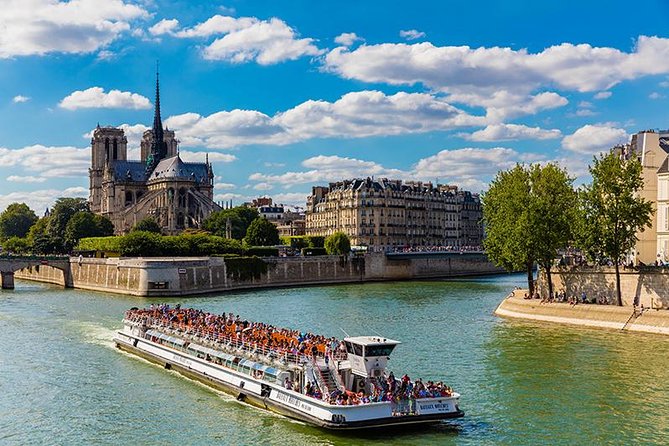
Reviewed · SEINE RIVER CRUISES
Bateaux Mouches Sightseeing Cruise on the Seine River in Paris
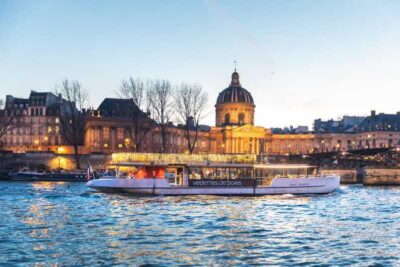
A river cruise turns the main monuments into one moving photo album. This Bateaux Mouches sightseeing cruise follows the Seine through Paris’s historic core for about 70 minutes, with English commentary and multiple departures from morning into the evening.
I love that you’re floating above the mess of street traffic. You also get two ways to watch the city: inside seating if you want shelter, or the open rooftop for a classic view (and lots of wind).
One thing to consider: audio quality can vary. On breezy or crowded sailings, it can be hard to hear the narration—especially from the lower deck—so plan your spot accordingly.
In This Review
- Quick hits: what matters before you go
- Port de la Conférence to the heart of Paris
- Value for the price: what $20-ish really buys you
- Boarding and the vibe: arrive early enough to breathe
- Deck strategy: rooftop for drama, inside for sanity
- The route: what each riverside landmark means and what to watch for
- Starting near the Seine’s 18th-century royal square
- The Louvre and the glass pyramid area
- Hôtel de Ville: the city hall with a rebuilt façade
- Conciergerie: royal power, then prison
- Île de la Cité: where Paris really begins
- Notre-Dame: Gothic, unfinished for centuries, restored later
- Île Saint-Louis: elegant old houses
- Pont Neuf: the oldest stone bridge and Henri IV’s statue
- Musée d’Orsay area: a former railway station turned museum
- Les Invalides: the golden dome and Napoleon’s tomb area
- Eiffel Tower: the engineering icon you can’t ignore
- Palais de Chaillot / Trocadéro area: 1937 exhibition buildings and museums
- Commentary and audio: how to get the most from the narration
- Food and drinks: quick options, not a full meal
- Who this cruise is best for
- Should you book Bateaux Mouches? My practical take
Quick hits: what matters before you go
Two decks mean you can choose your comfort—windy rooftop views or sheltered indoor sightlines.
You get a real overview fast because you’re not stuck crossing town on foot or in traffic.
Flex-time departures help your day (you can board any slot during the open window).
You’ll see major landmarks close to the river from Notre-Dame to the Eiffel Tower.
Cold weather is real on the rooftop—bring a layer even if the forecast looks mild.
Port de la Conférence to the heart of Paris
This cruise is an easy fit for almost any first-time Paris plan. It starts and ends at Port de la Conférence (75008), and it runs daily from 10:00 AM to 9:00 PM. The key benefit is timing: departures happen every 30–45 minutes, so you can pick a moment that matches your mood—morning light, golden-hour sightseeing, or the Eiffel Tower sparkle.
The boat itself is set up for movement and photos. You’ll have room to shift around and find angles, and the route keeps the landmarks lined up along the water. This is also a good option when your feet are tired. Paris is gorgeous, but walking nonstop can wear you out fast. On the Seine, you’re doing the sightseeing work without the street-level grind.
More time out on the Seine, compared
- Paris: 1-Hour Seine Cruise departing from the Eiffel Tower
★ 4.4 · 77,472 reviews - Paris: Seine Cruise & Crepe Tasting near the Eiffel Tower
★ 4.4 · 11,231 reviews - Paris: Seine River Panoramic Views Dinner Cruise
★ 4.3 · 10,611 reviews - Paris: Eiffel Tower Access by Elevator & Seine River Cruise
★ 4.6 · 7,329 reviews
Value for the price: what $20-ish really buys you
At around $20.40 per person, you’re paying for a straight shot through the city’s most famous waterfront sights. This isn’t a long, museum-style experience. It’s closer to a guided “greatest hits” pass, with a structured route and audio narration.
If you compare it to the cost of multiple paid attractions—or even just the time and energy of repeated metro trips—the value often makes sense. You’ll also avoid some typical sightseeing friction: crossings, detours, and the need to constantly line up for tickets.
The best way to judge value is to ask one question: do you want a quick orientation of the center of Paris? If yes, this cruise fits perfectly. If you want a deep, slow, stop-and-explore itinerary, you’ll likely want a different style of tour.
Boarding and the vibe: arrive early enough to breathe
The port area can be busy, especially near popular departure times. You may need to exchange your voucher for tickets at the ticket desk. Plan on a line and give yourself breathing room before the boat time.
Once you’re onboard, it feels organized enough to enjoy the ride, but don’t assume it will be quiet and uncrowded. If you’re traveling with kids, it can still work well because there’s a lot to look at and fresh air helps. If you’re sensitive to noise, aim for a calmer departure time and choose your deck thoughtfully.
Also note: there are restrooms on board, and seating is free—so you can move around to find the best view for where the boat is passing the sights.
Deck strategy: rooftop for drama, inside for sanity
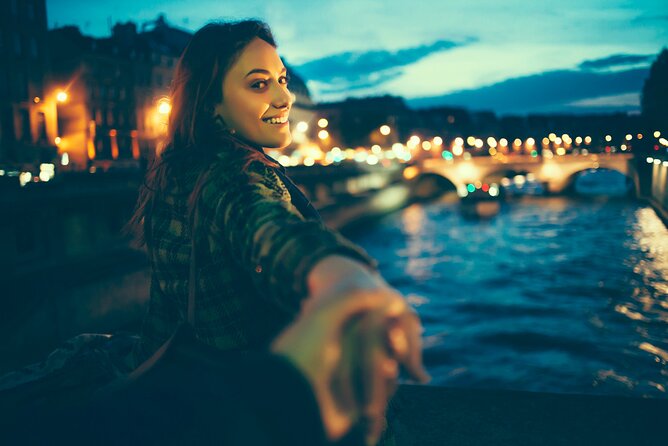
If you want the most classic photos, the rooftop deck is the move. You’ll get broad angles and a direct feel for the city passing right next to you. But the tradeoff is simple: wind and cold can hit harder than you expect, particularly in the evening.
Inside is the practical choice when:
- it’s chilly or rainy,
- you’re with younger kids,
- you want more stable conditions for listening.
And here’s the audio reality. Sound quality can be uneven depending on where you’re standing. Some passengers find the narration clearly enough, while others struggle—especially if you’re outside and the wind or crowd noise takes over. My practical advice: if hearing the details matters to you, try to get a spot where audio carries best, and don’t stand in the busiest bottleneck areas.
The route: what each riverside landmark means and what to watch for
This cruise stays in Paris’s historic center, moving landmark to landmark without intermediate stops. So your job is easy: watch the riverbanks and keep your camera ready.
Starting near the Seine’s 18th-century royal square
Early on, you pass a royal square designed by Gabriel in the 18th century. It’s also tied to a darker moment: in 1792, the square was the site of a guillotine, where thousands were executed. Later, in 1836, King Louis Philippe installed an obelisk that was a gift from Egypt.
What to watch for: the mix of monumental urban design and the way Paris layers its eras. From the boat, you can see how this area still reads like a stage—wide, planned, and built for visibility.
Worth weighing up next to this Paris pick

The Louvre and the glass pyramid area
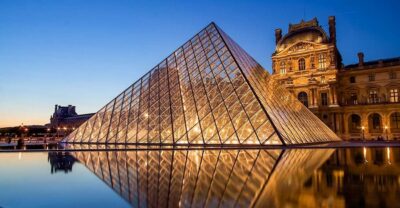
Next comes the Louvre, which you’ll likely associate with art—but here you get a specific architectural landmark: since 1989, visitors enter through the glass pyramid designed by Ieoh Ming Pei.
Look from the water for how the pyramid acts like a sharp geometric marker amid the older buildings. It helps you understand why the Louvre feels both ancient and modern in one frame.
Hôtel de Ville: the city hall with a rebuilt façade
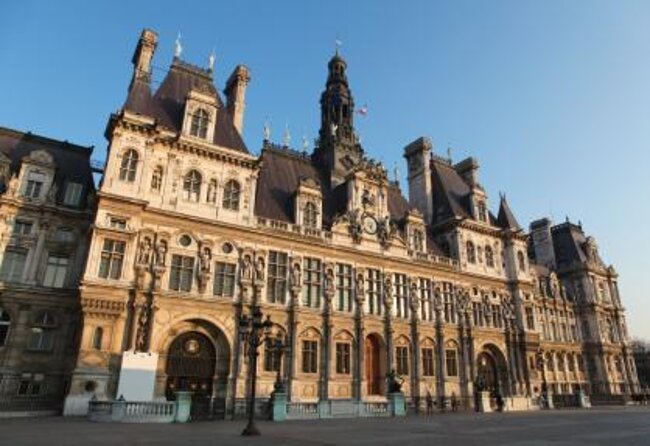
You’ll glide past the Hôtel de Ville, Paris’s city hall. The building you see reflects the city’s political changes: it was rebuilt in the 19th century after being burned during the Commune period in 1871.
On the boat, watch how the façade sits like a civic backdrop along the water. It’s a reminder that this isn’t just a postcard strip—it’s where Paris runs.
Conciergerie: royal power, then prison
The Conciergerie is one of those locations that hits you because of its transformation. What remained of the palace of France’s early kings was later used as a prison during the French Revolution.
From the Seine, it’s a good stop for the mind. The building doesn’t scream its past; it simply stands. The river view gives you perspective on how the city changed function while keeping the same footprint.
Île de la Cité: where Paris really begins
As you continue, you pass Île de la Cité, described as the cradle of the city where the earliest inhabitants (the Parisii) settled in the 3rd century BC.
I like this stretch because it grounds the whole trip. It’s easy to think of Paris as all one era—yet from this vantage point you can sense how the city’s “first base” became today’s core.
Notre-Dame: Gothic, unfinished for centuries, restored later
Then comes the big one: Notre-Dame Cathedral. Construction began in 1163 and ran until 1350. It was celebrated by Victor Hugo in The Hunchback of Notre-Dame, and later restoration work was taken on by architect Viollet-Le-Duc in the 19th century.
What to watch for: on the boat, Notre-Dame isn’t a distant skyline icon. It feels like it rises out of the river setting, which is exactly what makes this cruise different from a museum day. It also helps you understand why the cathedral is still one of the city’s strongest visual anchors.
Île Saint-Louis: elegant old houses
You’ll pass the area that was once île aux vaches (cow island). Today, it’s known for some of the most beautiful 16th- and 17th-century houses, built largely by architect Le Vau.
From the water, Île Saint-Louis often looks quieter and more refined than the busier main banks. Even without getting off the boat, you’re picking up the mood difference.
Pont Neuf: the oldest stone bridge and Henri IV’s statue
Next up is Pont Neuf, the oldest stone bridge in Paris, opened in 1606. In the center you’ll see an equestrian statue of King Henri IV, nicknamed Vert Galant because of his many female conquests.
Tip: this is one of those locations where you can get both landmark context and an easy photo. The bridge anchors the view, and the statue adds instant character.
Musée d’Orsay area: a former railway station turned museum
As the boat moves along, you’ll pass what is now Musée d’Orsay, originally constructed in 1900 as a railway station. Today it’s a museum focused on 19th-century masterpieces, especially Impressionists.
What you’ll notice from the river: the building’s purpose shows through in its shape. Even if you’ve never studied Impressionism, this is a cool “Paris is layers” moment—transport architecture becoming art.
Les Invalides: the golden dome and Napoleon’s tomb area
Then the boat passes the Les Invalides complex, recognizable by its dome adorned with fine gold. It was built as a hospital for war-wounded under Louis XIV. Today it houses the tomb of Napoleon I and the Musée de l’Armée (Military Museum).
From the water, the dome makes this stretch easy to spot. It’s also a reminder that Paris’s grand moments aren’t only artistic or royal—they’re also military and political.
Eiffel Tower: the engineering icon you can’t ignore
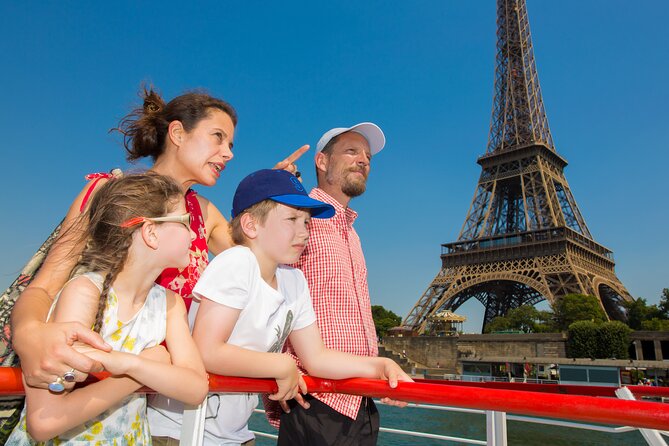
Next, you’ll see the Eiffel Tower—the “Iron Lady,” designed by engineer Gustave Eiffel for the 1889 World Exhibition. It reaches 324 meters high and weighs about 10,000 tonnes.
Timing matters here. If you pick a sunset departure, you can catch the shift from daylight to evening. Many people plan for this moment because it’s the kind of sight that transforms with the light.
Palais de Chaillot / Trocadéro area: 1937 exhibition buildings and museums
Finally, you’ll glide toward the 1937 World Exhibition complex, which houses several museums including the Naval Museum, the Museum of French Monuments, and the Museum of Man.
Even if you don’t go inside, seeing this cluster from the Seine helps you understand why the Trocadéro area is such a prime viewing zone. It’s not random—this is a deliberately built cultural stage.
Commentary and audio: how to get the most from the narration
The cruise includes commentary in English, and it often comes through as recorded narration. In practice, what matters most is how the audio travels on your chosen deck.
From the inside, you usually have an easier time hearing what’s being said. On the lower deck or rooftop, wind and crowd noise can interfere. If you care about the story behind the buildings—like why certain squares and structures connect to the Revolution—pick your spot where you can hear clearly, and don’t be shy about adjusting positions as the boat moves.
If you’re traveling with kids, audio can be hit or miss simply because everyone’s excited at the same time. That’s normal. Use the narration as a bonus, not the only source of meaning.
Food and drinks: quick options, not a full meal
Snacks and soft drinks are available for purchase, but they cost extra. Tea and coffee are also extra. If you want a snack, plan on grabbing it before or shortly after boarding rather than expecting a full onboard service.
You don’t need much food for a 70-minute cruise, but it’s nice to have a warm drink if the evening is cold. If you’re sensitive to price markups, treat onboard purchases as convenience rather than value.
Who this cruise is best for
This is one of those tours that fits a wide audience:
- First-time visitors who want a clean overview of the center of Paris.
- People with limited time who still want to see major landmarks in a single pass.
- Families who want an easier sightseeing day with restrooms onboard and a fun setting.
- Photo lovers who want the best views without hiking between attractions.
It’s less ideal if you need long stops, deep guided discussions at each site, or you’re counting on excellent audio from every deck position. Also, if you’re a light sleeper-to-noise type, pick an off-peak departure.
Should you book Bateaux Mouches? My practical take
I’d book this cruise if you want an efficient, scenic hit of Paris’s most famous riverside landmarks, with the comfort option of choosing inside or rooftop. The route makes sense for getting your bearings fast, and the time frame is perfect for combining with walking later.
I would think twice if you’re strongly focused on hearing every detail from any deck position. Cold weather on the rooftop is common, and audio can be uneven when it’s windy or crowded. If that sounds like you, choose inside seating and schedule this as a “views first” experience.
If you do book, aim for a departure that matches your priority: daylight for crisp architecture, sunset for atmosphere, and evening for Eiffel Tower drama. And bring a layer. The Seine doesn’t care what time of year it is.
More Cruises & Boat Tours in Paris
- Paris: 1-Hour Seine Cruise departing from the Eiffel Tower
★ 4.4 · 77,472 reviews - Paris: Evening River Cruise with Music
★ 4.4 · 22,721 reviews - Paris: Louvre Guided Tour with Reserved Access & Boat Cruise
★ 4.3 · 16,353 reviews - Paris: Tootbus Hop-on Hop-off (Optional River Cruise)
★ 4.3 · 15,279 reviews - Paris: Big Bus Hop-On Hop-Off Tour with Optional Cruise
★ 4.4 · 13,279 reviews
More Tour Reviews in Paris
- Paris: 1-Hour Seine Cruise departing from the Eiffel Tower
★ 4.4 · 77,472 reviews - Paris: Louvre Museum Timed-Entrance Ticket
★ 4.6 · 71,977 reviews - Disneyland® Paris 1-Day Ticket
★ 4.6 · 49,412 reviews - Paris: Versailles Palace and Gardens Full Access Ticket
★ 4.6 · 41,579 reviews - Paris: Arc de Triomphe Rooftop Tickets
★ 4.6 · 34,264 reviews
More Cruises on the Seine
- Paris: 1-Hour Seine Cruise departing from the Eiffel Tower
★ 4.4 · 77,472 reviews - Paris: Seine Cruise & Crepe Tasting near the Eiffel Tower
★ 4.4 · 11,231 reviews - Paris: Seine River Panoramic Views Dinner Cruise
★ 4.3 · 10,611 reviews - Paris: Eiffel Tower Access by Elevator & Seine River Cruise
★ 4.6 · 7,329 reviews - Paris: 3-Course-Dinner Cruise on the Seine with live music
★ 4.7 · 7,248 reviews
Fresh off the review desk in Paris
- Secrets of Paris Bike Tour in English or Dutch★ 5.0 · 5 reviews
- Paris: Mont Saint-Michel Day Tour with Chinese Tour Guide★ 5.0 · 5 reviews
- Private Street Art 2-Hour Guided Tour in Paris★ 4.5 · 5 reviews
- Orsay Museum Tour: 2h Highlights (Private & Small Group)★ 5.0 · 5 reviews
- Discover Paris in electric golf carts★ 4.0 · 5 reviews
- Paris Private Boat Tour with your own Captain Guide★ 5.0 · 5 reviews
Seine River Cruises, compared.
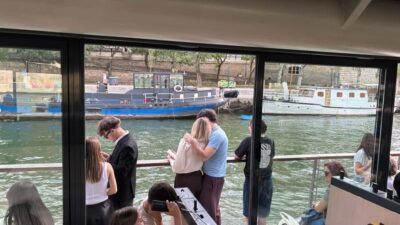 ★ 4.41-Hour Seine Cruise departing from the Eiffel TowerFrom $2077,472 reviews
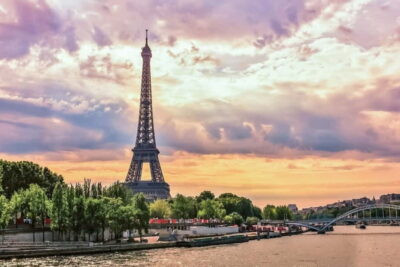 ★ 4.4Seine Cruise & Crepe Tasting near the Eiffel TowerFrom $2311,231 reviews
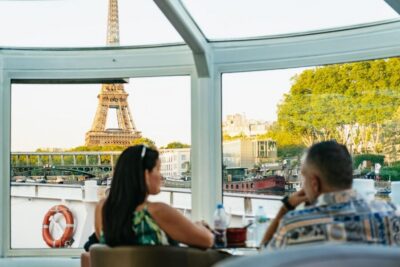 ★ 4.3Seine River Panoramic Views Dinner CruiseFrom $6410,611 reviews
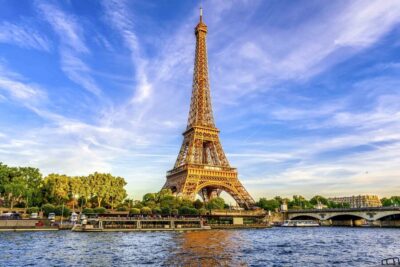 ★ 4.6Eiffel Tower Access by Elevator & Seine River CruiseFrom $797,329 reviews
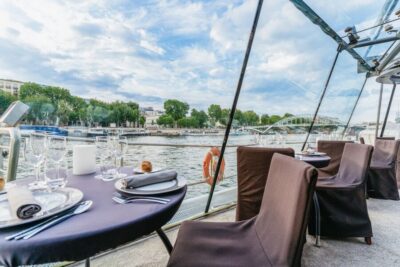 ★ 4.73-Course-Dinner Cruise on the Seine with live musicFrom $1357,248 reviews
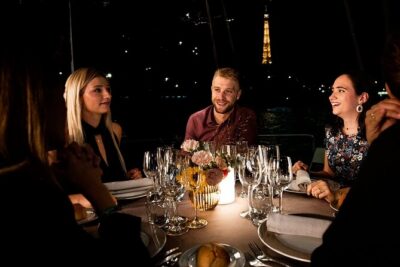 ★ 4.5Bateaux Parisiens Seine River Gourmet Dinner & Sightseeing CruiseFrom $1506,930 reviews
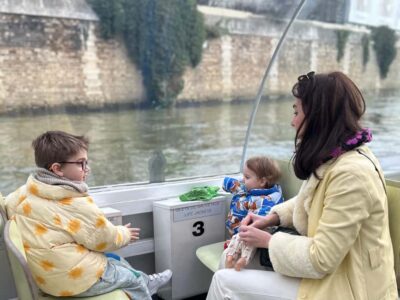 ★ 4.4Hop-On Hop-Off Seine Cruise Pass with 9 StopsFrom $275,645 reviews
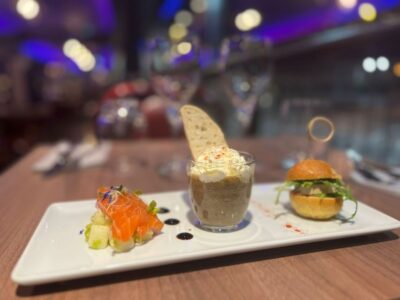 ★ 4.2Seine River Bistronomic Dinner CruiseFrom $695,272 reviews
Browse the lists this tour appears in