
Reviewed · PARIS
Belleville Bound Paris Beyond the Baguette
Paris can feel like a museum. This tour brings you back to streets, food, and real daily life. You’ll start by seeing Fontaines Wallace and a city-supported shared garden, then you’ll spend real time in Belleville, where immigration and migration shaped what people eat and how they live. I like that it mixes practical sightseeing with food that feels tied to the neighborhood, not a postcard.
Two things I especially like: the pacing in a small group (max 6), and the way the guide turns ordinary places into a story you can actually use while walking around on your own. One consideration: it doesn’t return to your starting point, so you’ll want a plan for how you get home once you’re finished in the Belleville area.
In This Review
- Key highlights you’ll feel right away
- A 5-hour Belleville walk that trades postcards for neighborhoods
- Meeting at Rue Sedaine, then finishing in Belleville
- Fontaines Wallace: practicality, charity, and instant Paris flavor
- Jardin Truillot: one of Paris’s shared gardens where locals actually show up
- Avenue Parmentier: a potato story on a street you’ll remember
- Belleville: immigration, food, and identity you can taste
- What the guide does (and why it changes the tour)
- The food philosophy: beyond baguette stereotypes
- Price and value: what $175 buys you in real terms
- Who this tour suits best
- Should you book this Belleville Bound tour?
- FAQ
- How long is the tour?
- What time does it start?
- Where do I meet the guide?
- Where does the tour end?
- Is the tour offered in English?
- Is a mobile ticket provided?
- What’s the maximum group size?
- Which stops include admission tickets?
- Does the tour run in all weather?
- What is the cancellation policy?
Key highlights you’ll feel right away
- Small group size (max 6) means more time to talk and ask questions.
- Admission tickets included for two stops, so you’re not paying twice.
- Belleville focus gives you Paris through immigration and food culture.
- Mix of classics and colonial influences shows how French food evolved.
- A finish in Belleville keeps the day rolling, even if you’re not going back to the 11th.
- English-speaking guide makes the history and food stories easy to follow.
A 5-hour Belleville walk that trades postcards for neighborhoods
This is a ~5-hour guided walk that starts at 10:30 am and stays in the everyday flow of Paris life. The tour is run by Culinary Backstreets Walks, and you’ll get a mobile ticket, so you can keep things simple on your phone. It’s also offered in English, which matters if you want the history to land without guessing.
The big “for you” detail is the ending: you finish around 8 Rue de Belleville, 75020, not back at where you started. That’s not a problem if you’re staying nearby or you like to wander afterward. It’s a problem if your schedule expects you to be back at the same exact spot later.
Still deciding? Here is how it stacks up against a few Paris favourites we have booked and reviewed.
- Paris: 1-Hour Seine Cruise departing from the Eiffel Tower
★ 4.4 · 77,472 reviews - Paris: Louvre Museum Timed-Entrance Ticket
★ 4.6 · 71,977 reviews - Disneyland® Paris 1-Day Ticket
★ 4.6 · 49,412 reviews - Paris: Versailles Palace and Gardens Full Access Ticket
★ 4.6 · 41,579 reviews
Meeting at Rue Sedaine, then finishing in Belleville
You meet at 4 Rue Sedaine, 75011 Paris. From there, you’ll move through the 11th and over to the Belleville side, with stops that are short enough to keep the day from dragging. There’s also mention that you’ll be near public transportation, which helps if you want to arrive early, reset your bearings, and avoid the last-minute scramble.
A practical tip: plan your meals like you’re going to be fed. The experience includes multiple tastings as you go. You’ll likely leave full, but not stuffed, because the walk includes a decent mix of walking and short sitting moments (helpful when the weather isn’t perfect). If you’re the kind of person who likes a big dinner reservation right after tours, I’d schedule it later rather than immediately.
Fontaines Wallace: practicality, charity, and instant Paris flavor
Stop one is Fontaines Wallace, and even if you don’t know the name yet, you’ll recognize the look. These fountains are tied to real public use—water for people—and that blend of function and beauty is why they feel so Paris. The framing here matters: it’s not just a photo stop. You’re learning how something meant for public well-being became part of the city’s visual language.
Admission is included for this stop, which is one of the small ways the tour keeps value high. You’re paying for a guide, and you’re also getting ticketed access included in the experience rather than treated as an extra cost. Time on site is about 30 minutes, so it’s enough to read the story, see what’s distinctive, and keep moving.
What I like about this start: it gives you a “Paris mindset” early. You stop thinking only about monuments and start noticing how the city serves people.
Jardin Truillot: one of Paris’s shared gardens where locals actually show up
Next comes Jardin Truillot, a public garden tended by the city and maintained through local care. The tour points out that this is one of 185 shared gardens in Paris, which is a great fact to know once you’re in the neighborhood—because it explains why some green spaces feel like they belong to the people around them, not just tourists.
Admission is included here too, and the time is another 30 minutes. That length is ideal for a garden stop. Long enough to slow down, look around, and notice how the space is used. Short enough that you don’t feel like you’ve been parked in one spot while the rest of your day walks away.
If you like “quiet Paris” moments between food stops, this is a good one. And if you tend to rush, the garden acts like a pause button.
Avenue Parmentier: a potato story on a street you’ll remember
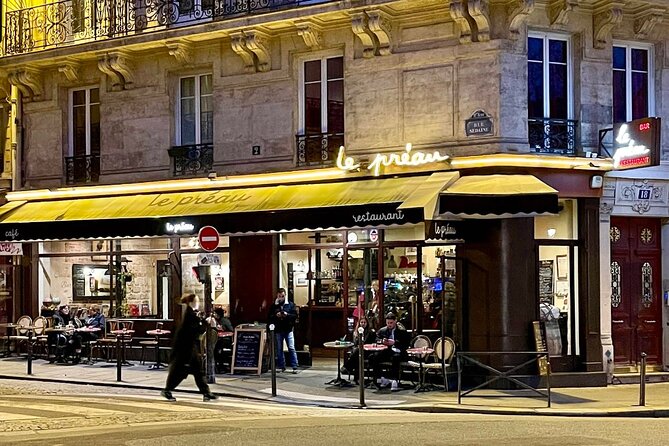
Stop three is Avenue Parmentier, named after Antoine-Augustin Parmentier, the man who helped popularize potatoes in France. This is a clever stop because it connects food history to something you can point at from the sidewalk. You’re not just eating; you’re seeing where food culture comes from.
This portion is 30 minutes, and the admission is listed as free. Even so, it’s not a throwaway segment. A street name can be one of the most practical history lessons you’ll take home: you’ll remember it later when you see potatoes on a menu, or when someone brings up how French cuisine changed over time.
Belleville: immigration, food, and identity you can taste
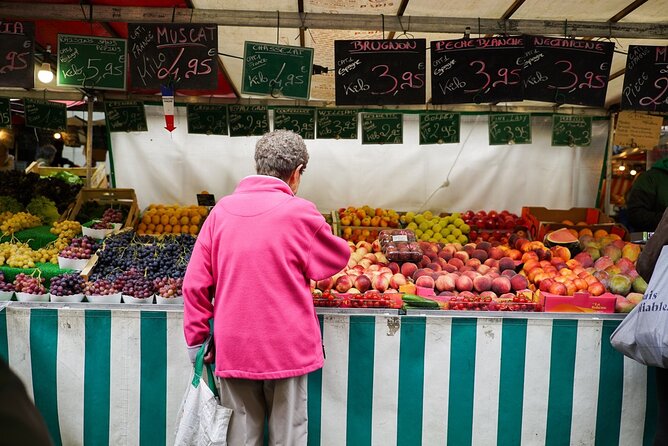
The big payoff is Belleville, where the tour frames the neighborhood as a place shaped by long immigration and cultural mixing. That matters because food is one of the easiest ways to understand how a city changes. When people bring dishes from home, they also change the local taste—then local shops adapt, and the whole area evolves.
This stop lasts about 1 hour. Admission is free, which is good to know because it keeps the costs tied to the places where tickets are actually part of the plan (like the two earlier stops). Belleville also explains why the tour’s food list often goes beyond the standard “Paris only” stereotype.
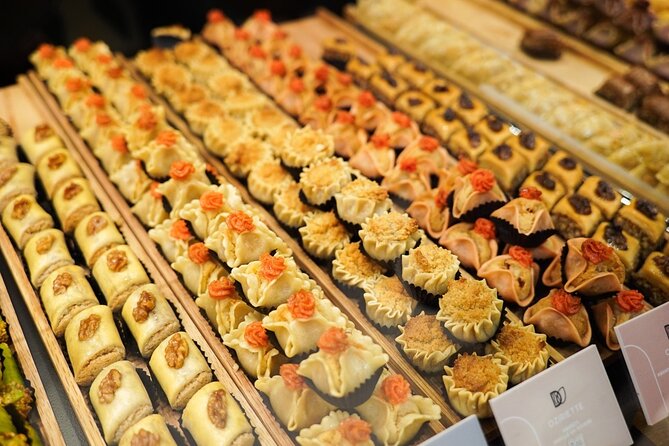
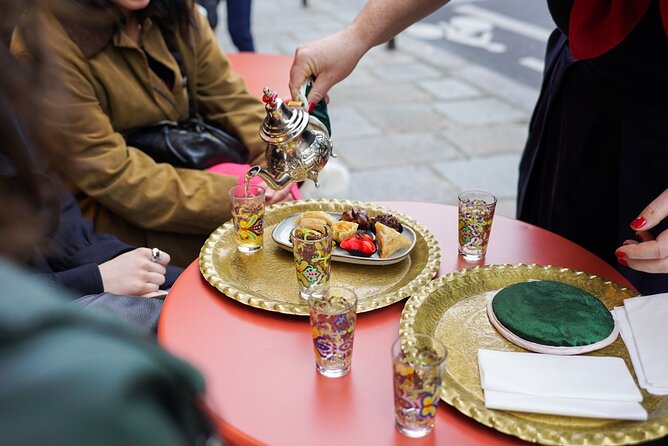
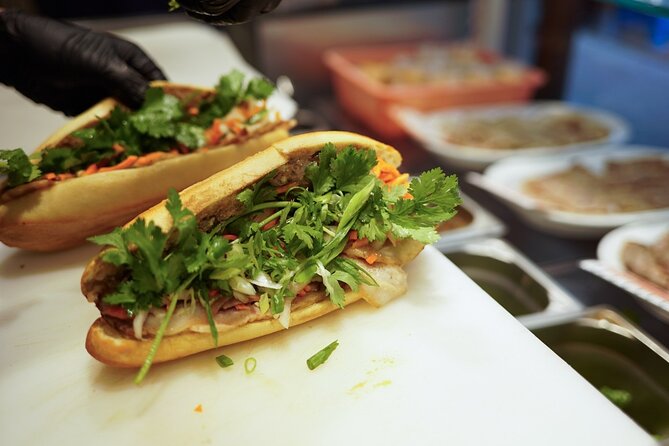
In past experiences with this route, the food has leaned into the idea of a mixed culinary Paris. Expect tastings that can include things like banh mis, a Tunisian fried pastry, and hibiscus juice, along with more familiar French staples such as cheese and croissant. You might also see influences like Algerian pastries and other snack-style bites as you walk. The mix is part of the point: it shows how French dining gets reinvented in real neighborhoods, not in themed restaurants.
One more detail I’d flag: the final tasting moment has included a cafe/bar style stop for an easy closing. That’s the kind of ending that lets you slow down, talk with your guide, and make sense of what you just learned without rushing to another reservation.




What the guide does (and why it changes the tour)
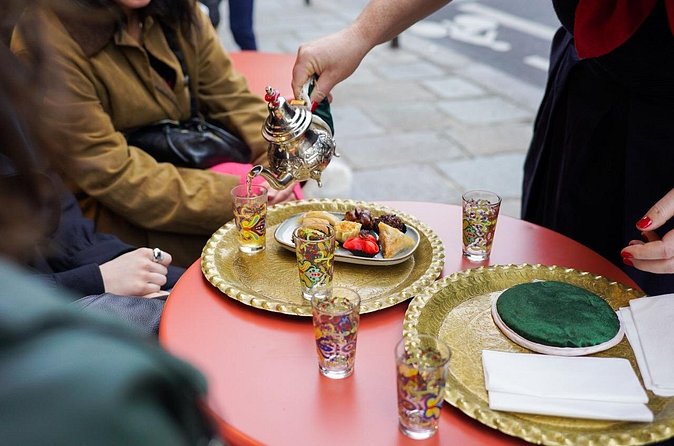
A great walking-food tour isn’t only about where you stop. It’s about how the guide connects the dots while you’re moving. Guides in this program have stood out for two things: pacing and conversation.
In one case, Lucia was praised for pacing the tour for a small group and for being very knowledgeable about the areas visited. In another, Susan was described as phenomenal, with a focus on interesting food and history that doesn’t stick to the usual Paris clichés. There’s also mention of strong guidance around wine, which is a big deal if you want to understand what you’re tasting and why it pairs well with the flavors of the neighborhood.
I like that you’re not left with vague “try this because it’s good” advice. You get context that helps you read the neighborhood in your own future walks—especially in Belleville, where the story is written in storefronts as much as in dishes.
The food philosophy: beyond baguette stereotypes
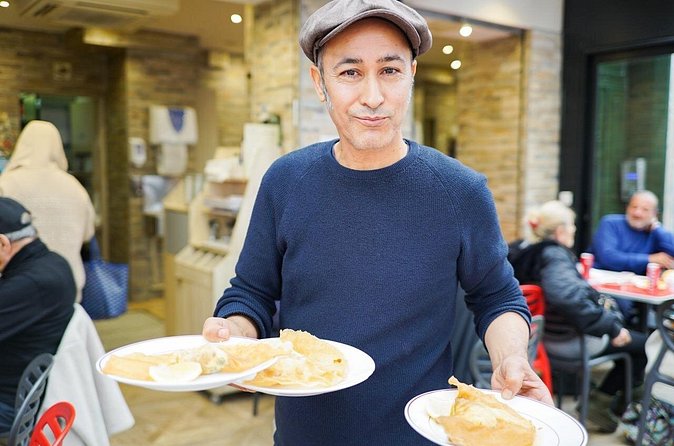
If you only know Paris through a tight list of classic dishes, this tour is designed to loosen that map. You’ll still encounter recognizably French items, but you’ll also get the sense that Parisian food culture has always been shaped by newcomers and by places where cultures overlap.
That’s why you might see a spread that mixes:
- Classic staples (like cheese, baguette, croissant)
- North African and former-colony influences (like Algerian pastries and Tunisian street-food style bites)
- Drink options tied to the region’s flavors (like hibiscus juice)
- Snack-y tasting formats that keep you going without making the walk miserable
And crucially, it’s not usually about stuffing yourself. One practical upside mentioned is that the tour runs long enough to feel satisfying, but the pacing includes breaks so you’re not exhausted from standing in lines and chasing the next stop. By the end, you’ll likely be full, yet still comfortable.
Price and value: what $175 buys you in real terms
At $175 per person for about 5 hours, you’re paying for a guided experience that combines three types of value:
- Local access to parts of Paris that aren’t on the typical fast-hit routes.
- Paid admission included for at least two stops (Fontaines Wallace and Jardin Truillot).
- Small-group attention from the guide, which changes how good the tasting moments feel.
The price feels more reasonable when you think about it as a package rather than “food only.” If you tried to recreate this day on your own, you’d spend time figuring out what matters, then you’d still miss the story that turns it from eating into understanding.
One caution from an experienced perspective: if you’re a frequent visitor to Paris and you expect a menu of totally unfamiliar foods at every stop, you may feel it’s more about the context and neighborhood than brand-new discoveries at every bite. Still, you’ll likely appreciate the way it brings you to Belleville with purpose.
Who this tour suits best
This fits well if you:
- Want Paris beyond the obvious landmarks
- Like food tours that connect dishes to neighborhood history
- Enjoy walking with short pauses and a guide who keeps things flowing
- Prefer smaller groups (max 6) over large crowded groups
It may be less ideal if you:
- Need to end exactly where you start (this one ends in Belleville)
- Have limited stamina for a multi-stop walking experience (it’s designed to be manageable, but it’s still a walk)
- Are traveling only when weather is uncertain, since the experience needs good weather
Should you book this Belleville Bound tour?
I’d book it if you want your Paris day to feel like a real neighborhood morning evolving into a real neighborhood meal. The combination of Fontaines Wallace, a meaningful shared garden stop at Jardin Truillot, and then a deeper, longer look at Belleville gives you both context and flavor.
Skip it only if your schedule requires you to return to your starting point, or if you’re mainly chasing a strict checklist of brand-new foods rather than how food reflects migration, identity, and local adaptation.
If you want a walking food tour that teaches you how to see Paris differently while you’re actually eating, this one is worth your time.
FAQ
How long is the tour?
The tour lasts about 5 hours.
What time does it start?
It starts at 10:30 am.
Where do I meet the guide?
You meet at 4 Rue Sedaine, 75011 Paris, France.
Where does the tour end?
The tour ends at 8 Rue de Belleville, 75020 Paris, France, and it does not return to the original meeting point.
Is the tour offered in English?
Yes, the tour is offered in English.
Is a mobile ticket provided?
Yes, you receive a mobile ticket.
What’s the maximum group size?
The group is capped at 6 travelers.
Which stops include admission tickets?
Fontaines Wallace and Jardin Truillot have admission tickets included.
Does the tour run in all weather?
No. The experience requires good weather. If it’s canceled due to poor weather, you’ll be offered a different date or a full refund.
What is the cancellation policy?
You can cancel for free up to 24 hours in advance for a full refund. Cancellations made less than 24 hours before the start time are not refunded.
More Tour Reviews in Paris
- Paris: 1-Hour Seine Cruise departing from the Eiffel Tower
★ 4.4 · 77,472 reviews - Paris: Louvre Museum Timed-Entrance Ticket
★ 4.6 · 71,977 reviews - Disneyland® Paris 1-Day Ticket
★ 4.6 · 49,412 reviews - Paris: Versailles Palace and Gardens Full Access Ticket
★ 4.6 · 41,579 reviews - Paris: Arc de Triomphe Rooftop Tickets
★ 4.6 · 34,264 reviews
Fresh off the review desk in Paris
- Secrets of Paris Bike Tour in English or Dutch★ 5.0 · 5 reviews
- Paris: Mont Saint-Michel Day Tour with Chinese Tour Guide★ 5.0 · 5 reviews
- Private Street Art 2-Hour Guided Tour in Paris★ 4.5 · 5 reviews
- Orsay Museum Tour: 2h Highlights (Private & Small Group)★ 5.0 · 5 reviews
- Discover Paris in electric golf carts★ 4.0 · 5 reviews
- Paris Private Boat Tour with your own Captain Guide★ 5.0 · 5 reviews