
Reviewed · WINE TOURS
Champagne & Terroir Treasures: Viator’s Terroir Gourmet Delight
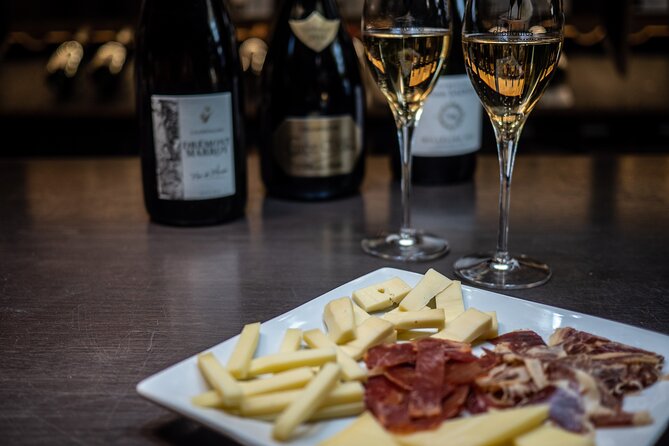
Champagne tastes better when your nose is clean. I like the way this tasting pairs three distinct champagnes with matured comté and ham in a 17th-century Paris cellar.
I also appreciate the lesson format: you get real talk on terroir, grapes, and blend while you compare what hits your glass. The small group size and perfume-free tasting rules make the session feel focused, but there is a chance the instruction depth or English clarity may vary depending on your guide.
In This Review
- Key things to look forward to
- Price and what you actually get for $86.82
- First stop: the meeting point in Saint-Germain (and why timing matters)
- The rules of the cellar: why perfume, lipstick, and gum matter
- Inside a boutique 17th-century champagne cellar
- The tasting flow: three champagnes, compared in sequence
- The plate: comté and ham, and why that pairing makes sense
- Terroir, grapes, and blend: the lesson you’re paying for
- How the sensory etiquette improves what you taste
- Buying bottles: turn tasting notes into a smart souvenir
- Who should book this tasting (and who might skip it)
- Should you book Champagne & Terroir Treasures?
- FAQ
- Where does the experience start?
- Where does the tour end?
- How long is the tasting?
- What is included in the price?
- How many champagnes will I taste?
- Is transportation included?
- Do I need to bring a paper ticket?
- What’s the minimum age?
- What’s the maximum group size?
- Is it refundable if I cancel?
Key things to look forward to
- Three pours (80 ml each) paired with cheese and charcuterie
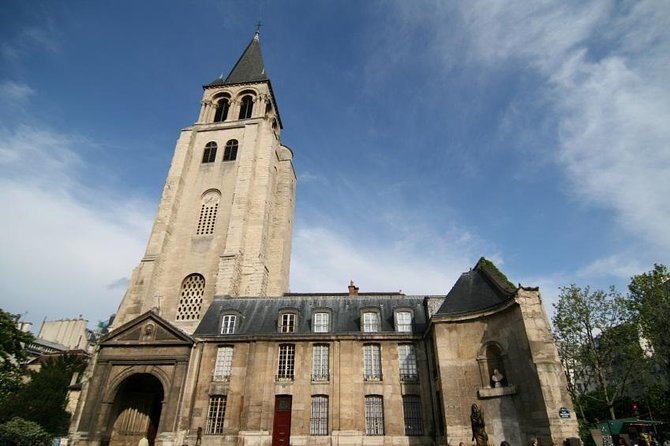
- A 17th-century cellar in central Paris, in the St-Germain area
- Terroir + grape + blend explanations tied to what you taste
- Smell-sensitive etiquette, including no perfume and no lipstick
- Max 12 people, which keeps questions easy to ask
Price and what you actually get for $86.82
At $86.82 per person for about 1 hour 30 minutes, this is not a bargain tasting. But it does include the key ingredients you’d otherwise pay for: three small champagne tastings and a plate of comté and ham. In Paris, that combination is the difference between a quick sip and a real sensory session.
Also, the tour is designed to end with you choosing a bottle or two to take home. That makes the price feel less like a one-time drink and more like a guided way to find your next purchase—if you go in with a willingness to compare styles.
One thing to keep in mind: your non-alcohol meal is modest. You’re there for the tasting, not a full dinner.
Worth weighing up next to this Paris pick
- Paris: Moulin Rouge Cabaret Show Ticket with Champagne
★ 4.7 · 16,088 reviews - Authentic Parisian Gourmet Food Tour with 10 Local Dishes & Wines
★ 5.0 · 4,754 reviews - Loire Valley Castles Day Trip from Paris with Complementary Wine
★ 4.5 · 3,907 reviews - Montmartre Hill French Gourmet Food and Wine Tasting Walking Tour
★ 5.0 · 2,588 reviews
First stop: the meeting point in Saint-Germain (and why timing matters)
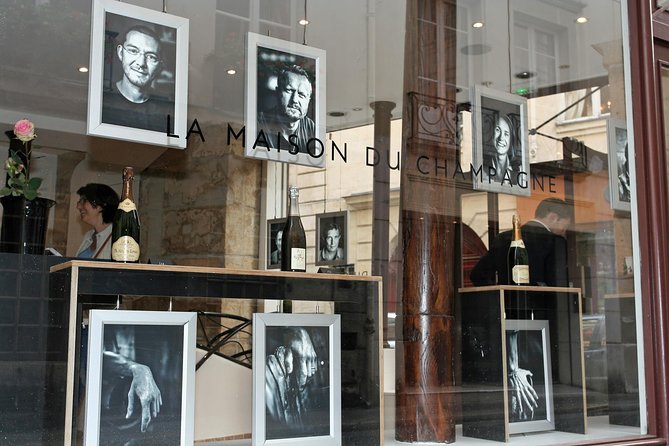
The experience starts and ends back at 22 Rue de Savoie, 75006 Paris. You’re close to public transportation, which matters because you don’t want to waste pre-tasting time hunting for the exact entrance.
You also need to arrive 10 minutes early. That’s not just fussiness—tastings run on a tight rhythm, and you’ll want your senses sharp when the guide starts. If you arrive late, you may miss the setup that makes the comparisons work.
You’ll receive a mobile ticket, so you’re not juggling paper tickets while you’re finding the right door.
The rules of the cellar: why perfume, lipstick, and gum matter
This is a smell-first tasting. The organizer explicitly asks you not to wear lipstick, chew gum, drink coffee or other strongly flavored drinks right before, and to avoid perfume or aftershave.
Their logic is simple: champagne aromas can get muddled if your senses arrive already overloaded. The tour even warns they may refuse entry if scents disturb the tasting atmosphere, with no refund.
Practical tip: if you’re coming straight from a café, don’t order a strong espresso beforehand. If you brushed your teeth very recently and strongly, you might notice the flavors shift toward acidity and bitterness. Aim for a clean, neutral reset so the champagne reads true.
It feels strict, but it also makes the tasting more accurate. You’re not just drinking; you’re matching aroma to taste.
Inside a boutique 17th-century champagne cellar
The setting is a major part of the value. You’re tasting in a 17th-century Paris champagne cellar, which gives you the calm and damp-cool mood you want for wine evaluation. Lighting tends to be better for focus than for loud nightlife drinking, and the room itself encourages slow attention.
The session is run by Dilettantes, and the group size is capped at 12 people. That ceiling matters. With a small group, you get more chances to ask questions instead of waiting your turn while others talk over the guide.
If you want a more intimate Paris experience—less theater, more food-and-wine conversation—this format usually fits.
The tasting flow: three champagnes, compared in sequence
You’ll sample three distinct champagnes during the session. The included portions are three small glasses, each 80 ml, so the math works out to about 240 ml total—enough to compare meaningfully without turning the tasting into a party.
How to get more out of those three pours:
- Taste in order and pay attention to how each one changes on the second sip.
- Take one note you can actually remember later: acidity level, fruit feel, or how long the finish lingers.
- Let the food do its job between tastings. Cheese and charcuterie can soften harsh edges and help you detect flavors you might miss on an empty palate.
There’s also pairing during the session: you’re given a plate alongside the tastings, so you don’t just drink champagne and guess what it would taste like with food.
The plate: comté and ham, and why that pairing makes sense
Your included snack is a plate featuring comté cheese and ham. The idea is classic: aged cheese brings savory depth and texture, while cured ham adds salt and fat.
That matters because champagne’s structure—its acidity and style—often benefits from salty, aged foods. When you take a bite, you reset your palate and get to see what the champagne does when it meets real flavor, not just your tongue.
If you’re a first-time champagne taster, the food can also make aromas easier to read. Fat helps tame sharpness. Salt highlights crispness. That’s why pairing is not an optional extra here—it’s the mechanism that makes the lesson stick.
You should expect a small plate, not a full meal. If you arrive hungry, you’ll probably finish the tasting satisfied but still ready for a proper dinner after.




Terroir, grapes, and blend: the lesson you’re paying for
This tour’s education centers on terroir, grapes, and blend. That trio is the core of how champagne becomes more than a sparkling wine label.
Here’s how to think about it while you taste:
- Terroir is the site story: soil, slope, and climate factors that influence grape behavior. In champagne, those differences often show up as changes in crispness and nuance.
- Grapes shape fruit character and backbone. Even when two champagnes feel similar at first, grape composition usually drives differences in how fruit, bitterness, or freshness lands.
- Blend is where winemaking choices become visible. Champagne makers blend lots and sometimes styles to create consistency—or to push a particular house personality.
Even if your goal is simply to drink something you’ll enjoy, this framing is useful. After three tastings, you’re no longer tasting randomly. You’re building a mental map that helps you choose bottles later.
One note from how the experience has been described: not every session delivers the same level of detailed explanation, and English clarity can vary. If you want very deep technical instruction, treat this as a friendly wine conversation more than a classroom lecture.
How the sensory etiquette improves what you taste
The unusual part of this tour isn’t the cellar—it’s the care instructions. No perfume or aftershave means the aromas you smell are coming from the glass, not your shirt.
No gum and no coffee the moment before prevents unrelated bitterness or roast notes from clinging to your mouth. Even brushing your teeth right before can leave residues that make champagne taste sharper than it should.
This is why I think the rules are worth taking seriously. The tasting experience depends on comparison, and comparison depends on your senses being consistent from pour to pour.
It’s also why the tour warns they can refuse entry if your scents interfere. That might sound harsh, but it protects the core purpose of the session: accurate tasting.
Buying bottles: turn tasting notes into a smart souvenir
After the tasting, you can purchase champagne to take home. The option includes buying one bottle or a couple bottles, and in some cases delivery is mentioned as an option.
The best way to buy value here is to avoid guessing based on a single sip. Instead:
- Pick the champagne that matched your taste goal: crisp and fresh, or more round and savory.
- Check whether you preferred it before or after eating comté/ham. If a bottle tasted great with food, it’s more likely you’ll actually enjoy it with a meal.
- If you’re unsure, buy one bottle rather than two. You’re not just buying alcohol—you’re buying a future drinking plan.
If you’re traveling with limited luggage flexibility, consider how you’ll carry the bottle. The tasting gives you the chance to go home with exactly what you liked, not what you guessed in a shop window.
Who should book this tasting (and who might skip it)
This experience is a strong fit if you:
- Want a short, focused tasting with food pairing
- Like the idea of learning the basics of terroir, grapes, and blend through actual sips
- Prefer a small group setting in a real Paris cellar over a big, noisy event
- Are planning to bring back a bottle and want help choosing
You might want to skip or temper expectations if you:
- Expect heavy, highly technical education every time
- Are sensitive to strict pre-tasting rules about scents and recent food/drink
- Need specific language support beyond standard guide English
The experience is rated 4.2 overall, with many comments praising the flavor and the setting, and at least some mentioning that guidance quality can depend on who leads your session.
Should you book Champagne & Terroir Treasures?
Book it if you want a compact, high-attention Paris activity where three tastings + pairing teach you something you can use. The price looks reasonable when you remember you’re paying for alcohol, food, and guided tasting structure in central Paris.
Think twice if you’re expecting a deep, lecture-style wine course. This is more about pairing, comparison, and practical understanding than turning you into a champagne scientist.
If your schedule allows, I’d treat it as one of those “small session” experiences that make a trip feel more personal. Then use what you learned to buy the bottle you’ll actually want to open later.
FAQ
Where does the experience start?
The start location is 22 Rue de Savoie, 75006 Paris, France.
Where does the tour end?
The activity ends back at the meeting point.
How long is the tasting?
It lasts about 1 hour 30 minutes.
What is included in the price?
You get a plate of comté cheese and ham and 3 small glasses of Champagne (80 ml each).
How many champagnes will I taste?
You’ll taste three different champagnes during the session.
Is transportation included?
No. Transportation to/from attractions is not included.
Do I need to bring a paper ticket?
No. You’ll receive a mobile ticket.
What’s the minimum age?
You must be 18 years old or older.
What’s the maximum group size?
The group is capped at 12 travelers.
Is it refundable if I cancel?
No. The experience is non-refundable and cannot be changed for any reason. If you cancel, the amount you paid is not refunded.
More Wine Tours in Paris
- Paris: Moulin Rouge Cabaret Show Ticket with Champagne
★ 4.7 · 16,088 reviews - Authentic Parisian Gourmet Food Tour with 10 Local Dishes & Wines
★ 5.0 · 4,754 reviews - Loire Valley Castles Day Trip from Paris with Complementary Wine
★ 4.5 · 3,907 reviews - Montmartre Hill French Gourmet Food and Wine Tasting Walking Tour
★ 5.0 · 2,588 reviews - Paris: Montmartre Cheese, Wine & Pastry Guided Walking Tour
★ 4.8 · 2,255 reviews
More Tour Reviews in Paris
- Paris: 1-Hour Seine Cruise departing from the Eiffel Tower
★ 4.4 · 77,472 reviews - Paris: Louvre Museum Timed-Entrance Ticket
★ 4.6 · 71,977 reviews - Disneyland® Paris 1-Day Ticket
★ 4.6 · 49,412 reviews - Paris: Versailles Palace and Gardens Full Access Ticket
★ 4.6 · 41,579 reviews - Paris: Arc de Triomphe Rooftop Tickets
★ 4.6 · 34,264 reviews
Fresh off the review desk in Paris
- Secrets of Paris Bike Tour in English or Dutch★ 5.0 · 5 reviews
- Paris: Mont Saint-Michel Day Tour with Chinese Tour Guide★ 5.0 · 5 reviews
- Private Street Art 2-Hour Guided Tour in Paris★ 4.5 · 5 reviews
- Orsay Museum Tour: 2h Highlights (Private & Small Group)★ 5.0 · 5 reviews
- Discover Paris in electric golf carts★ 4.0 · 5 reviews
- Paris Private Boat Tour with your own Captain Guide★ 5.0 · 5 reviews
Wine Tours, compared.
 ★ 4.7Moulin Rouge Cabaret Show Ticket with ChampagneFrom $11516,088 reviews
 ★ 5.0Authentic Parisian Gourmet Food Tour with 10 Local Dishes & WinesFrom $1024,754 reviews
 ★ 4.5Loire Valley Castles Day Trip from Paris with Complementary WineFrom $1493,907 reviews
 ★ 5.0Montmartre Hill French Gourmet Food and Wine Tasting Walking TourFrom $1452,588 reviews
 ★ 4.8Montmartre Cheese, Wine & Pastry Guided Walking TourFrom $1272,255 reviews
 ★ 4.6Paradis Latin Cabaret Show with Optional ChampagneFrom $1062,231 reviews
 ★ 4.6From Paris: Loire Valley Castles Day Trip With Wine TastingFrom $1041,727 reviews
 ★ 4.0Paris 3-Courses Gourmet Dinner Seine River Cruise with ChampagneFrom $1361,659 reviews
Browse the lists this tour appears in