
Reviewed · EIFFEL TOWER TOURS
Eiffel Tower Reserved Access with Photoshoot stops
Reserved access makes Paris faster. This 2-hour Eiffel Tower tour blends a Seine-side stroll with time-stamped tickets, so you spend less time lining up and more time framing great shots.
I especially like the way the route starts with a viewpoint from Passerelle Debilly, where the Eiffel Tower shows up in a clean, postcard-style angle. I also like that once you’re up there, the guide helps you read what you’re seeing from the second floor or the summit, not just snap pictures and rush on.
One thing to keep in mind: Eiffel Tower days can get messy. If your ticket time slot needs to shift or your group starts late, you may feel the clock pressure, so arrive on time at the meeting stairs and be ready to confirm you’ve got your reserved access plan.
In This Review
- Key highlights at a glance
- Meeting the guide near the Seine: what to expect at 7 rue de la Manutention
- Passerelle Debilly to Quai Branly: the first Eiffel Tower views that matter
- Rue de l’Universite and the Seine corridor: a walk that sets you up for the tower
- Forecourt and gardens: turning reserved entry into better photos
- Second floor or the top: guided viewpoints and fast orientation
- After the guided portion: using your ticket like a pro
- Price and value: is $53 worth it for a 2-hour format?
- When this tour is a great fit (and when it might not be)
- Should you book this Eiffel Tower reserved access tour?
- FAQ
- How long is the Eiffel Tower reserved access tour with photo stops?
- Where is the meeting point?
- Is the tour guided in English?
- Does the tour include Eiffel Tower tickets and reserved access?
- Are photo stops included?
- Is a professional photographer included?
- Do I need hotel transfer to join the tour?
- Can I cancel and get a refund?
- Does the tour include time after the guided portion?
Key highlights at a glance
- Reserved, time-stamped Eiffel Tower tickets tied to a specific entry window
- Photo stops built into the walk, not just afterthoughts
- Views from Passerelle Debilly and the Seine corridor
- Guided orientation on the higher floors so you know what angles to look for
- Free time after the guided portion so you can move at your own pace
Meeting the guide near the Seine: what to expect at 7 rue de la Manutention
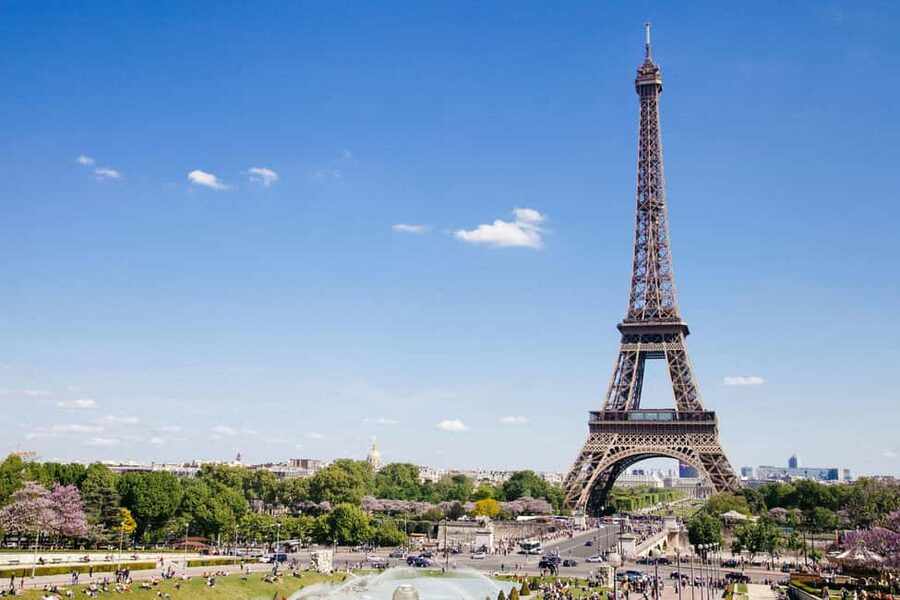
You start at 7 rue de la Manutention, in front of the stairs. It’s a simple setup, but it matters: with a tour that only runs 2 hours, late arrivals compress everything else. I’d treat the meeting point like your first checkpoint for the day—show up early, get your bearings, and don’t rely on last-minute phone calls.
The good news is the start is in the right neighborhood mood. You’re by the Seine, already in that classic Paris flow where you can feel the city moving around you. This tour leans practical: it gets you from street-level views to Eiffel Tower access without wasting time on long detours.
You’ll also be with a live English guide, which is a big deal here because the payoff isn’t only the ticket—it’s the walkthrough of what you’re looking at as you go.
More ways up the Iron Lady, side by side
- Paris: 1-Hour Seine Cruise departing from the Eiffel Tower
★ 4.4 · 77,472 reviews - Paris: Eiffel Tower Entry Ticket with Optional Summit Access
★ 4.4 · 20,035 reviews - Eiffel Tower Dedicated Reserved Access Summit or 2nd Floor
★ 4.3 · 18,352 reviews - Paris: Eiffel Tower Summit or Second Floor Access
★ 4.4 · 16,088 reviews
Passerelle Debilly to Quai Branly: the first Eiffel Tower views that matter
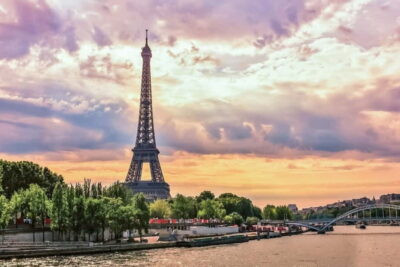
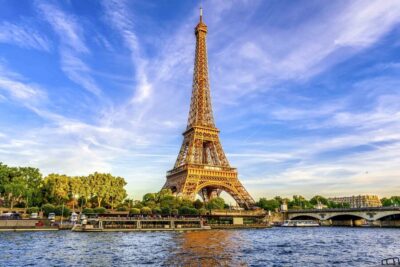
The walk kicks off with a cross of Passerelle Debilly, a small bridge over the Seine that frames the Eiffel Tower in a way that feels instantly iconic. This is one of those moments where you can take photos without climbing, without hunting, and without fighting for position inside a crowd funnel.
From there, you head toward Quai Branly and then cross Rue de l’Université, a street running parallel to the river. The value of this stretch is that you’re not just getting one view—you’re getting a sense of how the Eiffel Tower sits in the city’s geometry. From the right angle, you can see how the tower relates to the broad river axis and the surrounding skyline.
Why that matters for you: if you like photos, it stops you from shooting the Eiffel Tower like it’s a flat sticker on a postcard. Instead, you’re building a few different angles quickly, while you still have your “fresh eyes” moment before the crowds tighten.
Rue de l’Universite and the Seine corridor: a walk that sets you up for the tower
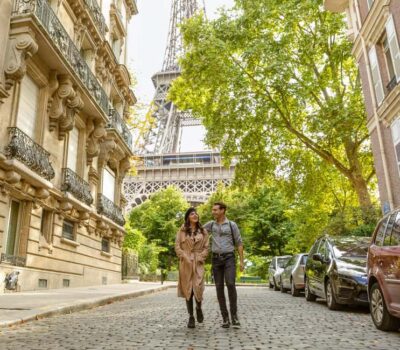
Rue de l’Université is described as an artery with remarkable buildings and a breathtaking view of the Eiffel Tower. Even if you’ve seen the tower a hundred times in pictures, this street-level view helps you adjust your expectations. The Eiffel Tower is tall, yes—but it also has relationships: to the river, to rooftops, to the way bridges cut across the water.
This part of the tour works best if you’re the kind of traveler who likes structure. You don’t have to wander and guess. The guide keeps you moving while also giving you cue points—where to stand, what angle to aim for, and what to notice as you walk.
A practical consideration: this is still Paris. Streets can be busy. If the day is crowded, the guide’s timing becomes extra important. That’s why being early to the meeting point is your best insurance.
Forecourt and gardens: turning reserved entry into better photos
After the walk, you reach the Eiffel Tower forecourt, with time for a few photos in the Eiffel Tower gardens. The gardens are a nice middle step. They help you switch from street-level framing to tower-level framing without feeling like you’ve been tossed straight into queues.
This is also where the reserved access starts to matter. The tour includes time-stamped Eiffel Tower tickets with reserved access, which is the key ingredient for a smoother entry experience. The idea is simple: you’re not just buying entry—you’re buying a controlled window that helps you get to the next phase quickly.
One drawback you should plan around: reserved doesn’t always mean perfectly frictionless. Some days the timing can shift because of ticket availability, and that can add waiting pressure. If your schedule is tight, mentally budget a little extra time for the transition from the garden/photo area to your elevator or platform access.
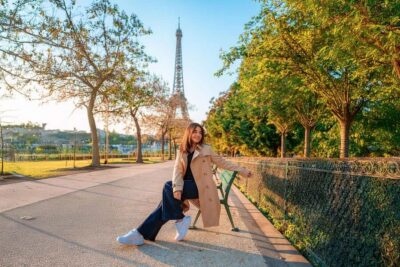
For photos, this is the point where you should slow down for a minute. Take a few frames, then stop thinking in single shots and think in sets: one wider view to show the tower’s scale, one medium shot from a garden angle, and then a closer “detail” shot once you’re higher up.
Second floor or the top: guided viewpoints and fast orientation
Once you finish the garden/photo time, the tour moves you quickly toward the second floor or the top, depending on the option you choose. The speed here is a core benefit. The goal is to get you to the viewpoint level while your energy is still high and before your attention fades from all the lower-level sightseeing.
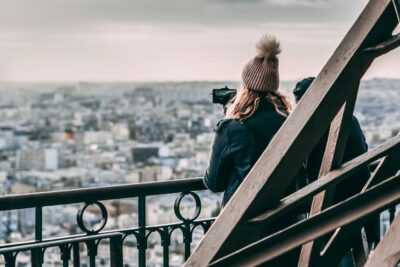
On the higher floors, you get a guided tour with the guide explaining the monument’s history and helping you interpret the viewpoints. That’s one of the most valuable parts of the experience because it turns the Eiffel Tower from a landmark into a readable structure. You’re not only looking out—you’re learning what you’re seeing and why it looks the way it does from your specific height.
What I like about this approach is the payoff-to-time ratio. Even if you only spend a short chunk of guided time up there, the orientation makes the rest of the visit far more rewarding. Without that, you can end up doing the tourist version of the view: photo, glance, move on.
A tip for your own comfort: wear layers. Tower space can feel different from the street—more open, more exposed to wind depending on the day. You’re going to be standing and looking for a while.
After the guided portion: using your ticket like a pro
After the guided tour, you’re free to visit the rest of the Eiffel Tower at your own pace. This freedom is underrated because it lets you match the experience to your style.
If you like photography, use your extra time to:
- Re-shoot your favorite angle once you’ve learned where the tower lines up best
- Look for a different horizon direction, not just the same view you took at first sight
- Slow down in the spots where you can stand without blocking others
If you prefer history over photos, you can spend more time reading and observing at your own pace. Either way, you’re no longer constrained by the group’s moving tempo.
One more practical thought: because the tour is timed, your best results come from staying flexible after the guide’s portion. Don’t plan a frantic sprint to nearby attractions immediately. Give yourself a realistic buffer to enjoy the tower, not just clear it.
More Paris photo sessions to book

Price and value: is $53 worth it for a 2-hour format?
At $53 per person for a 2-hour experience, the value isn’t just the ticket. It’s the combination of:
- a guided walking route in the Eiffel Tower district,
- several photo stops built into the walk,
- and reserved access through time-stamped entry.
Here’s the way I’d judge it for your travel style. If you’re the type who wants to see the tower but also wants smart photo positioning without thinking too hard, you’ll likely feel the value quickly. You’re paying to save time and decision-making, especially during the street-to-tower transition.
If you’re comfortable navigating on your own and you don’t care about guided interpretation, then you might feel it’s pricey. But if you want a plan that helps you get multiple angles fast and then adds context on the views, the price starts to make sense.
Also, the experience quality can swing depending on the day’s flow. Some feedback includes complaints about guide punctuality or shorter-than-promised guided interaction. That doesn’t mean every outing is like that, but it’s a reason to pay attention at the start: find your guide, confirm you’re in the right group, and check that reserved entry is clearly tied to your ticket time.
When this tour is a great fit (and when it might not be)
This is a strong match for you if:
- you want an Eiffel Tower visit with structure rather than wandering,
- you care about photo stops and not only the final viewpoint,
- you like learning a little about the monument while you’re there,
- you want reserved access to reduce stress around entry timing.
It may be less ideal if:
- you’re extremely time-sensitive and hate any chance of schedule shifts,
- you expect a large, long guided program and want every minute filled with commentary,
- you’re hoping for a professional photographer (you’re not getting one here).
For solo travelers, it can be great because the route keeps you from doing everything alone. For couples, the photo stops are handy because you can capture a few different compositions without constantly swapping roles. Families can work too, as long as everyone is okay with walking and waiting through the tower’s rhythm.
Should you book this Eiffel Tower reserved access tour?
I’d book it if you want a low-effort, high-efficiency Eiffel Tower experience: a structured walk, smart photo windows, and reserved access that helps you get higher sooner. The guided viewpoint orientation also tends to make the rest of your time on the tower feel more meaningful.
I’d hesitate only if you’re the kind of traveler who needs total certainty down to the minute. On busy days, timing issues can happen, and a short 2-hour tour gives less room for delays.
My practical call: choose a time slot when you can relax about crowd levels, and arrive at the meeting point on time so the morning or afternoon starts on your terms. If you do that, you’re setting yourself up for the best part of the deal—turning reserved access and photo stops into a visit that feels smooth and well-paced.
FAQ
How long is the Eiffel Tower reserved access tour with photo stops?
The tour lasts 2 hours.
Where is the meeting point?
You meet at 7 rue de la Manutention, in front of the stairs.
Is the tour guided in English?
Yes, the live tour guide is English.
Does the tour include Eiffel Tower tickets and reserved access?
Yes. You get time-stamped Eiffel Tower tickets with reserved access.
Are photo stops included?
Yes. The experience includes several photo stops during the walking portion.
Is a professional photographer included?
No, a professional photographer is not included.
Do I need hotel transfer to join the tour?
No transfer from your hotel is included, so you’ll need to get to the meeting point yourself.
Can I cancel and get a refund?
Yes. Free cancellation is available up to 24 hours in advance for a full refund.
Does the tour include time after the guided portion?
Yes. After the guided tour, you’re free to visit the rest of the Eiffel Tower at your own pace.
More Tour Reviews in Paris
- Paris: 1-Hour Seine Cruise departing from the Eiffel Tower
★ 4.4 · 77,472 reviews - Paris: Louvre Museum Timed-Entrance Ticket
★ 4.6 · 71,977 reviews - Disneyland® Paris 1-Day Ticket
★ 4.6 · 49,412 reviews - Paris: Versailles Palace and Gardens Full Access Ticket
★ 4.6 · 41,579 reviews - Paris: Arc de Triomphe Rooftop Tickets
★ 4.6 · 34,264 reviews
More Paris Photo Sessions
- Paris: Private Photoshoot at the Eiffel Tower
★ 4.7 · 2,636 reviews - Paris: Eiffel Tower Photoshoot
★ 4.7 · 2,351 reviews - Paris: Photoshoot Around Eiffel Tower with 55 Edited Photos
★ 4.8 · 702 reviews - Paris: Professional Photoshoot with the Eiffel Tower
★ 4.9 · 565 reviews - Paris: Eiffel Tower Premium Photoshoot
★ 4.9 · 425 reviews
The Eiffel Tower, Ticket by Ticket
- Paris: 1-Hour Seine Cruise departing from the Eiffel Tower
★ 4.4 · 77,472 reviews - Paris: Eiffel Tower Entry Ticket with Optional Summit Access
★ 4.4 · 20,035 reviews - Eiffel Tower Dedicated Reserved Access Summit or 2nd Floor
★ 4.3 · 18,352 reviews - Paris: Eiffel Tower Summit or Second Floor Access
★ 4.4 · 16,088 reviews - Paris: Seine Cruise & Crepe Tasting near the Eiffel Tower
★ 4.4 · 11,231 reviews
Fresh off the review desk in Paris
- Secrets of Paris Bike Tour in English or Dutch★ 5.0 · 5 reviews
- Paris: Mont Saint-Michel Day Tour with Chinese Tour Guide★ 5.0 · 5 reviews
- Private Street Art 2-Hour Guided Tour in Paris★ 4.5 · 5 reviews
- Orsay Museum Tour: 2h Highlights (Private & Small Group)★ 5.0 · 5 reviews
- Discover Paris in electric golf carts★ 4.0 · 5 reviews
- Paris Private Boat Tour with your own Captain Guide★ 5.0 · 5 reviews
Eiffel Tower Tours, compared.
 ★ 4.41-Hour Seine Cruise departing from the Eiffel TowerFrom $2077,472 reviews
 ★ 4.4Eiffel Tower Entry Ticket with Optional Summit AccessFrom $2920,035 reviews
 ★ 4.3Eiffel Tower Dedicated Reserved Access Summit or 2nd FloorFrom $2518,352 reviews
 ★ 4.4Eiffel Tower Summit or Second Floor AccessFrom $4116,088 reviews
 ★ 4.4Seine Cruise & Crepe Tasting near the Eiffel TowerFrom $2311,231 reviews
 ★ 4.1Eiffel Tower Stairs Climb to Level 2 & Summit OptionFrom $428,985 reviews
 ★ 4.6Eiffel Tower Access by Elevator & Seine River CruiseFrom $797,329 reviews
 ★ 4.6Eiffel Tower 2nd Floor or Summit AccessFrom $696,683 reviews
Browse the lists this tour appears in