

Reviewed · MUSEUMS
Entry Ticket for Paradox Museum Paris
Seeing is not believing here. That’s the whole point at Paradox Museum Paris, where you move at your own pace through playful, hands-on science of perception. You’ll meet visual and tactile paradoxes designed to make your brain question what it thinks it sees.
Two things I like a lot: the Ames Room (clever, photo-ready, and honestly funny) and the chance to wander through the hanging-room style illusions at your speed. A live staff team is part of the experience too, and when they’re on hand, the visit feels smoother and more fun.
One possible drawback: the place is interactive, and if you show up at a busy time, you might find less staff help than you hoped, especially for photo coaching or quick explanations.
In This Review
- Key things to know before you go
- Paradox Museum Paris in Plain Words: What You’re Actually Doing
- Choosing Your Time Slot and Using the Mobile Entry Ticket
- Your 90-Exhibit Self-Paced Visit: How the Experience Feels
- Inside the Ames Room and the Hanging Illusions
- Photo-Friendly Without Making It a Photoshoot Marathon
- What This Ticket Costs and Why It’s Still Good Value
- Comfort Notes: Light Sensitivity and Epilepsy Warnings
- Who Should Book This Paradox Museum Ticket?
- Should You Book Paradox Museum Paris?
- FAQ
- How long is the Paradox Museum Paris entry ticket?
- Can I choose what time to visit?
- Is the ticket a mobile ticket?
- Is the experience offered in English?
- Is confirmation provided after booking?
- What is the cancellation policy?
- What happens if it’s canceled due to weather?
- Are there warnings for light sensitivity or epilepsy?
- Is it easy to reach and are service animals allowed?
Key things to know before you go

- Interactive paradox exhibits built to trick your senses with visual and tactile prompts
- Pick your time slot and enjoy a self-paced visit instead of a rigid tour flow
- Ames Room and the hanging-room illusions are standout crowd favorites
- Plan for photo time; the museum is designed for memorable pictures
- Warnings are posted for exhibits that may bother people with light sensitivity or epilepsy
- Mobile ticket on your phone makes entry simpler
Paradox Museum Paris in Plain Words: What You’re Actually Doing
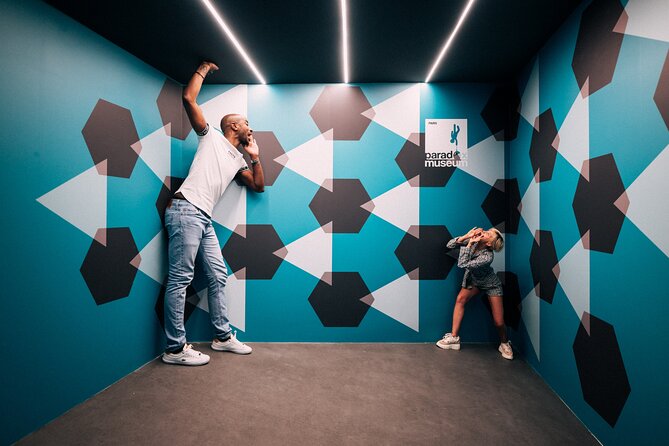
Paradox Museum Paris is an interactive perception museum. Instead of watching science on a screen, you test it on yourself. The exhibits are built around paradoxes, where your brain and senses get pulled in different directions by what you see and what you touch.
The museum leans hard into the idea that reality isn’t just out there. It’s processed inside your head. You’ll see how easy it is to misjudge size, space, and motion—especially when your eyes are given the wrong kind of cues. And yes, it’s fun on purpose. It’s also designed for photos that look too unbelievable to be real.
You should go in with the right mindset: curiosity first, performance second. If you treat each room like a puzzle (and take a break to laugh when it tricks you), you’ll get more out of the experience.
Worth weighing up next to this Paris pick
- Paris: Louvre Museum Timed-Entrance Ticket
★ 4.6 · 71,977 reviews - Disneyland® Paris 1-Day Ticket
★ 4.6 · 49,412 reviews - Paris: Versailles Palace and Gardens Full Access Ticket
★ 4.6 · 41,579 reviews - Paris: Arc de Triomphe Rooftop Tickets
★ 4.6 · 34,264 reviews
Choosing Your Time Slot and Using the Mobile Entry Ticket
This is a private experience where you can choose the time you want to visit. That matters in Paris, where your day is already a juggling act: museums, long walks, coffee lines, and sudden rain. Picking your slot helps you build a schedule that doesn’t feel rushed.
You’ll use a mobile ticket. That’s a small thing, but it’s a big convenience. Less paper, fewer steps, fewer chances you forget something in the hotel room. You also get confirmation at booking time, so you’re not waiting around to figure out what’s happening.
The museum is also listed as near public transportation, which is useful if you’re building a route around other sights. In practical terms: you can treat this like a flexible stop, not a separate expedition.
Your 90-Exhibit Self-Paced Visit: How the Experience Feels
The museum’s pitch is simple: more than 90 interactive exhibits focused on paradoxes and altered perception. In practice, that means you’ll keep moving—room to room—doing short sensory experiments that feel different from each other.
The best part is that it’s your pace. You’re not trapped in a fixed explanation schedule. If you want to spend extra time in one illusion (or repeat it for a better photo angle), you can. If you want to skim a room because it’s not your thing, you can move on.
Most exhibits are designed so you can participate without needing special knowledge. The museum also notes that most travelers can participate, but it’s still smart to keep an eye on the warning signs.
If you’re traveling with kids, this kind of layout usually works well because the attention stays on the activity itself. If you’re traveling solo or as a couple, it’s still a good reset from the usual “look and move on” museum style—because you get to interact, not just observe.
Inside the Ames Room and the Hanging Illusions
If you’ve heard anything about this museum, it’s probably about the rooms that make people gasp and then laugh. Two favorites show up again and again: the Ames Room and the hanging-room style illusions.
The Ames Room is the classic brain-twist. It’s all about how perspective gets manipulated so your sense of proportion goes off the rails. You stand where you’re told, you compare what you see to what you know, and then you watch your brain do its best to make it make sense. It’s clever and it’s photo-friendlier than you’d expect.
The hanging rooms (the idea of rooms that feel like they’re twisting or suspending space in a wrong way) are great if you like interactive “how is this possible?” moments. They’re also usually a hit because the effect is immediate. You don’t need a long setup. The illusion is the experience.
The key: don’t rush these rooms. Take a moment to position yourself, try a different stance, and let your photo do the talking. You’ll get better pictures, but more importantly, you’ll understand the illusion better.
Photo-Friendly Without Making It a Photoshoot Marathon
This museum is built for pictures. The whole setup—props, angles, and visual tricks—encourages you to create images that look like they were staged. One of the best values here is that your entry ticket doesn’t feel like a passive activity. You leave with evidence.
That said, manage expectations about help. The museum can be crowded, and one downside that pops up is that there may not always be enough staff on hand to explain everything or take the photos as advertised. Translation: come ready to do some of the work yourself.
Here’s how to keep it smooth:
- Spend your first minutes scanning the room layout so you know where the illusion “sweet spot” is.
- Use the time when staff is available for quick questions, not long coaching.
- If you’re filming, keep it short—long attempts slow down the flow.
When it’s working well, staff support can noticeably improve the experience. When it’s not, the rooms still do the heavy lifting. The illusions are strong enough that you’re not completely dependent on guidance.
What This Ticket Costs and Why It’s Still Good Value

The ticket price is $33.11 per person. You’re looking at roughly 1 hour 30 minutes on average, which puts it in the range of a short but high-satisfaction activity in central Paris.
Is it worth it? For many people, yes, because you get:
- a high number of exhibits (90+)
- hands-on interaction, not just looking
- illusion-focused moments that translate directly into photos
- a self-paced experience that fits into a day plan
Where the value question gets personal is your interest level in perception tricks and interactive rooms. If you mostly want landmark-style sightseeing, this isn’t that. If you like playful science, it’s a great use of an hour and a half—especially on a day when the weather or energy level makes long walking tours feel exhausting.
Also, compared to museums that rely on long guided content, you’re paying for participation. You don’t have to be an expert to enjoy it. You just have to show up and try.
Worth weighing up next to this Paris pick
Comfort Notes: Light Sensitivity and Epilepsy Warnings
Paradox Museum Paris includes warning information for certain exhibits. Some displays aren’t suitable for people with sensitivity to light or for those suffering from epilepsy. The museum states these warnings are correctly displayed.
So if that’s relevant for you or someone in your group, don’t just assume it’ll be fine. Skim the posted warnings when you arrive and decide room-by-room. If you’ve ever had issues with flashing lights, strobing effects, or strong visual triggers, take that seriously.
If you’re unsure, the safest strategy is to keep your first pass cautious: start with the rooms you feel comfortable with, then adjust as you learn how your body reacts to the visual stimulation.
Who Should Book This Paradox Museum Ticket?

This is a strong fit for:
- Families who want active museum time, not just sitting and reading
- Couples who enjoy playful, photo-friendly experiences
- Adults who like science ideas but don’t want a lecture-style museum
It’s also a good choice if you’re in Paris with a limited schedule. At around 90 minutes, you can slot it between other plans without feeling like you’re sacrificing half your day.
If you prefer quiet, contemplative galleries, you might find it less your style. This museum is interactive and playful. People talk, laugh, and try to recreate illusions. That’s part of the energy.
Should You Book Paradox Museum Paris?
I think you should book if you want a hands-on, laugh-while-learning stop that works well across ages and doesn’t require deep museum knowledge. The standout rooms like the Ames Room and the hanging-style illusions make the experience memorable, and the self-paced format helps you fit it into real life in Paris.
Skip it only if you know you’re sensitive to intense visual stimuli and the warnings apply to you, or if you strongly dislike interactive exhibits where you’re actively participating. If those aren’t issues, this ticket is a fun, practical way to spend 90 minutes and walk away with photos that will start arguments at dinner—in the best way.
FAQ
How long is the Paradox Museum Paris entry ticket?
The visit is about 1 hour 30 minutes.
Can I choose what time to visit?
Yes. You can choose whichever time you want to visit since it’s a private experience.
Is the ticket a mobile ticket?
Yes, the experience uses a mobile ticket.
Is the experience offered in English?
Yes, it’s offered in English.
Is confirmation provided after booking?
You receive confirmation at the time of booking.
What is the cancellation policy?
You can cancel for a full refund if you cancel up to 24 hours in advance. If you cancel less than 24 hours before the start time, the amount you paid is not refunded.
What happens if it’s canceled due to weather?
The experience requires good weather. If it’s canceled due to poor weather, you’ll be offered a different date or a full refund.
Are there warnings for light sensitivity or epilepsy?
Yes. Some exhibits are not suitable for people with sensitivity to light or suffering from epilepsy, and warnings are displayed.
Is it easy to reach and are service animals allowed?
It’s near public transportation, and service animals are allowed.
More Museums in Paris
- Paris: Louvre Museum Timed-Entrance Ticket
★ 4.6 · 71,977 reviews - Paris: Orsay Museum Entry Ticket
★ 4.7 · 25,647 reviews - Louvre Museum Masterpieces Guided Tour with Access
★ 4.5 · 12,023 reviews - Paris: Louvre Museum Entry Ticket With Host and River Cruise
★ 4.6 · 9,926 reviews - Les Invalides: Napoleon’s Tomb & Army Museum Entry
★ 4.6 · 9,185 reviews
More Tickets in Paris
- Paris: Louvre Museum Timed-Entrance Ticket
★ 4.6 · 71,977 reviews - Disneyland® Paris 1-Day Ticket
★ 4.6 · 49,412 reviews - Paris: Versailles Palace and Gardens Full Access Ticket
★ 4.6 · 41,579 reviews - Paris: Arc de Triomphe Rooftop Tickets
★ 4.6 · 34,264 reviews - Paris: Orsay Museum Entry Ticket
★ 4.7 · 25,647 reviews
More Tour Reviews in Paris
- Paris: 1-Hour Seine Cruise departing from the Eiffel Tower
★ 4.4 · 77,472 reviews - Paris: Louvre Museum Timed-Entrance Ticket
★ 4.6 · 71,977 reviews - Disneyland® Paris 1-Day Ticket
★ 4.6 · 49,412 reviews - Paris: Versailles Palace and Gardens Full Access Ticket
★ 4.6 · 41,579 reviews - Paris: Arc de Triomphe Rooftop Tickets
★ 4.6 · 34,264 reviews
Fresh off the review desk in Paris
- Secrets of Paris Bike Tour in English or Dutch★ 5.0 · 5 reviews
- Paris: Mont Saint-Michel Day Tour with Chinese Tour Guide★ 5.0 · 5 reviews
- Private Street Art 2-Hour Guided Tour in Paris★ 4.5 · 5 reviews
- Orsay Museum Tour: 2h Highlights (Private & Small Group)★ 5.0 · 5 reviews
- Discover Paris in electric golf carts★ 4.0 · 5 reviews
- Paris Private Boat Tour with your own Captain Guide★ 5.0 · 5 reviews
Museums, compared.
 ★ 4.6Louvre Museum Timed-Entrance TicketFrom $2671,977 reviews
 ★ 4.7Orsay Museum Entry TicketFrom $1525,647 reviews
 ★ 4.5Louvre Museum Masterpieces Guided Tour with AccessFrom $8612,023 reviews
 ★ 4.6Louvre Museum Entry Ticket With Host and River CruiseFrom $1009,926 reviews
 ★ 4.6Les Invalides: Napoleon’s Tomb & Army Museum EntryFrom $209,185 reviews
 ★ 5.0Louvre Museum – Exclusive Guided Tour (Entry Included)From $1816,296 reviews
 ★ 4.6Louvre Museum Hosted Entry and Mona Lisa AudioguideFrom $815,235 reviews
 ★ 4.5Grévin Wax Museum TicketFrom $334,654 reviews
Browse the lists this tour appears in