
Reviewed · VERSAILLES DAY TRIPS
Historical treasure hunt in the city of Versailles
Versailles turns into a game of suspects. This historical treasure hunt has you chasing clues through the city with a timer running, in a classic Cluedo-style setup starring D’Artagnan and eight big names from King Louis XIV’s world. I especially like how it gets you out of the usual palace-only rhythm and into Versailles’s historic streets.
Two things really made it land for me: the pace is relaxed even when the plot feels urgent, and the briefing from the guide is clear enough that you’re set up to play right away. You’ll likely meet friendly guides such as Arthur or Cyril for that opening handoff. One consideration: the mystery can be tricky, so if your group wants zero puzzling, you may want to bring strong team energy (and maybe patience).
In This Review
- Key things to know before you go
- A Cluedo-style case in Versailles’s streets
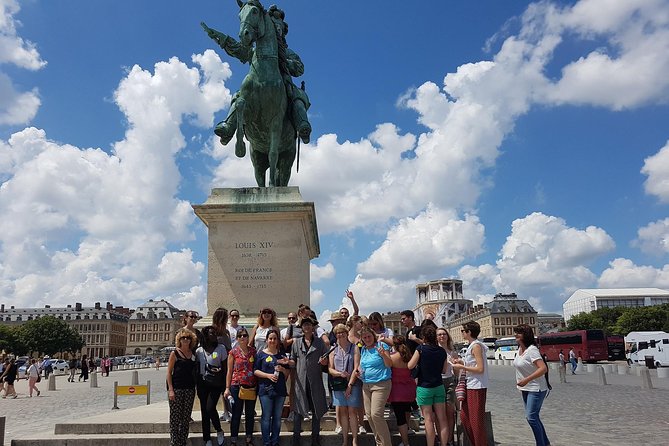
- Where the hunt starts: the Louis XIV equestrian statue
- The story setup: eight suspects and a ticking clock
- How the 2-hour mystery hunt actually plays
- The “walk through Versailles” part: what you’re doing on the ground
- The guides: Arthur and Cyril set you up for success
- Price and value: about $30.10 for a story you actively do
- Practicalities: getting there, language, and group size
- Weather and what to do if it’s bad
- Who should book this Versailles treasure hunt
- Should you book it?
- FAQ
- FAQ
- How long is the Versailles historical treasure hunt?
- Where does the experience start and end?
- What time does it start?
- Is it offered in English?
- What does the ticket format look like?
- How many people are in a group?
- What level of walking should I expect?
- Is it suitable for kids?
- What happens if the weather is poor?
- What is the cancellation window?
Key things to know before you go
- D’Artagnan and a poisoning plot: the case starts fast, with time pressure and a clear goal to unmask the culprit.
- Eight prominent personalities as suspects: including Madame de Montespan, the iron mask, and the king’s brother.
- Two hours of mostly independent walking: you leave after the initial welcome and solve as you go.
- Mobile ticket in English: practical for self-paced play, as long as everyone can read the clues comfortably.
- Small group size (max 20): enough structure for a hunt, without feeling crowded.
A Cluedo-style case in Versailles’s streets
This isn’t a sit-down museum experience. It’s a walking mystery where you act like investigators—following hints, comparing details, and deciding who’s responsible for a brewing attempt to poison King Louis XIV. The story gives you momentum: D’Artagnan, captain of the guards, is pulled into the investigation and the clock starts counting down.
What I like most is that the game format turns ordinary streets into “clue territory.” You’re not just passing buildings; you’re noticing them. And you’re learning Versailles in a way that feels active, not lecture-heavy. The best part is you get to see the town atmosphere beyond the palace area, which is where many visitors spend all their time.
The flip side is that you’ll be doing detective work with your own brain (and your group’s). If you prefer guided commentary at every corner, the self-guided nature may feel a bit too hands-on.
Other ways out to the palace at Versailles
- Versailles Palace and Gardens Tour from Paris
★ 4.5 · 3,390 reviews - Versailles Palace Guided Tour with Reserved Entry
★ 4.5 · 2,364 reviews - Versailles Full Day Bike Tour with Palace, Gardens, & Picnic
★ 5.0 · 2,217 reviews - Versailles Château and Gardens Walking Tour
★ 4.5 · 727 reviews
Where the hunt starts: the Louis XIV equestrian statue
Your case begins at the equatorian statue of Louis XIV in Versailles (78000). It’s the kind of meeting spot that works well because it’s a recognizable landmark, and it also helps your group “spawn” together before you scatter to solve clues.
The activity runs about 2 hours, and it ends back at the same meeting point. That return-to-start design is useful: it removes the stress of figuring out where you’ll finish. You can plan your day knowing you’ll be back near your starting area when you’re done.
The start time is 1:00 pm. If you’re combining this with palace time, I’d treat this as a flexible add-on after you’ve seen the big sights—something to keep your momentum without exhausting you with another long, formal tour.
The story setup: eight suspects and a ticking clock
The premise is simple and fun: D’Artagnan is warned about a poisoning attempt, and your job is to unmask who’s behind it. You’ll be investigating eight prominent personalities from the kingdom, including Madame de Montespan, the iron mask, and the king’s brother.
That “who’s involved?” structure matters because it keeps you from getting lost in a vague storyline. Even if the historical figures are new to you, the hunt gives you a framework. You’re not trying to memorize names for trivia night. You’re building a case as you go.
And the time pressure—mentioned in the setup as time being counted—adds a practical challenge. It encourages you to keep moving, read clues carefully, and make decisions rather than wandering forever.
How the 2-hour mystery hunt actually plays
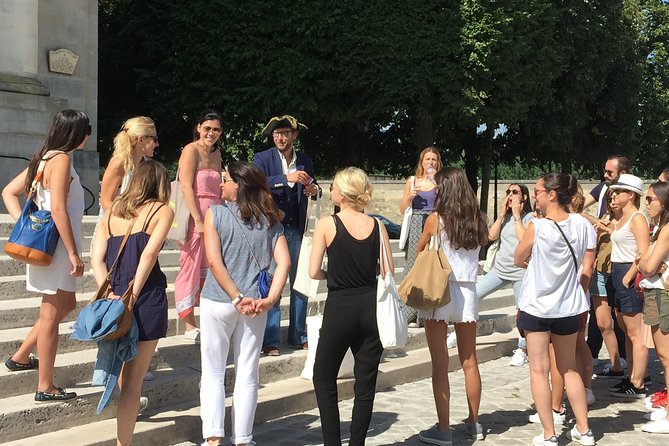
After you’re welcomed by your investigator trainer, you leave independently to solve the case over roughly two hours. That opening is important. A good briefing means you spend your hunt time investigating, not figuring out what the rules are.
Here’s what the flow feels like:
- Welcome and documents/instructions: you get what you need to play.
- Independent clue-solving: you walk, read, and solve without a guide hovering over your shoulder.
- Narrowing down the culprit: you use what you’ve learned in the hunt to choose who you think did it.
- Back to the meeting point: you finish where you started.
In a world where many activities keep you tied to a group, this setup is a nice middle ground. You’re free to move at a sensible pace, but you’re still inside a structured game with a clear end.
The “walk through Versailles” part: what you’re doing on the ground
You’ll explore the historic city of Versailles on foot as part of the hunt. The magic of this experience is that it turns the city into a clue map. Even if you’re not a history buff, the detective framework helps you notice details you’d normally gloss over.
You can also think of it as a low-pressure history lesson. You’re not sitting down for facts. You’re collecting hints, linking them, and making deductions. That’s the kind of learning that sticks.
One practical note: the clues can be challenging. One review described the hunt as quite tricky for an 11-year-old, but still doable through teamwork. That tells me the game is meant to reward group thinking. So if you’re bringing kids or teens, plan on a shared role: one person reads, one person checks, one person keeps the team moving when things stall.
Also, the experience works even when weather is less than perfect. There were people who completed it during pouring rain, which is a good sign that the route is designed to be weather-tolerant in practice (though the operator still notes the experience requires good weather).
The guides: Arthur and Cyril set you up for success
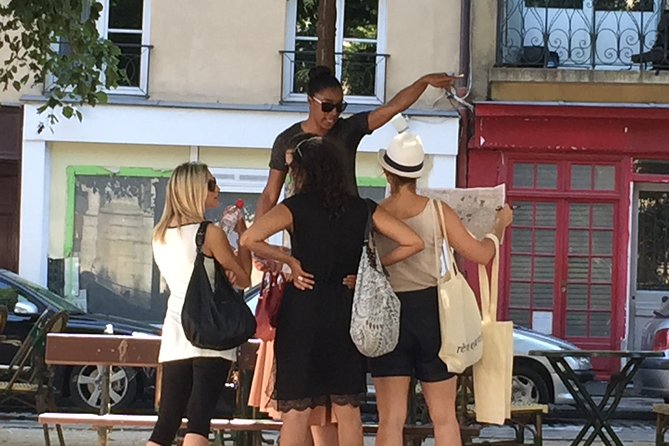
The hunt isn’t “no-human at all.” You get a trainer welcome and an info handoff at the start. Based on the guide names that show up in the experience, Arthur and Cyril are two people you might meet at the meeting point.
What stands out in how they’re described is not just friendliness, but practical timing and clarity. Arthur is noted as punctual, flexible, and kind, and Cyril is described as on time and ready with the document and info you need—then you’re left to solve it together as a team.
That’s the ideal balance. You don’t want a briefing that drags. You also don’t want a puzzle hunt where you’re guessing the whole time. A solid start makes the rest of the case feel fair.



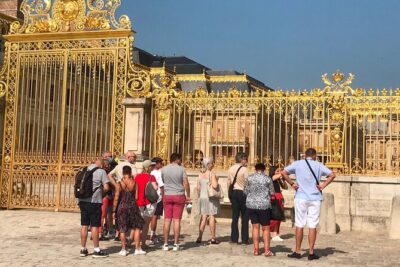
Price and value: about $30.10 for a story you actively do
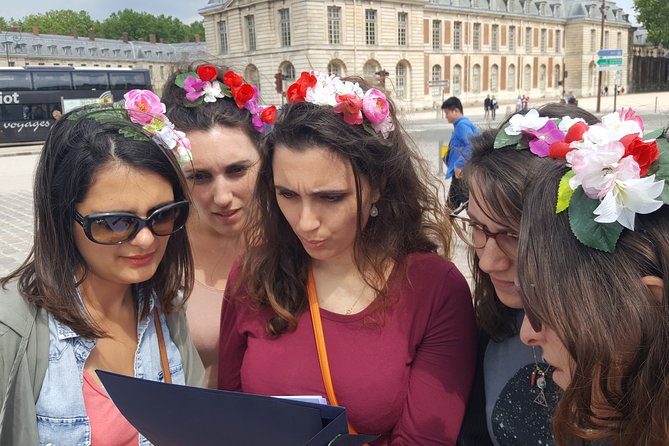
At $30.10 per person for around 2 hours, this feels priced like an activity, not a full-day guided tour. The value comes from what you’re buying: not just a route, but an experience that keeps you engaged without demanding museum-ticket-level time.
It’s also relatively efficient. If you already plan to see the palace grounds (or you’ve already done them), this gives you a second way to experience Versailles without committing to another full, formal tour that might eat the rest of your day.
Is it worth it if you hate puzzles? Probably not. But if you like games, team problem-solving, and walking around town with purpose, it’s a solid use of time at a moderate cost.
Practicalities: getting there, language, and group size
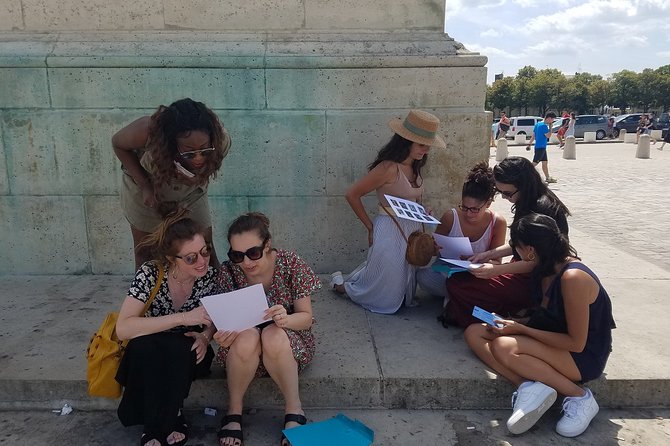
A few details make this easier to plan.
English is offered. That’s crucial because the hunt uses a mobile ticket, and you’ll want everyone reading the clues comfortably.
Mobile ticket means you’re not hunting for paper confirmations on the day. It also supports the self-guided structure, since the game relies on what you have with you rather than what a guide is handing out every minute.
Group size max 20 keeps it social enough to start together, but small enough that the briefing can actually work.
The activity is near public transportation, which helps if you’re pairing it with other parts of Versailles. You’re also told the route expects a moderate physical fitness level, which is fair for a walking game. Bring comfortable shoes and accept that you’ll cover ground at a city-stroll pace for about two hours.
One more plus: service animals are allowed. If that’s relevant for your party, you can book with more confidence.
Weather and what to do if it’s bad
This kind of activity depends on walking, so it has a weather requirement. If it’s canceled due to poor weather, you’ll be offered a different date or a full refund.
That’s a sensible approach for a city walk with clues. If you’re booking during a season known for rain, I’d dress for it. Based on firsthand completion during pouring rain, the activity can still be workable with the right attitude and rain gear.
Who should book this Versailles treasure hunt
This experience fits best when you want something different from the standard palace tour rhythm.
You’ll probably love it if:
- you like interactive games more than lectures
- you’re traveling with a mix of ages and want shared teamwork
- you have a couple hours free and want to experience the town beyond the palace area
- you want a clear start and finish without complicated logistics
You might skip it if:
- you dislike puzzles or want zero brainwork
- your group can’t handle moderate walking for two hours
- you’re the type who wants constant guided commentary at every stop
It also feels like a great option for people who already did the chateau and still want to squeeze more out of Versailles without adding another heavy tour.
Should you book it?
Yes, if your idea of a great day in Versailles includes playful detective work and walking the historic streets with purpose. The strong points are the fun, flexible game format, the helpful start from guides like Arthur or Cyril, and the way it nudges you outside the palace bubble.
Make your decision based on one simple question: do you want to solve a mystery with your group for two hours? If the answer is yes, this is an easy, high-value way to get more from Versailles while staying light on logistics and heavy on fun.
FAQ
FAQ
How long is the Versailles historical treasure hunt?
It’s about 2 hours.
Where does the experience start and end?
It starts at the equestrian statue of Louis XIV in Versailles and ends back at the meeting point.
What time does it start?
The start time is 1:00 pm.
Is it offered in English?
Yes, the experience is offered in English.
What does the ticket format look like?
You’ll receive a mobile ticket.
How many people are in a group?
There’s a maximum of 20 travelers.
What level of walking should I expect?
It requires a moderate physical fitness level.
Is it suitable for kids?
It can be done with younger participants, but the hunt may be tricky, so teamwork helps.
What happens if the weather is poor?
The experience requires good weather. If it’s canceled due to poor weather, you’ll be offered a different date or a full refund.
What is the cancellation window?
You can cancel for a full refund up to 24 hours in advance. If you cancel less than 24 hours before the start time, the amount paid won’t be refunded.
More Tour Reviews in Versailles
- Versailles Palace and Gardens Tour from Paris
★ 4.5 · 3,390 reviews - Versailles Palace Guided Tour with Reserved Entry
★ 4.5 · 2,364 reviews - Versailles Full Day Bike Tour with Palace, Gardens, & Picnic
★ 5.0 · 2,217 reviews - Versailles Château and Gardens Walking Tour
★ 4.5 · 727 reviews - From Paris: Versailles Palace Live Tour with Gardens Access
★ 4.5 · 706 reviews
More Days Out to Versailles
- Versailles Palace and Gardens Tour from Paris
★ 4.5 · 3,390 reviews - Versailles Palace Guided Tour with Reserved Entry
★ 4.5 · 2,364 reviews - Versailles Full Day Bike Tour with Palace, Gardens, & Picnic
★ 5.0 · 2,217 reviews - Versailles Château and Gardens Walking Tour
★ 4.5 · 727 reviews - From Paris: Versailles Palace Live Tour with Gardens Access
★ 4.5 · 706 reviews
Fresh off the review desk in Versailles
- Versailles Museum Palace direct tickets★ 4.0 · 5 reviews
- Electric 2-wheeler tour of the Chateau Park and Gardens★ 5.0 · 5 reviews
- Versailles: Path of the Heroes on original electrics 2 wheels★ 5.0 · 5 reviews
- 2-Hour Private Tour of Versailles in a Vintage Car (2CV)★ 5.0 · 5 reviews
- Versailles Guided Tour of the Palace with Gardens and Trianon★ 4.0 · 5 reviews
- Private Versailles Palace Guided Tour with Garden Access★ 4.5 · 6 reviews
Versailles Day Trips, compared.
 ★ 4.6Versailles Palace and Gardens Full Access TicketFrom $1741,579 reviews
 ★ 4.7Versailles: Skip-the-Line Tour of Palace and Gardens AccessFrom $7610,429 reviews
 ★ 4.6From Paris: Versailles Palace & Gardens with TransportationFrom $536,222 reviews
 ★ 4.6Versailles: Skip-the-Line Guided Palace Tour and Full AccessFrom $885,214 reviews
 ★ 4.7From Paris: Versailles Palace Guided Tour & Gardens AccessFrom $843,574 reviews
 ★ 4.5Versailles Palace and Gardens Tour from ParisFrom $713,390 reviews
 ★ 5.0Versailles Palace Bike Tour with Market & Marie-Antoinette hamletFrom $1312,680 reviews
 ★ 4.2From Paris: Versailles Guided Tour with Skip-the-Line EntryFrom $1152,422 reviews
Browse the lists this tour appears in