
Reviewed · PèRE LACHAISE TOURS
Mysteries of Père Lachaise
Père Lachaise feels like a novel in stone. This 90-minute guided walk turns Paris’s oldest cemetery into a story trail: you’ll pass major names and then linger over the oddball tombs tied to love, illusion, and the supernatural. I like how the tour keeps things human and readable, not stuffy.
Two big pluses for me: first, you get clear, entertaining explanations (with a sense of humor) as you move through the paths. Second, it’s not only about famous graves like Balzac or Oscar Wilde; you’ll also hear stranger tales tied to specific monuments, including Abelard and Héloïse and other legendary figures.
One thing to consider: the tour can tilt toward broader politics and French history alongside the cemetery mysteries. If you expect pure gothic spooky vibes only, you may notice the mix.
In This Review
- Key points to know before you go
- Meeting Père Lachaise at the biggest entrance
- Why this cemetery becomes a “mystery” walk
- The big-name graves that set the stage (Balzac, Wilde, Proust, more)
- Abelard and Héloïse: the lovers reunited in stone
- Vampire rumors, strange wills, and the Countess Demidoff
- Robertson and the art of illusion with skulls and phantasmagorias
- Count of Lavalette: adventure turned into legend
- Alan Kardec and the spiritualist angle
- The pacing and feel of a guided French tour
- Price and value for a 90-minute story walk
- Who this tour is best for (and who should skip it)
- Should you book Mysteries of Père Lachaise?
- FAQ
- Is the tour guided in English?
- How long is the tour?
- How much does it cost?
- Where is the meeting point?
- Which public transport stops are nearby?
- Is transportation included?
- Is the tour accessible for wheelchairs or strollers?
- Can you access every tomb during the tour?
Key points to know before you go
- French-only guide: plan on understanding French the whole way.
- Built around the cemetery’s most famous legends: you’ll see high-profile names and the odd tombs behind them.
- Story-driven stops: lovers, spiritualists, illusionists, and rumor-heavy figures are part of the route.
- A lot of walking on cobblestones and slopes: wear comfortable shoes.
- Not every grave is guaranteed to be accessible: the cemetery is a meditation space.
Meeting Père Lachaise at the biggest entrance
You start at the main entrance of Père Lachaise, the largest entrance to the cemetery. It’s on boulevard de Ménilmontant, opposite rue de la Roquette (75020 Paris). For transit, you’ve got an easy match of options: Père Lachaise metro (line 3) is right there, and you can also use Philippe Auguste (line 2) or buses 61 and 69.
What I like about starting here is that it sets the tone fast. Père Lachaise is enormous, and wandering without a plan can turn into just walking. A guided start helps you orient quickly and focus on the stories tied to the places you actually see.
Also, plan for the cemetery itself: this isn’t a theme park. It’s a place for reflection, so your experience is shaped by the fact that some areas and tomb access may be limited.
More quiet hours among the famous graves
- Paris: Haunted Père Lachaise Cemetery Guided Tour
★ 4.6 · 3,591 reviews - Paris: Pere Lachaise Cemetery Guided Tour
★ 4.8 · 2,236 reviews - Paris: Famous Graves of Pere Lachaise Cemetery Guided Tour
★ 4.6 · 1,081 reviews - The Père Lachaise Cemetery: Guided 2-Hour Small-Group Tour
★ 4.7 · 1,065 reviews
Why this cemetery becomes a “mystery” walk
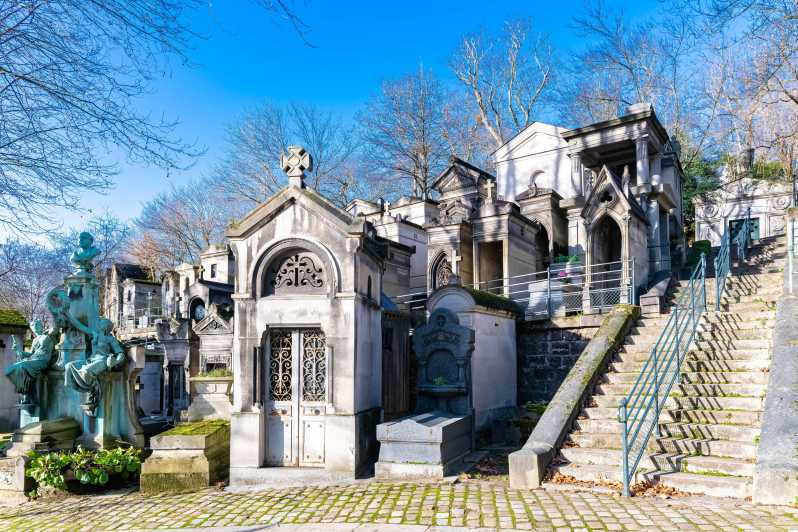
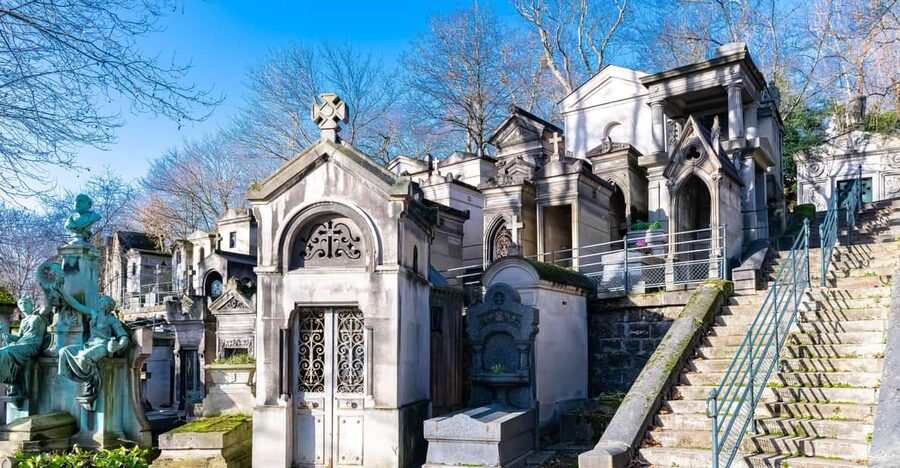
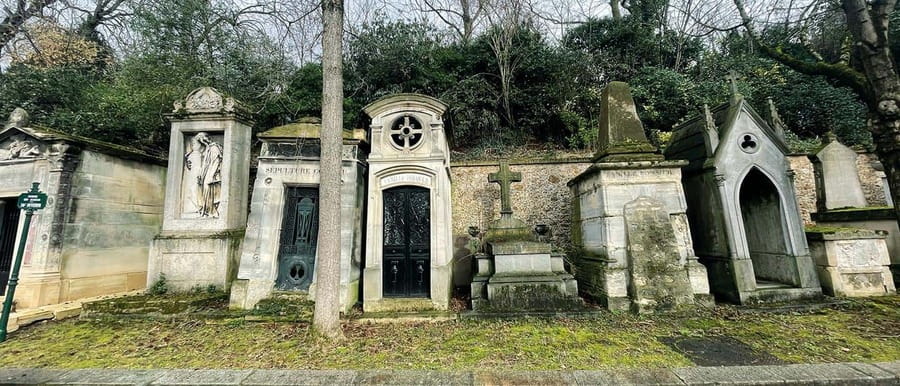
Père Lachaise isn’t famous only because of who is buried here. It’s famous because the cemetery reads like a map of Parisian imagination. The Romantic generation loved Gothic drama, the supernatural, and the macabre—and Père Lachaise carries that vibe in its alleys, monuments, and symbolism.
On this tour, the “mysteries” aren’t just spooky talk. They connect specific tombs to the characters people remembered: lovers turned into legends, spiritualists linked to séances, and figures wrapped in rumors that survive because the monuments make them unforgettable.
That’s the value: you’re not just looking at stone. You’re learning how and why certain stories stuck, and how a cemetery can function like a cultural memory system.
The big-name graves that set the stage (Balzac, Wilde, Proust, more)
Even if you came for the oddball tombs, you’ll also recognize several of the giants tied to Père Lachaise’s fame. Expect to hear about the final resting places of figures such as Balzac, Oscar Wilde, and Marcel Proust, along with other widely known names like Baron Haussmann, Edith Piaf, Gérard de Nerval, and Jim Morrison.
Why these names matter for your experience: they give you a baseline. Père Lachaise can feel overwhelming, so having anchor points helps you understand the cemetery’s reputation. Then, once you’re oriented, the smaller, stranger stories hit harder, because you’re not lost—you’re tracking a theme.
If you’re the type who likes a quick hit of famous Paris culture before you get specific, this works well. If you only want one kind of content, you might wish the tour were more narrowly focused—but the mix is part of how the cemetery becomes a story-world.
Abelard and Héloïse: the lovers reunited in stone
One of the most compelling story stops is the tomb of Abelard and Héloïse—the ill-fated lovers reunited in eternity. The guide explains the legend and the connection to a figure called Alexander the Black, described as a curator at the dawn of the 19th century who helped bring them into the realm of enduring memorial.
This is a great example of why a guided walk is worth it here. Without interpretation, you can read a tomb as art. With interpretation, you see how the cemetery became a stage for romance and memory, not just burial.
If you like love stories with a darker edge—or if you’re curious how legends get stabilized over time—this stop is a highlight.
Vampire rumors, strange wills, and the Countess Demidoff
Next up is the tale of Countess Demidoff, often framed as a vampire woman with a strange will. It’s exactly the kind of story that makes Père Lachaise different from an average cemetery tour: it blends historical curiosity with rumor, symbolism, and the way people turn the dead into characters.
You should treat this kind of stop as interpretation rather than a modern documentary. The “mystery” is part of how the legend functions: you’re learning what the story is and why the tomb matters, not just grabbing facts like a quiz answer.
For me, this is where the tour’s tone makes sense. When the cemetery is already built for dramatic storytelling—angles, inscriptions, allegory—you’re primed to understand why the macabre stuck around in people’s imaginations.
Robertson and the art of illusion with skulls and phantasmagorias
You’ll also hear about Robertson, described as the Grand Master of illusions, adorned with skulls and phantasmagorias in the spirit of time. This is a key match between person and place. Père Lachaise isn’t neutral. It’s symbolic. A tomb built around illusion fits the cemetery’s mood like it belongs there.
What I like about including this kind of figure: it expands what you think a cemetery tour can be. You’re not only learning about who died; you’re learning about what they represented—entertainment, performance, spectacle, and the audience’s hunger for the uncanny.
If you’re into theater history, symbolism, or the cultural role of trickery and spectacle, this stop will feel satisfying.




Count of Lavalette: adventure turned into legend
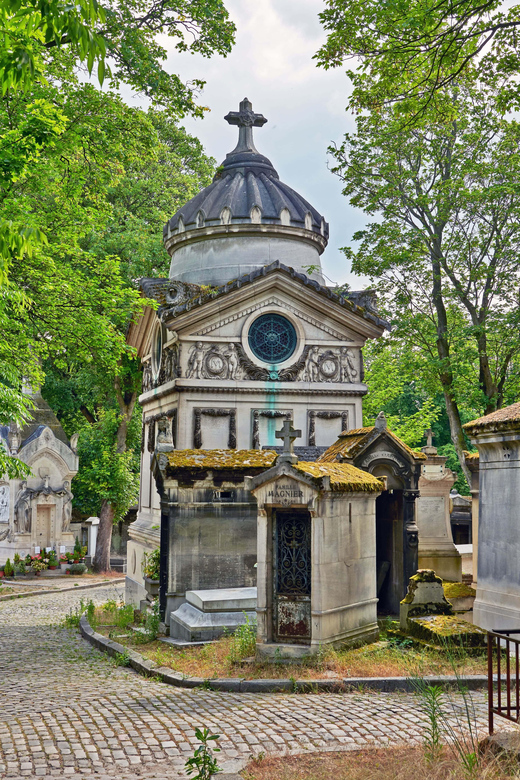
Another story you’ll encounter is that of the Count of Lavalette, whose life was full of adventure. His tomb becomes a way to connect the cemetery to wider French dramatic narratives—stories people carried forward because they sounded almost too cinematic to be real.
This is also where the tour may feel broader than you expect. If you’re seeking mysteries only in the supernatural sense, adventure stories can shift the emphasis. Still, it’s consistent with the cemetery’s overall “story cemetery” identity: many monuments function as chapters.
Alan Kardec and the spiritualist angle
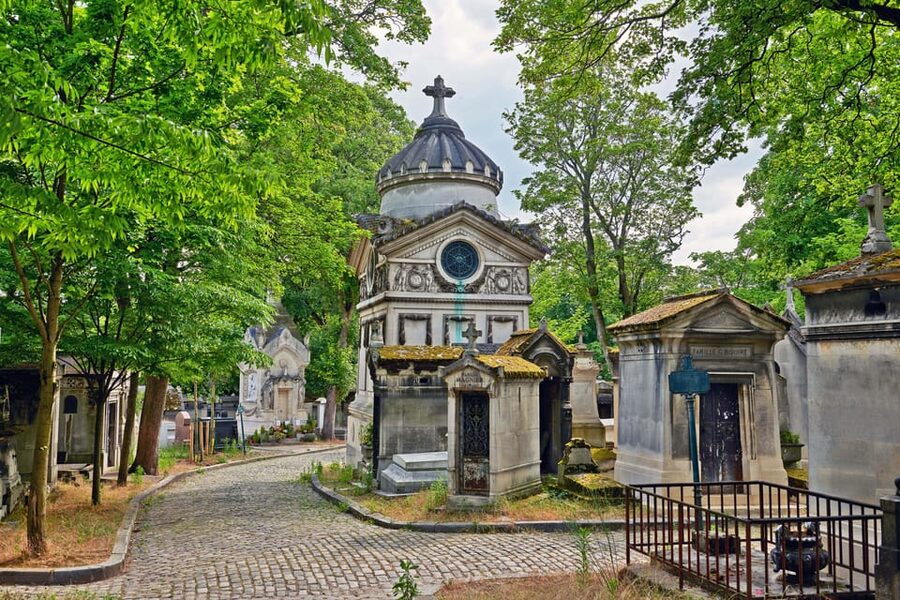
You’ll also see the tomb of Alan Kardec, associated with spiritualism and communicating with spirits of the dead somewhere in the afterlife. Again, the guide ties the idea to the person and the monument, turning the cemetery into a cultural snapshot of belief systems and what people wanted to believe.
This stop works best if you approach it with curiosity, not skepticism. The tour’s goal is to show you how these beliefs influenced memory and commemoration—not to prove anything beyond the story the tomb represents.
And it’s a good balance against the more gothic-romantic vibe. Kardec brings something else to the mix: a more organized, philosophical approach to the supernatural imagination.
The pacing and feel of a guided French tour
The tour is guided in French only, and it’s designed for a walking pace with frequent stops. That matters because a cemetery is easy to rush through without context. Here, the guide gives you a reason to slow down, look closely, and connect what you see to what you hear.
You’ll also want to keep your feet happy. The tour includes a lot of walking on cobbled paths and footpaths with slopes. Comfortable shoes are a must. The cemetery isn’t built for strollers or for reduced-mobility access either, so plan accordingly.
On top of the physical reality, there’s another practical constraint: because Père Lachaise is a meditation space, you can’t count on access to every tomb. The experience still works, but don’t plan on seeing every single monument you’ve ever pinned on a map.
Price and value for a 90-minute story walk
At $17 per person for about 90 minutes, this tour is priced for a short, focused experience rather than a full-day commitment. For me, the value comes from what you get per minute: a guided interpretation of a cemetery that would take ages to “understand” on your own.
You’re also paying for the human element—the ability to ask questions and get answers on the fly. The tone can be light and humorous, which helps the darker subject matter feel approachable instead of heavy.
One more value point: you’re not just paying for the famous names. You’re paying for the strange connections between personalities and monuments—exactly what makes Père Lachaise feel like a mystery even when you’re standing in daylight.
If you’re a French speaker and you like story-led walking tours, this is a strong use of time in Paris. If you don’t speak French, you’ll likely feel the main benefit slip away, because the guide is French-only.
Who this tour is best for (and who should skip it)
This tour fits you if you:
- want a guided way to experience Père Lachaise’s legends without getting lost
- like tomb stories that blend famous names with unusual, character-driven details
- enjoy a cemetery tour that leans toward the dramatic side (romance, spiritualism, illusion)
It may not be perfect if you:
- only want spooky supernatural content and nothing else
- need fully accessible routes or stroller-friendly ground (the tour takes place on cobbled/slope terrain)
- don’t understand French comfortably
Also keep your expectations aligned: the “mysteries” are story-based and interpretive, not a scripted horror show.
Should you book Mysteries of Père Lachaise?
If you’re spending limited time in Paris and want one cemetery experience that feels like more than sightseeing, I’d book it. The price is reasonable for a guided 90-minute format, and the best part is the storytelling focus—covering big names plus the more unusual tomb narratives that give Père Lachaise its eerie romance.
Just go in knowing it’s guided in French and that the content may mix cemetery legends with broader politics and French history. If that mix works for you, this tour is a fun, memorable way to experience a place that’s already built to feel like fiction written in stone.
FAQ
Is the tour guided in English?
No. The tour is guided in French only.
How long is the tour?
It lasts about 90 minutes.
How much does it cost?
It costs $17 per person.
Where is the meeting point?
Meet at the main entrance of Père-Lachaise cemetery, on boulevard de Ménilmontant (opposite rue de la Roquette, 75020 Paris).
Which public transport stops are nearby?
Père Lachaise metro station (line 3) is directly referenced, and Philippe Auguste (line 2) is also listed. Bus lines 61 and 69 are mentioned as options.
Is transportation included?
No. Transfer is not included.
Is the tour accessible for wheelchairs or strollers?
No. The tour is not accessible to people with reduced mobility or pushchairs because it involves cobbled paths/footpaths and slopes.
Can you access every tomb during the tour?
No guarantee. Since the cemetery is a place of meditation, access to all tombs can’t be assured.
More Tour Reviews in Paris
- Paris: 1-Hour Seine Cruise departing from the Eiffel Tower
★ 4.4 · 77,472 reviews - Paris: Louvre Museum Timed-Entrance Ticket
★ 4.6 · 71,977 reviews - Disneyland® Paris 1-Day Ticket
★ 4.6 · 49,412 reviews - Paris: Versailles Palace and Gardens Full Access Ticket
★ 4.6 · 41,579 reviews - Paris: Arc de Triomphe Rooftop Tickets
★ 4.6 · 34,264 reviews
Among the Graves of Pere Lachaise
- Paris: Haunted Père Lachaise Cemetery Guided Tour
★ 4.6 · 3,591 reviews - Paris: Pere Lachaise Cemetery Guided Tour
★ 4.8 · 2,236 reviews - Paris: Famous Graves of Pere Lachaise Cemetery Guided Tour
★ 4.6 · 1,081 reviews - The Père Lachaise Cemetery: Guided 2-Hour Small-Group Tour
★ 4.7 · 1,065 reviews - Paris: Famous Graves of Pere Lachaise Cemetery Guided Tour
★ 4.5 · 1,059 reviews
Fresh off the review desk in Paris
- Secrets of Paris Bike Tour in English or Dutch★ 5.0 · 5 reviews
- Paris: Mont Saint-Michel Day Tour with Chinese Tour Guide★ 5.0 · 5 reviews
- Private Street Art 2-Hour Guided Tour in Paris★ 4.5 · 5 reviews
- Orsay Museum Tour: 2h Highlights (Private & Small Group)★ 5.0 · 5 reviews
- Discover Paris in electric golf carts★ 4.0 · 5 reviews
- Paris Private Boat Tour with your own Captain Guide★ 5.0 · 5 reviews
Père Lachaise Tours, compared.
 ★ 4.6Haunted Père Lachaise Cemetery Guided TourFrom $253,591 reviews
 ★ 4.8Pere Lachaise Cemetery Guided TourFrom $232,236 reviews
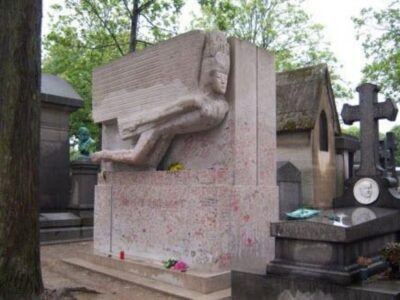 ★ 4.6Famous Graves of Pere Lachaise Cemetery Guided TourFrom $151,081 reviews
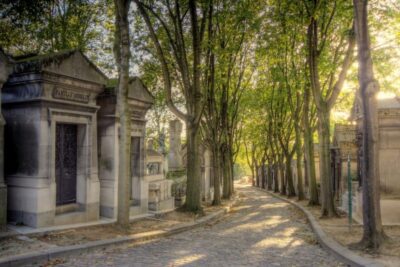 ★ 4.7The Père Lachaise Cemetery: Guided 2-Hour Small-Group TourFrom $281,065 reviews
★ 4.5Famous Graves of Pere Lachaise Cemetery Guided TourFrom $181,059 reviews
★ 4.8Pere Lachaise Cemetery Guided TourFrom $23901 reviews
★ 4.5Haunted Père Lachaise Cemetery Guided TourFrom $26344 reviews
★ 4.7The Père Lachaise Cemetery: Guided 2-Hour Small-Group TourFrom $281,065 reviews
★ 4.5Famous Graves of Pere Lachaise Cemetery Guided TourFrom $181,059 reviews
★ 4.8Pere Lachaise Cemetery Guided TourFrom $23901 reviews
★ 4.5Haunted Père Lachaise Cemetery Guided TourFrom $26344 reviews
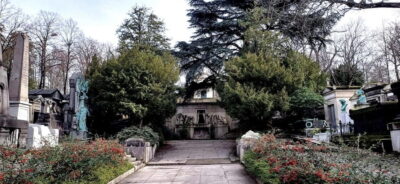 ★ 4.8Who Killed Victor ? Escape Game at Père Lachaise CemeteryFrom $37258 reviews
Browse the lists this tour appears in