
Reviewed · PARIS
Occupation and Liberation of Paris
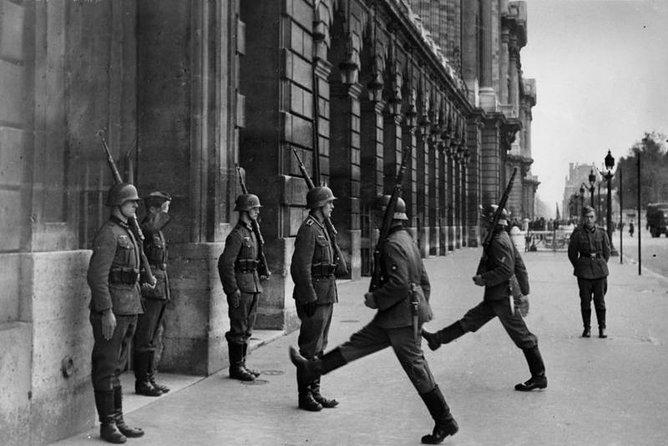
Paris under Occupation can feel like a distant page in a textbook, until you’re standing in the places where daily life, propaganda, and exploitation all collided. I like this tour because it sticks to real street-level scenes and turns them into clear stories you can picture, from entertainment venues to auctions and bank buildings. The strongest part is the way the guide connects those locations to how Parisians lived with fear, rationing, and forced collaboration, then shows where the Resistance and the Liberation movement hit hardest. One thing to consider: this is a French-language tour on a timed walk, and the subject is heavy.
What makes it especially useful is the route. In about 2 hours 15 minutes, you cover a string of sites tied to occupation-era power and wartime commerce, then end at Place de la Concorde where you can literally read the war into the stone. I also appreciate that the tour stays focused on what each stop reveals about the era—who benefited, who suffered, and what ordinary people had to do to survive. If you prefer a relaxed “wander and snack” pace, this isn’t that kind of tour.
In This Review
- Key points at a glance
- What you’re really paying for: story, access, and context
- Start to finish: a walk from daily life to Liberation traces
- Stop 1: Bouillon Chartier on the Grands Boulevards
- Stop 2: Folies Bergère and the wartime entertainment engine
- Stop 3: Passage Verdeau and a hidden layer of requisition
- Stop 4: Hôtel Drouot and the business of selling everything
- Stop 5: Mairie du 9e and Resistance, denunciation, and “ordinary” courage
- Stop 6: BNP Paribas / Maison Dorée and banks under Occupation
- Stop 7: Pathé Opéra Premier and requisitioned entertainment
- Stop 8: BRED-Banque Populaire and Place de l’Opéra’s symbolic weight
- Stop 9: Place Vendôme and jewelry stores, justice, and collaboration
- Stop 10: Rue de Castiglione and the Liberation battles ending here
- Stop 11: Place de la Concorde and visible memorial plaques
- The guide experience: what makes this tour land well
- Who this tour suits best (and who should choose another format)
- Making it work with your day in Paris
- Should you book Occupation and Liberation of Paris?
- FAQ
- Is the tour in English?
- How long is the Occupation and Liberation of Paris walk?
- Where does the tour start and end?
- How much does it cost?
- What kind of ticket do I get?
- Does the tour run in bad weather?
Key points at a glance
- Small group size (max 12): you get time for questions and a tighter, more personal feel.
- French-language storytelling: the tour is led in French (English isn’t standard, but you can ask).
- Street-level sites, not museum-only stops: you see everyday places—food halls, theaters, passages—through an Occupation lens.
- High focus on “how systems worked”: banks, stock exchange context, requisitions, denunciations, and spoliation are part of the narrative.
- Liberation is part of the ending, not an afterthought: the walk ends where battles and memorial traces are visible.
- Mobile ticket format: you don’t need to hunt for paper tickets.
What you’re really paying for: story, access, and context
At $25.44 per person for about 2 hours 15 minutes, this feels like strong value—especially in a city where good history tours can cost a lot more. What you’re buying isn’t just “seeing landmarks.” You’re paying for a guided chain of cause-and-effect: entertainment venues tied to propaganda, commercial buildings tied to deals and confiscations, and public spaces where wartime decisions shaped real lives.
Even better, the stop descriptions indicate admission tickets are free for the sites along the route. That matters because it keeps the experience from turning into a checklist of paid entrances. You can focus on the story instead of budgeting time and money for ticket lines at every stop.
Still deciding? Here is how it stacks up against a few Paris favourites we have booked and reviewed.
- Paris: 1-Hour Seine Cruise departing from the Eiffel Tower
★ 4.4 · 77,472 reviews - Paris: Louvre Museum Timed-Entrance Ticket
★ 4.6 · 71,977 reviews - Disneyland® Paris 1-Day Ticket
★ 4.6 · 49,412 reviews - Paris: Versailles Palace and Gardens Full Access Ticket
★ 4.6 · 41,579 reviews
Start to finish: a walk from daily life to Liberation traces
The tour begins at 32 Bd Poissonnière (75009 Paris) around 2:00 pm, and it finishes at Place de la Concorde (75001). It’s a linear walk, so plan to return to your hotel afterward with metro/bus options nearby (the tour notes that it’s close to public transportation).
The vibe is “stand here, look around, then understand what changed during the war.” You’ll spend most of your time outside, absorbing context at key corners and facades. That’s great for getting oriented in central Paris, but it does mean you’ll want decent shoes and weather.
Stop 1: Bouillon Chartier on the Grands Boulevards
You start at Bouillon Chartier Grands Boulevards, a place that anchors the tour in daily life rather than only big political events. The guide uses it to set the tone with anecdotes about what Paris felt like during the Occupation—how routine continued, how people adjusted, and how ordinary public spaces carried hidden tensions.
Why I’d put this first: it helps you stop seeing the Occupation as only military action. Instead, you begin with the human scale—food, crowds, and the uncomfortable normal that war creates.
Possible drawback: because it’s a “life under Occupation” start, some parts may feel emotionally heavy before the tour reaches the clearer Liberation payoff later.
Stop 2: Folies Bergère and the wartime entertainment engine
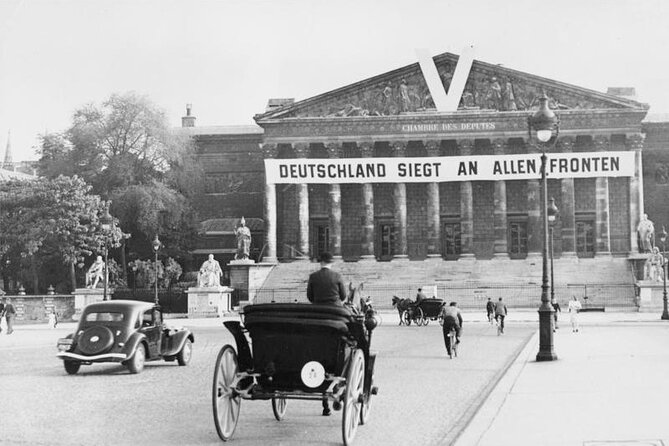
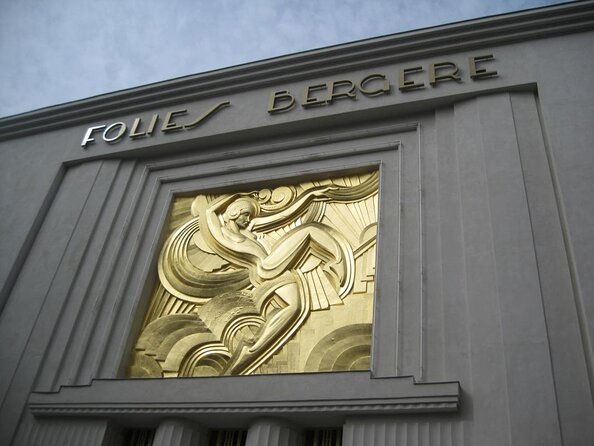
Next comes Folies Bergère, used as a window into the intense artistic and performance world under German control. The point isn’t just that shows existed. The guide connects theaters, stars, music halls, and cinemas to the occupation-era reality—what was allowed, what audiences were offered, and how art could serve the atmosphere of the time, whether willingly or under pressure.
This stop is useful if you want to understand how propaganda and spectacle worked in the same city as fear and shortages. It also adds variety. After the bouillon-era social life, you shift from meals to stages and screens.
Stop 3: Passage Verdeau and a hidden layer of requisition
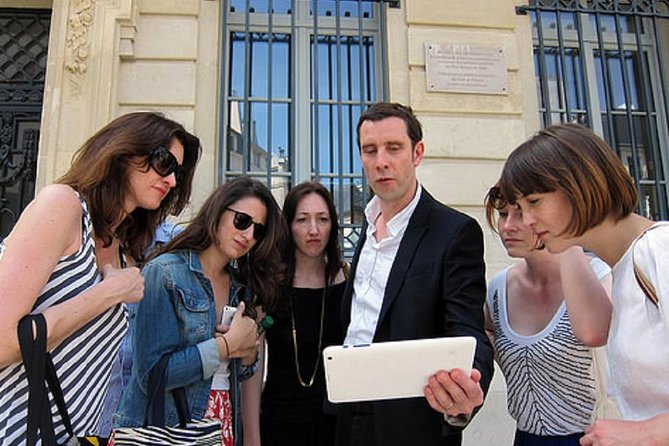
At Passage Verdeau, the tour explains how Parisian passages kept their look and feel while the war changed what happened behind the scenes. You’ll hear how the décor and atmosphere of these covered walkways could persist even as power relationships shifted.
The guide also points out a darker contrast: across from the passage world, a building was used as a brothel requisitioned by the German army. That detail turns a charming, narrow covered space into something much more unsettling—an example of how war used private life for occupation needs.
If you’re sensitive to topics like exploitation, this is one of the stops to be mentally prepared for.
Stop 4: Hôtel Drouot and the business of selling everything
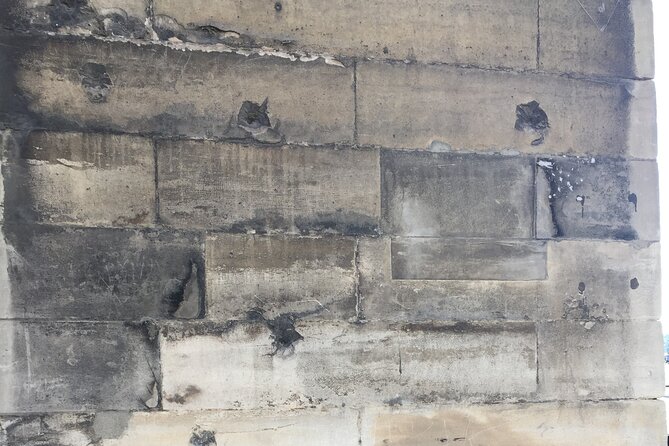
Hotel Drouot brings the discussion into the world of auctions. Here, the story turns to the way valuable objects and artworks were sold during the Occupation—plus what those sales could imply when confiscation and theft were involved.
This is the stop where spoliation of Jewish property is discussed directly, along with the incredible story of a German art dealer working for the Reich. You’ll likely come away thinking differently about what it means when you see an elegant auction house in peacetime. The war could turn culture and property into instruments.
It’s also a “systems” moment. The narrative goes beyond individual wrongdoing to show how institutions and intermediaries helped the machine run.




Stop 5: Mairie du 9e and Resistance, denunciation, and “ordinary” courage
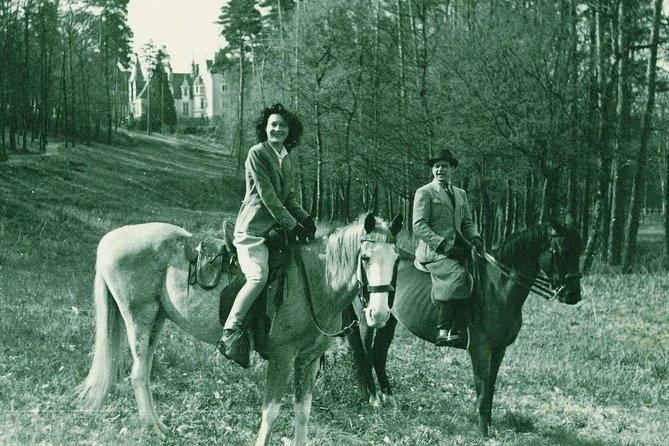
At Mairie du 9ᵉ arrondissement de Paris, the tour shifts from private suffering and commerce to civic life. The guide uses a town-hall setting to approach the Resistance through a town-hall employee—then broadens out to how denunciation and everyday forms of resistance appeared throughout France.
This is an important emotional change of pace, even though it doesn’t become light. It’s where the story moves from “what happened to objects and spaces” to “what happened to people inside institutions and neighborhoods.”
If you want a clearer sense of how resistance worked beyond heroic myths, this is the stop that helps most.
Stop 6: BNP Paribas / Maison Dorée and banks under Occupation
Near the Opéra area, you’ll examine BNP Paribas | Maison Dorée and talk about the role of banks under occupation. The guide also connects the story to the surprising situation on the Paris stock exchange and to armistice agreements between France and Germany, explaining the economic and political outcome of those agreements.
I like this stop because it gives you context for why wartime Paris wasn’t only about soldiers and street fear. The occupation came with financial structures—contracts, negotiations, and an economy reshaped by power.
One practical note: finance-focused history can feel abstract if you’re tired. If you find that happens to you, take a second to slow down, look at the building details, and let the guide connect the dots in plain language.
Stop 7: Pathé Opéra Premier and requisitioned entertainment
At the Pathe Opera Premier area, the tour uses a cinema connection to show how entertainment spaces were requisitioned for German soldiers. Nearby, the guide also references another major building and its role in propaganda promoting anti-Semitism.
This stop matters because it demonstrates how Occupation-era control could enter everyday leisure. Cinema wasn’t just art—it could become part of the occupation’s messaging and comfort for those in power.
It’s also a good “reset point.” After finance, you return to culture, but with a much darker angle than you’d expect when you hear the word cinema.
Stop 8: BRED-Banque Populaire and Place de l’Opéra’s symbolic weight
The tour returns to the Place de l’Opéra symbolism at BRED-Banque Populaire – Espace patrimonial. The guide explains why this square is such a telling place during the Occupation: it was linked to the Kommandantur, to the Café de la Paix, and to the Opera—meaning command, meeting, and public spectacle all sat in the same urban neighborhood.
You’ll likely get lots of short, memorable anecdotes here that help you picture the war as a lived experience in public spaces, not only behind doors.
This is also where the walking route pays off: being guided through one area at a time helps you build a mental map you can keep after the tour ends.
Stop 9: Place Vendôme and jewelry stores, justice, and collaboration
At Place Vendôme, the tour connects earlier conversations about jewelry stores on rue de la Paix to how luxury and property were treated during occupation. From there, it expands to the Ministry of Justice being occupied by the German army and to one of the first Resistance networks established nearby.
You’ll also hear about the Ritz hotel as a high point of Collaboration and occupation, with many celebrities who regularly went there. It’s a sharp reminder that glamour and power could share the same address.
This stop can be uncomfortable if you expect “beautiful Paris” to stay separate from the worst chapters of history. But if your goal is to understand the era honestly, it’s exactly the right kind of discomfort.
Stop 10: Rue de Castiglione and the Liberation battles ending here
On Rue de Castiglione, the guide explains how many large hotels housed German army headquarters. That detail reframes the hotel geography of central Paris. It’s not just where wealthy people stay—it’s how a foreign military presence could dominate a city.
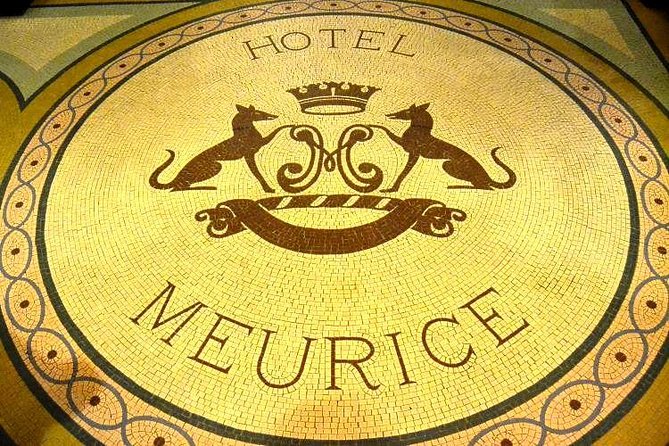
Behind the Meurice hotel, the tour focuses on main characters connected to these places and the battles of the Liberation that ended here. This is one of those stops where you can feel the story turning from analysis into outcome.
If you’re the type who likes to connect history to walking directions, this is where your sense of place starts to lock in.
Stop 11: Place de la Concorde and visible memorial plaques
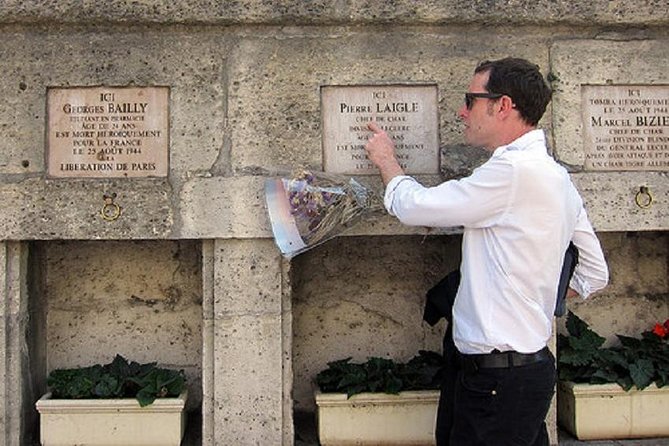
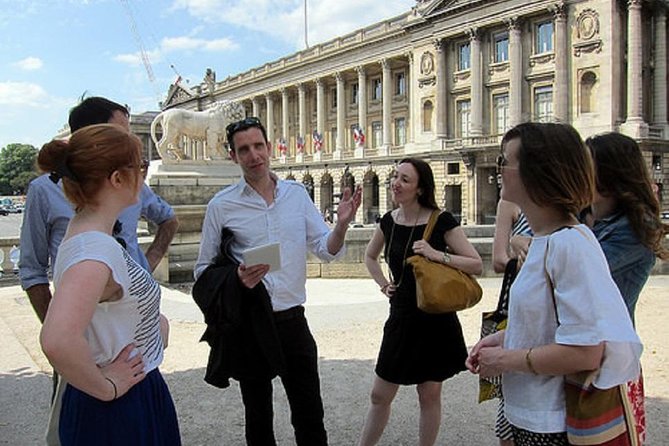
The tour ends at Place de la Concorde, a fitting finale because the square still shows traces of the Liberation. The guide points out memorial plaques dedicated to soldiers, resistance fighters, or ordinary civilians who took part in the fighting.
On the terrace, you’ll also see photos showing the place and its surroundings during the wartime period. That’s a strong way to tie the earlier streets to the actual moment when the city’s fate shifted.
Even if you don’t memorize every name, these plaques and visuals give you a way to continue the story afterward—by reading and comparing what you see in the present.
The guide experience: what makes this tour land well
A theme across the best comments is the quality of the historian—people highlight Thierry Heil for bringing the Occupation and Liberation to life with facts and vivid, clear storytelling in the exact places where the events happened. The feedback also emphasizes friendliness and the ability to answer questions without turning the tour into a lecture.
That combination matters. When you’re talking about Occupation-era topics—propaganda, spoliation, denunciation—clarity is everything. It’s easy for a tour to become either too vague or too blunt. When it’s done well, you understand both what happened and why it mattered.
Language note: the tour is in French, and there’s an option to contact the provider for an English tour. If you don’t speak French, plan ahead rather than hoping for translation.
Who this tour suits best (and who should choose another format)
This experience is ideal for you if:
- you want a history walk that explains how systems worked (banks, auctions, institutions)
- you like seeing Paris through the lens of real locations, not only big museum halls
- you can handle heavy subject matter and want it addressed directly
You may want a different option if:
- you’re looking for a purely “light sightseeing” walk
- you don’t read well with French commentary and there’s no English equivalent available for your dates
- you prefer long indoor pauses, since most of this is an outdoor walking route
Making it work with your day in Paris
Because it’s a short, focused walk ending near a central landmark, it fits well into a history-heavy itinerary. Start your day with something lighter or earlier in the morning, and then treat this tour as your “anchor.” If you do museums afterward, you’ll have a clearer framework for what you’re seeing.
Also, the tour uses a mobile ticket. Make sure your phone has battery and enough signal. It sounds obvious, but it saves time.
And since the experience notes it depends on good weather, bring a rain layer just in case. Even in Paris, a wet afternoon can turn a story-focused walk into a miserable one.
Should you book Occupation and Liberation of Paris?
If your goal is to understand how Occupation-era Paris actually functioned—from daily life and entertainment to banking, confiscation, and the Resistance—this is a strong choice. The route is short enough to stay manageable, and the content stays tied to the physical city, which makes it memorable.
I’d book it if you like history that connects places to decisions and consequences. I wouldn’t book it if you’re avoiding heavy topics or you need an English-speaking format on the same day. If French is a comfortable option for you, this kind of guided walk is one of the most efficient ways to grasp the era without getting lost in random facts.
FAQ
Is the tour in English?
The tour is in French. For a tour in English, you’ll need to contact the provider.
How long is the Occupation and Liberation of Paris walk?
It lasts about 2 hours 15 minutes.
Where does the tour start and end?
It starts at 32 Bd Poissonnière, 75009 Paris, and ends at Place de la Concorde, 75001 Paris.
How much does it cost?
The price is $25.44 per person.
What kind of ticket do I get?
You receive a mobile ticket.
Does the tour run in bad weather?
It requires good weather. If it’s canceled due to poor weather, you’ll be offered a different date or a full refund.
More Tour Reviews in Paris
- Paris: 1-Hour Seine Cruise departing from the Eiffel Tower
★ 4.4 · 77,472 reviews - Paris: Louvre Museum Timed-Entrance Ticket
★ 4.6 · 71,977 reviews - Disneyland® Paris 1-Day Ticket
★ 4.6 · 49,412 reviews - Paris: Versailles Palace and Gardens Full Access Ticket
★ 4.6 · 41,579 reviews - Paris: Arc de Triomphe Rooftop Tickets
★ 4.6 · 34,264 reviews
Fresh off the review desk in Paris
- Secrets of Paris Bike Tour in English or Dutch★ 5.0 · 5 reviews
- Paris: Mont Saint-Michel Day Tour with Chinese Tour Guide★ 5.0 · 5 reviews
- Private Street Art 2-Hour Guided Tour in Paris★ 4.5 · 5 reviews
- Orsay Museum Tour: 2h Highlights (Private & Small Group)★ 5.0 · 5 reviews
- Discover Paris in electric golf carts★ 4.0 · 5 reviews
- Paris Private Boat Tour with your own Captain Guide★ 5.0 · 5 reviews