
Reviewed · EIFFEL TOWER TOURS
Paris Baking Insider Experience near Eiffel Tower
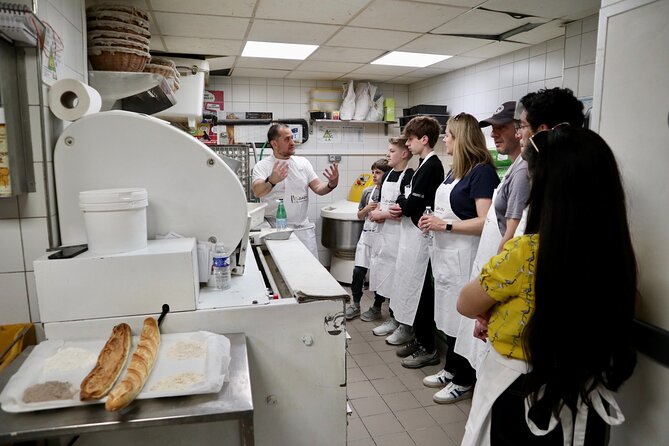
Flour flies near the Eiffel Tower. This small-group baking insider lesson puts you in a real working boulangerie setup, learning techniques for classic French pastries with an expert baker in English. Instructors like Nisha and Jess bring the craft to life, while the class stays capped at 8 people for real hands-on time.
I love how practical this is: you work dough with your own hands, including baguette shaping and laminating techniques. I also like the way they explain the why behind the steps, from flour types to yeast vs sourdough and how shaping affects the final bread.
One thing to plan for: the workshop takes place in a tight space and you’ll be on your feet for a while, with 15 steps to the bakery on the 2nd floor and no elevator.
In This Review
- Key highlights
- A Working Boulangerie Lesson, Not a Show
- Your 2-Hour Game Plan: What You Do and Why
- 1) Meet at the bakery and get oriented
- 2) Learn the bread basics: flours, yeast, sourdough
- 3) Hands-on lamination: rolling and folding dough
- 4) Baguette shaping and the feel of proper form
- 5) Croissant dough work (with an expectation reset)
- 6) Tastings that connect craft to flavor
- The Skills You’ll Walk Away With (And Actually Use)
- You’ll learn how to laminate dough without fear
- You’ll understand what makes different baguettes feel different
- You’ll get a practical handle on flour and fermentation choices
- You’ll be able to judge texture and doneness better
- Croissants, Baguettes, and Financiers: What’s the Food Mix?
- Price and Value: What You’re Really Paying For
- Guides Matter: The Human Touch in a Bakery Workshop
- Location and Getting There Near the Eiffel Tower Area
- Who This Paris Baking Class Is Best For
- Should You Book It?
- FAQ
- What is the duration of the Paris Baking Insider Experience?
- Where does the tour start?
- How big is the group?
- Is the experience offered in English?
- What’s included in the price?
- Can I get a mobile ticket?
- Are service animals allowed?
- Are children allowed to join?
- Is there an elevator at the meeting location?
- What is the cancellation policy?
Key highlights
- Small-group limit of 8 so you’re not watching from the sidelines
- Hands-on baguettes and lamination (including dough rolling and shaping)
- French baking fundamentals like flour choices, yeast vs sourdough, and baguette shaping
- Tastings along the way to connect flavor to technique
- Take-home pastries made during the class (including items like croissants and financiers in the format taught)
- English-led workshop with an expert guide in a working boulangerie environment
A Working Boulangerie Lesson, Not a Show

This is the kind of Paris food activity that feels like you stepped behind the counter. You’re not just getting a lecture. You’re rolling dough, learning shaping, and seeing how a real bakery runs during the day.
The experience is built around a small group (max 8), which matters in a baking class. There’s enough space for you to work, and your instructor can correct what you’re doing before it becomes a dough disaster.
Another big win: the class is led in English and designed for people who don’t bake for a living. If you’ve never made bread from scratch before, you’ll still get traction quickly because they teach specific steps, not vague “be creative” advice.
And yes, there’s the tastings angle. They use those bites to help you connect technique to flavor, so the lesson doesn’t stay trapped in your hands.
More ways up the Iron Lady, side by side
- Paris: 1-Hour Seine Cruise departing from the Eiffel Tower
★ 4.4 · 77,472 reviews - Paris: Eiffel Tower Entry Ticket with Optional Summit Access
★ 4.4 · 20,035 reviews - Eiffel Tower Dedicated Reserved Access Summit or 2nd Floor
★ 4.3 · 18,352 reviews - Paris: Eiffel Tower Summit or Second Floor Access
★ 4.4 · 16,088 reviews
Your 2-Hour Game Plan: What You Do and Why
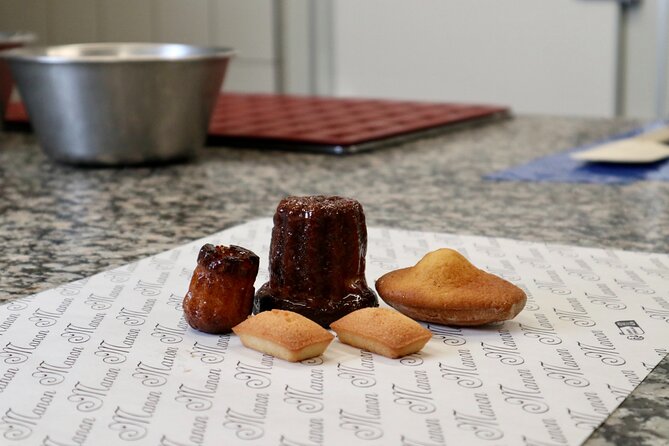
The class runs about 2 hours, and it moves in a steady rhythm: learn a concept, do the hands-on version, taste the difference, then move to the next skill. You’ll also get background facts about iconic French pastries while you’re working.
Here’s how the session typically feels, from start to finish:
1) Meet at the bakery and get oriented
You start at 31 Rue de l’Annonciation, 75016 Paris. Since the bakery is on the 2nd floor with no elevator and 15 steps, expect a quick stair climb before you even begin working.
Once you’re inside, the instructor sets expectations for what you’ll make and how the time is paced. Because it’s a hands-on workshop, you’ll want to arrive hungry and ready to stand.
2) Learn the bread basics: flours, yeast, sourdough
One of the most helpful parts for first-timers is the bread science they keep simple. You’ll learn the difference between bread flours and what that changes in dough feel and final structure.
You’ll also cover yeast vs sourdough, which is one of those topics that sounds intimidating until someone breaks it down into practical terms. The goal is not to turn you into a fermentation nerd. It’s to help you understand why a dough behaves differently.
3) Hands-on lamination: rolling and folding dough
Laminate dough is where French pastry gets its magic. In practical terms, that means learning how to roll and fold so you get layers rather than one flat sheet.
This is also where a small group helps. You can compare your work to what the instructor demonstrates, and you’ll get feedback before the dough is “done for.”
If you’ve heard people say croissants are complicated, this is where you learn what parts are truly tricky versus what parts are teachable.
4) Baguette shaping and the feel of proper form
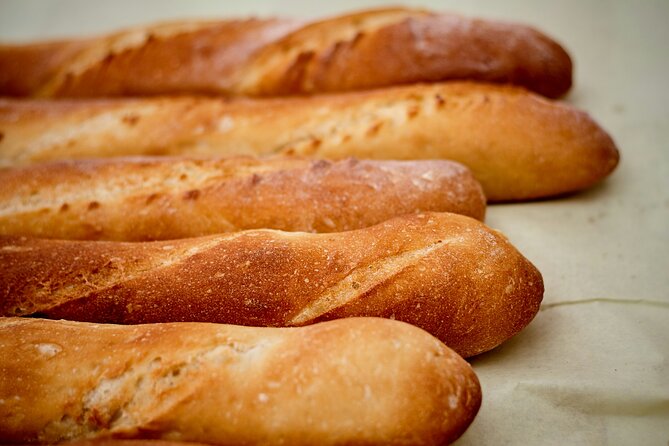
Then you move into baguette-shaping techniques. They’ll show you how to shape so the dough holds a good structure and bakes up into that classic look.
This isn’t just about aesthetics. Shape affects expansion in the oven and the way the crust forms. Getting your hands on the steps is the difference between knowing facts and actually being able to repeat the process later.



5) Croissant dough work (with an expectation reset)
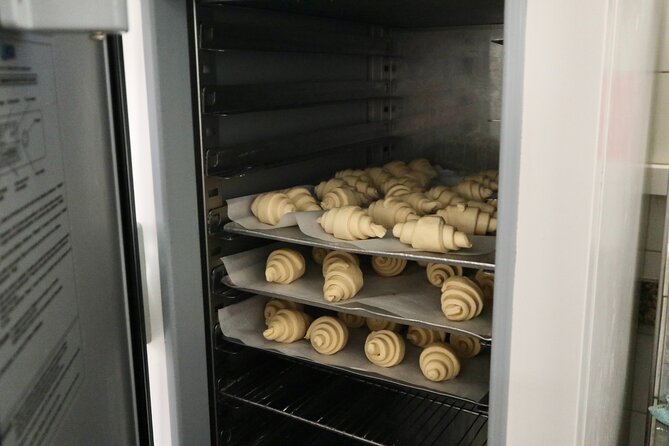
You’ll also work on puff croissant dough during the class. A key note from how the workshop is described and how it’s run: some portions may use prepared ingredients so you can complete the session within a two-hour window.
So if your dream was to start every element from scratch with every ingredient measured and mixed on the spot, you might find parts of the croissant component more like guided assembly and rolling than full dough creation. Still, you do learn technique, and you leave with what you make.
6) Tastings that connect craft to flavor
Between the hands-on steps, you’ll get tastings. This is more useful than it sounds. You’re not tasting as an afterthought. You’re tasting as feedback.
You start to notice how dough handling, fermentation choice (yeast vs sourdough), and baking outcomes change flavor, texture, and how crisp or soft something feels.
The Skills You’ll Walk Away With (And Actually Use)
This workshop is at its best when you treat it like a skill builder, not just a culinary souvenir stop. By the end, you should be able to do several things more confidently than when you arrived.
You’ll learn how to laminate dough without fear
Lamination is often described like a mysterious pastry spell. Here it becomes a repeatable physical process: roll, fold, manage thickness, and keep layers intact. If your croissant dreams have ever been derailed by videos that move too fast, the slow, guided practice is the real value.
You’ll understand what makes different baguettes feel different
They specifically mention learning how to differentiate one baguette from another, along with shaping techniques. Even if you don’t bake often, that kind of sensitivity changes how you shop for bread in Paris. You’ll start noticing differences in crust, scoring, and dough behavior.
You’ll get a practical handle on flour and fermentation choices
The workshop covers bread flours and yeast vs sourdough. That’s great for two reasons:
- It gives you a vocabulary you can use when reading recipes later.
- It helps you understand why a recipe can fail even when you follow it perfectly.
You’ll be able to judge texture and doneness better
Through tastings and guided steps, you’re training your eyes and hands. That’s the part that makes it easier to reproduce results at home, not just enjoy them once.
Croissants, Baguettes, and Financiers: What’s the Food Mix?
The class focuses on multiple pastry types, including baguettes and puff croissants, plus other small pastry items such as financiers.
In plain terms: you’ll be working in both the bread lane and the pastry lane. That broad mix is a good deal for a two-hour class because it shows how French baking techniques overlap. Dough feel matters for bread and pastry. Shaping matters for structure. And baking heat matters for how the crust develops.
That said, it’s smart to keep an expectation check on croissants. Some people have found the croissant portion more rolling and shaping than starting from raw dough mixing. If you’re the type who wants every step done from scratch, ask yourself whether you’d rather do a longer class that spends more time on dough prep. For many visitors, the guided rolling and laminated technique is exactly what they want.
Price and Value: What You’re Really Paying For
At $108.84 per person for about 2 hours, you’re paying for three things that are hard to replicate on your own:
1) Small-group hands-on instruction (max 8)
2) A real working bakery setting, not a classroom imitation
3) Tastings plus the chance to take pastries home
Value-wise, this can be a strong pick if you want more than a guided food stroll. Baking classes in Paris can range from “watch and eat” to “real labor with real skills.” This one is clearly in the hands-on camp, and the touch points—laminated dough, baguette shaping, and bread fundamentals—are the kind of skills that stick.
Also, the take-home factor matters. Many people leave with enough bread and pastries to turn the rest of their day into a mini food celebration.
Guides Matter: The Human Touch in a Bakery Workshop
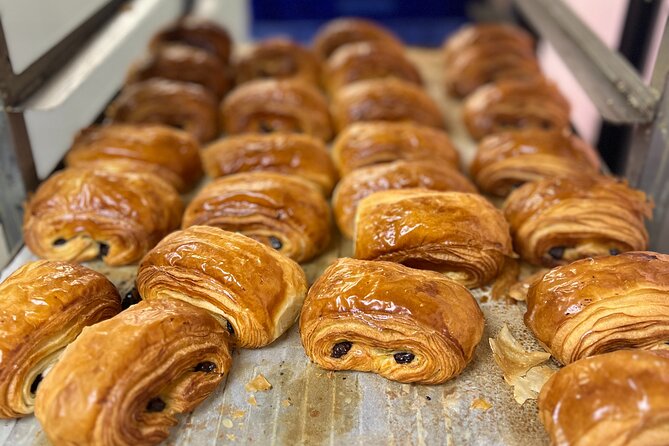
The best baking classes don’t just teach steps. They translate the steps into something you can do with your hands.
You’ll see different guides in the experience lineup, and several names come up often in feedback, including Nisha, Jess, Candice, Priya, Pierre, and Rachel. The consistent thread is clear: they’re good at keeping people moving, answering questions, and making sure everyone gets their turn.
If you’re traveling with kids, that coaching style becomes even more important. Some families mention kids participating while adults keep an eye on safety and pacing. Still, note the key rule: children under age 5 can join for free but won’t participate in the hands-on baking for safety reasons.
Location and Getting There Near the Eiffel Tower Area
The meeting point is 31 Rue de l’Annonciation, 75016 Paris, and the activity ends back at the same place. That’s convenient because you’re not wandering across town afterward with warm pastries in your hands.
Transportation is described as near public transportation, which helps if you’re pairing this with other Eiffel Tower sights. If you’re planning your day, give yourself some buffer time. Bakeries can be small, and you’ll likely want a few extra minutes so you’re not rushing while wearing your “bake safely” brain.
And please take the stairs seriously: 15 steps to the bakery on the 2nd floor with no elevator. This is one of those details that can make or break the experience if you have mobility limits or get tired easily.
Who This Paris Baking Class Is Best For
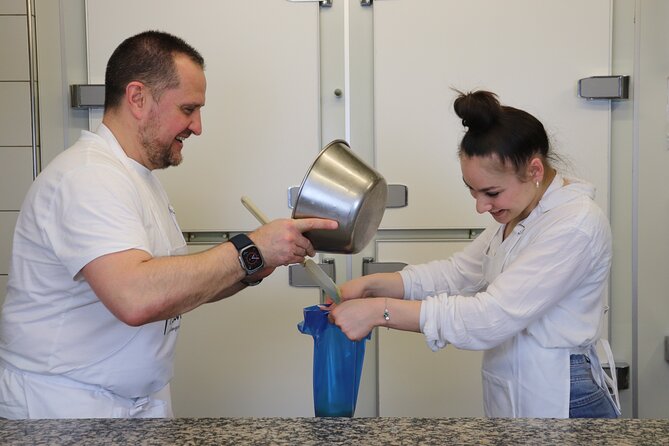
This is a great fit if you want an authentic Paris food moment with real technique, not just tasting.
You’ll likely enjoy it if:
- You like hands-on learning and want to shape baguettes or work laminated dough
- You want a behind-the-scenes feel of a working boulangerie
- You enjoy food culture where the focus is on craft and process
- You’re okay standing for an extended period
It may be less ideal if:
- You don’t want to be on your feet for a while
- You have trouble with stairs or tight indoor spaces
- You’re expecting every croissant component to be mixed from scratch in the session
If you’re on the fence, I’d think of this as a “learn the key moves and take the results home” class. It’s not a multi-day deep production course. It’s a two-hour skills sprint.
Should You Book It?
Yes, I think you should book it if you want a real French baking workshop in a working bakery, with hands-on dough time, tastings, and take-home pastries. The small group size is a meaningful advantage, and the lesson topics (flour choices, yeast vs sourdough, lamination, baguette shaping) are exactly the kind of fundamentals that make you feel confident later.
I’d hesitate only if stairs and standing are a problem for you, or if you’re very strict about doing every croissant step from raw ingredient prep within two hours. For most people, though, this is a smart, memorable way to spend an afternoon near central Paris sights.
FAQ
What is the duration of the Paris Baking Insider Experience?
The experience lasts about 2 hours.
Where does the tour start?
It starts at 31 Rue de l’Annonciation, 75016 Paris, France. The activity ends back at the meeting point.
How big is the group?
The class has a maximum of 8 travelers.
Is the experience offered in English?
Yes, the experience is offered in English.
What’s included in the price?
The experience includes an expert guide, snacks, and a hands-on baking lesson.
Can I get a mobile ticket?
Yes, it includes a mobile ticket.
Are service animals allowed?
Yes, service animals are allowed.
Are children allowed to join?
Children are allowed but must be accompanied by an adult. Kids under age 5 can join for free, but they cannot participate in the hands-on baking due to safety concerns.
Is there an elevator at the meeting location?
No. The workshop requires climbing 15 steps to the bakery on the 2nd floor, and there is no elevator.
What is the cancellation policy?
You can cancel for a full refund if you cancel at least 24 hours before the experience starts. If you cancel less than 24 hours before, the amount paid is not refunded.
More Tour Reviews in Paris
- Paris: 1-Hour Seine Cruise departing from the Eiffel Tower
★ 4.4 · 77,472 reviews - Paris: Louvre Museum Timed-Entrance Ticket
★ 4.6 · 71,977 reviews - Disneyland® Paris 1-Day Ticket
★ 4.6 · 49,412 reviews - Paris: Versailles Palace and Gardens Full Access Ticket
★ 4.6 · 41,579 reviews - Paris: Arc de Triomphe Rooftop Tickets
★ 4.6 · 34,264 reviews
The Eiffel Tower, Ticket by Ticket
- Paris: 1-Hour Seine Cruise departing from the Eiffel Tower
★ 4.4 · 77,472 reviews - Paris: Eiffel Tower Entry Ticket with Optional Summit Access
★ 4.4 · 20,035 reviews - Eiffel Tower Dedicated Reserved Access Summit or 2nd Floor
★ 4.3 · 18,352 reviews - Paris: Eiffel Tower Summit or Second Floor Access
★ 4.4 · 16,088 reviews - Paris: Seine Cruise & Crepe Tasting near the Eiffel Tower
★ 4.4 · 11,231 reviews
Fresh off the review desk in Paris
- Secrets of Paris Bike Tour in English or Dutch★ 5.0 · 5 reviews
- Paris: Mont Saint-Michel Day Tour with Chinese Tour Guide★ 5.0 · 5 reviews
- Private Street Art 2-Hour Guided Tour in Paris★ 4.5 · 5 reviews
- Orsay Museum Tour: 2h Highlights (Private & Small Group)★ 5.0 · 5 reviews
- Discover Paris in electric golf carts★ 4.0 · 5 reviews
- Paris Private Boat Tour with your own Captain Guide★ 5.0 · 5 reviews
Eiffel Tower Tours, compared.
 ★ 4.41-Hour Seine Cruise departing from the Eiffel TowerFrom $2077,472 reviews
 ★ 4.4Eiffel Tower Entry Ticket with Optional Summit AccessFrom $2920,035 reviews
 ★ 4.3Eiffel Tower Dedicated Reserved Access Summit or 2nd FloorFrom $2518,352 reviews
 ★ 4.4Eiffel Tower Summit or Second Floor AccessFrom $4116,088 reviews
 ★ 4.4Seine Cruise & Crepe Tasting near the Eiffel TowerFrom $2311,231 reviews
 ★ 4.1Eiffel Tower Stairs Climb to Level 2 & Summit OptionFrom $428,985 reviews
 ★ 4.6Eiffel Tower Access by Elevator & Seine River CruiseFrom $797,329 reviews
 ★ 4.6Eiffel Tower 2nd Floor or Summit AccessFrom $696,683 reviews
Browse the lists this tour appears in