
Reviewed · SEINE RIVER CRUISES
Paris: Cruise on The Canal Saint Martin and The Seine River
Canal Saint-Martin from below sounds like a trick. This cruise strings together locks, an underground tunnel under the Bastille area, and then a classic Seine highlights run so you get a lot of Paris with less footwork. I love the live storytelling that turns postcard views into something you can actually picture, and I love the way the route gives you big monuments from the water without hunting for viewpoints all day.
My main caution: the experience has two very different vibes, and the first half includes a long canal section with the tunnel, so if you want nonstop open-air sightseeing, plan to choose your seats and timing carefully.
In This Review
- Key things to know before you go
- Canal Saint-Martin Meets the Seine: Why This 2-Hour Route Works
- Boarding at Quai de Valmy and Ending at Île de la Cité
- Canal Saint-Martin’s Cafés, Iron Bridges, and the Hôtel du Nord View
- Passing Through the Locks: The Water-Level Rise-and-Fall Moment
- Swing Bridge + Canal Life: How Road Traffic and Water Trade Priority
- The Bastille-Area Underground Tunnel: Quiet Paris Under Vaulted Streets
- Port de l’Arsenal to Île Saint-Louis: From Work Port to Leisure Marina
- Seine Highlights Between UNESCO Riverbanks: Notre-Dame, the Louvre Axis, and the Tuileries
- Pont des Arts to Pont Alexandre III: Where the Bridges Steal the Show
- The Eiffel Tower Full Reveal and the Sparkle Moment
- Onboard Comfort, Drinks, and How to Hear the Guide in English
- Price and Value: What You’re Really Paying For
- Who Should Book This Cruise?
- Should You Book This Canal-and-Seine Cruise?
- FAQ
- How long is the Canal Saint-Martin and Seine cruise?
- Is the tour offered in English?
- Where do I meet, and where does the cruise end?
- Will I spend time underground?
- What happens if the weather is bad?
- What’s the group size limit?
Key things to know before you go
- Canal Saint-Martin engineering moment: you pass through locks where the water level rises and falls while gates open and close
- Bastille-area tunnel: the sound of the city fades as you glide through a vaulted underground passage
- Old port to marina change: Port de l’Arsenal shows how a former commercial space became leisure and houseboats
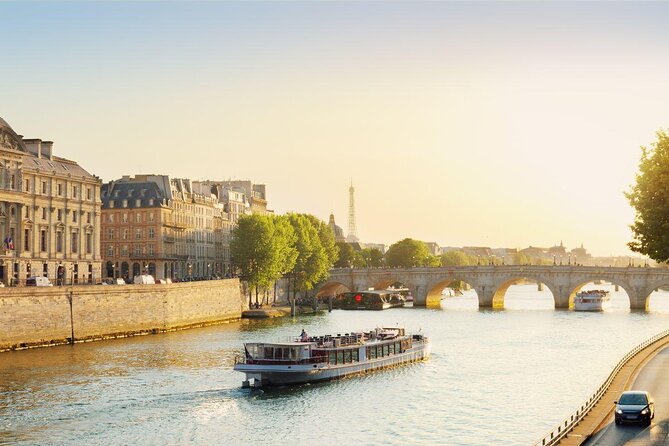
- UNESCO-listed Seine stretch: you’re guided past Notre-Dame, the Louvre area, the Orsay Museum, and the Eiffel Tower
- Photo-friendly deck access: from the open deck you can aim at famous bridges and landmarks without street-level obstruction
Canal Saint-Martin Meets the Seine: Why This 2-Hour Route Works
This is one of those smart Paris combos: a smaller canal with real local texture, then the big-name Seine skyline. The schedule is built so you don’t just see monuments, you also see how water shaped daily Paris—first as a working system, then as a scenic corridor.
The value is in the contrast. Canal Saint-Martin gives you iron footbridges, trees along the quays, and cafés by the water. Then you swing out to the Seine and the city opens up in dramatic river curves, with landmarks lining both banks. It feels like Paris in two chapters, delivered in one sitting.
More time out on the Seine, compared
- Paris: 1-Hour Seine Cruise departing from the Eiffel Tower
★ 4.4 · 77,472 reviews - Paris: Seine Cruise & Crepe Tasting near the Eiffel Tower
★ 4.4 · 11,231 reviews - Paris: Seine River Panoramic Views Dinner Cruise
★ 4.3 · 10,611 reviews - Paris: Eiffel Tower Access by Elevator & Seine River Cruise
★ 4.6 · 7,329 reviews
Boarding at Quai de Valmy and Ending at Île de la Cité
You start at 73 Quai de Valmy (near Valmy/Canal Saint-Martin) and the cruise finishes at 19 Quai de l’Horloge on Île de la Cité, opposite Pont Neuf. That end point matters: once you’re done, you’re already in the historic core, close to the Latin Quarter and right where you’d want to continue on foot.
Do be aware of getting off. One common complaint is that the drop-off area can involve steps up to the road, which is annoying if you use a walker or want the smoothest exit possible. If mobility is a concern, go slower on disembarking and wear shoes you’re comfortable with on uneven pavement.
Also, it’s a mobile-ticket style experience, and the operator notes it’s near public transportation. That makes it easier to slot into a day that already includes museums and walking.
Canal Saint-Martin’s Cafés, Iron Bridges, and the Hôtel du Nord View
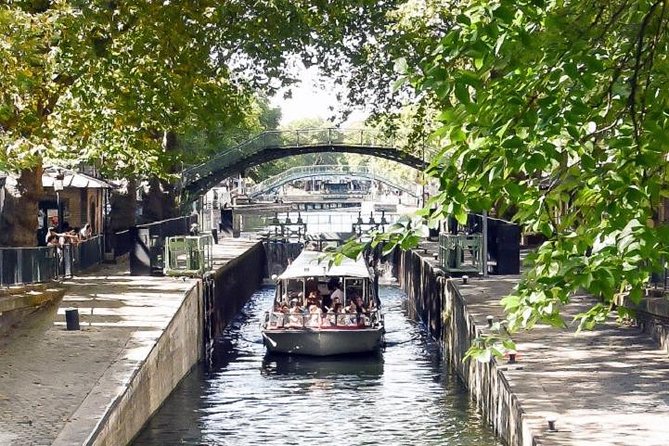
The first stretch follows Canal Saint-Martin’s tree-lined banks, where the scene shifts between old industrial structures and today’s cafés and terraces. As you glide past, you’ll hear how the canal was created to bring fresh water to Paris—and then how this neighborhood became a place people actually want to hang out.
Two things make this segment more than just pretty scenery. First, you’re moving slowly enough to notice details: the rhythm of the quays, the look of the bridges, and the way boats and pedestrians share the same narrow space. Second, the guide ties it together with practical context, so you’re not just staring at buildings—you’re understanding why this canal looks the way it does.
If you’re the type who normally spends time decoding Paris on your phone, this section is where the cruise earns its keep.
Passing Through the Locks: The Water-Level Rise-and-Fall Moment
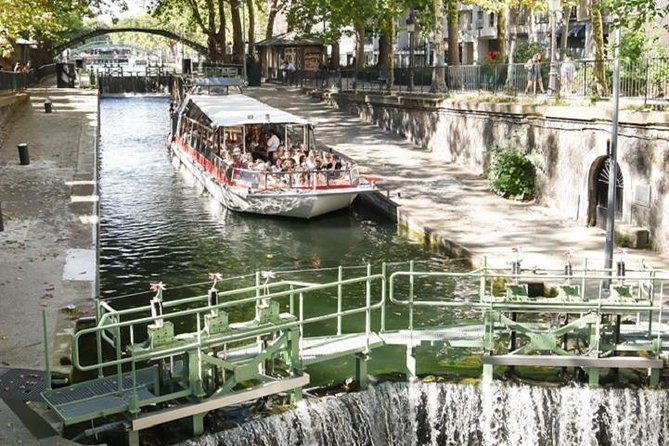
The standout engineering experience here is the lock passage. You watch gates slowly open and close while the boat moves through changing water levels, and that rise-and-fall is the most “hands-on” moment on the whole route.
This is also the easiest place to feel that you’re seeing something beyond the standard Seine cruise. On Canal Saint-Martin, everyday life shows up around the edges: locals on the quays, walkers crossing iron footbridges, and that working-meets-leisure contrast.
One practical tip: visibility can be tricky depending on where people gather on the upper deck during lock moments. If you care about watching the water level change clearly, head early for a spot that gives you an angle on the gates and the waterline.
Swing Bridge + Canal Life: How Road Traffic and Water Trade Priority
After the locks, the boat continues toward the swing bridge, another signature feature of Canal Saint-Martin. You’ll see the boat’s progress affect road traffic—cars pause so the canal can do its job—then you’re back in motion.
This part is surprisingly fun because it’s not about famous monuments. It’s about logistics and everyday coordination: how the canal operates, how movement is timed, and how the city shares space with water traffic.
If you like travel that feels like real city mechanics—not just sightseeing—this stop tends to land well. It’s also a good “reset” between the deeper tunnel section and the big open-air views to come.
The Bastille-Area Underground Tunnel: Quiet Paris Under Vaulted Streets
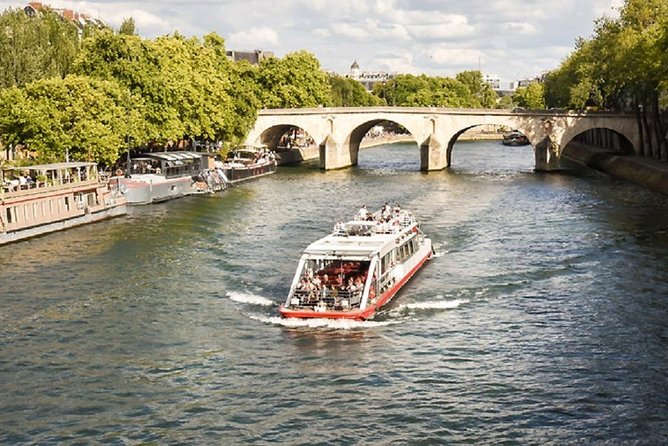
Then comes the moment that catches people off guard: you enter a long underground tunnel beneath the Bastille area. The change of atmosphere is dramatic. City noise disappears, and you glide in near-silence through a vaulted passage punctuated by shafts of daylight.
This is often the most surprising part of the experience because it flips your expectations. Paris above ground can feel loud, fast, and layered with crowds. Under the street, it feels controlled and hushed—like you’ve stepped into a different version of the city.
One common caution from past guests: the tunnel makes the early part of the cruise feel slower, especially in warm weather or on busy boats. If your priority is nonstop open-air viewing, remember that this is built in. Pick your seat with comfort in mind and plan for the fact that the Seine portion later is where the landmark photos get easier.
Worth weighing up next to this Paris pick


Port de l’Arsenal to Île Saint-Louis: From Work Port to Leisure Marina
When you exit the tunnel, the route reaches Port de l’Arsenal, a marina that connects Canal Saint-Martin to the Seine. Here you can see houseboats and pleasure craft moored in the basin.
What you’re really watching is a Paris transformation story. This used to be a commercial port area, and now it’s a pleasant harbor and garden space. That theme continues as the cruise transitions from canal life into the broader Seine panorama.
You then join the Seine proper, and the scenery opens up. One of the first big “wow” views is Île Saint-Louis, with its elegant 17th-century façades. You’ll also get an early glimpse of Île de la Cité, which helps you orient yourself before the biggest monuments start sliding by.
Seine Highlights Between UNESCO Riverbanks: Notre-Dame, the Louvre Axis, and the Tuileries
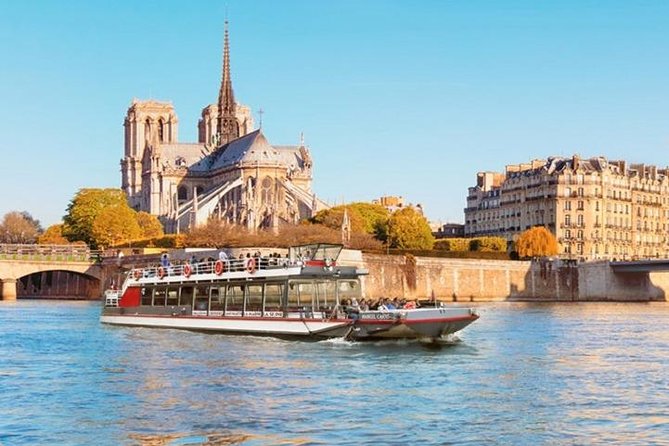
Now the boat shifts into its classic Paris highlight mode along the UNESCO-listed riverbanks. Your guide points out major monuments as they come into view: Notre-Dame Cathedral, the Conciergerie, the Louvre museum, the Tuileries gardens, the Orsay Museum, and the Eiffel Tower.
A key benefit here is pacing. You’re not walking between stops or checking which street angle gives the best photo. The river naturally guides you along a long lineup of icons, and the commentary helps you connect what you see to how the city developed.
The cruise continues past the Hôtel de Ville (City Hall) and through lively riverside promenades where people stroll and chat. That local rhythm matters, because it’s the difference between a museum day and a “Paris is alive” day.
Pont des Arts to Pont Alexandre III: Where the Bridges Steal the Show
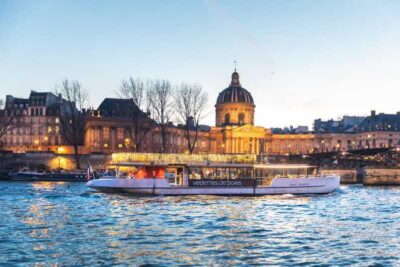
One of the photo-friendly stretch points is the Louvre frontage. From the water, the Louvre’s long river-facing façade lines up with the Institut de France on the Left Bank, and nearby you can catch the Pont des Arts footbridge—often cited as one of the best single glances to include all three in one frame.
Then you pass under Pont Alexandre III, one of Paris’s most ornate bridges, with golden statues and Art Nouveau-style lamps. Nearby you’ll see the glass roof of the Grand Palais and, across the way, the golden dome of Les Invalides, where Napoleon is buried.
This is a good segment to practice “what matters, not just what’s big.” The bridges aren’t just pretty. They’re part of how Paris links neighborhoods, handles pedestrian flow, and frames skyline views.
The Eiffel Tower Full Reveal and the Sparkle Moment
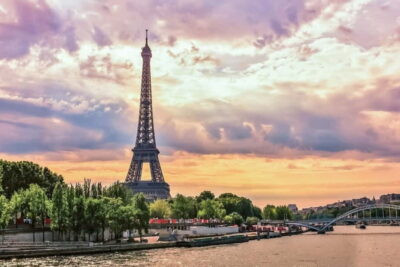
As you continue, the Eiffel Tower comes into full view over Trocadéro and the Champ de Mars. If you’re on an evening departure, the tower’s lights come on—and at the right time you may see it sparkle, which is the moment many people wait for.
This is where the cruise can feel like both romantic sightseeing and practical photo planning. Street-level crowds can make it hard to find a stable angle. From the river, you often get a cleaner sightline, and you’re already in motion, so you catch the Eiffel view multiple times as the boat curves and banks shift.
One small reality check: exact timing can depend on your departure and the river schedule. But the structure of the route is designed so the tower becomes a highlight rather than just a passing glance.
Onboard Comfort, Drinks, and How to Hear the Guide in English
Comfort isn’t uniform on this type of boat, and experiences vary based on heat, crowding, and sound. In August, the upper deck can get very hot, and one recurring note is that English narration may be harder to follow if the sound system is drowned out by group chatter.
On the plus side, the commentary often includes strong guidance from friendly, knowledgeable crew members—and names that came up include guides like Lea and Ben, plus a captain Pasquale praised for skill and continuous storytelling. That’s a good sign that you’re not getting a lifeless audio loop.
Practical move: if you want to hear the guide, position yourself so you’re not stuck behind tall groups on the top deck. If the boat is loud, leaning slightly toward the speaker zone can help. If hearing is a top priority for you, consider bringing earplugs—yes, even in Paris.
For onboard basics, there’s typically a concession stand for drinks such as soda, wine, and beer, and juices. Crepes snacks were also mentioned by some guests, which is a nice add-on for a 2-hour outing.
Price and Value: What You’re Really Paying For
At $42.05 per person for about 2 hours, you’re paying for three things that add up: the boat time, the guided narration, and the unusual route that mixes canal engineering with Seine monument views.
A standard Seine cruise often gives you the open-air lineup of landmarks. This one adds the Canal Saint-Martin lock experience and the Bastille tunnel. If those two moments are what you’re excited about, the price feels fair because you’re buying access to a part of Paris that most people never see from the water.
If you mainly want Eiffel Tower photos and a quick pass by big sights, you might be happier with a shorter or more open-air Seine option. But if you want one outing that teaches while it entertains, this route offers good value for the time.
Who Should Book This Cruise?
Book it if you want the easiest way to see a lot of Paris without planning a museum-to-landmark sprint. It’s also a great pick for first-timers who want orientation: the cruise helps you understand where Île Saint-Louis, Île de la Cité, and major monuments sit along the river.
You’ll especially enjoy it if you like engineering moments (locks), unusual settings (the tunnel), and photo opportunities that don’t require marching between viewpoints.
Skip or rethink if you strongly dislike enclosed or quieter sections. The first half includes the canal tunnel, and that can make the early part feel slower to some people—especially if the boat is crowded or the sound is hard to hear.
Should You Book This Canal-and-Seine Cruise?
I’d book this when you want a single, well-paced outing that mixes Paris romance with real waterway function. The locks and the underground tunnel are the main reasons it feels memorable, and the Seine segment delivers classic landmarks like Notre-Dame and the Louvre area with river-level photo angles.
If you do book, show up with the right expectation: it’s not just a Seine sightseeing ride. It’s a two-part route where the canal gives you the story, and the river gives you the skyline. That mix is exactly why it’s worth your time.
FAQ
How long is the Canal Saint-Martin and Seine cruise?
The cruise runs for about 2 hours.
Is the tour offered in English?
Yes. The tour is offered with English commentary.
Where do I meet, and where does the cruise end?
You start at 73 Quai de Valmy, 75010 Paris, France, and the cruise ends at 19 Quai de l’Horloge, 75001 Paris, France, on Île de la Cité near Pont Neuf.
Will I spend time underground?
Yes. The route includes a long underground tunnel beneath the Bastille area, as well as the canal lock passages before you reach the Seine.
What happens if the weather is bad?
The experience requires good weather. If it’s canceled due to poor weather, you’ll be offered a different date or a full refund.
What’s the group size limit?
The tour has a maximum of 100 travelers.
More Cruises & Boat Tours in Paris
- Paris: 1-Hour Seine Cruise departing from the Eiffel Tower
★ 4.4 · 77,472 reviews - Paris: Evening River Cruise with Music
★ 4.4 · 22,721 reviews - Paris: Louvre Guided Tour with Reserved Access & Boat Cruise
★ 4.3 · 16,353 reviews - Paris: Tootbus Hop-on Hop-off (Optional River Cruise)
★ 4.3 · 15,279 reviews - Paris: Big Bus Hop-On Hop-Off Tour with Optional Cruise
★ 4.4 · 13,279 reviews
More Tour Reviews in Paris
- Paris: 1-Hour Seine Cruise departing from the Eiffel Tower
★ 4.4 · 77,472 reviews - Paris: Louvre Museum Timed-Entrance Ticket
★ 4.6 · 71,977 reviews - Disneyland® Paris 1-Day Ticket
★ 4.6 · 49,412 reviews - Paris: Versailles Palace and Gardens Full Access Ticket
★ 4.6 · 41,579 reviews - Paris: Arc de Triomphe Rooftop Tickets
★ 4.6 · 34,264 reviews
More Cruises on the Seine
- Paris: 1-Hour Seine Cruise departing from the Eiffel Tower
★ 4.4 · 77,472 reviews - Paris: Seine Cruise & Crepe Tasting near the Eiffel Tower
★ 4.4 · 11,231 reviews - Paris: Seine River Panoramic Views Dinner Cruise
★ 4.3 · 10,611 reviews - Paris: Eiffel Tower Access by Elevator & Seine River Cruise
★ 4.6 · 7,329 reviews - Paris: 3-Course-Dinner Cruise on the Seine with live music
★ 4.7 · 7,248 reviews
Fresh off the review desk in Paris
- Secrets of Paris Bike Tour in English or Dutch★ 5.0 · 5 reviews
- Paris: Mont Saint-Michel Day Tour with Chinese Tour Guide★ 5.0 · 5 reviews
- Private Street Art 2-Hour Guided Tour in Paris★ 4.5 · 5 reviews
- Orsay Museum Tour: 2h Highlights (Private & Small Group)★ 5.0 · 5 reviews
- Discover Paris in electric golf carts★ 4.0 · 5 reviews
- Paris Private Boat Tour with your own Captain Guide★ 5.0 · 5 reviews
Seine River Cruises, compared.
 ★ 4.41-Hour Seine Cruise departing from the Eiffel TowerFrom $2077,472 reviews
 ★ 4.4Seine Cruise & Crepe Tasting near the Eiffel TowerFrom $2311,231 reviews
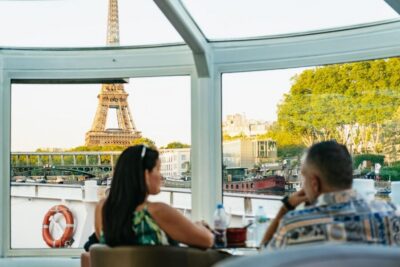 ★ 4.3Seine River Panoramic Views Dinner CruiseFrom $6410,611 reviews
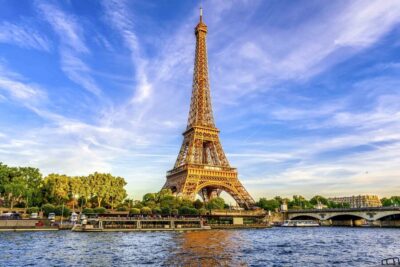 ★ 4.6Eiffel Tower Access by Elevator & Seine River CruiseFrom $797,329 reviews
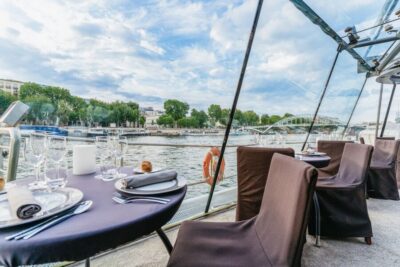 ★ 4.73-Course-Dinner Cruise on the Seine with live musicFrom $1357,248 reviews
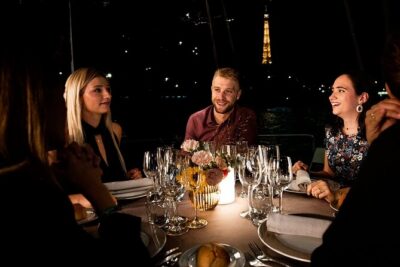 ★ 4.5Bateaux Parisiens Seine River Gourmet Dinner & Sightseeing CruiseFrom $1506,930 reviews
 ★ 4.4Hop-On Hop-Off Seine Cruise Pass with 9 StopsFrom $275,645 reviews
 ★ 4.2Seine River Bistronomic Dinner CruiseFrom $695,272 reviews
Browse the lists this tour appears in