
Reviewed · PARIS
Paris: Khéops VR Experience – Explore Ancient Egypt
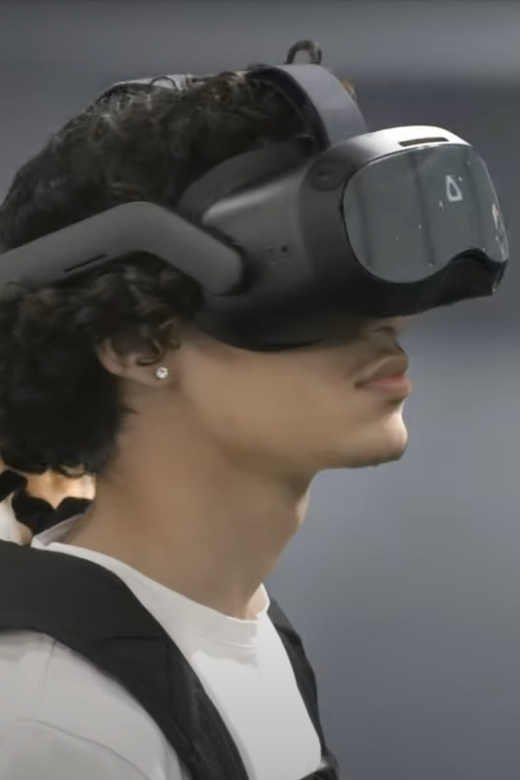
A pyramid tour, minus the flights. The Khéops VR Experience brings the Great Pyramid of Khufu to life inside a Paris setting, using 360° visuals and a guided story so you can look around and go deeper than you ever could in a normal museum visit. It’s an indoor cultural break that feels movie-big, without needing to leave town.
I love the hyper-realistic 360° reconstruction of the Giza Plateau and the pyramid exterior. I also really liked the way you can step into interior corridors and chambers that are usually off limits to the public. The whole thing is built with historical support, so it feels less like a tech demo and more like a guided look at how the monument was meant to be seen.
One thing to consider: the show mixes what you’re seeing with guide commentary that’s fairly detailed. If you try to do everything at once, you may miss some of the story while you’re staring in awe.
In This Review
- Key things to know before you go
- Khéops VR in Paris: What the Great Pyramid Experience Really Delivers
- From Orientation to the Foot of Khufu’s Pyramid
- Walking the Giza Plateau: Scale You Can Actually Feel
- Inside Hidden Chambers: The Moment the Experience Earns Its Price
- Sound, Lighting, and Smooth Motion: When VR Feels Respectful
- How Long It Takes (and How to Fit It Into a Paris Day)
- Who Should Go: Perfect for Curious Adults, Great for Families Over 8
- Price and Value: Is $37 Worth It?
- Practical Tips So You Get the Best Experience
- Should You Book Khéops VR Experience in Paris?
- FAQ
- How long is the Khéops VR Experience in Paris?
- Is it fully indoors?
- What will I see during the VR journey?
- Can you enter the pyramid’s interior?
- What languages are available?
- What age is it suitable for?
- Is it safe for people with epilepsy or heart problems?
- Is the experience wheelchair accessible?
- Is there free cancellation?
- Is there a reserve and pay later option?
Key things to know before you go
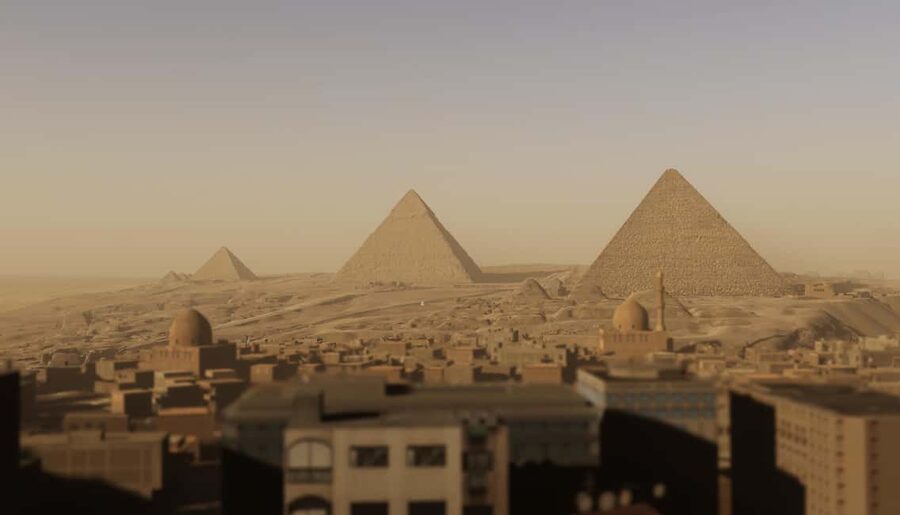
- Hyper-real 360° views of Khufu’s pyramid and the surrounding plateau
- Access to interior spaces normally not open to visitors
- Historical context up front, so the visuals land with meaning
- Cinematic sound, lighting, and smooth movement that keep the experience flowing
- Great for families over 8, and for history lovers who like learning by seeing
Khéops VR in Paris: What the Great Pyramid Experience Really Delivers
This is one of those Paris activities that doesn’t feel like a detour—it feels like a smart upgrade. Instead of walking the city for hours and hoping you catch the right museum timing, you get a concentrated hour indoors that targets one subject: the Great Pyramid of Khufu.
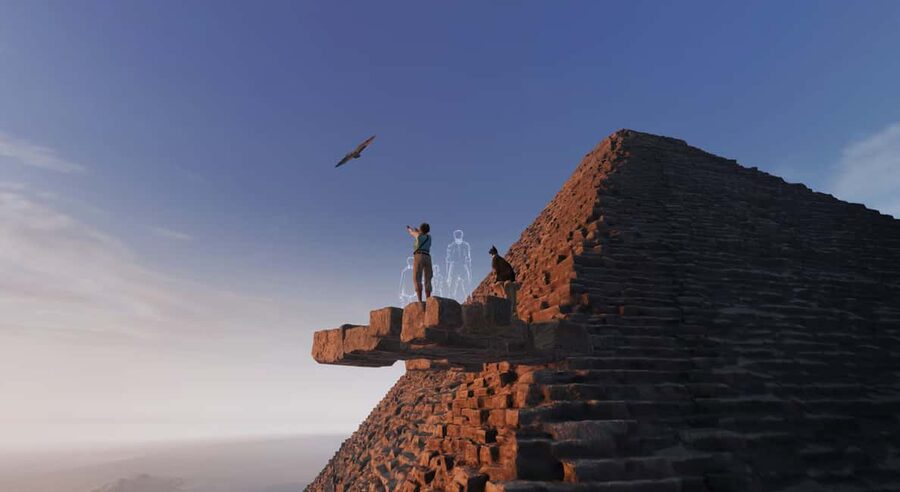
You’ll start with a short introduction about the archaeological context and Egyptian architectural mysteries. Then the main event kicks in when you put on the next-generation VR headset and find yourself at the foot of the pyramid. From there, you can look around freely in 360°, walk around the virtual plateau, and go inside the pyramid’s interior spaces.
What matters here is pacing. The experience is built to be absorbed in layers: first context, then scale, then detail, then “wait, I’m inside it.” If you like a guided story that helps you understand what you’re looking at, this format works.
And yes—the production quality is a big part of why people rate it so highly. One review called it totally immersive and praised the design. That matches what you’re paying for: the setup is meant to make the virtual environment feel believable, not just “cool-looking.”
Still deciding? Here is how it stacks up against a few Paris favourites we have booked and reviewed.
- Paris: 1-Hour Seine Cruise departing from the Eiffel Tower
★ 4.4 · 77,472 reviews - Paris: Louvre Museum Timed-Entrance Ticket
★ 4.6 · 71,977 reviews - Disneyland® Paris 1-Day Ticket
★ 4.6 · 49,412 reviews - Paris: Versailles Palace and Gardens Full Access Ticket
★ 4.6 · 41,579 reviews
From Orientation to the Foot of Khufu’s Pyramid
Before the visuals hit, you get a brief orientation. The goal is simple: set your expectations so the pyramid doesn’t feel like random scenery. You’ll hear the archaeological context and learn why Egyptian architecture is full of mystery and intention.
Then you’re transported to the virtual site—positioned at the foot of Khufu’s pyramid. The site appears in a vivid 360° reconstruction as it looked roughly 4,500 years ago. This is where the experience does its best trick: it uses scale and surroundings, not just the pyramid alone. You’re not only watching a model; you’re standing in its environment.
A practical benefit: this is a place where you don’t have to fight crowds or angle your neck for photos. You can turn slowly and really take in what’s around you, without someone elbowing past you. If you’ve ever visited famous monuments and felt rushed, you’ll understand why this VR version can feel oddly comforting.
Walking the Giza Plateau: Scale You Can Actually Feel
Once you’re in the experience, you can walk freely across the plateau. That’s more important than it sounds. Many VR shows put you in place and let you look only at what they point out. Here, the movement is part of the design, so you get a better sense of distance—how the pyramid dominates the area, and how the surroundings frame it.
You’ll have time to examine the monumental structure up close. The virtual recreation is presented as hyper-detailed, and the approach makes it easier to notice relationships you might miss in a traditional photo tour. For example, you can compare how the pyramid reads from different viewing angles and how that changes your understanding of its mass.
This is also the portion where your attention skills matter. The show blends visuals with guided commentary. One review noted it can be hard to focus on the environment and the guide’s fairly detailed remarks at the same time, and that a second visit might help. I agree with the underlying idea: you’re going to want to pick a priority for each moment. If you’re the type who learns by listening first, do that. If you’re the type who learns by looking, let the visuals lead and catch the narration as your second layer.
Inside Hidden Chambers: The Moment the Experience Earns Its Price
Here’s the core reason to pick this over a quick entertainment stop: you can step inside corridors and chambers that are normally inaccessible to the public.
In the real world, access limitations shape what most visitors can see. In this VR version, those limits get removed. You can go into interior spaces and experience the sense of depth without needing special permits or travel logistics.
This matters for understanding. The Great Pyramid isn’t just a shape outside a viewpoint. It’s a monument of interior planning—spaces, passages, and architectural logic. When you’re inside, the pyramid stops being an iconic silhouette and becomes a designed interior system. You’re able to connect the exterior “wow” with the interior “how does it work?”
The experience is also built with support from historical experts, which helps keep the presentation grounded. Even if you already know the basics, walking these interior routes in VR can sharpen what you think you know. And if you’re new to Egyptian history, it’s a powerful first impression because it gives you more than surface-level visuals.
Sound, Lighting, and Smooth Motion: When VR Feels Respectful
A VR experience can fail in two ways: it can be visually impressive but distracting, or it can be calm but static. This one tries to hit a third option: cinematic sound, dynamic lighting, and smooth motion that support your understanding rather than grabbing your attention every second.
The audio and lighting do real work. The sound design helps you feel oriented within the virtual space, while the lighting guides where to look—especially when you’re moving from plateau views toward the pyramid interior.
Movement is also described as smooth. That matters because comfort affects enjoyment. You’re not just wearing a headset; you’re “walking” in a controlled way in a virtual space. If you’ve struggled with VR before, this is still worth considering, since the experience is designed to be for all audiences (with health and age limitations—more on that soon).
One more subtle point: a well-run VR session prevents you from getting stuck in confusion. The time window is short enough that you shouldn’t feel lost. Reviews point to the staging being surprising and beautiful, which fits the idea that the production knows how to keep momentum.
How Long It Takes (and How to Fit It Into a Paris Day)
You’ll see an overall duration of about 1 hour, with the VR segment itself lasting around 45 minutes. That extra time is for the brief introduction, getting fitted with the headset, and transitioning between parts of the story.
So think of it as a compact, high-impact activity. It’s especially handy if you’re dealing with rain, tired feet, or a day when you want something cultural but indoors.
If you’re building an itinerary, I’d treat it like a focused attraction rather than a filler. Don’t cram it between major site visits with tight timing. Give yourself a little breathing room so you can arrive relaxed. You’ll enjoy the VR more when you’re not rushing in mentally.




Who Should Go: Perfect for Curious Adults, Great for Families Over 8
This VR experience is designed for all audiences, but the eligibility rules are clear.
It’s not suitable for children under 8, and it also isn’t recommended for people with heart problems or epilepsy. If any of those apply to you, skip it. VR isn’t the place to gamble with health.
If you’re looking for a smart Paris activity for families, the age rule is the key. For kids old enough to meet the minimum, this tends to land well because it’s visual and story-driven, not lecture-driven. One review specifically mentioned that the grandkids were thrilled—exactly the type of reaction you want from a trip activity.
For history lovers, it works because it mixes storytelling with access to spaces that would take you far away otherwise. For people who don’t love long museum hours, it works because the entire experience is concentrated and time-boxed.
For people who are sensitive to being read through a headset: the narration is detailed, so if you dislike multitasking, you might want to mentally prepare for that tradeoff. You can still enjoy the visuals, but you may not catch every line.
Price and Value: Is $37 Worth It?
At around $37 per person, this isn’t the cheapest way to spend an hour in Paris. It’s priced like a premium, production-heavy attraction.
Where the value comes from is what’s included. You get the VR headset experience, the main 45-minute guided journey, and a full storyline built with historical context. You’re also getting a “special access” effect—inside corridors and chambers you can’t just walk into during a regular day trip.
If you’re comparing it to a standard museum ticket, VR doesn’t give you a whole building of content. But it does give you something different: a sense of presence inside a famous monument. In practical terms, it can be a great choice when you want one iconic theme handled deeply in a short window.
The best way to think about the price is this: you’re paying for production quality and historical storytelling, not for travel to Egypt. For a weather-proof, time-efficient activity in Paris, it can feel like good value—especially if you love the idea of seeing something iconic from inside.
Practical Tips So You Get the Best Experience
Here are the things that will help you enjoy it more, with zero guesswork:
- Use the first minutes to set your focus. That opening context helps everything after it make sense.
- Choose your attention style. If you love details, listen and look in turns. If you’re more visual, prioritize the spaces first, then catch the story as it comes.
- Give your body a comfortable start. VR is easier when you arrive calm, not rushed.
- Plan for a “learning by seeing” moment. This experience is designed to teach through visuals. If you go in wanting only facts, you might feel impatient. If you go in open to the story, it lands better.
- Bring the family rule in mind. Under 8 is a no-go, so you’ll want to schedule based on age.
And one more tip based on real feedback: if you find the commentary rich (and it is), don’t fight it. Try not to do everything at once. You’ll still come away impressed by the pyramid visuals and the interior access.
Should You Book Khéops VR Experience in Paris?
I’d book it if you want a single, high-impact cultural experience that’s indoor, time-efficient, and genuinely different from the usual Paris routine. It’s a strong pick for families with kids over 8, for adults who like history told through visuals, and for anyone who likes the Great Pyramid story but prefers not to spend a day navigating crowds or travel time.
I’d think twice if VR isn’t comfortable for you personally, or if you’re in a health-risk group listed by the experience guidelines. I’d also reconsider if you’re very uncomfortable with audio narration while trying to look around—because the show mixes both, and attention can split.
If you fit the audience and you’re curious about ancient Egypt through a modern format, this is one of the more satisfying “Paris and then something else” activities you can add for a full hour of cinematic learning.
FAQ
How long is the Khéops VR Experience in Paris?
The experience lasts about 1 hour in total, with the VR part running for around 45 minutes.
Is it fully indoors?
Yes. It’s a fully indoor activity, so it works even when the weather is bad.
What will I see during the VR journey?
You’ll explore the Giza Plateau and the Great Pyramid of Khufu through a 360° VR recreation, with a story-led introduction to the archaeological context.
Can you enter the pyramid’s interior?
Yes. The experience includes corridors and chambers that are normally inaccessible to the public.
What languages are available?
The host or greeter offers French and English.
What age is it suitable for?
It’s not suitable for children under 8.
Is it safe for people with epilepsy or heart problems?
No. It’s not suitable for people with epilepsy or people with heart problems.
Is the experience wheelchair accessible?
Yes, it is wheelchair accessible.
Is there free cancellation?
Yes. You can cancel up to 24 hours in advance for a full refund.
Is there a reserve and pay later option?
Yes. You can reserve and pay later, so you can book without paying right away.
More Tour Reviews in Paris
- Paris: 1-Hour Seine Cruise departing from the Eiffel Tower
★ 4.4 · 77,472 reviews - Paris: Louvre Museum Timed-Entrance Ticket
★ 4.6 · 71,977 reviews - Disneyland® Paris 1-Day Ticket
★ 4.6 · 49,412 reviews - Paris: Versailles Palace and Gardens Full Access Ticket
★ 4.6 · 41,579 reviews - Paris: Arc de Triomphe Rooftop Tickets
★ 4.6 · 34,264 reviews
Fresh off the review desk in Paris
- Secrets of Paris Bike Tour in English or Dutch★ 5.0 · 5 reviews
- Paris: Mont Saint-Michel Day Tour with Chinese Tour Guide★ 5.0 · 5 reviews
- Private Street Art 2-Hour Guided Tour in Paris★ 4.5 · 5 reviews
- Orsay Museum Tour: 2h Highlights (Private & Small Group)★ 5.0 · 5 reviews
- Discover Paris in electric golf carts★ 4.0 · 5 reviews
- Paris Private Boat Tour with your own Captain Guide★ 5.0 · 5 reviews