
Reviewed · PARIS
Paris Left Bank: Writers, Revolution, and Black Coffee
Ideas start in the Latin Quarter. This Paris Left Bank tour connects medieval lanes, major campuses, and writer lore with a street-level energy that feels made for rainy days. I love the way the route tracks famous names through real places, from Shakespeare & Co to the Sorbonne area, without turning Paris into a museum line.
Second, I really like the guide style: small-group pace, English narration, and personal touches—some guides (like Mattieu, Yago/Yage, and Floriane) use extra photos and local context to make the stories stick. The only real drawback is practical: it’s a walk-first experience with no wheelchair accessibility, so you’ll want comfortable shoes and patience for crowds near landmarks.
In This Review
- Key highlights you’ll care about
- Why the Latin Quarter still feels like Paris’ idea engine
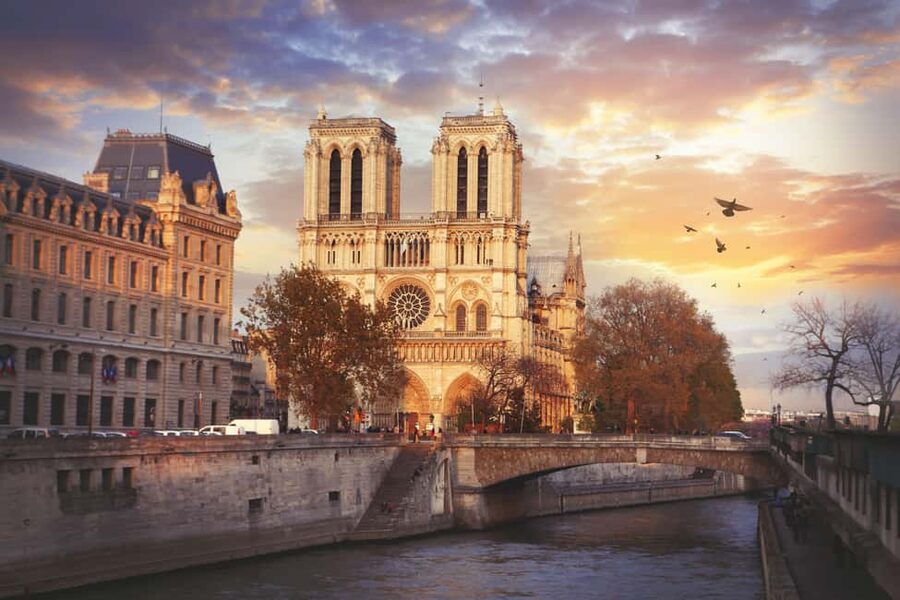
- Meeting at Notre-Dame: start fast, orient instantly
- The Notre-Dame area: history in stone, not in a ticket line
- Shakespeare & Co: books you can almost smell
- Sorbonne and La Sorbonne: when one word carries weight
- Musée du Moyen Age–Thermes et Hôtel de Cluny: Roman baths inside medieval Paris
- Hidden courtyards, an English street, and a student-life vibe
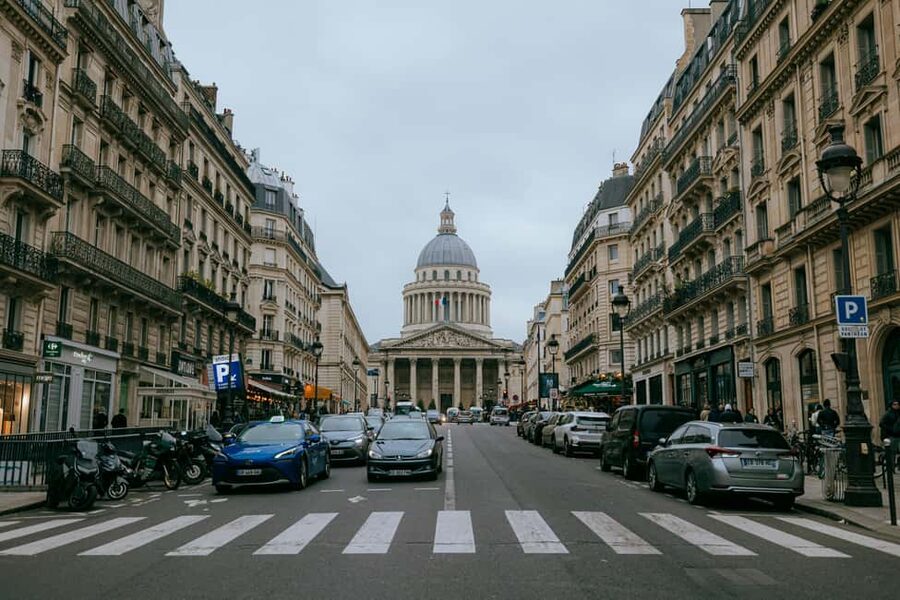
- Luxembourg Garden and the march toward the Panthéon
- Rain or shine: why this timing works better than self-guided wandering
- Price and value: $23 for a themed, guided Left Bank route
- Who should book this Latin Quarter tour
- Should you book this tour?
- FAQ
- FAQ
- How long is the Paris Left Bank Writers, Revolution, and Black Coffee tour?
- Is the tour in English?
- Does it run in bad weather?
- What’s included in the price?
- Are museum or monument entries included?
- Where do I meet the guide?
- What if I arrive late and miss the start?
- Is this tour suitable for wheelchair users?
Key highlights you’ll care about
- A “writers to revolution” storyline running from Notre-Dame to the Panthéon
- English tour, small group, rain or shine
- Hidden courtyards and back lanes that most first-timers miss
- Sorbonne gravity plus student-life details like cheap black coffee
- Roman bathhouses in the mix at the Musée de Cluny area
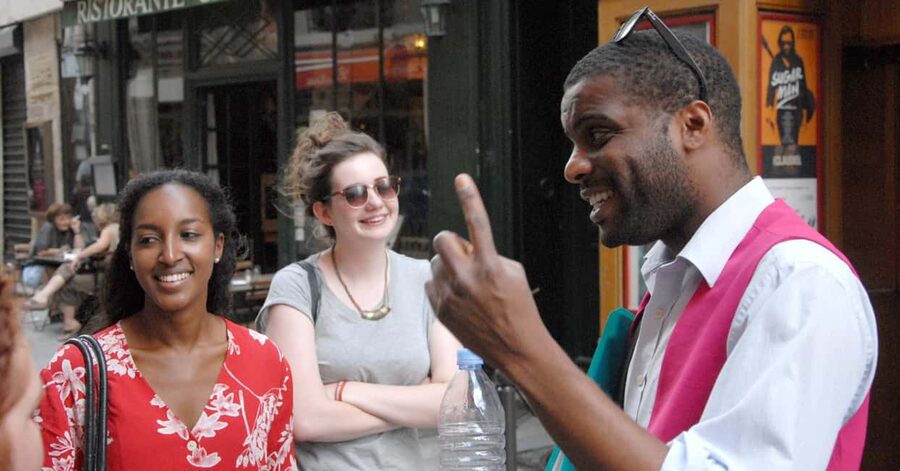
- Guides with personality, including photo aids and practical tips in English
Why the Latin Quarter still feels like Paris’ idea engine
The Latin Quarter isn’t famous just because it’s old. It stays famous because ideas collide here—academics, artists, writers, and rule-breakers sharing tight sidewalks and sharper opinions. On this tour, that theme isn’t just a slogan. You’ll hear why institutions formed, who challenged them, and how that tension shaped everything from literature to politics.
You’ll also get a specific vibe for Paris as a working city, not a staged postcard. The tour slows down at the spots where talk spills into history—places where students once argued late, where books changed hands, and where coffee shows up as fuel.
And yes, the coffee talk is real. The tour leans into the neighborhood’s habit of cheap, strong black coffee—because in student-land, caffeine is a lifestyle, not a beverage.
Worth weighing up next to this Paris pick
- Montmartre & Sacré Coeur : Museum & Coffee In A Tiny Group Tour
★ 5.0 · 8 reviews
Meeting at Notre-Dame: start fast, orient instantly
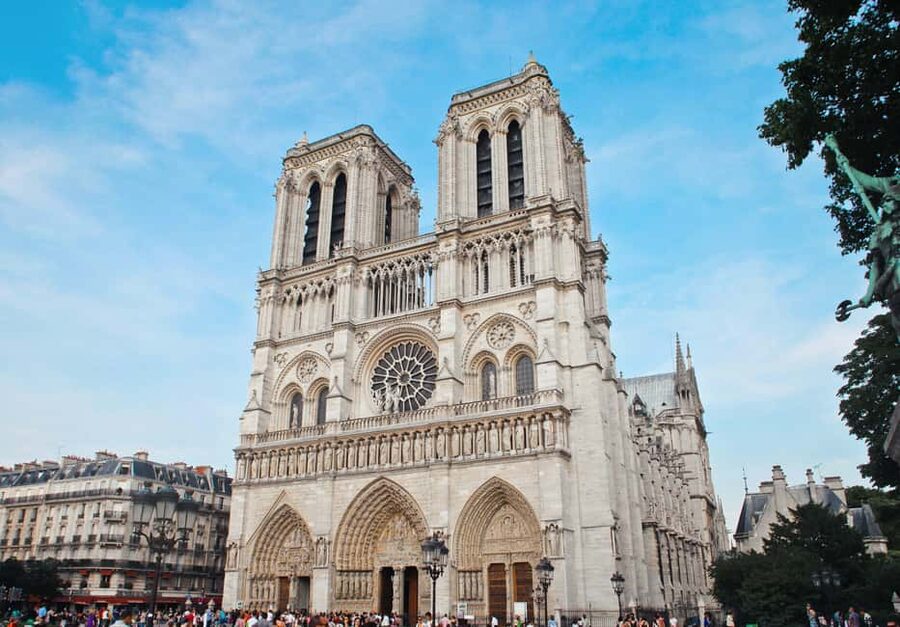
You begin in front of Notre-Dame, at the Statue de Charlemagne area, where your guide wears a pink vest. That’s a smart choice. You get grounded right away with medieval Paris in view, then you can build an actual walking mental map instead of just absorbing “sights” in pieces.
Your timing matters here. The tour starts right on time, and you walk rain or shine. If you’re the type who hates rushing, give yourself an extra buffer to find the vest and settle in before you move.
The route then begins with a short stop at Square René Viviani, a small pause that helps you understand how the neighborhood’s layout supports the Latin Quarter’s stubborn, labyrinth feel. Think of it as your warm-up: you’re learning the pattern before the storytelling gets heavy.
The Notre-Dame area: history in stone, not in a ticket line
You’ll spend a short time near Notre-Dame Cathedral. This isn’t a ticketed cathedral visit. That’s a big reason the tour stays good value: you pay for guiding and direction, not for waiting and entry fees.
What you can do with that is practical. I like that you’re close enough to feel the scale and the medieval atmosphere, but the tour doesn’t trap you in a long queue. Some guides also share practical pointers on timing—like when it’s easier to go inside Notre-Dame when crowds are lighter—so you can choose whether you want to upgrade your day later.
One note: Notre-Dame is a magnet. Even with a guided plan, you’ll feel the foot traffic. If you’re sensitive to crowds, the tour’s “walk and listen” rhythm can still be the better option versus trying to do everything independently in the same area.
Shakespeare & Co: books you can almost smell
From the start, the tour pushes you toward Shakespeare & Company, one of the Latin Quarter’s best-known bookshops. This stop works because it’s not just “a famous shop.” The surrounding streets are the point. You’ll get a sense of why writers stuck around here and why books mattered to the neighborhood’s self-image.
The tour’s tone is story-led—hearing about literary figures where they connect to the physical streets and corners. That makes the bookshop feel like part of the neighborhood’s memory, not just a retail stop.
If you like literature but don’t want a strict lecture, this is one of the best parts. It’s quick, but it’s specific: you’re shown the angles that support the stories rather than being pushed through a scripted checklist.
Sorbonne and La Sorbonne: when one word carries weight
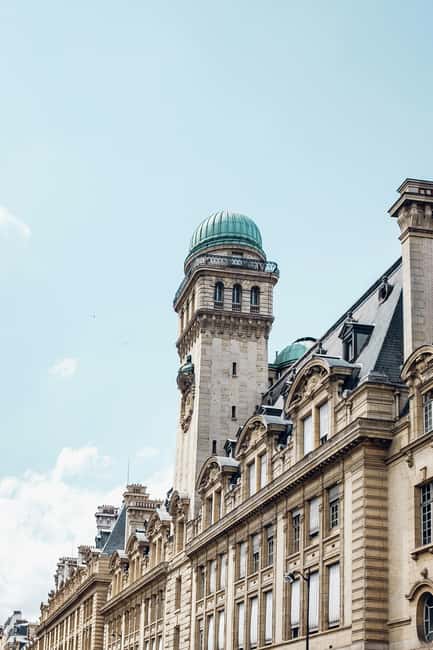
Next comes Sorbonne University and the La Sorbonne area—two moments where you can feel the difference between “old buildings” and “old institutions.” This is where the neighborhood stops being only romantic and becomes serious.
Here’s what you’ll appreciate: the tour connects the Church’s early role in founding education systems with how those controls were challenged over time. That gives context for why the Sorbonne name still lands with global weight. It’s not just academic branding. It’s a history of power, debate, and the slow fight for intellectual independence.
I also like that the tour doesn’t treat the Sorbonne like a locked-off monument. You’re walking in a living academic district, so it feels less like “look at the university” and more like “notice how the place shapes people.”
Musée du Moyen Age–Thermes et Hôtel de Cluny: Roman baths inside medieval Paris
The tour includes a guided look at Musée National du Moyen Age–Thermes et Hôtel de Cluny (about ten minutes). You won’t be in here long, and it’s not framed as a full museum day. But it’s a brilliant way to understand why the Latin Quarter is layered.
Why? Because this site connects medieval Paris to older Roman remains—often described through the Roman bathhouses theme that sits underneath the neighborhood’s later life. Even a short guided stop helps you see the area as continuity, not a single era pretending the past started at one date.
The trade-off is obvious: you don’t get deep museum time. If you want to spend hours inside collections, you’ll still need a separate visit. But for a 90-minute walk, this stop gives you the “aha” that makes the rest of the tour click.




Hidden courtyards, an English street, and a student-life vibe
Between the big landmarks, the tour works its magic through the spaces in between. You’ll walk medieval lanes tourists often miss on their own, and you’ll pass quieter pockets like hidden courtyards and central streets that shaped daily student life.
The Latin Quarter is known for its argumentative energy, and you’ll hear that theme built through what you see: tight passages, courtyards that redirect sound, and places where people gathered to talk. Even without official “tourist highlights,” these moments help you understand how ideas spread—slowly, socially, and stubbornly.
The tour also references the street of the English and an art-house cinema in the area. Again, you’re not getting a formal screening; you’re getting orientation. You’ll understand how the neighborhood attracted international voices and cultural types who came for words, wine, and debate.
And yes, the coffee stays in the story. Expect talk about cheap black coffee and how that fits the student routine—sharp opinions, late nights, and the daily fuel of “just one more conversation.”
Luxembourg Garden and the march toward the Panthéon

Toward the end, you shift into a more reflective mood as you head toward the Panthéon. The tour includes time around the Luxembourg Garden area as part of the route’s larger arc.
This matters because it balances the intellectual intensity you’ve been walking through. You’re not just hearing about revolution as an abstract concept—you’re experiencing a neighborhood that moves from tight medieval texture to calmer open space, which is exactly how Paris can feel from block to block.
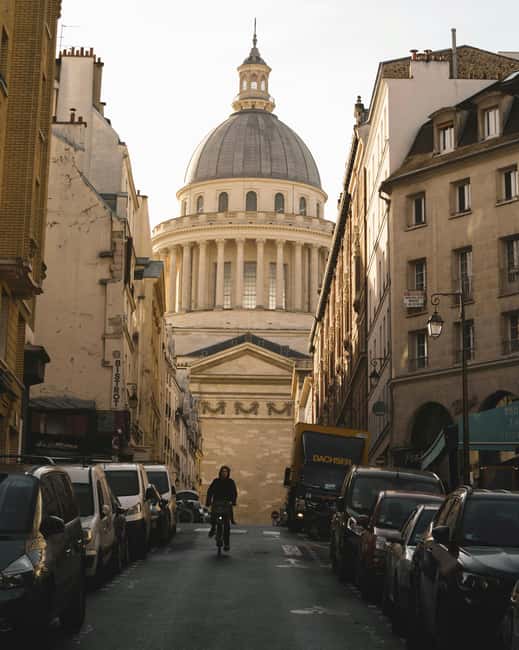
When you reach the Panthéon as the finish point, the tour closes its biggest theme: writers, rebellion, and the idea that neighborhoods can train people for change. You get a final visual anchor where all those stories feel like they belong in the same city, not in disconnected guidebook chapters.
Rain or shine: why this timing works better than self-guided wandering

This walk is built for rain or shine, which is great because Paris weather can change fast. The route is short enough (90 minutes) that you’re not stuck for half a day if conditions turn. And since it’s small-group, you get more attention than you would on a long bus tour.
Also, because it’s guided in English, you’re not stuck translating street-by-street. That’s not just comfort. It changes how you experience the places. You’ll pick up the why behind the architecture and the “who” behind the stories—so you leave knowing something, not just taking photos.
One practical point: bring a reusable water bottle. The tour includes stops for water and shade, and that small detail can be the difference between finishing strong and feeling wiped out early.
Price and value: $23 for a themed, guided Left Bank route
At $23 per person for 90 minutes, this is priced like a budget-friendly activity—but it doesn’t feel like a generic “tourist walk.” You’re paying for two things: a guide who knows the neighborhood lived-in style, and time saved by not having to piece together the stories yourself.
Notably, it does not include museum or monument entry fees. That’s a plus for cost control. You get guiding and context at key stops like the Cluny area and major institutions, but you can decide later whether you want deeper ticketed time.
You’ll also see why the stories feel more grounded thanks to guide personality. In reviews, guides like Mattieu and Yago/Yage were praised for being enthusiastic, patient, and for bringing extra help like supplementary photo materials. Others—like Floriane—were noted for an authentic, local approach and personal knowledge rather than only textbook facts.
Who should book this Latin Quarter tour
This tour is a strong fit if you:
- Want a Left Bank “idea tour” instead of a monuments-only day
- Prefer walking + storytelling over sitting in one place
- Enjoy English guidance with local context, not just audio commentary
- Like literature and cultural history, especially when it ties to real streets
It’s not a fit if you need wheelchair access. Also, because it’s a walk through busy areas, it’s easiest if you’re comfortable with uneven sidewalks and typical Paris foot traffic.
Should you book this tour?
If your goal is to understand why the Latin Quarter matters—intellectually, culturally, and historically—this is an efficient way to start. For $23 and 90 minutes, you get a coherent storyline from Notre-Dame toward the Panthéon, plus practical pacing and shade/water stops.
I’d book it when:
- You’re short on time and want structure
- You’d rather avoid crowd chaos by following a guide’s plan
- You want the neighborhood’s “student life” energy, not just famous facades
Skip it only if you want long museum time or full ticketed monument visits. In that case, you can still use this as inspiration, but plan separate entries later.
FAQ
FAQ
How long is the Paris Left Bank Writers, Revolution, and Black Coffee tour?
It lasts 90 minutes.
Is the tour in English?
Yes. The live tour guide speaks English.
Does it run in bad weather?
Yes. The tour walks rain or shine.
What’s included in the price?
You get a local passionate and fun guide, an experience designed to show the true Paris, and stops for water and shade.
Are museum or monument entries included?
No. Entries to any museum or monument are not included.
Where do I meet the guide?
Meet in a pink vest under the Horseman statue in front of Notre-Dame.
What if I arrive late and miss the start?
You can try locating the guide 20 minutes after departure at 77 rue Galande in front of the café Odette.
Is this tour suitable for wheelchair users?
No. It is not suitable for wheelchair users.
More Coffee Experiences in Paris
- Montmartre & Sacré Coeur : Museum & Coffee In A Tiny Group Tour
★ 5.0 · 8 reviews
More Tour Reviews in Paris
- Paris: 1-Hour Seine Cruise departing from the Eiffel Tower
★ 4.4 · 77,472 reviews - Paris: Louvre Museum Timed-Entrance Ticket
★ 4.6 · 71,977 reviews - Disneyland® Paris 1-Day Ticket
★ 4.6 · 49,412 reviews - Paris: Versailles Palace and Gardens Full Access Ticket
★ 4.6 · 41,579 reviews - Paris: Arc de Triomphe Rooftop Tickets
★ 4.6 · 34,264 reviews
Fresh off the review desk in Paris
- Secrets of Paris Bike Tour in English or Dutch★ 5.0 · 5 reviews
- Paris: Mont Saint-Michel Day Tour with Chinese Tour Guide★ 5.0 · 5 reviews
- Private Street Art 2-Hour Guided Tour in Paris★ 4.5 · 5 reviews
- Orsay Museum Tour: 2h Highlights (Private & Small Group)★ 5.0 · 5 reviews
- Discover Paris in electric golf carts★ 4.0 · 5 reviews
- Paris Private Boat Tour with your own Captain Guide★ 5.0 · 5 reviews