
Reviewed · CRUISES & BOAT TOURS
Private cruise with Paris water way
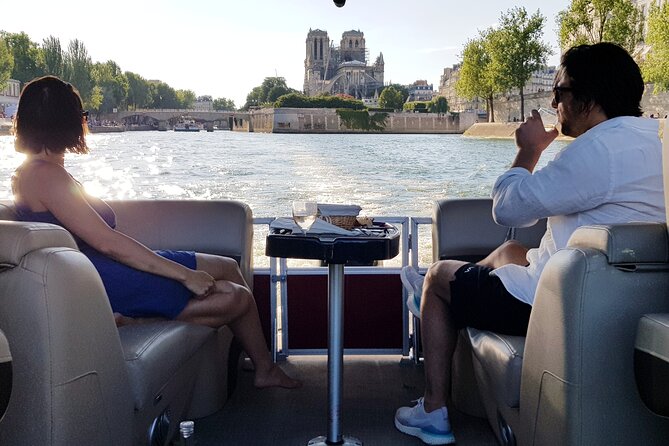
The Seine tells stories without rushing. This private 90-minute cruise gives you an easy way to see Paris landmarks from the water, with an English-speaking guide that keeps the facts clear and the vibe relaxed. I especially like that the guide can turn history into something you can follow fast, even for kids, like one run with guide Diego where the whole family stayed engaged. And I really like the straight shot of famous sights without the stress of lining up or planning separate stops. The main drawback: it runs on a set route, and it depends on good weather, so you’ll want a backup mindset if skies don’t cooperate.
You meet at 14 Quai François Mitterrand, then settle in for a loop that passes major “must-see” areas—bridges, islands, and big museum buildings—while the boat does the work of moving you along. Since it’s only your group, the experience feels calmer than you’d get on a packed public cruise, and you can ask questions without shouting. Just remember: you’re not getting long “go inside” time here, so think of this as your best overview pass, not a replacement for museum tickets.
In This Review
- Quick reasons this Seine cruise works
- What a 90-minute private Seine cruise is really for
- Meeting at 14 Quai François Mitterrand and getting settled fast
- Île Saint-Louis: the quieter island with royal-name legends
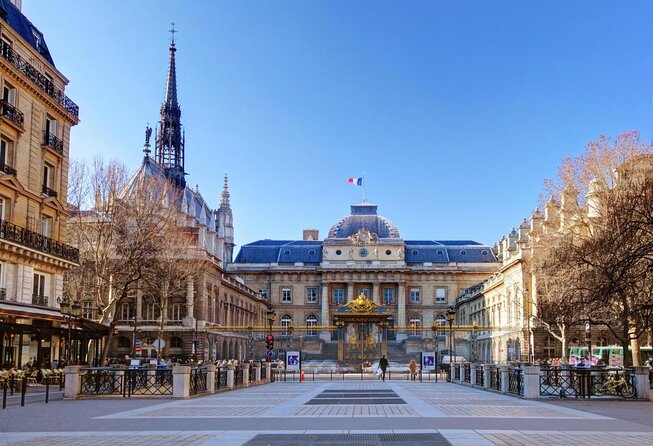
- Île de la Cité and the Palais de Justice area: where Paris’ power lived
- Pont Neuf and Pont des Arts: old stone versus modern romance
- Louvre and Musée d’Orsay from the river: two museums, one viewpoint
- National Assembly, Alexandre III bridge, and the river’s power symbols
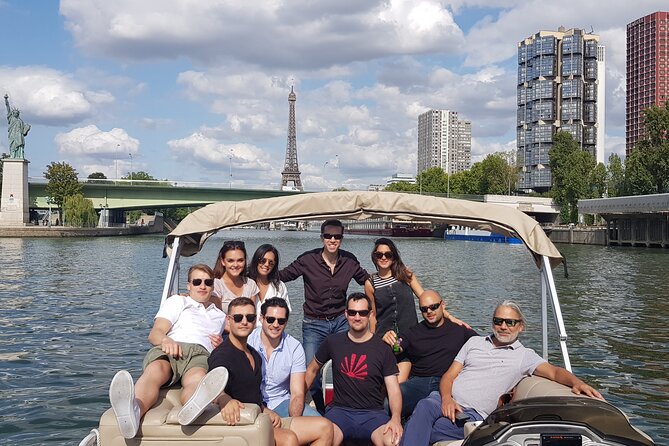
- Eiffel Tower sightline: what you’re really getting near the end
- Price and value: is $94.63 per person worth it?
- Who should book this Seine cruise?
- Should you book this Paris Water Way private cruise?
- FAQ
- How long is the private cruise on the Seine?
- Is this tour private?
- What language is offered?
- Where do we meet for the cruise?
- Do I need a printed ticket?
- What sights will the cruise pass?
- Is the cruise run year-round and in any weather?
- What’s the cancellation window for a full refund?
- Is it accessible for people with service animals, and is it near transit?
Quick reasons this Seine cruise works
- It’s private: only your group rides, which makes the pace feel smoother.
- Your route is landmark-heavy: Île Saint-Louis, Île de la Cité, Palais de Justice area, Pont Neuf, Louvre, Musée d’Orsay, Eiffel Tower.
- You get perspective you can’t fake: key buildings line up beautifully from the river.
- The guide style matters: one highlighted guide (Diego) explained the sights in a way that worked for families with kids.
- It’s weather-dependent: plan with flexibility, since the cruise requires good conditions.
- Mobile ticket included: convenient for day-of check-in.
What a 90-minute private Seine cruise is really for
Think of this as the “Paris orientation” cruise. In a short window, you cover the Seine’s most iconic stretches: natural islands, old stone bridges, landmark museums, and the Eiffel Tower approach. It’s not about one single building. It’s about seeing how Paris stacks its eras—medieval, royal, Revolutionary, and modern—along the same river corridor.
You’ll also appreciate the pacing. One hour and thirty minutes is long enough for the guide to explain what you’re seeing, but short enough that you don’t feel trapped on a boat for an entire afternoon. For first-timers, it’s a smart way to learn what to prioritize later. For repeat visitors, it still helps you notice details from the water that you’d miss on foot.
And because it’s private, you’re not stuck fighting for sightlines or trying to listen over a crowd. That matters most when the guide is pointing out small architectural cues or explaining why a bridge or island is famous.
Worth weighing up next to this Paris pick
- Paris: 1-Hour Seine Cruise departing from the Eiffel Tower
★ 4.4 · 77,472 reviews - Paris: Evening River Cruise with Music
★ 4.4 · 22,721 reviews - Paris: Louvre Guided Tour with Reserved Access & Boat Cruise
★ 4.3 · 16,353 reviews - Paris: Tootbus Hop-on Hop-off (Optional River Cruise)
★ 4.3 · 15,279 reviews
Meeting at 14 Quai François Mitterrand and getting settled fast
Your start point is 14 Quai François Mitterrand, 75001 Paris. The tour ends back at the meeting point, so you’re not stranded across town. Since the meeting area is listed as near public transportation, it’s relatively easy to plug into your day without a complicated connection.
With a mobile ticket, you can keep things simple on arrival—no hunting for paper. You’ll also get confirmation at booking time, which helps you feel set before you show up.
Practical tip: show up a few minutes early. Even though check-in is usually straightforward, river departures can be tight on time. Once you’re aboard, you can settle in and let the route do the work.
Île Saint-Louis: the quieter island with royal-name legends
Your first major pass is Île Saint-Louis, located upstream from Île de la Cité. This island is the smaller of the two natural Seine islands that still exist in Paris, with an area of 11 hectares. From the boat, you’ll get a “close enough” view of the island’s buildings without needing to cross footbridges or fight for museum time.
Here’s what makes this stop interesting. Île Saint-Louis takes its current name (since 1725) from King Louis IX, nicknamed Saint Louis. There’s even a legend tied to his story—he is said to have prayed on Île aux Vaches and taken the cross there with his knights in 1269 before leaving for the Eighth Crusade. Louis IX later died of dysentery under the walls of Tunis a year after that expedition.
And there’s also a modern layer: the Lambert hotel on the island is described as one of the island’s most beautiful private mansions. It was bought by Abdallah Ben Abdallah-Al-Thani from the ruling family of Qatar, and the property had a major fire in July 2013. It’s a reminder that these scenic river sights aren’t just postcard-old—they’re active, lived-in addresses with real-world events attached.
Possible drawback to keep in mind: because this is a pass-by stop, you won’t have time to explore the island streets. If you’re hoping for wandering time, you’ll want to plan that separately after this cruise.
Île de la Cité and the Palais de Justice area: where Paris’ power lived
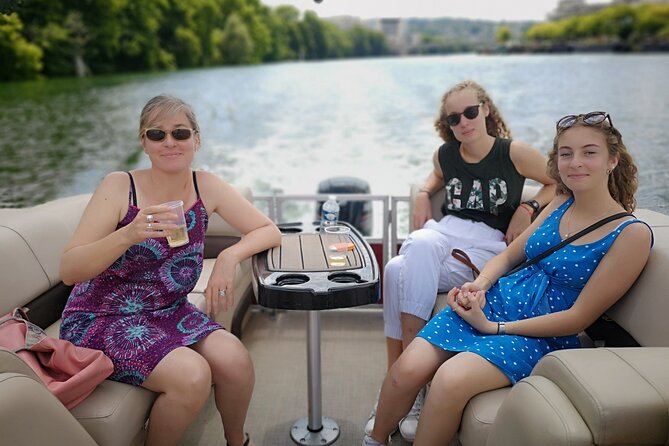
Next comes Île de la Cité, the island “in the heart of Paris” that’s considered the ancient cradle of the city (formerly Lutèce). This island sits in the 1st and 4th arrondissements, and historically it’s been described as the core of the city’s fortified limits.
From the boat, you’re essentially reading Paris history in layers. Île de la Cité is where the medieval city’s fortified area was concentrated after antiquity. A chronicler, Gui de Bazoches, referred to it back in 1190 as the head, the heart, and the marrow of Paris. That’s a strong line, but it matches what you feel from the river: this is where the city’s center-of-gravity used to be.
Then you pass by the Palais de Justice area, including the Conciergerie. The Palais de Justice traces back to the Curia Regis, and it’s tied to Parliaments and sovereign jurisdictions—like Water and Forests, the Constabulary, and the Money office—plus today’s courts and high-level institutions like the Council of State, Court of Cassation, and Court of Accounts.
If you’ve ever wondered why these buildings look so “official” and serious, this stop explains it. The complex has been located since the earliest phase in the Palais de la Cité, which was the seat of power for kings from the 10th to the 14th century. Even from the water, you’re in the atmosphere of that authority. The notes also point out key surviving elements: the Great Hall with its kitchen, the Conciergerie, the Sainte-Chapelle, and several towers.
One thing to watch for: the river view helps you connect multiple landmarks at once. On foot, these places can feel scattered. From the water, they line up into one coherent “power district” story.
Pont Neuf and Pont des Arts: old stone versus modern romance
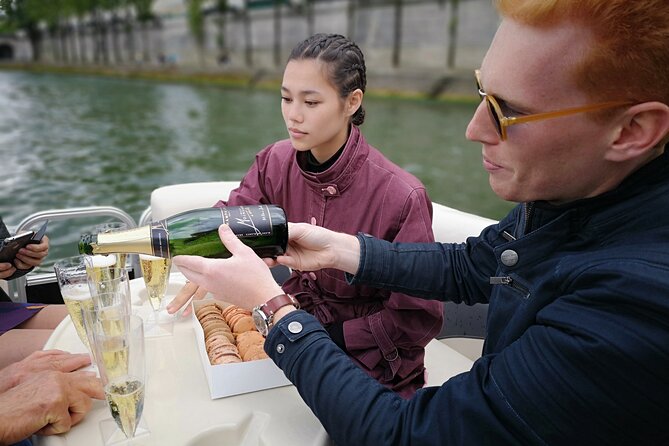
After Île de la Cité, you pass under Pont Neuf. Despite its name, it’s the oldest existing bridge in Paris. It crosses the Seine at the western tip of Île de la Cité. Built at the end of the 16th century and completed at the start of the 17th, it was originally novel because it had no houses on it and included sidewalks to protect pedestrians from mud and horses.
It’s also a technical first: it’s described as the first stone bridge in Paris to cross the Seine entirely. Later, it was classified as a historical monument in 1889 and added to a UNESCO listing in 1991 alongside the quays of the Seine in Paris. So when you look at Pont Neuf from the boat, you’re not just seeing a pretty bridge—you’re seeing a piece of a protected river heritage zone.
Then comes Pont des Arts, which is famous for its “love padlocks” story. The practice took off starting in 2008, when couples hung padlocks on wire mesh parapets. It spread to other bridges too, like the Léopold-Sédar-Senghor footbridge and several others.
But Paris eventually hit the brakes. There was controversy about heritage damage and the visual impact. In September 2014, the city decided the locks would end. Fences were removed on June 1, 2015. The structure didn’t just sit empty: it was first replaced by a temporary street-art exhibition, then by panels in glass from autumn 2015.
From the boat, this stop is a quick way to understand how cities manage popular trends. A romantic tradition became a maintenance and conservation problem, and the solution shifted toward something more controlled.
Downside to consider: since you only pass under these bridges, you won’t get long look time at the bridge details. If padlocks or bridge design are your thing, plan a separate walk after the cruise to see current conditions.
Louvre and Musée d’Orsay from the river: two museums, one viewpoint
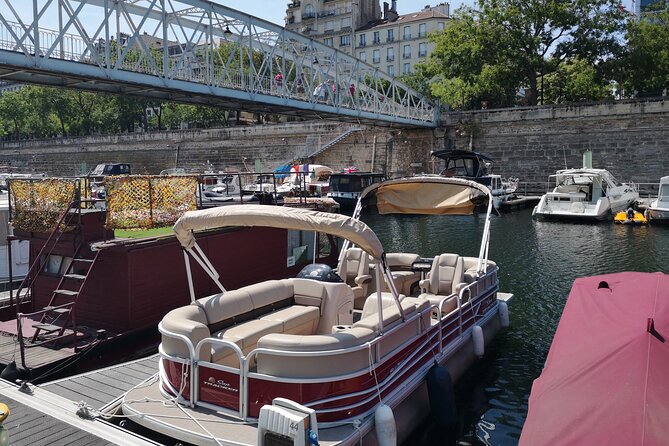
The cruise then swings past the big museum fronts.
First, you pass in front of the Louvre. Even if you don’t enter, the building’s presence is huge. The Louvre began as a royal residence and later became a major museum after the French Revolution. It was inaugurated in 1793 under the name Muséum central des arts de la République, and today it’s described as the world’s largest museum of art and antiques, with an exhibition area listed at 72,735 m².
The Louvre’s collection scale is enormous: it conserves more than 500,000 works, with more than 36,000 on display. The museum’s scope is also broad, covering Western art from the Middle Ages to 1848, plus ancient civilizations before that (Egyptian, Greek, Etruscan, Roman, and related cultures), the arts of early Christians, and Islam.
From a river cruise viewpoint, the Louvre stop is valuable because it gives you the “shape” of the museum within Paris. You’ll likely spot how it anchors the left bank and how it relates to the rest of your route.
Next, you pass in front of the Musée d’Orsay. This museum is in the 7th arrondissement on the left bank. It’s housed in the former Orsay station built from 1898 to 1900 by Victor Laloux, then converted into a museum starting in the 1980s. The collection focuses on Western art from 1848 to 1914, covering painting, sculpture, decorative arts, graphic art, and photography.
Here’s why this matters for your planning: Musée d’Orsay is especially strong for Impressionist and Post-Impressionist works. The notes mention nearly 1,100 canvases out of more than 3,650 total works tied to that period. If you want to narrow your museum choices later, this stop helps you decide which museum fits your taste—Louvre for broader eras, Orsay for that 19th-century bridge between styles.
Possible drawback: you’ll see the buildings, but the cruise can’t replace museum time. If you’re an art lover aiming to actually spend hours inside, treat the cruise as pre-game. Use it to learn the geography so your museum visit feels less chaotic.
Worth weighing up next to this Paris pick




National Assembly, Alexandre III bridge, and the river’s power symbols
As you continue, you pass in front of the National Assembly. The notes here focus on political history: how national representation evolved over two centuries, changing with shifts in public freedoms, and how different names came and went. The title National Assembly was chosen in 1789 and later reappeared in 1946 after earlier periods without that name.
Even if politics isn’t your main interest, this stop adds context. Paris buildings aren’t random. This is where you can connect the river view to the institutions that shaped modern France’s governance.
Then comes Alexandre III bridge, passed under the bridge. It was inaugurated for the Universal Exhibition of Paris in 1900, meant to symbolize Franco-Russian friendship. The first stone was laid on October 7, 1896 by Tsar Nicolas II, Empress Alexandra Fedorovna, and President Félix Faure, with engineers Jean Résal and Amédée Alby and architects Cassien-Bernard and Gaston Cousin credited for the work.
The bridge runs along the axis of the Esplanade des Invalides and leads toward the Petit and Grand Palais. If you like visual “wow” moments, this is one. The bridge is described as a work of art, and the route angle matters: it’s not just a crossing; it’s part of a grand exhibition-era plan.
And there’s a line of permanence built into the story. The bridge includes an inscription about Émile Loubet opening the Universal Exhibition and inaugurating the bridge on April 14, 1900. On a river cruise, you’ll catch this kind of text only if you’re looking carefully, but even without reading every engraving, the bridge’s purpose comes through: it’s designed for symbolism.
Eiffel Tower sightline: what you’re really getting near the end
The final big landmark in the route is the Eiffel Tower. The tower is a 324-meter-tall puddled iron structure built in two years by Gustave Eiffel and collaborators for the 1889 Universal Exhibition celebrating the centenary of the French Revolution. It was originally named the tower of 300 meters, and it became a symbol of Paris and a major tourism magnet.
The notes also include visitation scale: it was the third most visited French cultural site in 2015 with 5.9 million visitors in 2016, and since opening it has welcomed more than 300 million visitors.
From your boat perspective, the main value is the approach view. Seeing it from the river compresses the experience into one grand sightline, tying together everything you just saw: bridges, islands, museums, and finally the tower.
One consideration: since your cruise is only 90 minutes, you won’t have time to linger for photos from multiple positions. If Eiffel Tower photos are a priority, plan a follow-up walk or stop nearby after the cruise ends back at the meeting point.
Price and value: is $94.63 per person worth it?
At $94.63 per person for about 1 hour 30 minutes, you’re paying for a few clear things: a private format (only your group), a guided narration in English, and a route that covers several top sights in one smooth pass.
Is it cheap? No. But it also isn’t trying to be an all-day budget tour. The value here comes from time and logistics. You’re consolidating multiple “big” sightseeing areas into one experience, so you don’t have to spend your day guessing transit routes, crisscrossing the city, or stacking multiple tour bookings.
For couples, this is often the sweet spot: you get romance, major landmarks, and a calmer pace than a crowded public cruise. For families, it can be even better when the guide keeps the kids interested—one highlighted run with Diego reportedly made the explanations land for three children without turning it into a lecture.
For solo travelers, it’s also a comfort buy. Private means your focus stays on the guide and the view instead of navigating a crowd.
The main value-weakening scenario: if you already plan to spend extensive time inside museums and want lots of walking stops, this might feel like a “preview.” In that case, you’d want to treat it as the opening act, not the whole show.
Who should book this Seine cruise?
You should book if you want:
- a quick Paris overview that focuses on landmarks along the Seine
- a private group format that feels calmer and easier to ask questions on
- an English-guided route that explains what you’re seeing in context
- a family-friendly way to learn without long museum lines
You might skip it if you:
- want to spend lots of time inside buildings during the same outing
- prefer a very flexible route where you can stop and wander freely at each landmark
- are traveling on a day when weather is unpredictable and you can’t reschedule
Should you book this Paris Water Way private cruise?
Yes, if you want a smooth, landmark-focused introduction to Paris that you can fit into almost any itinerary. The route is packed in a good way: islands tied to the city’s origins, a medieval-to-royal power center, classic bridges with real stories, and the museum district energy before the Eiffel Tower finale.
Book it with the right expectations. You’re buying a guided river pass that shows you the geometry of Paris, not a long sightseeing marathon. If weather is good, you’ll get exactly what this kind of cruise is best at: the river view, the history in readable chunks, and a relaxed pace that leaves you ready to explore on foot afterward.
FAQ
How long is the private cruise on the Seine?
The tour lasts about 1 hour 30 minutes.
Is this tour private?
Yes. It’s listed as a private tour/activity, so only your group participates.
What language is offered?
The experience is offered in English.
Where do we meet for the cruise?
You meet at 14 Quai François Mitterrand, 75001 Paris, France. The tour ends back at the meeting point.
Do I need a printed ticket?
No. The tour includes a mobile ticket, and you should receive confirmation at time of booking.
What sights will the cruise pass?
The route includes passages by Île Saint-Louis and Île de la Cité, the Palais de Justice area (Conciergerie), Pont Neuf, Pont des Arts, in front of the Louvre and Musée d’Orsay, the National Assembly, under Alexandre III bridge, and in front of the Eiffel Tower.
Is the cruise run year-round and in any weather?
It requires good weather. If it’s canceled due to poor weather, you’ll be offered a different date or a full refund.
What’s the cancellation window for a full refund?
Free cancellation is available up to 24 hours in advance of the experience start time for a full refund.
Is it accessible for people with service animals, and is it near transit?
Service animals are allowed, and the activity is near public transportation. Most travelers can participate.
More Private in Paris
- Louvre Museum Paris Essential Guided Tour Semi-Private 6ppl Max
★ 5.0 · 3,807 reviews - SUV Private Transfer: Paris to Charles de Gaulle Airport (CDG)
★ 4.0 · 3,091 reviews - Paris: Private Photoshoot at the Eiffel Tower
★ 4.7 · 2,636 reviews - Top Private Cruises in Paris with French Champagne and surprises
★ 5.0 · 1,553 reviews - Golf Cart in Paris – Private Guided City Tour – Pickup Included
★ 5.0 · 1,164 reviews
More Cruises & Boat Tours in Paris
- Paris: 1-Hour Seine Cruise departing from the Eiffel Tower
★ 4.4 · 77,472 reviews - Paris: Evening River Cruise with Music
★ 4.4 · 22,721 reviews - Paris: Louvre Guided Tour with Reserved Access & Boat Cruise
★ 4.3 · 16,353 reviews - Paris: Tootbus Hop-on Hop-off (Optional River Cruise)
★ 4.3 · 15,279 reviews - Paris: Big Bus Hop-On Hop-Off Tour with Optional Cruise
★ 4.4 · 13,279 reviews
More Tour Reviews in Paris
- Paris: 1-Hour Seine Cruise departing from the Eiffel Tower
★ 4.4 · 77,472 reviews - Paris: Louvre Museum Timed-Entrance Ticket
★ 4.6 · 71,977 reviews - Disneyland® Paris 1-Day Ticket
★ 4.6 · 49,412 reviews - Paris: Versailles Palace and Gardens Full Access Ticket
★ 4.6 · 41,579 reviews - Paris: Arc de Triomphe Rooftop Tickets
★ 4.6 · 34,264 reviews
Fresh off the review desk in Paris
- Secrets of Paris Bike Tour in English or Dutch★ 5.0 · 5 reviews
- Paris: Mont Saint-Michel Day Tour with Chinese Tour Guide★ 5.0 · 5 reviews
- Private Street Art 2-Hour Guided Tour in Paris★ 4.5 · 5 reviews
- Orsay Museum Tour: 2h Highlights (Private & Small Group)★ 5.0 · 5 reviews
- Discover Paris in electric golf carts★ 4.0 · 5 reviews
- Paris Private Boat Tour with your own Captain Guide★ 5.0 · 5 reviews
Cruises & Boat Tours, compared.
 ★ 4.41-Hour Seine Cruise departing from the Eiffel TowerFrom $2077,472 reviews
 ★ 4.4Evening River Cruise with MusicFrom $2722,721 reviews
 ★ 4.3Louvre Guided Tour with Reserved Access & Boat CruiseFrom $8116,353 reviews
 ★ 4.3Tootbus Hop-on Hop-off (Optional River Cruise)From $4315,279 reviews
 ★ 4.4Big Bus Hop-On Hop-Off Tour with Optional CruiseFrom $4313,279 reviews
 ★ 4.3Illuminations River Cruise with Audio CommentaryFrom $2012,340 reviews
 ★ 4.4Seine Cruise & Crepe Tasting near the Eiffel TowerFrom $2311,231 reviews
 ★ 4.3Seine River Panoramic Views Dinner CruiseFrom $6410,611 reviews
Browse the lists this tour appears in