
Reviewed · MUSEUMS
Rigoletto at the Jacquemart-André Museum
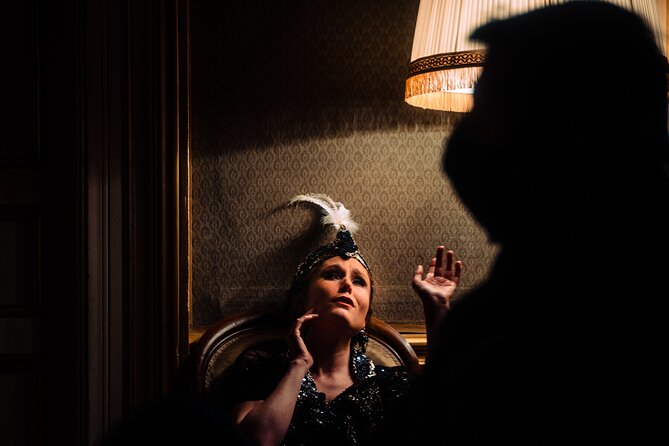
Verdi gets a whole new address at Jacquemart-André. This is Rigoletto staged inside the museum’s first-floor salons, so you’re not stuck watching from far away. You’re close enough to feel the story land.
I love the up-close casting and staging: the main roles move through the rooms, and the production uses a small cast with a trio of musicians. I also love the rhythm of the night, including a glass of champagne at intermission and built-in time to experience the museum in a more personal way.
One thing to plan for: sightlines and seating can be uneven. In one room, there were practically no seats, and if you want a clear view of the performers, you’ll likely need to be in the front rows.
In This Review
- Key Things to Know Before You Go
- Verdi’s Rigoletto Where the Paintings Are Watching
- The 8:30 PM Flow: What Happens During the 3 Hours
- Why the Small Cast and Trio Sound So Effective
- Champagne at Intermission: A Simple Upgrade That Helps
- The Museum Part Isn’t an Afterthought
- Seating, Crowds, and Visibility: The Real-World Considerations
- Dressing for a Prestigious Paris Venue
- The Little Extras: Interaction and Production Details
- Price and Value: Is $348 Fair for This Experience?
- Who This Fits Best
- Should You Book This Rigoletto at Jacquemart-André?
- FAQ
- What time does Rigoletto start, and how long is the experience?
- Is the performance offered in English?
- What’s included in the ticket?
- Will I have a seat the whole time?
- Is evening wear recommended?
- Can I get a full refund if I cancel?
Key Things to Know Before You Go
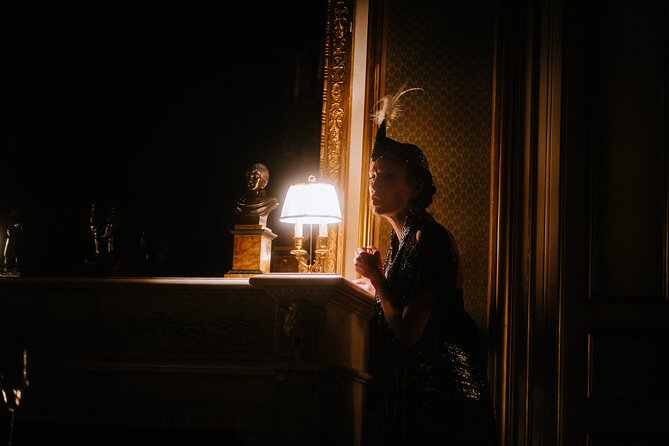
- Jacquemart-André’s salons become the opera stage, not just a backdrop
- Champagne intermission gives you a break and changes the pace
- Close-up staging with standing moments means the show can feel more physical
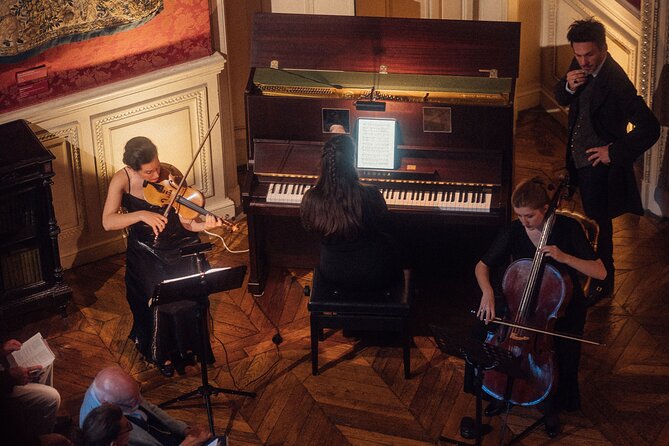
- A trio of musicians (piano, violin, cello) keeps the sound intimate
- Private museum time is included, focused on the first-floor permanent collection
- Seating comfort varies by room, so your viewing will depend on where you land
Verdi’s Rigoletto Where the Paintings Are Watching
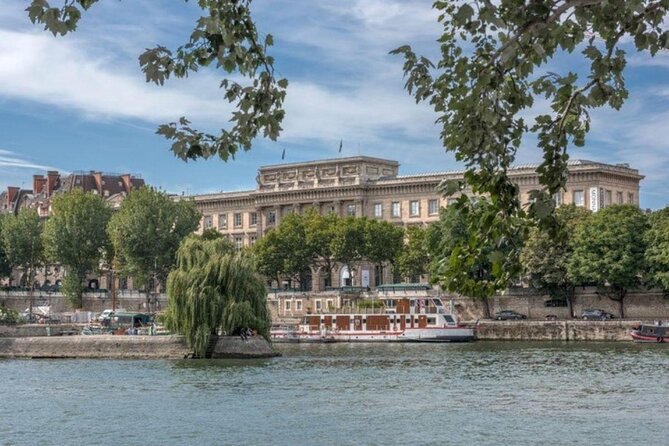
This night is all about contrast. You’re in a grand Paris museum, surrounded by art and elegant rooms, but the production strips opera down to its emotional core. You get a version focused on the main characters: Rigoletto (baritone), Gilda (soprano), Duca di Mantova (tenor), Sparafucile (bass), and Maddalena (mezzo-soprano). With fewer performers on stage, the drama feels sharper.
The adaptation is created by Musica at Palazzo Venice, and the staging is by Patrizia di Paolo with costumes by Venice’s Atelier Nicolao. Even if you’re not a hardcore opera person, that combination matters. It signals a production built for smaller spaces, where body language, facial expression, and timing do a lot of the storytelling.
And that’s the big reason this works: the museum isn’t treated like a lecture hall. It’s treated like a living room where people are actually telling you something.
Worth weighing up next to this Paris pick
- Paris: Louvre Museum Timed-Entrance Ticket
★ 4.6 · 71,977 reviews - Paris: Orsay Museum Entry Ticket
★ 4.7 · 25,647 reviews - Louvre Museum Masterpieces Guided Tour with Access
★ 4.5 · 12,023 reviews - Paris: Louvre Museum Entry Ticket With Host and River Cruise
★ 4.6 · 9,926 reviews
The 8:30 PM Flow: What Happens During the 3 Hours
The evening starts at 8:30 pm and runs about 3 hours. Plan to treat it like a complete event, not a quick stop after dinner. You’ll want to arrive ready to pay attention.
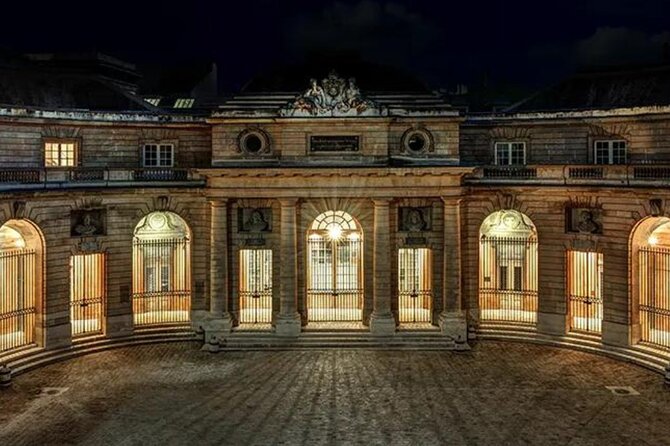
You begin at Musée Jacquemart-André, where you follow the story through the museum’s rooms. The show unfolds in the salons on the first floor, and the production is designed so the performance doesn’t feel locked behind a formal proscenium. Instead, you move through the same world as the characters.
A key moment comes at intermission, when you get a glass of champagne. That break is more than a drink ticket. It resets your focus, gives you a moment to take in the room again, and helps the second half land with more impact.
After the opera segment, the night’s structure also includes time for a private tour of the museum’s prestigious permanent collection in the salons on the first floor. So you’re not just consuming a show. You’re also getting the museum experience in the same spaces you’ve just watched music in.
Why the Small Cast and Trio Sound So Effective
This production keeps the musical team compact: piano, violin, and cello. That’s a choice with a clear effect. In a regular opera house, you can feel the orchestra as a wall of sound. Here, the instruments can feel like they’re leaning in with you. The emotional emphasis stays close to the voices.
Also, because the cast focuses on the major roles, you don’t spend time tracking lots of side characters. That can be a real plus if you’re new to opera or if you prefer clarity over complication. The story is still intense—passion, betrayal, filial love, and revenge—but the staging helps keep it understandable.
And the performance has that “few people, big feelings” advantage. When you’re close to the singers, the transition between softer lines and dramatic bursts feels immediate. It’s the kind of setup where you don’t have to strain to catch every nuance.
Champagne at Intermission: A Simple Upgrade That Helps
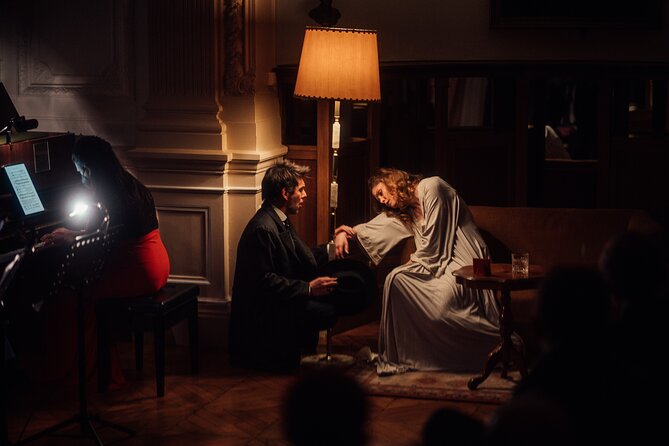
I like that the production pauses for champagne in the middle. It turns intermission into a genuine change of gear, not just a shuffle to the lobby.
In a setting like Jacquemart-André, that matters. The museum rooms are part of the experience, so you want time to look around without rushing. The champagne gives a small celebration feeling, but it also keeps you socially anchored. You get a shared moment before you return to the story.
A small note: one review suggested that tiny extras like petit fours would have been a nice touch. That’s not included in the provided details, but the comment is a good reminder to think of champagne as the main perk at intermission.
The Museum Part Isn’t an Afterthought
One reason this experience feels more valuable than a standard ticket is that the admission ticket is included and you get an added layer: a private tour of the museum’s permanent collection in the salons on the first floor.
Practically, this means you’ll see the museum in two modes. First, you experience it as a stage world. Then you experience it as art and atmosphere—where the rooms and objects make a different kind of sense.
This is a smart use of time. Museums can be tricky after a long day: you walk, you look, you lose the thread. Here, the night’s structure helps you connect what you’re seeing to the space itself. You’re in the same rooms, but your brain switches gears.
Seating, Crowds, and Visibility: The Real-World Considerations
This is where you should be honest with yourself.
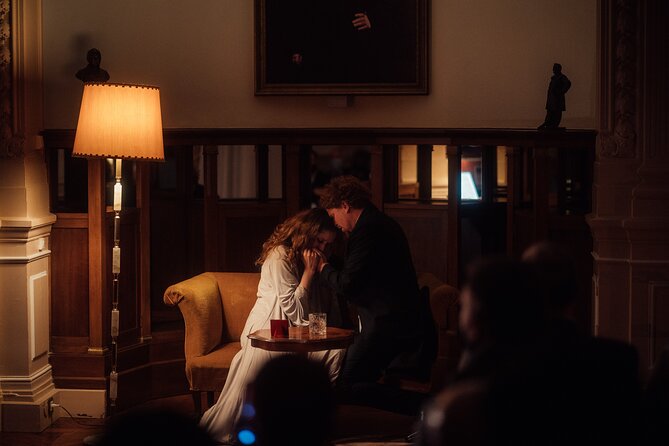
In the rooms, seating isn’t guaranteed to be uniform. One guest noted that the first room had practically no seats, and that meant it could be hard to see the performers when the crowd was large. Another guest pointed out that front rows mattered a lot for visibility.
So if you have limited patience for standing, don’t treat this like a relaxed sit-down performance. One review even mentioned the desire for more seating options in the first and third parts of the show. If you know you’ll struggle standing, consider arriving early and being ready to choose a better viewing spot, as soon as you can.
Also, crowding can affect the experience. One comment said it felt like around 80 people in one room. That’s not a dealbreaker, but it’s a reminder: this is intimacy by design, not intimacy by emptiness.
Tip: wear comfortable shoes. You’re not going to want heavy walking shoes that squeak or pinch, because you’ll likely be standing and shifting more than you expect.



Dressing for a Prestigious Paris Venue
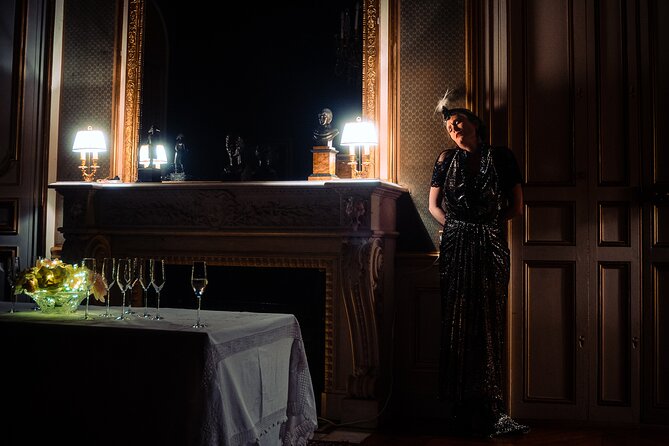
Jacquemart-André has a formal, polished vibe. One review specifically pointed out that participants should respect the organizer’s request for evening wear in such a prestigious venue.
That’s your cue. You don’t need to dress like you’re headed to a gala, but you should aim for smart evening attire. Think: something you’d be comfortable wearing to a concert in a top hall—no jeans-for-everything plans.
The Little Extras: Interaction and Production Details
Part of the charm here is that it feels like people are actually in the room with you. The staging is built to feel close and personal, with singers mixing with the audience at moments rather than only singing from a fixed platform.
You might also get some connection between performers and musicians during the evening. One review praised the musicians’ communication and exchange with the singers. Another note said a promised end-of-show exchange didn’t happen.
That doesn’t mean the event is poorly run. It suggests that the exact flow of interaction can vary. So if you’re hoping for a meet-and-greet style moment, treat it as a bonus, not a guarantee.
If you’re sensitive to staging details: one guest mentioned a possible lack of light for the last act. That’s not something you can fix, but it’s worth knowing if you’re relying on visual detail late in the performance.
Price and Value: Is $348 Fair for This Experience?
At $348.07 per person, this isn’t a bargain opera ticket. But it also isn’t just “opera in a museum.” You’re paying for several things working together:
- a professionally staged Rigoletto performance with a compact cast and live trio
- champagne at intermission
- included admission to the museum
- a private tour of the permanent collection in the same salon spaces
If you’re comparing this to a standard opera night that includes backstage-level access (or a special museum-after-hours program), the price starts to look more like a premium experience package than a simple show ticket.
So here’s the value test I’d use: if you want opera where you can feel the voices and the emotions without distance, and you want the museum experience folded into the same night, this may be worth it. If you mainly want the cheapest possible opera option, you’ll probably prefer a traditional venue.
Who This Fits Best
This is the kind of experience that suits a few different types of travelers:
- First-time opera goers who want the story clarified by staging and a small cast
- Opera fans who enjoy hearing singers up close and getting a more personal atmosphere
- Museum lovers who prefer a guided thread through art instead of aimless wandering
- Couples and small groups looking for a date-night vibe in a prestigious setting
If you’re traveling with someone who struggles with standing for long stretches, I’d take extra care. The venue is beautiful, but the setup can mean standing and shifting depending on where you are.
Should You Book This Rigoletto at Jacquemart-André?
If you want opera with proximity, a museum setting that’s part of the storytelling, and a night that feels like you’re being let into a special world, this is a strong choice. The highest praise centers on the intimacy, the quality of the voices, and the way the staging keeps things emotionally immediate.
Book it if you can handle variable seating and you’re okay with the idea that crowd size can change sightlines. If your top priority is guaranteed front-row comfort and a fully cushioned, traditional theater setup, you may find the logistics more annoying than romantic.
My practical advice: dress for the occasion, come with comfy shoes, and arrive ready to be close to the action—because that’s the whole point of this show.
FAQ
What time does Rigoletto start, and how long is the experience?
The experience starts at 8:30 pm and runs for about 3 hours.
Is the performance offered in English?
Yes. The experience is offered in English.
What’s included in the ticket?
Your ticket includes the Rigoletto performance, an admission ticket to the museum, a champagne glass at intermission, and a private tour of the museum’s permanent collection in the salons on the first floor.
Will I have a seat the whole time?
Seating can vary by room. Some parts of the event may have limited seating, so your view and comfort may depend on where you are placed.
Is evening wear recommended?
One review notes that participants should respect the organizer’s request for evening wear in the prestigious venue.
Can I get a full refund if I cancel?
Yes. You can cancel up to 24 hours before the experience’s start time for a full refund.
More Museums in Paris
- Paris: Louvre Museum Timed-Entrance Ticket
★ 4.6 · 71,977 reviews - Paris: Orsay Museum Entry Ticket
★ 4.7 · 25,647 reviews - Louvre Museum Masterpieces Guided Tour with Access
★ 4.5 · 12,023 reviews - Paris: Louvre Museum Entry Ticket With Host and River Cruise
★ 4.6 · 9,926 reviews - Les Invalides: Napoleon’s Tomb & Army Museum Entry
★ 4.6 · 9,185 reviews
More Tour Reviews in Paris
- Paris: 1-Hour Seine Cruise departing from the Eiffel Tower
★ 4.4 · 77,472 reviews - Paris: Louvre Museum Timed-Entrance Ticket
★ 4.6 · 71,977 reviews - Disneyland® Paris 1-Day Ticket
★ 4.6 · 49,412 reviews - Paris: Versailles Palace and Gardens Full Access Ticket
★ 4.6 · 41,579 reviews - Paris: Arc de Triomphe Rooftop Tickets
★ 4.6 · 34,264 reviews
Fresh off the review desk in Paris
- Secrets of Paris Bike Tour in English or Dutch★ 5.0 · 5 reviews
- Paris: Mont Saint-Michel Day Tour with Chinese Tour Guide★ 5.0 · 5 reviews
- Private Street Art 2-Hour Guided Tour in Paris★ 4.5 · 5 reviews
- Orsay Museum Tour: 2h Highlights (Private & Small Group)★ 5.0 · 5 reviews
- Discover Paris in electric golf carts★ 4.0 · 5 reviews
- Paris Private Boat Tour with your own Captain Guide★ 5.0 · 5 reviews
Museums, compared.
 ★ 4.6Louvre Museum Timed-Entrance TicketFrom $2671,977 reviews
 ★ 4.7Orsay Museum Entry TicketFrom $1525,647 reviews
 ★ 4.5Louvre Museum Masterpieces Guided Tour with AccessFrom $8612,023 reviews
 ★ 4.6Louvre Museum Entry Ticket With Host and River CruiseFrom $1009,926 reviews
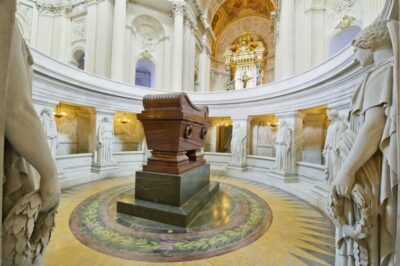 ★ 4.6Les Invalides: Napoleon’s Tomb & Army Museum EntryFrom $209,185 reviews
 ★ 5.0Louvre Museum – Exclusive Guided Tour (Entry Included)From $1816,296 reviews
 ★ 4.6Louvre Museum Hosted Entry and Mona Lisa AudioguideFrom $815,235 reviews
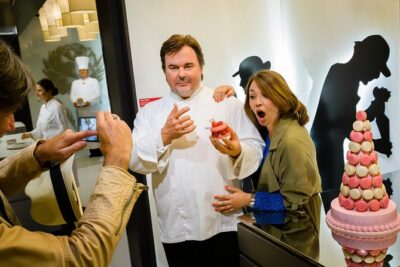 ★ 4.5Grévin Wax Museum TicketFrom $334,654 reviews
Browse the lists this tour appears in