
Reviewed · SEINE RIVER CRUISES
Seine River Direct Access Guided Cruise
Seeing Paris from the Seine feels like cheating.
In about an hour, you glide past top landmarks with live narration through panoramic windows aboard a 100% electric boat, starting right at Port de Suffren. It is a simple way to get the big-picture highlights of Paris without a full day of walking.
I especially like the fact that the guide keeps the story moving from bridge to bridge, with clear details you can actually remember later. English is offered, though on some days the English delivery can be harder to follow, so you may want to listen carefully when you’re up on deck and the wind is strong.
In This Review
- Key points before you board
- Where the Seine cruise starts at Port de Suffren
- The 100% electric boat ride: comfort you can feel in an hour
- Live narration in English (and what to expect day to day)
- Your Seine route: the Paris landmarks you’ll recognize instantly
- Eiffel Tower: the 1889 exhibition icon
- American Church in Paris: green clock-tower and stained glass
- Hôtel des Invalides: Louis XIV’s military hospital and Napoleon’s tomb
- Pont Alexandre III: gold leaf, nymphs, and a Franco-Russian signal
- Pont de la Concorde: stones from the Bastille and the Revolution’s aftermath
- Musée d’Orsay area: a former station turned art museum
- Institut de France: Académie Française and the dictionary-making job
- Pont Neuf: the oldest stone bridge and its 381 mask sculptures
- Pont Saint-Michel: Napoleon III’s imperial Ns and the Latin Quarter link
- Île de la Cité and Notre-Dame: Paris’s presumed origin
- Arab World Institute and Île Saint-Louis: culture and prestigious old-town calm
- Hôtel de Ville and Louvre: civic power and the museum that started as a palace
- Place de la Concorde and its Luxor obelisk: a political square with a long reach
- Grand Palais: 1900 exhibition architecture now used for events and skating
- Palais de Chaillot at Trocadéro: museums and the river-facing viewpoints
- Weather and seating: how to stay comfortable during your one-hour show
- Champagne onboard: nice add-on, not the point
- Value for the money: what $25.23 gets you (and what it doesn’t)
- Who should book this Seine direct access guided cruise?
- Should you book this Seine River direct access guided cruise?
- FAQ
- FAQ
- How long is the Seine River direct access guided cruise?
- Where does the cruise start and where does it end?
- Is the tour offered in English?
- Is the boat 100% electric?
- Is champagne included in the price?
- What weather gear should I bring?
- How many people are on the cruise?
- What if the cruise is canceled due to poor weather?
- Are alcoholic drinks served to everyone?
Key points before you board
- 1 hour on a 100% electric boat makes this an easy, lower-stress way to see major landmarks fast
- Live onboard guide narration helps turn views into something you can place on a map
- Morning and afternoon departures let you match it to your day plan
- Champagne is available for purchase onboard, not included
- Max group size of 220 usually means you’ll find room to move (especially in cooler weather)
- Top-deck weather matters: October/November can be chilly and windy
Where the Seine cruise starts at Port de Suffren
Your tour begins at 2 Port de Suffren (75007 Paris), and the cruise ends back at the same meeting point. That matters because you can plan your day knowing you will not get stranded on the far side of the city.
It is also listed as being near public transportation, so you can keep your schedule flexible. If you’re pairing this with other Paris sights, I like slotting it in early enough that you can use what you learn on the boat to guide your next stop on land.
More time out on the Seine, compared
- Paris: 1-Hour Seine Cruise departing from the Eiffel Tower
★ 4.4 · 77,472 reviews - Paris: Seine Cruise & Crepe Tasting near the Eiffel Tower
★ 4.4 · 11,231 reviews - Paris: Seine River Panoramic Views Dinner Cruise
★ 4.3 · 10,611 reviews - Paris: Eiffel Tower Access by Elevator & Seine River Cruise
★ 4.6 · 7,329 reviews
The 100% electric boat ride: comfort you can feel in an hour
This cruise runs on a 100% electric boat, and that’s more than a marketing line. Electric boats tend to feel smoother and quieter than the old diesel experience you might picture, which helps you actually hear the guide while you’re looking out.
The ride is about 1 hour (approx.), so it stays within that sweet spot: long enough to see plenty of sights from the river, short enough that you don’t feel like Paris stole your whole day. In colder months, I’ve found that short cruises can be the difference between enjoying the experience and just surviving it.
Live narration in English (and what to expect day to day)
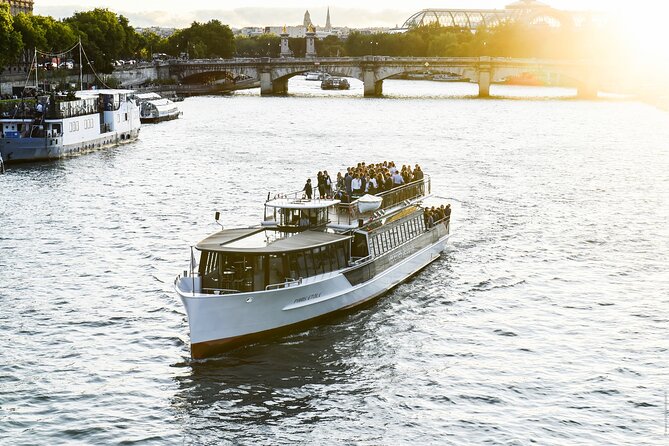
The big upgrade here is the onboard guide. You get narration as you pass landmarks, and that turns the Seine from a pretty backdrop into a route you can follow in your head later.
The tour is offered in English, and multiple reviews highlight that the guide may speak in more than one language. One thing to plan for: on certain days, English clarity can be challenging. If you’re really counting on the English commentary, try to stand somewhere you can hear without fighting wind gusts—especially on open-air areas.
Your Seine route: the Paris landmarks you’ll recognize instantly
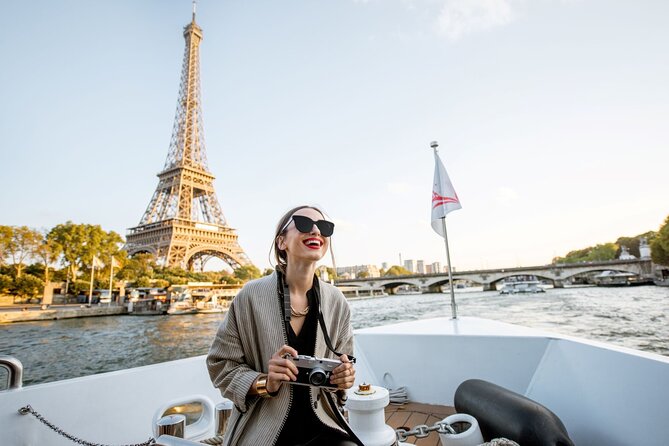
Think of this as a greatest-hits tour from the water. Here’s what you’ll spot as the guide points things out along the way.
Eiffel Tower: the 1889 exhibition icon
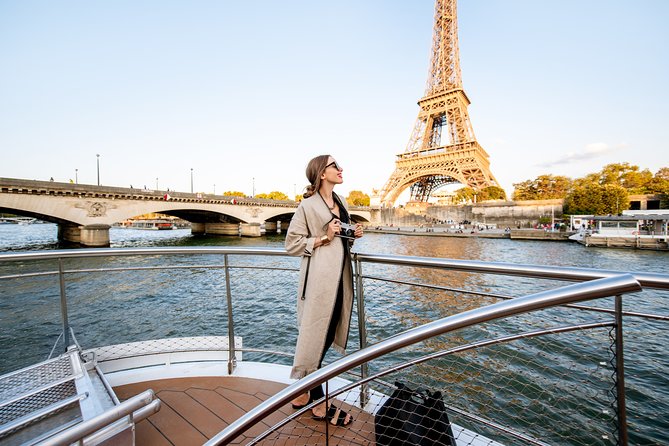
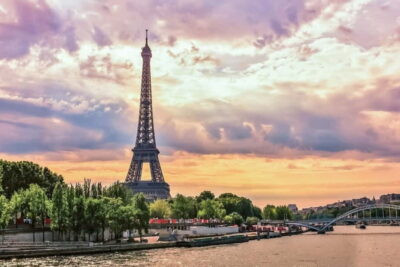
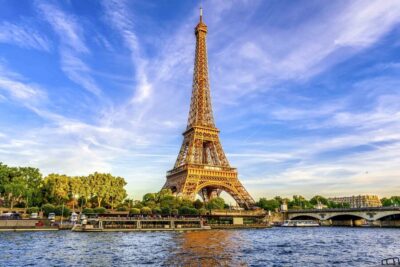
The cruise starts with a front-row view of the Eiffel Tower—built for the 1889 Universal Exhibition by engineer Gustave Eiffel. It went up fast for such a landmark: two years, two months, and five days, and it was designed to last at least 20 years.
From the Seine, you’ll understand why Parisians once found it scandalous. Now it’s the city’s most recognizable symbol, and the river angle makes it feel taller and more exact than it does from the street.
American Church in Paris: green clock-tower and stained glass
Next up is the American Church in Paris, the first American Church built outside the US in 1931. It’s especially known for stained-glass windows by Louis Comfort Tiffany, listed as a historic monument.
On the water, religious buildings can look tiny until the guide puts them in context—then you start noticing the architectural details you would otherwise miss.
Worth weighing up next to this Paris pick


Hôtel des Invalides: Louis XIV’s military hospital and Napoleon’s tomb
You’ll pass the Hotel des Invalides, built on the orders of Louis XIV as a military hospital for injured soldiers and officers. Today, the royal chapel houses the tomb of Napoleon I.
This stop is useful because it gives you a fast political history thread: from monarchy building power to an empire’s legacy still physically present on the riverbank.
Pont Alexandre III: gold leaf, nymphs, and a Franco-Russian signal
The Alexandre III Bridge is one of the most ornate bridges you’ll see on the Seine. It was built for the 1900 Universal Exhibition and to seal the Franco-Russian Alliance.
Watch for the gold leaf details on the central Paris coat of arms, plus nymphs representing the river Seine. On the opposite side, you’ll see symbols tied to Saint Petersburg and the river Neva. It is a bridge that works like a diplomatic poster—only made in stone and metal.
Pont de la Concorde: stones from the Bastille and the Revolution’s aftermath
The Pont de la Concorde leads toward major political and public spaces. It was built using stones from the former Bastille prison, after the Bastille was stormed in 1789.
The bridge connects to the Palais Bourbon (seat of the National Assembly) on one side and to the Place de la Concorde on the other. If you like linking architecture to real events, this is a strong stop.
Musée d’Orsay area: a former station turned art museum
You’ll also pass the former Orsay railway station, originally built for the 1900 Universal Exhibition. It later became a museum in the 1980s, housing 19th-century art, including works by major Impressionists and Post-Impressionists such as Auguste Renoir, Claude Monet, and Vincent Van Gogh.
From the river, you’re not “visiting” the museum, but you’re getting the visual cue that the building is the reason people come here.
Institut de France: Académie Française and the dictionary-making job
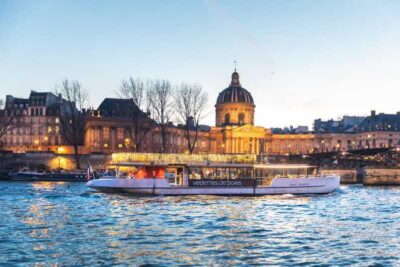
The Institut de France (formerly the Collège des Quatre Nations) was funded through Mazarin’s bequest in 1661. It houses multiple academies, and the best-known is the Académie Française, whose members work to shape and update the official French dictionary.
This stop is a good reminder that Paris isn’t only monuments. It’s also institutions that keep the culture running.
Pont Neuf: the oldest stone bridge and its 381 mask sculptures
The Pont Neuf is the oldest bridge in Paris, notable for being the first to be built in stone with pavements instead of houses lining it. It’s also famous for 381 grimacing stone masks, each individually decorated.
From the water, the masks feel like little secrets tucked into a big landmark. Even if you cannot count them all, the sheer number is the point.
Pont Saint-Michel: Napoleon III’s imperial Ns and the Latin Quarter link
You’ll glide past Pont Saint-Michel, built at the request of Napoleon III—hence the imperial Ns on its pillars. It leads toward the Latin Quarter, named because students at the University of Paris spoke Latin until the 19th century.
That’s one of those details that makes the neighborhood name click instantly. After this cruise, you’ll likely feel more confident navigating that part of Paris on foot.
Île de la Cité and Notre-Dame: Paris’s presumed origin
The guide calls out Île de la Cité, often described as the presumed birthplace of Paris. The island was settled by the Parisii tribe around 300 years before the Common Era, then known as Lutetia.
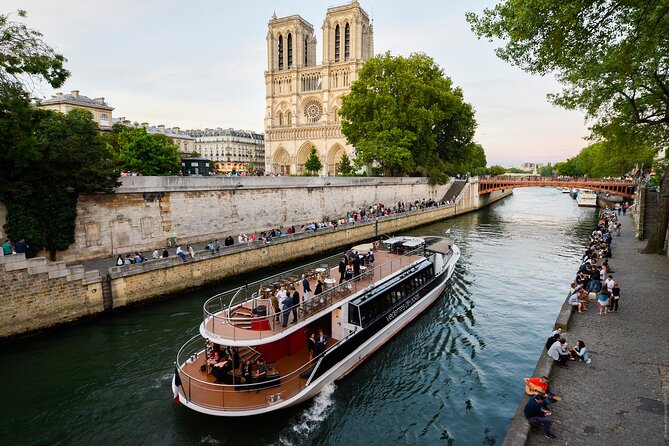
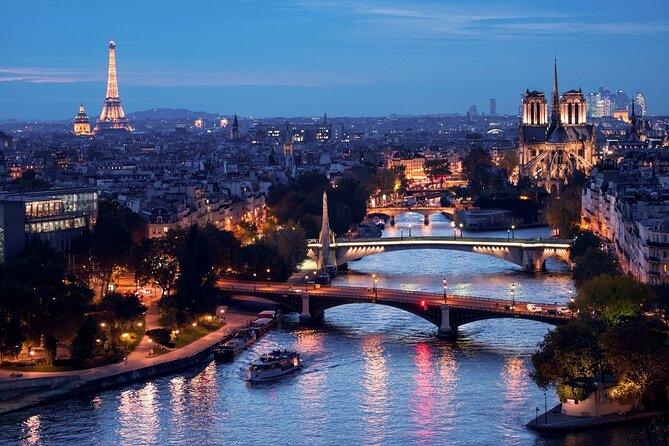
Then comes the star: Cathedrale Notre-Dame de Paris. Construction began in 1163 and finished nearly two centuries later, in 1345. The cathedral’s gargoyles and sculptures get spotlighted, along with the Rose du Midi rose window, dedicated to the New Testament.
The cathedral is noted with free admission—but on a cruise, you’re mainly taking it in from the river angle unless your overall plan includes a separate visit.
Arab World Institute and Île Saint-Louis: culture and prestigious old-town calm
Further along, you’ll pass the Arab World Institute, inaugurated in 1987. It focuses on history, art, society, religions, and science in the Arab world.
Then comes Île Saint-Louis, known for 17th-century town houses like Hôtel Lambert and Hôtel Lauzun. It’s one of the more prestigious areas of Paris, and the tour description even notes that celebrities have lived there, including Charles Baudelaire and Georges Moustaki.
From a boat, you’ll notice how these islands change the feeling of the river—less like a corridor and more like a neighborhood boundary.
Hôtel de Ville and Louvre: civic power and the museum that started as a palace
You’ll see Hôtel de Ville de Paris, seat of the Paris City Council since 1357, with construction inspired by Neo-Renaissance style. It’s open to visitors and even has a banquet hall designed as a template of the Hall of Mirrors in Versailles.
Then the Louvre appears in the line-up: originally a royal palace, turned into a museum in 1793. It’s described as the largest monument in Paris, with over four kilometers of façades and nearly 14 kilometers of galleries, holding about 38,000 works, including the Winged Victory of Samothrace, Venus de Milo, and Mona Lisa.
On the river, you’re not touring the museum. But you are getting a fast read on why it’s so central: the building is designed to dominate the view from multiple directions.
Place de la Concorde and its Luxor obelisk: a political square with a long reach
The Place de la Concorde is linked to the French Revolution, including the execution of King Louis XVI and Queen Marie-Antoinette. The central feature is an obelisk from Luxor, brought to France in 1836.
If you didn’t come in knowing the obelisk story, the guide’s framing makes you slow down and actually study the square’s layout.
Grand Palais: 1900 exhibition architecture now used for events and skating
The Grand Palais was built for the 1900 Universal Exhibition and is known for its large glass roof, described as the largest in Europe. Today, it becomes a venue for cultural events and exhibitions, plus a funfair and the largest skating rink in Europe.
Seeing it from the Seine is a reminder that Paris buildings aren’t frozen in time. They keep getting repurposed.
Palais de Chaillot at Trocadéro: museums and the river-facing viewpoints
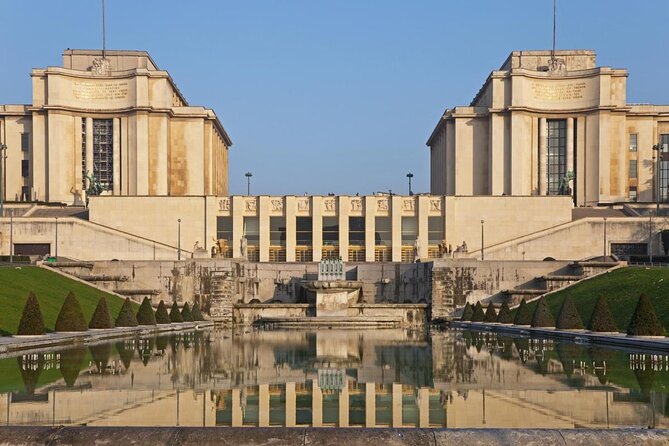
Finally, you’ll pass the Palais de Chaillot at the Place du Trocadéro. Built for the 1937 Universal Exhibition, it includes two Neoclassical pavilions around an esplanade overlooking the gardens at Trocadéro.
It houses the City of Architecture and Heritage, the National Navy Museum, a Museum of Humankind, and the National Theatre of Chaillot. Even without stepping inside, you’ll leave with a better sense of what that area is built for.
Weather and seating: how to stay comfortable during your one-hour show
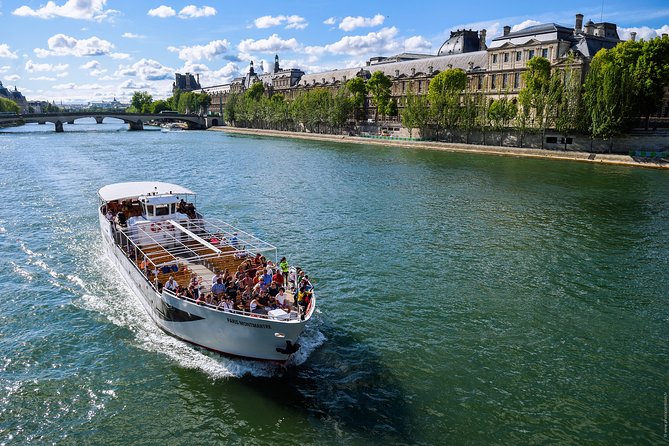
This is where you can make or break your experience. Multiple reviews mention that it can get chilly and windy on the top deck in October/November, so bring a hat if you’re traveling in shoulder season. Another good tip: even on warmer days, a wind breaker jacket can help.
One practical detail I would plan around: before the boat really gets going, it can feel hot inside on sunny days, since ventilation may be limited until motion improves airflow. If you run warm, it’s smart to choose your seating with sun and airflow in mind.
Also, if you want the best views, don’t stroll in at the last second. One review mentions getting there just before boarding ended and still having a great time below the top deck—so you don’t need front-row heroics, but arriving early gives you better choices.
Champagne onboard: nice add-on, not the point
Champagne is available to purchase onboard, but it’s not listed as included. So treat it like a fun bonus, not the main plan.
If you do buy the glass, you’ll still get value from the hour because the narration and the views are doing the heavy lifting. If you’d rather keep it simple, skip the champagne and focus on seeing the landmarks from multiple angles as the boat turns under bridges.
Value for the money: what $25.23 gets you (and what it doesn’t)
At around $25.23 per person for roughly 1 hour, you’re paying for three things: time saved, a live guide, and a comfortable ride that covers a lot of Paris in one loop.
What you’re not getting is a deep, museum-style experience at each landmark. This is a “see it, place it, understand it enough to return later” type of outing. If that matches how you travel, you’ll likely feel like you hit the sweet spot.
This also works well for kids and families. Reviews mention the guide held the attention of an 11-year-old, and the cruise is easy because you do not need to manage constant walking breaks.
Who should book this Seine direct access guided cruise?
I’d book this if you want:
- a fast way to orient yourself on your first Paris trip
- an easy activity that mixes history details with classic views
- a family-friendly hour where everyone can take photos without constant stair climbs
I might skip it if you hate shared experiences where hearing the guide depends on wind, crowd position, and that day’s English clarity. And if you need hands-on museum time at Notre-Dame, the Louvre, or the Orsay, plan that separately.
Should you book this Seine River direct access guided cruise?
If your goal is a clean, efficient Paris highlight reel with a live guide, I think this cruise is a strong pick. The 100% electric boat, the live narration, and the compact one-hour format make it easy to fit into any itinerary.
My advice: bring a layer, get to the meeting point on time so you can choose where you stand, and plan to listen closely if you’re relying on English narration. Also, keep an eye on updates in case of a last-minute technical cancellation—these can happen, and refunds are automatic when that occurs.
FAQ
FAQ
How long is the Seine River direct access guided cruise?
It lasts about 1 hour (approx.).
Where does the cruise start and where does it end?
It starts at 2 Port de Suffren, 75007 Paris, France and ends back at the same meeting point.
Is the tour offered in English?
Yes. The experience is offered in English.
Is the boat 100% electric?
Yes, the cruise is on a 100% electric boat.
Is champagne included in the price?
No. Champagne is available to purchase onboard, but alcoholic beverages are not listed as included.
What weather gear should I bring?
It can be chilly and windy on the top deck in October/November, so bring a hat. A wind breaker jacket can also help.
How many people are on the cruise?
The tour has a maximum of 220 travelers.
What if the cruise is canceled due to poor weather?
This experience requires good weather. If it’s canceled due to poor weather, you’ll be offered a different date or a full refund.
Are alcoholic drinks served to everyone?
No. Only travelers 18 years old and above can be served alcoholic drinks; minors under 18 are served non-alcoholic drinks.
More Cruises & Boat Tours in Paris
- Paris: 1-Hour Seine Cruise departing from the Eiffel Tower
★ 4.4 · 77,472 reviews - Paris: Evening River Cruise with Music
★ 4.4 · 22,721 reviews - Paris: Louvre Guided Tour with Reserved Access & Boat Cruise
★ 4.3 · 16,353 reviews - Paris: Tootbus Hop-on Hop-off (Optional River Cruise)
★ 4.3 · 15,279 reviews - Paris: Big Bus Hop-On Hop-Off Tour with Optional Cruise
★ 4.4 · 13,279 reviews
More Tour Reviews in Paris
- Paris: 1-Hour Seine Cruise departing from the Eiffel Tower
★ 4.4 · 77,472 reviews - Paris: Louvre Museum Timed-Entrance Ticket
★ 4.6 · 71,977 reviews - Disneyland® Paris 1-Day Ticket
★ 4.6 · 49,412 reviews - Paris: Versailles Palace and Gardens Full Access Ticket
★ 4.6 · 41,579 reviews - Paris: Arc de Triomphe Rooftop Tickets
★ 4.6 · 34,264 reviews
More Cruises on the Seine
- Paris: 1-Hour Seine Cruise departing from the Eiffel Tower
★ 4.4 · 77,472 reviews - Paris: Seine Cruise & Crepe Tasting near the Eiffel Tower
★ 4.4 · 11,231 reviews - Paris: Seine River Panoramic Views Dinner Cruise
★ 4.3 · 10,611 reviews - Paris: Eiffel Tower Access by Elevator & Seine River Cruise
★ 4.6 · 7,329 reviews - Paris: 3-Course-Dinner Cruise on the Seine with live music
★ 4.7 · 7,248 reviews
Fresh off the review desk in Paris
- Secrets of Paris Bike Tour in English or Dutch★ 5.0 · 5 reviews
- Paris: Mont Saint-Michel Day Tour with Chinese Tour Guide★ 5.0 · 5 reviews
- Private Street Art 2-Hour Guided Tour in Paris★ 4.5 · 5 reviews
- Orsay Museum Tour: 2h Highlights (Private & Small Group)★ 5.0 · 5 reviews
- Discover Paris in electric golf carts★ 4.0 · 5 reviews
- Paris Private Boat Tour with your own Captain Guide★ 5.0 · 5 reviews
Seine River Cruises, compared.
 ★ 4.41-Hour Seine Cruise departing from the Eiffel TowerFrom $2077,472 reviews
 ★ 4.4Seine Cruise & Crepe Tasting near the Eiffel TowerFrom $2311,231 reviews
 ★ 4.3Seine River Panoramic Views Dinner CruiseFrom $6410,611 reviews
 ★ 4.6Eiffel Tower Access by Elevator & Seine River CruiseFrom $797,329 reviews
 ★ 4.73-Course-Dinner Cruise on the Seine with live musicFrom $1357,248 reviews
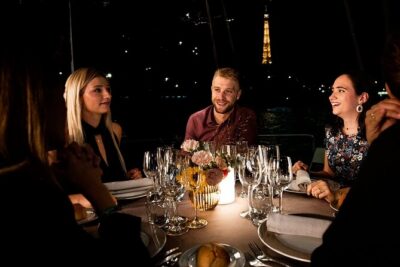 ★ 4.5Bateaux Parisiens Seine River Gourmet Dinner & Sightseeing CruiseFrom $1506,930 reviews
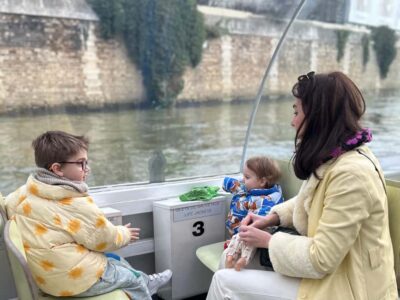 ★ 4.4Hop-On Hop-Off Seine Cruise Pass with 9 StopsFrom $275,645 reviews
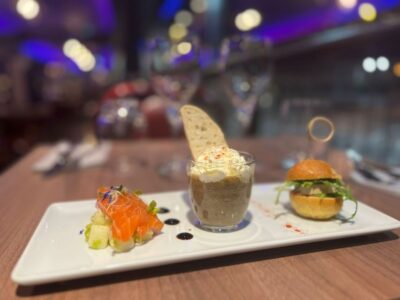 ★ 4.2Seine River Bistronomic Dinner CruiseFrom $695,272 reviews
Browse the lists this tour appears in