
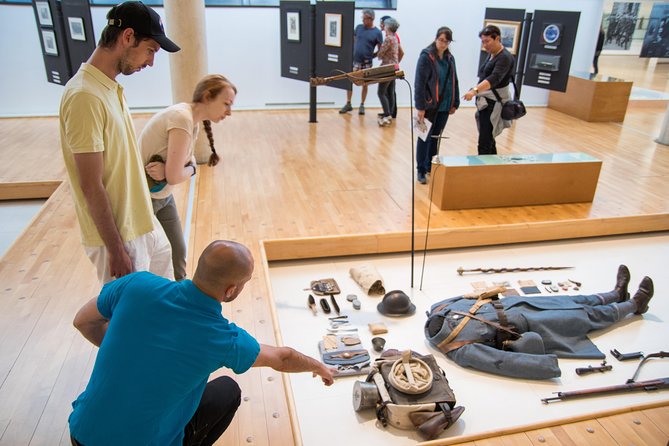
Reviewed · PARIS
Somme Battlefields from Paris with Australian memorial & Amiens Cathedral
Somme trenches, then a cathedral. This full day links WWI battle sites to the people Australia remembers, with time to stand where the history happened. You get a small-group format (max 8) plus air-conditioned minivan comfort, so the day feels manageable even though it runs long.
I especially like how the stops balance big memorials with small, physical details like walking preserved trenches at Beaumont-Hamel. I also like that entry to all the major sites is handled and free, which keeps the day from turning into a pile of ticket desk lines and extra costs.
The main drawback is simple: it’s a long, early start and you’ll be outdoors at multiple sites. If cold rain or wind hits (and it often does in that region), plan for it so the day stays moving, not miserable.
In This Review
- Key things you’ll notice on this Somme + Australian memorials day
- Somme battlefields from Paris: how the small-group format changes the day
- Price and value: what $278.26 really buys you
- The morning game plan: what to bring for a 7:00am WWI day
- Stop 1: Thiepval Memorial of the Missing and the weight of 72,000 names
- Stop 2: Lochnagar Crater—the Somme’s impact made visible
- Stop 3: Beaumont-Hamel’s Newfoundland Memorial—walking where trench lines still exist
- Stop 4: Pozières Memorial—a fast stop with heavy context
- Stop 5: Villers-Bretonneux Military Cemetery—Australia remembered in a specific place
- Sir John Monash Centre: video testimonials and interactive displays that make command human
- Le Tommy lunch at Pozières: a practical break with a private artifacts angle
- Amiens Cathedral at the end: how the calm lands after the Somme
- Who should book this Somme day trip from Paris
- Should you book it? My honest take
- FAQ
- What is the duration of the tour?
- What time does the tour start in Paris?
- What language is the tour offered in?
- How large is the group?
- Is lunch included in the price?
- Are admission tickets included for the memorials and sites?
- What are the main stops on the day?
- Is the tour affected by weather?
- What is the minimum age to join?
- Can I get a full refund if I cancel?
Key things you’ll notice on this Somme + Australian memorials day
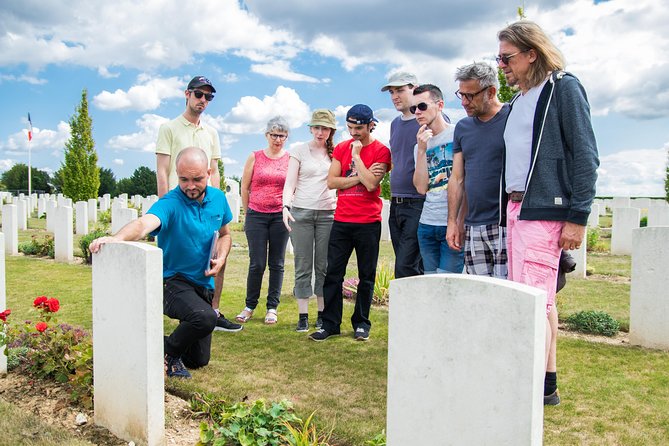
- Max 8 on a Paris-to-Somme minivan keeps the pace human and questions actually get answered
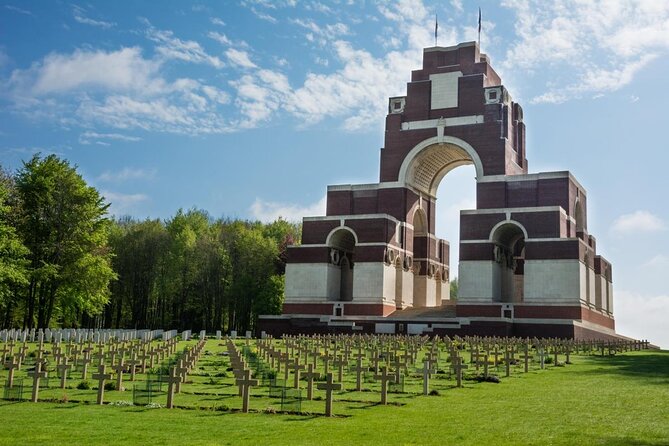
- Thiepval’s names (more than 72,000) are powerful because you can read and reflect without a rush
- Lochnagar Crater is a physical reminder of what Day One meant, with a 30m-deep, 100m-wide wound in the ground
- Beaumont-Hamel’s preserved trenches let you walk the trench line instead of just looking at photos
- Villers-Bretonneux memorials connect directly to Australians, including 10,738 servicemen with no known grave
- Sir John Monash Centre uses video testimonials and interactive displays to make command decisions feel personal
Somme battlefields from Paris: how the small-group format changes the day
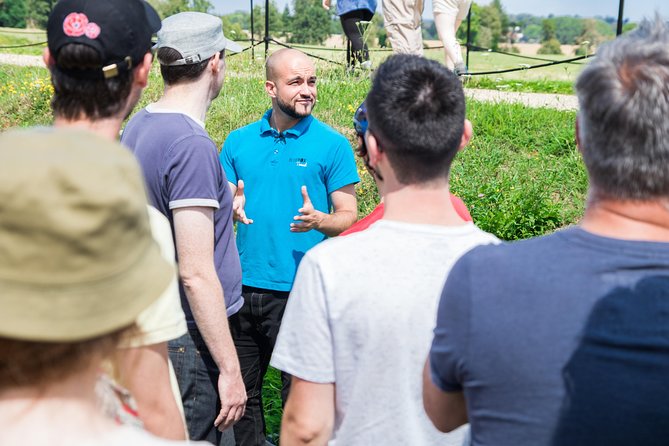
This tour is built for a long haul north from Paris, but the delivery matters. With a maximum of 8 people in an air-conditioned minivan, you avoid the chaos that usually comes with huge groups, and you get quicker turnarounds between stops.
The day also has a clear emotional arc: you start with missing names, move through the landscape of impact and trench warfare, then finish with commemoration at Australian-linked sites and a major cathedral in Amiens. That sequence helps your brain connect facts to feeling, instead of bouncing between disconnected “photo spots.”
A quick note on timing: you start at 7:00am, and the day runs about 11 hours. That’s normal for this kind of excursion, but it does mean you’ll want to be packed and ready the night before.
Still deciding? Here is how it stacks up against a few Paris favourites we have booked and reviewed.
- Paris: 1-Hour Seine Cruise departing from the Eiffel Tower
★ 4.4 · 77,472 reviews - Paris: Louvre Museum Timed-Entrance Ticket
★ 4.6 · 71,977 reviews - Disneyland® Paris 1-Day Ticket
★ 4.6 · 49,412 reviews - Paris: Versailles Palace and Gardens Full Access Ticket
★ 4.6 · 41,579 reviews
Price and value: what $278.26 really buys you
At $278.26 per person, you’re paying for the pieces that actually cost time and energy: round-trip transport, a driver/guide, and the fact that major admissions are free at each scheduled stop. You’re also getting guaranteed line-skipping, which matters at high-traffic memorial and museum points.
The “not included” part is straightforward: food. Lunch is on you at the stop in Pozières (Le Tommy), and it’s given as about one hour of free time.
For value, the key question is whether you’ll use the guided context. If you’re going to read the names, stand in trenches, and connect the Australian role to the wider battle, this price is reasonable because so many parts of the day are included and pre-arranged.
The morning game plan: what to bring for a 7:00am WWI day
You’ll be outdoors at multiple sites, and the tour runs in all weather. That’s not a threat; it’s a reality of northern France in winter and shoulder seasons, and it’s why smart packing makes the difference between a moving day and a miserable one.
I’d prioritize:
- Waterproof footwear with grip (trenches and craters don’t care about your schedule)
- Layers you can adjust without fuss
- A rain layer even if the forecast looks friendly
Also, plan your energy. A long day where you stop, walk a bit, and stand for reflection is tiring in a different way than sightseeing malls. Pace yourself, hydrate, and use the lunch break to reset your body.
Stop 1: Thiepval Memorial of the Missing and the weight of 72,000 names
Your first stop is the Thiepval Memorial of the Missing. This is where the scale lands: it records the names of more than 72,000 United Kingdom and South African men who died with no known grave.
What I like about starting here is that it trains you to read the experience. You’re not “shopping for war facts.” You’re being introduced to the reality that for many families, the war ended without a body to bury, which is why these memorials exist at all.
The time at Thiepval is about 30 minutes—enough to slow down, find names, and let the space do its work. If you try to rush it, the place won’t click. Give it a calm half hour and it will.
Stop 2: Lochnagar Crater—the Somme’s impact made visible
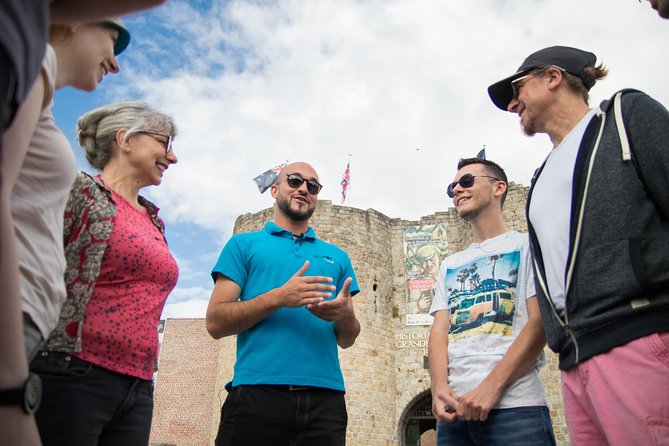
Next comes Lochnagar Crater, created when a mine was detonated on July 1, 1916, the opening day of the Battle of the Somme. The crater is described as about 30m deep and 100m wide.
This stop is short and very visual. You don’t need background to understand what you’re seeing; the ground itself is the lesson. It’s also a reminder that the battle wasn’t just trenches and guns—it included deliberate engineering under the earth.
Your visit is about 30 minutes, which is a sweet spot. Long enough to look, short enough that you don’t get numb to the scale.
Stop 3: Beaumont-Hamel’s Newfoundland Memorial—walking where trench lines still exist
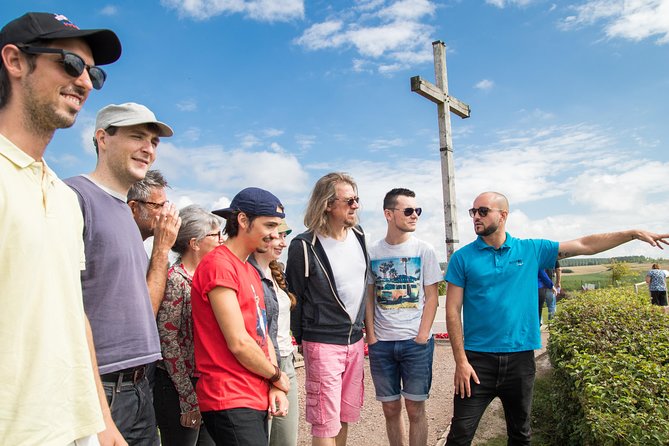
This is one of the most meaningful stops because Beaumont-Hamel is preserved in a way that lets you move through the story. The Newfoundland Memorial at Beaumont-Hamel is described as the largest Somme battlefield site that has been preserved, and you can still see and walk in the trenches.
That makes a difference. When you’re standing near the ground features, you understand how tight the terrain was, how exposure shaped survival, and how the battlefield demanded movement under impossible conditions.
You get about 30 minutes here. Use that time to look at the trench remnants, then look outward from the trench line to imagine the battlefield view. That mental flip is where the place becomes more than a stop on a route.




Stop 4: Pozières Memorial—a fast stop with heavy context
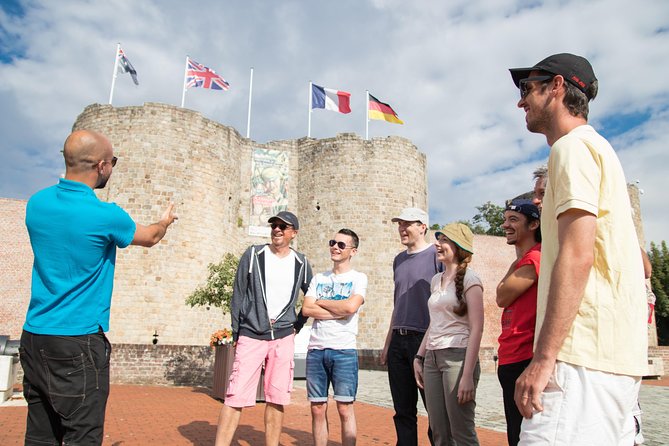
Pozières Memorial is on the schedule for about 10 minutes, which means this is not a linger-and-study stop. It’s more like a strong waypoint: enough time to absorb the meaning of commemoration, then you’re off to the next place.
Because the time is short, it helps if you’re ready for it mentally. If you need time to read carefully, you’ll have to accept that the tour is moving on purpose—this is a long day with many memorials, and each one gets only what it takes to fit the full route.
Stop 5: Villers-Bretonneux Military Cemetery—Australia remembered in a specific place
Then you reach Villers-Bretonneux, and the tour’s Australian focus becomes very direct. The Military Cemetery/memorial commemorates 10,738 Australian servicemen with no known grave who died on the Western Front.
This stop matters because it’s tied to a living tradition. The site notes Anzac Day celebrations every April 25, which is one reason this memorial doesn’t feel like distant history. It feels like a place that still shapes remembrance today.
You’ll have about 30 minutes here, giving you time to read, stand, and notice details. If you’re Australian, this is often the moment that changes the trip from educational to personal.
Sir John Monash Centre: video testimonials and interactive displays that make command human
After the cemetery stop, you visit the Sir John Monash Centre. This is where the day widens from ground-level suffering into decisions, planning, and leadership in the wider war effort.
The centre is described as having video testimonials and interactive displays. That combination helps you understand the battle beyond the static facts of dates and locations—especially if you’ve never connected Monash’s role to the wider outcome on the Somme.
You get about 1 hour. Use that time to watch the videos, not just scan the exhibits. The emotional payoff tends to land when you match the stories to what you’ve already seen outside.
Le Tommy lunch at Pozières: a practical break with a private artifacts angle
Lunch is given as about one hour of free time at Le Tommy, a restaurant owned and operated by Dominique, described as a local legend for both his strong character and his passion for Somme history.
The practical part: your lunch is not included, so you’ll pay for your meal. The interesting part: you can explore Dominique’s private collection of artifacts, tied to the Battle of the Somme and presented alongside the lunch stop.
This is also where you should think about your dietary needs. If you have strict requirements, you might find limited options at a rural-history-focused place, so plan accordingly and keep expectations realistic.
If you want a quick reset between memorials, this lunch works well. It’s not just food; it’s another layer of material culture from the same ground you visited earlier.
Amiens Cathedral at the end: how the calm lands after the Somme
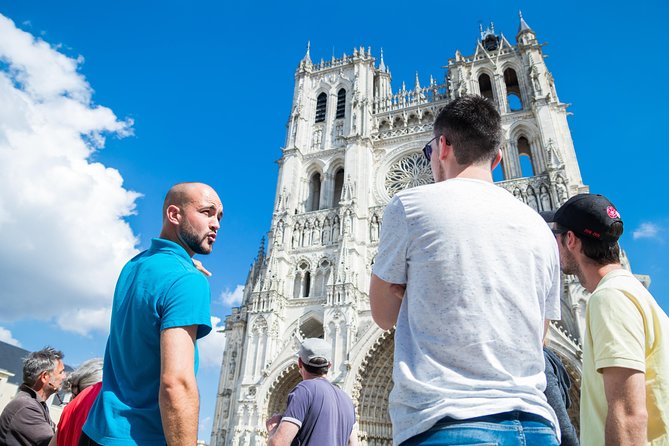
The day closes at Cathedrale Notre-Dame d’Amiens, a 13th-century cathedral and described as the largest cathedral in France. Your time here is about 20 minutes.
If you’ve spent the day confronting trenches, craters, and missing names, the cathedral can feel like a breath. It doesn’t erase what you’ve seen, but it gives you a place to collect yourself.
Amiens is also connected to the war era. One detail you may pick up along the way is that the cathedral was damaged by German bombings in 1918. Seeing it at the end makes the contrast sharper: the war scarred a city, and the city still stands.
Who should book this Somme day trip from Paris
This is a strong fit if you:
- Want Australian WWI focus without staying stuck in only museum walls
- Like a route that prioritizes specific memorials and preserved trench ground
- Prefer small-group touring where you can ask questions and move at a realistic pace
It also suits families who can handle an emotional day. The tour lists a minimum age of 7, and several visitors have brought kids and teens. Still, it’s not a theme park day. Some places are sobering, so bring your patience and let the day be what it is.
If you’re the type who hates long days outdoors, or you want a purely light, relaxed sightseeing schedule, this may feel heavy. But if you’re genuinely interested in how the Somme is remembered through British, Canadian, and Australian sites, the structure makes sense.
Should you book it? My honest take
I’d book this tour if your goal is to experience the Somme in a way that connects ground-level details to memorial meaning—especially through Villers-Bretonneux and the Sir John Monash Centre. The combination of small-group comfort, free admissions at stops, and guided context is exactly what you want for a day like this.
I wouldn’t book it on a whim if you hate early starts or you’re unprepared for weather. The sites are outdoors, the day is long, and you’ll get the most out of it when you dress for cold and wet conditions.
If you can handle that, this is one of those rare day trips where the final cathedral visit doesn’t feel like an afterthought. It feels like the last page after reading a difficult chapter.
FAQ
What is the duration of the tour?
It runs for about 11 hours.
What time does the tour start in Paris?
The start time is 7:00am, with the day ending back at the meeting point.
What language is the tour offered in?
The tour is offered in English.
How large is the group?
The maximum group size is 8 travelers.
Is lunch included in the price?
No. Lunch at Le Tommy is not included, though the tour gives about one hour for lunch there.
Are admission tickets included for the memorials and sites?
Yes. Admission tickets are listed as free for the scheduled stops.
What are the main stops on the day?
You visit the Thiepval Memorial of the Missing, Lochnagar Crater, the Newfoundland Memorial at Beaumont-Hamel, Pozières Memorial, Villers-Bretonneux Military Cemetery, the Sir John Monash Centre, Le Tommy for lunch, and Cathedrale Notre-Dame d’Amiens.
Is the tour affected by weather?
The tour operates in all weather conditions, so you should dress appropriately.
What is the minimum age to join?
The minimum age is 7 years.
Can I get a full refund if I cancel?
Yes, you can cancel for a full refund up to 24 hours before the experience start time. Free cancellation is available, and changes inside 24 hours aren’t accepted.
More Tour Reviews in Paris
- Paris: 1-Hour Seine Cruise departing from the Eiffel Tower
★ 4.4 · 77,472 reviews - Paris: Louvre Museum Timed-Entrance Ticket
★ 4.6 · 71,977 reviews - Disneyland® Paris 1-Day Ticket
★ 4.6 · 49,412 reviews - Paris: Versailles Palace and Gardens Full Access Ticket
★ 4.6 · 41,579 reviews - Paris: Arc de Triomphe Rooftop Tickets
★ 4.6 · 34,264 reviews
Fresh off the review desk in Paris
- Secrets of Paris Bike Tour in English or Dutch★ 5.0 · 5 reviews
- Paris: Mont Saint-Michel Day Tour with Chinese Tour Guide★ 5.0 · 5 reviews
- Private Street Art 2-Hour Guided Tour in Paris★ 4.5 · 5 reviews
- Orsay Museum Tour: 2h Highlights (Private & Small Group)★ 5.0 · 5 reviews
- Discover Paris in electric golf carts★ 4.0 · 5 reviews
- Paris Private Boat Tour with your own Captain Guide★ 5.0 · 5 reviews