
Reviewed · PARIS
The Essentials of Paris in a Classic Open Top Car Citroën DS
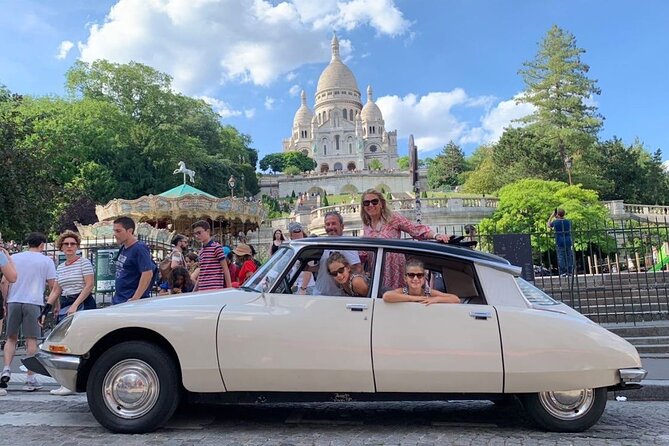
Paris looks better from an open-top classic car. This private Citroën DS tour strings together big-name landmarks with short stops and lots of guide Q&A, so you leave with your bearings instead of a pile of random photos. With Benjamin at the wheel and pickup/drop-off options, it’s built for real-time sightseeing, not a complicated maze.
What I like most is the balance: comfortable, heated seating with plenty of legroom, plus the freedom to move quickly through central sights. You also get a private guide who can point out what to notice as you go, and you can ask questions without feeling rushed. One thing to consider is that Paris traffic and city noise can slow the pace and make narration harder to catch when the streets get crowded, so good expectations (and patience) help.
In This Review
- Key Things I’d Plan for This Citroën DS Paris Tour
- What This 3-Hour Classic Car Tour Feels Like in Paris
- First Looks: La Madeleine and the Tuileries Green Between Landmarks
- Concorde to the Champs-Élysées: Power, Empire, and Golden Sights
- Arc de Triomphe to the Eiffel Tower Area: The City’s Big “Wow” Corridor
- The Seine Moment: Bridges, Movement, and a Little Romance
- Orsay to the Louvre: Art Stops Without the Full-Time Commitment
- From Pigalle to Montmartre: Nightlife Energy to Sacré-Cœur Views
- Montmartre Side Streets: Rue Lepic, Windmills, and the Artist References
- Latin Quarter and Île de la Cité: A Dense Dose of Paris Meanings
- Saint-Germain-des-Prés: Cafés, Language, and the Left Bank Pulse
- Royal Paris and Covered Passages: Palais Royal, Bridges, and Shopping-Walk Energy
- Price, Pickup Area Limits, and Seat Reality (Read This Before You Book)
- Comfort, Weather, and How to Hear the Guide on a Busy Day
- So, Should You Book This Citroën DS Tour?
- FAQ
- How long is the tour?
- What does it cost, and how many people can be in the group?
- Is pickup offered?
- Where are the meeting points if I’m not picked up?
- What language is the tour in?
- What’s included?
- Are children allowed?
Key Things I’d Plan for This Citroën DS Paris Tour
- Private, question-friendly guiding with Benjamin, so you can tailor what you care about
- Hotel-area pickup and drop-off (with specific arrondissement limits) to prevent wasted time
- Open-top viewing for photos and skyline moments, paired with heating for comfort
- A fast “highlights map” route that covers multiple neighborhoods in about 3 hours
- Weather-dependent timing, because the experience requires good conditions
What This 3-Hour Classic Car Tour Feels Like in Paris
This is the kind of tour you do early—when you want to understand how Paris fits together. You get a big sweep of central areas in a single guided drive, with short walk-and-look stops at major landmarks. Think of it as building your mental map, then letting you come back later for deeper visits.
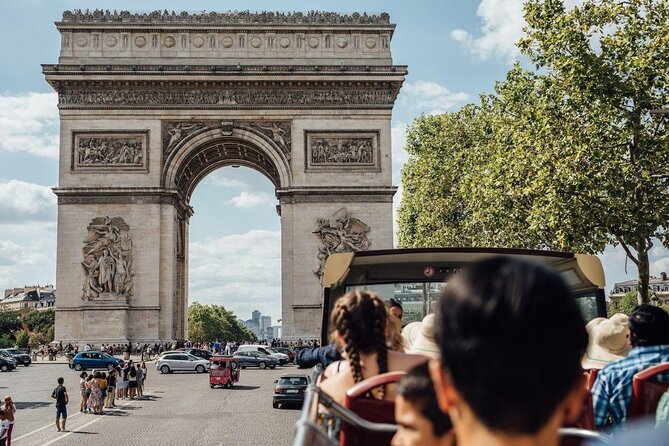
The car matters. A vintage Citroën DS isn’t just a cute detail; it’s part of the experience. You ride in heating-powered comfort with comfortable seats and plenty of legroom, which helps when you’re doing a lot of stop-and-go viewing. You’ll also have bottled water, and you can buy alcohol separately if you want it.
It’s private too, limited to your group (up to 4). That means you can move at a pace that works for you. If a photo takes longer, you’re not waiting for a busload.
Still deciding? Here is how it stacks up against a few Paris favourites we have booked and reviewed.
- Paris: 1-Hour Seine Cruise departing from the Eiffel Tower
★ 4.4 · 77,472 reviews - Paris: Louvre Museum Timed-Entrance Ticket
★ 4.6 · 71,977 reviews - Disneyland® Paris 1-Day Ticket
★ 4.6 · 49,412 reviews - Paris: Versailles Palace and Gardens Full Access Ticket
★ 4.6 · 41,579 reviews
First Looks: La Madeleine and the Tuileries Green Between Landmarks
Your tour opens with two places that set the tone immediately: the Church of La Madeleine and the Tuileries Gardens.
La Madeleine is all about presence. You’ll see its grand neoclassical façade and a richly decorated interior, and it’s a strong “Paris postcard” moment right away because the building feels formal and monumental in the middle of the city.
Then you shift into the softer side of the center: the Tuileries Gardens, that long, elegant green space between the Louvre area and Place de la Concorde. This is where the tour gives you breathing room. Even with a short stop, gardens like this help you reset—so you don’t feel like your entire day is just stone façades and traffic.
Tip for your photos: when the garden light hits, it’s easier to frame wide views and moveable shots from paths and edges without fighting crowds all day.
Concorde to the Champs-Élysées: Power, Empire, and Golden Sights
After the calm of the Tuileries, the route leans into grand Paris. You’ll get Place de la Concorde, where history and elegance meet around fountains, statues, and the famous Luxor Obelisk—a towering ancient Egyptian monument that anchors the whole square.
From there, you’ll pass the French National Assembly (Palais Bourbon), which adds a different kind of landmark energy. Instead of art or romance, it’s government and national identity right along the Seine.
Next comes Champs-Élysées, Paris’s iconic avenue. Even if you only get a short window, it’s the kind of street you understand instantly: luxury, history, and lights in a single long line of motion. Then you’ll see Élysée Palace, the official residence of the French President, surrounded by formal gardens—power, but with a very visual, ceremonial look.
Two more sights round out this stretch: the Grand Palais with its glass-domed splendor, and the Petit Palais, an elegant contrast with its quieter setting and artworks displayed in a calm garden-style environment. This pairing is useful because it shows Paris isn’t just “one style.” It’s architecture that can shift mood fast.
Arc de Triomphe to the Eiffel Tower Area: The City’s Big “Wow” Corridor
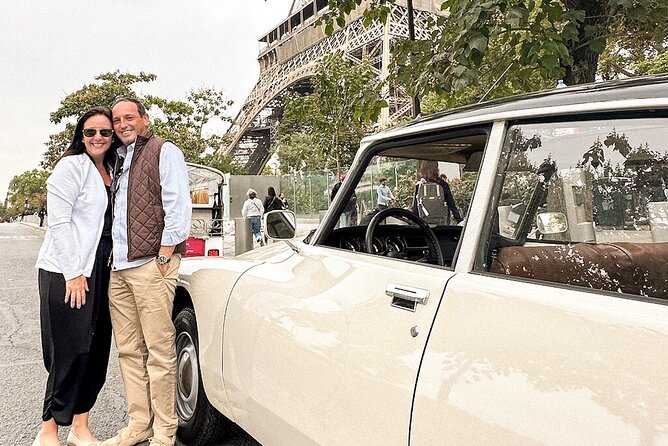
This part of the drive is built for your first real awe moments. You’ll reach Arc de Triomphe, with its sculpted archways honoring France’s heroes. Even for a brief stop, it’s the kind of structure that makes you feel you’ve arrived at the core of Paris.
Then comes the Eiffel Tower zone. Before you get there, you’ll pass or stop near Rue de l’Université, a picturesque street experience just steps away from the Eiffel Tower area—good for a quick streetscape look when you don’t want to be stuck only on the tower.
At the Eiffel Tower itself, you’ll get a short visit window designed for photos and quick viewing. The open-top car also helps here: you’re not only looking; you’re getting those skyline angles while moving.
You’ll also see École Militaire, a grand 18th-century landmark near the Eiffel Tower, and then head toward Pont Alexandre III, which the route treats as a highlight with its golden sculptures and sweeping views.
And if you want one more “serious Paris” stop nearby, Les Invalides delivers it with its golden dome and its connection to French military history, including the tomb of Napoleon Bonaparte. It’s the sort of place that changes how you understand the city’s timeline.
The Seine Moment: Bridges, Movement, and a Little Romance
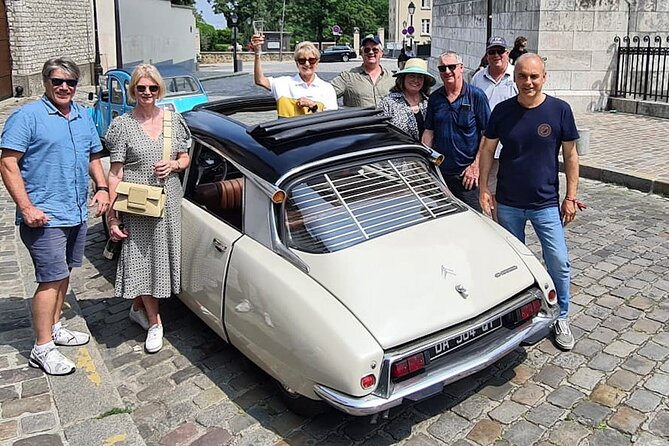
You’ll spend time on the Seine in a way that’s practical for limited hours. One moment you’re looking at bridges, the next you’re crossing views that show Paris from different angles—exactly what you miss when you only do museum days.
You’ll also cross or approach Pont de la Concorde, which links Place de la Concorde to the Jardin des Tuileries. From the waterline and from the bridge perspective, many of the major landmarks feel more connected, like they belong to the same story rather than separate attractions.
If you want one strategy for getting the most from short stops: pick one or two “anchor” photos you’ll definitely want (for example, a bridge shot and a tower shot). Then use the rest of your time to notice details your brain usually ignores when you’re rushing.
Orsay to the Louvre: Art Stops Without the Full-Time Commitment
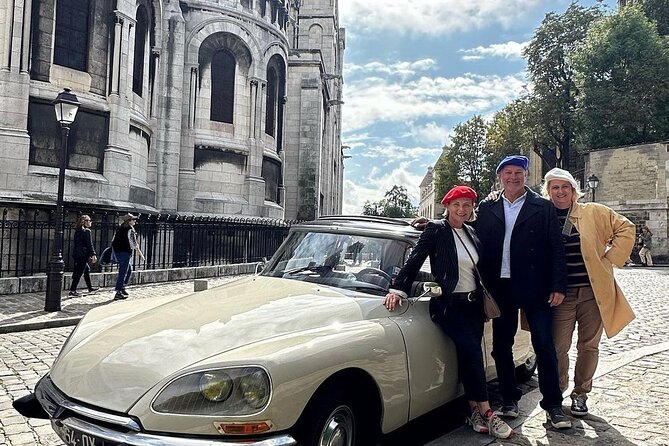
This tour includes key museum-area landmarks, and it’s useful because it gives you options. You’ll see Musée d’Orsay, housed in a beautifully restored former railway station, and you’ll understand quickly why it’s a favorite for Impressionist and Post-Impressionist work.
Then the big one: the Louvre. The world’s largest art museum, with its iconic glass pyramid, sits like a cultural magnet in the center. The tour doesn’t try to turn this into a full museum day. Instead, you’ll get the orientation moment—where the building sits, how it connects to surrounding streets, and what you’d want to plan if you come back.
You’ll also pass Place Vendôme for luxury storefront vibes and the Vendôme Column, plus Opéra Garnier, which brings ornamented elegance into the route. The point here isn’t to read every architectural detail. It’s to recognize the style differences so you know what you’re drawn to later.




From Pigalle to Montmartre: Nightlife Energy to Sacré-Cœur Views
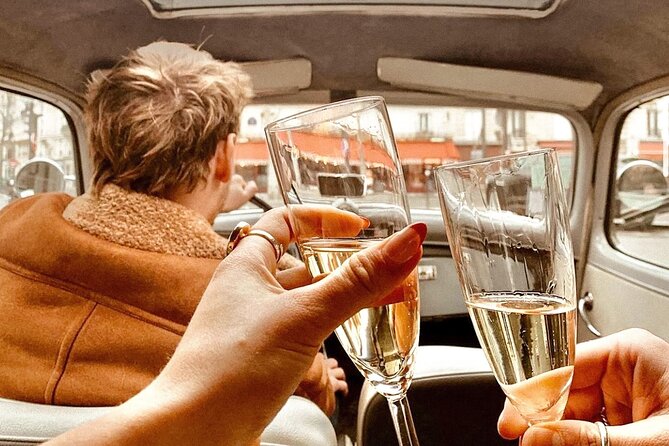
After the grand central sights, the route turns toward Paris’s artistic and nightlife lanes. You’ll head through Pigalle, known for cabarets and historic music venues, and then see Moulin Rouge with its iconic red windmill façade. These are famous, yes—but they’re also part of Paris’s identity, and seeing them from the street gives you a different sense than scrolling photos later.
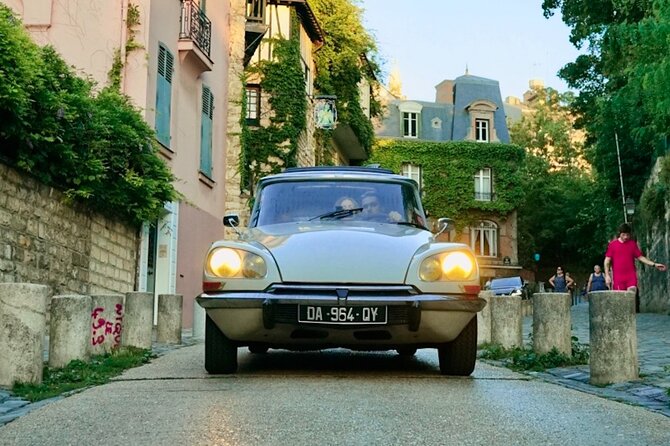
The tour also includes the myth-and-art aura around Le Chat Noir, then moves through streets like Rue de l’Abreuvoir, with old houses and that village-feel on the hill. You’ll even pass Clos Montmartre, a vineyard tucked into Montmartre. That’s the kind of detail that makes you realize this district isn’t just a photo stop; it has real texture.
Then you climb to Montmartre proper, with Sacré-Cœur Basilica as the headline. You’ll get the classic “gleaming white domes” look and breathtaking panoramic views over Paris. One of the best things about adding Sacré-Cœur here is that it flips the tour from flat street-level landmarks to a viewpoint. You stop looking at the city; the city looks back at you.
Montmartre Side Streets: Rue Lepic, Windmills, and the Artist References
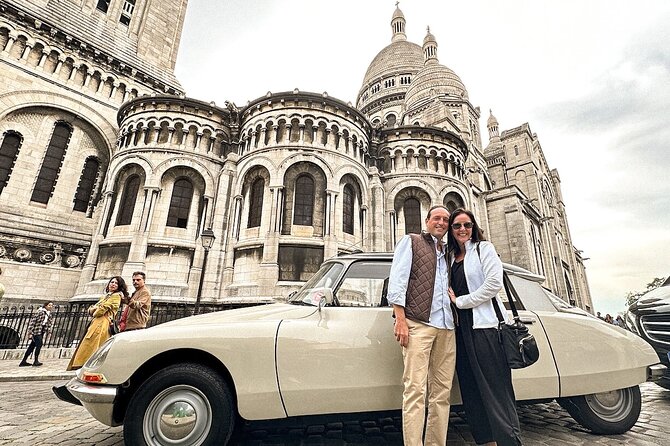
Montmartre is where the stops feel more like guided walking stories. Along the way you’ll see Rue Lepic, a cobblestone street where history, art, and cinema overlap. You’ll also reach Moulin de la Galette, a historic windmill setting with an atmosphere tied to artists and local gatherings.
Two culture-focused “artist-life” stops are included: Van Gogh’s House and Renoir’s House. Even if you don’t go deep into every gallery detail, these moments help you connect names to place—what makes the neighborhood feel anchored in creative history, not just tourism.
You’ll also pass or stop for La Maison Rose, plus Place du Tertre, where painters showcase their work in the same kind of lively square rhythm you associate with Montmartre. And the route even includes the Montmartre stairs, which let you feel how the hill changes the experience block by block.
If you want a quick modern romance moment, there’s also the Wall of I Love You, where the phrase appears in multiple languages. It’s a stop that works well even for groups who don’t care about long monument visits.
Latin Quarter and Île de la Cité: A Dense Dose of Paris Meanings
Later in the route, you shift into the historic heart and the book-and-think energy of central Paris. You’ll pass Île de la Cité, the historic center where major landmarks sit along the Seine.
You’ll reach Notre-Dame Cathedral, described here through its striking Gothic architecture and iconic presence in the city center. Nearby in the same area is Sainte-Chapelle, famous here for its breathtaking stained-glass windows and Gothic design.
The tour also includes a few literary and local-life landmarks that change the tempo. Shakespeare and Company is included for book lovers who like the idea that Paris is a place where stories keep happening. Île Saint-Louis also appears for a quieter, historic-street feel, with narrow lanes and café atmosphere.
You’ll then move into the Latin Quarter zone with the Panthéon, a neoclassical mausoleum honoring France’s greatest minds and heroes. Additional church and university landmarks appear nearby, including Saint-Étienne-du-Mont, La Sorbonne, and Saint-Sulpice Church, each described through distinct architectural character and their role in the district’s spiritual and intellectual identity.
If you like Paris as a place where ideas matter, this section does that well. It isn’t only pretty. It’s identity-building.
Saint-Germain-des-Prés: Cafés, Language, and the Left Bank Pulse
The Left Bank portion keeps the tour from becoming only monuments. You’ll see Saint-Germain-des-Prés, known for cafés and a literary and artistic scene, then stop near or include iconic café names like Les Deux Magots and Le Café de Flore.
You’ll also get a look toward the Abbey of Saint-Germain-des-Prés and the pedestrian-feeling charm of Rue de Buci, which is described as a great street for an authentic Paris experience with cafés, gourmet food shops, and boutiques.
For a perspective shift, the route also includes the Académie Française, tied to preserving and enriching the French language. It’s a logical stop in this area because the Left Bank isn’t just a place to eat and look—it’s tied to how people think and speak.
Royal Paris and Covered Passages: Palais Royal, Bridges, and Shopping-Walk Energy
Toward the end, you get a mix of formal spaces and easy-walk architecture. You’ll pass or see the French Senate (Palais du Luxembourg) and the Jardin du Luxembourg, which functions as a quiet oasis for people-watching and resting your legs.
Then it moves into river-side and classic-Paris crossing zones with Quai de Seine views and Pont Neuf, the oldest standing bridge, plus Place Dauphine on Île de la Cité.
You’ll also see the newer-meets-classic art architecture feel with Bourse de Commerce, and the older ceremonial geometry of Place des Victoires. If you like small Paris moments, you get Galerie Vivienne, with its 19th-century glass-roofed shopping arcade character and cozy café atmosphere.
And don’t skip Palais Royal. The tour includes the gardens and arcades plus the famous Colonnes de Buren—a visual stop that’s quick but memorable because it feels like modern art dropped into formal royal surroundings.
Finally, the route cycles through classic squares like Place de Valois, reinforcing that Paris isn’t only “one main attraction.” It’s a network.
Price, Pickup Area Limits, and Seat Reality (Read This Before You Book)
The price is $480.44 per group (up to 4) for about 3 hours. If you book with a full group of four, that’s roughly $120 per person, which is where value starts to make sense—especially because this is a private guide plus transport. If you’re traveling as two, the per-person cost rises, so for a couple it’s still worth it if you care about efficiency and avoiding confusion with directions.
Pickup is offered, but not everywhere. The tour says pickup and drop-off are available for locations inside the city of Paris except in the 3rd, 4th, 10th, 11th, 12th, 19th, and 20th arrondissements, and it also says no pickup or drop-off at Le Marais, Bastille, République, and Gare du Nord. If your hotel doesn’t land in the permitted zones or isn’t centrally located, you can choose a meeting point.
Two meeting point options are listed:
- In front of Hôtel Crillon, 10 Place de la Concorde (75008)
- In front of the Panthéon, Place du Panthéon (75005)
One practical seat note: children under 10 aren’t allowed because the back seats don’t have seat belts. If you’re traveling with kids, plan another format.
A small planning tip that actually helps: the best scheduled times are between 10AM and 4PM to avoid worst traffic. If you’re flexible, pick a time slot within that window.
Comfort, Weather, and How to Hear the Guide on a Busy Day
This experience is built around good visibility and easy sightlines. The open-top car is great for photos and views, but it also means you feel the weather more. The provider states the experience requires good weather, and if it’s canceled for poor weather you’ll be offered another date or a full refund.
Inside comfort is handled pretty well: heating and comfortable seating with plenty of legroom. That matters because “short stops all day” still adds up to a lot of time upright in a car.
For hearing the guide, keep expectations realistic. Paris streets can get loud fast, especially with traffic. If you want the full narration, sit where you can see and hear the guide most easily, and ask follow-up questions. Your group will move together, so you’re not stuck listening from the back like a passenger on a crowded bus.
So, Should You Book This Citroën DS Tour?
Book it if you’re the kind of traveler who wants a fast overview that sets up the rest of your trip. It’s especially strong for first-timers because you’ll see iconic landmarks like La Madeleine, the Louvre, Eiffel Tower, Arc de Triomphe, Sacré-Cœur, Notre-Dame, Sainte-Chapelle, and the Latin Quarter, plus plenty of neighborhood-style streets like Montmartre lanes and Left Bank café areas.
Skip it (or consider another format) if you’re traveling with young kids under 10, or if you absolutely need long, quiet stops at one sight. This tour is about coverage and orientation, not deep museum time or a slow wander.
If you want your first day to feel organized and fun, this classic car + private guide combo is a solid way to get your bearings fast—without spending half your vacation trying to figure out where to stand.
FAQ
How long is the tour?
It’s approximately 3 hours.
What does it cost, and how many people can be in the group?
It’s $480.44 per group, for up to 4 people.
Is pickup offered?
Yes. Pickup and drop-off are available to locations inside Paris except for the 3rd, 4th, 10th, 11th, 12th, 19th, and 20th arrondissements, and there’s no pickup or drop-off at Le Marais, Bastille, République, or Gare du Nord.
Where are the meeting points if I’m not picked up?
You can meet in front of Hôtel Crillon (10 Place de la Concorde, 75008) or in front of the Panthéon (Place du Panthéon, 75005). The tour ends back at the meeting point.
What language is the tour in?
The tour is offered in English.
What’s included?
A private transportation service, a local guide (Benjamin), professional driver, bottled water, and a mobile ticket. The car also has heating and comfortable seats with plenty of legroom.
Are children allowed?
Children under 10 years old are unfortunately not allowed due to no seat belt on the back seats.
More Tour Reviews in Paris
- Paris: 1-Hour Seine Cruise departing from the Eiffel Tower
★ 4.4 · 77,472 reviews - Paris: Louvre Museum Timed-Entrance Ticket
★ 4.6 · 71,977 reviews - Disneyland® Paris 1-Day Ticket
★ 4.6 · 49,412 reviews - Paris: Versailles Palace and Gardens Full Access Ticket
★ 4.6 · 41,579 reviews - Paris: Arc de Triomphe Rooftop Tickets
★ 4.6 · 34,264 reviews
Fresh off the review desk in Paris
- Secrets of Paris Bike Tour in English or Dutch★ 5.0 · 5 reviews
- Paris: Mont Saint-Michel Day Tour with Chinese Tour Guide★ 5.0 · 5 reviews
- Private Street Art 2-Hour Guided Tour in Paris★ 4.5 · 5 reviews
- Orsay Museum Tour: 2h Highlights (Private & Small Group)★ 5.0 · 5 reviews
- Discover Paris in electric golf carts★ 4.0 · 5 reviews
- Paris Private Boat Tour with your own Captain Guide★ 5.0 · 5 reviews