
Reviewed · SEINE RIVER CRUISES
The Seine River Cruise
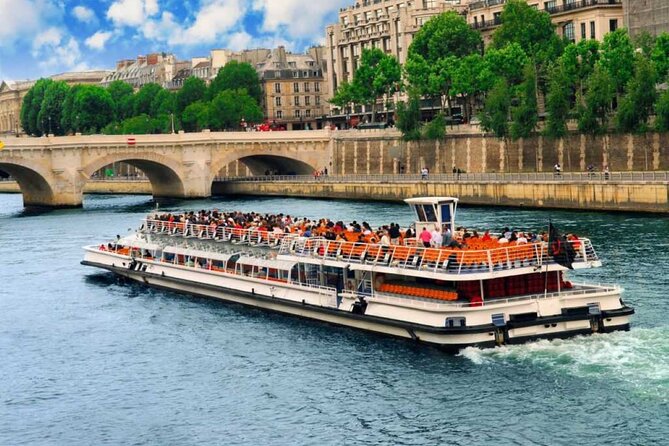
Paris at river level feels different. A Seine cruise is one of the easiest ways to take in major landmarks without bouncing between neighborhoods. I like that you get broad, postcard-ready views of the Eiffel Tower and the cathedral area in a short time window, and I also like that evening departures can time well with the tower lights. The main thing to watch is space and crowding: some departures feel packed, and the on-board narration can be hard to hear when the boat is busy.
If you want a “get your bearings fast” Paris experience, this fits the bill. You board at Pont de l’Alma (Port de la Conférence) and the cruise runs about 1 hour to 1 hour 10 minutes, looping back to the same meeting point. One caution: if weather is poor, the operator may cancel and you’ll need to switch dates or take a refund depending on how the cancellation is handled.
In This Review
- Key Things to Know Before You Board
- Why the Seine is the easiest way to see Paris fast
- Pont de l’Alma pickup: where you’ll start and what that means
- Practical tip
- The Eiffel Tower glow: what you’ll notice beyond the photo
- If you’re aiming for the sparkle lights
- Notre-Dame after restoration: why seeing it from the river hits harder
- A small realism note
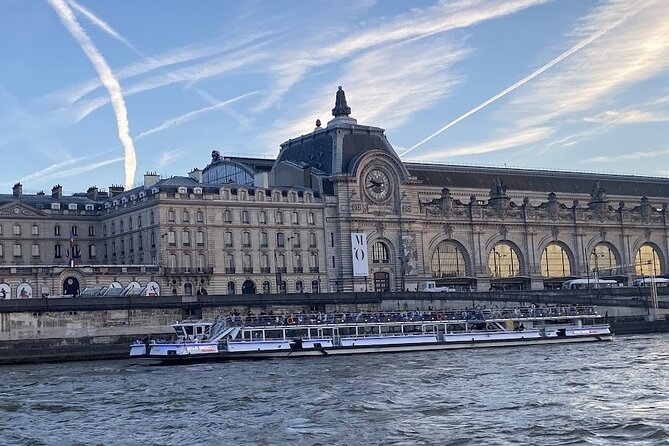
- Musée d’Orsay and the art you can sense from the water
- The military museum stop: a different kind of Paris scenery
- The Louvre and the art-palace-style sights near Pont Alexandre III
- Best use of this part of the cruise
- Group size, crowding, and the real feel of the boat
- How I’d plan around crowd risk
- Narration and hearing it over the crowd
- Price and value: what $18.56 buys you (and what it doesn’t)
- Who this is best for
- Weather dependence: when to book and how to stay flexible
- How to reduce stress
- Should you book this Seine River Cruise?
- FAQ
- Where does the Seine River cruise start?
- How long is the cruise?
- What are the main sights you’ll see from the river?
- What is included in the ticket price?
- What is not included?
- Where does the cruise end?
- What are the operating hours?
- What is the cancellation policy?
- Does the cruise depend on weather?
- Are service animals allowed?
Key Things to Know Before You Board
- Boarding is quick, but not always smooth: plan to arrive with extra buffer in case the line is long.
- Expect a mix of viewpoints: you’ll see major sights from the river without climbing or switching tickets for each one.
- Evening timing can be magic: one sailing at 9pm was timed well for the Eiffel Tower sparkle at 10pm.
- Crowd level can change: the experience can feel packed, so choose a time that matches your comfort.
- Audio is pre-recorded and may be basic: if you want deep explanations, you may need to read up before you go.
- You’re limited to a short window: it’s great for highlights, not for museum-level time.
Why the Seine is the easiest way to see Paris fast
The Seine has a simple superpower: it lines up Paris’s big-hitters in a way your feet can’t. With a cruise, you’re not deciding which neighborhood to hit first. Instead, you ride past landmarks like the Eiffel Tower, Notre-Dame, the Musée d’Orsay, and the Louvre-area sights, all while Paris slides by at a relaxed pace.
That matters because Paris can be exhausting when you do it “by ambition.” A short cruise cuts through the mental load. You get wide angles on architecture and river life, and you come away with a mental map you can use later—when you’re deciding where to walk, eat, or aim your camera.
And there’s a second bonus: water changes the lighting. At night, the reflections turn the whole city into a glowing backdrop. If you’re even mildly photo-focused, you’ll understand why people keep coming back.
More time out on the Seine, compared
- Paris: 1-Hour Seine Cruise departing from the Eiffel Tower
★ 4.4 · 77,472 reviews - Paris: Seine Cruise & Crepe Tasting near the Eiffel Tower
★ 4.4 · 11,231 reviews - Paris: Seine River Panoramic Views Dinner Cruise
★ 4.3 · 10,611 reviews - Paris: Eiffel Tower Access by Elevator & Seine River Cruise
★ 4.6 · 7,329 reviews
Pont de l’Alma pickup: where you’ll start and what that means
Your meeting point is Pont de l’Alma, Port de la Conférence (75008 Paris), and the cruise ends back at the same place. That return-to-start detail sounds small, but it’s huge for planning. You don’t have to worry about how to get yourself back across town afterward.
This part also helps you pair the cruise with dinner. Since the end point is the same as the start, you can stay in the same general area afterward instead of guessing transit connections.
Practical tip
Arrive early. Not just “a few minutes.” One downside reported is long boarding lines and big delays when departures are crowded. Give yourself breathing room so you’re not stressed while waiting.
The Eiffel Tower glow: what you’ll notice beyond the photo
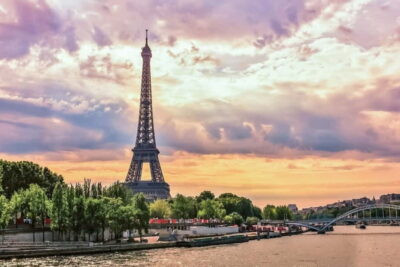
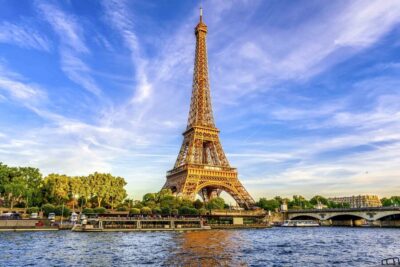
The Eiffel Tower is the obvious star, but the cruise view is different from standing on the ground. Up close, it can feel huge in a physical way. From the river, it’s a composition—tower, bridges, and riverbank all working together in one frame.
The tower was built for the 1889 Exposition Universelle (World’s Fair), and that “fairytale-structure” origin shows in how it sits in the skyline. On the cruise, you also get a layered sense of Paris moving around it—especially when you’re cruising later in the day.
If you’re aiming for the sparkle lights
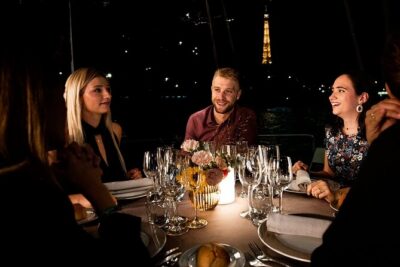
Timing can make or break your photos. One great data point: the 9pm cruise was reported as a perfect time to catch the tower’s sparkling lights at 10pm. If that exact timing matters to you, consider choosing a departure that puts you on the river during that window.
Notre-Dame after restoration: why seeing it from the river hits harder
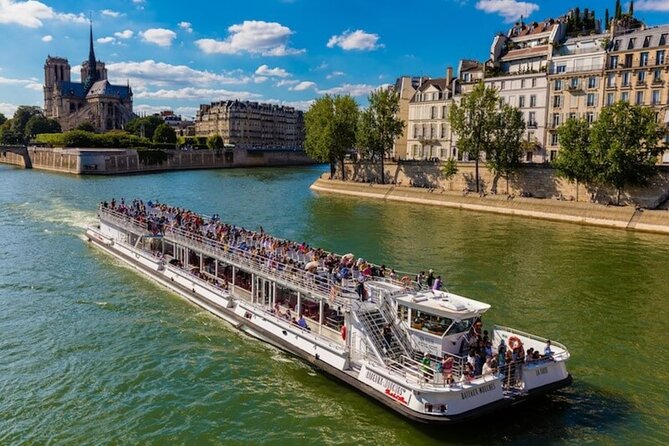
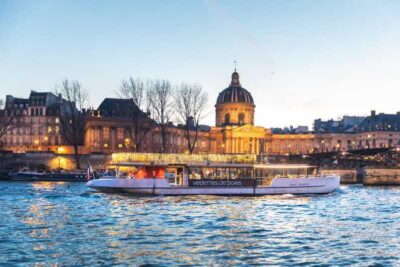
Notre-Dame is one of those places where the experience is bigger than the building itself. From the water, it becomes part of the wider Paris view rather than a single, up-close focal point.
There’s also a real-world milestone here. The cathedral was damaged by a fire accident in 2019 and reopened in 2024 after five years of restoration efforts. That timeline adds weight to seeing it now: you’re not just looking at famous architecture—you’re witnessing a major comeback.
From a cruise perspective, you’ll likely notice how the cathedral’s mass anchors the river scene. It’s not just “a church you recognize.” It reads like a landmark-shaped landmark, holding its place as everything else slides by.
Worth weighing up next to this Paris pick


A small realism note
The audio narration may not give you much detail, and if the boat is crowded, it can be tough to hear. If you want to understand what you’re seeing in a deeper way, do a quick read before you go so the visuals mean more during the cruise.
Musée d’Orsay and the art you can sense from the water
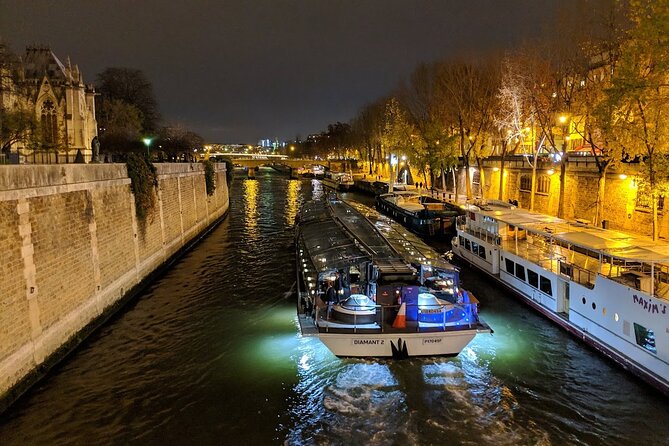
The Musée d’Orsay is a huge deal in Paris art culture, and the river view helps you connect the building to its surroundings. Even if you’re not planning to go inside, you’ll get the “why this matters” feeling: it’s a landmark that sits comfortably in the city’s flow.
From the Seine, you also get a sense of what kind of day you have ahead. If your cruise makes you hungry for more art, you’ll know where to aim next. If you’re art-casual, you’ll still come away understanding that this is a “serious” art route in Paris—not a random stop.
The key thing: the cruise is designed for views, not deep museum time. If you want to linger with paintings, you’ll do that separately. Think of the cruise as your orientation and inspiration tool.
The military museum stop: a different kind of Paris scenery
A stop along the way includes one of the most prestigious military museums in the world. That’s a refreshing change from the more purely scenic or church-and-palace stops, because it adds a historical angle to the day.
Why it’s worth noting: military history museums often feel heavy in a good way—especially when you’re not buried in it for hours. Seeing it from the river gives you a quick “this exists, it matters” moment. It can also help balance your trip if you’re doing a lot of art and architecture already.
If you’re a history nut, you’ll probably want to build in time later to go inside. If you’re more here for the sights, this stop still adds meaning without turning the cruise into a lecture.
The Louvre and the art-palace-style sights near Pont Alexandre III
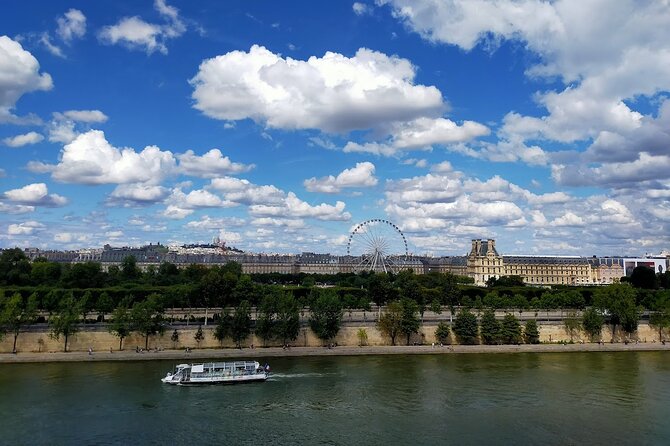
The cruise includes the Louvre, described as the world’s largest art museum and a historic monument. From the water, the Louvre is a “you know it even if you don’t know it” landmark. It’s hard to explain, but your brain instantly recognizes it as the museum in Paris.
The cruise also passes a major art and cultural landmark described as a blend of Beaux-Arts architecture and modern innovation, located near the Champs-Élysées and Pont Alexandre III. Even without going inside, these are the kinds of buildings that make you feel Paris is built like a stage set—big forms, clear lines, and serious design.
Best use of this part of the cruise
Treat it like a visual checklist. Don’t stress about identifying every detail mid-ride. Instead, watch for the landmarks you most want to revisit on foot later. If you’re planning a day trip to museums, the cruise helps you decide what to prioritize.
Group size, crowding, and the real feel of the boat
This isn’t sold as a private experience. The cruise has a maximum of 99 travelers, and that number matters in how the boarding and on-board experience can feel.
Two different experiences were reported: one cruise felt well organized and not overly crowded (especially the 8pm option), while other departures had major crowd issues—long lines to board and a packed boat with people pushing. Safety is the big concern in that scenario. If you’re the type who hates tight spaces or gets anxious around aggressive boarding lines, choose your departure time carefully.
How I’d plan around crowd risk
- Pick an earlier “prime” slot like 8pm if you want a smoother feel (it was reported as not overly crowded).
- Arrive early enough that you’re not scrambling at the worst moment.
- If you’re sensitive to crowds, consider sitting toward the side with better visibility and less crush (you’ll have a better feel once you see how people are positioning themselves).
Narration and hearing it over the crowd
The cruise uses pre-recorded audio in many languages. That can be helpful for basics, but it also means the commentary may feel thin compared with a live guide. One review noted that there was scant detail about each site, and loud passengers made it difficult to hear.
So here’s the practical expectation: use the audio for orientation, not for expert-level storytelling.
If you’re interested in the deeper stuff—history dates, architectural changes, the why behind each sight—do a quick prep. Then the audio becomes a helpful overlay, not the only source of meaning.
Price and value: what $18.56 buys you (and what it doesn’t)
At $18.56 per person, you’re paying for a short, scenic ride past Paris’s biggest landmarks. That’s strong value compared with spending a whole day on transit and multiple paid attractions just to “see the highlights.”
What you get:
- A high-visibility route featuring Eiffel Tower, Notre-Dame, Musée d’Orsay, the Louvre, and major bridges and cultural stops.
- A time-efficient experience lasting about 1 hour to 1 hour 10 minutes.
- The cruise ends back where you start, which reduces “lost time.”
What’s not included:
- Meals
- Private transportation
And while there is an “entrance fee” listed as included, the big payment is really the cruise itself—so don’t expect this to replace museum tickets or paid guided tours.
Who this is best for
This fits travelers who want:
- a first-day or second-day orientation tool,
- a low-effort landmark checklist,
- and an evening plan that doesn’t require a lot of decision-making.
If you’re looking for a museum-level deep dive on art or architecture, you’ll want to add separate visits. The cruise is for seeing, not studying.
Weather dependence: when to book and how to stay flexible
This experience is clear about one thing: it requires good weather. If it’s canceled due to poor weather, you’ll be offered a different date or a full refund.
So plan for at least one “weather-safe” option day. Paris weather can swing, and river cruises are honest about it. Also, the cancellation policy states the booking is non-refundable and cannot be changed for any reason—so the “different date or full refund” situation is specifically tied to cancellation due to bad weather.
How to reduce stress
- Choose a day with some flexibility.
- Keep your other plans lighter so you can adjust quickly if the cruise gets canceled.
Should you book this Seine River Cruise?
Yes—if you want a fast, scenic way to connect the dots of Paris. The key advantages are the landmark lineup and the short duration, especially for an evening cruise that can line up with the Eiffel Tower lights.
I’d book it if:
- you’re trying to see Eiffel Tower, Notre-Dame, Musée d’Orsay, and Louvre-area sights without spending the whole day crisscrossing,
- you want an easy, relaxing plan at night,
- and you’re okay with pre-recorded audio and a “highlights” pace.
I’d think twice (or choose a different departure time) if:
- you hate crowds or narrow boarding lines,
- you want detailed narration and live storytelling,
- or you’re traveling on a day where you suspect high demand.
If you do book, treat it like a visual orientation. Then build your next steps on foot and by museum ticket. That combo is how you get the most out of Paris with the least stress.
FAQ
Where does the Seine River cruise start?
It starts at Pont de l’Alma, Port de la Conférence, 75008 Paris, France.
How long is the cruise?
The cruise runs about 1 hour to 1 hour 10 minutes.
What are the main sights you’ll see from the river?
You’ll see major Paris landmarks including the Eiffel Tower, Notre-Dame Cathedral, Musée d’Orsay, the Louvre, and historic bridges such as Pont Alexandre III.
What is included in the ticket price?
The ticket includes an entrance fee for the experience.
What is not included?
Meals and private transportation are not included.
Where does the cruise end?
The cruise ends back at the meeting point.
What are the operating hours?
The activity is listed as operating Monday through Sunday from 10:00 AM to 10:30 PM.
What is the cancellation policy?
The experience is non-refundable and cannot be changed for any reason. If it’s canceled due to poor weather, you’ll be offered a different date or a full refund.
Does the cruise depend on weather?
Yes. It requires good weather, and cancellations due to poor weather can happen.
Are service animals allowed?
Yes, service animals are allowed.
More Cruises & Boat Tours in Paris
- Paris: 1-Hour Seine Cruise departing from the Eiffel Tower
★ 4.4 · 77,472 reviews - Paris: Evening River Cruise with Music
★ 4.4 · 22,721 reviews - Paris: Louvre Guided Tour with Reserved Access & Boat Cruise
★ 4.3 · 16,353 reviews - Paris: Tootbus Hop-on Hop-off (Optional River Cruise)
★ 4.3 · 15,279 reviews - Paris: Big Bus Hop-On Hop-Off Tour with Optional Cruise
★ 4.4 · 13,279 reviews
More Tour Reviews in Paris
- Paris: 1-Hour Seine Cruise departing from the Eiffel Tower
★ 4.4 · 77,472 reviews - Paris: Louvre Museum Timed-Entrance Ticket
★ 4.6 · 71,977 reviews - Disneyland® Paris 1-Day Ticket
★ 4.6 · 49,412 reviews - Paris: Versailles Palace and Gardens Full Access Ticket
★ 4.6 · 41,579 reviews - Paris: Arc de Triomphe Rooftop Tickets
★ 4.6 · 34,264 reviews
More Cruises on the Seine
- Paris: 1-Hour Seine Cruise departing from the Eiffel Tower
★ 4.4 · 77,472 reviews - Paris: Seine Cruise & Crepe Tasting near the Eiffel Tower
★ 4.4 · 11,231 reviews - Paris: Seine River Panoramic Views Dinner Cruise
★ 4.3 · 10,611 reviews - Paris: Eiffel Tower Access by Elevator & Seine River Cruise
★ 4.6 · 7,329 reviews - Paris: 3-Course-Dinner Cruise on the Seine with live music
★ 4.7 · 7,248 reviews
Fresh off the review desk in Paris
- Secrets of Paris Bike Tour in English or Dutch★ 5.0 · 5 reviews
- Paris: Mont Saint-Michel Day Tour with Chinese Tour Guide★ 5.0 · 5 reviews
- Private Street Art 2-Hour Guided Tour in Paris★ 4.5 · 5 reviews
- Orsay Museum Tour: 2h Highlights (Private & Small Group)★ 5.0 · 5 reviews
- Discover Paris in electric golf carts★ 4.0 · 5 reviews
- Paris Private Boat Tour with your own Captain Guide★ 5.0 · 5 reviews
Seine River Cruises, compared.
 ★ 4.41-Hour Seine Cruise departing from the Eiffel TowerFrom $2077,472 reviews
 ★ 4.4Seine Cruise & Crepe Tasting near the Eiffel TowerFrom $2311,231 reviews
 ★ 4.3Seine River Panoramic Views Dinner CruiseFrom $6410,611 reviews
 ★ 4.6Eiffel Tower Access by Elevator & Seine River CruiseFrom $797,329 reviews
 ★ 4.73-Course-Dinner Cruise on the Seine with live musicFrom $1357,248 reviews
 ★ 4.5Bateaux Parisiens Seine River Gourmet Dinner & Sightseeing CruiseFrom $1506,930 reviews
 ★ 4.4Hop-On Hop-Off Seine Cruise Pass with 9 StopsFrom $275,645 reviews
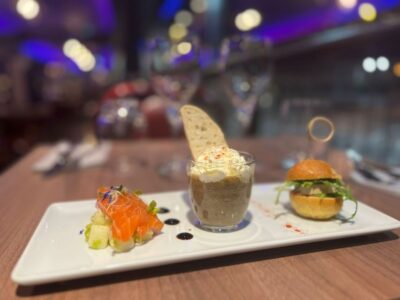 ★ 4.2Seine River Bistronomic Dinner CruiseFrom $695,272 reviews
Browse the lists this tour appears in