
Reviewed · PARIS
The Treasure of Saint-Louis : Île de la Cité & Saint-Louis
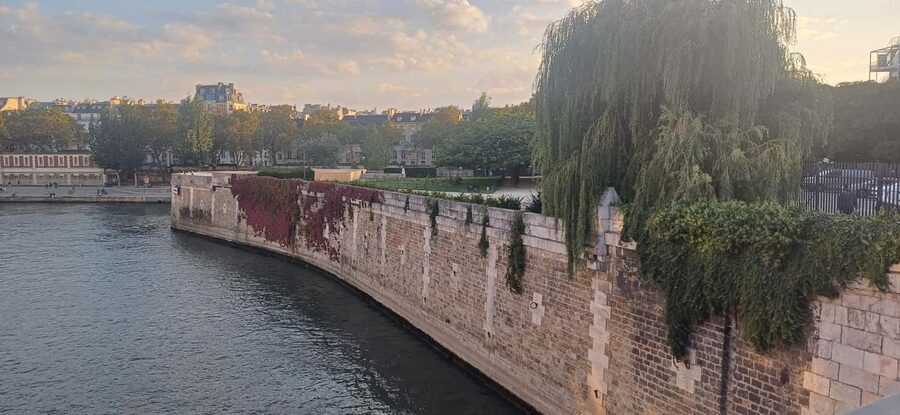
Paris feels different when you have a mission. This game-style tour moves you around the two islands in the Seine with a guide on hand, a map, and a notebook, so you’re not just walking—you’re solving your way through the heart of the city. You also get to see Notre-Dame de Paris and other nearby spots in about an hour and a half.
What I like most is the mix of interactive puzzles and real sightseeing, built to work across ages. I also like that the tour tests practical thinking—sense of direction, careful observation, and logic—so the walk stays mentally engaging, not just scenic.
One thing to consider: if you prefer a classic guided tour with lots of uninterrupted explanations, the format can feel more like a participatory scavenger hunt than a lecture, and you may want additional context while you’re on the trail.
In This Review
- Key things to know before you go
- The Treasure of Saint-Louis: Why this is more fun than a normal stroll
- Where you start on Île Saint-Louis: Square Barye and the statue meeting point
- The 90-minute format: Two 45-minute legs that keep momentum
- First leg: Île Saint-Louis walk with a guided game pace
- A small practical note
- Second leg: Île de la Cité and the Notre-Dame de Paris segment
- If you want more narration
- How the clues work: direction, observation, and logic in real space
- What’s included—and why the map and notebook matter
- Pricing: Is $35 worth 90 minutes of puzzle-guided sightseeing?
- Pacing and comfort: what “difficulty 2/5” means for you
- Languages and accessibility: practical details that affect the experience
- Who should book this Treasure of Saint-Louis tour?
- Should you book this Treasure of Saint-Louis tour?
- FAQ
- Where does the tour start?
- How long is the experience?
- What islands do you visit?
- Do you see Notre-Dame de Paris?
- What’s included in the price?
- Is transportation included?
- Is it family friendly?
- What languages are available?
- Is the tour wheelchair accessible?
- Is there a cancellation policy or flexible booking option?
Key things to know before you go
- A sense-of-direction challenge turns island hopping into a game
- Logic and observation are more useful than you’d expect
- Map + notebook make you the active solver, not a passive listener
- You cover both islands in one compact, family-friendly loop
- Notre-Dame de Paris is part of the route, not just a distant landmark
The Treasure of Saint-Louis: Why this is more fun than a normal stroll
This isn’t a standard “follow the guide and listen” walking tour. It’s built like a treasure hunt that uses direction, clues, and short reasoning tasks to keep you switched on as you move across Île Saint-Louis and then Île de la Cité. That format matters in Paris. The city has plenty of famous sights, but it can also be easy to zone out once you’ve seen a few postcards. Here, your attention stays on purpose.
The other strong point is that you’re not stuck choosing between education and entertainment. The walk stays educational because you’re learning along the way—through guided stops, the clues in your notebook, and what your guide points out when something on your map doesn’t add up.
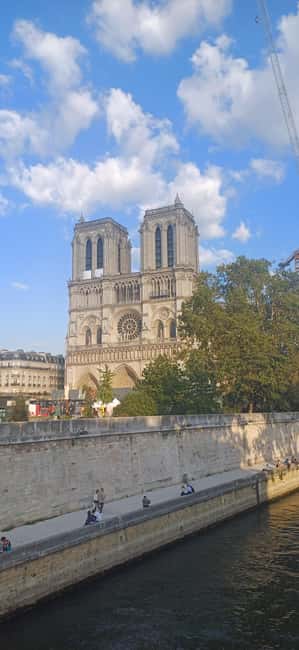
And yes, you end up in the area around Notre-Dame de Paris, which is a big draw. But the experience is about arriving there with your bearings. You’re not just hoping the city makes sense; you’re actively building a mental picture as you go.
Still deciding? Here is how it stacks up against a few Paris favourites we have booked and reviewed.
- Paris: 1-Hour Seine Cruise departing from the Eiffel Tower
★ 4.4 · 77,472 reviews - Paris: Louvre Museum Timed-Entrance Ticket
★ 4.6 · 71,977 reviews - Disneyland® Paris 1-Day Ticket
★ 4.6 · 49,412 reviews - Paris: Versailles Palace and Gardens Full Access Ticket
★ 4.6 · 41,579 reviews
Where you start on Île Saint-Louis: Square Barye and the statue meeting point
Your tour begins at Square Barye, positioned at the eastern end of Île Saint-Louis. You’ll meet your guide inside the square, in front of the statue.
That detail is worth planning for because Square Barye is the kind of place where it’s easy to show up and feel slightly unsure. If you arrive a few minutes early, you can take a quick look around the square and confirm you’re standing in the right spot by the statue. It helps you start the game without that awkward “are we here yet?” moment.
Also, knowing the start point (and that it’s on the island) sets your expectations: you’re not meeting at a major transit hub. You’re meeting in a quieter pocket that’s meant for walking.
The 90-minute format: Two 45-minute legs that keep momentum
This experience is designed to fit into a tight window: 90 minutes total. The route is split into two main segments—about 45 minutes on Île Saint-Louis, then about 45 minutes on Île de la Cité.
Why that matters: short legs keep the “treasure hunt” feeling from dragging. In longer games, the puzzles can start to feel like work. Here, the time is compact enough that even if you’re solving slowly or stopping for questions, you still move through both islands at a lively pace.
Difficulty is listed as 2/5, and it’s described as family friendly. That usually translates into something practical: you’ll be walking, but the structure is built for regular sightseeing comfort rather than a fitness challenge.
First leg: Île Saint-Louis walk with a guided game pace
On Île Saint-Louis, you’ll do a guided visit and walk for around 45 minutes. This is where the tour really “turns on,” because you’re getting your map, your notebook, and the initial setup for finding clues. You’re also dealing with the tour’s core theme: you’ll be tested on your sense of direction.
That may sound abstract, but it becomes concrete fast. When you’re moving street by street, a map isn’t just something to admire—it becomes your tool for decision-making. You start to notice patterns: where you are relative to a clue, how one turn changes what you think you should be seeing next, and how your own sense of direction compares to what the route expects.
I also like that this part is a good entry for families. You don’t need to be a history expert to participate. If someone in your group enjoys solving simple mysteries or watching for details, this segment gives them a role.
A small practical note
Because the activity involves interaction and problem-solving, it helps if your group can stay flexible. If everyone wants to speed ahead to check sights, the game element may get a bit strained. The sweet spot is letting the clue-solving rhythm set the pace.
Second leg: Île de la Cité and the Notre-Dame de Paris segment
Then you move to Île de la Cité for another guided visit and walk, again about 45 minutes. This is the part that connects your game to a major iconic landmark: the cathedral of Notre-Dame de Paris.
What makes this segment work is the balance between structure and freedom. You know you’ll see Notre-Dame during the visit, but you’re not just herded to a viewpoint. The route is still guided with clues, and that changes the feel. You’re approaching the area with the tour’s logic in mind, so it’s easier to remember what you did and where you went.
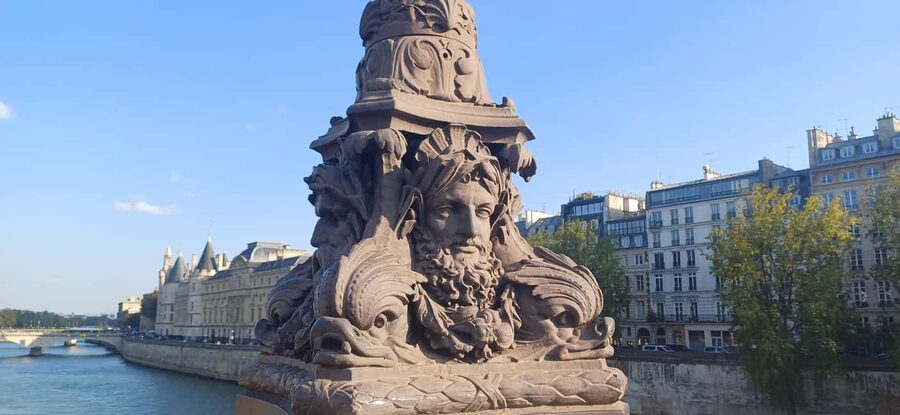
You’ll also see plenty of other stops along the way, described as more or less famous. That phrase matters. Paris sightseeing can turn into a competition over who gets the most famous photos. Here, the route seems to aim for a mix—big-name landmark energy near the middle, plus smaller stops that help you fill in the mental map.




If you want more narration
One review note points out that the game is very well done, but some people would have preferred more explanations. If that sounds like you, just go in with the right mindset: your guide will be part teacher and part puzzle-master. You’ll get guidance during the clues, but it’s not a long, sit-down history talk.
How the clues work: direction, observation, and logic in real space
The highlights list three things that show up repeatedly: direction, observation, and logic. This is not trivia for trivia’s sake. It’s a way to keep you actively reading the environment around you.
Here’s how it usually plays in your favor:
- When you’re tested on direction, you start paying attention to where you are relative to other points. That makes the walk more memorable.
- Observation tasks push you to notice details instead of scrolling past everything with your phone camera.
- Logic hints keep the experience from feeling random. You’re not just guessing; you’re reasoning your way forward.
This is also why the tour works for different ages. Some people enjoy the visual side of puzzles. Others enjoy figuring out the steps. And if someone in the group is more “directionally challenged,” the game still has room for them, because you’re not only relying on perfect orientation—you’re using the map and your guide’s help to correct course when needed.
I’d say the best way to enjoy it is to treat it as a team activity. Swap roles: one person holds the notebook, another watches the map, and another keeps track of what the last clue actually asked you to notice.
What’s included—and why the map and notebook matter
Included items are: guided tour of both islands, a guide, a map, and a notebook.
The map and notebook aren’t extras. They’re the mechanism for the experience. Your guide is there to keep you moving and to help steer you when you hit a snag, but the materials are what turn the route into a self-guided puzzle chain.
That has two practical upsides:
- You get a clear structure for what to do, so you don’t spend your time wondering what comes next.
- You leave with a record of the route in your notes, which makes the whole walk easier to remember later.
Also, you get your guide in French and English, so you can expect the explanation and clue support to match your language. That’s important for a game. When the clues are unclear, you can’t solve them, and the whole experience loses momentum.
Pricing: Is $35 worth 90 minutes of puzzle-guided sightseeing?
At $35 per person for about 90 minutes, the big question is value: are you paying for a walk, or for something that actually changes how you experience the area?
Here, the value comes from the structure. You’re paying for:
- a guide who runs the interactive format
- map + notebook tools
- the time saved by having a planned loop that covers both islands and key landmark time
If you like sightseeing that stays active—where you’re doing something rather than only listening—this price tends to make sense. If you want a slow, deep, narration-heavy tour with no participation required, you might feel it’s slightly too game-focused for your taste.
In other words: for puzzle lovers and families, $35 feels like a fair entry ticket into a lively format. For people who simply want landmark commentary, it could feel like you’re paying for participation you didn’t ask for.
Pacing and comfort: what “difficulty 2/5” means for you
The difficulty is listed as 2/5, and it’s described as family friendly. That’s a good indicator that you won’t be pushed into long, exhausting stretches or aggressive climbs.
Still, you’re on foot through central Paris islands, so wear shoes you trust. Also, expect that the game may require quick stops to check clues, then continue walking. It’s not constant sitting; it’s stop-and-go in small bursts.
If your group is traveling with kids, teen puzzle-solvers, or adults who like games, the pacing should feel natural. If your group hates delays and wants to keep a strict walking cadence, coordinate ahead and agree on how often you’ll pause for clues.
Languages and accessibility: practical details that affect the experience
The tour is offered in French and English with a live guide. That matters because this is an interactive format. You’ll want clear guidance at the moments when clues feel confusing, and having support in your language prevents the game from turning frustrating.
It’s also listed as wheelchair accessible. That’s a big plus for groups planning mobility needs. If you have accessibility requirements, it’s smart to plan around the meeting point at Square Barye and confirm the exact route fit for your group before you go, but the listing does explicitly say wheelchair accessible.
Who should book this Treasure of Saint-Louis tour?
I’d point you toward this tour if you want Paris sightseeing that stays hands-on. It’s especially well suited for:
- families who want an activity that moves past the usual sightseeing fatigue
- groups that like solving short puzzles in a real place
- adults who enjoy walking with a purpose, not just following a route
- first-time visitors who want to learn the lay of two islands without getting buried in details
It’s less ideal if you’re in “tell me everything slowly, and I’ll just listen” mode. This is a participatory game. If you treat it like that, you’ll probably have a better time.
One small insight from guide feedback: the guide experience is a key part of the value. A guide like Max has been praised for making this part of the city fun and answering questions with kindness. That kind of support helps when the clues need a nudge.
Should you book this Treasure of Saint-Louis tour?
If you like a logic-based treasure hunt and you want Notre-Dame area sightseeing without a heavy lecture style, I’d say it’s a smart booking. For $35 and 90 minutes, it gives you both islands covered in a structured loop, plus tools (map and notebook) that turn the walk into something you can actively complete.
Book it if your group includes puzzle people, kids, or anyone who learns best by doing. Skip it if you want long-form narration only, or if participation games make you impatient.
If you’re deciding between a standard guided walk and this one, choose the one that matches your group’s energy. This tour is built for curiosity with a little competition in your step, and that’s exactly why it tends to land well.
FAQ
Where does the tour start?
The meeting point is Square Barye, at the eastern end of Île Saint-Louis. The guide meets you inside the square, in front of the statue.
How long is the experience?
It lasts about 90 minutes.
What islands do you visit?
You visit both Île Saint-Louis and Île de la Cité.
Do you see Notre-Dame de Paris?
Yes. The route includes time to see Notre-Dame de Paris.
What’s included in the price?
The tour includes a guide, a map, a notebook, and the guided tour/walk covering Île de la Cité and Île Saint-Louis.
Is transportation included?
No. Transportation is not included.
Is it family friendly?
Yes. The experience is rated difficulty 2/5 and is described as family friendly and adaptable to all ages.
What languages are available?
The live guide offers French and English.
Is the tour wheelchair accessible?
Yes, it is listed as wheelchair accessible.
Is there a cancellation policy or flexible booking option?
You have free cancellation up to 24 hours in advance for a full refund, and you can use a reserve and pay later option.
More Tour Reviews in Paris
- Paris: 1-Hour Seine Cruise departing from the Eiffel Tower
★ 4.4 · 77,472 reviews - Paris: Louvre Museum Timed-Entrance Ticket
★ 4.6 · 71,977 reviews - Disneyland® Paris 1-Day Ticket
★ 4.6 · 49,412 reviews - Paris: Versailles Palace and Gardens Full Access Ticket
★ 4.6 · 41,579 reviews - Paris: Arc de Triomphe Rooftop Tickets
★ 4.6 · 34,264 reviews
Fresh off the review desk in Paris
- Secrets of Paris Bike Tour in English or Dutch★ 5.0 · 5 reviews
- Paris: Mont Saint-Michel Day Tour with Chinese Tour Guide★ 5.0 · 5 reviews
- Private Street Art 2-Hour Guided Tour in Paris★ 4.5 · 5 reviews
- Orsay Museum Tour: 2h Highlights (Private & Small Group)★ 5.0 · 5 reviews
- Discover Paris in electric golf carts★ 4.0 · 5 reviews
- Paris Private Boat Tour with your own Captain Guide★ 5.0 · 5 reviews