
Reviewed · PARIS
World War two : The Occupation of Paris
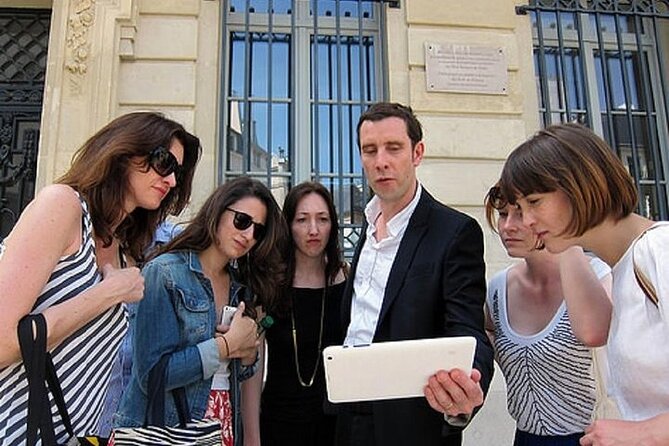
Paris gets darker fast on this guided walk. In just about two hours, you trace how WWII occupation changed everyday streets, theaters, and institutions—without getting lost, because your guide keeps the pace and the story straight. I especially like the street-level anecdotes that make the history feel immediate.
I also like how the route links big themes—control, stolen property, Resistance, and the Liberation—to specific addresses you can still point at today. One caution: the stop times are short, so if you want a deep, academic treatment at every single location, plan to do some quick follow-up after the walk.
In This Review
- Key points before you go
- WWII in Paris, step by step from the street level
- Starting at Bouillon Chartier: how occupation life begins in plain sight
- Folies Bergère and Passage Verdeau: culture kept playing, but under pressure
- Hôtel Drouot and the 9th arrondissement: the business of stealing and resisting
- Banks at Place de l’Opéra: money, bureaucracy, and control
- Place Vendôme and the Ritz area: power, law, and collaboration
- Rue de Castiglione and the road to Liberation
- Place de la Concorde: battle marks, memorial plaques, and stolen art
- How the guide makes it worth the money
- Who this tour suits best (and who should pair it with something else)
- Price and logistics: good value, but plan your expectations
- Should you book the Occupation of Paris tour?
- FAQ
- How long is the World War II: The Occupation of Paris tour?
- Where does the tour start and end?
- What language is the tour offered in?
- How many people are in a group?
- Do I need to buy admission tickets for stops?
- Do I get a mobile ticket?
- What’s the starting time?
- Is free cancellation available?
Key points before you go
- A small group (max 15) keeps the walk manageable and the guide’s attention closer.
- English-led narration with a guide who leads the way, so you don’t waste time navigating.
- High-impact themes in a short loop, from requisitioned theaters to auction houses and banks.
- Memorial context at Place de la Concorde, where the square’s battle marks come with names and meaning.
- Lots of “see-it-now” Paris details, like passages, auction settings, and building roles during the occupation.
WWII in Paris, step by step from the street level
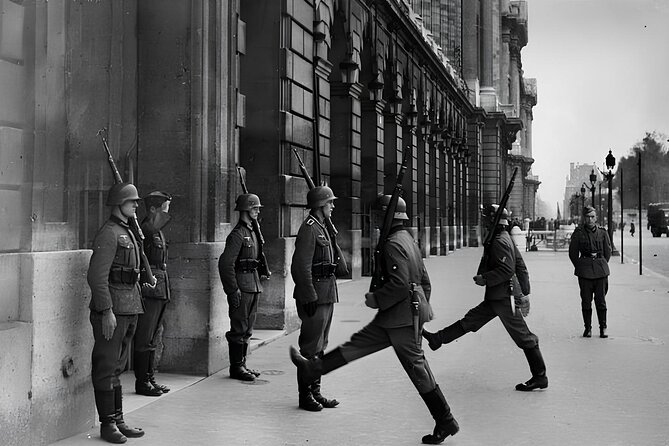
This is the kind of tour where Paris looks normal—until your guide points out how it wasn’t. You’ll move through famous areas, but the lens is always WWII occupation and how daily life bent around it. The payoff is that you start connecting what you’re seeing (theaters, banks, passages, official buildings) to what was happening behind the façades.
The format helps. It’s about 2 hours 15 minutes, it’s guided end-to-end, and you’re not expected to read a map while also processing heavy history. You’ll get personalized recommendations too, which I find useful when you’re trying to plan the rest of your trip around themes you just learned.
Still deciding? Here is how it stacks up against a few Paris favourites we have booked and reviewed.
- Paris: 1-Hour Seine Cruise departing from the Eiffel Tower
★ 4.4 · 77,472 reviews - Paris: Louvre Museum Timed-Entrance Ticket
★ 4.6 · 71,977 reviews - Disneyland® Paris 1-Day Ticket
★ 4.6 · 49,412 reviews - Paris: Versailles Palace and Gardens Full Access Ticket
★ 4.6 · 41,579 reviews
Starting at Bouillon Chartier: how occupation life begins in plain sight
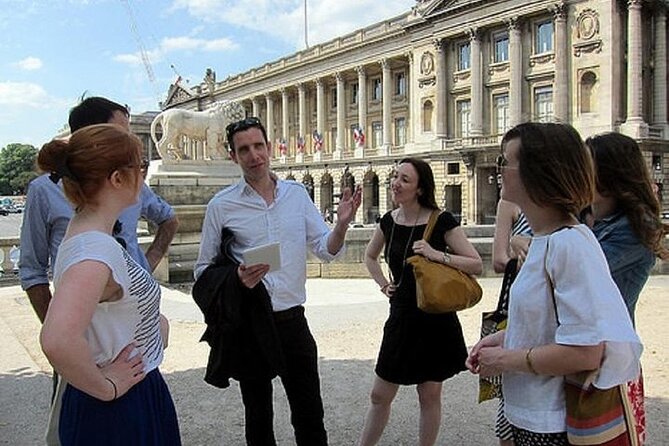
You kick off near Bouillon Chartier on the Grands Boulevards. Right away, the story moves toward the start of WWII and then into the reality of occupation—how quickly Paris went from the shock of war to routines under control.
What I like here is that your guide doesn’t treat the occupation like a single dramatic event. Instead, you hear about everyday life under occupation—the kinds of scenes and pressures that shaped what people could do, what they dared to do, and what they had to pretend not to notice. It sets the tone for the rest of the walk: history as lived experience, not just dates.
Folies Bergère and Passage Verdeau: culture kept playing, but under pressure
Next comes Folies Bergère, and this is where the tour gets especially interesting if you love Paris at night. Your guide connects occupation with an intense artistic and entertainment life: movie stars, music halls, and the way shows kept moving even when the situation was wrong.
Then you slip into Passage Verdeau. Passages in Paris already feel like little time capsules—so it makes sense that your guide uses them as a stage for occupation-era stories. You’ll get a sense of how the spaces kept their atmosphere and décor, while other activities nearby were far from harmless. The tour also references a bordello requisitioned by the German army, which is the sort of detail that changes how you look at a familiar facade. Not for shock value—more for understanding how power uses space.
Hôtel Drouot and the 9th arrondissement: the business of stealing and resisting
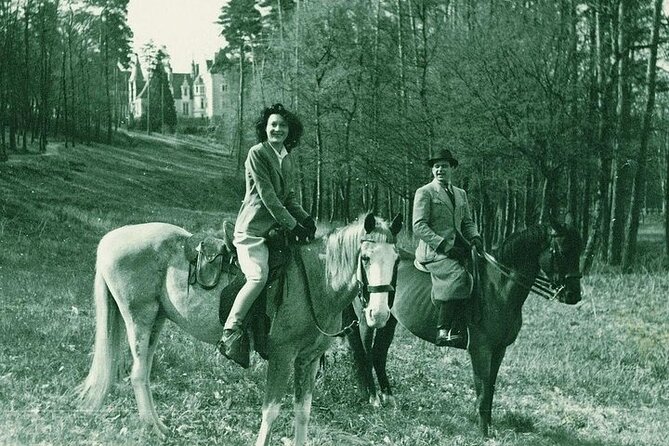
Hôtel Drouot is one of those Paris places that looks like it belongs to auctions and objects—until your guide reframes it through occupation. During WWII, lots of everyday items and art were sold there. The tour explains how this tied into the mass stealing of Jewish property, and it even talks about the story of a German art dealer working for the Reich.
This stop is where the topic gets morally heavy, fast. But the guide’s job here is practical too: you’ll connect the theme to what was happening in the city, not just in an abstract way. If you’re someone who wants your history to come with mechanisms—how wrongdoing moved through systems—this is a strong segment.
Then you head to the Mairie du 9th arrondissement, and it shifts from property theft to choices people made. A local employee helps explain the Résistance, but you also hear about denunciation and a quieter form of resistance often described as passive resistance. This is a good balance point after the auction-house material, because it returns agency to individuals instead of leaving you stuck in the logic of perpetrators.
Banks at Place de l’Opéra: money, bureaucracy, and control
The tour then pivots toward institutions. You stop by BNP Paribas | Maison Dorée, where the guide explains the role of banks under occupation. You’ll hear how the armistice convention between France and Germany created the economic and political situation people had to live through, and how financial systems were part of the machinery of control.
After that, you’re in theater country again, near Pathe Opera Premier. Your guide points out how a movie theater was requisitioned for German soldiers. It’s a reminder that entertainment wasn’t just something people watched—it was also something occupation officials could take over.
Nearby, your guide also references a major Nazi propaganda exhibition in Paris, The Jews and France, and how it promoted antisemitism. This isn’t just a name-drop. The point is to show how public messaging was weaponized in the city’s cultural space.
You finish this “Opéra zone” run at BRED-Banque Populaire – Espace patrimonial. The Place de l’Opéra area is described as symbolic for occupation, with the Kommandantur mentioned on-site and stories attached to places like Café de la Paix. If you’ve ever wandered around Opéra and wondered why everything feels layered, this segment gives you a thread to follow.
Place Vendôme and the Ritz area: power, law, and collaboration
Place Vendôme comes next, and the tour uses it to talk about high-stakes occupation governance. Your guide references the fate of rue de la Paix jewelry stores, then moves to the law ministry, occupied by the German army. You’ll also hear about one of the early resistance networks located nearby.
Then comes a key name tied to occupation and collaboration: the Ritz Hotel. The tour frames it as a central location with celebrities, spies, and militaries moving around the same streets. It’s an uncomfortable stop, because it forces you to accept that big hotels weren’t only places to stay—they could also become nodes in the occupation network.
If you’re wondering how the tour stays “walkable” while handling big topics, this is how. The guide keeps returning to the city itself: what function did each building have, and how did that function shape behavior?




Rue de Castiglione and the road to Liberation
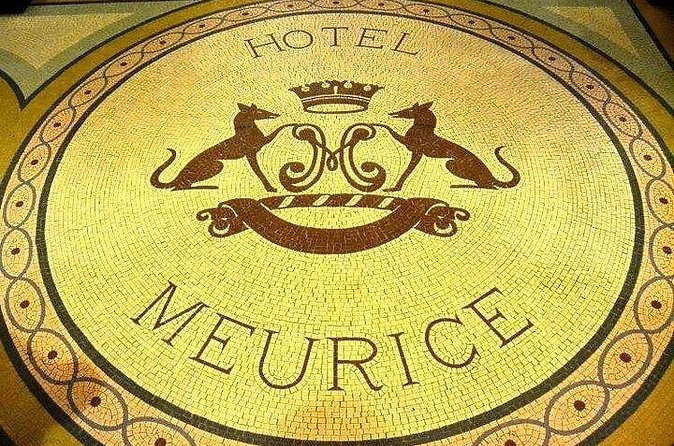
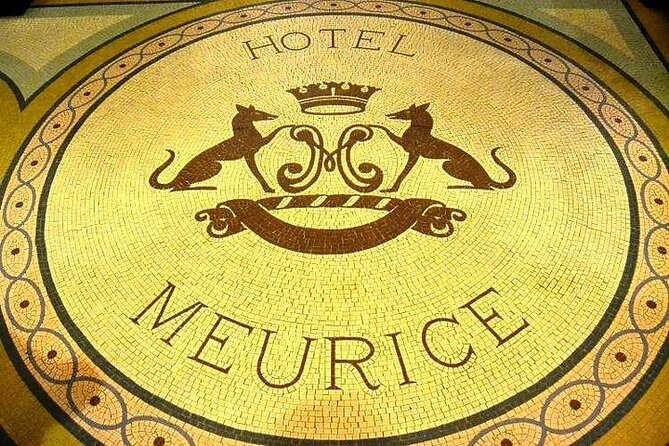
Rue de Castiglione shifts the story from institutions to headquarters. Your guide explains that many palace hotels were used as headquarters of the German army. Then you get a closer look at the area behind Hotel Meurice, including the main characters connected to these places and the fights of the Libération that ended there.
This section works well if you want momentum. It’s not just occupation creeping in; it’s the build-up toward how things were eventually broken. And because you’re still in central Paris—still among grand buildings and familiar streets—you can imagine the movement of troops and information in a way that static museum exhibits can’t always pull off.
Place de la Concorde: battle marks, memorial plaques, and stolen art
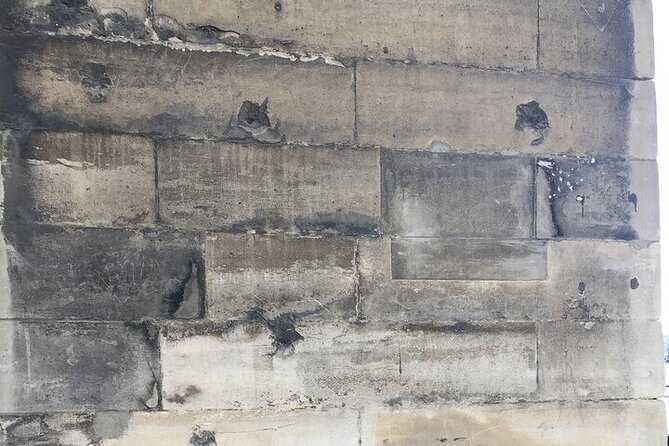
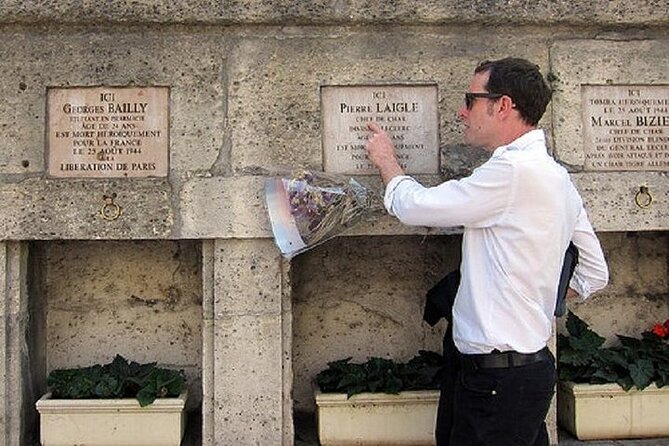
You end at Place de la Concorde, and the guide uses the square to show what happened during Liberation fighting. You’ll see how the square carries marks from the conflict, and then you’ll focus on the memorial plaques dedicated to soldiers, resistance fighters, or civilians who took part in the battle.
The tour also adds a practical visual element: from the terrace area, photos of the square and nearby places help you connect what you see now with what changed then. It’s one of those “stand here, look this way” teaching moments that makes the final section stick.
Behind the square, your guide brings you to the grim end of the occupation story: a museum area used by the Germans to store art stolen from Jews and sent to Germany. It’s a heavy closing note, but it also makes sense of the earlier Hôtel Drouot stop. The route gives you a chain: theft through systems, then storage and removal.
How the guide makes it worth the money
At $83.40 per person for about 2 hours 15 minutes, this isn’t a bargain sightseeing stroll. So here’s how I judge value: you’re paying for (1) a structured, English-led narrative and (2) local guidance that links buildings to what happened there.
Most of the praise around this experience focuses on guide quality—people highlight how friendly and informative the guides are, and how much they learned about the occupation and Liberation. That matches what you should look for in a WWII walking tour: a guide who can explain why each stop matters without turning it into random trivia.
There is one practical consideration to keep in mind. This is a script-driven, short-stop format, and it can feel like a lot of sites with not a lot of time per site. If you’re the type who wants lots of minutiae—dates, names, and deep context at every address—this might leave you wanting more depth on the spot. The fix is simple: ask questions during pauses, and then follow up later with a museum visit or two based on what you cared about most.
Who this tour suits best (and who should pair it with something else)
This walk fits best if you want:
- A focused way to understand occupation and Liberation in central Paris
- A guide-led route that helps you connect streets you already know
- A balance of culture, institutions, and people’s choices
You might pair it with something else if:
- You love art and want more on provenance and looting beyond the street-level overview
- You want more time inside museums or archives
- You’re traveling with kids and need an easier entry point into the topic (you might choose a less intense primer first)
It also helps that the group is capped at 15 people, which makes it easier for your guide to keep the pace and answer questions.
Price and logistics: good value, but plan your expectations
For $83.40, you’re paying for a concentrated storytelling route with mobile tickets and an English guide. Every listed stop shows admission ticket free, so you’re not stacking extra entry fees on top of the price.
The most important logistics point is time. With a stop every few minutes, you’ll be moving through central locations efficiently. That’s great for coverage, but it means this is not a slow, reflective walk where you can linger in every corner. If you like to take your time, I’d plan a calmer museum afternoon after this rather than chaining it right before dinner when you want quiet.
Should you book the Occupation of Paris tour?
If you want a guided, street-level understanding of how WWII occupation shaped Paris—through theaters, banks, auction spaces, and the final scars at Place de la Concorde—this is a strong choice. The route is compact, the themes connect logically from daily life to Resistance to the Liberation, and the end-to-end guidance helps you actually see the places instead of just passing them.
Skip it or pair it carefully if you’re chasing deep academic detail at each stop. The tour is structured for breadth in a short window. For me, that’s the point: it’s a powerful orientation to the darkest parts of Paris during WWII, with enough direction to let you build the rest of your trip around what moved you most.
FAQ
How long is the World War II: The Occupation of Paris tour?
It lasts about 2 hours 15 minutes.
Where does the tour start and end?
It starts at 38 Bd des Italiens, 75009 Paris, France, and ends at Place de la Concorde, 75008 Paris, right next to Concorde métro station.
What language is the tour offered in?
The tour is offered in English.
How many people are in a group?
The tour has a maximum of 15 travelers.
Do I need to buy admission tickets for stops?
No. The stops listed show admission ticket free.
Do I get a mobile ticket?
Yes, it includes a mobile ticket.
What’s the starting time?
The start time listed is 10:30 am.
Is free cancellation available?
Yes. You can cancel up to 24 hours in advance for a full refund.
More Tour Reviews in Paris
- Paris: 1-Hour Seine Cruise departing from the Eiffel Tower
★ 4.4 · 77,472 reviews - Paris: Louvre Museum Timed-Entrance Ticket
★ 4.6 · 71,977 reviews - Disneyland® Paris 1-Day Ticket
★ 4.6 · 49,412 reviews - Paris: Versailles Palace and Gardens Full Access Ticket
★ 4.6 · 41,579 reviews - Paris: Arc de Triomphe Rooftop Tickets
★ 4.6 · 34,264 reviews
Fresh off the review desk in Paris
- Secrets of Paris Bike Tour in English or Dutch★ 5.0 · 5 reviews
- Paris: Mont Saint-Michel Day Tour with Chinese Tour Guide★ 5.0 · 5 reviews
- Private Street Art 2-Hour Guided Tour in Paris★ 4.5 · 5 reviews
- Orsay Museum Tour: 2h Highlights (Private & Small Group)★ 5.0 · 5 reviews
- Discover Paris in electric golf carts★ 4.0 · 5 reviews
- Paris Private Boat Tour with your own Captain Guide★ 5.0 · 5 reviews