
Reviewed · 1-DAY TOURS
WW1 Australians in the Somme -Villers Bretonneux, Le Hamel – Day trip from Paris
A WW1 day trip that’s about Australians, not just generals. I like the small group size (max 7), which keeps the pace human and the questions coming, and I like that the whole day is guide-led so you can focus on the places instead of the map. The one thing to think about is the early start and the packed schedule, because this is a long day and some sites are quick stops.
The upside is that the itinerary stays tightly focused, walking you through key memorials and battlefield sites tied to Australian forces and leaders. If you want breathing room at each stop, you might find some locations—like Lochnagar Crater—brief. Still, you’ll get context from your guide so those short visits land with meaning.
In This Review
- Key things to know before you go
- A Somme day with an Australian storyline
- Price and what you actually get for it
- Your morning start: beating the crowds out of Paris
- Stop 1: Australian National Memorial at Villers-Bretonneux
- Stop 2: Le Hamel and the Australian Corps Memorial
- Stop 3: Lochnagar Crater, sprung at 7:28 am
- Stop 4: Windmill Memorial at Pozières and the Unknown Soldier link
- Stop 5: Mont Saint-Quentin and the 2nd Australian Division memorial
- Stop 6: Historial de la Grande Guerre in Péronne
- The guide factor: what makes this feel personal
- Who this day trip suits best
- A few practical considerations before you choose
- Should you book this tour?
- FAQ
- FAQ
- How long is the WW1 Australians in the Somme day trip from Paris?
- What time does the tour start, and where do we meet?
- How many people are in the group?
- Is the tour in English?
- What’s included in the price?
- Do I need to pay entry fees for the memorial sites?
- Is lunch included?
- Does the itinerary include a museum?
- What happens if the weather is bad?
- Is hotel pick-up included?
Key things to know before you go
- Max 7 travelers: This is built for a personal Somme day, not a crowd shuffle.
- Australia-focused stops: Villers-Bretonneux, Le Hamel, and multiple Australian division memorials keep the story centered.
- Free access at major sites: Admission is free for the memorials and battlefield points, so your paid value is in transport plus guiding.
- Lochnagar Crater is preserved: You’ll see one of the famous Somme craters tied to the 1916 opening day.
- Historial de la Grande Guerre includes entry: After lunch, you get a museum hour with exhibits and trench artists’ work.
A Somme day with an Australian storyline
This is the kind of WW1 tour that feels focused from the first minute. You’re not spending the day bouncing between random monuments. Instead, you’re tracing how Australians fought, planned, and paid for battles on the Western Front, with stops that are tied to specific moments and named places.
The small-group size matters here. It’s easier for your guide to pace conversations around the group, and it’s easier for you to hear the details without leaning on your neighbor’s shoulder for every explanation. If you like learning while you walk, this format is a win.
And because this is in English with a driver guide, the day doesn’t bog down in translation. You’re free to look at what’s in front of you while the bigger story gets explained in plain language.
One more practical note: the day is long, about 12 to 13 hours, starting at 6:30 am from Théâtre du Lido on the Champs-Élysées. If you’re the type who needs slow mornings, pack a buffer into your expectations.
Worth weighing up next to this Paris pick
- Disneyland® Paris 1-Day Ticket
★ 4.6 · 49,412 reviews - Normandy D-Day Sites & Cemetery Day Trip from Paris with Lunch
★ 5.0 · 6,877 reviews - Day Trip to Mont-Saint-Michel from Paris
★ 4.5 · 4,876 reviews - Disneyland® Paris 1-Day Flexible Date Ticket
★ 4.3 · 4,347 reviews
Price and what you actually get for it
At $300.06 per person, this isn’t a cheap “bus and badges” outing. But you’re also paying for a full day of guided transportation out of Paris with a small group and air-conditioned vehicle. Your cost also includes admission to the Historial de la Grande Guerre in Péronne.
Many Somme tours advertise memorials that are free to enter on your own. Here’s the value logic: the memorials and battlefield sites are easy to visit, but getting there, timing stops, and understanding what you’re seeing is the hard part. This tour bundles that hard part for you.
Also, your day is structured so you’re not just driving and hoping you’ll connect dots later. Your guide’s commentary ties sites together around Australian action, which is what turns “a list of places” into a coherent experience.
What’s not included is lunch. Plan to buy a meal near Péronne or bring something you can eat on the go. It’s a small detail, but on a long day it changes how you feel at the museum.
Your morning start: beating the crowds out of Paris
You’ll meet at Théâtre du Lido, 116 bis Av. des Champs-Élysées, 75008 Paris, with the day starting at 6:30 am. That early departure is doing something useful: it gives you daylight for walking and avoids turning the day into a parking-lot tour.
Since the group is limited to seven, the vehicle isn’t just comfortable. It’s also practical for group flow. When you stop for each site, you can get moving without the typical bottleneck of larger tours.
You’ll also have a mobile ticket, so you’re not wasting time searching for paper. This matters more than you’d think when you’re dealing with early mornings and a strict day rhythm.
Stop 1: Australian National Memorial at Villers-Bretonneux
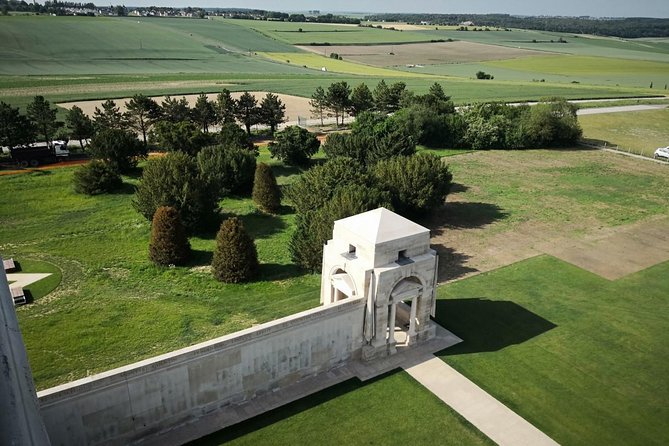
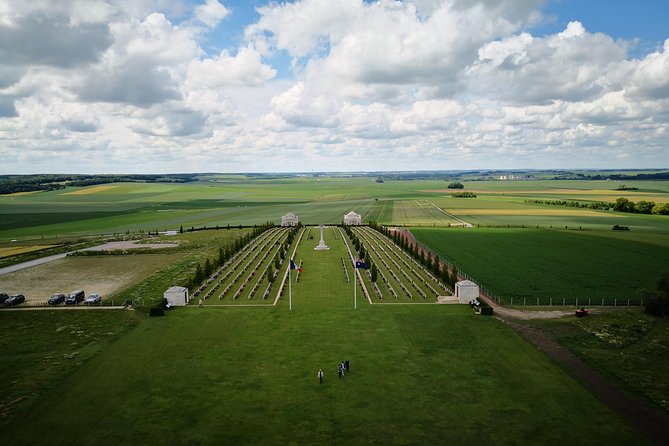
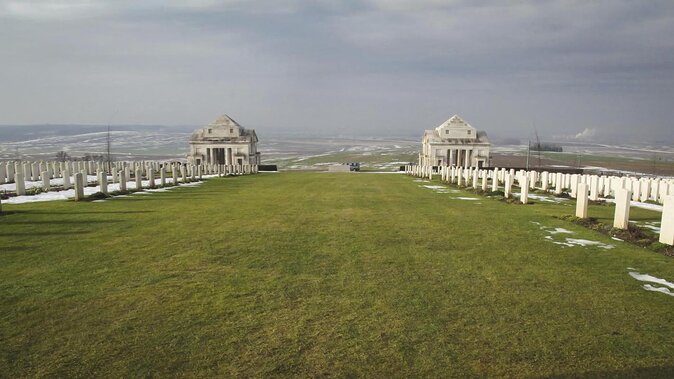
This is the emotional anchor of the day. The Australian National Memorial in Villers-Bretonneux is the main memorial for Australians killed on the Western Front whose remains have no known grave. It lists 10,773 names of soldiers of the Australian Imperial Force killed between the time Australian forces arrived in France and Belgium in 1916 and the end of the war.
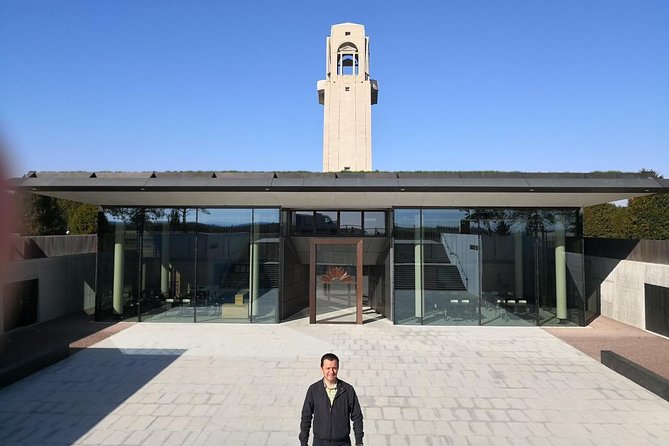
What I’d highlight for you is the setting. It’s not a random museum stop. It’s located within the Villers-Bretonneux Military Cemetery, and you’ll see the Cross of Sacrifice nearby. The memorial itself includes a tower designed by Sir Edwin Lutyens, with surrounding walls and panels listing the missing dead.
There’s also a strong bilingual element: the main inscription is presented in French and English. That helps the site land with visitors from both sides of the story.
Why this stop is worth your time even if you’ve seen memorials before: the memorial’s focus isn’t on one battle. It’s about absence—about the men whose names are preserved even when the bodies aren’t.
Plan for about 40 minutes here. That’s enough time to walk the cemetery area, read key inscriptions, and let the scale of the names sink in.
Stop 2: Le Hamel and the Australian Corps Memorial

Next comes Le Hamel, and this is where the day shifts from names and loss to tactics and action. The Australian Corps Memorial is built to interpret the battle of 4 July 1918.
This is tied to a big moment in modern warfare planning. With American support, General John Monash launched a victorious attack by combining infantry, artillery, air power, and tanks together in one operation. In other words, you’re seeing how commanders adapted and integrated new battlefield tools.
The memorial park includes panoramic displays and explanatory panels, plus preserved trenches. Even if you only have about 30 minutes, those elements matter. You don’t just look at grass and stone. You understand what the terrain was trying to do to the attackers and defenders.
This stop also works well if you’re traveling with teens or skeptical adults. It offers a clear story arc: what was planned, what was difficult, and why it mattered.
If you tend to rush through interpretation panels on your own, slow down here. The guide context helps these displays click faster, and the preserved trenches give you a physical sense of scale.
Stop 3: Lochnagar Crater, sprung at 7:28 am
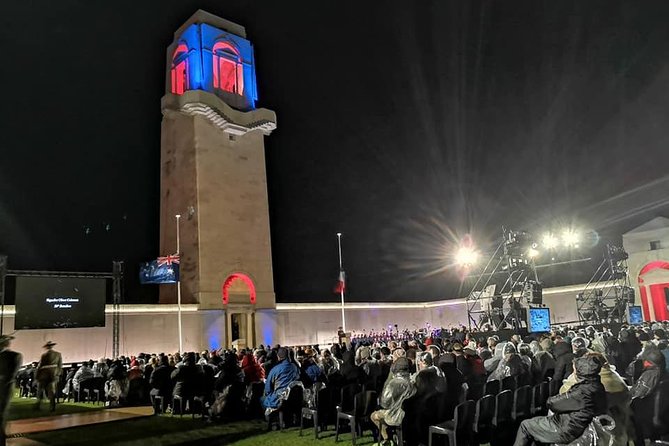
Lochnagar Crater is short on time—about 10 minutes—but it’s iconic for a reason. This crater comes from an underground mine planted by the British near La Boisselle, intended for the opening day of the Somme, 1 July 1916.
The mine was dug under a German fortification known as Schwabenhöhe (Swabian Height) by the Tunnelling Companies of the Royal Engineers. British forces named it after Lochnagar Street, the trench where the gallery was driven.
On that morning at 7:28 am, the mine was sprung. The resulting crater measured about 30 meters deep and 100 meters wide. You’ll also learn that the British captured and held the site, though attacks on the flanks didn’t go as planned due to German small-arms and artillery fire.
Here’s the tradeoff: the visit is brief, so you’ll want to stand in the right spot and read what’s available quickly. If you’re there for photos, it’s doable, but prioritize the explanation first, then take pictures once you understand what the crater represents.
The site is also preserved as a memorial, and a religious service is held each 1 July. That detail gives the place a living rhythm, not just a static past.



Stop 4: Windmill Memorial at Pozières and the Unknown Soldier link
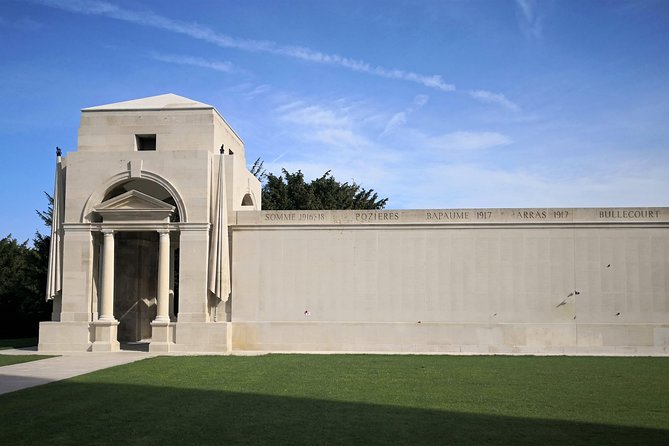
At Pozières, the Windmill Memorial carries an Australian historian’s fingerprints. It was established as an Australian memorial in the 1930s at the suggestion of Charles Bean, Australia’s official war historian.
The quote tied to the site is stark: the Windmill area held more Australian sacrifice than any other place on earth. Over seven weeks in 1916, Australians suffered 23,000 casualties, with more than 6,700 deaths, in the countryside around the Windmill.
This is the kind of stop where your guide’s commentary matters a lot. Numbers like that can feel abstract if you just look at stone. When you connect the stats to the ground and the battlefield effort, the memorial turns into a story with weight.
One of the most memorable ties from this site is the role it played in the funeral of Australia’s Unknown Soldier. On 11 November 1993, soil from the Windmill site was cast over the Unknown Soldier’s coffin during the funeral at the Australian War Memorial in Canberra.
It’s a long-distance connection that makes sense once you know what you’re looking at. Plan for about 10 minutes here, and don’t treat it like a “quick photo stop.” Let it land.
Stop 5: Mont Saint-Quentin and the 2nd Australian Division memorial
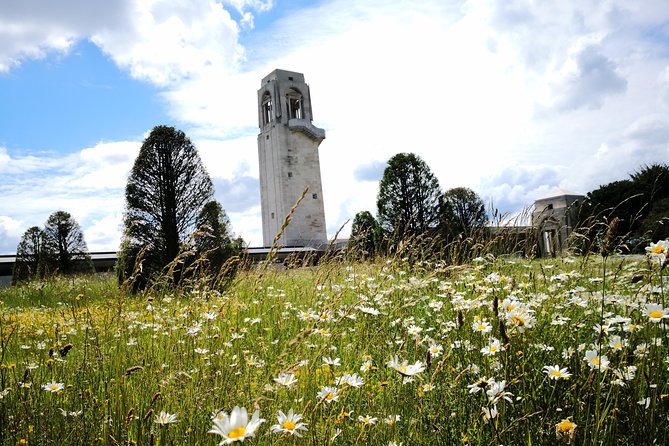
This stop is about divisions, sculpture, and the rough reality that memorials can be destroyed—and rebuilt.
The Mont Saint-Quentin Australian war memorial is on the road between Bapaume and Péronne. It commemorates the Australian Second Division. It’s also noted as the only one of five Australian divisional memorials that was initiated by members of that division.
The base was erected in 1925 and features bronze bas-reliefs by May Butler-George. You’ll see scenes of men hauling and pushing a gun, and men advancing with bayoneted rifles and hand grenades. At the top is an Australian soldier thrusting his bayonet through a German eagle, designed by sculptor Charles Web Gilbert.
Then comes the harsh historical interruption: in 1940, German soldiers smashed the memorial. A replacement statue was erected in 1971 by Stanley Hammond, showing a thoughtful Australian soldier looking down.
This is a powerful “memory in layers” stop. You’re not only seeing war. You’re seeing how later generations tried to repair what war damaged.
Expect about 10 minutes. If you like sculpture and inscriptions, take a little extra time with the bas-reliefs if your group pace allows.
Stop 6: Historial de la Grande Guerre in Péronne
After lunch (not included), you’ll have about 1 hour at the Historial de la Grande Guerre in Péronne, with admission included.
The museum is housed in a 13th-century medieval castle, which gives the exhibits a built-in atmosphere. But the building is only part of the appeal. What you get is a concentrated look at what soldiers wore and used, with large exhibits of uniforms and weapons from the conflict.
One of the most distinctive parts is the permanent collection of Trench Artists, including work by Otto Dix. These artists documented what they saw, and the exhibits include sketching and etchings that can be graphic. That’s the point, though: you’re looking at war through testimony, not just through uniforms on mannequins.
For you, this hour is the emotional and educational bridge. Earlier stops are mostly outdoors: stone, names, trenches, and craters. The museum gives you objects and drawings that explain how people experienced the war day to day.
If your group includes people who find battlefield sites hard to connect to, this is where they often start to “get it.” It’s easier to absorb once you’ve walked the memorials first.
The guide factor: what makes this feel personal
This tour’s big strength is that your guide turns logistics into learning. The information isn’t just dates and locations. It’s why those sites matter in the Australian story of the Somme.
In particular, the guides on this route are often praised for being clear and engaging. One guide name that stands out in feedback is Regis, with people noting how much detail he brings and how he explains battlefield conditions in a way that stays understandable.
That matters because you’re visiting places where it would be easy to feel overwhelmed. A good guide helps you focus on what to notice, like the terrain cues around trenches, the purpose of memorial inscriptions, and the tactical significance behind something like Le Hamel.
Also, the small group format helps. With up to seven people, you can hear answers to questions without the guide shouting over a crowd.
Who this day trip suits best
I’d point you toward this tour if you:
- Want WW1 sites, but with a clear Australian lens
- Prefer a small-group day rather than a big bus experience
- Like learning through storytelling while you walk, not just reading plaques
- Have limited time in Paris and want a meaningful 12–13 hour field trip
It’s also a decent fit if you’re traveling with teenagers who can handle structure. The mix of memorials, battlefield sites, and a museum gives you variety without losing the thread.
A few practical considerations before you choose
Because the group has only seven people and the schedule is tight, you’ll want to be ready to move when your guide tells you to. Some stops are around 10 minutes, so build your expectations around “see, learn, respect, move on,” not “linger for an hour.”
Bring what you’d bring for early morning field walking: comfortable shoes, a layer for changing weather, and some way to stay hydrated. This is an experience that works best when you’re physically comfortable enough to focus.
Also, note that the tour runs on good weather. If conditions are poor, you’ll be offered a different date or a full refund.
Should you book this tour?
If you want a Somme day that feels personal, has strong guidance, and keeps the story anchored in Australian involvement, I think it’s a smart choice. The price looks high until you break down what you’re paying for: small-group transport, an English guide, and museum entry, all structured to make the memorial sites meaningful instead of confusing.
If you hate early mornings or you’re hoping for lots of unstructured time at each stop, this may feel rushed. But if you can handle a packed, respectful day with guided context, you’ll come away with a much clearer understanding of the Somme from the Australian perspective.
FAQ
FAQ
How long is the WW1 Australians in the Somme day trip from Paris?
The tour runs about 12 to 13 hours total.
What time does the tour start, and where do we meet?
You meet at Théâtre du Lido, 116 bis Av. des Champs-Élysées, 75008 Paris and the start time is 6:30 am.
How many people are in the group?
This is a small-group tour limited to a maximum of 7 travelers.
Is the tour in English?
Yes, it’s offered in English.
What’s included in the price?
The price includes air-conditioned vehicle, driver guide, and admission to the Historial de la Grande Guerre in Péronne.
Do I need to pay entry fees for the memorial sites?
The memorial and battlefield sites listed are marked as free admission.
Is lunch included?
No, lunch is not included.
Does the itinerary include a museum?
Yes. You’ll have about 1 hour at the Historial de la Grande Guerre in Péronne, with entry included.
What happens if the weather is bad?
This experience requires good weather. If it’s canceled due to poor weather, you’ll be offered a different date or a full refund.
Is hotel pick-up included?
No, hotel pick-up and drop-off are not included. You’ll start and end at the same meeting point.
More 1-Day Tours in Paris
- Disneyland® Paris 1-Day Ticket
★ 4.6 · 49,412 reviews - Normandy D-Day Sites & Cemetery Day Trip from Paris with Lunch
★ 5.0 · 6,877 reviews - Day Trip to Mont-Saint-Michel from Paris
★ 4.5 · 4,876 reviews - Disneyland® Paris 1-Day Flexible Date Ticket
★ 4.3 · 4,347 reviews - Loire Valley Castles Day Trip from Paris with Complementary Wine
★ 4.5 · 3,907 reviews
More Tour Reviews in Paris
- Paris: 1-Hour Seine Cruise departing from the Eiffel Tower
★ 4.4 · 77,472 reviews - Paris: Louvre Museum Timed-Entrance Ticket
★ 4.6 · 71,977 reviews - Disneyland® Paris 1-Day Ticket
★ 4.6 · 49,412 reviews - Paris: Versailles Palace and Gardens Full Access Ticket
★ 4.6 · 41,579 reviews - Paris: Arc de Triomphe Rooftop Tickets
★ 4.6 · 34,264 reviews
Fresh off the review desk in Paris
- Secrets of Paris Bike Tour in English or Dutch★ 5.0 · 5 reviews
- Paris: Mont Saint-Michel Day Tour with Chinese Tour Guide★ 5.0 · 5 reviews
- Private Street Art 2-Hour Guided Tour in Paris★ 4.5 · 5 reviews
- Orsay Museum Tour: 2h Highlights (Private & Small Group)★ 5.0 · 5 reviews
- Discover Paris in electric golf carts★ 4.0 · 5 reviews
- Paris Private Boat Tour with your own Captain Guide★ 5.0 · 5 reviews
1-Day Tours, compared.
 ★ 4.6Disneyland® Paris 1-Day TicketFrom $6149,412 reviews
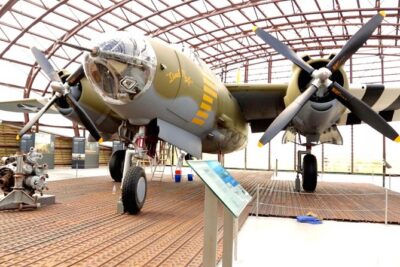 ★ 5.0Normandy D-Day Sites & Cemetery Day Trip from Paris with LunchFrom $1206,877 reviews
 ★ 4.5Day Trip to Mont-Saint-Michel from ParisFrom $1534,876 reviews
 ★ 4.3Disneyland® Paris 1-Day Flexible Date TicketFrom $1404,347 reviews
 ★ 4.5Loire Valley Castles Day Trip from Paris with Complementary WineFrom $1493,907 reviews
 ★ 4.5From Paris: Giverny, Monet’s Home & Gardens Half-Day TripFrom $892,887 reviews
 ★ 5.0Normandy D-Day Small-Group Day Trip with Omaha Beach, Cemetery & Cider TastingFrom $3202,786 reviews
 ★ 4.5Mont Saint Michel Day Trip from Paris with English Speaking GuideFrom $1312,750 reviews
Browse the lists this tour appears in