
Reviewed · PRIVATE
4-Hour Private Tour in Paris in a Vintage Car
Vintage cars make Paris feel personal.
This private 4-hour ride strings together big-name sights and classic neighborhoods, with the bonus that your route can slow down for photos and breaks. I like that you’re not just staring at a screen of landmarks; you’re watching Paris slide by from a vintage car with a real guide.
Two standout reasons I’d pick this: first, the guides (like Baptiste, Charles, and Romain/Roman) bring strong English and an easy, friendly vibe that fits a short time window. Second, the car is surprisingly practical in city chaos—small enough to handle tight streets, yet comfortable enough that a rainy afternoon still works.
The main drawback to consider is time. A route that touches so many places means you’ll get brief looks at many stops, not long museum-style visits at every location—so you’ll want to prioritize what you care about most.
In This Review
- Key highlights at a glance
- Vintage car energy: why this format feels right in Paris
- Price and what you’re really buying for 4 hours
- Pickup, meet-up, and how you’ll start the tour
- The core sights loop: Concorde to Eiffel Tower
- 1900 Paris glamour: Invalides, Pont Alexandre III, Grand and Petit Palais
- Royal and luxury Paris: Élysée area, Saint-Honoré, Vendôme, Garnier, Galeries Lafayette
- Montmartre with a quick hit: Moulin Rouge, painters square, Sacré-Cœur
- Paris for the slow look: Galerie Vivienne and the BnF Richelieu
- Palais-Royal, Le Marais, and the islands: classic neighborhoods in one sweep
- Notre-Dame area and the Latin Quarter bridge-jump to the Left Bank
- Museums and grand interiors: Louvre, Musée d’Orsay, and Assemblée nationale passes
- One thing to manage: how many stops you can actually enjoy in 4 hours
- Should you book this vintage-car Paris tour?
- FAQ
- How long is the private tour in the vintage car?
- What is the price and group size?
- Is pickup available, and where does the tour start?
- What language is the guide?
- Is this tour private?
- Are entry tickets included?
- What’s the cancellation policy?
Key highlights at a glance
- Vintage car comfort in tight Paris traffic: smaller size helps the ride feel smooth even when streets get messy.
- English-speaking guides you can chat with: Baptiste, Charles, and Romain/Roman are specifically praised for great communication.
- Flexible photo and break moments: your guide can stop the car so you can step out for pictures, snacks, and bathroom breaks.
- One compact route across many neighborhoods: from the grand center monuments to Montmartre, then onto the Left Bank.
- Mostly ticket-free sightseeing stops: many listed stops are free to view, with Moulin Rouge marked as not included.
Vintage car energy: why this format feels right in Paris
Paris looks different when you move at street level. In a vintage car, you feel the pace of the city—gravel-road narrow lanes, grand boulevards, and the constant swirl of scooters and buses. It’s a fun way to get your bearings fast without walking nonstop.
The car itself matters more than you’d think. In the reviews, people mention classic cars that range from an orange Citroën to a compact beetle-style model, and the guides manage the route to keep it comfortable. That small-car advantage shows up when you’re trying to pass through the kind of heavy traffic around major sights like the Arc de Triomphe and the Eiffel Tower area.
The best part is how the guide uses the vehicle. When you’re stuck in a normal group tour bus, you often don’t control anything. Here, the guide can tailor timing and make room for real breaks—something you’ll appreciate if you’re balancing kids, seniors, or just jet lag.
Worth weighing up next to this Paris pick
- Louvre Museum Paris Essential Guided Tour Semi-Private 6ppl Max
★ 5.0 · 3,807 reviews - SUV Private Transfer: Paris to Charles de Gaulle Airport (CDG)
★ 4.0 · 3,091 reviews - Paris: Private Photoshoot at the Eiffel Tower
★ 4.7 · 2,636 reviews - Top Private Cruises in Paris with French Champagne and surprises
★ 5.0 · 1,553 reviews
Price and what you’re really buying for 4 hours
The price is $531.13 per group, up to 3 people, for about 4 hours. That sounds steep until you do the math: for 3 people it’s roughly $177 per person, and for 2 it’s about $266 each.
What you’re paying for is not just the car. It’s a private, driver-led way to cover a lot of iconic Paris efficiently, with an English-speaking guide and pickup included. If you’re coming with a small group and you don’t want to wrestle with multiple transit tickets and transfers, this can feel like good value.
You should also consider that many of the listed stops are ticket-free to enjoy. That keeps costs calmer if you’re planning photos and quick views instead of a day of paid entries at every stop. The one clear exception noted is Moulin Rouge, which is marked as not included.
Pickup, meet-up, and how you’ll start the tour
You meet at 24 Rue de Madrid, 75008 Paris. Pickup is offered anywhere in Paris intramural, and the tour begins once you’re in the car.
I like this structure because it reduces decision fatigue. You don’t need to plan your exact closest metro stop for the start of the day; you just get yourself to the pickup point or meet at the address if you prefer. You also receive a mobile ticket, which is handy for last-minute changes.
The tour is private, so it’s only your group. That matters in Paris, where a shared schedule often turns into delays. Here, your guide can shape the pacing around your needs—especially for things like getting out for photos or stepping away for a quick bathroom break.
The core sights loop: Concorde to Eiffel Tower
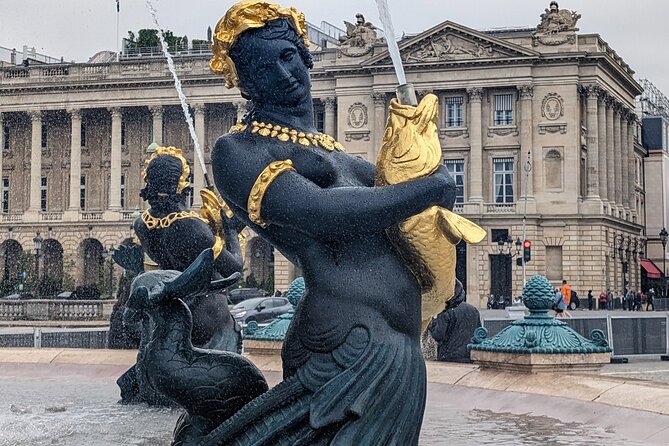
Your route kicks off at Place de la Concorde, the big central square with the Luxor Obelisk from Egypt. This is also tied to the French Revolution story, since the guillotine was used here to behead Marie-Antoinette and King Louis XVI. Even on a quick stop, it’s a powerful spot because it’s so clearly tied to multiple eras.
From there you head toward the Champs-Élysées. This avenue was created in the 17th century by the Versailles gardener Le Nôtre, and it’s a major stage for July 14 events and big sports like the Tour de France finale. If you only have hours, this is where you “see” what people mean by Paris grandeur.
Next is the Arc de Triomphe, built under Napoleon Bonaparte to celebrate victories of the Grande Armée. The guide typically focuses on how the monument relates to the roads around it, and yes—the traffic circle is wild, so a car tour is a smart way to experience the area without getting stuck in it on foot.
Then comes the headline: Eiffel Tower. You’ll get time for photos and a short walk around for viewpoints. It’s also a good place for the guide to point out photo angles so you don’t waste your time guessing.
1900 Paris glamour: Invalides, Pont Alexandre III, Grand and Petit Palais
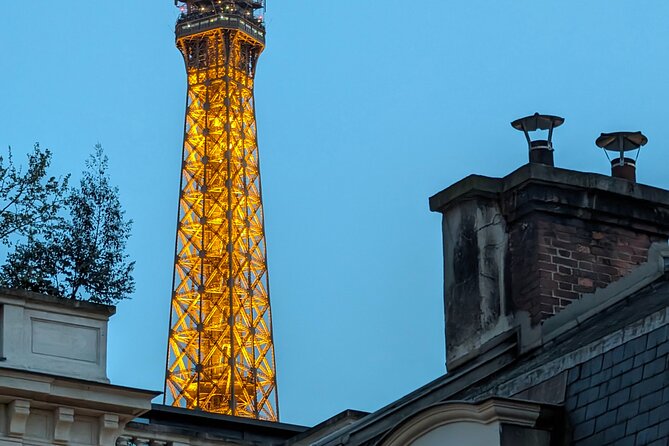
After Eiffel, the tour flows into the classic monuments around the military and exhibition-era Paris. You’ll pass the École Militaire area, a military school still operating since Louis XV and known for enrolling prestigious students like Napoleon Bonaparte.
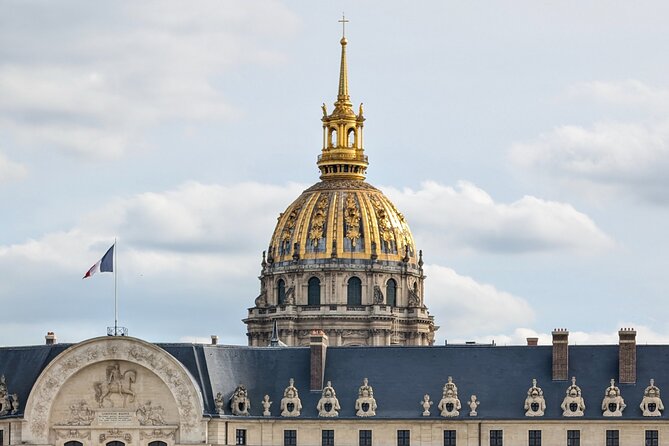
Then it’s Hôtel des Invalides, built under Louis XIV and now an Army museum. Most importantly, it houses Napoleon’s tomb, so even a brief stop gives you context for why this area is such a magnet in any Paris history conversation.
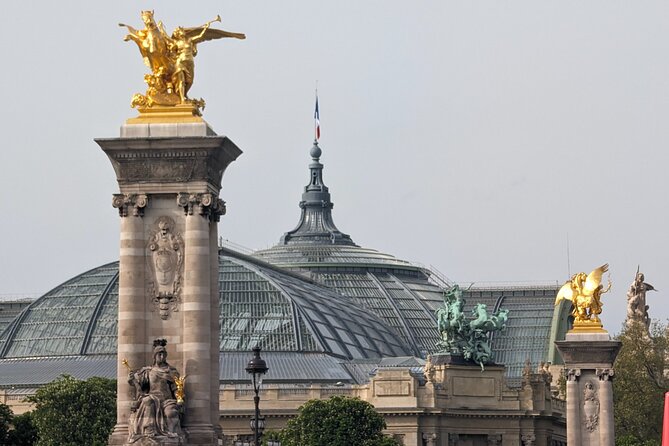
A standout scenic moment is the pass by the Pont Alexandre III, built for the 1900 Universal Exhibition, with the first stone laid by Tsar Nicholas II. This bridge is one of those places where you get a “wow” shot without needing a ticket line.
Next are the Grand Palais and Petit Palais, both tied to the Universal Exhibition of 1900. Grand Palais has its glass roof and hosts major events, including sports competitions for future Olympic Games. Petit Palais works as the calmer counterpoint, with a museum setting and notable 19th-century paintings.
Royal and luxury Paris: Élysée area, Saint-Honoré, Vendôme, Garnier, Galeries Lafayette
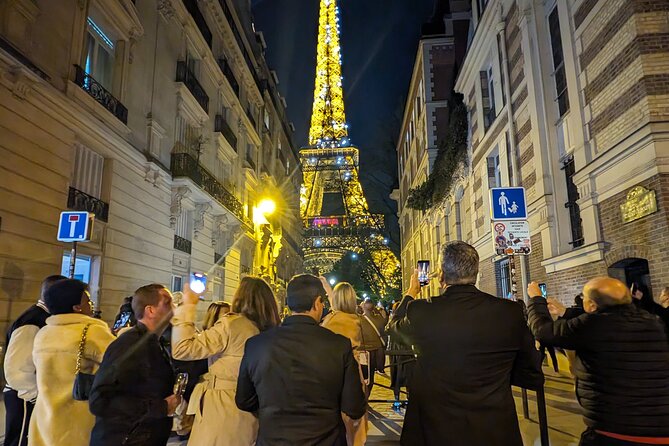
You’ll move through an elegant slice of central Paris. One stop spotlights the palace linked to Madame de Pompadour, favorite of Louis XV; today that palace is where France’s presidents work. It’s a quick look, but it connects the dots between 18th-century power and modern leadership.
On Rue Saint-Honoré, the vibe turns chic and shopping-focused, with a street that traces back to an old Roman road. If you like to see where fashion lives, this is where the feel of Paris shifts from monuments to luxury.
Then you’ll reach Place Vendôme, described as Paris’s most luxurious square, with a smaller Versailles-in-miniature layout under Louis XIV. The Vendôme column built under Napoleon Bonaparte is also here, plus luxury names like the Ritz.
For architecture lovers, the stop at Palais Garnier is the key move. This is Charles Garnier’s masterpiece built during the Second Empire. If you’ve only seen opera houses in pictures, this helps you understand why the exterior is part of the drama.
Nearby, you’ll also see Galeries Lafayette, built in 1893, famous for its glass dome. Even if you don’t plan to shop, the dome makes it feel like Paris understands light and crowds at the same time.




Montmartre with a quick hit: Moulin Rouge, painters square, Sacré-Cœur
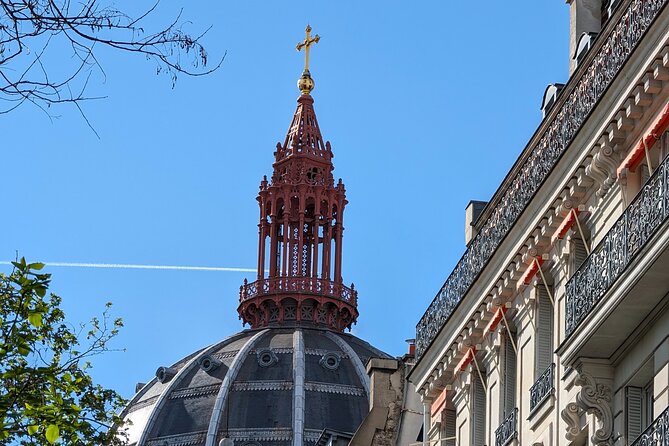
Then the tour switches from grand boulevards to hillside Paris. Moulin Rouge is included as a sight pass, though the admission is marked as not included. Think of it as a chance to connect the myth of the cabaret with what’s right in front of you.
You’ll spend time around Place du Tertre, Montmartre’s painters’ square, where artists meet and work in a concentrated hub. It’s touristy in the best way—more about street life than ticketed culture.
Next is Basilique du Sacré-Cœur. The big draw is the view over the city and the bright white basilica stone looking down over everything. This is also where the tour’s timing matters: if it’s windy or rainy, you’ll want the guide to help you choose the best moments for photos.
You’ll also pass Rue Victor Massé, tied to the old Chat Noir cabaret, plus the Palais Brongniart area, the former Paris Stock Exchange built under Napoleon Bonaparte. The result is a Montmartre segment that doesn’t just stop at postcards—it adds cultural context around entertainment and commerce.
Paris for the slow look: Galerie Vivienne and the BnF Richelieu
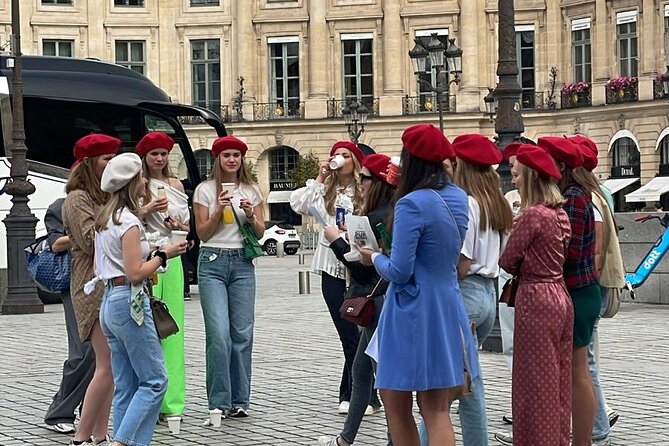
One of my favorite “change of pace” moments here is Galerie Vivienne, a covered pedestrian passage with a glass roof and mosaic floor. This is the kind of place where you can look up and suddenly feel like you’ve stepped into a different century without leaving central Paris.
Then you get to Bibliothèque nationale de France (BnF) | Richelieu, a newly renovated 17th-century library. The highlight is the oval room with its dome, which is the sort of space that makes you stop and just look for a minute.
These are good stops for anyone who doesn’t need every stop to be a monument. If you like Paris as a mix of architecture, reading rooms, and everyday elegance, this portion makes the tour feel less repetitive.
Palais-Royal, Le Marais, and the islands: classic neighborhoods in one sweep
The tour continues with Palais-Royal, founded in 1628. It connects to Louis XIV’s early life and today you’ll see a blend of antique shops, theaters, restaurants, cafes, and the State Council. Even as a quick stop, the setting gives you that “center of gravity” feel that Paris planners built into the city.
You’ll also pass Place des Victoires, tied to Louis XIV’s military victories. From there it’s Rue Montorgueil, known for small food shops and restaurants—perfect if you want to taste Paris energy, even if you’re not eating at every stop.
Next comes Le Marais with its old noble mansions and the older Jewish quarter around Rue des Rosiers. If you’re new to Paris, this is where the city starts to feel like neighborhoods with personalities, not just attractions.
You’ll spend time at Place des Vosges, the oldest royal square in Paris. Then it’s the cour et jardin de l’Hôtel de Sully, a 17th-century mansion with gardens, a nicer pause if the day starts to feel too rushed.
Then you cross into the river islands: Île Saint-Louis is a classic residential slice, and you can take in the Hôtel de Lambert. It’s also mentioned as a good time for Berthillon ice cream, created on the island 70 years ago—so if you like sweet breaks, this stop works well.
Finally, you reach Île de la Cité, where Paris is said to have begun about 2000 years ago. This is where the medieval streets and dense landmarks pile up, including the areas around Notre-Dame and the older quai scenes.
Notre-Dame area and the Latin Quarter bridge-jump to the Left Bank
On the island, the big anchor is Cathedrale Notre-Dame de Paris. It’s a Gothic masterpiece and described as 861 years old, with treasures including the crown of Christ. Even with a short visit time, it’s a sight that makes you slow down, because the scale and details are hard to fake.
The tour also includes an older bridge pass: the oldest bridge in Paris, followed by Place Dauphine, built by Henri IV. These are quieter, small-space stops that make the river feel intimate, not just scenic.
Then you move into Quartier Latin, one of Paris’s oldest areas, with medieval streets, older churches that survived the French Revolution, and the Luxembourg Garden mentioned as part of the area experience. The tour also highlights the University of Paris creation in 1257 by Robert de Sorbon.
You’ll then see the Pantheon, followed by Place de la Contrescarpe, known for cafes where students meet. This is a good section for atmosphere. You’re not just seeing buildings; you’re seeing how Paris keeps the university and student vibe alive.
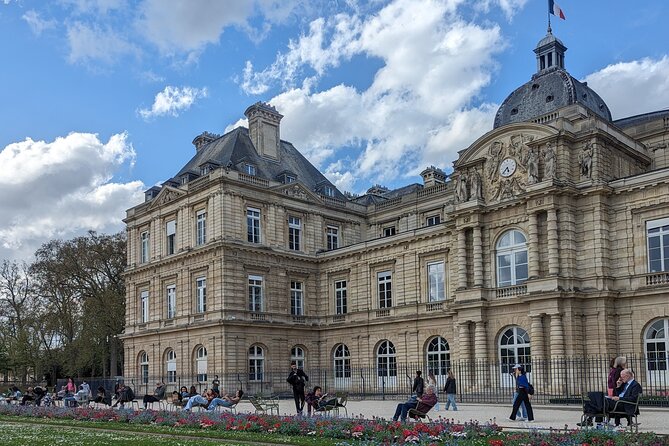
Next is Luxembourg Gardens, one of Paris’s most beautiful parks as described here. It also connects to the Luxembourg Palace, which hosts senators. Even a short stop is enough to feel why locals treat this place like a routine.
On the Left Bank, you’ll reach Saint-Germain-des-Prés Quarter, linked to writers, philosophers, artists, and late-1900s intellectual energy. You’ll also pass Eglise Saint-Sulpice, with paintings by Delacroix mentioned, plus Eglise de St-Germain-des-Prés, described as the oldest church in Paris with 1000-year age context.
Museums and grand interiors: Louvre, Musée d’Orsay, and Assemblée nationale passes
Near the end of the route, you get big culture hits. Musée d’Orsay is referenced through a station built in 1900 for the Universal Exhibition, now a museum that houses impressionism masterpieces. Even if you’re mostly outdoors in a short stop, knowing the building’s former job makes it feel less random.
You’ll also pass the National Assembly, described as the chamber of deputies. This is the kind of stop that helps you understand modern Paris isn’t just cafés and cathedrals—it’s institutions in action.
The final major anchor is Louvre Museum, described as alternating between a fortress and royal residence before becoming a museum since the French Revolution. It’s also presented as the largest museum in the world today, and you’ll have time set aside (10 minutes) at that stop.
One thing to manage: how many stops you can actually enjoy in 4 hours
This is the trade. The itinerary spans everything from Concorde to Île de la Cité to the Left Bank, plus Montmartre. That’s a lot of moving parts, and you won’t get deep, slow time in every place.
The good news is your guide can help you make it work by adjusting photo time and breaks. In the reviews, people liked that the guide could customize stops and that the car kept them comfortable even on cold rainy days. If you’re the type who wants a clean overview plus a few photo-worthy moments, this route fits.
If you want heavy museum time, you’ll likely need a separate day for museums. Here, you’re buying perspective and orientation, not a full museum marathon.
Should you book this vintage-car Paris tour?
Book it if:
- You want a private way to cover a lot of Paris in one afternoon.
- Your group is small (up to 3), and you want the value of sharing the group price.
- You care about photo breaks and a guide who can respond to your pace, like Baptiste, Charles, or Romain/Roman.
Skip it (or pair it with a longer plan) if:
- You’re hoping for long entries at every major site. This format is built for seeing and photographing, not spending hours inside each stop.
- You already have a tight museum checklist for this day and prefer to use all your time for fewer locations.
Overall, this is a strong choice when you want Paris to feel cinematic and efficient at the same time—less “bus schedule” and more “your guide, your route, your pace.”
FAQ
How long is the private tour in the vintage car?
It runs for about 4 hours.
What is the price and group size?
The price is $531.13 per group, up to 3 people.
Is pickup available, and where does the tour start?
Yes. Pickup is offered anywhere in Paris intramural. If you meet at the start point, the address is 24 Rue de Madrid, 75008 Paris, France.
What language is the guide?
The tour is offered in English.
Is this tour private?
Yes. It’s private, so only your group participates.
Are entry tickets included?
Many listed stops note admission ticket free. Moulin Rouge is marked as admission ticket not included.
What’s the cancellation policy?
You can cancel for a full refund up to 24 hours in advance of the experience start time, and free cancellation is offered.
More Private in Paris
- Louvre Museum Paris Essential Guided Tour Semi-Private 6ppl Max
★ 5.0 · 3,807 reviews - SUV Private Transfer: Paris to Charles de Gaulle Airport (CDG)
★ 4.0 · 3,091 reviews - Paris: Private Photoshoot at the Eiffel Tower
★ 4.7 · 2,636 reviews - Top Private Cruises in Paris with French Champagne and surprises
★ 5.0 · 1,553 reviews - Golf Cart in Paris – Private Guided City Tour – Pickup Included
★ 5.0 · 1,164 reviews
More Tours in Paris
- Paris: Louvre Guided Tour with Reserved Access & Boat Cruise
★ 4.3 · 16,353 reviews - Paris: Big Bus Hop-On Hop-Off Tour with Optional Cruise
★ 4.4 · 13,279 reviews - Louvre Museum Masterpieces Guided Tour with Access
★ 4.5 · 12,023 reviews - Versailles: Skip-the-Line Tour of Palace and Gardens Access
★ 4.7 · 10,429 reviews - Paris: Louvre Overview, Exploration tour and Reserved Entry
★ 4.1 · 10,145 reviews
More Tour Reviews in Paris
- Paris: 1-Hour Seine Cruise departing from the Eiffel Tower
★ 4.4 · 77,472 reviews - Paris: Louvre Museum Timed-Entrance Ticket
★ 4.6 · 71,977 reviews - Disneyland® Paris 1-Day Ticket
★ 4.6 · 49,412 reviews - Paris: Versailles Palace and Gardens Full Access Ticket
★ 4.6 · 41,579 reviews - Paris: Arc de Triomphe Rooftop Tickets
★ 4.6 · 34,264 reviews
Fresh off the review desk in Paris
- Secrets of Paris Bike Tour in English or Dutch★ 5.0 · 5 reviews
- Paris: Mont Saint-Michel Day Tour with Chinese Tour Guide★ 5.0 · 5 reviews
- Private Street Art 2-Hour Guided Tour in Paris★ 4.5 · 5 reviews
- Orsay Museum Tour: 2h Highlights (Private & Small Group)★ 5.0 · 5 reviews
- Discover Paris in electric golf carts★ 4.0 · 5 reviews
- Paris Private Boat Tour with your own Captain Guide★ 5.0 · 5 reviews
Private, compared.
 ★ 5.0Louvre Museum Paris Essential Guided Tour Semi-Private 6ppl MaxFrom $1813,807 reviews
 ★ 4.0SUV Private Transfer: Paris to Charles de Gaulle Airport (CDG)From $713,091 reviews
 ★ 4.7Private Photoshoot at the Eiffel TowerFrom $412,636 reviews
 ★ 5.0Top Private Cruises in Paris with French Champagne and surprisesFrom $4821,553 reviews
 ★ 5.0Golf Cart in Paris – Private Guided City Tour – Pickup IncludedFrom $1691,164 reviews
 ★ 4.5Private Paris Airport Arrival Transfer – CDG & ORLY AirportsFrom $571,119 reviews
 ★ 4.0Paris Private Arrival Transfer from Charles de Gaulle (CDG) or Orly (ORY)From $541,084 reviews
 ★ 5.0Private Montmartre Food Tour with Wine, Cheese & PastriesFrom $3021,027 reviews