

Reviewed · LOUVRE MUSEUM TOURS
Paris: Louvre Overview, Exploration tour and Reserved Entry
Skip-the-line at the Louvre changes your whole day. This reserved-entry orientation gets you through the main chaos faster, then funnels you toward the museum’s biggest hits with priority access and a guide-led push into the collection.
Two things I like a lot: first, the escort to the Mona Lisa keeps you from getting turned around in one of Europe’s biggest museums. Second, the visit pairs that quick orientation with an audio guide for all ages, so you can keep moving or slow down with your own headphones.
One real consideration: the Louvre is a lot of walking and there are stairs, so this isn’t ideal for mobility limits. Also, even with reserved access, security checks and crowd flow can still slow entry.
In This Review
- Key highlights to look for
- Why reserved entry matters in the Louvre
- Meeting at the Carrousel Arch: how to find your host fast
- The orientation route: how the Louvre’s palace layers shape your visit
- Mona Lisa escort: the smartest way to handle the world’s busiest painting
- Anchoring stops: antiquity highlights that actually give context
- French art and royal rooms: seeing power instead of just paintings
- Beyond the classics: Ancient Near East and Islamic Art
- Audio guide + self-time: use the headphones after Mona Lisa
- Walking, stairs, and “not everything is included”
- Price and value: what you’re really paying for (and what you’re not)
- Should you book this reserved-entry Louvre tour?
- FAQ
- Where do I meet the guide?
- What is included in the price?
- Is the audio guide included?
- Are temporary exhibitions included?
- How does the skip-the-line access work?
- What restrictions should I plan for?
Key highlights to look for
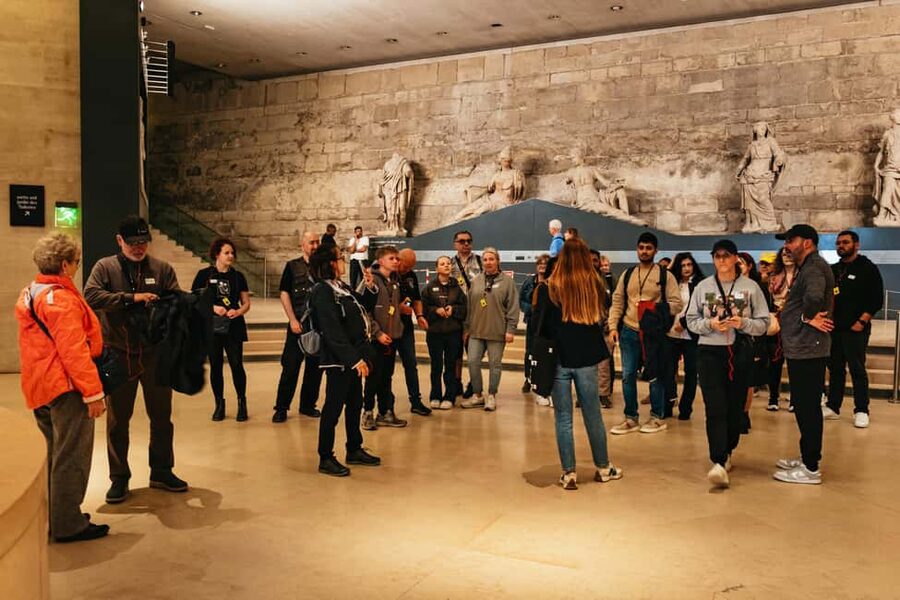
- Skip the line via a dedicated entrance so you waste less time outside the Louvre
- Escort to the Mona Lisa to avoid the dead-end crowds around the most famous room
- Orientation across major departments instead of aimless wandering
- Audio guide for all ages to keep your pace after the guided portion
- A focused highlights route through antiquity, French art, and royal spaces
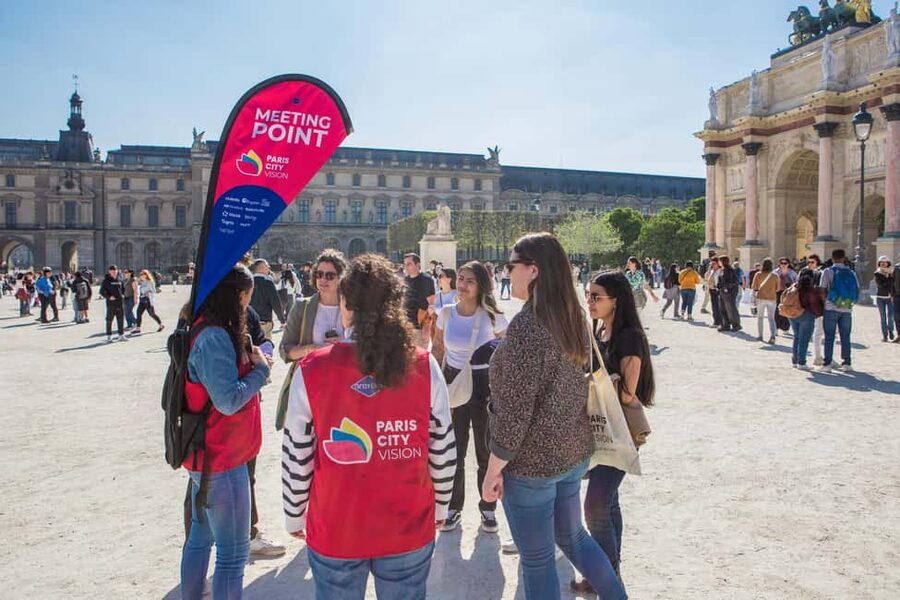
- Clear meeting point near the Louvre Pyramid with a host in a red jacket and Paris City Vision sign
Why reserved entry matters in the Louvre
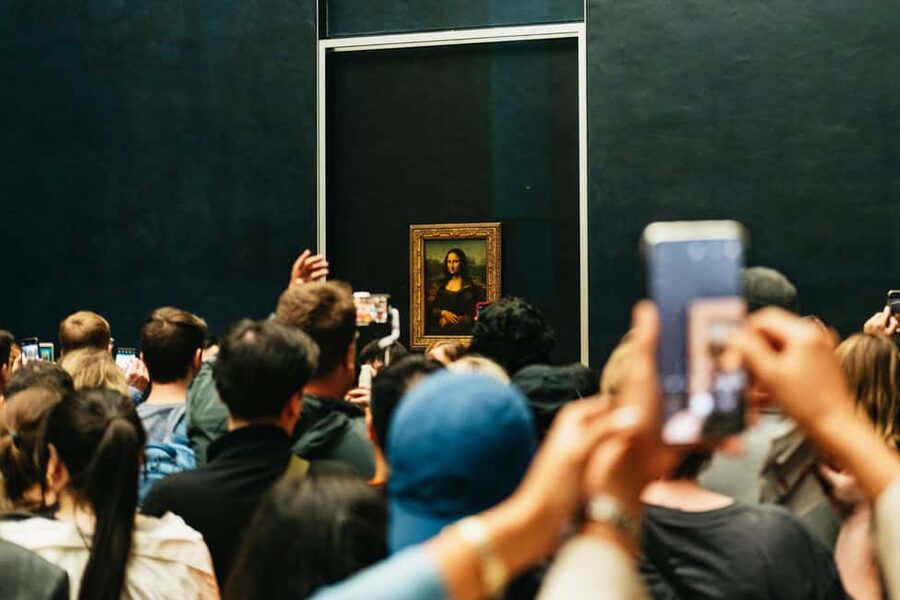
The Louvre can feel like a maze on steroids. Even when you know what you want to see, the real enemy is time lost to queues, confusing entrances, and crowd bottlenecks once you’re inside.
This experience solves the biggest friction point with skip-the-line entry through a separate entrance. That matters because your energy is limited. A museum day works best when you’re moving toward the art you care about—not spending the first hour trying to locate the right wing while everyone else is doing the same thing.
The other win is pacing. This is not a “stay in one room and talk forever” tour. It’s an orientation-style route that helps you understand how the Louvre is laid out, then gets you to a few cornerstone masterpieces so you can decide what to revisit later.
Still chasing the Mona Lisa? More Louvre visits
- Paris: Louvre Museum Timed-Entrance Ticket
★ 4.6 · 71,977 reviews - Paris: Louvre Guided Tour with Reserved Access & Boat Cruise
★ 4.3 · 16,353 reviews - Louvre Museum Masterpieces Guided Tour with Access
★ 4.5 · 12,023 reviews - Paris: Louvre Overview, Exploration tour and Reserved Entry
★ 4.1 · 10,145 reviews
Meeting at the Carrousel Arch: how to find your host fast
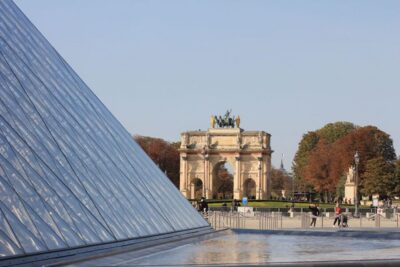
You meet at the right side of the Carrousel Arch with the Louvre Pyramid behind you, at the end of the gardens. Your host will be holding a Paris City Vision sign and wearing a red jacket.
That location is practical. It keeps you near the main Louvre approach, so you’re not doing a long trek across the museum perimeter just to start. It also gives you a clear visual target. When a meeting point is this specific, you spend less time doing the classic Paris activity: scanning faces and hoping your group is looking for you.
Tip that saves stress: show up in comfortable shoes and be ready for lines and security checks. The tour notes explicitly that entry is subject to Louvre procedures, so your schedule should stay flexible.
The orientation route: how the Louvre’s palace layers shape your visit
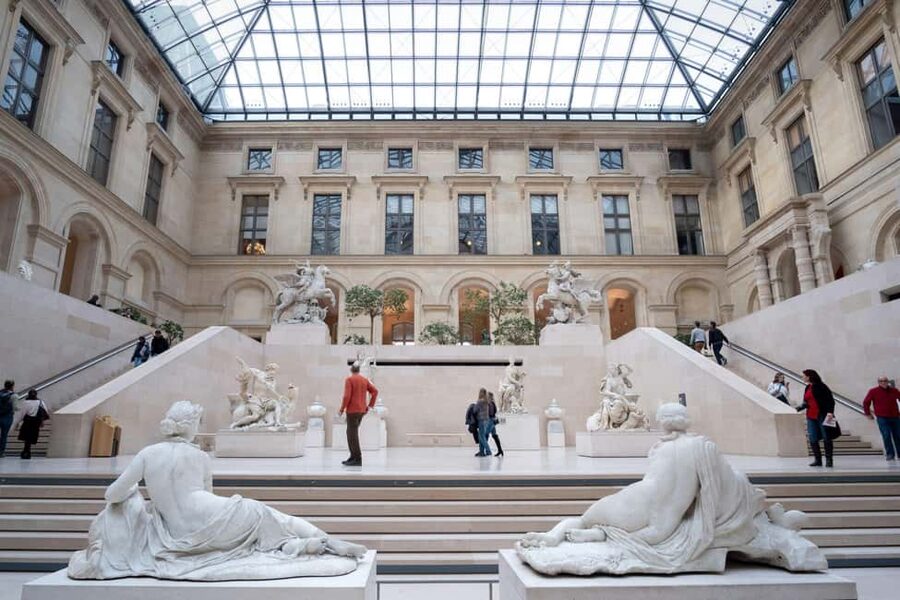
The Louvre wasn’t built as a museum. It started as royal residence power—then became a vast public collection. This orientation helps you connect those dots early, so the building itself makes sense as you walk.
You’ll move through the palace’s medieval foundations, then get an overview of the museum’s structure across major departments. Knowing the logic of the place matters here. Without that, it’s easy to bounce from room to room and still feel like you saw nothing you can name.
A good orientation also helps your later self-guided time. Once you’ve seen where key wings are, you can return to what you loved instead of repeating the same wide loops. The goal is not to see everything. The goal is to come away with a mental map and a shortlist.
Mona Lisa escort: the smartest way to handle the world’s busiest painting
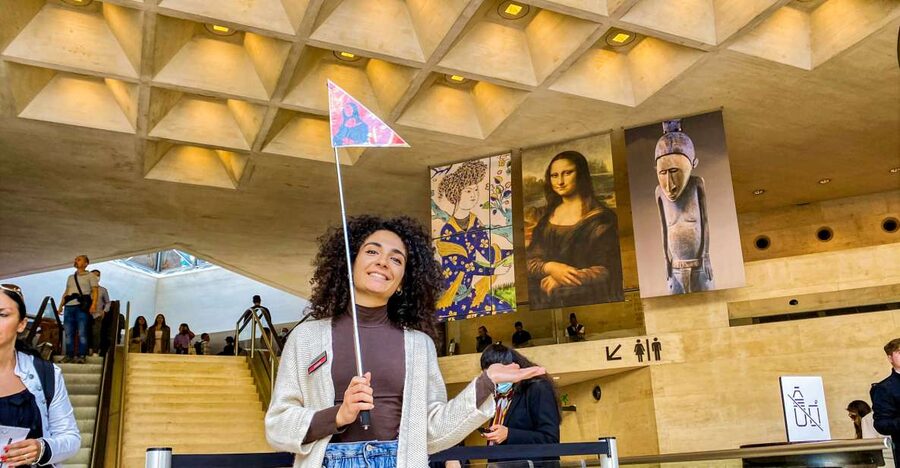
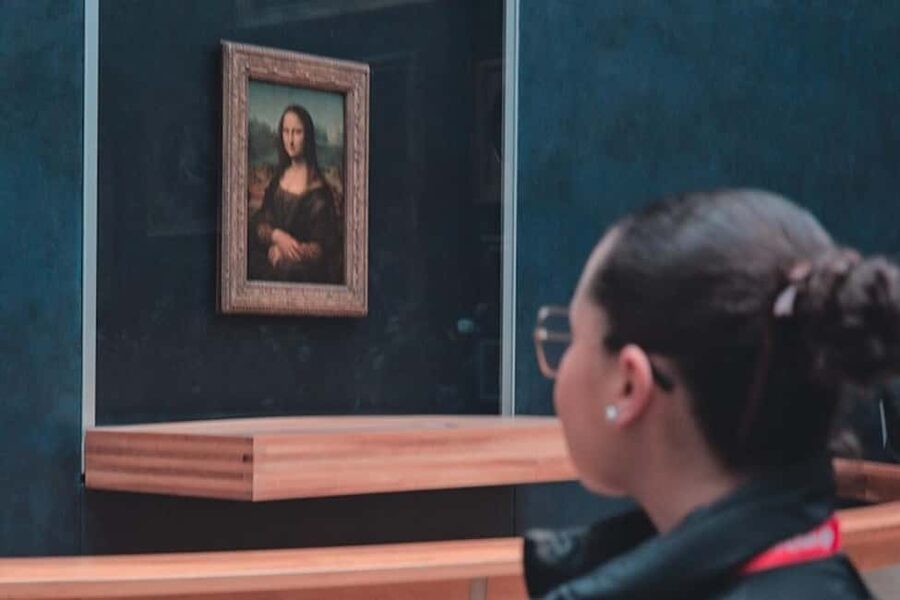
Let’s talk about that room. The Mona Lisa is famous for a reason, but it’s also famous for the crowd gravity around it.
This experience includes an escort to the Mona Lisa, which is the difference between:
- being swept along in the crowd, or
- reaching the painting with less wandering and fewer wrong turns.
What you can expect is a tight, efficient visit to the highlight—then you’re freer to continue at your own pace. One clear theme from the experience is that staying with the guide is mainly about navigation and avoiding the stress of getting lost in a place that overwhelms your sense of direction.
Also, don’t plan on a long, slow art moment here. Even with reserved access, the room can be packed. Bring realistic expectations: you’re there to see it in person, get a photo if it’s workable, and then move on while you still have energy.
Anchoring stops: antiquity highlights that actually give context

A big museum tour can turn into a checklist. This one leans more toward meaning—using major masterpieces and iconic sculptures as anchors so the rest of the collection feels less random.
Here are some of the standout stops you can expect to experience:
- Venus de Milo and the Caryatids: these are not just famous objects. They’re visual shortcuts into how the ancient world imagined beauty and architecture.
- Pharaonic Egypt, including the Seated Scribe and a mummy: this helps you grasp Egypt’s mix of portraiture, ritual life, and belief systems.
- Antiquity departments such as Greek, Etruscan, and Roman collections: you’ll get an overview that makes it easier to spot themes later, like political symbolism and everyday life turned into monumental art.
- The Galerie d’Apollon: a classic space for people who want to understand why royalty and art were inseparable in France.
What makes these stops valuable is the way they build familiarity fast. When you later see smaller objects nearby, you’ll often recognize the department logic and the types of stories the Louvre is telling.
French art and royal rooms: seeing power instead of just paintings
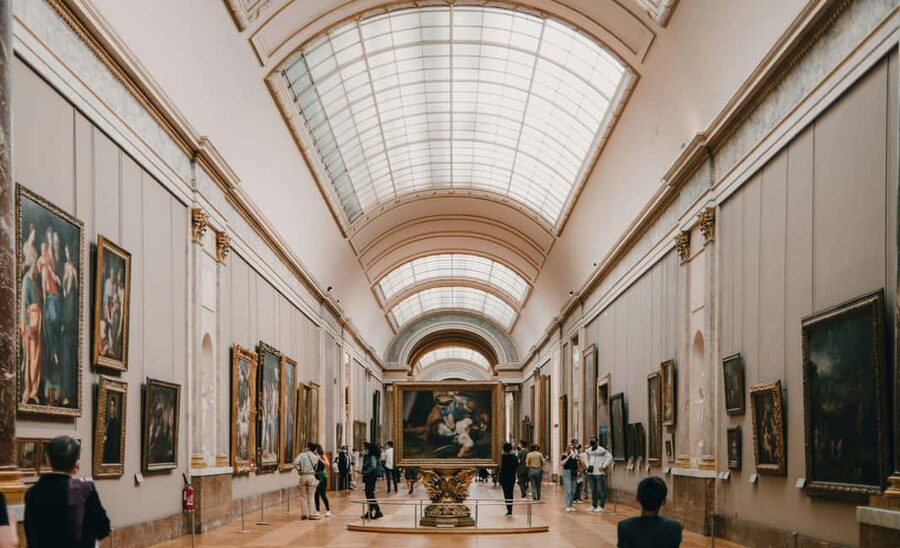
The Louvre doesn’t only do ancient civilizations. It also does France at full volume—royal taste, national myth, and big-gallery drama.
Your route includes major French highlights such as Liberty Leading the People, plus the luxury staging of the palace with royal decorative arts and the apartments of Napoleon III. That combination matters because it changes how you interpret the paintings. You start to see art as part of political and social storytelling, not just pretty scenes.
You’ll also spend time in the Richelieu Wing and its famous French sculptures. If you’ve ever walked through a museum and thought, I don’t know where to look—this wing helps. Sculptures arranged across big, formal rooms reward a slower pace, and they give you a break from the constant scanning.
A practical note: these are showpiece spaces, and crowding can happen. Your best strategy is to let the guide get you oriented, then decide which rooms deserve your extra minutes.
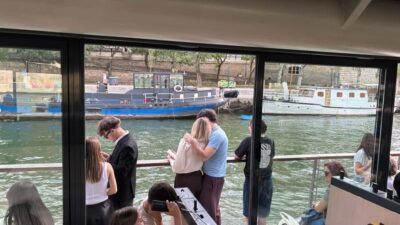


Beyond the classics: Ancient Near East and Islamic Art

One of the smarter parts of this plan is that it doesn’t just stop at the “usual ancient suspects.” It also reaches into the Ancient Near East and connects it to Islamic Art, covering civilizations linked to Mesopotamia, Syria, Persia, and more.
You’ll also get references to the origins of writing, architecture, and cultural life. Even if you’re not a textbook reader, that framing helps you understand why objects look the way they do. Instead of seeing disconnected artifacts, you see the movement of ideas across regions and centuries.
This section is especially good for first-timers. The Louvre can trick you into thinking it’s only about Greece and Rome. This part widens your view quickly.
Audio guide + self-time: use the headphones after Mona Lisa
The tour highlights mention a personal audio guide for all ages. In practice, this kind of add-on is most useful when you stop treating the day as one long group march.
Here’s how I’d use it: after the guided highlights and especially after the Mona Lisa escort, switch from following to choosing. Pop in the headphones for the works that match your interests, then let the rest of your time be flexible.
One extra practical tip: you may have an access code tied to your group tour materials for audio descriptions later. That means you can keep your pace without constantly checking a map or waiting for a guide to catch up.
If you hate rushing, this is where you win. The orientation gives you direction; the audio gives you control.
Walking, stairs, and “not everything is included”
The Louvre is big enough that “one day” is a relative word. You should expect a lot of walking, with stairs along the way. The activity also states it is not suitable for people with mobility impairments.
If you’re sensitive to stairs or long distances, you’ll want to think hard before booking. Even with reserved entry, the museum’s physical layout doesn’t get easier.
Two other boundaries to know:
- Temporary exhibitions are not included. Your day is aimed at the main highlights route.
- This is reserved entry with escort, not a full-room-by-room guided commentary. If you want to stand in front of each artwork for extended interpretation, you might find this style too fast.
Price and value: what you’re really paying for (and what you’re not)
At $60 per person for a one-day Louvre experience, the value comes from time saved and stress reduced.
You’re paying for:
- skip-the-line entry via a dedicated door,
- the escort to the Mona Lisa, and
- an efficient orientation through major areas so you know where to go next.
You’re not paying for:
- access to temporary exhibitions, and
- a slow, full guided tour of the entire museum.
So the value math depends on your style. If your goal is to hit the top masterpieces, get your bearings, and then roam on your terms, this is a solid deal. If you want deep, slow interpretation everywhere, you may feel the experience moves too quickly for your taste.
Also, keep your expectations about crowding realistic. Even with priority access, the Louvre runs on security screening and crowd flow, and the tour notes that delays can happen.
Should you book this reserved-entry Louvre tour?
Book it if:
- you’re visiting the Louvre for the first time and want a fast orientation,
- Mona Lisa is on your must-see list,
- you prefer an efficient highlights route plus self-exploration after.
Skip it (or choose something else) if:
- you need a low-walking plan or step-free access,
- you’re hoping for a slow, room-by-room guided lecture,
- temporary exhibitions are the centerpiece of your visit.
If you do book, do two things before you go: wear comfortable shoes, and plan to use the orientation to create your own shortlist of rooms for later. This is how you turn a packed museum day into something you actually remember.
FAQ
Where do I meet the guide?
Meet on the right side of the Carrousel Arch with the Louvre Pyramid at your back, at the end of the gardens. Your host will be holding a Paris City Vision sign and wearing a red jacket.
What is included in the price?
The price includes skip-the-line Louvre Museum entry, priority entrance through a dedicated door, and an escort to the Mona Lisa.
Is the audio guide included?
The experience highlights say you get a personal audio guide for all ages.
Are temporary exhibitions included?
No. Access to temporary exhibitions is not included.
How does the skip-the-line access work?
Skip-the-line access is through a separate entrance with priority entry, but it is subject to Louvre museum procedures. Security checks or unforeseen crowds can still slow entry.
What restrictions should I plan for?
You should wear comfortable shoes and avoid bringing pets. Smoking is not allowed, and luggage or large bags are not allowed.
More Tours in Paris
- Paris: Louvre Guided Tour with Reserved Access & Boat Cruise
★ 4.3 · 16,353 reviews - Paris: Big Bus Hop-On Hop-Off Tour with Optional Cruise
★ 4.4 · 13,279 reviews - Louvre Museum Masterpieces Guided Tour with Access
★ 4.5 · 12,023 reviews - Versailles: Skip-the-Line Tour of Palace and Gardens Access
★ 4.7 · 10,429 reviews - Mona Lisa & Louvre Masterpieces Tour with Reserved Access
★ 4.6 · 6,812 reviews
More Tour Reviews in Paris
- Paris: 1-Hour Seine Cruise departing from the Eiffel Tower
★ 4.4 · 77,472 reviews - Paris: Louvre Museum Timed-Entrance Ticket
★ 4.6 · 71,977 reviews - Disneyland® Paris 1-Day Ticket
★ 4.6 · 49,412 reviews - Paris: Versailles Palace and Gardens Full Access Ticket
★ 4.6 · 41,579 reviews - Paris: Arc de Triomphe Rooftop Tickets
★ 4.6 · 34,264 reviews
Back to the Louvre: More Ways In
- Paris: Louvre Museum Timed-Entrance Ticket
★ 4.6 · 71,977 reviews - Paris: Louvre Guided Tour with Reserved Access & Boat Cruise
★ 4.3 · 16,353 reviews - Louvre Museum Masterpieces Guided Tour with Access
★ 4.5 · 12,023 reviews - Paris: Louvre Museum Entry Ticket With Host and River Cruise
★ 4.6 · 9,926 reviews - Mona Lisa & Louvre Masterpieces Tour with Reserved Access
★ 4.6 · 6,812 reviews
Fresh off the review desk in Paris
- Secrets of Paris Bike Tour in English or Dutch★ 5.0 · 5 reviews
- Paris: Mont Saint-Michel Day Tour with Chinese Tour Guide★ 5.0 · 5 reviews
- Private Street Art 2-Hour Guided Tour in Paris★ 4.5 · 5 reviews
- Orsay Museum Tour: 2h Highlights (Private & Small Group)★ 5.0 · 5 reviews
- Discover Paris in electric golf carts★ 4.0 · 5 reviews
- Paris Private Boat Tour with your own Captain Guide★ 5.0 · 5 reviews
Louvre Museum Tours, compared.
 ★ 4.6Louvre Museum Timed-Entrance TicketFrom $2671,977 reviews
 ★ 4.3Louvre Guided Tour with Reserved Access & Boat CruiseFrom $8116,353 reviews
 ★ 4.5Louvre Museum Masterpieces Guided Tour with AccessFrom $8612,023 reviews
 ★ 4.6Louvre Museum Entry Ticket With Host and River CruiseFrom $1009,926 reviews
 ★ 4.6Mona Lisa & Louvre Masterpieces Tour with Reserved AccessFrom $806,812 reviews
 ★ 5.0Louvre Museum – Exclusive Guided Tour (Entry Included)From $1816,296 reviews
 ★ 4.0Louvre Reserved Ticket and River Cruise ComboFrom $376,054 reviews
 ★ 4.6Louvre Museum Hosted Entry and Mona Lisa AudioguideFrom $815,235 reviews
Browse the lists this tour appears in