
Reviewed · TOURS
Paris – Latin Quarter Free Tour in English (Tip-Based)
One walk can turn the Latin Quarter into a story you can picture. This free, tip-based tour strings together old streets, famous writers, and major landmarks in about two hours, with guide-led stops in English. I like that you can pick a start time (morning or afternoon), then finish in an area where you’ll actually want to linger for food and drinks. One thing to consider: each stop is brief, so this is best for orientation and highlights, not slow museum time.
I really like the mix of stops here: you get both the big Paris markers like the Panthéon and smaller layers like medieval churches and the Roman Baths’ leftovers. I also like the “street-level” pacing, since you’re walking through the same neighborhood that shaped centuries of learning, art, and politics. Plus, the booking is budget-friendly since the tour price is low and the contribution is meant to be flexible.
The main drawback is timing. With about two hours and lots of ground to cover, the tour moves at a lively clip, and you won’t linger long enough for deep entry experiences at every single site.
In This Review
- Key reasons this Latin Quarter tour is worth your time
- Latin Quarter 101: Why this neighborhood is built for walking
- Meeting at Saint-Michel and pacing like you mean it
- Stop-by-stop: from Saint-Michel fountains to the Latin Quarter’s oldest streets
- Fontaine Saint-Michel: the reset point for the whole story
- Rue de la Huchette: narrow lanes and Old Paris vibes
- Shakespeare and Company: writers’ Paris in brick and paper
- Notre-Dame: a view moment, not an entry marathon
- The oldest tree in Paris (dating back to 1601): touch for the wish
- Eglise Saint-Julien Le Pauvre: medieval education in a modest shell
- Salvador Dalí Sundial: art that points toward Santiago
- Eglise Saint-Severin: Gothic ceilings and organ possibilities
- Les Thermes de Lutece: Roman baths, citizen life, and time travel
- Musée de Cluny: medieval Paris in an ornate setting
- La Sorbonne: the university heartbeat of the Latin Quarter
- The Panthéon: the big headline of the route
- St. Étienne du Mont: Saint Genevieve’s tomb and the fall of empires
- Ernest Hemingway’s first home office: inspiration you can stand inside
- Price and value: a low booking price with pay-what-you-want spirit
- Where you end: Place de la Contrescarpe as your easy next move
- Who should book this Latin Quarter free tour (and who should skip it)
- Should you book this Latin Quarter tip-based walking tour?
- FAQ
- Is this tour really tip-based or is there a fixed price?
- How long is the Paris Latin Quarter tour?
- What language is the tour offered in?
- Where do I meet the guide?
- Where does the tour end?
- What time does the tour start?
- How large are the groups?
- Is it okay if I need to cancel?
Key reasons this Latin Quarter tour is worth your time
- Tip-based and budget-friendly without feeling like you’re rushed just to “make it work.”
- Old Paris on foot, from Fontaine Saint-Michel through tiny lanes and longtime institutions.
- A writer-focused route, with Shakespeare and Company and Ernest Hemingway’s first Paris home office.
- Major landmarks with context, including Notre-Dame (views), the Panthéon, and La Sorbonne.
- Roman-to-medieval to modern layers in a single walk, from Thermes de Lutece to churches and Musée de Cluny.
- An easy finish in a food-and-drink square, so you don’t end the day stranded.
Latin Quarter 101: Why this neighborhood is built for walking
The Latin Quarter is one of those Paris areas where history feels close to the sidewalk. You’re not just seeing monuments from a distance. You’re moving through the old street web that connected education, religion, publishing, writers, and everyday life.
This tour makes that idea practical. You start near Fontaine Saint-Michel, then glide through classic Latin Quarter streets and landmarks that sit close together. The guide’s job is to connect the dots: how Paris grew from a medieval city into the modern place people chase today.
What helps here is that the tour is short enough to fit into almost any itinerary. Two hours is long enough to get your bearings and learn what to notice on your own next day.
Still deciding? Here is how it stacks up against a few Paris favourites we have booked and reviewed.
- Paris: 1-Hour Seine Cruise departing from the Eiffel Tower
★ 4.4 · 77,472 reviews - Paris: Louvre Museum Timed-Entrance Ticket
★ 4.6 · 71,977 reviews - Disneyland® Paris 1-Day Ticket
★ 4.6 · 49,412 reviews - Paris: Versailles Palace and Gardens Full Access Ticket
★ 4.6 · 41,579 reviews
Meeting at Saint-Michel and pacing like you mean it
You meet at Place Saint-Michel by Fontaine Saint-Michel. The tour end is at Place de la Contrescarpe, which is a smart way to finish because you’re already in dining territory.
The tour runs about 2 hours and you can usually choose between a morning or afternoon start time. The provided start time is 11:00 am, but the key point is flexibility. If you want a later start (or an earlier one), this tour is designed for real schedules, not just one fixed plan.
Group size caps at 50, and it’s a walking tour. That usually means you’ll spend more time listening at corners and landmarks and less time trapped waiting in lines. You’ll likely appreciate the pace if you like learning while moving. If you prefer slow wandering and you hate time pressure, plan to add extra solo time after the tour.
One practical note: you’ll use a mobile ticket, and the tour is in English.
Stop-by-stop: from Saint-Michel fountains to the Latin Quarter’s oldest streets
Fontaine Saint-Michel: the reset point for the whole story
The tour kicks off at Fontaine Saint-Michel. This isn’t just a pretty meeting spot. The guide frames the fountain as part of the Grand Reconstruction of Paris, then ties it to a big-picture timeline: how Paris changed from medieval roots to modern shape in a surprisingly short span of decades.
This is a helpful warm-up. After hearing that opening, the next streets don’t feel random. They start to read like evidence.
Rue de la Huchette: narrow lanes and Old Paris vibes
Next comes Rue de la Huchette, one of the older streets in the area. This is the kind of lane that makes you slow down without trying. The guide uses the tight geometry of the street to tell stories about what “Old Paris” felt like.
Quick reality check: you’re not here to shop or hunt for a single landmark. You’re here to understand the neighborhood’s shape, which pays off later when you’re orienting yourself.
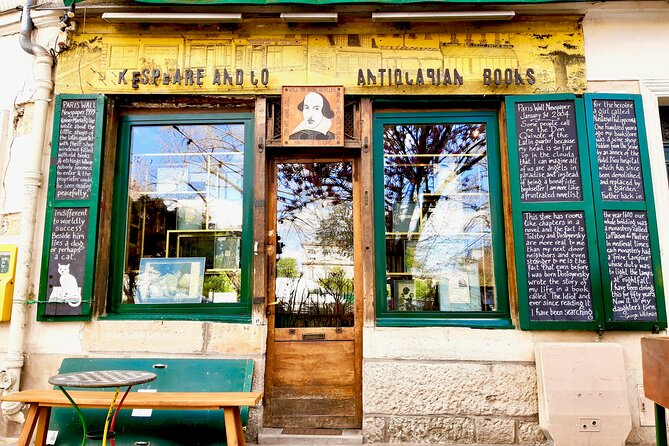
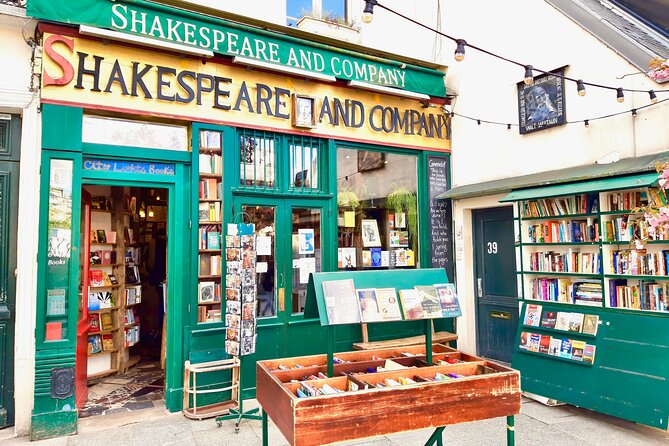
Shakespeare and Company: writers’ Paris in brick and paper
Then it’s Shakespeare and Company, the iconic bookshop tied to the 1920s. The focus is less on browsing and more on what the shop represents: a meeting place for writers, including names like Hemingway, James Joyce, and F. Scott Fitzgerald.
Even if you aren’t a big bookstore person, this stop helps you read the Latin Quarter. The neighborhood isn’t only famous for buildings. It’s famous for the ideas that circulated inside places like this.


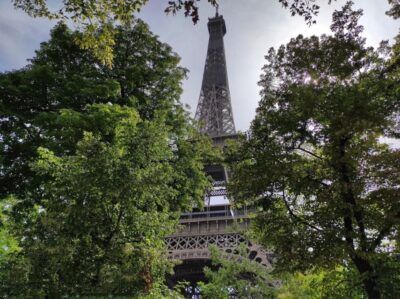
Notre-Dame: a view moment, not an entry marathon
You get Notre-Dame de Paris as a highlight, with breathtaking views. The tour is set up as a look-and-learn moment here rather than a long-ticket, all-day detour.
If you’re going to spend time at Notre-Dame later, consider this your orientation stop. You’ll know what direction and angles to look for when you come back.
The oldest tree in Paris (dating back to 1601): touch for the wish
A special mid-route stop is the oldest tree in Paris, said to date back to 1601. There’s a local tradition to touch the leaves and make a wish.
This is the kind of stop that feels small until you realize it’s exactly what walking tours do best: you remember it because it’s human, not because it’s monumental.
Eglise Saint-Julien Le Pauvre: medieval education in a modest shell
Next is Eglise Saint-Julien Le Pauvre, one of the oldest buildings in Paris. It may not be the biggest church on the map, but the guide connects it to education—once a center of learning alongside Notre-Dame.
That detail matters. In the Latin Quarter, “church” often means more than worship. It can signal where knowledge lived, who studied, and what community looked like.
Salvador Dalí Sundial: art that points toward Santiago
You’ll also see a Salvador Dalí Sundial, tied to the Latin Quarter and connected to the Camino de Santiago de Compostela. The point isn’t technical art history. It’s how Paris layers culture: literature, religion, travel mythology, and modern art all brush against the same streets.
If you like art you can spot on a walk, this stop is a fun one.
Eglise Saint-Severin: Gothic ceilings and organ possibilities
Then comes Eglise Saint-Severin, a 13th-century Flamboyant Gothic church. The guide calls out its vaulted ceilings and columns that resemble palm trees. There’s also a chance you might hear the pipe organ.
Even with a short stop, churches like this reward attention. If your mind likes details (shapes, ceilings, carving), you’ll get more out of this than if you just want photos.
Les Thermes de Lutece: Roman baths, citizen life, and time travel
One of the most compelling stops is Les Thermes de Lutece, the Roman Baths area. The idea is simple and powerful: the Romans invaded in 52 B.C., and after that they built baths and an entire city. What you see now are remnants of a much larger complex that once served citizens.
This is where you start to feel the neighborhood’s depth. The Latin Quarter isn’t just medieval. It goes back farther than most first-timers realize.
Musée de Cluny: medieval Paris in an ornate setting
After the Roman thread, you shift to medieval life at Musée de Cluny. The building itself dates back to the 15th century, and the guide frames it as a place where the medieval story of Paris becomes tangible.
This is another “short but meaningful” stop. Even if you don’t go inside, you’ll understand what kind of time period the neighborhood represents.
La Sorbonne: the university heartbeat of the Latin Quarter
La Sorbonne is next. It’s described as the 3rd oldest university in the world, with roots dating to the 11th century, and the tour mentions stories tied to 1257. In other words: education here is not a modern idea. It’s built into the neighborhood’s identity.
If you enjoy understanding why places exist, you’ll like this stop. It explains why the Latin Quarter attracts thinkers—because it has always been built for them.
The Panthéon: the big headline of the route
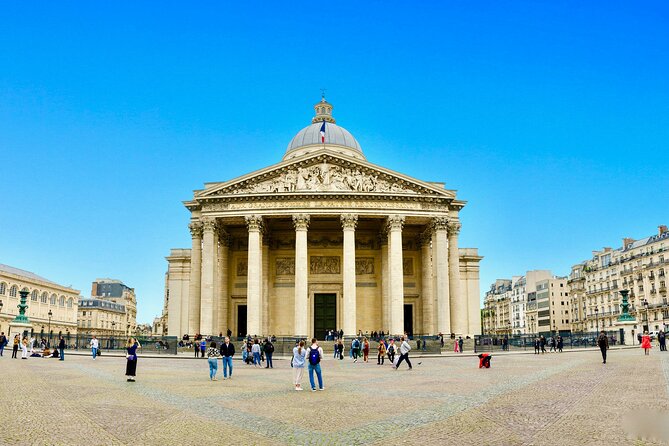
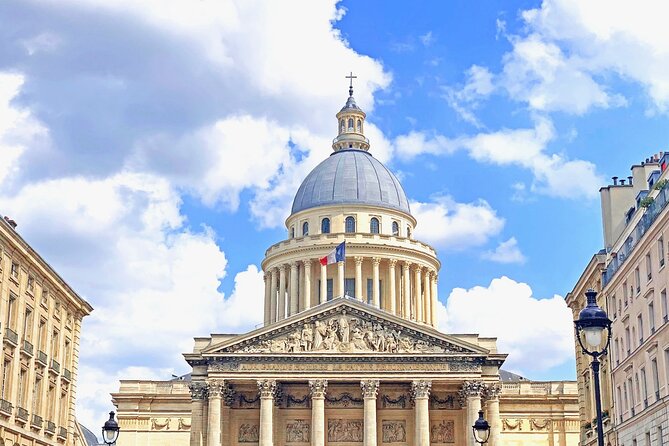
Then you reach what the tour treats as a main event: the Panthéon. The guide explains the meaning of the name—All the Gods—and then tells the story of how the building began as a major religious structure and later became France’s key mausoleum.
You’ll also learn that many major minds are buried inside, including Victor Hugo and Marie Curie (and more).
This is a stop where listening helps. The building is impressive, but the guide’s version gives it purpose: it’s not only architecture, it’s a national memory machine.
St. Étienne du Mont: Saint Genevieve’s tomb and the fall of empires
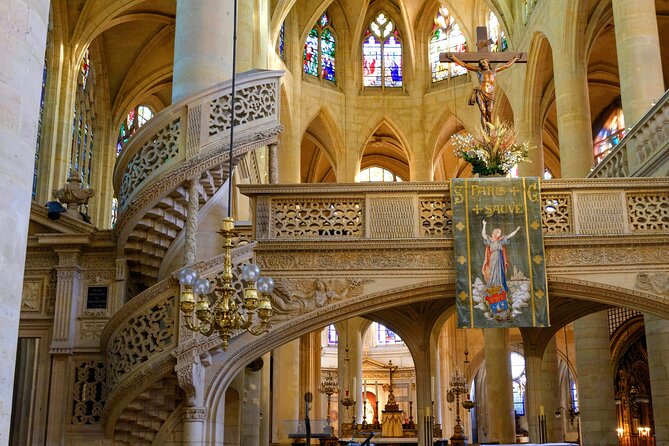
Next is St. Etienne du Mont, a 15th-century church with relics connected to the patron saint of Paris: Saint Genevieve. The tour highlights that inside are her tomb and knuckle.
The guide links Genevieve to the story of Paris during the Roman Empire’s decline—how that transition mattered and why her role became part of the city’s survival narrative.
This stop can feel emotional if you like history that includes people and fear, not only dates.
Ernest Hemingway’s first home office: inspiration you can stand inside
Finally, the route turns toward literary legend with Ernest Hemingway’s first home office. The guide connects it to Hemingway’s famous love of Paris and drops his quote in a memorable way: If you are lucky enough to have lived in Paris as a young man, then wherever you go for the rest of your life, it stays with you, for Paris is a moveable feast.
The stop matters because it gives you a writer’s-eye view of the neighborhood. You don’t just walk past places. You start imagining the routines and drafts that may have happened nearby.
Price and value: a low booking price with pay-what-you-want spirit
This is a tip-based tour, offered with a very low listed group price (about $3.62 per group, up to 9). In practice, you’re paying primarily through the contributions you choose to make, which are meant to support the guide and the experience.
A few value points that matter:
- The route covers a lot of famous names and key neighborhood layers in about 2 hours.
- You get a certified expert guide and an “historic and entertaining” format, which is what makes a walking tour work. Without that guidance, you’d mostly be reading plaques and moving on.
- The stops are built around places that are generally accessible without special paid tickets at each stop, since they’re marked as free in the tour’s structure.
One logistical consideration: tips/contributions are said to be accepted only via credit/debit and electronic payments, and VAT is added to contributions. So bring a card and expect taxes on top of what you choose to pay.
If you’re on a tight budget but still want real storytelling, this format is usually a strong deal. If you dislike the pay-what-you-want style because you’d rather have a fixed price, you might feel a little less in control.
Where you end: Place de la Contrescarpe as your easy next move
The tour ends at Place de la Contrescarpe. That’s a smart finish point because it’s described as a lively square with restaurants, bars, and cafes.
This is more useful than it sounds. After a walking tour, most people want something simple: sit down, eat, and talk through what they just learned. Ending in a place built for that saves you time and stress.
Who should book this Latin Quarter free tour (and who should skip it)
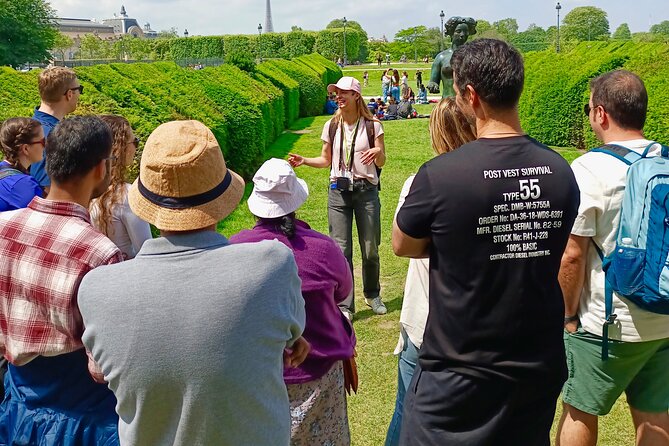
This tour fits well if you:
- Want an efficient first look at the Latin Quarter.
- Like history tied to real places: streets, churches, bookstores, and universities.
- Enjoy learning in English without spending your whole day on tickets and lines.
You might skip or modify if you:
- Want longer museum time or deeper interior access at each site (this route is mostly stop-and-go).
- Prefer a slower pace and don’t like the pressure of finishing by a certain time.
Should you book this Latin Quarter tip-based walking tour?
I’d book it if your goal is to understand the Latin Quarter fast, walk away with mental maps, and leave ready to eat and explore on your own. The best part is the balance: you get major icons like the Panthéon and Notre-Dame views, plus the neighborhood’s “everyday history” moments like the Roman baths remnants, older churches, the Dalí sundial, and the oldest tree with a wish tradition.
Before you decide, make sure you’re comfortable with a 2-hour walking pace and short stops. If that works for you, this is a very practical way to get your bearings in Paris’ most story-dense district—without blowing your budget.
FAQ
Is this tour really tip-based or is there a fixed price?
It’s listed as tip-based (pay what you want). The experience also shows a low group price, and then contributions/tips are handled through payment.
How long is the Paris Latin Quarter tour?
The duration is approximately 2 hours.
What language is the tour offered in?
The tour is offered in English.
Where do I meet the guide?
The meeting point is at Fontaine Saint-Michel, Pl. Saint-Michel, 75005 Paris.
Where does the tour end?
The tour ends at Place de la Contrescarpe, 75005 Paris.
What time does the tour start?
The provided start time is 11:00 am. Morning or afternoon start times are also offered.
How large are the groups?
The tour has a maximum of 50 travelers.
Is it okay if I need to cancel?
Yes. You can cancel for a full refund up to 24 hours before the experience starts.
More Tours in Paris
- Paris: Louvre Guided Tour with Reserved Access & Boat Cruise
★ 4.3 · 16,353 reviews - Paris: Big Bus Hop-On Hop-Off Tour with Optional Cruise
★ 4.4 · 13,279 reviews - Louvre Museum Masterpieces Guided Tour with Access
★ 4.5 · 12,023 reviews - Versailles: Skip-the-Line Tour of Palace and Gardens Access
★ 4.7 · 10,429 reviews - Paris: Louvre Overview, Exploration tour and Reserved Entry
★ 4.1 · 10,145 reviews
More Tour Reviews in Paris
- Paris: 1-Hour Seine Cruise departing from the Eiffel Tower
★ 4.4 · 77,472 reviews - Paris: Louvre Museum Timed-Entrance Ticket
★ 4.6 · 71,977 reviews - Disneyland® Paris 1-Day Ticket
★ 4.6 · 49,412 reviews - Paris: Versailles Palace and Gardens Full Access Ticket
★ 4.6 · 41,579 reviews - Paris: Arc de Triomphe Rooftop Tickets
★ 4.6 · 34,264 reviews
Fresh off the review desk in Paris
- Admission ticket Arsène Lupine and the secret of the Opera★ 4.0 · 242 reviews
- Père-Lachaise : histoires et mystères contés par un comédien★ 4.8 · 244 reviews
- From Paris: Small-Group Loire Valley Castles Full-Day Tour★ 4.8 · 244 reviews
- Versailles Timed Entrance Ticket and Giverny Small Group Day Trip from Paris★ 5.0 · 246 reviews
- Paris: 1,5 hour Guided Segway Tour★ 4.9 · 247 reviews
- Paris Seine River Gourmet Lunch Cruise with Champagne Option★ 4.0 · 247 reviews
Tours, compared.
 ★ 4.3Louvre Guided Tour with Reserved Access & Boat CruiseFrom $8116,353 reviews
 ★ 4.4Big Bus Hop-On Hop-Off Tour with Optional CruiseFrom $4313,279 reviews
 ★ 4.5Louvre Museum Masterpieces Guided Tour with AccessFrom $8612,023 reviews
 ★ 4.7Versailles: Skip-the-Line Tour of Palace and Gardens AccessFrom $7610,429 reviews
 ★ 4.1Louvre Overview, Exploration tour and Reserved EntryFrom $6010,145 reviews
 ★ 4.6Mona Lisa & Louvre Masterpieces Tour with Reserved AccessFrom $806,812 reviews
 ★ 4.0Paris Big Bus Hop-On Hop-Off Tour with Optional River CruiseFrom $466,534 reviews
 ★ 5.0Louvre Museum – Exclusive Guided Tour (Entry Included)From $1816,296 reviews