
Reviewed · CYCLING TOURS
Best of Paris Bike Tour
Four hours and Paris starts clicking. This Best of Paris Bike Tour stitches together the big names—Notre-Dame, the Seine, the Louvre, Eiffel Tower—plus smart guidance for how to plan the rest of your trip. I also like the small-group feel: you’re not just moving through photo stops, you’re getting context at each one.
The biggest value for me is the time-saving angle. Your guide’s advice can help you avoid the usual Louvre line headache, including a shortcut tip that can save around 2 hours of waiting. And you get a real break too, with a snack stop in the Rue Cler outdoor market area.
One thing to think about: Paris traffic can feel chaotic, and this route uses a mix of cycle paths and street sections. The bikes are not e-bikes, so you’ll be relying on your own legs—fine on mostly flat ground, but you do need to stay alert.
In This Review
- Key reasons this bike tour works
- Finding the bright blue bike at Saint-Michel
- Bike setup, gear, and what you’re riding (not e-bike)
- Notre-Dame area: your first stop and the fast orientation
- Musée d’Orsay and the Impressionists: art talk that actually helps
- Along the Seine: gliding past crowds on your own schedule
- Pont Alexandre III to the Army Museum area: architecture and stories on wheels
- The 30-minute break: Rue Cler snack time built in
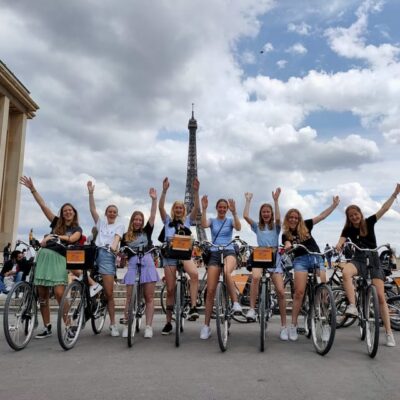
- Eiffel Tower: the postcard moment, with actual context
- Grand Palais, Champs-Élysées, and Place de la Concorde: building a Paris photo route
- Louvre and the glass pyramids: seeing it from the right angle
- How guides make (or break) the experience: pacing, traffic, and flexibility
- Price and value: what $53 buys in real time
- Who should book this bike tour (and who should think twice)
- Should you book Best of Paris Bike Tour?
- FAQ
- How long is the Best of Paris Bike Tour?
- Where do we meet the guide?
- Which Metro stops are closest?
- Is this tour in English?
- What’s included in the price?
- Is food included?
- Does the tour use e-bikes?
- How much time is spent at major landmarks?
- What should I wear?
- If the RER line C is under maintenance, will I still be able to get there?
Key reasons this bike tour works
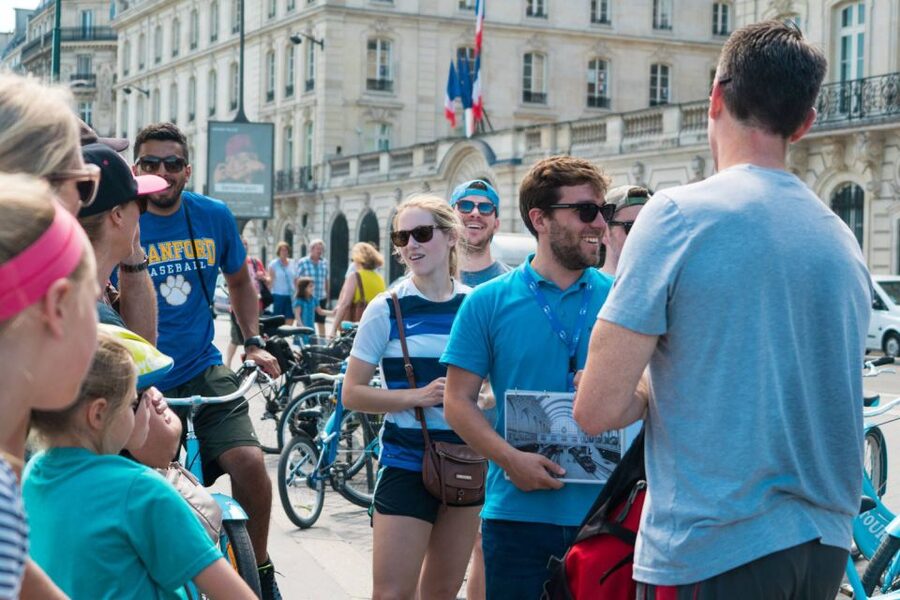
- Big sights, efficient routing: Notre-Dame to the Eiffel Tower with the Seine and Pont Alexandre III in the middle.
- Time-saving Louvre intel: you’ll learn a shortcut approach that can shave hours off waiting later.
- Small-group pacing with frequent stops: brief explanations at the sites, not long lectures on the move.
- Rue Cler snack break included as part of the experience: about 30 minutes to taste and wander stalls.
- Real guide support in traffic: you get help reading the road and staying together.
- Comfort gear provided: helmet, plus rain gear (and warm gloves/scarf in cold weather).
Finding the bright blue bike at Saint-Michel
Your day starts in central Paris, meeting your guide in front of Fontaine Saint-Michel. Look for the guide standing next to a bright blue bike. The area is easy to reach on Metro and RER: the closest stop is Saint-Michel-Notre-Dame (Metro line 4 and RER line C), and you’re also close to Metro line 10 at Cluny.
This location matters because you’re beginning where lots of first-time visitors start sightseeing anyway. You don’t waste half your tour commuting across town.
Tip: if you’re arriving early, plan a quick buffer. A few minutes of delay can happen around the Saint-Michel area, especially during peak tourist periods.
Worth weighing up next to this Paris pick
- Versailles Palace Bike Tour with Market & Marie-Antoinette hamlet
★ 5.0 · 2,680 reviews - Paris: Charming Nooks and Crannies Bike Tour
★ 4.8 · 2,585 reviews - From Paris: Versailles Bike Tour w/ Palace, Gardens, & Picnic
★ 5.0 · 2,150 reviews - Paris: City Highlights Bike Tour
★ 4.7 · 1,835 reviews
Bike setup, gear, and what you’re riding (not e-bike)
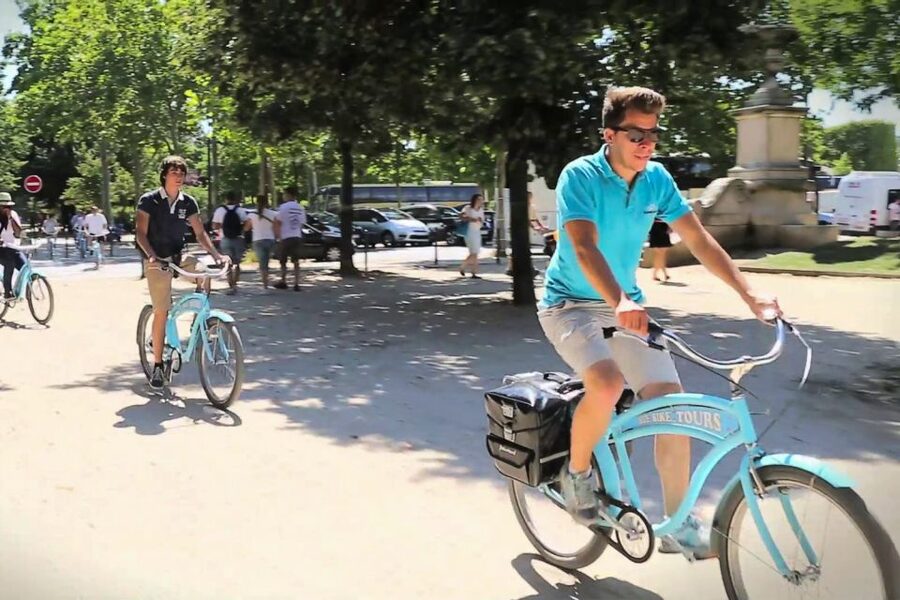
The tour provides a comfortable aluminum-framed bike and a helmet. If weather turns, you’ll get quality rain gear, and in colder conditions you can get warm gloves and a scarf.
What you should know before you picture a super-easy cruiser: the bikes are not e-bikes and are typically single-gear. The good news is that the route through this part of Paris is mostly flat, and guides keep the pace in mind for the group. Still, if you don’t feel confident riding in busy urban streets, go into it ready to focus.
Traffic awareness is the main practical consideration. One rider noted how heavy and chaotic traffic can be, and that’s exactly why having a guide matters. You’ll get instructions and guidance as you move.
Notre-Dame area: your first stop and the fast orientation
After a short bike roll from the meeting point, you stop at Notre-Dame Cathedral. Even if you’ve seen Notre-Dame in photos a hundred times, being there by bike changes how you understand the city. You get the “shape” of the area—streets, bridges, sight lines—without the fatigue of walking between viewpoints.
You’ll also get a sense of how the guide will work: brief stops, clear talking points, then back on the bike. That rhythm is useful on a half-day because it keeps the energy up while still giving you something to remember beyond a checklist.
A drawback at this stage can be crowd density. Notre-Dame is a magnet, so expect more foot traffic around you at times. The guide will typically manage the moment—where to pause, how to move, and where to look.
Musée d’Orsay and the Impressionists: art talk that actually helps
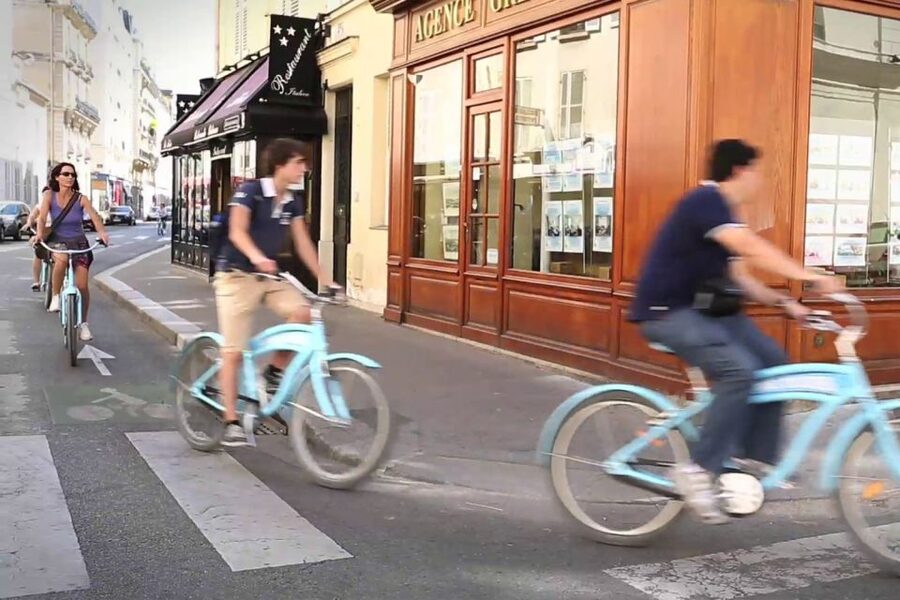
Next up is a stop at Musée d’Orsay. You’re not only going for the building—you’ll learn about the Impressionists as you take in the setting. This is the kind of stop that makes later museum time easier because it gives you a simple mental framework for what you’re seeing (even if you don’t plan to go inside on this tour).
The practical bonus: by the time you reach Orsay, you’ve already covered enough ground that you’re getting your bearings. Then you start attaching names and ideas to places instead of just admiring scenery.
Along the Seine: gliding past crowds on your own schedule
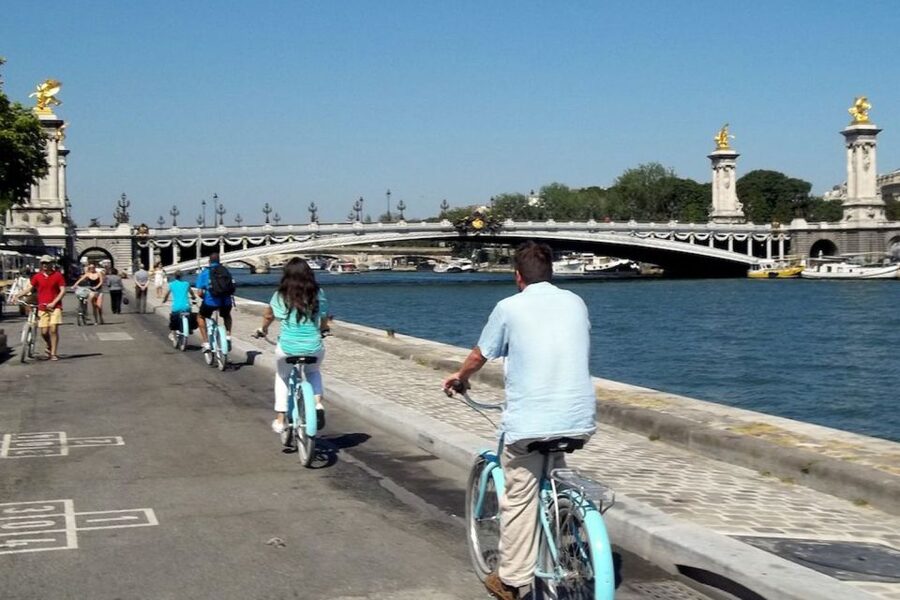
One of the tour’s best assets is how it uses the Seine. You’ll ride along the Seine River for a stop and some photo time, then move on to Pont Alexandre III for another postcard-style viewpoint.
This section is valuable because it’s both scenic and strategic. Paris’s highlights get packed tightly, and walking that same route can feel slow. Cycling gives you motion without feeling rushed. You breeze by visitors and locals alike, and you can stop when the light is right.
Photo tip: for river views, the best angles often depend on where the sun is, but you’ll at least get chances to reposition. If your guide helps with timing, you’ll feel less frantic trying to catch the shot before you move on.
Pont Alexandre III to the Army Museum area: architecture and stories on wheels
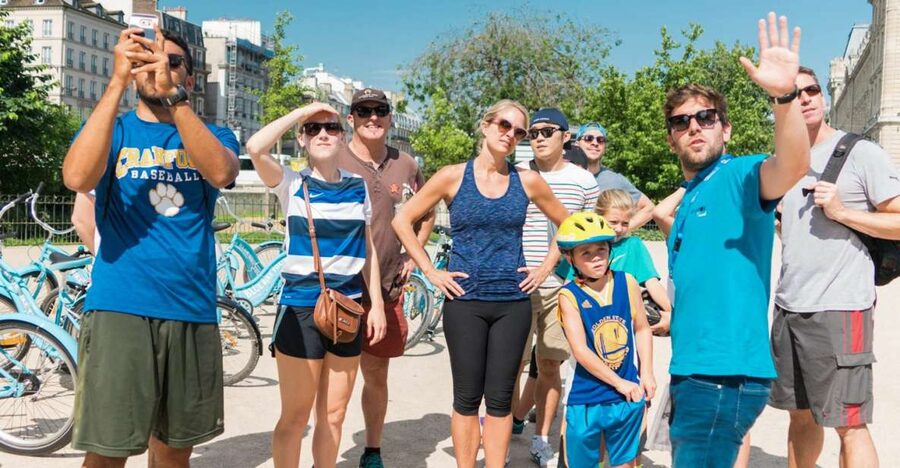
From the Seine, you head to Pont Alexandre III and then into the area near the Army Museum (Musée de l’Armée). The guide’s job here isn’t just to point. It’s to connect details—what you’re looking at, why it matters, and how Paris evolved around these landmarks.
There’s also a subtle value in this mid-tour stretch: it slows the day down just enough that you don’t feel like you’re sprinting from one icon to the next. You’re still moving, but the guide-controlled pauses keep the experience feeling structured instead of chaotic.

The 30-minute break: Rue Cler snack time built in
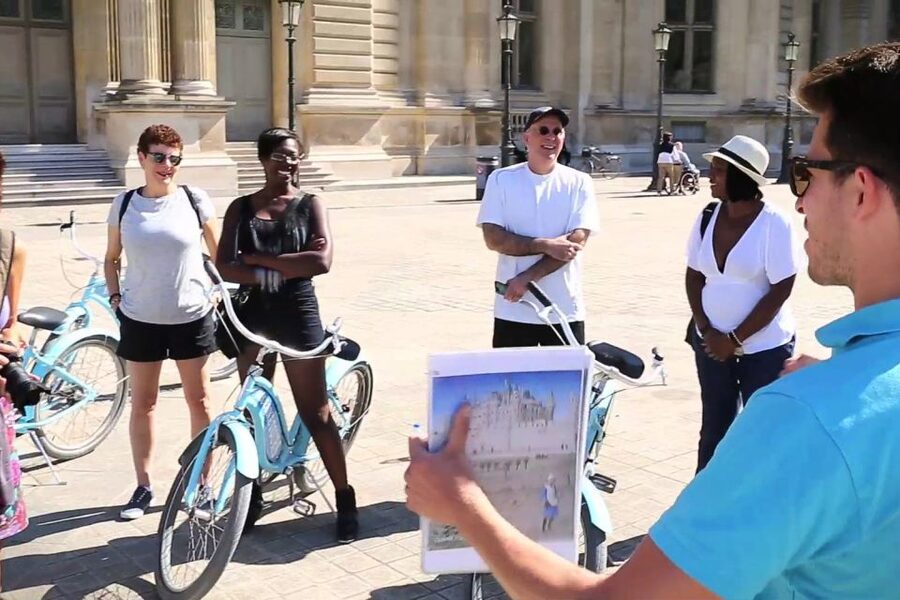
After the Army Museum stop, you get a 30-minute break. This is where the tour slots in a chance to head toward Rue Cler, an outdoor market area known for quick bites and casual tasting.
What makes this break practical: it prevents the all-sight, no-food trap that can ruin the second half of a tour day. You’re not locked into a set meal. Instead, you get time to wander stalls and try local treats on your own.
Because the tour price doesn’t include food, you’ll still pay for what you choose to buy. But you’re not left starving either—you’re given the moment to eat without derailing the route.
Small tip: if you’re prone to long lines or slow choices at stalls, use the first minutes of the break to decide what you want. It’s the easiest way to keep the tour from feeling rushed.
Eiffel Tower: the postcard moment, with actual context
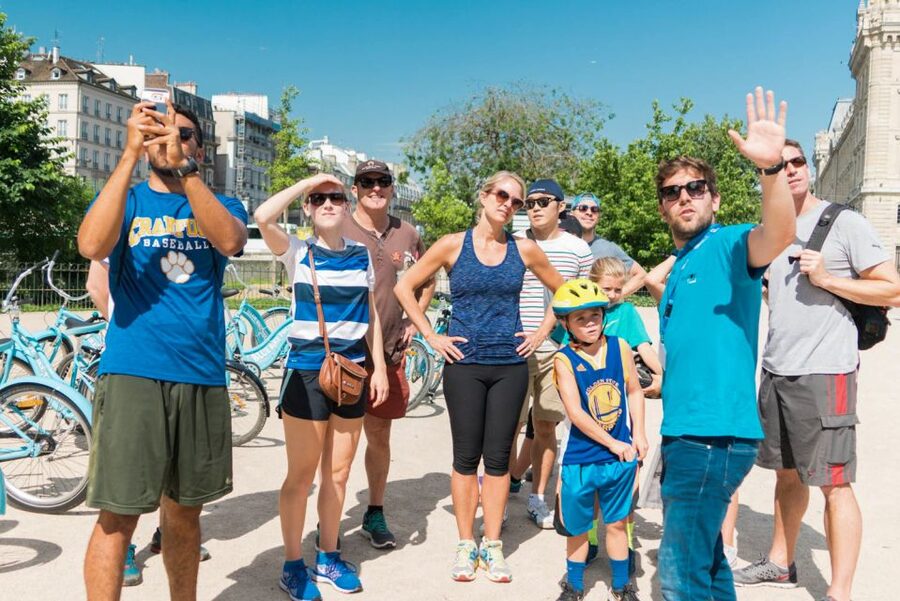
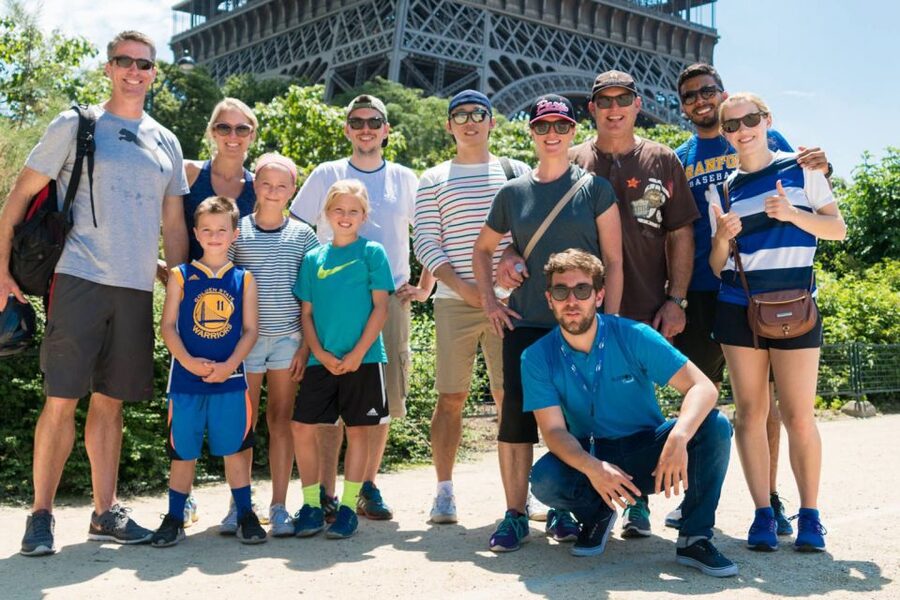
After the break, you bike to the Eiffel Tower area. You’ll get around 15 minutes at the tower, then continue the loop.
Here’s why this stop is more than a photo op: earlier you’ve been learning how different neighborhoods and landmarks connect across the city. So when you see the tower, it feels like part of a system, not a random monument.
Also, pay attention to your guide’s pacing. People often crowd around the main viewpoints, but a guide can steer you to the best angles with the least hassle.
If you’re traveling with kids, this is often where the energy peaks. One family rider specifically praised how the guide kept kids involved and entertained during a bike tour like this—important when you’ve got younger attention spans.
Grand Palais, Champs-Élysées, and Place de la Concorde: building a Paris photo route
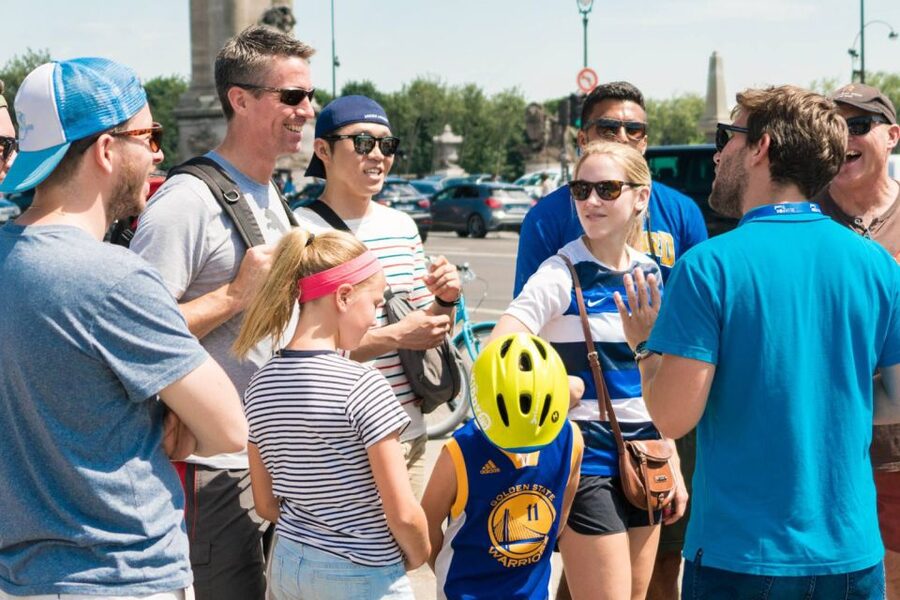
After the Eiffel Tower, the route moves past Grand Palais (a short stop) and then into the major avenue area: Champs-Élysées. You also get a stop at Place de la Concorde, which is where you’ll get one of the best sight “frames” in the city.
From Place de la Concorde, you’ll see the sweep toward the Champs-Élysées and the Arc de Triomphe. This viewpoint is valuable because it gives you a sense of distance and direction. On foot, that understanding takes longer to build.
This section can be visually overwhelming because the landmarks are so close to your field of view. The guide helps keep it grounded: you’re not just looking, you’re learning what you’re looking at and how the city organizes itself around these big spaces.
Louvre and the glass pyramids: seeing it from the right angle
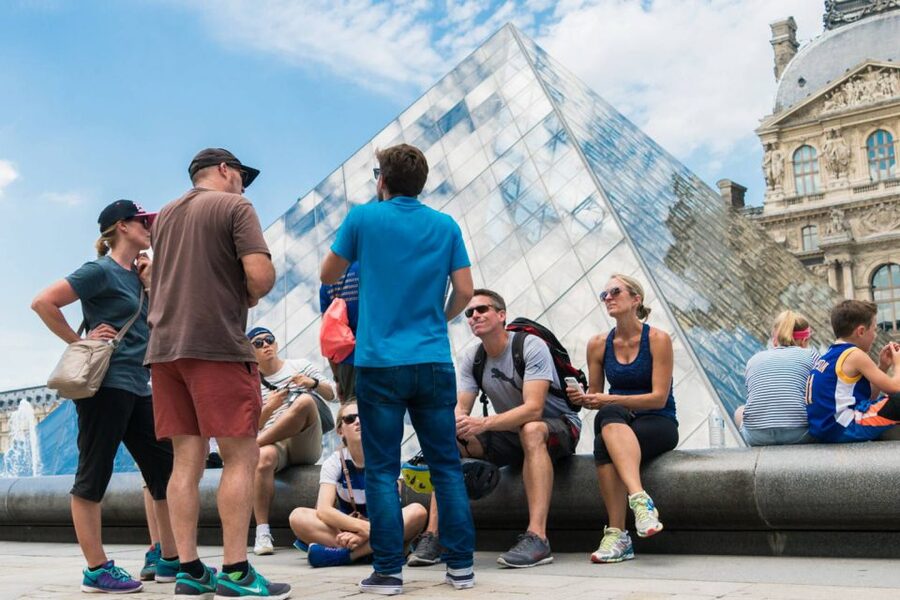
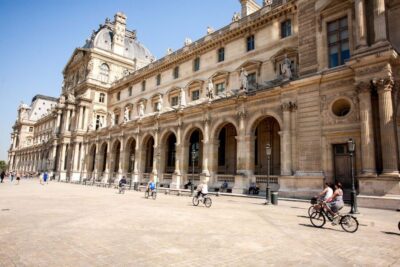
The tour brings you to the Louvre Museum area, including time near the famous glass pyramids in the Louvre courtyard. This is the stop where your guide’s time-saving advice becomes real.
One of the most helpful tips you’ll hear: where to find a shortcut entrance approach that can save around 2 hours of waiting when you visit later. It’s the kind of practical info that changes your entire day plan.
You also get a sense of the Louvre’s size by cycling around the edge of it. That matters, because the Louvre can feel like one huge maze once you’re on the ground. The tour gives you a “map in your head” before you buy tickets for a deeper visit.
How guides make (or break) the experience: pacing, traffic, and flexibility
A big reason this tour scores highly is the human part: the guide.
In different departures, you’ll see guide styles that keep things smooth. For example, one rider praised Irving for setting a comfortable pace even with a larger group and for adding unplanned moments when something interesting happened—like a real-life logistics scene involving furniture moved through a building window because stairways were too narrow. That’s how you know the guide is paying attention, not just running a script.
Another theme from guides like Joe, Tibo, Ervin, and Michael: they keep the group safe and engaged. Drivers and road rules are a big deal in central Paris, and bike tours can go wrong fast if someone doesn’t manage intersections. Multiple riders also mentioned guides being patient with kids (with Michael and others specifically called out), and that’s a real benefit for families.
If you’re the type who likes asking questions, the stops are built for it. Guides gave brief, focused explanations at each site—enough to understand what you’re looking at, without dragging you into a long classroom session.
One note: sound can be tricky in busy areas. A rider mentioned that hearing the guide could be harder at times in crowded spots. If you’re a bit sensitive to this, position yourself closer to the guide during stops.
Price and value: what $53 buys in real time
At $53 per person for about 4 hours, you’re paying for more than a bike rental. You’re buying:
- A local guide who leads you between top monuments
- A route plan that saves you time versus piecing together transport and walking
- A set of insider tips (especially the Louvre shortcut)
- Gear support: helmet, and rain gear plus warm gloves and a scarf in colder weather
Food isn’t included. That’s normal for a sightseeing tour. But the built-in Rue Cler snack break gives you a reasonable way to take care of yourself without derailing the schedule.
For me, the best value is the orientation. If it’s your first day in Paris—or you only have a couple days—this kind of bike loop can turn the city from random postcards into an actual plan.
Who should book this bike tour (and who should think twice)
This tour is a strong fit if:
- You want to see a lot of Paris highlights in half a day
- You prefer cycling over long walks between distant landmarks
- You like learning context in short bursts at each stop
- You want time-saving guidance for future sightseeing (like the Louvre strategy)
It may be less ideal if:
- You’re uncomfortable riding in city traffic conditions, even with a guide managing safety
- You expect an e-bike assist
- You’re sensitive to wind/rain and don’t like dressing for the weather (though rain gear and warm gear help)
Also, if you’re the person who forgets basics until it’s too late: use the restroom before you start when you can. One rider specifically called this out as a simple way to make the ride feel smoother.
Should you book Best of Paris Bike Tour?
I’d book it if your goal is smart orientation plus the top Paris icons in one efficient loop. The combination of a small-group format, frequent stops, and practical tips—especially that Louvre shortcut guidance—makes the cost feel justified for many first-timers.
Skip it only if you strongly dislike cycling near intersections or you want a slow, deep dive into one museum. This is a “see the city, get the plan” experience, not a standalone museum day.
FAQ
How long is the Best of Paris Bike Tour?
The tour lasts 4 hours.
Where do we meet the guide?
Meet your guide in front of Fontaine Saint-Michel, and look for the guide standing next to a bright blue bike.
Which Metro stops are closest?
The closest stop is Saint-Michel-Notre-Dame (Metro line 4 and RER line C). It’s also close to Metro line 10 at Cluny.
Is this tour in English?
Yes, the live tour guide speaks English.
What’s included in the price?
You get a comfortable aluminum-framed bike, a helmet, a fun local guide, insider information on the monuments, and quality rain gear if it rains. In cold weather you’ll also receive warm gloves and a scarf.
Is food included?
Food and drink are not included. The tour includes a snack break with time to explore stalls at the Rue Cler outdoor market.
Does the tour use e-bikes?
No. The bikes are not e-bikes, and they are described as single-gear.
How much time is spent at major landmarks?
Time varies by stop, with examples including about 15 minutes at Notre-Dame, about 10 minutes at Musée d’Orsay, multiple shorter photo stops along the Seine and bridges, and about 15 minutes at the Eiffel Tower. The Rue Cler area break is 30 minutes.
What should I wear?
Dress for the weather forecast. In summer, bring a cap, sunscreen, and light clothing. In winter, gloves, a scarf, and warmer clothes are recommended.
If the RER line C is under maintenance, will I still be able to get there?
The information says that during summer months, RER line C will be undergoing maintenance and won’t run through central Paris, so you may want to rely on the Metro options like line 4 to Saint-Michel-Notre-Dame and line 10 to Cluny.
More Cycling Tours in Paris
- Versailles Palace Bike Tour with Market & Marie-Antoinette hamlet
★ 5.0 · 2,680 reviews - Paris: Charming Nooks and Crannies Bike Tour
★ 4.8 · 2,585 reviews - From Paris: Versailles Bike Tour w/ Palace, Gardens, & Picnic
★ 5.0 · 2,150 reviews - Paris: City Highlights Bike Tour
★ 4.7 · 1,835 reviews - Electric Bike Tour of Paris’ Hidden Gems
★ 4.9 · 1,377 reviews
More Tours in Paris
- Paris: Louvre Guided Tour with Reserved Access & Boat Cruise
★ 4.3 · 16,353 reviews - Paris: Big Bus Hop-On Hop-Off Tour with Optional Cruise
★ 4.4 · 13,279 reviews - Louvre Museum Masterpieces Guided Tour with Access
★ 4.5 · 12,023 reviews - Versailles: Skip-the-Line Tour of Palace and Gardens Access
★ 4.7 · 10,429 reviews - Paris: Louvre Overview, Exploration tour and Reserved Entry
★ 4.1 · 10,145 reviews
More Tour Reviews in Paris
- Paris: 1-Hour Seine Cruise departing from the Eiffel Tower
★ 4.4 · 77,472 reviews - Paris: Louvre Museum Timed-Entrance Ticket
★ 4.6 · 71,977 reviews - Disneyland® Paris 1-Day Ticket
★ 4.6 · 49,412 reviews - Paris: Versailles Palace and Gardens Full Access Ticket
★ 4.6 · 41,579 reviews - Paris: Arc de Triomphe Rooftop Tickets
★ 4.6 · 34,264 reviews
Fresh off the review desk in Paris
- Secrets of Paris Bike Tour in English or Dutch★ 5.0 · 5 reviews
- Paris: Mont Saint-Michel Day Tour with Chinese Tour Guide★ 5.0 · 5 reviews
- Private Street Art 2-Hour Guided Tour in Paris★ 4.5 · 5 reviews
- Orsay Museum Tour: 2h Highlights (Private & Small Group)★ 5.0 · 5 reviews
- Discover Paris in electric golf carts★ 4.0 · 5 reviews
- Paris Private Boat Tour with your own Captain Guide★ 5.0 · 5 reviews
Cycling Tours, compared.
 ★ 5.0Versailles Palace Bike Tour with Market & Marie-Antoinette hamletFrom $1312,680 reviews
 ★ 4.8Charming Nooks and Crannies Bike TourFrom $532,585 reviews
 ★ 5.0Versailles Full Day Bike Tour with Palace, Gardens, & PicnicFrom $1312,217 reviews
 ★ 5.0From Paris: Versailles Bike Tour w/ Palace, Gardens, & PicnicFrom $1142,150 reviews
 ★ 4.7City Highlights Bike TourFrom $501,835 reviews
 ★ 4.9Electric Bike Tour of Paris’ Hidden GemsFrom $581,377 reviews
 ★ 5.0Paris Local Districts and Stories Off the Beaten Track Guided Bike TourFrom $541,264 reviews
 ★ 5.0Best of Paris Electric Bike TourFrom $781,179 reviews
Browse the lists this tour appears in