
Reviewed · NORMANDY DAY TRIPS
Canadians in Normandy D-Day beaches Juno Beach and Pegasus Bridge (3/7 pax)
Normandy hits hard when the story is filtered through Canada. This full-day small-group route connects the opening bridge action at Pegasus Bridge to the Canadian sacrifice on Juno Beach, with a guide who keeps the details human. I especially like the way the stops are tightly chosen for a Canada lens, and how the Juno Beach Centre turns facts into something you can feel. The main tradeoff is time: it’s a long day, so you’ll need to let go of the idea of lingering everywhere.
For this trip, I’d plan on an early start from Paris at 6:30 am and a packed-but-not-rushed flow of brief stops. The group size is kept small (up to 7 travelers), which makes it easier to ask questions and get clear explanations as you move from site to site. If you like slow sightseeing and extra time for wandering, you may find the schedule a bit intense.
In This Review
- Key things you’ll notice on this Canadian Normandy day
- A Canada-shaped Normandy day, built for meaning
- Leaving Paris early: why the 6:30 am start is worth it
- Pegasus Bridge: the opening minutes of Operation Deadstick
- Bény-sur-Mer Canadian War Cemetery: tidy grounds, huge loss
- La Maison des Canadiens: one house, first-minute chaos
- Juno Beach Centre: how the story is built room by room
- The exhibit rooms that make the difference
- Croix de Lorraine and One Charlie: de Gaulle and the heavy cost
- The schedule reality: why the day feels full
- Price and value: what $288.99 buys you (and why it may be worth it)
- Who this tour is best for
- Should you book Canadian Normandy with this small-group route?
- FAQ
- What time does the tour start and where do I meet?
- How long is the full-day experience?
- Is it a small group?
- What’s included in the price?
- Is lunch included?
- Does it run in all weather?
Key things you’ll notice on this Canadian Normandy day
- Small-group pacing: up to 7 people, so you spend more time understanding and less time waiting.
- Pegasus Bridge focus: built in 1934, it became a key British airborne objective on 6 June 1944.
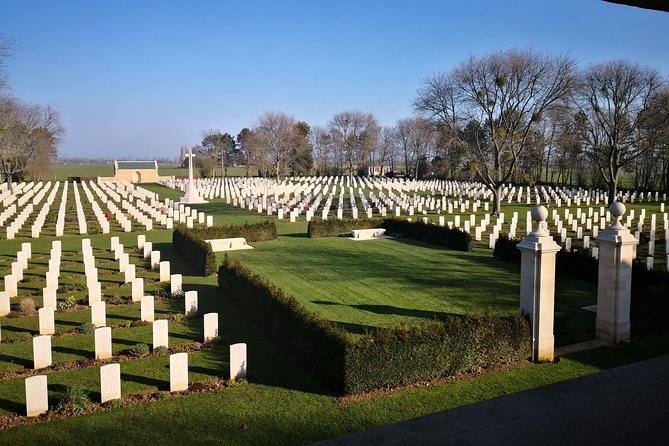
- Bény-sur-Mer Canadian War Cemetery: impeccably kept grounds with 2,049 headstones and the Cross of Sacrifice.
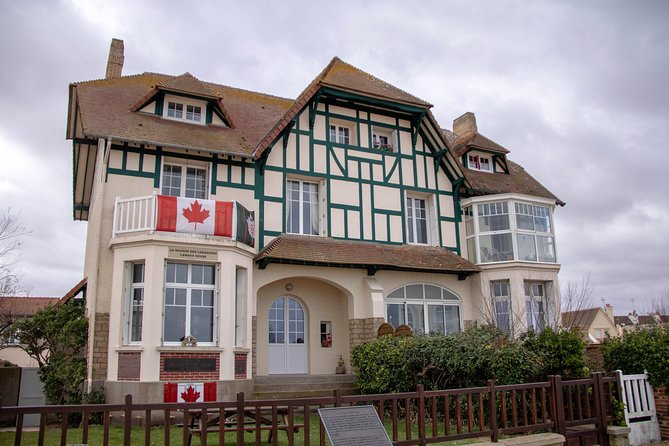
- Canada House (La Maison des Canadiens): a single surviving house with a blunt inscription about casualties in the first minutes.
- Juno Beach Centre exhibits: films, photo collections, and room-by-room context from Canada in the 1930s to the Normandy campaign.
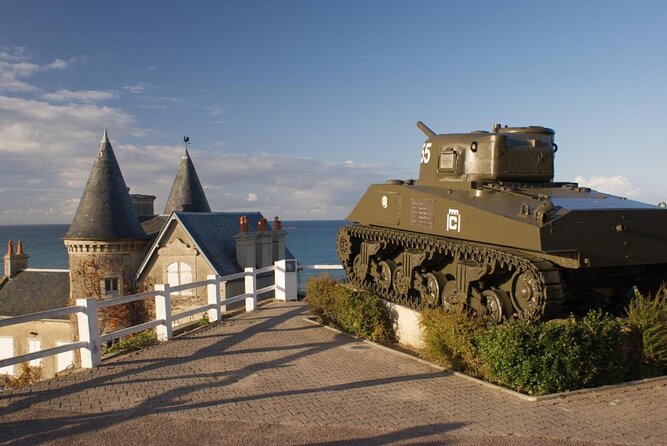
- Croix de Lorraine + One Charlie: de Gaulle’s return is commemorated, plus a Churchill AVRE tank memorial tied to D-Day landings.
A Canada-shaped Normandy day, built for meaning
This is one of those Normandy trips where the route feels intentional. Instead of trying to cover every Allied front and every battlefield angle, the day stays anchored in Canada’s role—right from the very first hours around the bridges to the landing and aftermath at Juno.
That focus matters because it changes how you read what you’re seeing. You’re not just looking at a beach or a bridge and hoping the pieces click. The guide ties the locations together so you understand why Canada fought where it did, and why certain moments mattered for days and weeks afterward.
The day also has a practical rhythm. You get a mix of exterior sites (bridge, house, cemetery, monuments) and one major indoor anchor: the Juno Beach Centre. That balance helps when you’re doing a long-distance day from Paris.
More of the D-Day coast, compared
- Normandy D-Day Sites & Cemetery Day Trip from Paris with Lunch
★ 5.0 · 6,877 reviews - Normandy D-Day Small-Group Day Trip with Omaha Beach, Cemetery & Cider Tasting
★ 5.0 · 2,786 reviews - Normandy D-Day Beaches and American Cemetery Day Trip from Paris
★ 4.5 · 2,673 reviews - Paris: Normandy D-Day Sites Guided Day Trip with Lunch
★ 4.7 · 1,082 reviews
Leaving Paris early: why the 6:30 am start is worth it
The meeting point is central: Théâtre du Lido on the Champs-Élysées (116 bis Av. des Champs-Élysées, 75008 Paris). The tour starts at 6:30 am, and you return to the same meeting point at the end.
That early departure isn’t just a schedule quirk. If you’re trying to see multiple sites in one day, leaving early is how you avoid losing time to traffic and late arrivals. It also improves your odds of having better conditions for outdoor stops—something this experience depends on, since good weather is required.
You’ll ride in an air-conditioned vehicle, and you’ll have a mobile ticket. In other words, you don’t have to fight for paper tickets or waste time with last-minute paperwork.
One small reality check: with a 13 to 14 hour day, you’ll want to travel smart. Bring water, dress in layers, and plan to eat later if lunch isn’t included. The tour doesn’t include food, so build your day around that.
Pegasus Bridge: the opening minutes of Operation Deadstick
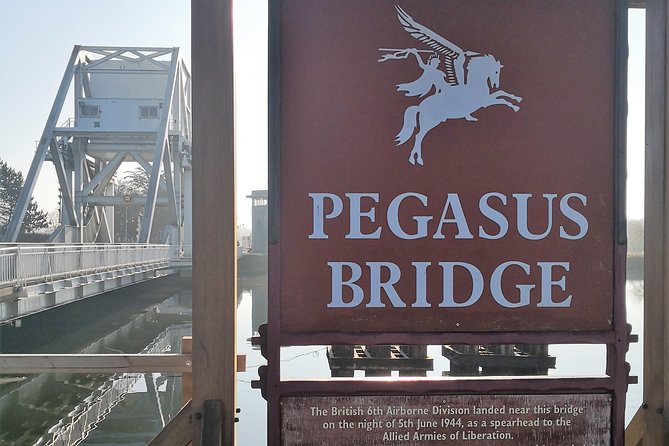
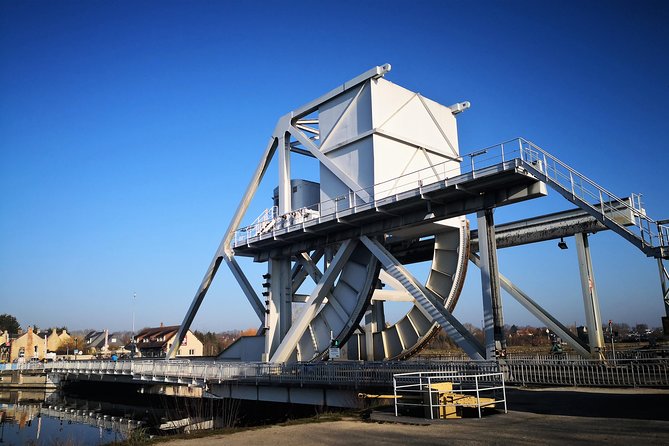
The first stop is Pegasus Bridge, a bascule bridge built in 1934 over the Caen Canal, between Caen and Ouistreham. This is one of those locations where you quickly understand why it was targeted: controlling a key crossing affects movement, reinforcement, and the tempo of the fight.
What makes Pegasus Bridge central to a Canadian-themed trip is how it frames the Allied invasion’s earliest action. Pegasus Bridge (also known as the Bénouville Bridge) and the nearby Ranville Bridge were major objectives for British airborne troops during Operation Deadstick, part of Operation Tonga, in the opening minutes of the Normandy landings on 6 June 1944.
You get specific context here: a glider infantry unit from the 2nd Battalion, the Oxfordshire and Buckinghamshire Light Infantry (British 6th Airborne Division), led by Major John Howard, was tasked to land, take the bridges intact, and hold them until relieved.
This stop is short—about 20 minutes—but the information density is the point. You’re learning how one action at one crossing influenced German response capability in the days and weeks after the invasion. It’s a good start because it sets the stage for why later ground battles at Juno mattered.
Practical note: since you’re getting only a brief window, use those minutes to orient yourself. Look for how the canal and approach areas sit in the landscape, then listen for how the guide explains movement and timing.
Bény-sur-Mer Canadian War Cemetery: tidy grounds, huge loss
Next up is the Bény-sur-Mer Canadian War Cemetery, near Caen in lower Normandy, named after Bény-sur-Mer (even though it’s near the village of Reviers). This is a calm stop, but it’s not a casual one.
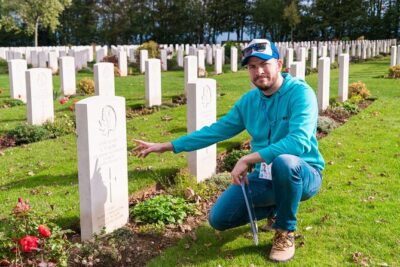
The cemetery holds predominantly Canadian soldiers killed during the early stages of the Battle of Normandy. The grounds are landscaped and kept immaculately, and you’ll see the Cross of Sacrifice, a Commonwealth War Graves Commission memorial style that’s designed to be instantly recognizable.
Here are the kinds of figures that land emotionally because they’re so concrete: the cemetery contains 2,049 headstones, marking the dead of the 3rd Division, plus the graves of 15 airmen. The overall effect is that the scale of the sacrifice becomes visible, not abstract.
You also get a sense of local care. The mayor and people of Reviers take a special interest in the cemetery, treating it almost as their own. It’s one reason many people leave this stop feeling quiet but grounded—like someone is truly tending the memory.
This stop runs about 30 minutes with free admission. If you’re the type who wants extra time to read names, you may find the duration limiting. Still, it’s a powerful use of a half hour, especially after the action-heavy framing at Pegasus Bridge.
La Maison des Canadiens: one house, first-minute chaos
Then you move to La Maison des Canadiens (Canada House) in Bernières-sur-Mer. This is one of the most striking stops because it’s not just a monument—it’s a building with the kind of survival story that makes D-Day feel immediate.
At the entrance, there’s a stark inscription: within sight of the house, over 100 men of the Queen’s Own Rifles were killed or wounded in the first few minutes of the landings. It’s a blunt reminder that the war wasn’t far away. It was happening right there, in the opening moments, with bodies and time compression you can’t really picture until you see it written.
The house is described as one of the first houses liberated by Canadian soldiers on D-Day and a landmark still seen in many D-Day photos. The site also explains why it may have survived: it was one of the few houses left intact, possibly because it had been the favored home of an occupying German officer.
The personal layer here is especially meaningful. The left-hand side is owned by Hervé Hoffer’s family, and the story includes that his grandfather owned the home during the war but was evicted by the Germans. For the 40th anniversary in 1984, when veterans began returning on pilgrimages, Hoffer met Canadians who had actually liberated his house.
This stop is about 20 minutes with free admission. Don’t rush it. Even if your time is limited, take a moment to read the inscription and look at the surroundings from the house’s vantage. It helps you understand why this particular place became a key memory point.
Juno Beach Centre: how the story is built room by room
If you only cared about one indoor stop, it would be the Juno Beach Centre—and you’ll likely feel that way after the visit. This is where the day shifts from outdoor locations to a structured narrative.
You get about 2 hours here, with admission included. The Centre’s permanent exhibit uses photographs, documents, multimedia, maps, and artifacts to tell the story of Canadians who volunteered or mobilized at home, plus how Canadian units moved from places like Sicily to Italy and then to Normandy and the Netherlands.
The exhibit also places numbers in context: it pays homage to the 45,000 Canadians who lost their lives during the war, including 5,500 killed during the Battle of Normandy and 359 on D-Day. Those figures matter because the rest of the exhibit helps explain what “duty” looked like for real people.
What I like about this museum is the sequencing. It doesn’t start with the beach and then toss you into the past. It sets up Canada in the 1930s, shows mobilization, and then connects those societal changes to what happens in Europe.




The exhibit rooms that make the difference
- Room A: Courseulles, June 06th 1944
You stand in a simulated landing craft and watch a film that puts you into the mindset of Canadians during D-Day. Images of war and Canada during the war years play around you while soldiers and families describe thoughts and feelings from the time.
- Room B: Canada in the 1930’s
You build baseline understanding: geography, demographics, the economy, the state of the military, politics, and social climate. There’s even a young-audience circuit presented through virtual characters, Peter and Madeleine.
- Room C: Canada goes to War
You see how Canada’s entry into the war begins (including a simulated living room with period voices) and how the country mobilized. You also get the idea that the entire nation was involved, not only the battlefield.
- Room D: Road to Victory
Campaigns in which Canadians fought are shown, from Italy through Normandy and onward. This room broadens the picture with branches and roles beyond infantry—medical corps, war correspondents, engineers, and more.
- Room E: Some Came Back, Others Did Not
This part hits emotionally. Names scroll across the ceiling to remember those who died, while the narrative also acknowledges that many returned home to help shape Canada.
- Room F: They Walk With You
The film uses emotionally guided audio and Second World War newsreel footage, plus recreations tied to infantry sacrifice on D-Day and in Normandy.
That last segment is the one that sticks with most people because it’s about the infantry viewpoint—how a soldier often didn’t have the big picture, only the job and the need to survive. It changes how you interpret everything you saw outside.
Croix de Lorraine and One Charlie: de Gaulle and the heavy cost
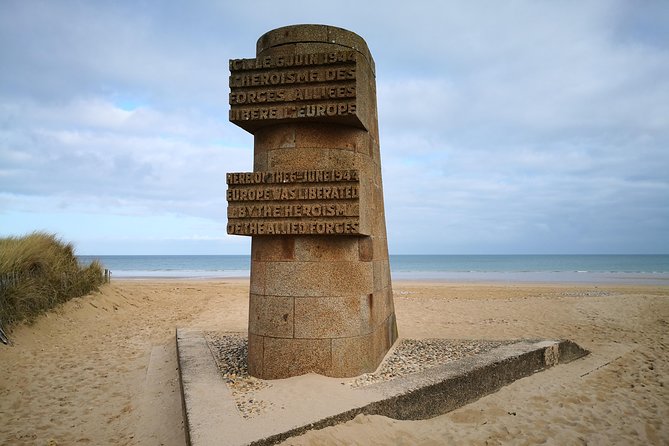
The final major site is the Croix de Lorraine, a monument more than 18 meters high facing the sea. It commemorates General de Gaulle’s return to French soil on June 14, 1944, after crossing the English Channel aboard the French destroyer La combattante.
This stop works on two levels: it gives you symbolism tied to leadership and liberation, and it then pulls you back to the mechanics of D-Day landings and the losses that came with them.
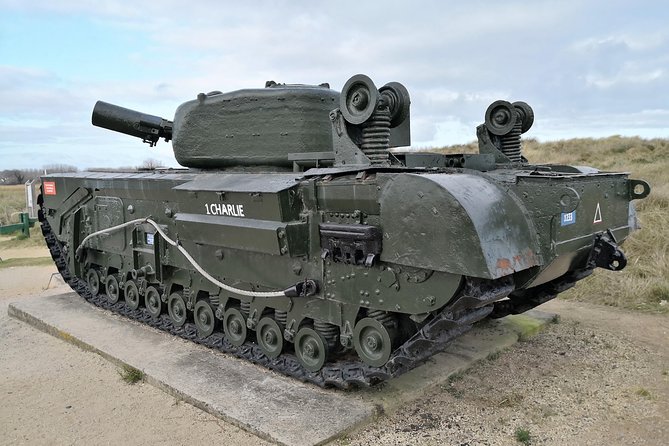
Right there, you’ll also find a Churchill AVRE tank memorialized as One Charlie. This tank is tied directly to landing operations on 6 June 1944. The important technical detail is that it couldn’t bridge a deep culvert about 100 yards south of the site, and the crew had to escape under enemy fire with very heavy casualties.
Admission here is free, and the stop runs about 30 minutes. It’s a good closing point because the day starts with the action to seize crossings and ends with how liberation and terrain challenges met in blood.
The schedule reality: why the day feels full
This is a 13 to 14 hour experience, and it’s dense by design. You’ll hit five main stops, with the longest time dedicated to the Juno Beach Centre.
Here’s how the timing generally feels based on the stop durations:
- Pegasus Bridge: ~20 minutes
- Canadian War Cemetery: ~30 minutes
- La Maison des Canadiens: ~20 minutes
- Juno Beach Centre: ~2 hours
- Croix de Lorraine: ~30 minutes
That adds up to a meaningful chunk of “quiet time” too, not just walking between sites. Still, you should treat the day like a highlight-focused pilgrimage, not a slow museum crawl. If you want to read every headstone line-by-line, you’ll likely want a separate cemetery visit on another day.
My advice: choose one or two places you’ll focus on as your emotional anchors. For many people, that’s the cemetery and the Juno Beach Centre. Use those for deeper attention, and let the shorter stops act like chapters that move the story forward.
Price and value: what $288.99 buys you (and why it may be worth it)
At $288.99 per person, this isn’t a budget excursion. But you do get several value pieces bundled together:
- Round-trip transportation in an air-conditioned vehicle from central Paris
- A guide who frames Canada’s role and connects the locations
- Admission to the Juno Beach Centre (the major paid component)
- Free admission tickets for the other major stops listed in the route
You’re also buying time management. Trying to stitch together Pegasus Bridge, a Canadian cemetery, Canada House, and the Juno Beach Centre on your own from Paris means trains or rental logistics, plus the stress of timing. This plan removes that burden and keeps the day coherent.
The main cost-side downside is the lack of included lunch or drinks unless specified. So budget for food on your own. The other downside is duration. If you’re prone to exhaustion or prefer slower sightseeing, the full-day format can feel like a lot.
Still, the combination of guided context + included transport + museum entry is where the value lands for people who want the highlights done well.
Who this tour is best for
This experience is ideal if you fit one of these profiles:
- You want a Canada-focused Normandy day with clear connections, not a generic overview
- You’re short on time and want the major Canada sites done in one long trip
- You care about understanding why certain moments (like bridge control) mattered for what happened afterward
- You appreciate museums that explain the whole arc, including Canada’s mobilization and the human cost
It’s also a strong pick for family history fans and anyone who wants a structured, story-driven visit. Just know that the day moves. If you’re the type who likes to linger for hours at a single spot, you’ll probably want extra days in Normandy after.
Should you book Canadian Normandy with this small-group route?
I’d book it if you want a guided, Canada-shaped Normandy overview that doesn’t waste time. The route is efficient, the indoor anchor at Juno Beach Centre is substantial, and the stops choose locations tied to early invasion action, Canadian burial memory, and personal stories like Canada House.
I’d skip or think twice if you need a slow pace, you’re very sensitive to long travel days, or you’re hoping for lots of unstructured time for wandering.
If you do book, plan for the essentials: wear layers for early-morning and coastal conditions, bring water, and eat independently since lunch isn’t included. Also keep weather in mind—this tour depends on decent conditions.
FAQ
What time does the tour start and where do I meet?
You meet at Théâtre du Lido, 116 bis Av. des Champs-Élysées, 75008 Paris at 6:30 am. The tour ends back at the same meeting point.
How long is the full-day experience?
It runs about 13 to 14 hours.
Is it a small group?
Yes. It’s limited to a maximum of 7 travelers.
What’s included in the price?
Transport in an air-conditioned vehicle, the guide, and entry/admission to the Juno Beach Centre are included.
Is lunch included?
No. Lunch and drinks are not included unless specified.
Does it run in all weather?
The experience requires good weather. If it’s canceled due to poor weather, you’ll be offered another date or a full refund.
More Tour Reviews in Paris
- Paris: 1-Hour Seine Cruise departing from the Eiffel Tower
★ 4.4 · 77,472 reviews - Paris: Louvre Museum Timed-Entrance Ticket
★ 4.6 · 71,977 reviews - Disneyland® Paris 1-Day Ticket
★ 4.6 · 49,412 reviews - Paris: Versailles Palace and Gardens Full Access Ticket
★ 4.6 · 41,579 reviews - Paris: Arc de Triomphe Rooftop Tickets
★ 4.6 · 34,264 reviews
The D-Day Beaches, More Day Trips
- Normandy D-Day Sites & Cemetery Day Trip from Paris with Lunch
★ 5.0 · 6,877 reviews - Normandy D-Day Small-Group Day Trip with Omaha Beach, Cemetery & Cider Tasting
★ 5.0 · 2,786 reviews - Normandy D-Day Beaches and American Cemetery Day Trip from Paris
★ 4.5 · 2,673 reviews - Paris: Normandy D-Day Sites Guided Day Trip with Lunch
★ 4.7 · 1,082 reviews - From Paris: Normandy D-Day Landing Beaches Full-Day Tour
★ 4.8 · 698 reviews
Fresh off the review desk in Paris
- Secrets of Paris Bike Tour in English or Dutch★ 5.0 · 5 reviews
- Paris: Mont Saint-Michel Day Tour with Chinese Tour Guide★ 5.0 · 5 reviews
- Private Street Art 2-Hour Guided Tour in Paris★ 4.5 · 5 reviews
- Orsay Museum Tour: 2h Highlights (Private & Small Group)★ 5.0 · 5 reviews
- Discover Paris in electric golf carts★ 4.0 · 5 reviews
- Paris Private Boat Tour with your own Captain Guide★ 5.0 · 5 reviews
Normandy Day Trips, compared.
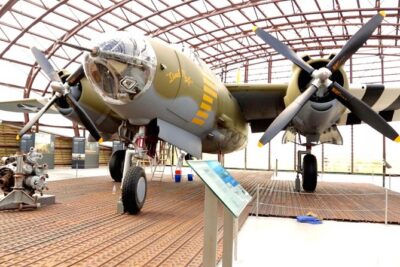 ★ 5.0Normandy D-Day Sites & Cemetery Day Trip from Paris with LunchFrom $1206,877 reviews
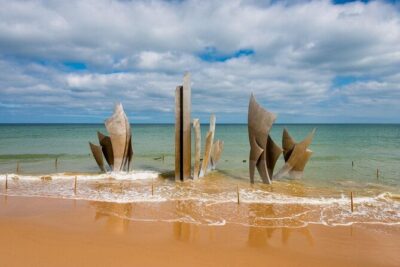 ★ 5.0Normandy D-Day Small-Group Day Trip with Omaha Beach, Cemetery & Cider TastingFrom $3202,786 reviews
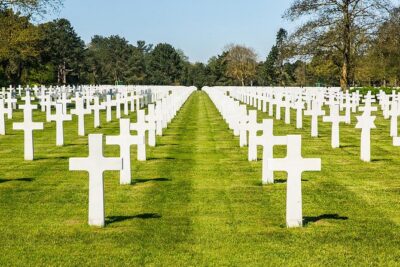 ★ 4.5Normandy D-Day Beaches and American Cemetery Day Trip from ParisFrom $2072,673 reviews
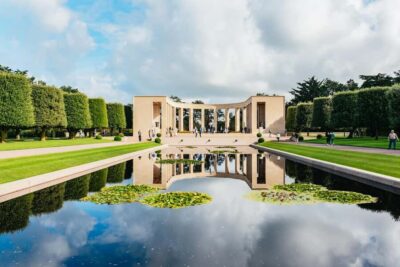 ★ 4.7Normandy D-Day Sites Guided Day Trip with LunchFrom $1171,082 reviews
 ★ 4.8From Paris: Normandy D-Day Landing Beaches Full-Day TourFrom $312698 reviews
 ★ 4.6From Paris: Normandy D-Day Beaches Day TripFrom $199566 reviews
 ★ 5.0Normandy D-Day Beaches with Juno Beach, bunkers & Canadian Cemetery from ParisFrom $290296 reviews
 ★ 5.0Normandy D-Day Landing Beaches Small-Group Day Trip from ParisFrom $344275 reviews
Browse the lists this tour appears in