
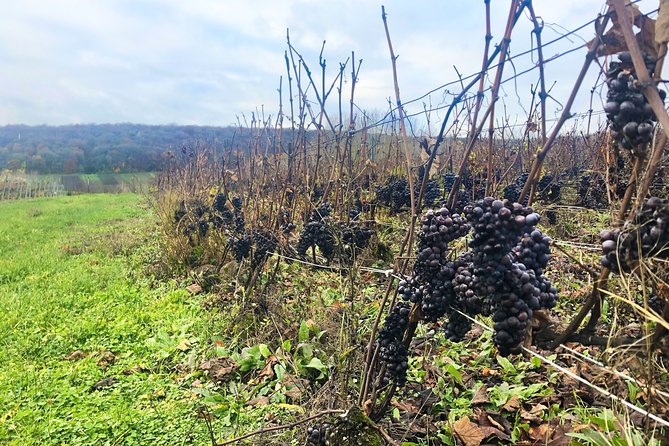
Reviewed · WINE TOURS
Champagne Area Small-Group Tour including a Top Champagne house & Family Winery
Eight people. One Champagne day.
This full-day Champagne region tour trades Paris bustle for chalk cellars, vineyard roads, and real producer time. I like the way it pairs a big-name top Champagne house visit in Epernay with tastings, and I also like that you end at a family-run winery where you can meet the people behind the bottles. The pace is built around guided access and set tasting times, so it can feel structured rather than free-form.
One possible drawback: the day can feel time-tight, and you may not get the tasting variety you dream about if you’re hoping for lots of pours at each stop.
In This Review
- Key highlights worth clocking before you go
- From Paris to Champagne: what this day is really built for
- Moët & Chandon in Epernay: chalk tunnels and classic Champagne spectacle
- Hautvillers and Dom Pérignon: the stop that adds meaning
- The family winery finale: Roger-Constant Lemaire and meeting the growers
- The House of Mumm and that second big-name comparison
- The ride, the schedule, and why it can feel long
- Food on your own: what it means for your budget and your day
- Price and value: what you’re paying for at $322.34 per person
- What to pack for chalk cellars and a long day
- Who this Champagne tour is best for
- Should you book this Champagne Area small-group tour?
Key highlights worth clocking before you go
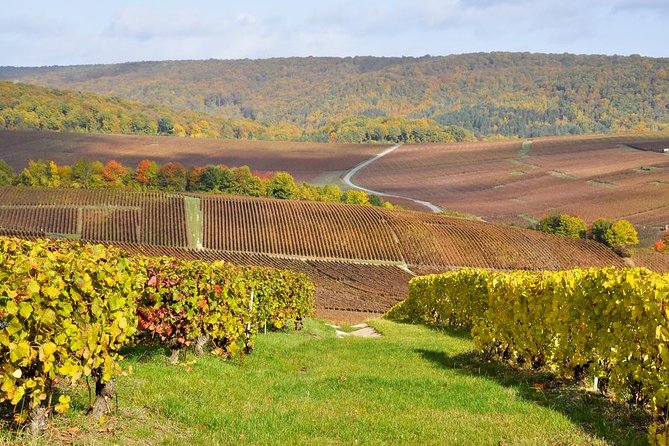
- Moët & Chandon cellars in Epernay with a guided look at how Champagne is made underground
- Four total tastings spread across top-house and family-producer stops
- Hautvillers stop for Dom Pérignon’s tomb and Champagne-area context
- A family estate visit (Roger-Constant Lemaire) where you can meet the growers
- Cold, damp cellars that make warm layers a real quality-of-life upgrade
From Paris to Champagne: what this day is really built for
This is the kind of Champagne tour that’s designed to remove friction. You leave Paris early in an air-conditioned minivan, ride out through the countryside, then spend the day in places that usually require planning: cellar tours, scheduled tastings, and guided movement between towns. If you want Champagne without thinking about rail times, car rental logistics, or which house offers what at which hour, this format is the point.
The small group size matters here. You’re capped at 8 participants, which generally keeps the experience feeling calmer than larger coach trips. Still, remember that minivans are minivans. Some people have noted that the seating can feel snug for a full day, so pack with comfort in mind.
Worth weighing up next to this Paris pick
- Paris: Moulin Rouge Cabaret Show Ticket with Champagne
★ 4.7 · 16,088 reviews - Authentic Parisian Gourmet Food Tour with 10 Local Dishes & Wines
★ 5.0 · 4,754 reviews - Loire Valley Castles Day Trip from Paris with Complementary Wine
★ 4.5 · 3,907 reviews - Montmartre Hill French Gourmet Food and Wine Tasting Walking Tour
★ 5.0 · 2,588 reviews
Moët & Chandon in Epernay: chalk tunnels and classic Champagne spectacle
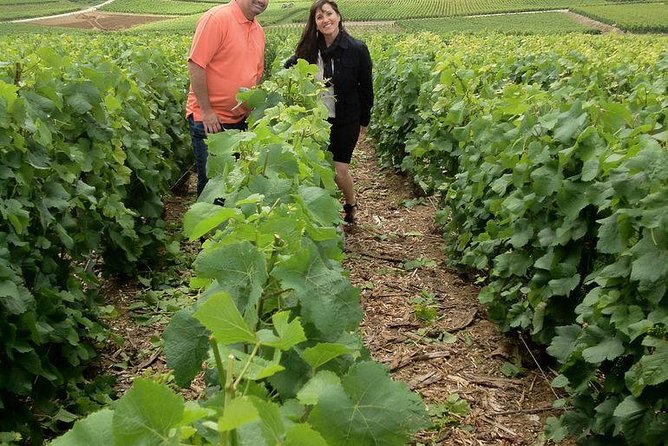
The star pull for many people is the visit to Epernay and the Moët & Chandon cellars. Epernay is where Champagne houses turn their storage into a kind of architecture lesson: deep chalk galleries, long corridors, and the sense that these bottles have been quietly waiting for you. You’ll get a guided look at the production process too, which is the difference between snapping photos and actually understanding why the wines taste the way they do.
On a tour like this, I like that the tasting doesn’t come “at the end of nowhere.” It lands after the tour context, so you taste with ideas in your head: how the base wine, blending, and the second fermentation stage contribute to the final sparkle. Expect a guided experience and a glass that’s meant to connect to what you just learned.
Hautvillers and Dom Pérignon: the stop that adds meaning
You’ll also stop in Hautvillers to see the tomb of Dom Pérignon. Even if you’re not a Champagne-history superfan, this is a small stop with big emotional weight. It grounds the day in the person most people associate with Champagne’s early story, and it helps explain why Hautvillers shows up on so many Champagne itineraries.
Practical note: tomb visits and town stops can vary in how much time you get on the ground. The goal here is context, not a long wandering session. If you’re the type who likes to linger, build in patience and don’t plan a side quest right before you arrive.
The family winery finale: Roger-Constant Lemaire and meeting the growers
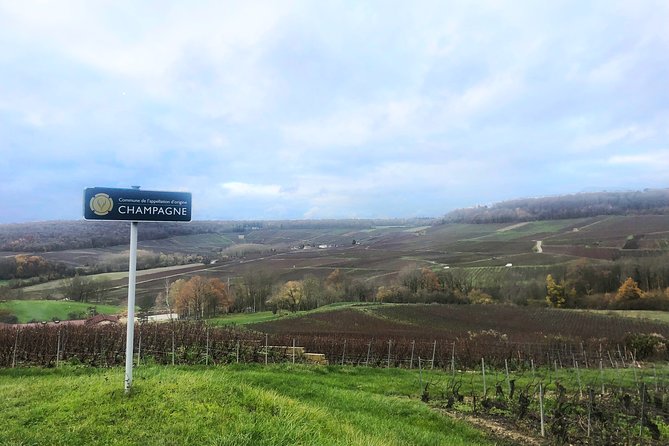
The day’s most personal feel usually comes at the family producer stop: Champagne Roger-Constant Lemaire. This is tied to Hautvillers and dates back to the late 19th century. What you’re paying for is not just a cellar tour. The experience is built around the idea that you’ll meet the family and hear the approach they’ve passed down through generations.
This stop also stands out because you get tasting time with a variety of bottles. The day includes four Champagne tastings total, and the family winery stop is where you’re most likely to feel the contrast between styles and blends. I like this layout: you start with spectacle at a top house, then end with character from a smaller operation.
One more thing: cellars are typically cold and damp. That’s not just a comfort issue; it’s part of how Champagne is stored and handled. Plan to bring a warm layer because you’ll feel it once you step underground.
The House of Mumm and that second big-name comparison
You’ll also have a tasting connected to the House of Mumm. Bringing two major brands into the same day is useful because it forces a comparison. Even when the tour descriptions sound similar, the final glasses can point you toward different house identities: how they aim for balance, texture, and a signature style in their non-vintage and reserve offerings.
Some people have found the tasting structure basic, depending on how the pours are allocated across the day. If you’re a heavy “compare five Champagnes” person, you might wish for more than a set number of glasses. But if you mainly want a guided, no-stress way to experience two recognizable Champagne worlds, this comparison is one of the strongest reasons the day works.
The ride, the schedule, and why it can feel long
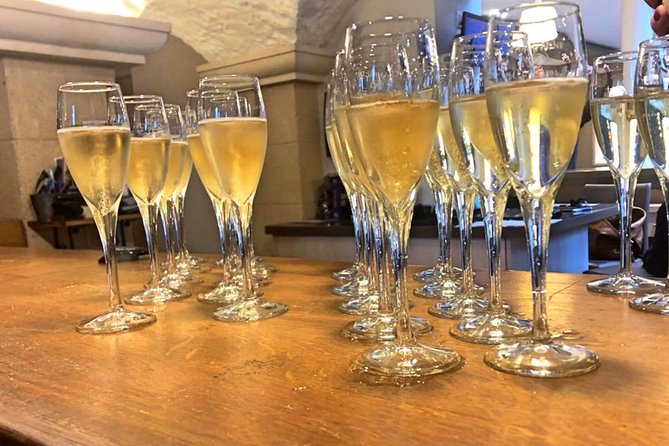
The tour runs about 11 hours, starting at 7:30 am and ending near Arc de Triomphe. That’s a full day, and most of that time is transportation and switching locations. If you’re prone to getting cranky when you’re kept on a tight timetable, this is worth weighing.
A handful of past guests have flagged two common issues: seating can feel tight in a full minivan, and the day can be tightly slotted so you don’t linger in each place. On the flip side, many others love that it hits key moments efficiently: countryside views, major house access, and structured tasting time.
My practical take: set expectations that this is a guided day, not a slow travel day. You’re meant to get value from multiple stops, and that usually means less free wandering.




Food on your own: what it means for your budget and your day
Food is not included, which means lunch (and any snacks you want) are on you. Some people do lunch in town breaks during the day, and you’ll likely have time to eat between stops. The upside is flexibility. You can choose something lighter, cheaper, or sit down for a proper meal without being tied to a group menu.
The downside is timing pressure. When you have limited gaps between programmed activities, it’s smart to eat fast and move on. I’d also bring a small snack for the road, especially if you’re sensitive to early mornings.
Price and value: what you’re paying for at $322.34 per person
At $322.34 per person, you’re paying for more than “a driver to Champagne.” You’re buying:
- Return transport from Paris in an air-conditioned minivan
- Small-group handling (max 8)
- Pre-arranged access to major cellar tours
- Four tastings total across the day
- Stops tied to iconic Champagne places, including Dom Pérignon’s tomb
Here’s how I’d judge value. If you want to replicate this on your own, you’d need to line up transport, book cellar tours, and coordinate timing so you don’t lose half your day to transit. That planning work has a cost, even if the headline price looks lower. Also, Champagne house tours often include at least one tasting as part of admission. The tour structure here is trying to bundle those admissions into one smooth day.
Where the price can feel less worth it is when someone wants more tasting variety or more time per stop. A set tasting schedule can be great for first-timers, but not ideal for serious collectors hunting for lots of different pours.
What to pack for chalk cellars and a long day
Cellars are usually cold and damp. The tour specifically warns you to dress appropriately and bring warm clothes. I’d take that seriously. A light jacket you’d wear in Paris summer often won’t cut it once you’re underground.
I’d also pack:
- A warm layer for cellars
- Comfortable shoes for steps and uneven ground
- A small day bag (you’ll stash layers while riding)
- A light snack, if you want insurance for lunch-on-your-own timing
If you’re sensitive to tight seating, consider bringing a travel cushion too. It’s not glamorous, but it can save your day.
Who this Champagne tour is best for
This works best if you fall into one of these buckets:
- You want top-house Champagne plus a family producer without complicated planning
- You’re happy with a guided schedule and want the day to feel efficient
- You value cellars and production context, not just drinking
- You’re traveling in a small group (or solo) and want a calmer vibe
It might be less ideal if you’re the kind of visitor who wants hours at one place, tons of extra pours, or a very relaxed pace with lots of wandering. The day is built to move.
Should you book this Champagne Area small-group tour?
If your goal is to see the Champagne region from Paris with smart sequencing and pre-arranged access, I think this tour is a solid choice. The combo of Moët & Chandon cellars, the Hautvillers/Dom Pérignon stop, and the family-run Roger-Constant Lemaire visit gives the day a strong balance of big-brand spectacle and smaller-producer heart.
I’d book especially if you like the idea of learning as you taste and you’re okay with four tastings total over the day. If you’re hunting for the most Champagne per hour or maximum time at each house, you’ll want to compare against other options—because this one prioritizes coverage and guided structure over long, unlimited tasting sessions.
More Wine Tours in Paris
- Paris: Moulin Rouge Cabaret Show Ticket with Champagne
★ 4.7 · 16,088 reviews - Authentic Parisian Gourmet Food Tour with 10 Local Dishes & Wines
★ 5.0 · 4,754 reviews - Loire Valley Castles Day Trip from Paris with Complementary Wine
★ 4.5 · 3,907 reviews - Montmartre Hill French Gourmet Food and Wine Tasting Walking Tour
★ 5.0 · 2,588 reviews - Paris: Montmartre Cheese, Wine & Pastry Guided Walking Tour
★ 4.8 · 2,255 reviews
More Tours in Paris
- Paris: Louvre Guided Tour with Reserved Access & Boat Cruise
★ 4.3 · 16,353 reviews - Paris: Big Bus Hop-On Hop-Off Tour with Optional Cruise
★ 4.4 · 13,279 reviews - Louvre Museum Masterpieces Guided Tour with Access
★ 4.5 · 12,023 reviews - Versailles: Skip-the-Line Tour of Palace and Gardens Access
★ 4.7 · 10,429 reviews - Paris: Louvre Overview, Exploration tour and Reserved Entry
★ 4.1 · 10,145 reviews
More Tour Reviews in Paris
- Paris: 1-Hour Seine Cruise departing from the Eiffel Tower
★ 4.4 · 77,472 reviews - Paris: Louvre Museum Timed-Entrance Ticket
★ 4.6 · 71,977 reviews - Disneyland® Paris 1-Day Ticket
★ 4.6 · 49,412 reviews - Paris: Versailles Palace and Gardens Full Access Ticket
★ 4.6 · 41,579 reviews - Paris: Arc de Triomphe Rooftop Tickets
★ 4.6 · 34,264 reviews
Fresh off the review desk in Paris
- Secrets of Paris Bike Tour in English or Dutch★ 5.0 · 5 reviews
- Paris: Mont Saint-Michel Day Tour with Chinese Tour Guide★ 5.0 · 5 reviews
- Private Street Art 2-Hour Guided Tour in Paris★ 4.5 · 5 reviews
- Orsay Museum Tour: 2h Highlights (Private & Small Group)★ 5.0 · 5 reviews
- Discover Paris in electric golf carts★ 4.0 · 5 reviews
- Paris Private Boat Tour with your own Captain Guide★ 5.0 · 5 reviews
Wine Tours, compared.
 ★ 4.7Moulin Rouge Cabaret Show Ticket with ChampagneFrom $11516,088 reviews
 ★ 5.0Authentic Parisian Gourmet Food Tour with 10 Local Dishes & WinesFrom $1024,754 reviews
 ★ 4.5Loire Valley Castles Day Trip from Paris with Complementary WineFrom $1493,907 reviews
 ★ 5.0Montmartre Hill French Gourmet Food and Wine Tasting Walking TourFrom $1452,588 reviews
 ★ 4.8Montmartre Cheese, Wine & Pastry Guided Walking TourFrom $1272,255 reviews
 ★ 4.6Paradis Latin Cabaret Show with Optional ChampagneFrom $1062,231 reviews
 ★ 4.6From Paris: Loire Valley Castles Day Trip With Wine TastingFrom $1041,727 reviews
 ★ 4.0Paris 3-Courses Gourmet Dinner Seine River Cruise with ChampagneFrom $1361,659 reviews
Browse the lists this tour appears in