
Reviewed · GIVERNY DAY TRIPS
Giverny Monet House and Gardens Skip the line Walking tour
Monet’s gardens pull you in fast. This skip-the-line, small-group walking tour gives you the best part of Giverny—Monet’s home and Japanese-style water gardens—with less waiting. I like that the tour starts with a village walk, so you understand why this place mattered before you ever reach the pink house.
I also like the “see and learn” mix: you get a guided story of Monet’s life and the people who shaped his art, then you walk the same water-lily views that made his paintings so recognizable. Plus, the group stays capped at 15 people, which makes the experience feel more personal than the usual crowd shuffle.
One consideration: Giverny is still busy, and even with skip-the-line access, you’ll be walking through bottlenecks with other visitors.
In This Review
- Key highlights to expect on this Giverny tour
- Monet in Giverny: Why This Tour Works
- Price and logistics: what you’re paying for
- Meeting at La Capucine: how to make the first 15 minutes count
- The village walk: Monet’s world before the pink house
- Fondation Claude Monet: house interiors, Japanese prints, and what’s replica vs. original
- The garden you came for: Japanese bridge, lily ponds, and pond-side views
- How the 2-hour format feels in real life
- Who this tour is best for (and who should reconsider)
- Should you book this skip-the-line Monet tour?
- FAQ
- How long is the Giverny Monet House and Gardens skip-the-line walking tour?
- What’s included in the tour price?
- Do I get admission to Monet’s house and gardens?
- How big is the group?
- Where do I meet for the tour?
- Can I cancel for a full refund?
Key highlights to expect on this Giverny tour

- Skip-the-line entrance for Monet’s house and gardens, so you spend less time stuck at the entry
- Small-group cap of 15, which helps you hear directions and keep the group together
- Village walk first, so Monet’s story lands before you see the house and ponds
- What you’ll actually see: home interiors and quality replicas, with the original paintings located in the museum
- Oriental Water Gardens details like the Japanese bridge, weeping willows, and water lilies
- Seasonal garden blooms (April to October is especially lush)
Monet in Giverny: Why This Tour Works
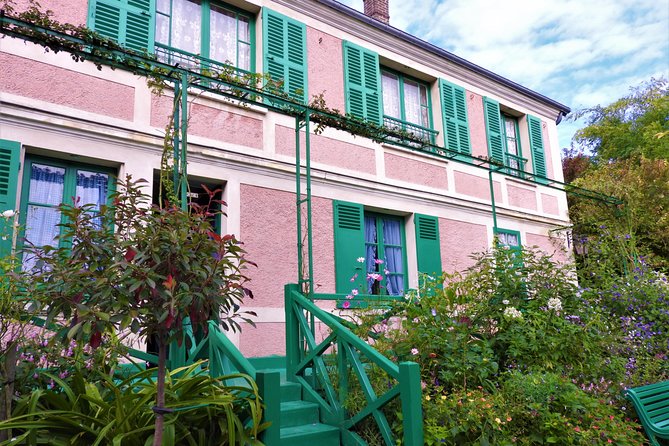
Giverny is the kind of day trip that can either feel magical or exhausting, depending on how you handle timing. What I like about this tour is that it’s built around the real friction point—getting into Monet’s property during peak visiting hours—and then it layers in context so the place doesn’t just look pretty.
The structure is simple. You start with a guided village walk, then you move into Monet’s house and gardens through a special entrance designed to bypass the longest lines. That flow matters because Monet’s impact hits harder when you first learn what the village was like when he lived there.
More trips to Monet's garden at Giverny
- Giverny: Monet’s House and Gardens Guided Tour
★ 4.8 · 645 reviews - Giverny Village Walking Tour & Skip-the-Line to Monet Garden
★ 4.0 · 595 reviews - Giverny Monet House and Gardens Skip the line Walking tour
★ 4.0 · 217 reviews - Monet’s Gardens & House-Private Giverny Tour From Paris
★ 4.5 · 137 reviews
Price and logistics: what you’re paying for
At $63.86 per person for about 2 hours, this isn’t a budget outing. But it’s also not just a guided walk with no added value. Your price covers a local guide and entrance fees to Monet’s house and gardens, which is where a big chunk of your cost usually goes anyway.
You’ll also get a mobile ticket, and the tour runs with a strict start time. The operator notes that the tour starts promptly, and latecomers can miss it—so plan to arrive early. The meeting point is La Capucine Giverny, 80 Rue Claude Monet, 27620 Giverny, and the tour ends back there.
One more practical note: this is offered by UTG EXPERIENCE (not the estate itself). That’s normal for many “skip-the-line” products in Europe, but it means you should follow the meeting instructions closely.
Meeting at La Capucine: how to make the first 15 minutes count
Arrive 15 minutes early if you can. That isn’t just a courtesy. In Giverny, you’re dealing with foot traffic and the daily crush that surrounds the house and gardens entrances. If you’re late, you run the risk of losing your spot when the group moves.
The tour is capped at 15 travelers, which is a big deal for a place like this. Smaller groups mean less waiting at gates and more time your guide can actually keep everyone pointed the right way.
Also check whether you’re coming by public transportation—the start area is described as near public transit. If you’re arriving from Paris by train to Vernon, you may still need a short connection or shuttle to reach Giverny proper, so build a little buffer into your day.
The village walk: Monet’s world before the pink house
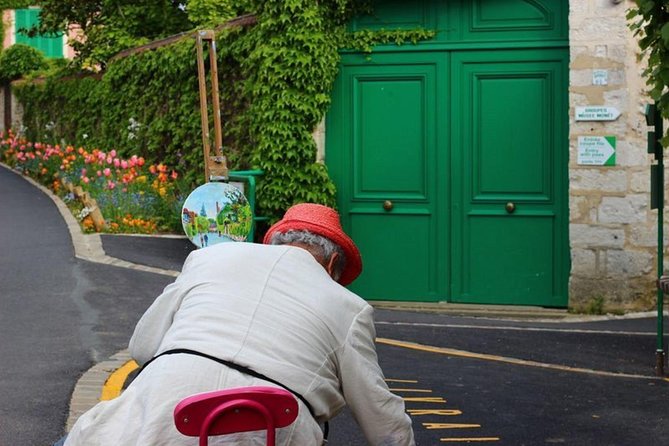
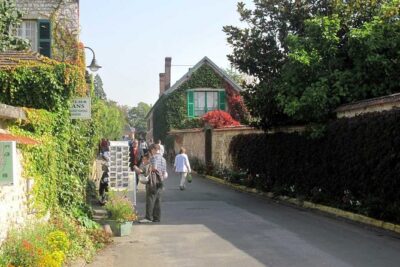
Before you reach the gardens, the tour sends you through the village of Giverny, the setting that inspired Monet for decades. This part is more than an intro stroll. Your guide explains how the village went from sleepy to artist-attracting, and why Monet’s presence shifted the area.
Here’s what you’ll pick up on this segment:
- Monet lived and worked in Giverny for decades
- The Impressionist movement context matters: Monet helped lead it from 1883 to 1926
- Other major artists connected with him in this period, including John Singer Sargent, Paul Cézanne, and Mary Cassatt
- By 1887, the village had become something like an artists’ colony
This is the “aha” stage for a lot of people. The flowers and ponds are the headline, sure, but understanding how the village became an art magnet makes the whole property feel less like a postcard and more like a real creative home base.
Fondation Claude Monet: house interiors, Japanese prints, and what’s replica vs. original
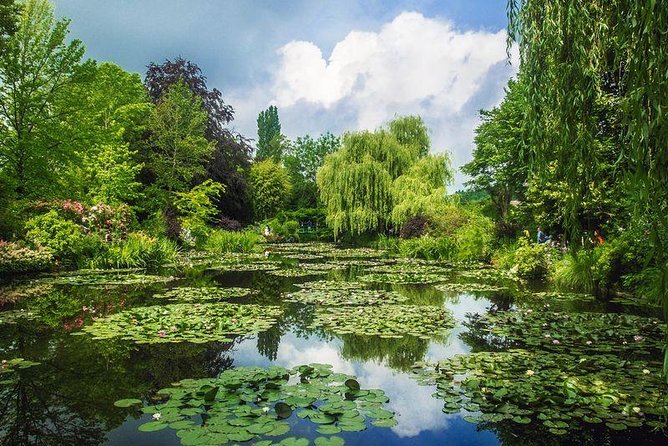
The main house stop is where the skip-the-line benefit shows up. You’ll enter through a special route so you can bypass the worst of the queue.
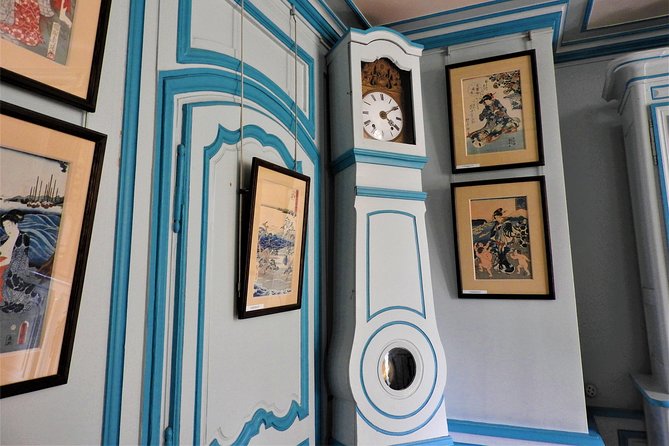
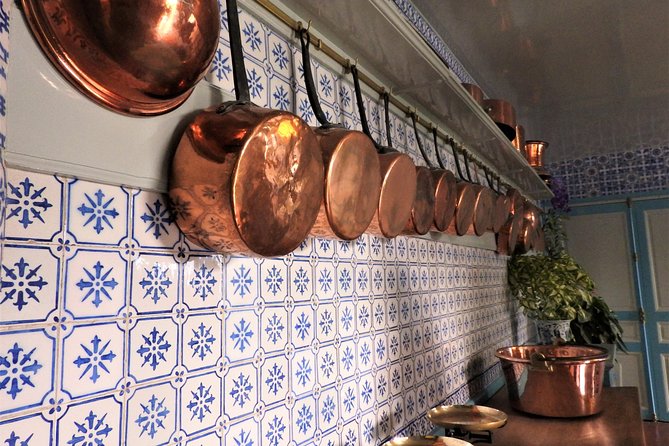
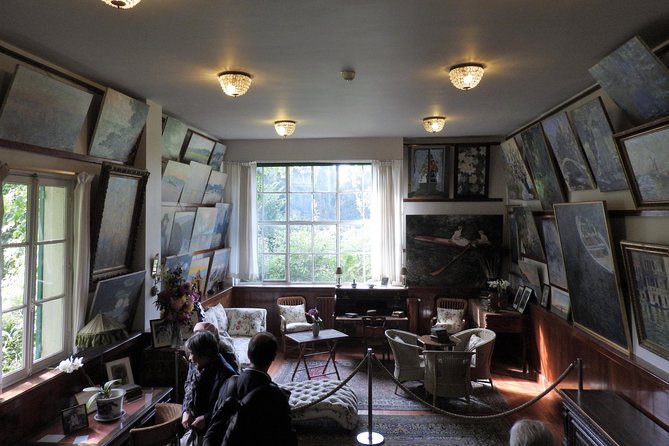
At Fondation Claude Monet, the property is maintained by the foundation, and your guide will walk you through the story of the place. The house itself is often described as cheerful and lively—particularly the kitchen—and you’ll also see Monet’s connection to Japanese art through 18th and 19th century Japanese prints housed there.
A key detail to know before you go in: inside, you’ll see quality replicas of famous works. The original Monet paintings are in the museum. That doesn’t ruin the experience—it changes it. You’re not going to the house to study brushwork like an expert in a conservation room. You’re going to the house and gardens to understand the atmosphere, the collecting, and the daily rhythms behind the art.
If your goal is to see the house and garden as a single living environment, this stop delivers. The guide’s job is to connect rooms and objects back to the themes Monet painted—light, reflection, and the feeling of water doing something alive.
The garden you came for: Japanese bridge, lily ponds, and pond-side views
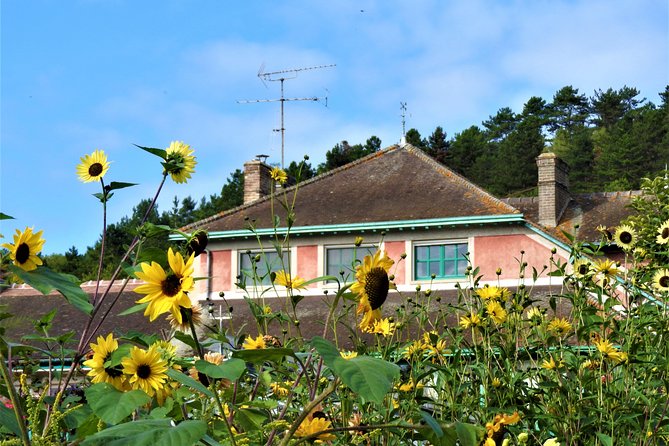
Then it’s outside, and the tone shifts. This is where the tour earns its reputation as a standout Giverny experience.
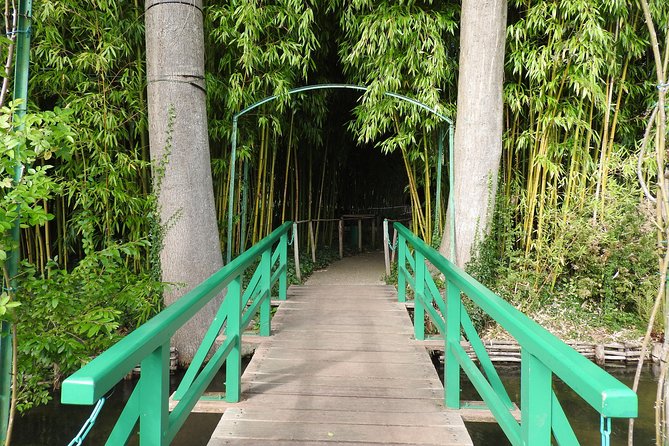
You’ll stroll through Monet’s Japanese-style gardens, including the Oriental Water Gardens, where the views line up with his most famous imagery. Your guide points out the visual anchors that most people recognize instantly:
- water lilies
- weeping willows
- the Japanese bridge
The point isn’t just to photograph the same angle everyone posts online. It’s to walk the space slowly enough that you start noticing how the landscape is composed—how the water, the plants, and the pathways give you slightly different perspectives as you move.
Season matters. From April to October, the gardens are described as overflowing with blooms like wild roses, hollyhocks, poppies, and fragrant honeysuckle. Reviews also flag that October can feel different: flowers may be more sparse depending on the season and weather, but the gardens can still be beautiful even in the rain.
This is also where crowd management is a real factor. Even with a smaller group, Giverny is busy. I’d recommend you:
- keep moving with the group when your guide calls it
- stop often, but don’t get “stuck” in the busiest photo spots
- position yourself mid-group if the tour provides audio, since long lines can make it harder to hear clearly at the ends



How the 2-hour format feels in real life
A 2-hour duration can sound tight, but for Monet’s house and gardens, it’s often the right length. You’re not wandering alone for half a day guessing where to go. You follow a route, you hear the story, and then you get your photo and walking time in the key places.
Because the group is capped at 15, you’re more likely to keep momentum. Larger groups tend to stretch out and lose cohesion, which makes your tour feel like a long line with a guide voice behind it.
A practical rhythm that works well here:
- village walk = context and orientation
- house = story + key interior highlights (and the replica/original distinction)
- gardens = the visuals you came for, plus the details your guide helps you see
When the tour ends, you’re back at the meeting point area, which gives you the chance to continue exploring Giverny at your own pace—shops, casual meals, and slower strolls through the village streets.
Who this tour is best for (and who should reconsider)
This is a great pick if you:
- want Monet’s house and gardens without spending your morning stuck in a line
- like art history but don’t want a lecture-only experience
- value a guide who connects the place to the painting ideas
It also helps if you’re traveling with kids. The gardens are visually strong, and a good guide keeps the group from turning into a scavenger hunt.
Consider another option if you:
- hate crowds in general (Giverny is crowded, even with skip-the-line access)
- need complete language consistency. The tour is described as in the English language, but mixed groups can shift how commentary is handled
- expect to see all original Monet works inside the house area. You’ll see replicas; originals are in the museum
Should you book this skip-the-line Monet tour?
If your goal is to see Giverny’s top Monet sights in a smart order—village first, then the house, then the gardens—this tour is a strong value. The main reason to book is simple: the combination of skip-the-line entry, entrance fees included, and a guide who tells you what you’re looking at saves time and turns a crowded site into something you can enjoy.
I’d book it especially if you’re visiting during peak season, on a short trip from Paris, or anytime you’d rather not gamble on long waits. Just go in knowing the estate is popular, so wear good walking shoes and plan for busy paths. If you do that, you’ll leave with the feeling of why Monet’s water views took hold in the first place.
FAQ
How long is the Giverny Monet House and Gardens skip-the-line walking tour?
It’s about 2 hours.
What’s included in the tour price?
The tour includes a local guide and entrance fees to Monet’s house and gardens.
Do I get admission to Monet’s house and gardens?
Yes. Entrance tickets are provided by the UTG tour guide, and the tour includes admission to Monet’s house and its gardens.
How big is the group?
The group is capped at a maximum of 15 travelers.
Where do I meet for the tour?
Meet at La Capucine Giverny, 80 Rue Claude Monet, 27620 Giverny, France. The tour ends back at the meeting point.
Can I cancel for a full refund?
Yes. You can cancel up to 24 hours in advance for a full refund. If you cancel less than 24 hours before the start time, the amount paid won’t be refunded.
More Tours in Giverny
- Giverny: Monet’s House and Gardens Guided Tour
★ 4.8 · 645 reviews - Giverny Village Walking Tour & Skip-the-Line to Monet Garden
★ 4.0 · 595 reviews - Monet’s Gardens & House-Private Giverny Tour From Paris
★ 4.5 · 137 reviews - Guided tour Monet’s house and gardens/small group
★ 4.5 · 68 reviews - Giverny: Monet’s House & Gardens Private Guided Tour +Ticket
★ 4.1 · 29 reviews
More Tour Reviews in Giverny
- Giverny: Monet’s House and Gardens Guided Tour
★ 4.8 · 645 reviews - Giverny Village Walking Tour & Skip-the-Line to Monet Garden
★ 4.0 · 595 reviews - Monet’s Gardens & House-Private Giverny Tour From Paris
★ 4.5 · 137 reviews - Guided tour Monet’s house and gardens/small group
★ 4.5 · 68 reviews - Monet’s House and Garden & Giverny Village
★ 4.5 · 39 reviews
Monet's Giverny, More Trips
- Giverny: Monet’s House and Gardens Guided Tour
★ 4.8 · 645 reviews - Giverny Village Walking Tour & Skip-the-Line to Monet Garden
★ 4.0 · 595 reviews - Monet’s Gardens & House-Private Giverny Tour From Paris
★ 4.5 · 137 reviews - Guided tour Monet’s house and gardens/small group
★ 4.5 · 68 reviews - Monet’s House and Garden & Giverny Village
★ 4.5 · 39 reviews
Fresh off the review desk in Giverny
- From Paris: Giverny & Monet’s House Skip-the-Line Tour★ 4.4 · 10 reviews
- Le Havre Shore Excursion: Private Tour of Giverny, Rouen and Honfleur★ 5.0 · 19 reviews
- Giverny: Monet’s House & Gardens Private Guided Tour +Ticket★ 4.1 · 29 reviews
- Monet’s House and Garden & Giverny Village★ 4.5 · 39 reviews
- Guided tour Monet’s house and gardens/small group★ 4.5 · 68 reviews
- Monet’s Gardens & House-Private Giverny Tour From Paris★ 4.5 · 137 reviews
Giverny Day Trips, compared.
 ★ 4.5From Paris: Giverny, Monet’s Home & Gardens Half-Day TripFrom $892,887 reviews
 ★ 4.3From Paris: Giverny Day Trip with Audio Guide or Live GuideFrom $932,372 reviews
 ★ 4.0Versailles Palace and Giverny Monet House Visit with LunchFrom $2421,948 reviews
 ★ 4.5Giverny Monet’s Home and Gardens Half Day Tour from ParisFrom $911,836 reviews
 ★ 5.0Giverny Small-Group Half Day Trip with Monet’s Gardens from ParisFrom $1571,663 reviews
 ★ 4.5From Paris: Giverny and Versailles Palace Guided Day TripFrom $1631,324 reviews
 ★ 4.0Giverny and Monet’s House Half Day Trip from Paris Guide or AudioFrom $1021,319 reviews
 ★ 4.5Giverny and Versailles Small Group Day Trip from Paris with LunchFrom $392755 reviews
Browse the lists this tour appears in