
Paris feels faster from a golf cart. From anywhere in the 75 area code, you can be picked up and dropped off on your schedule with a fully private, eco-friendly ride and a driver who stays with you.
You control the flow too: stick with the suggested route or shape your own Paris day.
I like the custom itinerary part most because it turns a limited visit into something practical. Guides such as Michele, Olivier, and Noe have been praised for adapting stops on the fly and for making room for photo moments and quick detours.
That flexibility matters when you’re juggling first-time highlights with one or two must-sees.
One thing to keep in mind: comfort can be a tradeoff. If you sit farther back or the ride feels more bumpy, it can be harder to hear your guide over traffic noise.
Still, it’s a good swap when you want to cover ground without pounding the pavement.
In This Review
- Key highlights to know before you book
- Why a private golf cart beats walking (and keeps you sane)
- Pickup in the 75 area code: start exactly where you’re staying
- Picking the right length: from 1 hour to a 10-hour Paris plan
- How the ride works: photo stops, site visits, and real free time
- The guide factor: history, pacing, and letting you adjust
- Comfort and listening tips in Paris traffic
- Value check: $165 per group up to 3 people
- Who this private golf cart tour is best for
- Should you book this golf cart tour?
- FAQ
- How many people can ride in a Golf Cart?
- Where is pickup included?
- Can I customize the route or follow a suggested route?
- How long are the tour options?
- What languages are available for the guide/driver?
- Is the tour private?
Key highlights to know before you book
- Pickup and drop-off anywhere in Paris (ZIP 75): Tell them your address and go, no awkward meeting points.
- Fully private for 1–3 people: You’re not sharing views, stops, or pacing with strangers.
- Pick your time window: Options range from 1 hour up to 10 hours for a full-on Paris loop.
- Guide-at-your-disposal format: You choose what to prioritize, and the driver builds the route around it.
- Frequent photo-stop energy: The experience is designed for scenic views and quick picture stops rather than rushed walking marathons.
Why a private golf cart beats walking (and keeps you sane)
Here’s the core idea: you’re buying time + control. Paris is gorgeous, but it’s also traffic-heavy and spread out. A golf cart-style tour lets you see a lot in a short window without arriving at your day’s end like you’ve been in a long-distance relay.
I also like the simplicity of having the driver do the navigation work. You’re not trying to decode one-way streets, figure out the best crossing points, or guess where your next photo angle will be. Instead, you can focus on what you want to photograph, which neighborhoods you want to pass through, and what you want to do with the downtime.
Eco-friendly also fits this style of sightseeing. You’re not adding to the “big vehicle chaos” feeling, and you still get that “floating sightseeing” vibe along the routes your guide suggests or your own picks create.
Worth weighing up next to this Paris pick
- Paris: Louvre Guided Tour with Reserved Access & Boat Cruise
★ 4.3 · 16,353 reviews - Louvre Museum Masterpieces Guided Tour with Access
★ 4.5 · 12,023 reviews - Louvre Museum – Exclusive Guided Tour (Entry Included)
★ 5.0 · 6,296 reviews - Versailles: Skip-the-Line Guided Palace Tour and Full Access
★ 4.6 · 5,214 reviews
Pickup in the 75 area code: start exactly where you’re staying
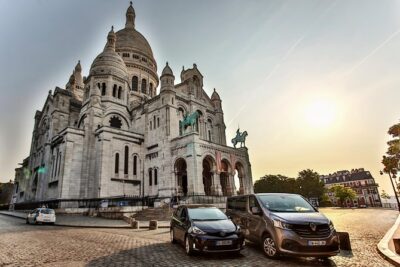
The pickup is one of the biggest value drivers in this experience. You don’t have to travel to a central meeting spot or negotiate public transit with luggage and timing stress. You just share an address in Paris where the ZIP code starts with 75, and the driver comes to you.
In practice, this helps you design your day. If you’re staying near the Louvre area, for instance, some guides have started there and built the rest of the loop from a strong anchor. If you’d rather begin at a hotel you can reach quickly after check-in, you can do that too.
One smart tip: plan your first request before the driver arrives. Even one or two priorities (for example, the big sights plus one church or one food stop) gives the guide a clean starting point. Guides like Michele and Olivier have been praised for fitting those requests into a tight schedule and for staying flexible when something takes longer than expected.
Picking the right length: from 1 hour to a 10-hour Paris plan
This is a tour where length really changes the vibe. With only 1 hour, you’re choosing what to see, not everything. With 4 to 6 hours, you can breathe, add a sit-down pause, and still feel like you accomplished something meaningful.
Here’s how I’d think about the options based on what people consistently want from a short Paris day:
- 1–2 hours: Best for a “first bearings” loop—perfect when you land late, have one afternoon, or want to hit a core set of sights plus a scenic pass.
- 3–5 hours: This is where the tour starts to feel like a plan, not just transport. You can include photo stops, a visit window, and time for shopping or a quick treat.
- 6–10 hours: Best when you want a full outing, including time for a relaxed break. One example from the experience set: a guide was able to build a longer day that included a park lunch style stop and extra local-feeling areas.
If you have a list, you’ll do best by matching your list length to the cart time. If your list is long, choose longer. The driver can help you sequence it, but physics still wins.
How the ride works: photo stops, site visits, and real free time
The tour flow is designed around a simple rhythm: photo stop, visit, free time, sightseeing, and scenic driving. That sounds generic, but it’s actually what makes this type of tour work—each segment supports a different kind of Paris experience.
Photo stops: This is your advantage. Instead of sprinting between monuments, you get intentional stops for pictures. Some guides have even been noted for making playful photo moments on bridges, which is exactly the kind of thing that can be hard to orchestrate on your own.
Site visits: This is where your guide’s storytelling shows up. People have praised guides such as Enzo and Olivier for sharing detailed context at the stops they select. The goal isn’t just facts—it’s giving you a clearer picture of what you’re looking at so your photos and walking later make more sense.
Free time: This is the underrated part. You might use it for a quick stroll, a shop stop, or just stepping away from the route noise. One example: a guide helped plan timing around a bakery request and macaroons, which turns a tour stop into a real lived memory instead of a photo-only checklist.
Sightseeing and scenic views on the way: You’re not only stopping at landmarks. The route itself is part of the experience—your guide keeps the driving path aligned with what you want to see and photograph, instead of forcing you to constantly reposition.
Potential drawback: if you pack too many must-dos into free time, you can feel rushed anyway. I’d rather choose a few priorities and let the rest be “while we’re here” discoveries.
The guide factor: history, pacing, and letting you adjust
A private car only works well if the guide can adapt. Based on the experience set, the guides are often praised for three things: they keep you safe in traffic, they handle requests with flexibility, and they help you enjoy the ride without feeling like you’re being herded.
I’ve seen names pop up repeatedly—Brendan, Willem, Claudio, Olivier, Laurent, Brice, Noe, and Michele. Even when the personalities differ, the pattern is consistent: they build a route that fits your list and your pace. One guide was described as taking photos of the group during a stop, while another was noted for being patient while people took pictures without constantly having to ask for more time.
Another detail I appreciate: when something runs into timing issues, guides have been described as adjusting the plan so you still hit your major priorities. That’s valuable in Paris, where traffic and crowds can scramble your best intentions.
If you want the best experience, come with a simple strategy:
- Tell the driver your must-sees and your “nice-to-sees.”
- Name one or two practical priorities (food stop, photo targets, shopping time).
- Ask for recommendations, but keep them focused so you don’t lose time.
Comfort and listening tips in Paris traffic
Let’s be real: Paris is loud, and streets are busy. Even in a small cart, the sound mix changes depending on where you sit. Some people found it difficult to hear the guide when they sat farther back, especially with traffic noise in the background.
If you care about listening (and you probably do if you’re paying for a guided format), I’d sit closer to the driver/guide area. You’ll catch more of the explanations and you’ll be better positioned to ask quick questions during the stops.
Also keep in mind that some rides can feel a bit jostly. One review-based comparison noted more movement than a similar trip elsewhere, and the biggest complaint was discomfort rather than safety or service. That doesn’t mean it’s unbearable—it just means you should set expectations for a fun, compact sightseeing ride rather than a smooth-luxury sedan feel.
Quick comfort checklist:
- Wear something you can move in for photo stops.
- Bring sunglasses or a light layer if the day shifts.
- If you’re sensitive to bumps, choose a seat that feels steadier to you.
Worth weighing up next to this Paris pick


Value check: $165 per group up to 3 people
At $165 per group for up to 3 people, the value math usually works best when you’re traveling as a small unit. For two or three people, your per-person cost drops fast compared with booking separate taxis for a full loop. It also beats the “pay per ticket for a bus that doesn’t know your priorities” feeling.
What you’re really paying for is not the vehicle—it’s the dedicated driver time and the ability to shape your route. You can add a stop for a specific bakery moment, ask for extra time at a photo spot, or build your day around how you want to move through the city.
It’s also a smart spend when you only have limited time. Several guides were praised for turning short windows into a tour that felt worth it, especially for first-time Paris days. If you’re trying to cover a lot without wasting energy, the cart style is one of the easiest ways to do it.
One caution on value: if you book the shortest duration and expect a full-day tour experience, you’ll feel disappointed. Match the duration to your ambitions, then you’ll feel like the money did what it was supposed to do.
Who this private golf cart tour is best for
This tour makes particular sense for people who want flexibility and less walking.
It’s especially good for:
- Families with teens: You get sightseeing without constant “are we there yet?” pacing.
- Older visitors or anyone who prefers not to walk much: The cart reduces the physical grind while still allowing multiple stops.
- First-time visitors: You get quick orientation plus history on the move, so later days feel easier to plan.
- Small groups with shared priorities: Up to 3 people means you can keep it intimate and still affordable.
It may be less ideal if you want long, quiet, museum-style time at a specific site. This format supports scenic touring, photo stops, and guided context, but it’s not built for deep, hour-by-hour interior exploration.
Should you book this golf cart tour?
If your Paris plan includes a tight schedule, a short stay, or you want to see more without walking yourself into a nap, I think it’s a strong yes. The pickup from your address and the ability to customize the route are the two levers that make this worth it, especially when you don’t want to compromise your priorities.
Book it if you:
- Have 1–6 hours and want a structured loop with room for photos.
- Travel with up to 3 people and want privacy.
- Care about guided context instead of just driving past places.
Skip (or consider another option) if:
- You only want one stop and would rather do it on your own.
- You expect a smooth ride with zero bump.
- Your schedule requires lots of long museum interiors, where you’d spend more time waiting than sightseeing.
FAQ
How many people can ride in a Golf Cart?
The golf cart tour is fully privatized for 1 to 3 people.
Where is pickup included?
Pickup in Paris is included for addresses where the ZIP code starts with 75.
Can I customize the route or follow a suggested route?
Yes. You can either follow the proposed routes or create a tailor-made itinerary based on your interests.
How long are the tour options?
You can choose durations from 1 hour up to 10 hours.
What languages are available for the guide/driver?
English and French are available.
Is the tour private?
Yes. It’s a private tour, and it’s fully privatized for your group.
More Guided in Paris
- Paris: Louvre Guided Tour with Reserved Access & Boat Cruise
★ 4.3 · 16,353 reviews - Louvre Museum Masterpieces Guided Tour with Access
★ 4.5 · 12,023 reviews - Louvre Museum – Exclusive Guided Tour (Entry Included)
★ 5.0 · 6,296 reviews - Versailles: Skip-the-Line Guided Palace Tour and Full Access
★ 4.6 · 5,214 reviews - Louvre Access with Mona Lisa Escort or Guided Option
★ 4.0 · 4,588 reviews
More Tours in Paris
- Paris: Louvre Guided Tour with Reserved Access & Boat Cruise
★ 4.3 · 16,353 reviews - Paris: Big Bus Hop-On Hop-Off Tour with Optional Cruise
★ 4.4 · 13,279 reviews - Louvre Museum Masterpieces Guided Tour with Access
★ 4.5 · 12,023 reviews - Versailles: Skip-the-Line Tour of Palace and Gardens Access
★ 4.7 · 10,429 reviews - Paris: Louvre Overview, Exploration tour and Reserved Entry
★ 4.1 · 10,145 reviews
More Tour Reviews in Paris
- Paris: 1-Hour Seine Cruise departing from the Eiffel Tower
★ 4.4 · 77,472 reviews - Paris: Louvre Museum Timed-Entrance Ticket
★ 4.6 · 71,977 reviews - Disneyland® Paris 1-Day Ticket
★ 4.6 · 49,412 reviews - Paris: Versailles Palace and Gardens Full Access Ticket
★ 4.6 · 41,579 reviews - Paris: Arc de Triomphe Rooftop Tickets
★ 4.6 · 34,264 reviews
Fresh off the review desk in Paris
- Secrets of Paris Bike Tour in English or Dutch★ 5.0 · 5 reviews
- Paris: Mont Saint-Michel Day Tour with Chinese Tour Guide★ 5.0 · 5 reviews
- Private Street Art 2-Hour Guided Tour in Paris★ 4.5 · 5 reviews
- Orsay Museum Tour: 2h Highlights (Private & Small Group)★ 5.0 · 5 reviews
- Discover Paris in electric golf carts★ 4.0 · 5 reviews
- Paris Private Boat Tour with your own Captain Guide★ 5.0 · 5 reviews
Guided, compared.
 ★ 4.3Louvre Guided Tour with Reserved Access & Boat CruiseFrom $8116,353 reviews
 ★ 4.5Louvre Museum Masterpieces Guided Tour with AccessFrom $8612,023 reviews
 ★ 5.0Louvre Museum – Exclusive Guided Tour (Entry Included)From $1816,296 reviews
 ★ 4.6Versailles: Skip-the-Line Guided Palace Tour and Full AccessFrom $885,214 reviews
 ★ 4.0Louvre Access with Mona Lisa Escort or Guided OptionFrom $1004,588 reviews
 ★ 4.0Louvre Priority Access with Mona Lisa Escort or Guided OptionFrom $744,420 reviews
 ★ 4.6Louvre Museum: Skip-the-Line Small Group Guided TourFrom $1294,268 reviews
 ★ 5.0Louvre Museum Paris Essential Guided Tour Semi-Private 6ppl MaxFrom $1813,807 reviews