
Reviewed · GUIDED
Guided tour of Paris in Citroën Traction Avant or DS 21
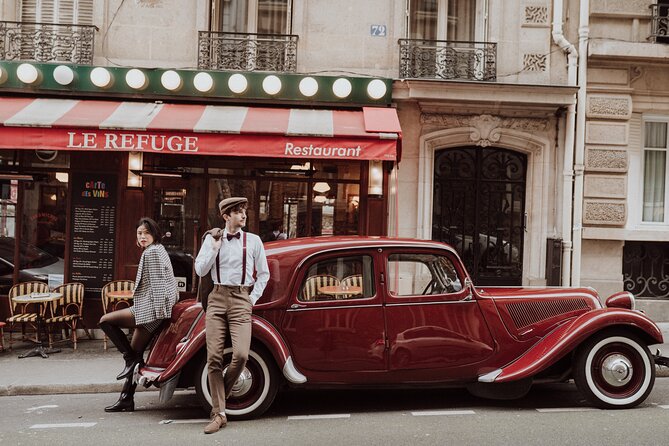
A vintage Citroën turns Paris into a set. This private drive lets you pick a Traction Avant or DS 21 and bounce between famous sights with a driver who drops you where photos actually happen. You’re not stuck behind a big-bus schedule, and the route is built for seeing a lot without feeling trapped in crowds.
I love the photo-friendly pacing: the car pulls in close, pauses long enough to frame the shot, and moves before you feel rushed. I also like the convenience of pickup and being able to sit back while you connect the dots between landmarks that would take hours on foot.
One consideration: the “guided” part can be uneven. Based on what I’ve seen in reports, the depth of historical storytelling and English clarity can vary by driver, so I’d treat this as a landmark highlight drive with narration rather than a full-on museum lecture.
In This Review
- Key Things You’ll Notice on This Vintage Car Paris Tour
- Vintage Citroën or DS 21: Why This Changes the Mood in Paris
- Price for Up to Four: Is It Good Value at $171.18 per Group?
- Starting at Concorde: How the Route Fits a Short Paris Visit
- Arc de Triomphe and Eiffel Tower: The Fastest Way to Get That Big-Paris Feeling
- The Seine Corridor Moments: Bridges, Palaces, and Opera Views
- Moulin Rouge to Sacré-Cœur: Classic Paris in Two Different Vibes
- Pyramid, Notre-Dame, and the Pantheon: Ending With the City’s Old Core
- Your Driver Makes or Breaks It: English, Depth, and the Photo Focus
- Comfort and Practical Tips for a Vintage Car Ride
- Who Should Book This (and Who Might Prefer a Walking Tour)
- Should You Book This Vintage Car Paris Tour?
- FAQ
- How long is the Paris tour in the vintage Citroën or DS 21?
- What car options are available?
- Is this a private tour?
- What is the group size?
- Where does the tour start and end?
- Is pickup offered?
- Is the tour guided in English?
- Are admission tickets included for the landmarks?
- Is food or drinks included?
- Can I cancel for a full refund?
Key Things You’ll Notice on This Vintage Car Paris Tour
- Two iconic car choices: You can select between Citroën Traction Avant and DS 21 for the ride.
- Landmark hops, not long walks: Short stops are timed so you can see big sights without the slog.
- Private driver, private group: Up to 4 people in your own vehicle setup.
- Photo stops are a core feature: Many stops are clearly built for quick, flattering viewpoints.
- Narration quality depends on the driver: Some guides go deeper, others stick to names and dates.
Vintage Citroën or DS 21: Why This Changes the Mood in Paris
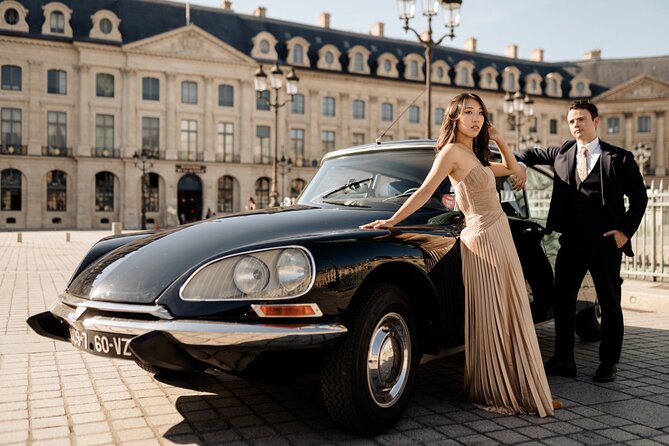
Paris looks different when you arrive in a car that’s basically rolling cinema. The Traction Avant and DS 21 aren’t subtle. Expect attention from passersby, big grins from other tourists, and plenty of photo moments where people stop and stare (in a good way).
This is also one of the smarter ways to do Paris if you’re short on time. Walking between central landmarks can turn into a long, stop-and-start grind. Here, the driver handles the moving parts—streets, turns, and the general chaos—while you focus on the sights.
If you care about the feel of the trip as much as the checklist, this is the point. A vintage car gives you an instant story you’ll remember, not just a memory card full of landmarks.
Worth weighing up next to this Paris pick
- Paris: Louvre Guided Tour with Reserved Access & Boat Cruise
★ 4.3 · 16,353 reviews - Louvre Museum Masterpieces Guided Tour with Access
★ 4.5 · 12,023 reviews - Louvre Museum – Exclusive Guided Tour (Entry Included)
★ 5.0 · 6,296 reviews - Versailles: Skip-the-Line Guided Palace Tour and Full Access
★ 4.6 · 5,214 reviews
Price for Up to Four: Is It Good Value at $171.18 per Group?
The headline number is $171.18 per group (up to 4). That matters because you’re not paying per person the way you do on many private city tours.
For a 1 to 3 hour experience, you’re essentially paying for three things:
- Private transportation (the listed inclusion)
- A driver who plans the sight stops so you can actually see major landmarks in limited time
- A built-in photo setup, since the car is part of the experience
If you’re traveling solo, it’s pricier than a shared bus tour. If you’re a couple or small family, the math improves fast. And if at least one person in your group hates long walking days, the value jumps again, because the whole format is designed for comfort and short stops.
The best use case is a “get my bearings fast” trip, plus a few skyline moments you can’t easily recreate on foot.
Starting at Concorde: How the Route Fits a Short Paris Visit
The tour starts and ends at Concorde (75008), with pickup offered. That’s a great location for beginning an afternoon or early evening run because it puts you close to several central sight corridors.
You’ll feel the route as a sequence of quick anchors:
- Big monuments that reset your mental map (like the Arc de Triomphe)
- Iconic skyline stops (like the Eiffel Tower)
- Classic Paris views in different neighborhoods
- Final landmarks that help you connect the city’s “old center” story (Notre-Dame and the Pantheon)
In real terms, this kind of driving tour is about time management. Paris traffic and pedestrian bottlenecks can eat hours. A private vintage-car format helps you keep momentum, so you can spend more of your visit actually looking at Paris and less of it walking between points that were never meant to be linked on foot in a single day.
Arc de Triomphe and Eiffel Tower: The Fastest Way to Get That Big-Paris Feeling
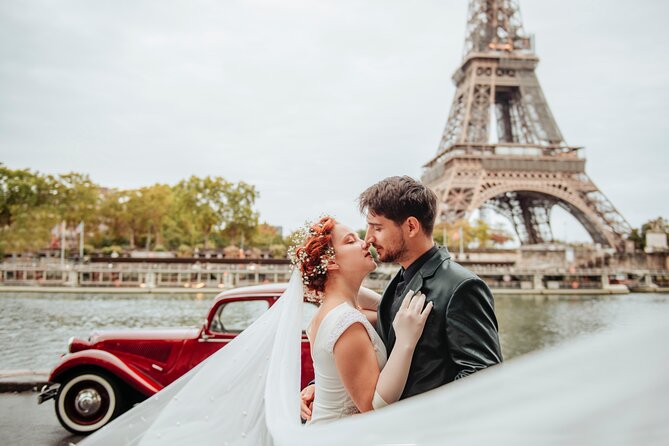
Two stops do the heavy lifting here: Arc de Triomphe and the Eiffel Tower.
At the Arc de Triomphe stop, you’re getting a quick orientation moment. Expect a brief explanation of what you’re looking at, plus time for pictures. The time allocation is short (about 5 minutes noted for each of these specific landmarks), so the trick is to use that time smart:
- Arrive ready with your photo framing (angles matter around the Arc)
- Take a couple quick wide shots first, then swap to tighter compositions
Then comes the Eiffel Tower stop, again with a short window. This is enough to get the photo you came for and to understand what makes that tower the center of Paris mythology. If you already plan to visit the tower later for views from above, this is still valuable: it gives you the ground-level context and positioning.
A practical note: the experience description says admission tickets are not included, so think of these stops as “see and photograph,” not “go up.”
The Seine Corridor Moments: Bridges, Palaces, and Opera Views
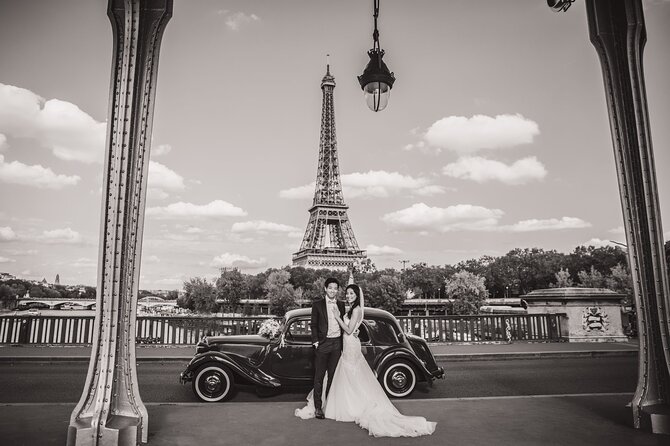
Between the major monuments, the tour includes several shorter explanation stops that point you down the central Paris spine. The details provided mention:
- a stop connected to a bridge
- references to a palace, a place, and the opera
- additional landmark explanations along the way
Even when the stop names aren’t listed here, the structure tells you what the tour is trying to do: move you through iconic areas while giving you just enough context to recognize what you’re seeing.
This is one of the tour’s best ideas. Paris is all about layers. From the car, you see the shape of each district—the way avenues open up, where grand buildings sit, and how the city’s layout guides your eye. If you’re already planning a second, deeper visit later, these “in-between” views can become your map for what to prioritize.
Drawback to keep in mind: because stops are short, you may not get the “why this building matters” depth you’d want for every single site. If that’s your style, ask your driver to focus on your top 1 or 2 questions early, so the time doesn’t get spent on passing highlights.
Moulin Rouge to Sacré-Cœur: Classic Paris in Two Different Vibes
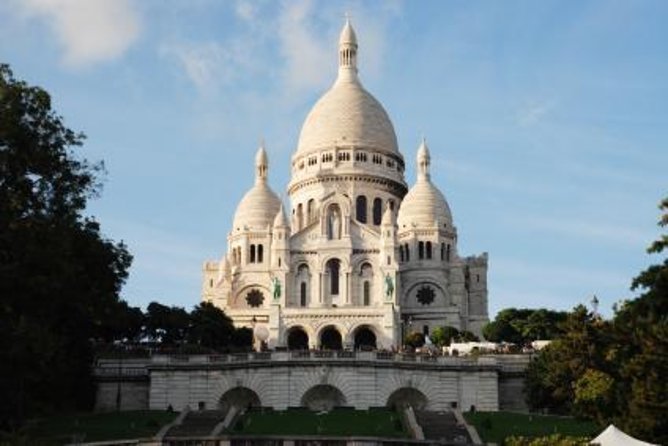
Next up is Moulin Rouge, followed by Basilique du Sacré-Cœur de Montmartre (Sacré-Cœur).
Moulin Rouge is the kind of landmark you don’t need much explaining for visually—everyone knows the silhouette. What you’re really buying is the quick cultural pointing and photo positioning, plus the fact that you reach it without wrestling for parking or getting swallowed by foot traffic.
Then you shift to Montmartre territory and the Sacré-Cœur area. This stop includes explanation and pictures, again with a short time window (about 5 minutes noted for that segment). Sacré-Cœur works well in a driving format because the area is busy and hilly. Getting dropped at the right moment helps you avoid the classic problem: arriving late, hiking in the wrong direction, or losing your photo chance because your feet are already tired.
If your priority is a “top sights with minimal walking” day, this pairing is strong.




Pyramid, Notre-Dame, and the Pantheon: Ending With the City’s Old Core
After Montmartre, the tour includes more landmark explanation stops, including:
- a museum mention
- a pyramid landmark
- Notre-Dame
- the Pantheon
Here’s why I like the ending arc. Arc de Triomphe and Eiffel Tower give you the headline Paris image. These final stops help you see Paris as a long-running story: medieval influence, grand civic monuments, and the “big names” of French architecture and culture tied to specific places.
One more important point: the tour description says admission tickets aren’t included. That’s especially relevant for anything that might involve entering a museum or ticketed areas. So think of this as a “see the landmarks from the outside / at your drop-off points” kind of experience unless your guide specifically directs you otherwise during the time you have.
Your Driver Makes or Breaks It: English, Depth, and the Photo Focus
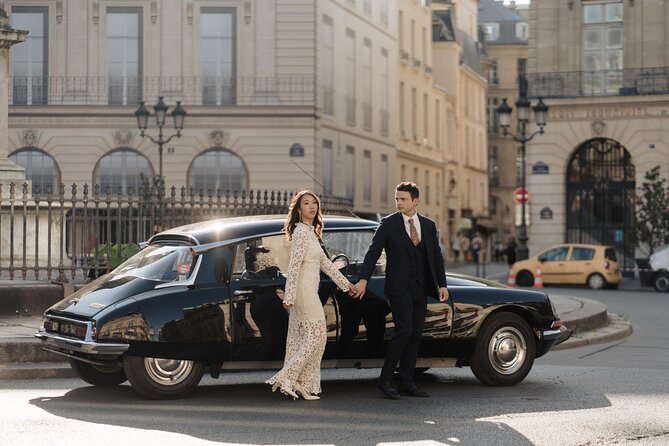
This tour is private, which means your driver’s style matters a lot.
Good signs show up in the reviews:
- Some guides, including Abi, are described as polite, punctual, patient, and strong with photo stops.
- Another guide named Ali is mentioned in reports as taking great pictures and being entertaining.
- There are also reports of drivers mixing languages (English plus others) depending on the guest.
There are also real issues you should plan around:
- Several reviews complain about English clarity and difficulty following commentary.
- A few guests report shallow narration—more naming things and pointing than telling stories.
- One report mentions distractions during the drive, like non-tour content playing on a phone, which obviously won’t help if you came for a cultural guide experience.
- Another report mentions gas fumes in the car, leading to headaches, especially with windows open.
My practical advice: if you want the most “guided” feel, start the ride with a simple request. Ask your driver to focus on 2 or 3 things you care about—architecture style, French history context, or how to photograph certain facades. With a short stop-driven format, that kind of focus saves you from getting generic narration for everything.
Comfort and Practical Tips for a Vintage Car Ride
Vintage cars are comfortable in a different way than modern rentals. They’re roomy enough to enjoy the ride, but they can feel “alive” in traffic. One review notes the car can need backing up in tight spots. That’s not a bad sign—it’s part of how these cars handle old Paris streets.
Two comfort realities to consider:
- It’s still a car ride through city conditions, not a slow countryside cruise.
- The “authentic” factor can include sensory things like smell. One report mentions gas fumes.
If you’re sensitive to smells, I’d bring up your comfort needs early. If windows can help or hurt you, your guide can sometimes adjust the situation during transfers.
For the photos, don’t wait until the last second. Use the first stop to confirm where your driver can safely pull in and what kind of angle you should aim for. If you’re traveling with multiple people, agree on who wants the wide skyline shots first, then do close-ups.
This tour tends to work best when you treat it like a guided photography session plus a quick orientation ride—rather than a slow, interpretive walk through each neighborhood.
Who Should Book This (and Who Might Prefer a Walking Tour)
This vintage-car Paris tour is a great fit if:
- You want a short, high-impact overview of central Paris
- Your group includes people who struggle with lots of walking
- You want iconic photos without spending the day hunting for the perfect viewpoint
- You care about the ride itself—this is not just transport
It may be less ideal if:
- You want deep, site-by-site historical storytelling for every stop
- Your top goal is museum entry rather than landmark viewing
- You’re very sensitive to narration quality or language clarity and need perfect English all the way through
If you fall into the second group, you could still enjoy the experience, but I’d pair it with at least one longer, slower neighborhood walk later. Think of this as your fast map-builder, not your final word on Paris.
Should You Book This Vintage Car Paris Tour?
Book it if you’re after a memorable, photo-forward Paris day where the city feels cinematic and easy. The private setup, vintage-car charm, and short landmark stops make it a strong choice for a first visit, a limited itinerary, or anyone who wants a more comfortable way to hit the big icons.
Skip it or adjust expectations if you want a consistently expert, deeply narrated cultural tour in polished English. Because narration style can vary by driver, it’s smart to go in with the right mindset: you’re buying a vintage-car landmark drive with commentary, not a lecture series.
If you do book, message your expectations in advance with your top priorities (photo angles, architecture, history questions). That simple step usually changes the whole ride.
FAQ
How long is the Paris tour in the vintage Citroën or DS 21?
The experience runs about 1 to 3 hours, depending on the timing you book.
What car options are available?
You can choose between a Citroën Traction Avant and a DS 21.
Is this a private tour?
Yes. It’s private, so only your group participates.
What is the group size?
The price is per group for up to 4 people.
Where does the tour start and end?
It starts at Concorde 75008 Paris, France and ends back at the same meeting point.
Is pickup offered?
Pickup is offered.
Is the tour guided in English?
The tour is offered in English.
Are admission tickets included for the landmarks?
Admission tickets are not included.
Is food or drinks included?
Food and drinks are not included.
Can I cancel for a full refund?
Yes. Free cancellation is available up to 24 hours in advance for a full refund. Within 24 hours of the start time, the amount paid is not refunded.
More Guided in Paris
- Paris: Louvre Guided Tour with Reserved Access & Boat Cruise
★ 4.3 · 16,353 reviews - Louvre Museum Masterpieces Guided Tour with Access
★ 4.5 · 12,023 reviews - Louvre Museum – Exclusive Guided Tour (Entry Included)
★ 5.0 · 6,296 reviews - Versailles: Skip-the-Line Guided Palace Tour and Full Access
★ 4.6 · 5,214 reviews - Louvre Access with Mona Lisa Escort or Guided Option
★ 4.0 · 4,588 reviews
More Tours in Paris
- Paris: Louvre Guided Tour with Reserved Access & Boat Cruise
★ 4.3 · 16,353 reviews - Paris: Big Bus Hop-On Hop-Off Tour with Optional Cruise
★ 4.4 · 13,279 reviews - Louvre Museum Masterpieces Guided Tour with Access
★ 4.5 · 12,023 reviews - Versailles: Skip-the-Line Tour of Palace and Gardens Access
★ 4.7 · 10,429 reviews - Paris: Louvre Overview, Exploration tour and Reserved Entry
★ 4.1 · 10,145 reviews
More Tour Reviews in Paris
- Paris: 1-Hour Seine Cruise departing from the Eiffel Tower
★ 4.4 · 77,472 reviews - Paris: Louvre Museum Timed-Entrance Ticket
★ 4.6 · 71,977 reviews - Disneyland® Paris 1-Day Ticket
★ 4.6 · 49,412 reviews - Paris: Versailles Palace and Gardens Full Access Ticket
★ 4.6 · 41,579 reviews - Paris: Arc de Triomphe Rooftop Tickets
★ 4.6 · 34,264 reviews
Fresh off the review desk in Paris
- Secrets of Paris Bike Tour in English or Dutch★ 5.0 · 5 reviews
- Paris: Mont Saint-Michel Day Tour with Chinese Tour Guide★ 5.0 · 5 reviews
- Private Street Art 2-Hour Guided Tour in Paris★ 4.5 · 5 reviews
- Orsay Museum Tour: 2h Highlights (Private & Small Group)★ 5.0 · 5 reviews
- Discover Paris in electric golf carts★ 4.0 · 5 reviews
- Paris Private Boat Tour with your own Captain Guide★ 5.0 · 5 reviews
Guided, compared.
 ★ 4.3Louvre Guided Tour with Reserved Access & Boat CruiseFrom $8116,353 reviews
 ★ 4.5Louvre Museum Masterpieces Guided Tour with AccessFrom $8612,023 reviews
 ★ 5.0Louvre Museum – Exclusive Guided Tour (Entry Included)From $1816,296 reviews
 ★ 4.6Versailles: Skip-the-Line Guided Palace Tour and Full AccessFrom $885,214 reviews
 ★ 4.0Louvre Access with Mona Lisa Escort or Guided OptionFrom $1004,588 reviews
 ★ 4.0Louvre Priority Access with Mona Lisa Escort or Guided OptionFrom $744,420 reviews
 ★ 4.6Louvre Museum: Skip-the-Line Small Group Guided TourFrom $1294,268 reviews
 ★ 5.0Louvre Museum Paris Essential Guided Tour Semi-Private 6ppl MaxFrom $1813,807 reviews