
Paris at low speed is surprisingly freeing. This private eco tuk-tuk route is a fast way to get your bearings and see the classic postcard sights with a real guide telling you what matters. I like the convenience of hotel pickup in several central neighborhoods, and I also love that onboard Wi‑Fi keeps you online without fiddling with roaming.
The big practical win here is the pace. You’re not stuck in the heaviest traffic on foot, and you can glide from one highlight to the next while still getting history at each stop. One possible drawback to plan for: in a tight 2-hour window, you might not linger everywhere, so it helps to decide what you care about most before you roll out.
If you’re the type who wants a clean overview first (then you go back later on your own), this kind of tour can be a great match. And when the guide clicks, it’s more than sightseeing—guides like Sébastien and Tariq have a way of turning landmarks into stories you’ll remember.
In This Review
- Key things to know before you ride
- Private eco tuk-tuk pace: how you’ll actually see Paris in 2 hours
- Starting at Place Vauban and using hotel pickup the right way
- Champs-Élysées to Arc de Triomphe: your “Paris boulevard” orientation
- Trocadéro and the Eiffel Tower area: best views, minimal waiting
- Invalides and Pont Alexandre III: the quick history stops that feel real
- Petit Palais, Grand Palais, and Place de la Concorde: Paris in scale
- Louvre glass pyramid and Notre-Dame views: what you should (and shouldn’t) expect
- Montmartre notes: why it might not fit in this 2-hour plan
- Price and value: is $170.98 per person fair for 2 hours?
- Who this tuk-tuk tour suits best
- Final decision: should you book this Paris private eco tuk-tuk tour?
- FAQ
- How long is the Paris highlights private eco tuk-tuk tour?
- How much does it cost?
- Is hotel pickup included?
- What language is the tour offered in?
- Is Wi-Fi available during the ride?
- Are tickets included for the Eiffel Tower, the Louvre, or Notre-Dame?
- Can I cancel for a full refund?
Key things to know before you ride
- Hotel pickup in select arrondissements: 7th, 8th, 9th, 15th, 16th, 1st, and 4th districts get pickup; others meet at Place Vauban.
- Onboard Wi‑Fi + bottled water: simple comfort perks that matter when you’re out for a couple hours.
- Short photo stops at icons: you’ll see Champs-Élysées, Arc de Triomphe, Trocadéro/Eiffel-area views, and more with brief time windows.
- A true private experience: only your group rides—no crowd herding.
- Guides can tailor on the fly: especially helpful if you’re returning to Paris and want specific angles or priorities (Kalil did this for a past group).
- One route, many landmarks, limited time: you’ll likely choose what to prioritize if the full list can’t fit.
Private eco tuk-tuk pace: how you’ll actually see Paris in 2 hours
A tuk-tuk tour in Paris is not about staying parked at famous monuments. It’s about moving you efficiently between viewpoints while a guide gives you context you’d usually miss if you just snap photos and walk on.
In two hours, you’ll do a “greatest hits” run. The stops are designed as quick photo-and-orientation moments—so you’re not waiting in lines, and you’re not burning half your day figuring out transport. That’s the real value: you leave with a mental map of where everything sits.
The tradeoff is simple: time. The itinerary includes a lot of landmarks, and short stops (often around five minutes) mean you may need to move quickly even when you want one more photo. Reviews also hint at that reality—some folks found it hard to cover everything within the chosen duration, and the guide asked what they wanted most to make the trip smoother.
If you’re a first timer, this is a smart approach. It’s also useful for a second or third trip—especially if you want the “Paris classics” without spending your morning sorting bus routes or taxis.
Worth weighing up next to this Paris pick
- Louvre Museum Paris Essential Guided Tour Semi-Private 6ppl Max
★ 5.0 · 3,807 reviews - SUV Private Transfer: Paris to Charles de Gaulle Airport (CDG)
★ 4.0 · 3,091 reviews - Paris: Private Photoshoot at the Eiffel Tower
★ 4.7 · 2,636 reviews - Top Private Cruises in Paris with French Champagne and surprises
★ 5.0 · 1,553 reviews
Starting at Place Vauban and using hotel pickup the right way
This tour starts at Place Vauban (in the 7th arrondissement). If you’re staying in certain central districts—7th, 8th, 9th, 15th, 16th, 1st, or 4th—you can get free hotel pickup.
That pickup detail matters more than it sounds. With Paris traffic and narrow streets, being dropped right where you’re staying saves you time and stress. It also reduces the chance that you’re late and scrambling at the start—because the driver is meant to meet you in the hotel lobby with a signboard showing the lead traveler’s name.
If your hotel is outside the pickup zones, you’ll meet at Place Vauban instead. Either way, the tour ends back at the meeting point, which makes the plan easy to connect with lunch plans afterward.
Also note the small comfort items: you get bottled water, and there’s Wi‑Fi on board. That’s handy if you’re coordinating with your travel partner, checking transit or maps, or just sharing photos without burning your phone battery.
Champs-Élysées to Arc de Triomphe: your “Paris boulevard” orientation
You kick things off with a scenic drive down the Champs-Élysées. This is one of those streets where you can’t help noticing the luxury shops, theaters, and cafés, but a guide’s narration is what turns it from scenery into a story. You’ll also get a quick sense of how this avenue fits into the city’s power and pageantry.
Then comes Arc de Triomphe, with a short stop for admiration and photos. The Arc is a national pride symbol and a tribute to French soldiers, and the guide explains the construction story and why it matters. Your time here is brief, and admission isn’t included for this stop—so plan on viewing from outside and taking your pictures, not touring inside.
Here’s how I’d handle this first stretch if you care about photos: be ready to move right when the quick stop begins. When time is tight, lingering too long can steal minutes from later viewpoints—like the ones that give you that classic Eiffel Tower framing.
This start works especially well if you’ve never been to Paris. You’ll learn the street grid logic fast, which makes your later self-guided wandering much easier.
Trocadéro and the Eiffel Tower area: best views, minimal waiting
The Eiffel Tower is the big finish line for a lot of first-time trips—and the tour gives you a strong setup. You’ll go to Trocadéro, which is famous for Eiffel Tower views. With the guide providing historical context, you get a photo opportunity with a viewpoint that feels like it belongs on a postcard.
From there, you move to the Eiffel Tower stop itself. The time is short (listed around five minutes), and admission isn’t included. So think of this as a close-up look from the outside, not a ticketed climb or a full visit.
What makes this portion worth doing by tuk-tuk is the timing. Instead of trying to reach the best angles with crowds and parking headaches, you ride in and get your shot at two different perspectives. You leave with the “from across the river” look and the “nearby landmark” look—so later, when you return for a longer visit, you’ll know where you want to stand.
If you’re traveling with someone who’s sensitive to long walks, this is a big win. You get landmark time without the full stamina tax.
Invalides and Pont Alexandre III: the quick history stops that feel real
Next up is Hôtel des Invalides, home to Napoleon’s tomb and a military museum. You’re not doing a ticketed visit here, but the pass-by with a guide’s explanation gives you a meaningful anchor. Even if you don’t go inside on this trip, you’ll know what you’re looking at and why it’s important.
Then you cross Pont Alexandre III, an ornate bridge known for its Art Nouveau design. The guide connects the bridge’s symbolism to the Franco-Russian friendship theme. This stop is the kind of thing most first-time visitors miss when they’re rushing through the city.
One reason I like this part of the route: it breaks up the “big single icon” cycle. After Eiffel Tower time, you shift to architecture and symbolism—plus you get another chance for photos without needing to queue anywhere.
The small pauses also help you notice details. On foot, you might only clock the major landmark. From the tuk-tuk, you can actually compare what you see in motion versus what you see from a fixed spot.
Petit Palais, Grand Palais, and Place de la Concorde: Paris in scale
This stretch is where you start feeling the city’s “grand” side. You’ll pass the Petit Palais, known for its architectural beauty and museum/event space. Then there’s Grand Palais, where the guide points out artistic and cultural contributions.
These aren’t always the first things people plan for, but that’s exactly why this route can be useful. It gives you a first visual impression, and it tells you where to look later if you want museums or performances.
Place de la Concorde is the next major stop, and it’s huge. It’s described as the largest square in Paris, and the tour highlights elements like the Luxor Obelisk gifted by Egypt in the 19th century. You also learn about the fountains symbolizing French rivers and seas, plus the square’s role in major historical events (including the French Revolution). Admission isn’t included, and your time is short, but the context makes it feel more than just a wide intersection.
Then you’re onto two more civic landmarks: the Assemblée Nationale (French National Assembly building) and Place Vendôme. Together, they help you see Paris as a working capital, not only a museum.
If you like structure, this is a good section. The landmarks have clear roles: empire symbolism, culture and art, government, and luxury history.




Louvre glass pyramid and Notre-Dame views: what you should (and shouldn’t) expect
The route reaches the Louvre area with a stop centered on the glass pyramid. You get a quick pause for photos, and admission isn’t included. That’s an important expectation to set: this tour is not positioning itself as a full museum visit with tickets. It’s a landmark glance with guiding context so you can decide later whether the Louvre deserves your attention for hours.
Then comes Notre-Dame de Paris, also with a brief photo view and admission not included. You’ll hear stories about its Gothic architecture and historical significance. Like the Louvre, you should think of this as a street-level wrap-up: beautiful to see, but not a ticketed visit.
This end matters for two reasons. First, it ties your “Paris classics” loop together—monuments, government, major art institutions, and the cathedral all in one glide. Second, it gives you a clean direction for what to do next on your own.
If you’re hoping for a lot more time at either the Louvre or Notre-Dame, you’ll probably want to plan those as separate visits. This tour is set up for orientation and photo moments, not deep museum time.
Montmartre notes: why it might not fit in this 2-hour plan
The information provided also mentions Montmartre—Basilique du Sacré-Cœur and Place du Tertre—with a note that it’s included in the 3 and 4 hour tour versions. That means you should assume Montmartre is not guaranteed on the 2-hour option.
What you can take from this: if Montmartre is a priority for you, it’s worth choosing a longer duration or asking how the schedule is handled day-of. Montmartre is described as a hilltop district tied to artists, writers, and musicians, with iconic views and Place du Tertre’s lively artist square.
If you do have extra time during the ride, the guide may tailor. Past groups had experiences where the guide adjusted things based on what the couple wanted to see, including a nod to pop-culture sights (Emily in Paris-style locations) when time allowed. Still, don’t assume Montmartre is part of the 2-hour product unless your booking confirms it.
Price and value: is $170.98 per person fair for 2 hours?
At $170.98 per person for about two hours, this isn’t the cheapest way to see Paris. But you’re paying for something specific: private transportation, a guide, and convenience.
Here’s how I’d judge the value:
- You’re getting a private ride, not a shared bus-and-rush experience.
- You’re getting hotel pickup for several central districts, which saves both time and hassle.
- You have onboard Wi‑Fi plus bottled water, which is small but real comfort.
- The guide gives context at each stop, turning quick photo pauses into an actual guided overview.
Whether it’s worth it depends on your travel style. If you’re the type who wants to spend your time inside museums and only needs transport, you might skip this and do self-guided routes plus one paid guide session. If you’re the type who wants to learn the layout quickly and reduce decision fatigue on day one, then the cost can feel more reasonable.
Also think about coordination. Without a tour, you’d likely spend money on taxis or rideshares plus you’d lose the storytelling time. Here, the cost bundles transport and narration into a short window—useful if your itinerary is tight.
Who this tuk-tuk tour suits best
This tour fits best when you:
- Want a first-pass overview of major Paris landmarks without spending the day walking.
- Appreciate quick, guided context at many different stops.
- Stay in central areas where pickup is offered.
- Plan to come back to Paris highlights later for longer visits (Louvre, Notre-Dame, and any Eiffel Tower plans you want to ticket separately).
It can also help for mobility concerns. One review notes that the experience supported a family with mobility issues and made it easier to get in and out for photo shoots. That makes sense for a low-walk, short-stop format.
Language is worth a quick check. The tour is offered in English, and one negative review mentioned a mismatch for another language. If you need a specific language, confirm it when you book so you don’t end up with a guide who can’t deliver comfortably.
Final decision: should you book this Paris private eco tuk-tuk tour?
I’d book this if you want a fast, guided orientation loop and you like the idea of a private ride with minimal walking. It’s a strong option for a first-time trip because you’ll hit the big icons—Champs-Élysées, Arc de Triomphe, the Eiffel area (from Trocadéro and nearby), Invalides, Pont Alexandre III, Concorde, the Louvre area, and Notre-Dame—without lines and with context from your guide.
I would hesitate if you’re expecting ticketed visits at the Eiffel Tower, Louvre, or Notre-Dame during the same 2-hour session. The stops are short and admission isn’t included, so you’ll likely be seeing exteriors and collecting photos.
If you do book, do two things that will make the tour feel smoother: decide your top 3 must-sees before you go, and be ready for a quick pace. When guides are on point, people have had fantastic experiences with guides like Sébastien and Tariq, and you’ll leave with a Paris map in your head—not just a camera roll.
FAQ
How long is the Paris highlights private eco tuk-tuk tour?
It runs for about 2 hours.
How much does it cost?
The price is $170.98 per person.
Is hotel pickup included?
Pickup is offered free of charge for hotels in the 7th, 8th, 9th, 15th, 16th, 1st, and 4th districts. If you’re outside these districts, you meet at Place Vauban.
What language is the tour offered in?
The tour is offered in English.
Is Wi-Fi available during the ride?
Yes. Wi‑Fi is available on board.
Are tickets included for the Eiffel Tower, the Louvre, or Notre-Dame?
Admission tickets are not included for the Eiffel Tower stop, the Louvre stop, and Notre-Dame de Paris. The tour gives brief photo/view stops.
Can I cancel for a full refund?
Yes. You can cancel up to 24 hours in advance for a full refund.
More Private in Paris
- Louvre Museum Paris Essential Guided Tour Semi-Private 6ppl Max
★ 5.0 · 3,807 reviews - SUV Private Transfer: Paris to Charles de Gaulle Airport (CDG)
★ 4.0 · 3,091 reviews - Paris: Private Photoshoot at the Eiffel Tower
★ 4.7 · 2,636 reviews - Top Private Cruises in Paris with French Champagne and surprises
★ 5.0 · 1,553 reviews - Golf Cart in Paris – Private Guided City Tour – Pickup Included
★ 5.0 · 1,164 reviews
More Tours in Paris
- Paris: Louvre Guided Tour with Reserved Access & Boat Cruise
★ 4.3 · 16,353 reviews - Paris: Big Bus Hop-On Hop-Off Tour with Optional Cruise
★ 4.4 · 13,279 reviews - Louvre Museum Masterpieces Guided Tour with Access
★ 4.5 · 12,023 reviews - Versailles: Skip-the-Line Tour of Palace and Gardens Access
★ 4.7 · 10,429 reviews - Paris: Louvre Overview, Exploration tour and Reserved Entry
★ 4.1 · 10,145 reviews
More Tour Reviews in Paris
- Paris: 1-Hour Seine Cruise departing from the Eiffel Tower
★ 4.4 · 77,472 reviews - Paris: Louvre Museum Timed-Entrance Ticket
★ 4.6 · 71,977 reviews - Disneyland® Paris 1-Day Ticket
★ 4.6 · 49,412 reviews - Paris: Versailles Palace and Gardens Full Access Ticket
★ 4.6 · 41,579 reviews - Paris: Arc de Triomphe Rooftop Tickets
★ 4.6 · 34,264 reviews
Fresh off the review desk in Paris
- Secrets of Paris Bike Tour in English or Dutch★ 5.0 · 5 reviews
- Paris: Mont Saint-Michel Day Tour with Chinese Tour Guide★ 5.0 · 5 reviews
- Private Street Art 2-Hour Guided Tour in Paris★ 4.5 · 5 reviews
- Orsay Museum Tour: 2h Highlights (Private & Small Group)★ 5.0 · 5 reviews
- Discover Paris in electric golf carts★ 4.0 · 5 reviews
- Paris Private Boat Tour with your own Captain Guide★ 5.0 · 5 reviews
Tuk-Tuks, compared.
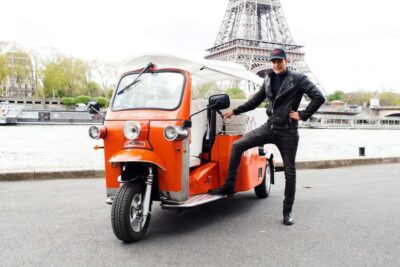 ★ 4.9Best of Paris in 2 Hours by Private Electric TukTukFrom $306106 reviews
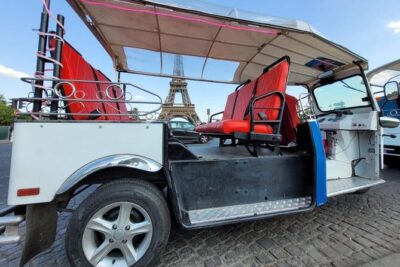 ★ 4.5Paris with a Tuk Tuk – Private 3-Hour TukTuk TourFrom $471104 reviews
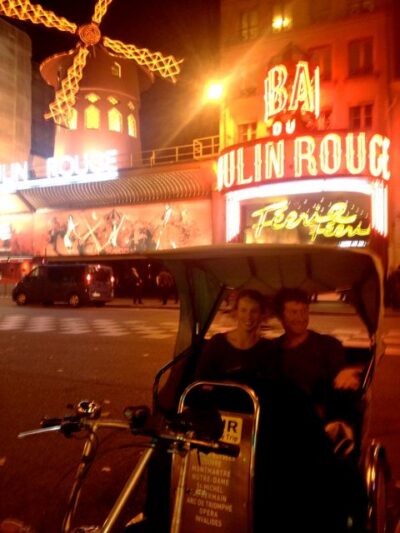 ★ 4.2Nighttime Tuk-Tuk TourFrom $146104 reviews
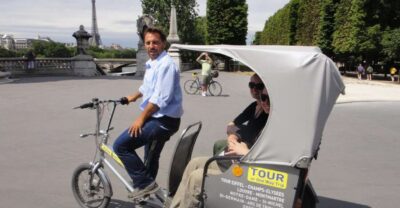 ★ 4.7Paris Tuk-Tuk: 2, 4 or 6H First Highlights & Parisian AreasFrom $283103 reviews
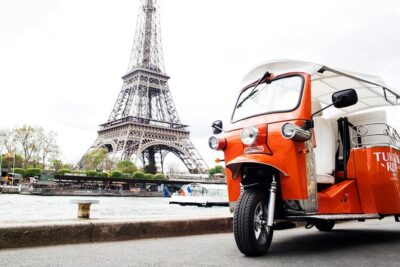 ★ 5.0Private Electric TukTuk tour in Paris ( 2 hours )From $31493 reviews
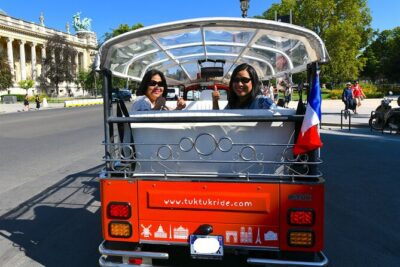 ★ 5.0Premium private tour of Paris in an Electric TukTuk (4 hours)From $56445 reviews
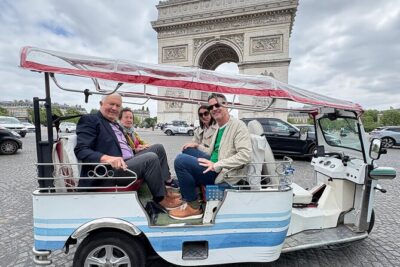 ★ 5.0Paris Sightseeing by Tuk Tuk Golf Cart 2 hoursFrom $15044 reviews
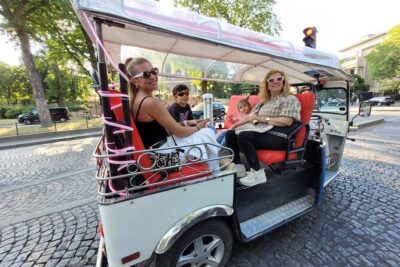 ★ 4.5Paris with a Tuk Tuk – Private 2-Hour TukTuk TourFrom $33634 reviews
Browse the lists this tour appears in