
Reviewed · LOUVRE MUSEUM TOURS
Louvre Essential Private tour
The Louvre feels doable with the right guide. This private tour for your group includes entry tickets and a professional, licensed guide, so you spend less time guessing and more time seeing what you came for. You get a route that’s built around the big names, but also around your pace and questions.
I also like how the guide turns the museum into a story instead of a checklist. You’ll move through major areas—Greek, Italian, French, and even Mesopotamia—while learning what connects the artworks across time. The one possible drawback is the time limit: at about 3 hours, you can’t cover everything, so you’ll want to decide what matters most to you.
In This Review
- Key takeaways
- Entering the Louvre with a plan that actually fits
- Meeting at Arc de Triomphe du Carrousel and getting oriented fast
- Stop 1: The Louvre’s medieval roots and the first “wow” room
- Greek antiquities: Venus de Milo, Victory of Samothrace, and myth in motion
- The Italian gallery: a long corridor built for masterpieces
- French department highlights: huge paintings and Napoleon-era drama
- Mesopotamia stops: Hammurabi and the Khorsabad Bulls
- Dutch masters: Rubens, Vermeer, and Rembrandt in a calmer pocket
- The guide makes or breaks the Louvre day
- How customization works when you’re overwhelmed
- Price and value: what $357.42 buys you
- Timing, pacing, and what to expect from a 3-hour route
- Who should book this Louvre Essential Private tour
- Quick FAQ before you decide
- FAQ
- How long is the Louvre Essential private tour?
- Is it a private tour?
- Are Louvre entry tickets included?
- What time does the tour start?
- Where do we meet for the tour?
- What languages are offered?
- Does the tour include a mobile ticket?
- Are there age-based free admission rules?
- What is the cancellation policy?
- Should you book?
Key takeaways
- Private, customizable route for your group, not a rigid group loop
- Tickets included so you can focus on art instead of logistics
- A licensed guide who connects works to history and mythology as you go
- High-impact highlights across Greek, Italian, French, Dutch, and Mesopotamian collections
- Efficient entry and pacing that helps you handle a museum that can feel overwhelming
Entering the Louvre with a plan that actually fits
The Louvre can feel like a place where you either rush or wander forever. This kind of Louvre Essential private tour is built for people who want structure without losing control of the day. You meet at Arc de Triomphe du Carrousel area at 2:00 pm, then you stay together for about three hours, with the guide keeping the route moving at a pace that fits your group.
Because it’s private, you’re not stuck with a one-size-fits-all tempo. If your group wants to linger in one room—say, around myth and sculpture—you can. If you’re more interested in paintings, the guide can emphasize that. This matters in the Louvre, where the difference between a great visit and a frustrating one is often what you do first and how long you spend in the rooms that connect with you.
Still chasing the Mona Lisa? More Louvre visits
- Paris: Louvre Museum Timed-Entrance Ticket
★ 4.6 · 71,977 reviews - Paris: Louvre Guided Tour with Reserved Access & Boat Cruise
★ 4.3 · 16,353 reviews - Louvre Museum Masterpieces Guided Tour with Access
★ 4.5 · 12,023 reviews - Paris: Louvre Overview, Exploration tour and Reserved Entry
★ 4.1 · 10,145 reviews
Meeting at Arc de Triomphe du Carrousel and getting oriented fast
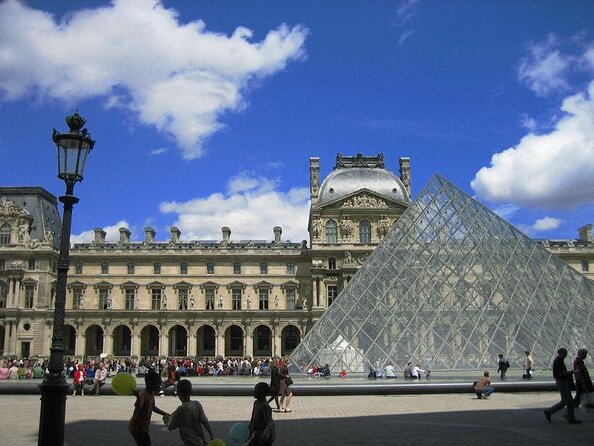
Your tour starts at the Pl. du Carrousel area near Arc de Triomphe du Carrousel, and it ends back at the same meeting point. That round-trip setup is helpful because you’re not left figuring out how to exit on your own.
What I like here is that the guide’s job begins immediately. You’re not walking into the Louvre blind, trying to guess which wing to hit first. Guides in this experience are described as getting people into the museum efficiently and then progressing through the main areas in an organized way—exactly what you want when you’re staring at a museum floor plan that looks like it was designed to confuse.
Tip for your day: before you go, decide what you want most. Is it the famous names, myth, or how the collections evolved? When you tell the guide your interests, the tour becomes more personal than a standard highlights loop.
Stop 1: The Louvre’s medieval roots and the first “wow” room
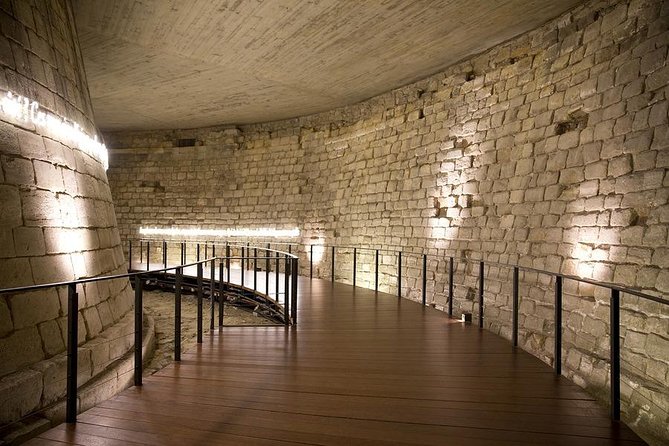
One of the best ways to start at the Louvre is to remember that it wasn’t always an art museum. This tour begins by sending you toward the oldest room in the museum—about 800 years old—so you get that medieval feeling right away. It’s a smart opening because it resets your brain. Instead of seeing the Louvre only as a giant gallery, you start seeing it as a fortress-turned-palace-turned-museum.
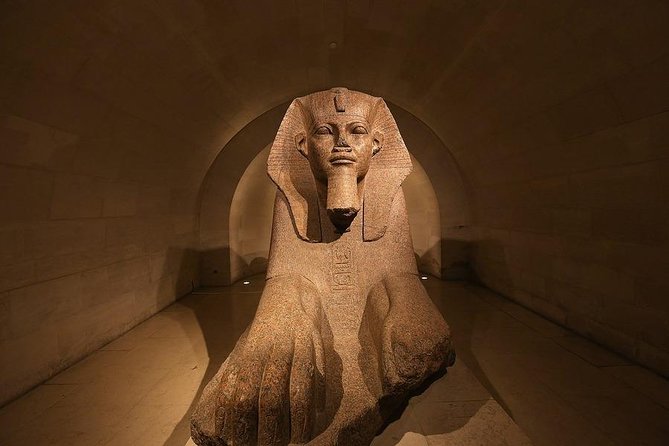
From there, you’re guided to a standout Egyptian connection: the great sphinx of Tanis. Even if you don’t think you’re an Egypt person, the guide uses it to explain the links between Egypt and Paris. That connection is part of what makes the tour feel like more than famous artworks on a wall—you’re learning how objects travel through time and culture, ending up in this one place.
Then the tour shifts to the Greek antiquities collection, where you start stacking big myth and big art. Think of it as the foundation layer of your Louvre visit.
Greek antiquities: Venus de Milo, Victory of Samothrace, and myth in motion
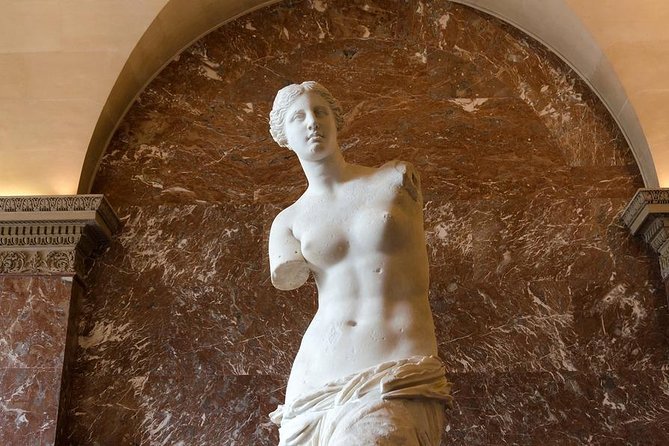
The Greek department is one of the Louvre’s densest areas, and it’s also where a guide earns their pay. You see major works including the Venus de Milo and the Victory of Samothrace, but you don’t just get a photo opportunity. The guide frames them with stories and mythology so the rooms feel connected, not random.
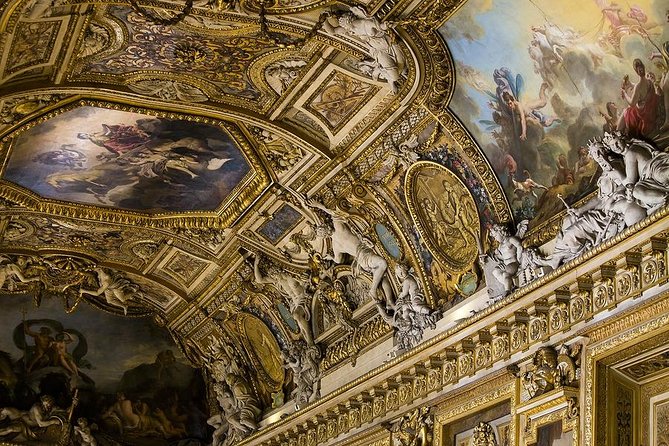
One particularly memorable stop in this section is the Caryatides room, described as a beautiful ballroom space. Here, the guide tells stories from mythology, turning architecture and sculpture into characters in the same narrative. If you like art that has drama—battles, gods, transformations—this part is where the tour clicks.
A practical note: Greek rooms can be crowded, so a private guide helps you keep momentum without feeling like you’re constantly getting stuck behind tour groups. The goal isn’t to sprint. It’s to keep your attention on what you’re seeing.
The Italian gallery: a long corridor built for masterpieces
Next up is the Italian section, including an Italian gallery that’s about 800 meters long. That’s a lot of wall space, so you’ll want someone to help you pace it. This is exactly the kind of section where a private tour makes a difference: you’re not trying to decide, on the fly, what’s worth your time.
You’ll encounter major Italian names such as Mantegna, Raphael, Caravaggio, and Veronese. And yes, you’ll also see the Mona Lisa. The point isn’t only the famous face. It’s how the guide positions her among the surrounding tradition—how Italian painting earned its reputation and how styles shifted over time.
If you’re a first-timer, this is the section where many people start to feel like they understand the museum. You go in thinking you’ll recognize a few artworks. You leave understanding why those artworks became legends.
French department highlights: huge paintings and Napoleon-era drama

After Italy, the tour brings you to the French painting department. This is a great change of pace because the works here can feel bigger-than-life—literally. Examples mentioned include Sacre de Napoleon and La Mort de Sardanapale, and the guide’s point is practical: these paintings can be larger than what many people expect from a museum wall.
This section is especially useful if you want historical context with your art. The guide helps you connect the paintings to the kinds of ideas France was obsessed with—power, spectacle, empire, and cultural ambition. If you like art that’s also political theater, this is your lane.
Worth weighing up next to this Paris pick




Mesopotamia stops: Hammurabi and the Khorsabad Bulls
Most first-time visitors think of the Louvre as Greece and Rome plus a few famous painters. This tour intentionally adds something different: Mesopotamian sculptures and artifacts.
You’ll see works such as the Khorsabad Bulls and the Hammurabi code. Even if these names don’t ring bells before you arrive, the guide explains why they matter. It’s a reminder that the Louvre isn’t only a museum of later European masterpieces. It’s also a museum of foundational civilizations—where law, power, and myth-shaped societies were already being visualized in stone.
This is also a section that helps you understand why the Louvre is such a draw for people who think they’re “just seeing the Mona Lisa.” Once you’ve seen Mesopotamia in context, your understanding of the museum broadens fast.
Dutch masters: Rubens, Vermeer, and Rembrandt in a calmer pocket
Then comes another area that can surprise you: the Dutch department. You’ll see Rubens, Vermeer, and Rembrandt. One of the most helpful notes here is that the guide routes you so this part can feel less crowded than some of the main headline rooms.
That matters because Dutch painting often rewards closer looking. It’s not only about fame; it’s about light, detail, and mood. When you aren’t packed in with constant body bumps, you can actually take in how these artists built scenes.
The guide makes or breaks the Louvre day
The standout pattern in this experience is guide quality. You’re not just getting facts; you’re getting help managing the museum.
For example, Auriel is highlighted as incredibly knowledgeable and deeply tuned in to group needs, with great insights on the three ladies of the Louvre. That’s a perfect example of the kind of detail that transforms a famous museum into a personal experience. Another guide, Olga, is described as professional and able to give a strong first visit introduction, with the kind of clarity that helps you understand how the museum’s collections are organized.
Vincent is praised for getting people into the museum efficiently and then moving through the main areas in an orderly fashion at the group’s pace. That combination is huge: efficient entry reduces stress, and orderly flow keeps you from feeling like you’re constantly missing key rooms. Finally, Miguel is mentioned for being kind and helpful in understanding museology—how the museum thinks about its collections and how you should approach them.
Bottom line: with a private guide, you’re not only learning about art. You’re learning how to see in the Louvre.
How customization works when you’re overwhelmed
A customizable private tour sounds nice on paper. In practice, it means your guide uses your interests to decide where to slow down. You can ask questions throughout, which turns the Louvre from a one-way lecture into a back-and-forth experience.
This is especially valuable if you’re traveling with mixed interests: one person obsessed with famous paintings, another more into sculpture or ancient history. Because it’s private, you’re not forced into one person’s preferences. The guide can balance those needs and still follow a coherent path.
If you want to get the most out of the customization, come with a short list:
- one must-see artwork
- one theme you like (myth, empire, religion, daily life, law and power)
- how you feel about crowds (do you want slower pacing, or faster movement?)
Then tell the guide at the start. It helps them shape the route in a way that feels worth the money.
Price and value: what $357.42 buys you
At $357.42 per person for about three hours, this is not a budget choice. But the value comes from three concrete things that are included: a professional licensed guide, a private format, and admission tickets in the price.
Here’s the practical math in real travel terms:
- The Louvre is huge. Without a guide, you’ll spend time deciding where to go and what to prioritize.
- With tickets included, you avoid one friction point and you keep the day focused.
- With private pacing, you can tailor the visit so you don’t spend most of your time in rooms you don’t care about.
So this tour tends to make sense when you’re either a first-timer, you’re short on time, or you want a higher-quality experience that reduces decision fatigue. If you’re traveling with older family members, or you just know you’ll get overwhelmed in big museums, paying for a guide can actually save your trip.
One more note: this tour is typically booked about 82 days in advance. That’s a sign demand is steady, and it’s smart to lock in dates early if your schedule is tight.
Timing, pacing, and what to expect from a 3-hour route
This tour runs for about three hours, starting at 2:00 pm. That’s enough time to hit multiple major collections, but it also forces tradeoffs. The guide is designed to focus on the Louvre’s top areas rather than trying to squeeze everything into one afternoon.
If you’re the type who likes to stand for a while and read labels, three hours may feel like a sprint. If you’d rather see the major works and learn the stories behind them, you’ll likely feel satisfied and clear-headed when you’re done.
Also, because the tour ends back at the meeting point, you can plan the rest of your afternoon without needing to map out your exit.
Who should book this Louvre Essential Private tour
This is a strong match if:
- it’s your first time in the Louvre
- you want a guide who can connect works to myth and history
- you prefer a structured route instead of wandering
- you care about seeing a spread of collections (Greek, Italian, French, Dutch, Mesopotamian)
- you’d like to ask questions in a private setting
It may not be the best fit if:
- you have plenty of time and want to roam without any guidance
- your budget is tight and you’re fine with a self-guided highlights approach
If you’re on the fence, think about what you’re most worried about. For many people, it’s not ticket access. It’s feeling lost inside a museum that size. This tour is built to fix that.
Quick FAQ before you decide
FAQ
How long is the Louvre Essential private tour?
It’s about 3 hours.
Is it a private tour?
Yes. It’s private, so only your group participates.
Are Louvre entry tickets included?
Yes. Admission tickets are included.
What time does the tour start?
The start time listed is 2:00 pm.
Where do we meet for the tour?
You meet at Arc de Triomphe du Carrousel, Pl. du Carrousel, 75001 Paris, France.
What languages are offered?
The tour is offered in English, German, Italian, Spanish, and French.
Does the tour include a mobile ticket?
Yes. A mobile ticket is included.
Are there age-based free admission rules?
Free admission applies to visitors under 18 and EEA residents under 26, with valid ID and proof of residency.
What is the cancellation policy?
Free cancellation is offered. You can cancel up to 24 hours in advance for a full refund. Changes within 24 hours aren’t refunded, and the experience requires a minimum number of travelers; if that minimum isn’t met, you’ll be offered a different date/experience or a full refund.
Should you book?
If you want your Louvre day to feel organized, focused, and full of stories—not just a pile of photos—this is a solid buy. The biggest selling point is the combo of private pacing plus admission included, guided by experts such as Auriel, Olga, Vincent, and Miguel. You’ll get a tour route that hits the headline masterpieces while still making room for the connections that most self-guided visits miss.
Book it if you’re short on time, new to the museum, or easily overwhelmed by big spaces. If you’d rather wander freely for hours and you’re comfortable planning your own highlights, then you might skip this and DIY. But if you’re paying to make the Louvre click, this is the kind of private tour that usually delivers.
More Tours in Paris
- Paris: Louvre Guided Tour with Reserved Access & Boat Cruise
★ 4.3 · 16,353 reviews - Paris: Big Bus Hop-On Hop-Off Tour with Optional Cruise
★ 4.4 · 13,279 reviews - Louvre Museum Masterpieces Guided Tour with Access
★ 4.5 · 12,023 reviews - Versailles: Skip-the-Line Tour of Palace and Gardens Access
★ 4.7 · 10,429 reviews - Paris: Louvre Overview, Exploration tour and Reserved Entry
★ 4.1 · 10,145 reviews
More Tour Reviews in Paris
- Paris: 1-Hour Seine Cruise departing from the Eiffel Tower
★ 4.4 · 77,472 reviews - Paris: Louvre Museum Timed-Entrance Ticket
★ 4.6 · 71,977 reviews - Disneyland® Paris 1-Day Ticket
★ 4.6 · 49,412 reviews - Paris: Versailles Palace and Gardens Full Access Ticket
★ 4.6 · 41,579 reviews - Paris: Arc de Triomphe Rooftop Tickets
★ 4.6 · 34,264 reviews
Back to the Louvre: More Ways In
- Paris: Louvre Museum Timed-Entrance Ticket
★ 4.6 · 71,977 reviews - Paris: Louvre Guided Tour with Reserved Access & Boat Cruise
★ 4.3 · 16,353 reviews - Louvre Museum Masterpieces Guided Tour with Access
★ 4.5 · 12,023 reviews - Paris: Louvre Overview, Exploration tour and Reserved Entry
★ 4.1 · 10,145 reviews - Paris: Louvre Museum Entry Ticket With Host and River Cruise
★ 4.6 · 9,926 reviews
Fresh off the review desk in Paris
- Secrets of Paris Bike Tour in English or Dutch★ 5.0 · 5 reviews
- Paris: Mont Saint-Michel Day Tour with Chinese Tour Guide★ 5.0 · 5 reviews
- Private Street Art 2-Hour Guided Tour in Paris★ 4.5 · 5 reviews
- Orsay Museum Tour: 2h Highlights (Private & Small Group)★ 5.0 · 5 reviews
- Discover Paris in electric golf carts★ 4.0 · 5 reviews
- Paris Private Boat Tour with your own Captain Guide★ 5.0 · 5 reviews
Louvre Museum Tours, compared.
 ★ 4.6Louvre Museum Timed-Entrance TicketFrom $2671,977 reviews
 ★ 4.3Louvre Guided Tour with Reserved Access & Boat CruiseFrom $8116,353 reviews
 ★ 4.5Louvre Museum Masterpieces Guided Tour with AccessFrom $8612,023 reviews
 ★ 4.1Louvre Overview, Exploration tour and Reserved EntryFrom $6010,145 reviews
 ★ 4.6Louvre Museum Entry Ticket With Host and River CruiseFrom $1009,926 reviews
 ★ 4.6Mona Lisa & Louvre Masterpieces Tour with Reserved AccessFrom $806,812 reviews
 ★ 5.0Louvre Museum – Exclusive Guided Tour (Entry Included)From $1816,296 reviews
 ★ 4.0Louvre Reserved Ticket and River Cruise ComboFrom $376,054 reviews
Browse the lists this tour appears in