
Reviewed · LOUVRE MUSEUM TOURS
Louvre Masterpieces Private Guided Tour with Reserved Access
The Louvre can feel like a maze. This experience makes it human, with reserved skip-the-line access and a guide-led route that turns famous works into stories you can actually follow. If you’re lucky enough to get a guide like Mélina or Léa, the details land fast and stick.
My favorite part is the pacing: you hit the top masterpieces without spending your whole trip fighting crowds and confusion. One note to keep in mind: it’s only 2 hours, so even the most “masterpieces” route is still a highlights sampler, and the promised scandal angle may feel more playful than intense for some tastes.
In This Review
- Key things that make this Louvre tour worth your time
- What you really get in a 2-hour Louvre highlights route
- Meeting point at the Louis XIV horse statue (and how to avoid the first panic)
- The Pyramid start: orientation, controversy, and fast museum momentum
- Medieval Foundations: how the Louvre used to be a fortress
- The Sphinx of Tanis stop: mystery you can actually point to
- The highlights walk: from big names to darker stories
- Mona Lisa finish: why ending here helps you enjoy the rest
- Private vs semi-private (up to six): how the group size changes the vibe
- Price and value: is $527 per person actually fair?
- Practical stuff that affects your day (not the brochure)
- Who this Louvre tour suits best
- Should you book this Louvre tour?
- FAQ
- How long is the Louvre tour?
- Where do we meet before entering the Louvre?
- Does the tour include skip-the-line entrance?
- Is this tour private?
- Where does the guided portion end, and can I stay after?
- Is it wheelchair accessible?
- What can I bring into the museum?
Key things that make this Louvre tour worth your time
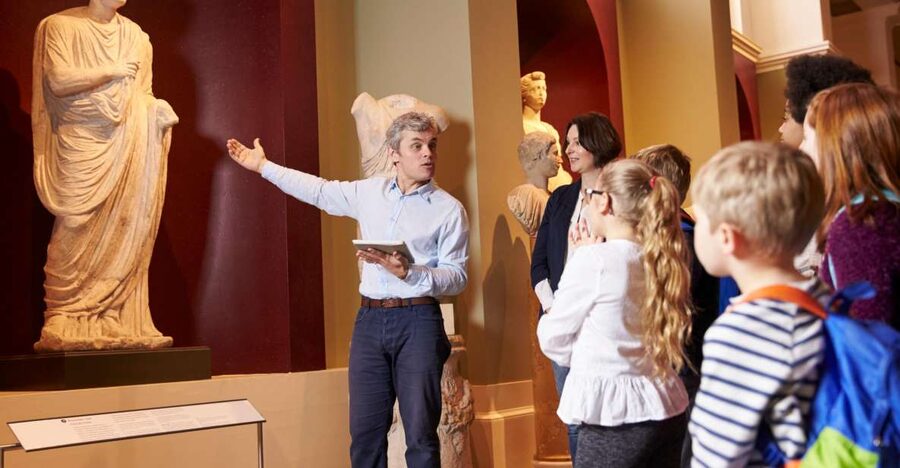
- Reserved access + skip-the-line entry via a separate entrance, so you start seeing art sooner
- Pyramid first stop, with the guide explaining why it’s been controversial and what to notice as you enter
- Medieval Foundations walk, which gives context for how the Louvre used to function before it became a museum
- Great Sphinx of Tanis stop, a memorable moment built around long-running mysteries
- Mona Lisa finish, plus tips for what to hunt for next on your own
- Private or semi-private option (small group up to six) so you can match the vibe to your travel style
What you really get in a 2-hour Louvre highlights route
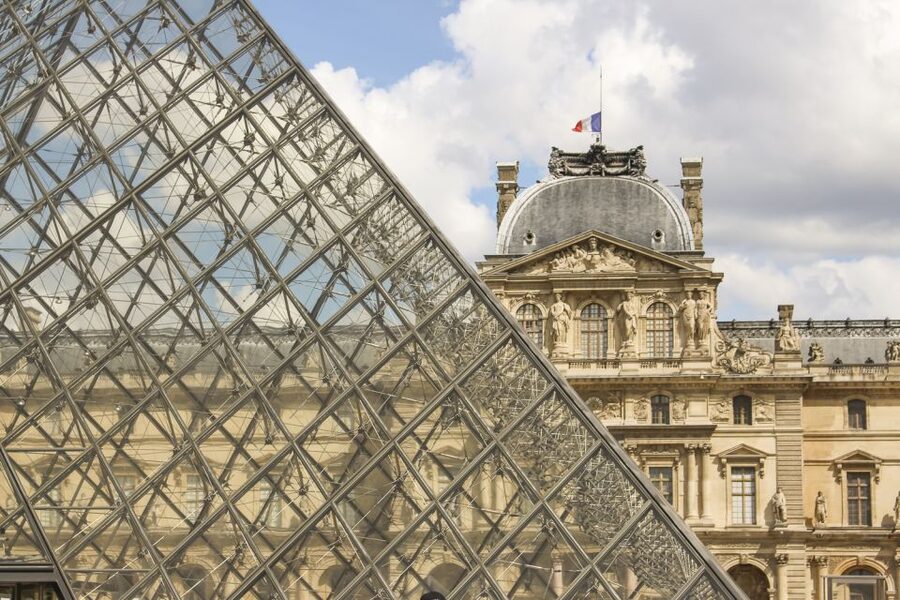
This is a 2-hour guided sweep designed to get you grounded fast. The Louvre is famous for being massive, but you don’t need to feel lost or exhausted right away. Instead, you get a planned route that stops at the museum’s biggest-name works and the moments that help those names make sense.
The “private” part matters too. You’re not just buying a ticket and hoping for the best. You’re buying someone to steer your eyes. That’s especially helpful at the Louvre, where it’s easy to stare at a masterpiece and still miss why it became famous in the first place.
And yes, there’s a strong story vibe. The tour leans into famous artwork and the behind-the-scenes drama—people, ideas, and the kinds of controversies that keep museum visitors talking long after they leave the room.
The only catch is the clock. Two hours doesn’t let you slowly absorb everything the Louvre offers. You’ll see a lot, but not everything. If your idea of a Louvre day is sitting with one painting for 45 minutes, this isn’t that. Think quick orientation and smart highlights.
Still chasing the Mona Lisa? More Louvre visits
- Paris: Louvre Museum Timed-Entrance Ticket
★ 4.6 · 71,977 reviews - Paris: Louvre Guided Tour with Reserved Access & Boat Cruise
★ 4.3 · 16,353 reviews - Louvre Museum Masterpieces Guided Tour with Access
★ 4.5 · 12,023 reviews - Paris: Louvre Overview, Exploration tour and Reserved Entry
★ 4.1 · 10,145 reviews
Meeting point at the Louis XIV horse statue (and how to avoid the first panic)
You meet at 8 Pl. du Carrousel, at the statue of Louis XIV on horseback, placed directly in front of the big Pyramid at the Louvre’s main entrance area.
That location is useful because it’s easy to recognize once you’re there: horse statue, big Pyramid, main entrance zone. Still, the Louvre area can feel hectic, and your tour will start on time. I’d arrive a little early so you’re not hunting for your group while you’re already stressed.
From that meeting point, the tour walks you to the Pyramid starting area. That order is clever: you start with the landmark everyone takes photos of, then you transition into the museum story.
The Pyramid start: orientation, controversy, and fast museum momentum
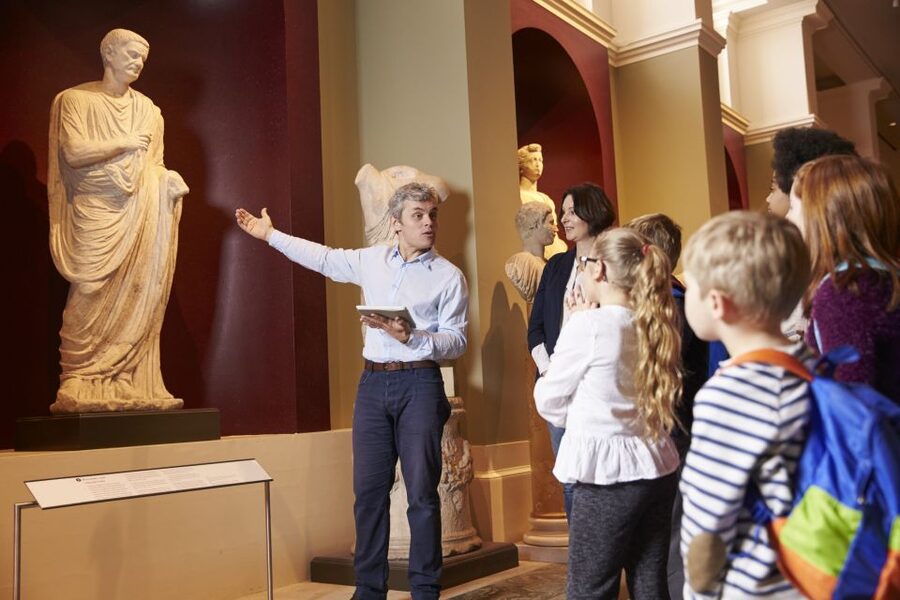
Your tour begins at the controversial Pyramid next to the Tuileries Garden. The guide uses this opening moment to set expectations. You’ll hear about why the Pyramid has remained a point of debate over time, and you’ll get a sense of what you’re walking into before you’re surrounded by galleries.
This is more than trivia. Starting here helps you read what comes next. When you understand the building’s modern face, the rest of the museum journey feels less random. It also helps you decide what you want to chase after the guided portion ends.
Then you move inside and go backward in time, not forward. The tour takes you from the sleek entrance concept into the museum’s older layers—exactly what you’d want if you’re the kind of person who hates feeling like you’re just reacting to rooms without a plan.
Medieval Foundations: how the Louvre used to be a fortress

One of the most valuable parts of this tour is the shift to the Medieval Foundations. The route takes you through the shadows of those older structures, giving you context for how the Louvre was not always the elegant art palace you see today.
This is where a good guide earns their fee. You’re not just being transported from point A to point B. You’re learning how the Louvre evolved, so you can understand what you’re looking at when you’re surrounded by masterpieces.
You’ll walk through this section as part of the overall “route of stories” approach. It’s the kind of stop that makes you feel like you’re connecting dots, even in a museum that’s all famous objects and big names. It also breaks up the experience so it doesn’t feel like constant room-to-room intensity.
The Sphinx of Tanis stop: mystery you can actually point to
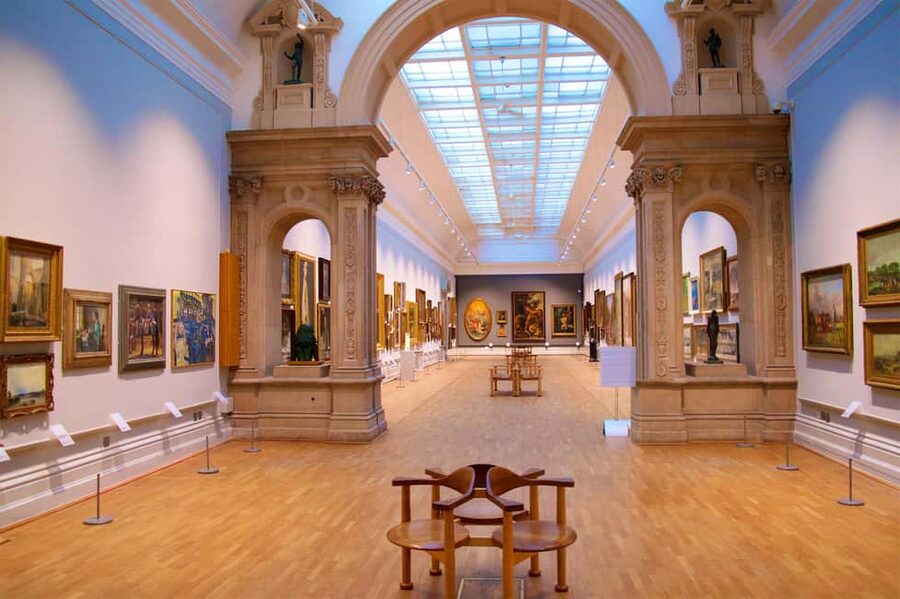
After the foundations, you come face to face with the Great Sphinx of Tanis. The guide frames it around the idea that riddles have puzzled people for thousands of years—one of those art-and-history moments that pulls you out of the “just look, don’t think” mode.
Even if you’re not a dedicated archaeology person, this stop works because it’s visual and dramatic. A sphinx in the Louvre is inherently a little surreal. The guide helps you handle that surprise by giving you a way to interpret it.
This is also a smart variety move. It keeps the tour from being only paintings and only European art. You get a broader museum feel, while still staying inside the tight 2-hour timeline.
The highlights walk: from big names to darker stories
Once you’re inside the core museum flow, you’re guided past thousands of works—but in a controlled way. The tour is designed to stop at over a dozen well-known masterpieces, with the guide weaving in scandalous tales and dramatic themes.
The content is described as including stories of murder and cannibalism, plus the gossip energy you’d expect around legendary figures. It’s not presented like a museum lecture. It’s presented like a narrative route, with the guide using controversy and human behavior to make the art feel more immediate.
Just keep your expectations in check. One limitation shows up in a practical way: the scandal angle may not be as detailed or as shocking as you personally want. If you’re hoping for a deep, hard-edged history debate with sources and specifics, this short highlights tour may feel more like entertaining framing than a forensic investigation.
That said, if you want to leave with a strong sense of what the Louvre’s most famous works are and why they’ve become cultural magnets, the story format is a plus. It turns the museum into something you remember, not just something you walked through.
Worth weighing up next to this Paris pick



Mona Lisa finish: why ending here helps you enjoy the rest
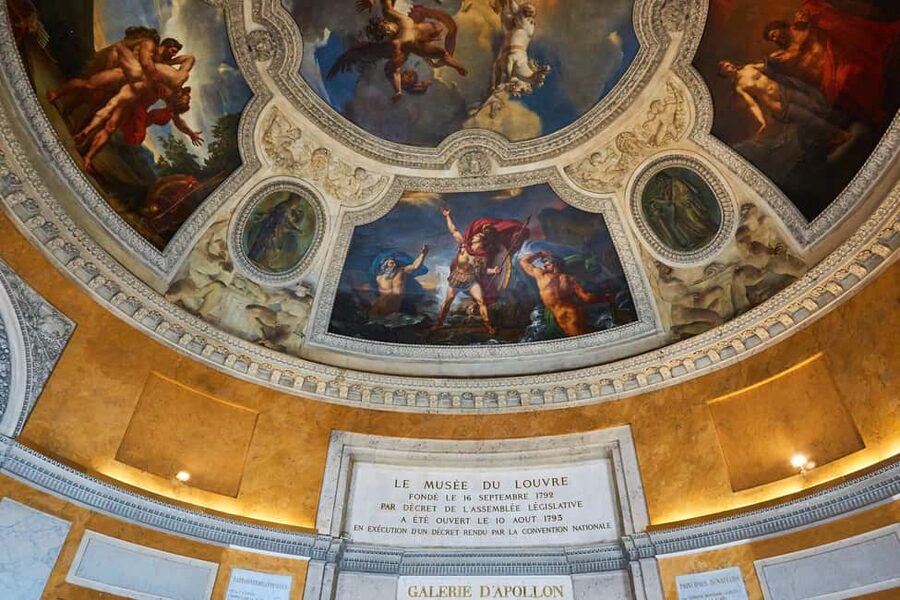
The guided portion ends at the most famous lady of them all: Mona Lisa. This is a strategic finish. If you end earlier, you often spend the rest of the day searching for the next thing while the crowd energy builds. Ending at Mona Lisa gives you a clear milestone and a satisfying “peak moment” before you explore on your own.
After you reach her, you’re free to stay inside as long as you wish. The guide also gives you tips for what to look for after the tour ends. That part matters because it prevents the typical post-tour problem: you’re inside the Louvre, you’re excited, and then you wander without a plan.
One practical note from the tour info: after the guided outdoor walking portion, the experience inside can shift to self-guided time. In other words, you’ll get the guide-led highlights, then you’re essentially set loose with advice. That’s a good model for people who like structure for the big hits, then freedom afterward.
Private vs semi-private (up to six): how the group size changes the vibe
You can choose a private tour or a semi-private small group option for a group of up to six.
If you want flexibility—questions, pace control, or a more personal feel—private is the way to go. If you’re traveling with friends or a small group and want something social without feeling like you’re swallowed by a huge crowd, semi-private is a sweet spot.
Group size matters in the Louvre because moments can hinge on attention: the guide might point out something small in one room that changes how you see the entire work. Fewer people means less time spent waiting for everyone to catch up.
Also, guide quality seems to be a big part of the experience. The tour information and past guide highlights point to guides who can keep things engaging. One guide is specifically praised for being professional and captivating, and another is praised for being accessible even for children—useful if your party includes younger museum fans.
Price and value: is $527 per person actually fair?
At $527 per person for a 2-hour experience, this is not a budget play. It’s premium. So you should evaluate value the way the tour is built: time saved, stress reduced, and a guide who turns the Louvre into a story route.
Here’s what you’re paying for, based on the tour details:
- Skip-the-line reserved access (via a separate entrance)
- An English-speaking live guide
- A planned route hitting major works instead of aimless wandering
- A finish at Mona Lisa with the option to stay longer independently
- A private or small-group format (not a huge group experience)
If you’re the type of traveler who hates waiting and hates chaos, the reserved access can be worth a lot. The Louvre has a way of draining energy before you even find your first gallery. Removing that friction is a real part of the value, not just a convenience perk.
If you’re going during a busy season, or you simply want to maximize art-per-hour, the price starts to make more sense. If you’re comfortable navigating on your own and you prefer to spend hours exploring at your own speed, you might decide this is too pricey for what’s essentially a short highlights route.
Practical stuff that affects your day (not the brochure)
Before you go:
- Bring passport or ID card
- There’s a size limit for items: anything exceeding 55x35x20 cm isn’t allowed in the museum
- No luggage or large bags
- No pets
- No smoking
Also, the tour duration is listed as 2 hours, and starting times depend on availability. So if you’re trying to stack other plans the same day, don’t leave zero buffer time. A museum day is rarely perfectly timed.
Accessibility is listed in a slightly confusing way. The info says wheelchair accessible, yet it also lists not suitable for wheelchair users. If you need wheelchair access, I’d treat that as a “confirm first” situation and contact the operator before booking so you don’t end up with surprises on arrival.
Who this Louvre tour suits best
This tour is a good fit for you if:
- You want the Louvre highlights without spending half the day figuring out where to go
- You like a guide who tells stories, not just dates and labels
- You’re visiting for a limited time and want a “greatest hits” route
- You want reserved entry and a more controlled experience
It might be less ideal if:
- You want long, slow, room-by-room immersion
- You’re chasing a super-deep controversy analysis and not just guided framing
- You’re very sensitive to the idea of a “scandal tour” being more entertaining than academic
Should you book this Louvre tour?
Book it if you want your Louvre day to start fast, feel guided, and end with Mona Lisa done and dusted—then you can relax into self-guided wandering with a plan. The reserved access plus tight 2-hour structure is especially valuable if you want to reduce stress and see more art, not more confusion.
Skip or reconsider if you’re aiming for marathon museum time or if you want heavy-depth research on every controversial detail. In that case, you might prefer a longer format tour or self-guided approach.
If your priorities are time, direction, and story-led highlights, this is the kind of tour that makes the Louvre feel doable.
FAQ
How long is the Louvre tour?
The tour is 2 hours.
Where do we meet before entering the Louvre?
You meet at the statue of Louis XIV on horseback, in front of the big Pyramid directly at the Louvre’s front entrance area, near 8 Pl. du Carrousel.
Does the tour include skip-the-line entrance?
Yes. Your ticket includes skip-the-line entrance through a separate entrance.
Is this tour private?
It’s offered as a private tour, with an option for a semi-private small group (up to six people).
Where does the guided portion end, and can I stay after?
The tour concludes at Mona Lisa. After that, you’re free to stay in the museum as long as you wish, and the guide provides tips for what to see next on your own.
Is it wheelchair accessible?
The tour information includes wheelchair accessible, but it also lists not suitable for wheelchair users. If you need wheelchair access, confirm the exact situation with the provider before booking.
What can I bring into the museum?
Bring a passport or ID card. Luggage or large bags aren’t allowed, and items larger than 55x35x20 cm are not permitted. Pets and smoking are also not allowed.
More Tours in Paris
- Paris: Louvre Guided Tour with Reserved Access & Boat Cruise
★ 4.3 · 16,353 reviews - Paris: Big Bus Hop-On Hop-Off Tour with Optional Cruise
★ 4.4 · 13,279 reviews - Louvre Museum Masterpieces Guided Tour with Access
★ 4.5 · 12,023 reviews - Versailles: Skip-the-Line Tour of Palace and Gardens Access
★ 4.7 · 10,429 reviews - Paris: Louvre Overview, Exploration tour and Reserved Entry
★ 4.1 · 10,145 reviews
More Tour Reviews in Paris
- Paris: 1-Hour Seine Cruise departing from the Eiffel Tower
★ 4.4 · 77,472 reviews - Paris: Louvre Museum Timed-Entrance Ticket
★ 4.6 · 71,977 reviews - Disneyland® Paris 1-Day Ticket
★ 4.6 · 49,412 reviews - Paris: Versailles Palace and Gardens Full Access Ticket
★ 4.6 · 41,579 reviews - Paris: Arc de Triomphe Rooftop Tickets
★ 4.6 · 34,264 reviews
Back to the Louvre: More Ways In
- Paris: Louvre Museum Timed-Entrance Ticket
★ 4.6 · 71,977 reviews - Paris: Louvre Guided Tour with Reserved Access & Boat Cruise
★ 4.3 · 16,353 reviews - Louvre Museum Masterpieces Guided Tour with Access
★ 4.5 · 12,023 reviews - Paris: Louvre Overview, Exploration tour and Reserved Entry
★ 4.1 · 10,145 reviews - Paris: Louvre Museum Entry Ticket With Host and River Cruise
★ 4.6 · 9,926 reviews
Fresh off the review desk in Paris
- Secrets of Paris Bike Tour in English or Dutch★ 5.0 · 5 reviews
- Paris: Mont Saint-Michel Day Tour with Chinese Tour Guide★ 5.0 · 5 reviews
- Private Street Art 2-Hour Guided Tour in Paris★ 4.5 · 5 reviews
- Orsay Museum Tour: 2h Highlights (Private & Small Group)★ 5.0 · 5 reviews
- Discover Paris in electric golf carts★ 4.0 · 5 reviews
- Paris Private Boat Tour with your own Captain Guide★ 5.0 · 5 reviews
Louvre Museum Tours, compared.
 ★ 4.6Louvre Museum Timed-Entrance TicketFrom $2671,977 reviews
 ★ 4.3Louvre Guided Tour with Reserved Access & Boat CruiseFrom $8116,353 reviews
 ★ 4.5Louvre Museum Masterpieces Guided Tour with AccessFrom $8612,023 reviews
 ★ 4.1Louvre Overview, Exploration tour and Reserved EntryFrom $6010,145 reviews
 ★ 4.6Louvre Museum Entry Ticket With Host and River CruiseFrom $1009,926 reviews
 ★ 4.6Mona Lisa & Louvre Masterpieces Tour with Reserved AccessFrom $806,812 reviews
 ★ 5.0Louvre Museum – Exclusive Guided Tour (Entry Included)From $1816,296 reviews
 ★ 4.0Louvre Reserved Ticket and River Cruise ComboFrom $376,054 reviews
Browse the lists this tour appears in