
Reviewed · LOUVRE MUSEUM TOURS
Louvre & Musée d’Orsay Exclusive Museum Tour With Entry
Paris art gets easier with a guide. This Louvre and Musée d’Orsay combo uses reserved entry plus a focused route, so you spend less time herding yourself through two world-class museums. The timing is built for people who have limited hours but still want the headliner works.
I also like that you’re not just “seeing famous art.” You’re guided through both museums in a way that helps names and styles click, from da Vinci to Delacroix in the Louvre, then to Manet, Monet, Renoir, Degas, and Rodin in Orsay. In the feedback I read, guides such as Daniel and Julien were repeatedly praised for turning huge halls into an easy, story-driven walk.
The main drawback is simple: with about two hours inside each museum, you won’t have time to linger everywhere. If you love slow, room-by-room browsing, you’ll probably want a second visit on your own after this tour wraps up.
In This Review
- Key points to know before you go
- Why this Louvre and Musée d’Orsay tour is such a smart “two-museum” plan
- Starting at the Louvre glass pyramid (and why the 10:00 am plan matters)
- Inside the Louvre: a focused route through Da Vinci, Raphael, and more
- The best part of Musée d’Orsay isn’t just the art—it’s the building
- Musée d’Orsay highlights: Impressionists and post-Impressionists in one strong sweep
- Lunch and pacing: how the breaks keep the day from turning into a sprint
- What “private” really means here (and when semi-private changes the feel)
- Reserved entry and the reality of museum lines
- Value check: what you’re paying for, not just the cost
- Who this tour suits best
- Should you book this Louvre and Musée d’Orsay combo?
- FAQ
- What time does the tour start?
- How long is the tour?
- Are entry tickets included?
- Is lunch included?
- Will I be able to skip lines?
- What’s the route between museums like?
- Do I need to bring a mobile phone number?
- What can I bring into the museums?
- Is the tour wheelchair friendly?
Key points to know before you go
- Reserved entry for both museums saves time and stress in two of the busiest places in Paris.
- Two guided museum blocks (about two hours each) are designed for a high-impact route, not an all-day crawl.
- The Seine crossing is built into the plan with a short 10-minute walk, keeping the day smooth.
- You’ll see the must-dos plus lesser-known picks instead of just doing a checklist.
- Private or small-group options let you match the experience to your comfort level and pace.
- Pacing can matter for mobility since the tour runs around breaks and navigation through major galleries.
Why this Louvre and Musée d’Orsay tour is such a smart “two-museum” plan
If you’re doing Paris on a tight schedule, this is the kind of day that makes sense. The Louvre is enormous—five floors and endless corridors—and trying to “DIY it all” usually turns into stop-start frustration. Orsay is more compact than the Louvre, but it’s still full of rooms you could easily lose an hour in.
This tour’s big value is the pairing. You get the Louvre’s long sweep of art and artifacts, then you cross the Seine on foot for Orsay’s Impressionist and post-Impressionist focus. Done right, it gives you a helpful before-and-after feeling: classical power and myth in the Louvre, then modern paint, light, and movement at Orsay.
Still chasing the Mona Lisa? More Louvre visits
- Paris: Louvre Museum Timed-Entrance Ticket
★ 4.6 · 71,977 reviews - Paris: Louvre Guided Tour with Reserved Access & Boat Cruise
★ 4.3 · 16,353 reviews - Louvre Museum Masterpieces Guided Tour with Access
★ 4.5 · 12,023 reviews - Paris: Louvre Overview, Exploration tour and Reserved Entry
★ 4.1 · 10,145 reviews
Starting at the Louvre glass pyramid (and why the 10:00 am plan matters)
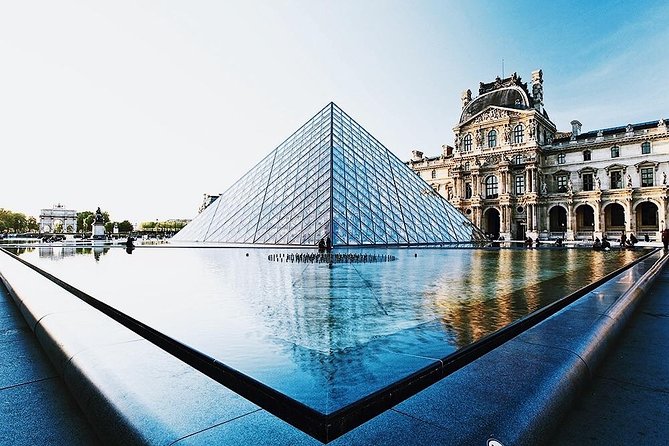
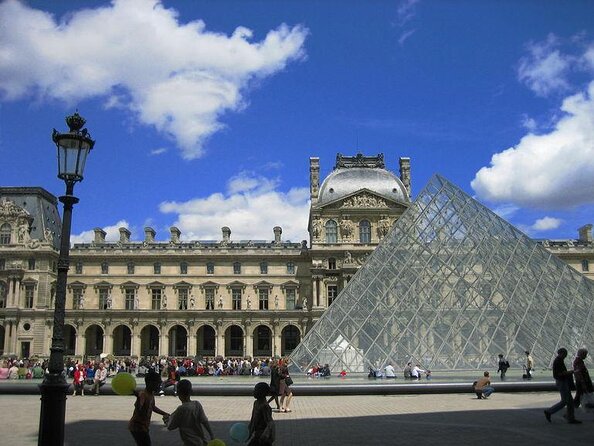
Your day starts at the Musée du Louvre at 10:00 am, meeting at the glass pyramid area. That meeting point is easy to find, and it matters because the Louvre’s entry and security flow can eat time if you show up late or without a plan. With reserved admission included, you’re set up to begin quickly rather than spending your morning stuck in the wrong line.
Also, the tour expects you to travel light. Large bags and suitcases aren’t allowed inside the museums—only handbags or small thin bag packs go through security. If you’re traveling with shopping bags, remember that you may need to manage them before you get to the doors.
Inside the Louvre: a focused route through Da Vinci, Raphael, and more
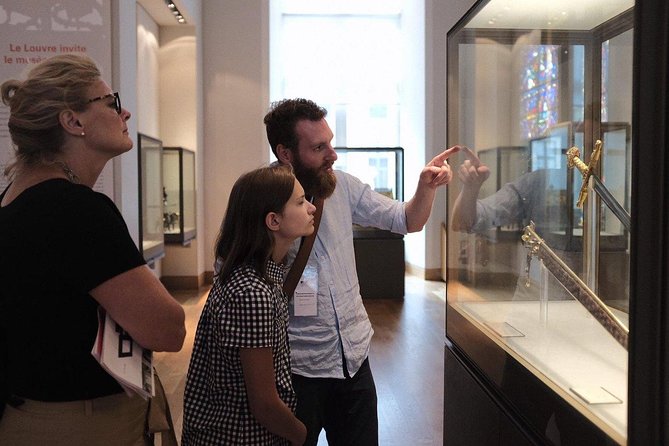
The Louvre tour block runs about two hours. That’s a tight window, but it’s also exactly why guided routing works here. Instead of wandering until your feet give up, you follow your guide’s path to both legendary works and supporting pieces that make the big names easier to understand.
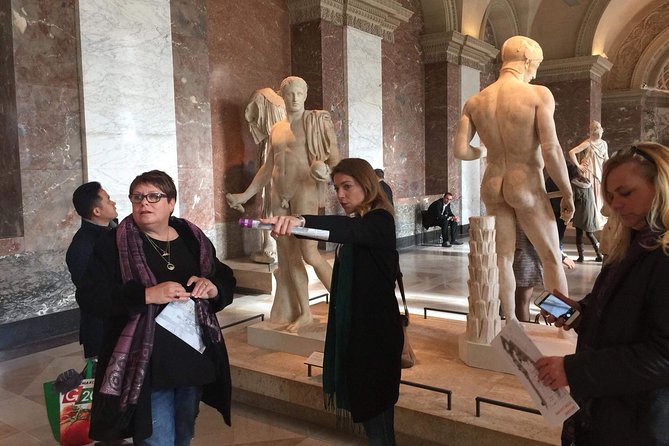
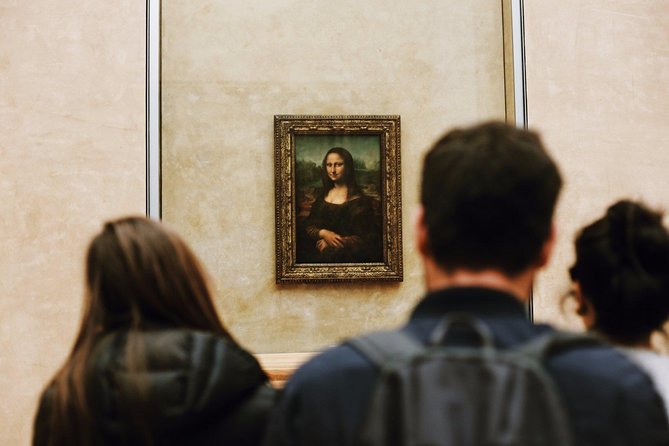
You’ll see major crowd magnets like the Mona Lisa, The Raft of the Medusa, and Venus de Milo. You’ll also pass through works associated with artists such as Raphael, Delacroix, and Leonardo da Vinci. The point isn’t just to tick boxes—it’s to see how different subjects, styles, and eras were used to grab attention in their own time.
What I like about this approach is that the Louvre can feel like “too much” if you go in cold. A good guide helps you connect details—style choices, historical context, and what to look for—without making you sit through lectures. In the feedback I saw, guides like Marcel and Julien were singled out for being supportive and for finding helpful, less-stressful routes through heavy crowds.
One practical consideration: the Louvre has quiet or restricted areas where speaking may be limited. Your guide will tell you what to expect before entering those spaces. It’s not a big deal, but it helps to know the museum experience includes rules beyond just “look at art.”
The best part of Musée d’Orsay isn’t just the art—it’s the building
After your morning at the Louvre, you take a break and then walk about 10 minutes across the Seine to Musée d’Orsay. That short transfer keeps your day from feeling like two unrelated trips. You get a clean change of scenery: from palace-scale rooms to a former 19th-century Beaux-Arts train station.
Orsay is famous for how it frames modern art. The building itself feels designed to hold drama—so when you step inside, the shift in art styles feels real, not just theoretical. And once you’re in, you’ll find a serious collection: more than 4,000 works on display across the galleries.
Musée d’Orsay highlights: Impressionists and post-Impressionists in one strong sweep
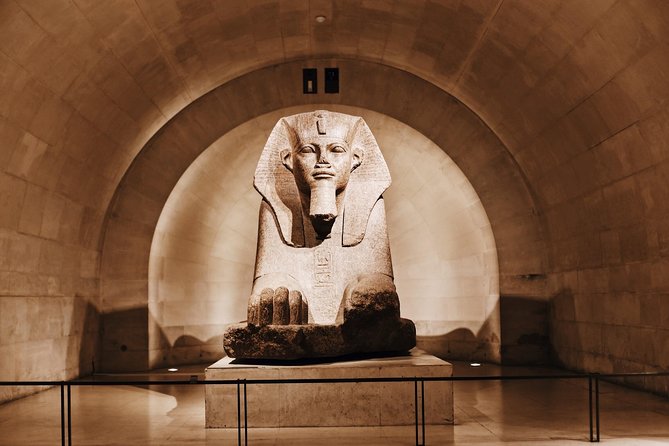
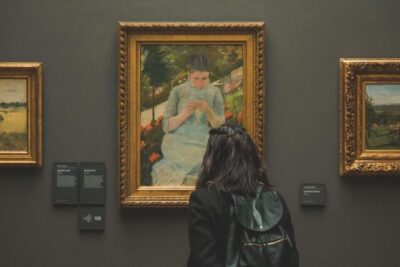
The Orsay tour block is also about two hours, with reserved entry and a guided route. This museum leans hard into Impressionist and post-Impressionist masters, with artists such as Manet, Renoir, Cézanne, Gauguin, van Gogh, Monet, Degas, and Rodin showing up prominently.
The way your guide frames the works matters here. Orsay isn’t only about what paintings look like; it’s also about how artists worked differently—how they used color, how they handled line and form, and how they treated light as something alive. You’ll get the story of artists who broke with tradition and helped make the modern Impressionist movement possible.
You’ll also spend time on major works by artists listed in the tour details, including Manet, Renoir, Cézanne, Gauguin, Eugène, Boudin, and Monet. Even if you already know a few “big names,” it’s worth having someone explain what you’re seeing and why it was new.
A nice bonus is what happens at the end. After the guided portion, you can continue exploring at your leisure. That’s important because Orsay rewards a second pass. If you want to compare how one artist’s technique changes across rooms, having extra time after the tour helps.
Lunch and pacing: how the breaks keep the day from turning into a sprint
The whole tour runs about 5 hours 30 minutes (about 5–5.5 hours), including a break. Lunch is not included, so you’re on your own for where to eat.
This matters more than it sounds. If you try to skip food to “save time,” you’ll end up rushing through artwork you wanted to enjoy. The break is there so you can reset—especially in the Louvre, where the sheer scale can drain you faster than expected.
If you have mobility needs, pay attention to the tour options. The tour is listed as wheelchair friendly, but it doesn’t apply if you choose the Save! Book semi-private option. Also, you should share your needs when booking. The pace and breaks are part of what makes this kind of combo doable, and the feedback included examples of guides adjusting to mobility challenges.
More hours with the Impressionists at the Orsay



What “private” really means here (and when semi-private changes the feel)
This is described as a private tour/activity, and the package includes a guide exclusively for you in the private setup. That exclusivity doesn’t apply if you choose the Save! Book semi-private option. So if you’re the type who likes asking lots of questions—or wants the route shaped to your interests—private is the safer bet.
Either way, you’ll be in English. The tour is designed so you can learn more than you easily would on your own, especially in the Louvre where the building’s size can make “random wandering” feel like work.
Reserved entry and the reality of museum lines
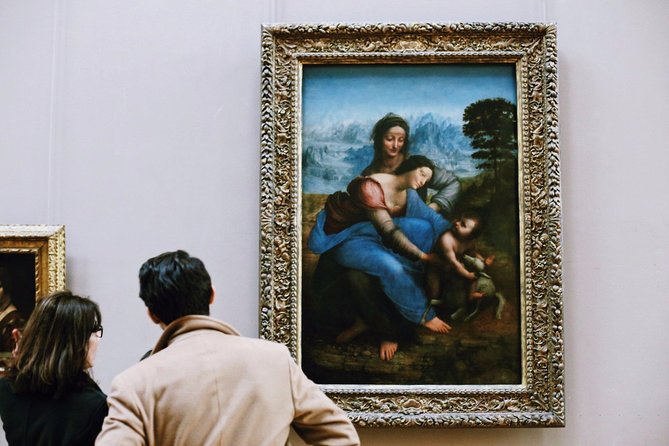
The tour includes reserved entry tickets for both museums, and the plan is meant to help you bypass long lines. Still, the tour notes that security lines can form and that some access types may still involve some waiting depending on conditions.
So how do you use this info? Arrive on time and follow the bag rules. If your plan is to show up with a big backpack or suitcase, you’ll slow yourself down at security. Keep your load small so the reserved-entry advantage actually shows up in your day.
Value check: what you’re paying for, not just the cost
At $288.55 per person for about 5.5 hours, this isn’t a budget add-on. But you are paying for two things that are expensive in time and effort:
- You’re buying entry for both major museums as part of the package. The tour details also specify a €22 adult entrance ticket for the Louvre being included, which helps anchor the value.
- You’re paying for routing and interpretation. In the Louvre, the difference between seeing the highlights and learning how to look is usually the guide’s job. The same goes for Orsay, where style and technique matter.
If you’re comparing this to two separate self-guided days, the math often works out when you factor in how hard the Louvre is to navigate without guidance. You also get a single plan that strings the two museums together, including the walk across the Seine, which reduces “Paris logistics time.”
Who this tour suits best
This combo is a great fit if you:
- Have only a half-day (or one main morning) and still want serious coverage
- Prefer guided routes over wandering the Louvre’s five floors
- Like art history told in a way that helps you look at details, not just memorize titles
- Want a smooth move from Louvre to Orsay without figuring out how to stitch it together
It may feel less ideal if you:
- Want to spend long hours on every gallery (this plan is built for a focused hit list)
- Need maximum flexibility to stop and start every 10 minutes
- Plan to travel heavy (since bag restrictions can affect your pace)
Should you book this Louvre and Musée d’Orsay combo?
If your goal is to see the Louvre and Orsay in one efficient day and not waste hours getting oriented, I think this is a solid booking. The reserved admission for both museums plus a guided route through the biggest highlights is exactly the combo that makes sense when time is the real luxury you don’t have.
If you’re the kind of person who wants deep, slow study of dozens of rooms, book it as your first pass, then plan to return on another day to go at your own speed. This tour is best when it gives you momentum—and then helps you know where to go next.
FAQ
What time does the tour start?
The tour starts at 10:00 am, with the meeting point at the Musée du Louvre.
How long is the tour?
It runs about 5 hours 30 minutes (approximately 5 to 5.5 hours), including a break.
Are entry tickets included?
Yes. Reserved entry tickets for the Louvre and Musée d’Orsay are included in the tour price. Temporary exhibitions are not included.
Is lunch included?
No. There is time for a lunch break, but lunch is an own-expense break.
Will I be able to skip lines?
The tour description says you will bypass lines with reserved entry. That said, security lines can still form depending on conditions.
What’s the route between museums like?
After the Louvre, you take a short 10-minute walk across the Seine River to reach the Musée d’Orsay.
Do I need to bring a mobile phone number?
Yes. You’re instructed to provide a mobile phone number (including country code).
What can I bring into the museums?
No large bags or suitcases are allowed inside the museums. You should plan for handbags or small thin bag packs to go through security.
Is the tour wheelchair friendly?
The tour is listed as wheelchair friendly, but this does not apply if you choose the Save! Book semi-private option.
More Tour Reviews in Paris
- Paris: 1-Hour Seine Cruise departing from the Eiffel Tower
★ 4.4 · 77,472 reviews - Paris: Louvre Museum Timed-Entrance Ticket
★ 4.6 · 71,977 reviews - Disneyland® Paris 1-Day Ticket
★ 4.6 · 49,412 reviews - Paris: Versailles Palace and Gardens Full Access Ticket
★ 4.6 · 41,579 reviews - Paris: Arc de Triomphe Rooftop Tickets
★ 4.6 · 34,264 reviews
More at the Musee d'Orsay
- Paris: Orsay Museum Entry Ticket
★ 4.7 · 25,647 reviews - Paris: Orsay Museum Entry Ticket and Digital Audio Guide App
★ 4.4 · 3,170 reviews - Paris in a Day: Louvre or Orsay, Eiffel Tower, City Walk & Cruise
★ 5.0 · 1,956 reviews - Paris: Musée d’Orsay Skip-the-Line Tour with Expert Guide
★ 4.5 · 1,145 reviews - Musée d’Orsay Skip-the-Line Tour with Expert Guide
★ 4.8 · 1,088 reviews
Back to the Louvre: More Ways In
- Paris: Louvre Museum Timed-Entrance Ticket
★ 4.6 · 71,977 reviews - Paris: Louvre Guided Tour with Reserved Access & Boat Cruise
★ 4.3 · 16,353 reviews - Louvre Museum Masterpieces Guided Tour with Access
★ 4.5 · 12,023 reviews - Paris: Louvre Overview, Exploration tour and Reserved Entry
★ 4.1 · 10,145 reviews - Paris: Louvre Museum Entry Ticket With Host and River Cruise
★ 4.6 · 9,926 reviews
Fresh off the review desk in Paris
- Secrets of Paris Bike Tour in English or Dutch★ 5.0 · 5 reviews
- Paris: Mont Saint-Michel Day Tour with Chinese Tour Guide★ 5.0 · 5 reviews
- Private Street Art 2-Hour Guided Tour in Paris★ 4.5 · 5 reviews
- Orsay Museum Tour: 2h Highlights (Private & Small Group)★ 5.0 · 5 reviews
- Discover Paris in electric golf carts★ 4.0 · 5 reviews
- Paris Private Boat Tour with your own Captain Guide★ 5.0 · 5 reviews
Louvre Museum Tours, compared.
 ★ 4.6Louvre Museum Timed-Entrance TicketFrom $2671,977 reviews
 ★ 4.3Louvre Guided Tour with Reserved Access & Boat CruiseFrom $8116,353 reviews
 ★ 4.5Louvre Museum Masterpieces Guided Tour with AccessFrom $8612,023 reviews
 ★ 4.1Louvre Overview, Exploration tour and Reserved EntryFrom $6010,145 reviews
 ★ 4.6Louvre Museum Entry Ticket With Host and River CruiseFrom $1009,926 reviews
 ★ 4.6Mona Lisa & Louvre Masterpieces Tour with Reserved AccessFrom $806,812 reviews
 ★ 5.0Louvre Museum – Exclusive Guided Tour (Entry Included)From $1816,296 reviews
 ★ 4.0Louvre Reserved Ticket and River Cruise ComboFrom $376,054 reviews
Browse the lists this tour appears in