
Reviewed · LOUVRE MUSEUM TOURS
Louvre Museum Guided Tour of the Masterpieces in Spanish (6 people)
Walk into the Louvre with a game plan.
This Spanish small-group tour keeps you moving through the museum’s biggest hits, with commentary that gives you context instead of just showing you art. I like two things most: you get priority access (so you waste less time in the bottleneck), and the group is capped at 6 people (which makes the guide’s explanations actually land). One thing to consider: you still need to accept the reality of a massive museum and crowds, so your “perfect” view depends on where the group positions itself for each stop.
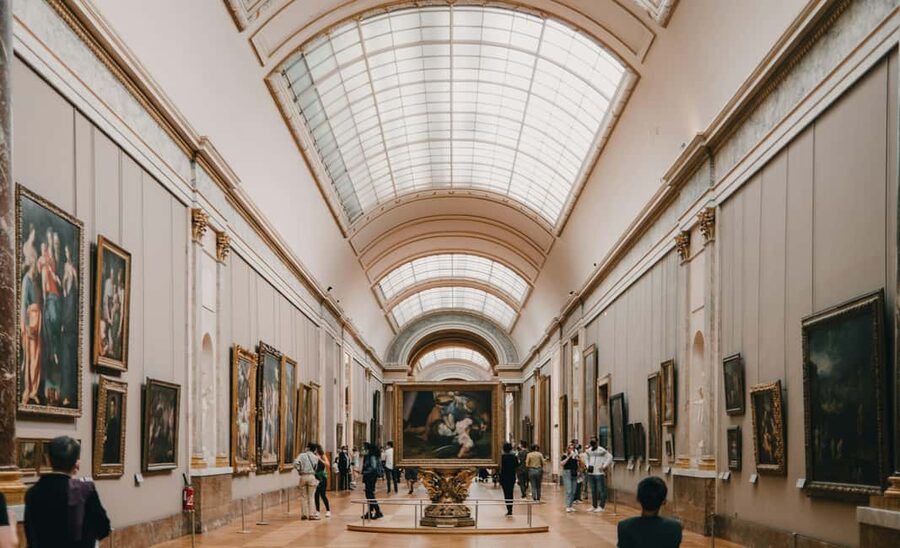
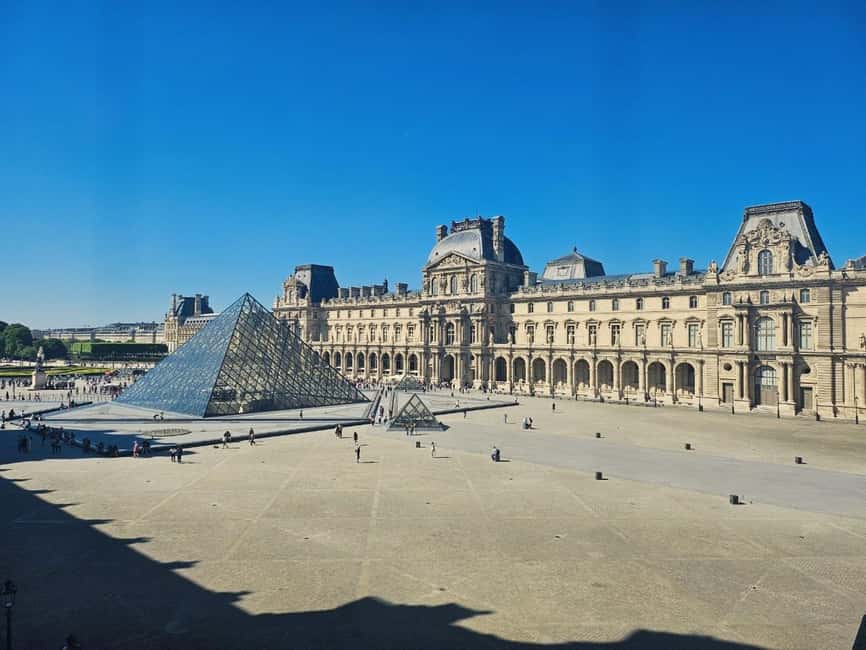
You’ll meet at the France Tourism Agency at 6 Rue de l’Amiral de Coligny, then walk a short distance to the Louvre’s group entry lane. The tour lasts about 2 hours, starting with Greek and Roman antiquities, climbing to the grand staircase highlight with Winged Victory of Samothrace, and finishing around French painting and major historical works like the power stories of kings, emperors, and revolutions.
Key points to know before you go
- Spanish guide, not just a label: explanations and commentary are in Spanish throughout the visit.
- Up to 6 people: smaller group means easier navigation and more interaction.
- Priority entry + separate access lane: you skip the most intense line pressure.
- Signature stops: Venus de Milo, Winged Victory of Samothrace, and Mona Lisa are built into the route.
- You keep exploring after: your ticket lets you continue in the museum after the guided portion.
- Not every room: this is a masterpieces route with essential context, not a whole-museum marathon.
In This Review
- Meeting at the France Tourism Agency and Getting In Without the Headache
- The Big Value of a 2-Hour Route: What You’ll See (and What You Won’t)
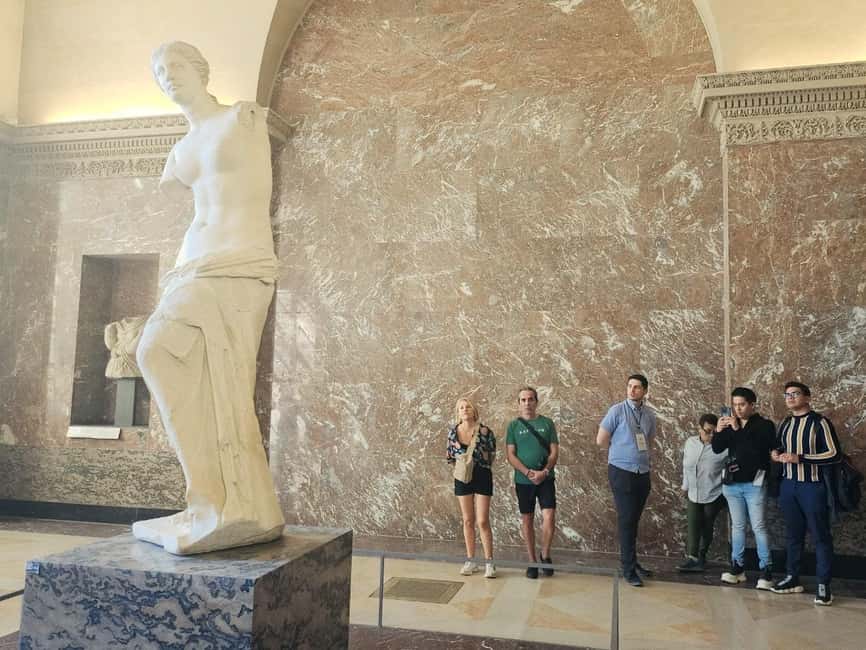
- Greek and Roman Antiquities: Venus de Milo and the Origins of Western Beauty
- The Grand Staircase Moment: Winged Victory of Samothrace (Nike)
- Mona Lisa Without Losing Your Mind: How the Guide Helps You Focus
- French Painting and Big Story Canvases: Kings, Revolutions, and Style Changes
- Using the All-Day Ticket: Your 2 Hours Sets Up the Rest of Your Visit
- Spanish Commentary: Why Language Changes the Experience
- Price and Value: Is $99 Worth It?
- Who This Tour Suits Best (and Who Might Skip It)
- Should You Book This Louvre Spanish Masterpieces Tour?
- FAQ
- How long is the guided tour?
- What language is the tour guide?
- What group size is it?
- Where do I meet the guide?
- Does my ticket let me enter the Louvre after the tour?
- Is there priority or skip-the-line access?
- Which famous artworks are included?
- Where does the tour end?
- Is the tour wheelchair accessible?
- What are the cancellation and payment options?
Meeting at the France Tourism Agency and Getting In Without the Headache
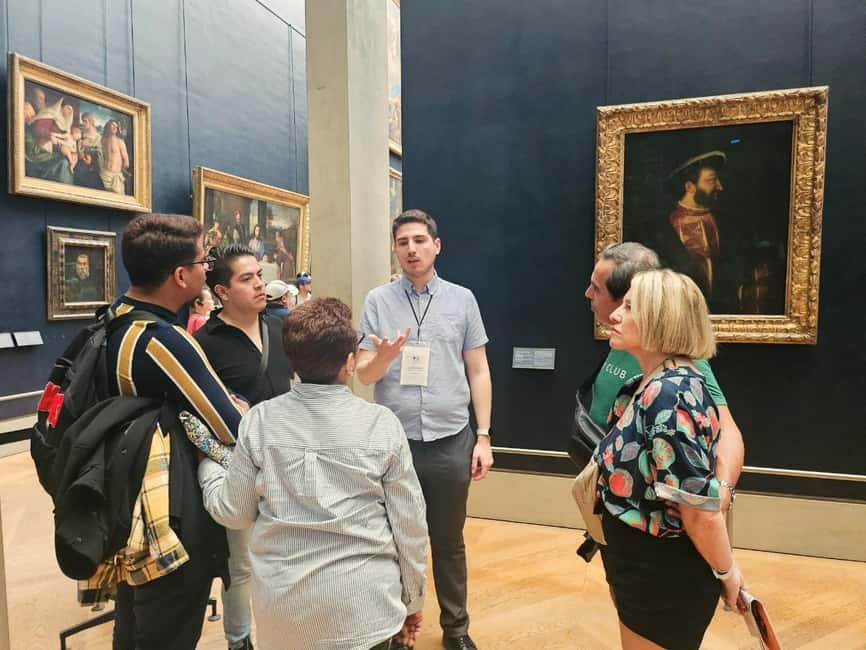
The tour starts at the France Tourism Agency at 6 Rue de l’Amiral de Coligny. From there, it’s about a 3-minute walk to the Louvre, which matters because timing inside the museum is everything. You’ll meet your guide, pick up your pre-booked ticket, and get a short intro to how the Louvre started as a royal palace. That detail is useful because it makes the building feel less like a random collection of rooms and more like something with a storyline.
Next, you walk together to the group access lane. This is where the “priority entrance” really earns its keep. You’re not trying to squeeze into the main crush. Instead, you enter through the more efficient lane set aside for your group, which helps you start the visit feeling in control rather than already exhausted.
The Big Value of a 2-Hour Route: What You’ll See (and What You Won’t)
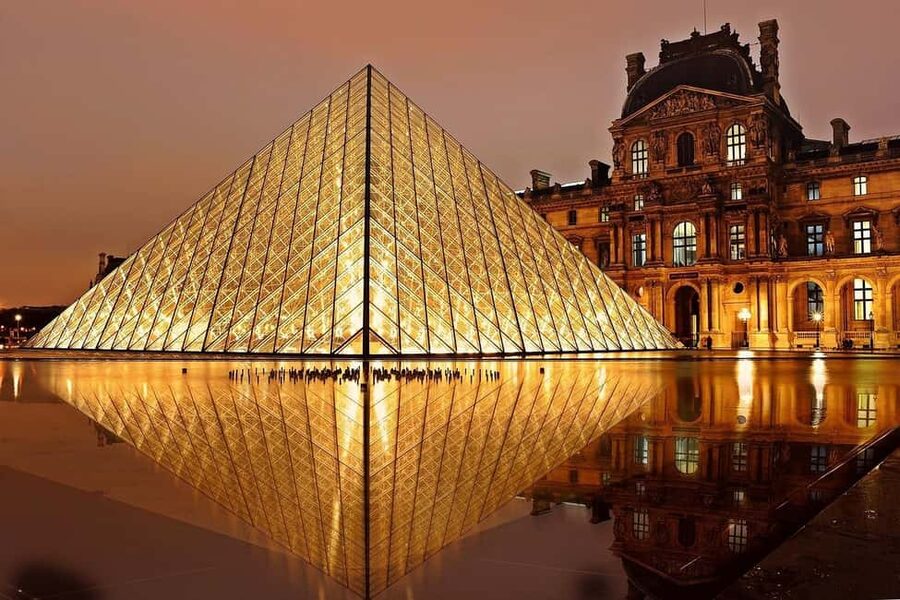
The most important thing about this tour is the format: a carefully designed highlight sequence. You’ll get the iconic works plus the key historical framing, but it doesn’t pretend you’ll cover every wing and every room. That’s not a downside. For a museum like the Louvre, trying to do it all is a fast way to remember nothing.
You’ll start with Greek and Roman antiquities, then climb toward the museum’s dramatic spaces. From there, the plan zeroes in on the moments most people come for, like Mona Lisa, while also weaving in French painting and large historical canvases. Depending on day and access, the guide can also steer you toward dramatic works tied to major eras such as Neoclassicism and Romanticism, including options like Le Sacre de Napoléon (The Coronation of Napoleon).
The tradeoff is simple: you will leave with a strong sense of the museum’s major “chapters,” not with a checkbox list of everything on every wall. If you like structure and clarity, this works well.
Still chasing the Mona Lisa? More Louvre visits
- Paris: Louvre Museum Timed-Entrance Ticket
★ 4.6 · 71,977 reviews - Paris: Louvre Guided Tour with Reserved Access & Boat Cruise
★ 4.3 · 16,353 reviews - Louvre Museum Masterpieces Guided Tour with Access
★ 4.5 · 12,023 reviews - Paris: Louvre Overview, Exploration tour and Reserved Entry
★ 4.1 · 10,145 reviews
Greek and Roman Antiquities: Venus de Milo and the Origins of Western Beauty
You begin in the Greek and Roman antiquities collections, where the tour starts grounding what you see in a longer idea: how Western art often borrowed from classical ideals. You’ll encounter Venus de Milo, plus other classical sculptures that illustrate ideals of beauty and proportion.
This first stop is smart because it sets a baseline. If you only jump straight to Renaissance painting and royal portraits, the Louvre can feel like a series of isolated masterpieces. Starting with antiquities makes later styles easier to read. You start noticing how themes, body ideals, and composition evolve over time.
Also, the tour approach is practical: it’s designed to give you just enough context to understand what you’re looking at. You’re not meant to memorize dates. You’re meant to see with better eyes.
The Grand Staircase Moment: Winged Victory of Samothrace (Nike)
After the antiquities, you’ll climb and start moving into the Louvre’s grand, theatrical spaces. A highlight is Winged Victory of Samothrace (Nike), positioned at the top of the main staircase. The sculpture’s placement is part of the effect—you don’t just look at it from a distance. The way it sits in the museum makes it feel like movement frozen mid-arrival.
Your guide will explain how this ancient sculpture was discovered and why it stays one of the most visually striking works in the whole museum. Even if you’ve seen photos before, the in-person scale and the sense of drama tend to hit differently when you’re standing there with someone who can point out what to notice.
One consideration here: views depend on where the group gathers. In a smaller group, you’re less likely to get lost in a sea of bodies, but the Louvre is still the Louvre. If you’re sensitive to crowds, this is one area where arriving with patience helps.
Mona Lisa Without Losing Your Mind: How the Guide Helps You Focus
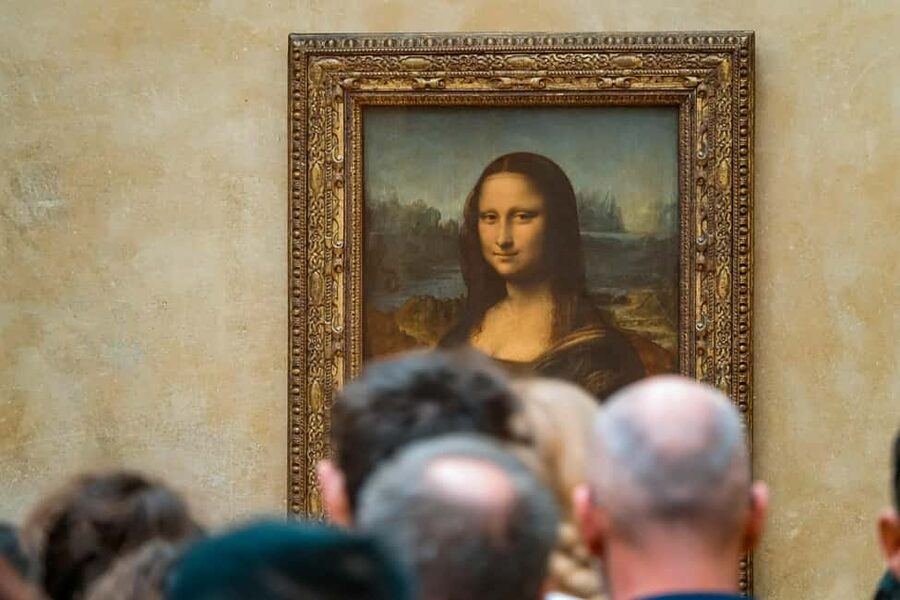
Then comes the moment everyone talks about: Leonardo da Vinci’s Mona Lisa. The good news is that the tour is built around how to manage the crowd. With a small group of up to 6 people, your guide can guide you to a practical vantage point and keep you from doing the classic mistake of wandering while everyone else stares.
Your Spanish guide will talk about mysteries and details that make the painting more than a famous face. They’ll cover ideas like the sfumato technique and the long-fascinating subject of the smile. You’ll also see other nearby Italian masterpieces that help you place the Mona Lisa in an artistic context, rather than treating it like a standalone celebrity.
What I like about this setup is the pacing. Instead of forcing you to sprint to the painting and then immediately disappear, the tour uses the Mona Lisa stop to teach you how to look. Once you understand what to watch for—soft transitions, expression, and composition—the rest of the room reads differently.
French Painting and Big Story Canvases: Kings, Revolutions, and Style Changes
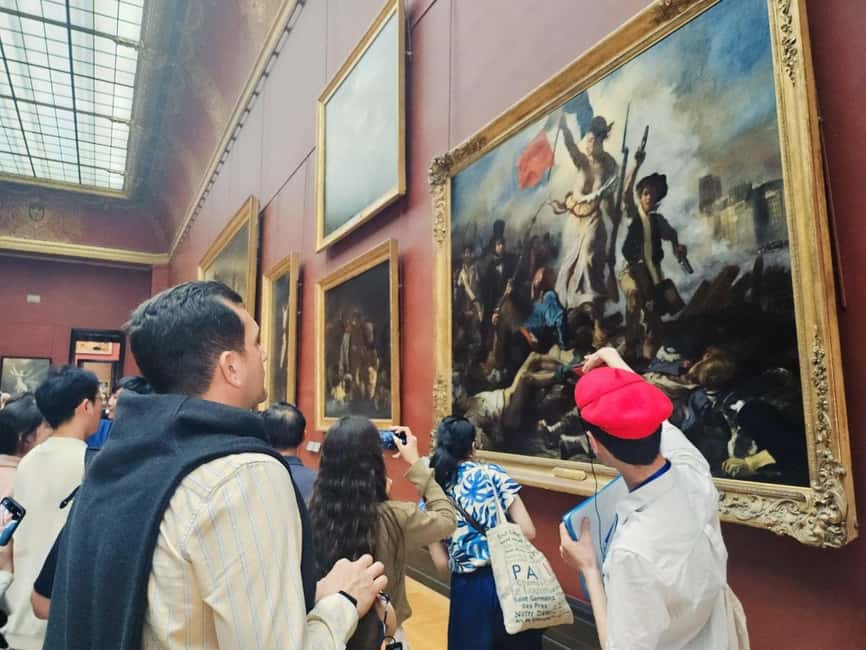
After Mona Lisa, you move into key rooms of French painting and large historical canvases. This part of the tour is where the Louvre starts telling you stories about power. You’ll see artworks tied to kings and emperors, then artworks that reflect revolutions and shifting political realities.
Depending on the day and what access allows, the guide can focus on the dramatic swings of Neoclassicism and Romanticism. These movements aren’t just art labels. They show how artists used composition, color, and emotion to persuade you—sometimes to inspire admiration, sometimes to push a political point.
This is also where a Spanish-speaking guide can feel extra useful. If you’re learning or you simply want more meaning while you look, commentary in Spanish helps you understand why certain choices were made. You’re not only scanning for famous names; you’re connecting the painting to the era’s mood and message.
Throughout this whole phase, you’ll get anecdotes and symbolic details, plus practical tips to help you enjoy the museum without feeling overwhelmed. That matters because the Louvre can be visually confusing if you’re trying to map it yourself mid-visit.
Using the All-Day Ticket: Your 2 Hours Sets Up the Rest of Your Visit
The tour lasts about 2 hours and ends inside the museum. After the guided portion, you’re free to keep exploring within the same wing of the building. That’s a smart design. It lets you turn the guide’s route into personal time, so you can linger where something clicked.
Here’s how I’d use your “after” time: return to the stops that felt most alive during the tour and look again for the specific things your guide pointed out. For example, if the Mona Lisa details made you curious, you can explore nearby works more calmly. If antiquities caught your attention, you can spend time with sculpture details—posture, drapery, and proportion—without the pressure of the next scheduled highlight.
Also, the ticket validity is for the whole day, which gives you flexibility. You can come back later if your feet need a break or if you want to browse at a slower pace after the guided route has already done the heavy lifting.
Worth weighing up next to this Paris pick



Spanish Commentary: Why Language Changes the Experience
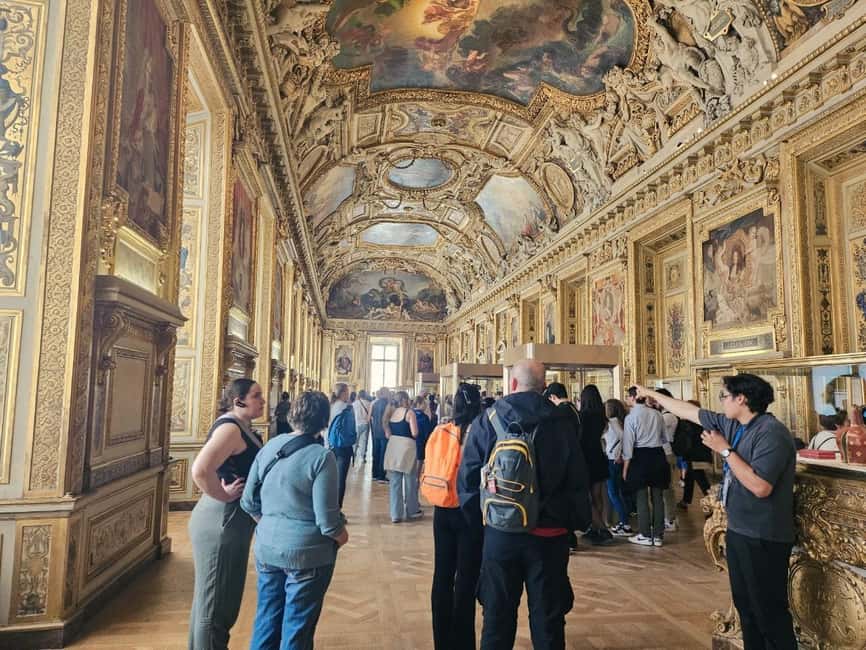
This tour is Spanish only, and that’s a feature, not a gimmick. When you get commentary in a language you can actually understand, the museum becomes less like a photo album and more like a guided conversation. The guide provides explanations and commentary in Spanish as you move through the galleries.
One more practical note: some content is shown in its original language. That can be normal in museums, and it just means you might occasionally see information labels or materials that aren’t translated. The guide’s role becomes even more important here, because they bridge the gap so you don’t feel left out.
If you speak Spanish well enough to enjoy art discussion, you’ll probably appreciate this more than you expect. If you’re not fluent, you might still enjoy it—but your best experience will come from being able to follow the guide’s explanations.
Price and Value: Is $99 Worth It?
At $99 per person for about 2 hours, you’re paying for a few concrete things: a professional Spanish guide, priority entrance via a separate lane, a small group of up to 6 people, and a ticket that stays valid for the entire day. You’re also paying for structure. That can be the biggest value in the Louvre, because the museum is so large that “finding your way” can become its own second tour—one you may not enjoy.
If you’re the type of traveler who likes to plan and then relax, this price usually feels fair. You’re not buying a ticket and hoping you figure out the best route on the fly. You’re buying time, direction, and commentary that helps the famous works make more sense.
If you already know the Louvre well and you prefer to roam freely without a set plan, you might decide to skip the guide. But for most people, the combination of priority entry and a tight highlight route is a strong value.
Who This Tour Suits Best (and Who Might Skip It)
This tour is a great fit for you if you want the Louvre’s essentials without the overwhelm. It also fits well if Spanish is your language (or close to it), since the guide’s explanations are central to the experience.
It’s also a good choice if you don’t want a huge group. A max of 6 means you can hear the guide, ask questions if the group dynamic allows, and get help navigating the museum spaces.
Who might pass? If your goal is to spend a long day drifting room-to-room with no scheduled stops, this format may feel a bit too structured. Or if you want a deep, room-by-room survey of every era, a 2-hour highlights tour won’t pretend to do that.
Good news: your all-day ticket and extra time in the same wing give you room to build on what you learned.
Should You Book This Louvre Spanish Masterpieces Tour?
Book it if you want a confident start, a manageable plan, and Spanish commentary that helps you understand what you’re seeing. The priority access, the small group size, and the fact that your ticket covers the whole day are practical advantages, not just marketing words. You’ll walk out knowing the Louvre’s major “chapters,” and you’ll have a useful route to guide your independent exploring afterward.
Skip it if you already have a personal Louvre route you love and you’re happy to figure out the flow yourself. Otherwise, this tour is one of the more sensible ways to experience the Louvre’s biggest names without turning your day into a maze.
FAQ
How long is the guided tour?
The guided portion lasts about 2 hours.
What language is the tour guide?
The guide provides the tour in Spanish.
What group size is it?
It’s a small group limited to up to 6 participants.
Where do I meet the guide?
You meet at the France Tourism Agency, 6 Rue de l’Amiral de Coligny.
Does my ticket let me enter the Louvre after the tour?
Yes. Your ticket is valid for the whole day, so you can continue exploring after the guided visit within the same wing.
Is there priority or skip-the-line access?
Yes. You get priority entrance using a separate entrance.
Which famous artworks are included?
The tour includes masterpieces such as Mona Lisa and Venus de Milo, and may also include works like Le Sacre de Napoléon (The Coronation of Napoleon) depending on day and access.
Where does the tour end?
The tour wraps up inside the museum, and then you have free time to explore in the same wing of the building.
Is the tour wheelchair accessible?
Yes, it is listed as wheelchair accessible.
What are the cancellation and payment options?
You can cancel up to 24 hours in advance for a full refund. You can also reserve now and pay later.
If you want, tell me your Spanish level and what you most care about (Mona Lisa only, or the full arc of painting and sculpture), and I’ll suggest how to use the after-tour time to get the best second look.
More Tours in Paris
- Paris: Louvre Guided Tour with Reserved Access & Boat Cruise
★ 4.3 · 16,353 reviews - Paris: Big Bus Hop-On Hop-Off Tour with Optional Cruise
★ 4.4 · 13,279 reviews - Louvre Museum Masterpieces Guided Tour with Access
★ 4.5 · 12,023 reviews - Versailles: Skip-the-Line Tour of Palace and Gardens Access
★ 4.7 · 10,429 reviews - Paris: Louvre Overview, Exploration tour and Reserved Entry
★ 4.1 · 10,145 reviews
More Tour Reviews in Paris
- Paris: 1-Hour Seine Cruise departing from the Eiffel Tower
★ 4.4 · 77,472 reviews - Paris: Louvre Museum Timed-Entrance Ticket
★ 4.6 · 71,977 reviews - Disneyland® Paris 1-Day Ticket
★ 4.6 · 49,412 reviews - Paris: Versailles Palace and Gardens Full Access Ticket
★ 4.6 · 41,579 reviews - Paris: Arc de Triomphe Rooftop Tickets
★ 4.6 · 34,264 reviews
Back to the Louvre: More Ways In
- Paris: Louvre Museum Timed-Entrance Ticket
★ 4.6 · 71,977 reviews - Paris: Louvre Guided Tour with Reserved Access & Boat Cruise
★ 4.3 · 16,353 reviews - Louvre Museum Masterpieces Guided Tour with Access
★ 4.5 · 12,023 reviews - Paris: Louvre Overview, Exploration tour and Reserved Entry
★ 4.1 · 10,145 reviews - Paris: Louvre Museum Entry Ticket With Host and River Cruise
★ 4.6 · 9,926 reviews
Fresh off the review desk in Paris
- Secrets of Paris Bike Tour in English or Dutch★ 5.0 · 5 reviews
- Paris: Mont Saint-Michel Day Tour with Chinese Tour Guide★ 5.0 · 5 reviews
- Private Street Art 2-Hour Guided Tour in Paris★ 4.5 · 5 reviews
- Orsay Museum Tour: 2h Highlights (Private & Small Group)★ 5.0 · 5 reviews
- Discover Paris in electric golf carts★ 4.0 · 5 reviews
- Paris Private Boat Tour with your own Captain Guide★ 5.0 · 5 reviews
Louvre Museum Tours, compared.
 ★ 4.6Louvre Museum Timed-Entrance TicketFrom $2671,977 reviews
 ★ 4.3Louvre Guided Tour with Reserved Access & Boat CruiseFrom $8116,353 reviews
 ★ 4.5Louvre Museum Masterpieces Guided Tour with AccessFrom $8612,023 reviews
 ★ 4.1Louvre Overview, Exploration tour and Reserved EntryFrom $6010,145 reviews
 ★ 4.6Louvre Museum Entry Ticket With Host and River CruiseFrom $1009,926 reviews
 ★ 4.6Mona Lisa & Louvre Masterpieces Tour with Reserved AccessFrom $806,812 reviews
 ★ 5.0Louvre Museum – Exclusive Guided Tour (Entry Included)From $1816,296 reviews
 ★ 4.0Louvre Reserved Ticket and River Cruise ComboFrom $376,054 reviews
Browse the lists this tour appears in