
Reviewed · LOUVRE MUSEUM TOURS
Louvre Museum Masterpieces Guided Tour
If the Louvre feels like a maze, this tour is your shortcut. You get a small-group highlights route that aims you at the real icons fast, with a guide who ties the museum to the building itself. My favorite part is the laser focus on the biggest masterpieces, without wasting your limited time wandering. You’ll also walk out with clear next steps for the rest of the museum, which is huge. The one drawback to factor in is simple: it’s still 2 hours of walking and stairs, and the Louvre can get packed.
You’ll meet your guide at Librairie Delamain, 155 Rue Saint-Honoré (near public transport), then head straight into the palace-and-museum story. The tour runs about 2 hours, in English, with a maximum of 6 people. That small size is what makes it feel less like a school trip and more like a smart, paced tour.
In This Review
- Key reasons this Louvre tour is worth your time
- Why a 2-hour Louvre highlights tour saves your sanity
- Meeting at Librairie Delamain: the part you should not rush
- The route: from Louvre origins to masterpieces you can actually see
- Nike of Samothrace: where you learn to look up
- Venus de Milo: a sculpture story with a real mystery
- Mona Lisa: how the crowd changes the experience
- What you do after the tour ends (and why it matters)
- Price and value: what you’re really paying for
- How demanding is it, really?
- Who should book this Louvre Masterpieces tour?
- Should you book it?
- FAQ
- How long is the Louvre Museum Masterpieces guided tour?
- What is included in the price?
- Is skip-the-line admission guaranteed?
- How many people are in the group?
- What language is the tour offered in?
- Is the tour wheelchair accessible?
- Where do I meet the guide, and where does the tour end?
- Can I cancel for a full refund?
Key reasons this Louvre tour is worth your time
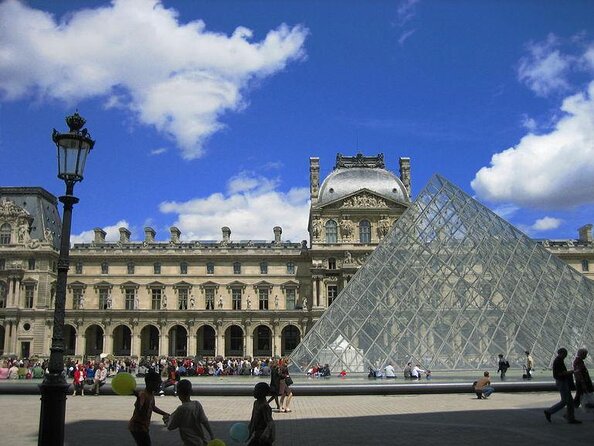
- Reserved entry to the museum so you spend more time looking at art and less time shuffling in lines
- Max 6 people, so you can actually hear your guide and get help finding good viewing angles
- A tight “highlights first” route that stops at the Nike, Venus de Milo, and the Mona Lisa
- Guides add on-the-spot context, including what’s known and what’s still a mystery about the Mona Lisa
- You finish inside the museum with independent time to go where your interests pull you next
Why a 2-hour Louvre highlights tour saves your sanity
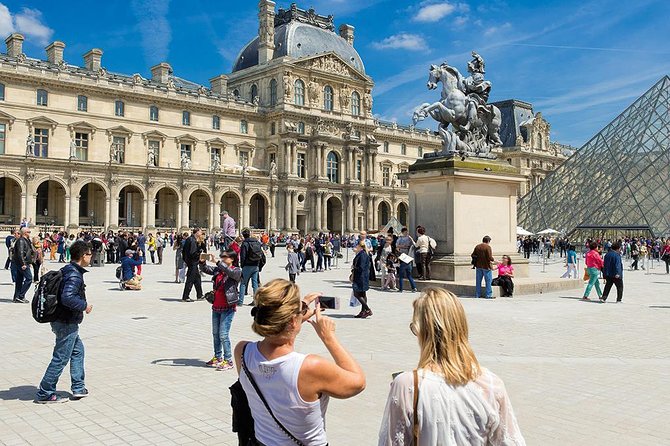
The Louvre can overwhelm you in minutes. Even if you’ve studied the art list, you still have to figure out where to go, how long it takes to get there, and how to deal with crowd flow. This tour is built for that reality. You’re not trying to “do the Louvre.” You’re trying to get your bearings fast and leave with a strong sense of what you’re looking at.
I like that the experience is designed around the “starter pack” masterpieces. You begin with a bit of Louvre history, then you move quickly into three works that most people came for: the Nike of Samothrace, the Venus de Milo, and Leonardo’s Mona Lisa. It’s a practical way to turn a huge museum visit into something you can actually enjoy.
And because the group is limited to 6, your guide can manage pacing and help people land at better spots. I saw that kind of care show up repeatedly in real guide style, including guides like Nicholas, Stephanie, and Laura who were praised for making the tour feel doable in a jammed museum.
The consideration: this is a walking tour. One review flagged lots of stairs, and the tour is described as requiring a strong physical fitness level. If you have mobility limits, plan for breaks and expect that your route may not be flexible in the moment.
Still chasing the Mona Lisa? More Louvre visits
- Paris: Louvre Museum Timed-Entrance Ticket
★ 4.6 · 71,977 reviews - Paris: Louvre Guided Tour with Reserved Access & Boat Cruise
★ 4.3 · 16,353 reviews - Louvre Museum Masterpieces Guided Tour with Access
★ 4.5 · 12,023 reviews - Paris: Louvre Overview, Exploration tour and Reserved Entry
★ 4.1 · 10,145 reviews
Meeting at Librairie Delamain: the part you should not rush
The meeting point is Librairie Delamain at 155 Rue Saint-Honoré, 75001 Paris. From there, you go in as a group and meet your guide near the entrance area.
Two practical tips help your day start smoother:
- Arrive early so you’re not stressed by security lines or finding the exact spot.
- Build in a little buffer for the day’s museum conditions, because timing can shift when there are strikes or crowd surges.
It’s also useful that the tour ends inside the Louvre. That means you’re not spending your last minutes walking back to the exit. Once the guided highlights are done, you’re already positioned to continue exploring.
The route: from Louvre origins to masterpieces you can actually see
This tour is about mixing context with iconic artwork. You’ll start with an orientation walk that connects the Louvre as a former palace to the museum it became. One guide approach described it as moving through the building’s evolution, from fort to fortress to palace and then museum. Whether you’re a history buff or just want a simple story, that framing gives the masterpieces something to sit on top of.
Then you hit the first big sculpture stop and move along the main highlight line. The tour is paced for a total duration of about 2 hours, and you’ll get the impression that the guide is aiming to maximize your “see it properly” time rather than checking boxes.
Expect a pattern like this:
1) short history or art background while walking
2) a focused stop at a major piece
3) time to take in the details
4) then move on quickly to the next icon
That’s why many people like this tour as a first visit. You leave with a mental map, not just photos.
Nike of Samothrace: where you learn to look up
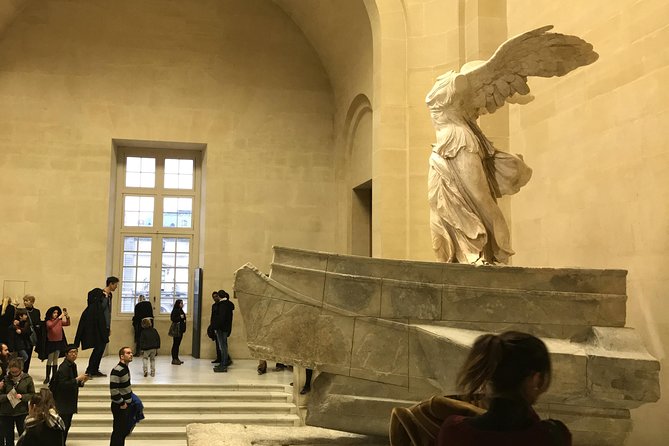
The Nike of Samothrace is one of those works that feels alive the moment you’re standing in front of it. You’ll start at its base and get guided context on what it represents. The Nike here symbolizes the messenger goddess Victory, and the statue’s flowing cloak and powerful pose are the reason this piece grabs attention even for people who don’t usually care about ancient sculpture.
A big value in seeing it with a guide is the way they explain what you’re actually noticing. Without context, you might look and think, impressive. With context, you start noticing how movement is carved into stone and how the artwork was meant to communicate power and arrival.
It’s also a good warm-up stop because it teaches you a way of viewing. You’ll carry that attention to the next piece, and your photos tend to come out better too because you’re aiming deliberately.
Venus de Milo: a sculpture story with a real mystery
Next up is the Venus de Milo. It’s among the most recognizable ancient works, and the guide will point out why it endured, including the story of how it ended up being found on Milos in the Aegean Sea.
This stop has a “human story” feel. One part is the art itself, but another part is the detective work around the sculpture’s origin and the gaps in what we know. That blend of certainty and uncertainty is one reason the Venus stop is often remembered.
If you’re the kind of traveler who likes to understand what you’re seeing at both levels (art and history), this is a strong match. Guides were praised for answering questions and making the art feel understandable, with names like Abad, Nicholas, and Elana showing up in positive feedback for that exact mix of storytelling and clear explanations.
Practical reality check: the Louvre is crowded. Your viewing angle may depend on the moment. The benefit of a guided stop is that you usually spend less time trying to figure out where to stand.
Mona Lisa: how the crowd changes the experience

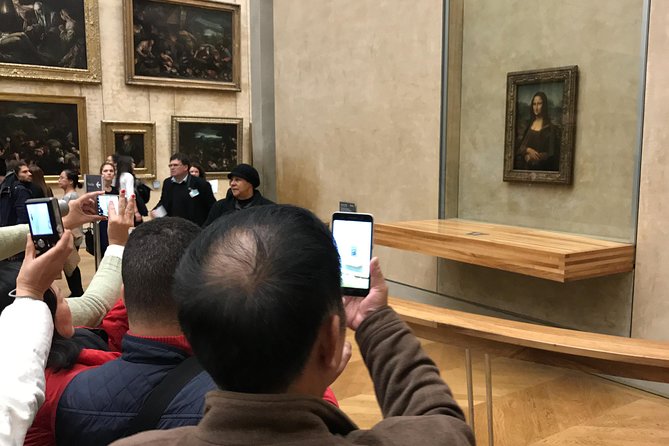
The Mona Lisa can be frustrating on your own because the crowd creates a moving wall around the painting. Even with an “early” or “skip-the-line” ticket, you can still find that the lines to get a close look are tight, and the view isn’t always ideal.
This tour handles the Mona Lisa in a way that helps you get more from less time. Your guide shares what’s known and what remains a mystery about the portrait, and they’ll help you find a spot where you can actually see rather than hover and hope.
A key point from real-world experiences: sometimes the skip-the-line promise can be affected by circumstances like maintenance closures of a guided entrance or unusual access delays due to events such as strikes. In those cases, you might wait longer than you expected, even though your ticket is reserved.
Still, the guide role matters. One review described communication challenges around the Mona Lisa area when it was extremely busy. Another mentioned that, while access was faster, it was still hard to get near enough for a perfect view. That’s normal for the Louvre’s most famous painting. Your best strategy is to expect a crowd and use the time to focus on details you can see from where you’re standing.
Worth weighing up next to this Paris pick



What you do after the tour ends (and why it matters)
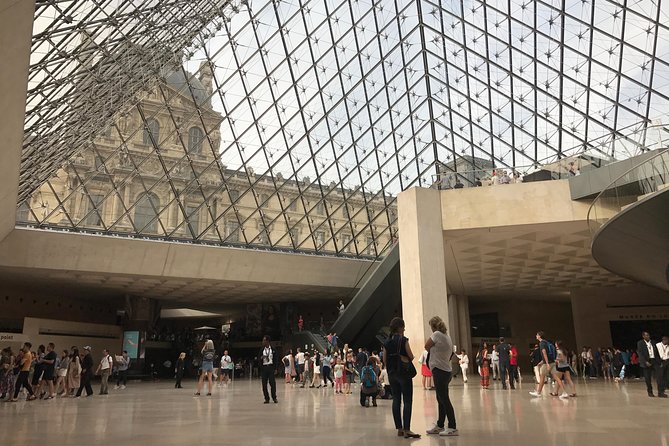
After the 2-hour highlights tour, you’re left with independent time to explore the rest of the museum. The guide can also point you toward exhibits that match your interests.
This part is important because the Louvre is not a museum you can “finish.” After seeing the big anchors, you’ll likely have stronger instincts about what you want next: more French and Italian painting, ancient sculpture, or even sections you didn’t plan to prioritize.
One practical tip from tour experiences: plan to keep your energy for the rest of the museum, since the highlights tour can feel like a sprint. If you think you’ll want to wander for 2 to 4 more hours, consider leaving time for rest stops and slower movement. Also note that food and drinks aren’t allowed inside the museum, so you’ll want to plan snacks outside if you need them.
Price and value: what you’re really paying for
At $121.72 per person, this isn’t the cheapest Louvre option. But it’s also not trying to sell you a vague “museum tour.” You’re paying for three things that tend to be hard to replicate on your own:
1) Skip-the-line admission via a guided setup (though real access can vary with closures or strikes)
2) A professional guide who helps you focus on what matters in a crowded building
3) A small-group route that keeps the experience from turning into a slow-moving line of bodies
Your ticket is included: €28 entrance ticket plus the guide. That means the price is effectively paying for guided time and reduced friction. For first-time visitors, those benefits often translate directly into feeling oriented and not lost.
Is it worth it if you already know the Louvre map and you’re comfortable navigating crowds? Maybe not. But if you’re going during a peak season or you want to leave with the real icons understood and placed in context, this style of tour often feels like the best use of your limited time.
How demanding is it, really?
The tour notes a strong physical fitness level. Reviews also flag walking, stairs, and the fact that the Louvre is packed.
So here’s how I’d plan it:
- Wear comfortable shoes with grip.
- Expect that you may stand for periods while looking at each masterpiece.
- Bring a plan for breaks and slower moments if you need them.
Also, because it ends inside the Louvre, you won’t finish “outside” right away. You may keep walking after your guided portion is over, depending on what you choose to see next.
Who should book this Louvre Masterpieces tour?
This tour is a great choice if:
- You’re visiting the Louvre for the first time and want a structured start
- You care about understanding context, not just taking snapshots
- You prefer a small-group pace instead of a large crowd herd
- You want to focus on the headline works: Nike of Samothrace, Venus de Milo, and Mona Lisa
It might be less ideal if:
- You need a fully flexible route for mobility reasons (the tour is described as not wheelchair accessible)
- You’re hoping for a long, slow art history seminar without crowds
- You’re going at a time when access conditions might be disrupted, since strikes or guided-entrance closures can change how fast you get in
Should you book it?
Yes, I think you should book this tour if your goal is to see the Louvre’s biggest masterpieces with guidance and then make smart choices for the rest of your day. The small group size, reserved entry intent, and the focus on the Nike, Venus de Milo, and Mona Lisa add up to real value for first-timers.
If you have the flexibility, book an earlier time. That’s a simple way to reduce stress, especially when crowds are heavy.
And if your priority is total flexibility and you love wandering without structure, you might prefer a self-guided plan. But if you want the museum to feel navigable, this is a strong way to start.
FAQ
How long is the Louvre Museum Masterpieces guided tour?
The tour runs about 2 hours.
What is included in the price?
The tour includes a professional guide and the museum entrance ticket (listed as €28 entrance ticket).
Is skip-the-line admission guaranteed?
The tour is marketed as skip-the-line admission. However, access can be affected by situations like maintenance closures of guided entrances or unusual delays such as strikes.
How many people are in the group?
The tour has a maximum of 6 travelers.
What language is the tour offered in?
The tour is offered in English.
Is the tour wheelchair accessible?
No, this tour is not wheelchair accessible.
Where do I meet the guide, and where does the tour end?
You meet near the Louvre entrance at Librairie Delamain, 155 Rue Saint-Honoré, 75001 Paris. The tour ends inside the Louvre.
Can I cancel for a full refund?
Yes. Free cancellation is available up to 24 hours in advance of the experience for a full refund.
More Tours in Paris
- Paris: Louvre Guided Tour with Reserved Access & Boat Cruise
★ 4.3 · 16,353 reviews - Paris: Big Bus Hop-On Hop-Off Tour with Optional Cruise
★ 4.4 · 13,279 reviews - Louvre Museum Masterpieces Guided Tour with Access
★ 4.5 · 12,023 reviews - Versailles: Skip-the-Line Tour of Palace and Gardens Access
★ 4.7 · 10,429 reviews - Paris: Louvre Overview, Exploration tour and Reserved Entry
★ 4.1 · 10,145 reviews
More Tour Reviews in Paris
- Paris: 1-Hour Seine Cruise departing from the Eiffel Tower
★ 4.4 · 77,472 reviews - Paris: Louvre Museum Timed-Entrance Ticket
★ 4.6 · 71,977 reviews - Disneyland® Paris 1-Day Ticket
★ 4.6 · 49,412 reviews - Paris: Versailles Palace and Gardens Full Access Ticket
★ 4.6 · 41,579 reviews - Paris: Arc de Triomphe Rooftop Tickets
★ 4.6 · 34,264 reviews
Back to the Louvre: More Ways In
- Paris: Louvre Museum Timed-Entrance Ticket
★ 4.6 · 71,977 reviews - Paris: Louvre Guided Tour with Reserved Access & Boat Cruise
★ 4.3 · 16,353 reviews - Louvre Museum Masterpieces Guided Tour with Access
★ 4.5 · 12,023 reviews - Paris: Louvre Overview, Exploration tour and Reserved Entry
★ 4.1 · 10,145 reviews - Paris: Louvre Museum Entry Ticket With Host and River Cruise
★ 4.6 · 9,926 reviews
Fresh off the review desk in Paris
- Secrets of Paris Bike Tour in English or Dutch★ 5.0 · 5 reviews
- Paris: Mont Saint-Michel Day Tour with Chinese Tour Guide★ 5.0 · 5 reviews
- Private Street Art 2-Hour Guided Tour in Paris★ 4.5 · 5 reviews
- Orsay Museum Tour: 2h Highlights (Private & Small Group)★ 5.0 · 5 reviews
- Discover Paris in electric golf carts★ 4.0 · 5 reviews
- Paris Private Boat Tour with your own Captain Guide★ 5.0 · 5 reviews
Louvre Museum Tours, compared.
 ★ 4.6Louvre Museum Timed-Entrance TicketFrom $2671,977 reviews
 ★ 4.3Louvre Guided Tour with Reserved Access & Boat CruiseFrom $8116,353 reviews
 ★ 4.5Louvre Museum Masterpieces Guided Tour with AccessFrom $8612,023 reviews
 ★ 4.1Louvre Overview, Exploration tour and Reserved EntryFrom $6010,145 reviews
 ★ 4.6Louvre Museum Entry Ticket With Host and River CruiseFrom $1009,926 reviews
 ★ 4.6Mona Lisa & Louvre Masterpieces Tour with Reserved AccessFrom $806,812 reviews
 ★ 5.0Louvre Museum – Exclusive Guided Tour (Entry Included)From $1816,296 reviews
 ★ 4.0Louvre Reserved Ticket and River Cruise ComboFrom $376,054 reviews
Browse the lists this tour appears in