
Reviewed · PRIVATE
Medieval Paris Private Tour
Paris turns medieval when you know where to look. This private walking tour uses an art historian guide to explain how Paris grew from the Île de la Cité outward, with easy stops near Notre-Dame and the Latin Quarter. I especially like the focus on architecture you can actually see—not just names on a sign—and the freedom to ask questions as you go. One thing to consider: a few major places are viewed from outside (including Notre-Dame), since access can be limited.
I also love the way the tour connects big landmarks to the Middle Ages through practical details, like what a Gothic tower tells you or why a fountain matters for everyday life. It’s built for moderate walking over about two hours, and it helps if you’re comfortable moving through central Paris at a relaxed pace.
In This Review
- Key things that make this medieval Paris tour worth your time
- What you’re really buying: a smart medieval shortcut in central Paris
- Price and how to judge the value for your group
- Start point near Pompidou: the route sets up the medieval story
- Stop 1: Musée de Cluny (outside only) and the medieval “feel” of the building
- Stop 2: Notre-Dame de Paris from afar, with context you can use later
- Stop 3: La Sorbonne and what medieval universities actually meant
- Stop 4: Tour Saint-Jacques—pilgrims, astrologers, and flamboyant Gothic
- Stop 5: Fountain of the Innocents—the oldest monumental fountain and the real tone of medieval life
- Stop 6: Centre Pompidou—modern design that borrows from the medieval mind
- Stop 7: Hôtel de Ville—don’t trust the façade, trust the site
- Guides and the question-friendly format
- How the outside-only approach affects your expectations
- Who this tour fits best
- A practical tip: wear good shoes and bring questions
- Should you book Medieval Paris Private Tour?
- FAQ
- How long is the Medieval Paris Private Tour?
- Where does the tour start and end?
- Is this tour private?
- Is it offered in English?
- Will we go inside Notre-Dame and Musée de Cluny?
- What kind of fitness level do I need?
- Is it free to cancel?
Key things that make this medieval Paris tour worth your time
- Art historian guidance that keeps the story tied to what you’re looking at on the street
- Notre-Dame from the outside with context, since entering may not be possible right now
- A smart walk through the Latin Quarter and its medieval institutions
- Tour Saint-Jacques and the Fountain of the Innocents for pilgrim life, science, and social reality
- Centre Pompidou’s medieval connections that you’d miss without a guide
- Small-group feel where your questions get answered live
What you’re really buying: a smart medieval shortcut in central Paris
This isn’t a long museum day. It’s a tight, street-level walk through medieval Paris landmarks you can reach fast—and then understand better.
You start with an art historian guide in central Paris and follow a route designed to show how the Middle Ages shaped what you still see today. The tour is private, so you’re not squeezed into the “follow the group” rhythm. You get to stop, look closely, and ask why things were built the way they were.
The value here is time plus clarity. Medieval Paris can feel like a jigsaw puzzle—Gothic churches, university buildings, old markets, civic power, and practical daily life—scattered across modern streets. This tour gives you the picture on the box by linking each stop to a bigger story.
Worth weighing up next to this Paris pick
- Louvre Museum Paris Essential Guided Tour Semi-Private 6ppl Max
★ 5.0 · 3,807 reviews - SUV Private Transfer: Paris to Charles de Gaulle Airport (CDG)
★ 4.0 · 3,091 reviews - Paris: Private Photoshoot at the Eiffel Tower
★ 4.7 · 2,636 reviews - Top Private Cruises in Paris with French Champagne and surprises
★ 5.0 · 1,553 reviews
Price and how to judge the value for your group
The price is $360.48 per group (up to 6) for about 2 hours, in English. That can be a good deal if you’re splitting it with friends or family, because you’re paying for a guide’s expertise and private attention, not for entry tickets.
Here’s a quick reality check:
- Up to 6 people is the stated group limit for pricing, so if your group is smaller, the per-person cost rises.
- The tour also lists a maximum of 10 people per booking, which can matter if you’re traveling with a larger group and want to confirm how it will be handled.
If you like history but hate wandering around clueless, the math usually works in your favor. You’re buying focus: the route, the explanations, and the ability to ask questions on the spot.
Start point near Pompidou: the route sets up the medieval story
The tour begins at 98 Bd Saint-Germain, 75005, at the side of the Pompidou museum by the Stravinsky fountain. Ending point is 26 Rue Saint-Merri, 75004.
Starting near Pompidou is a clever move. It primes your brain for one of the tour’s themes: modern Paris didn’t wipe the Middle Ages off the map. Even when buildings look new, ideas can echo older forms and older city logic. That connection becomes clearer once you start walking.
The duration is about two hours, with short stops. That pacing is good for a first medieval orientation, and it keeps the tour from turning into a long slog.
Stop 1: Musée de Cluny (outside only) and the medieval “feel” of the building
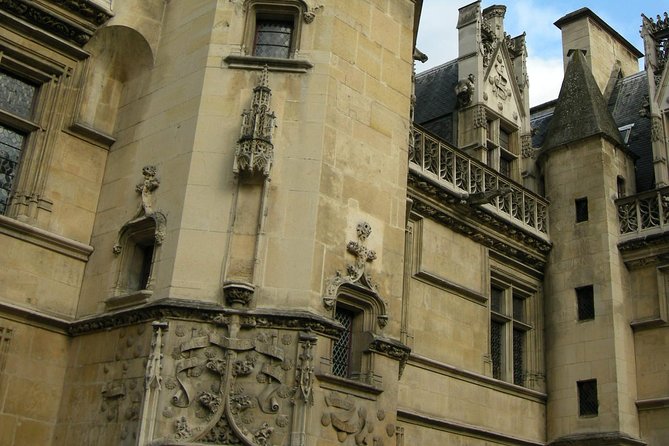
You’ll spend around 20 minutes at Musée de Cluny, known as the medieval museum of Paris. The key detail: the guide gives commentary on the building and how it reflects the medieval period, without visiting the museum inside.
That means you’re not paying for a second experience during this tour, and you avoid the “you’re here, now wait in line” problem. Instead, you get a quick reading of place—how medieval Paris architecture and atmosphere show up in what survives.
Why this works: before you chase landmarks, you learn what medieval work “looks like” in stone, shape, and setting. It makes the next stops easier to understand.
Stop 2: Notre-Dame de Paris from afar, with context you can use later
Next is Cathedrale Notre-Dame de Paris for about 20 minutes. There’s a practical note: since the cathedral suffered a fire and won’t be accessible for a while, the tour provides commentary from afar and does not include entering.
Even if you’ve seen photos of Notre-Dame your whole life, it helps to hear the history tied to its setting—especially the fact that it sits on the site connected to the city’s original founding on the Île de la Cité.
If you’re the type who loves architecture details, this kind of outside explanation is still valuable. You can often spot major structural ideas and symbolism more clearly when someone gives you the right framing.
Stop 3: La Sorbonne and what medieval universities actually meant
You’ll get about 10 minutes at La Sorbonne. The focus here is the importance of the university in the medieval period and why Paris mattered in that era.
This is one of those stops that can surprise you. People think of universities as modern institutions with modern campuses. In the Middle Ages, they were engines of learning, debate, and prestige—part of why Paris became a magnetic city for scholars and students.
If you’ve ever wondered how a city builds long-term influence, this is a strong place to ask. A good guide can connect the dots between education, power, and the kind of buildings a city invests in.




Stop 4: Tour Saint-Jacques—pilgrims, astrologers, and flamboyant Gothic
About 15 minutes goes to Tour Saint-Jacques, and it’s an unforgettable stop because it tells you Paris wasn’t only art and saints.
The tour highlights that this site mattered for pilgrims, plus people connected to astrology and alchemy. It also calls out the tower’s role as an example of flamboyant Gothic style.
That mix—religion and early science-style thinking, plus high-style architecture—captures medieval Paris better than a list of dates ever could. You start seeing the city as a place where beliefs, crafts, and experiments lived side by side.
Stop 5: Fountain of the Innocents—the oldest monumental fountain and the real tone of medieval life
You’ll spend about 20 minutes at Fontaine des Innocents. This is described as the city’s oldest monumental fountain, and the guide uses it to explain how life in medieval Paris could be beautiful and, at times, cruel.
This stop is great because it gives you a “street-level” emotional understanding. Churches and towers are impressive, but fountains are about public space—how people gather, where routines happen, and what a city chooses to display in front of everyone.
If you want medieval Paris to feel human—not just grand—this is the moment that usually does it.
Stop 6: Centre Pompidou—modern design that borrows from the medieval mind
About 15 minutes are spent at Centre Pompidou. This is one of the more interesting twists in the route: the tour frames the contemporary building as an image of modernity that is also influenced by the medieval period.
Why that’s useful: it trains you to notice patterns across time. You start asking better questions, like why certain design choices feel familiar even when styles change.
If you’re curious about how ideas travel through centuries—religion to civic life, crafts to design, city planning to architecture—this stop gives you a satisfying bridge.
Stop 7: Hôtel de Ville—don’t trust the façade, trust the site
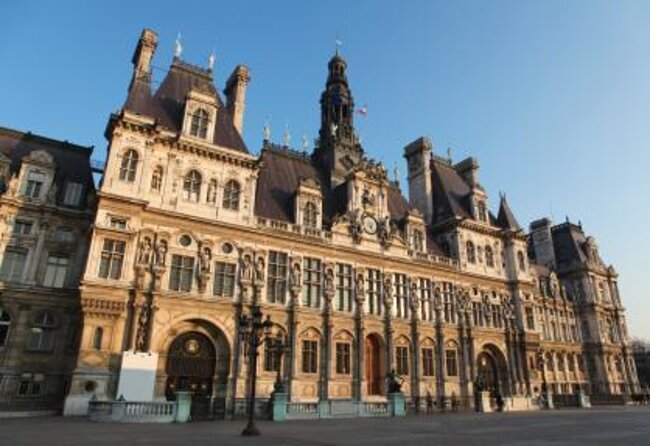
Finally, you’ll spend around 15 minutes at Hotel de Ville. The tour points out that while the façade may look Renaissance, the site is 100% medieval in origin and importance.
That’s a key lesson. Medieval Paris can be hidden under later remodeling. Seeing it explained this way helps you avoid a common mistake: judging everything by how it looks today.
This stop also lands well at the end of the walk, since it leaves you near 26 Rue Saint-Merri and within striking distance of more exploring if you want it.
Guides and the question-friendly format
This tour is led by a professional art historian guide, and the whole point of private is that you can steer the conversation.
In the past, guides have included people like Amy and Caroline. One of the best things about the experience is that the explanations aren’t only facts; they correct misconceptions and clarify what you’re seeing in architectural terms.
If you love asking about symbolism, Gothic design, or why medieval institutions shaped the city, you’ll get a lot from the format. If you don’t know much yet, you’ll still be guided to the right kind of observations.
How the outside-only approach affects your expectations
A fair heads-up: several major stops are treated as view-and-learn rather than enter-and-tour. Musée de Cluny is discussed without an inside visit. Notre-Dame is viewed from afar due to access limits.
This is not a flaw—it’s part of how the tour stays short and focused. You still get the “why” and “what to look for.” But if you want maximum time inside museums and churches, you might pair this with a separate add-on later.
The good news is that most stops are free to view during the walk, and the main included component is the guide.
Who this tour fits best
This medieval Paris private tour is a strong match if:
- You like architecture and institutions, not just monuments
- You want a short orientation to medieval Paris from a knowledgeable guide
- You’re traveling in a small group and want the pacing to match your curiosity
- You enjoy asking follow-up questions as you walk
It may be less ideal if:
- You want lots of indoor time and long museum visits in one go
- Your group needs fully step-free, unstressed walking (the tour asks for moderate physical fitness)
A practical tip: wear good shoes and bring questions
With a two-hour walking format, good shoes matter. Central Paris surfaces can be uneven, and the route includes multiple stops close together.
Also, come ready with a few questions. The guide explicitly encourages you to ask. Even one good question—like what a Gothic detail signals or how the medieval university shaped the city—can make the rest of the tour click.
Should you book Medieval Paris Private Tour?
Book it if you want a high-impact, guided way to understand how Paris became Paris in the medieval era. The private format, the art historian leadership, and the stop selection around Notre-Dame, Sorbonne, Tour Saint-Jacques, and the Fountain of the Innocents make it a smart use of limited time.
Skip or rethink it if your top priority is entering every major site. This tour is built around outside viewing and interpretation, including Notre-Dame from afar.
If your idea of a good Paris day is walking, looking closely, and learning the logic behind what you’re seeing, this one is a solid bet.
FAQ
How long is the Medieval Paris Private Tour?
It’s about 2 hours.
Where does the tour start and end?
It starts at 98 Bd Saint-Germain, 75005 Paris, on the side of the Pompidou museum by the Stravinsky fountain. It ends at 26 Rue Saint-Merri, 75004 Paris.
Is this tour private?
Yes. It’s a private tour/activity, and only your group participates.
Is it offered in English?
Yes. The tour is offered in English.
Will we go inside Notre-Dame and Musée de Cluny?
No. Notre-Dame is explained from afar due to access limits, and Musée de Cluny is discussed without visiting the museum inside.
What kind of fitness level do I need?
The tour asks for moderate physical fitness.
Is it free to cancel?
Cancellation is free if you cancel up to 24 hours in advance for a full refund. If you cancel less than 24 hours before the start time, the amount paid isn’t refunded.
More Private in Paris
- Louvre Museum Paris Essential Guided Tour Semi-Private 6ppl Max
★ 5.0 · 3,807 reviews - SUV Private Transfer: Paris to Charles de Gaulle Airport (CDG)
★ 4.0 · 3,091 reviews - Paris: Private Photoshoot at the Eiffel Tower
★ 4.7 · 2,636 reviews - Top Private Cruises in Paris with French Champagne and surprises
★ 5.0 · 1,553 reviews - Golf Cart in Paris – Private Guided City Tour – Pickup Included
★ 5.0 · 1,164 reviews
More Tours in Paris
- Paris: Louvre Guided Tour with Reserved Access & Boat Cruise
★ 4.3 · 16,353 reviews - Paris: Big Bus Hop-On Hop-Off Tour with Optional Cruise
★ 4.4 · 13,279 reviews - Louvre Museum Masterpieces Guided Tour with Access
★ 4.5 · 12,023 reviews - Versailles: Skip-the-Line Tour of Palace and Gardens Access
★ 4.7 · 10,429 reviews - Paris: Louvre Overview, Exploration tour and Reserved Entry
★ 4.1 · 10,145 reviews
More Tour Reviews in Paris
- Paris: 1-Hour Seine Cruise departing from the Eiffel Tower
★ 4.4 · 77,472 reviews - Paris: Louvre Museum Timed-Entrance Ticket
★ 4.6 · 71,977 reviews - Disneyland® Paris 1-Day Ticket
★ 4.6 · 49,412 reviews - Paris: Versailles Palace and Gardens Full Access Ticket
★ 4.6 · 41,579 reviews - Paris: Arc de Triomphe Rooftop Tickets
★ 4.6 · 34,264 reviews
Fresh off the review desk in Paris
- Secrets of Paris Bike Tour in English or Dutch★ 5.0 · 5 reviews
- Paris: Mont Saint-Michel Day Tour with Chinese Tour Guide★ 5.0 · 5 reviews
- Private Street Art 2-Hour Guided Tour in Paris★ 4.5 · 5 reviews
- Orsay Museum Tour: 2h Highlights (Private & Small Group)★ 5.0 · 5 reviews
- Discover Paris in electric golf carts★ 4.0 · 5 reviews
- Paris Private Boat Tour with your own Captain Guide★ 5.0 · 5 reviews
Private, compared.
 ★ 5.0Louvre Museum Paris Essential Guided Tour Semi-Private 6ppl MaxFrom $1813,807 reviews
 ★ 4.0SUV Private Transfer: Paris to Charles de Gaulle Airport (CDG)From $713,091 reviews
 ★ 4.7Private Photoshoot at the Eiffel TowerFrom $412,636 reviews
 ★ 5.0Top Private Cruises in Paris with French Champagne and surprisesFrom $4821,553 reviews
 ★ 5.0Golf Cart in Paris – Private Guided City Tour – Pickup IncludedFrom $1691,164 reviews
 ★ 4.5Private Paris Airport Arrival Transfer – CDG & ORLY AirportsFrom $571,119 reviews
 ★ 4.0Paris Private Arrival Transfer from Charles de Gaulle (CDG) or Orly (ORY)From $541,084 reviews
 ★ 5.0Private Montmartre Food Tour with Wine, Cheese & PastriesFrom $3021,027 reviews