
Reviewed · LOUVRE MUSEUM TOURS
Notre-Dame & Ile de la Cité–Louvre with a local
Paris’s oldest streets are the tour’s opening act. You begin on Pont Saint-Louis and work toward Notre-Dame, with stories that connect the Île de la Cité to Victor Hugo’s Paris. I especially loved how the guide points out what your eyes would normally miss, then gives you breathing room to absorb it.
I also like the built-in structure: short guided segments, plus smart free time so you’re not just standing around. With René, the explanations felt clear and paced well, and that matters when you’re dealing with crowds and lines in central Paris.
The main consideration is that Notre-Dame interior access isn’t guaranteed. Depending on crowds, security screening, and even services, you may end up doing the interior part in a self-guided way—or not get in.
In This Review
- Key things to know before you go
- Starting on Pont Saint-Louis: the calm lead-in
- Notre-Dame façade reading, then 20 minutes inside
- Sainte-Chapelle on the riverfront: Saint Louis and the Crown of Thorns story
- Conciergerie photo stop: quick context and the practical payoff
- Palais de Justice energy: the medieval power walk
- Pont Neuf to Pont des Arts: views that make the story stick
- Louvre courtyards, not the stress: Cour Carrée and Cour Napoléon
- Finish in the Tuileries Garden: your built-in next-step plan
- Price and value: $32 for a timed, focused three hours
- Timing and walking reality: what the 3-hour feel is like
- Who should book—and who should skip
- Should you book this Notre-Dame & Île de la Cité–Louvre with a local?
- FAQ
- How long is the Notre-Dame & Île de la Cité–Louvre with a local tour?
- Where do I meet the guide?
- What languages are available?
- Is entry to Notre-Dame included?
- How does the Notre-Dame interior free time work?
- Are flash photos allowed at Notre-Dame or elsewhere on the route?
- What should I bring?
- Where does the tour end?
Key things to know before you go
- Pont Saint-Louis start: a quiet warm-up on the pedestrian bridge between Île Saint-Louis and Île de la Cité
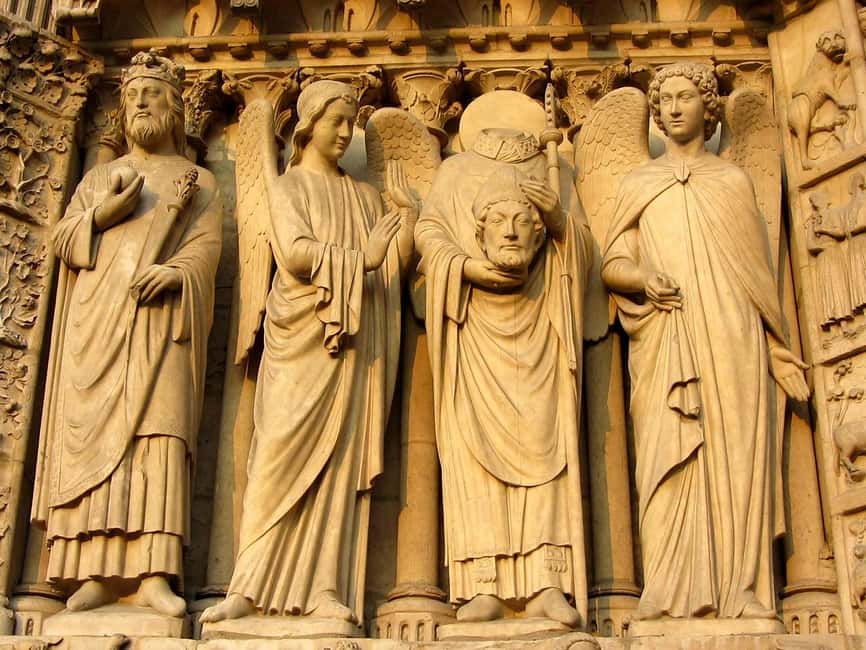
- Notre-Dame façade coaching: portals, kings, gargoyles, rose window—then a timed break inside
- Sainte-Chapelle storytelling: Saint Louis and the Crown of Thorns, mostly from the riverfront/exterior focus
- Pont Neuf to Pont des Arts views: classic postcard angles with the Louvre in the distance
- Louvre courtyards without the museum stress: Cour Carrée and Cour Napoléon explained as the palace-to-museum shift
Starting on Pont Saint-Louis: the calm lead-in
Your tour kicks off on Pont Saint-Louis, the pedestrian bridge that links Île Saint-Louis with Île de la Cité. It’s a great first move because it slows you down. Before you hit the busiest zone in town, you get your bearings and a sense of why Paris’s “island origins” matter.
From there, you walk toward Notre-Dame at a human pace. Your guide sets the timeline right away—starting with the Parisii living on Île de la Cité around 300 BCE—so when you’re staring at medieval stone moments later, you understand what era you’re actually in. It’s the kind of context that makes you feel oriented instead of overwhelmed.
You’ll also want to be ready for wind on the bridges. Even if it’s not cold, the river air can cut through. Wear comfortable shoes; you’ll be on your feet for the full sweep of the route.
Still chasing the Mona Lisa? More Louvre visits
- Paris: Louvre Museum Timed-Entrance Ticket
★ 4.6 · 71,977 reviews - Paris: Louvre Guided Tour with Reserved Access & Boat Cruise
★ 4.3 · 16,353 reviews - Louvre Museum Masterpieces Guided Tour with Access
★ 4.5 · 12,023 reviews - Paris: Louvre Overview, Exploration tour and Reserved Entry
★ 4.1 · 10,145 reviews
Notre-Dame façade reading, then 20 minutes inside
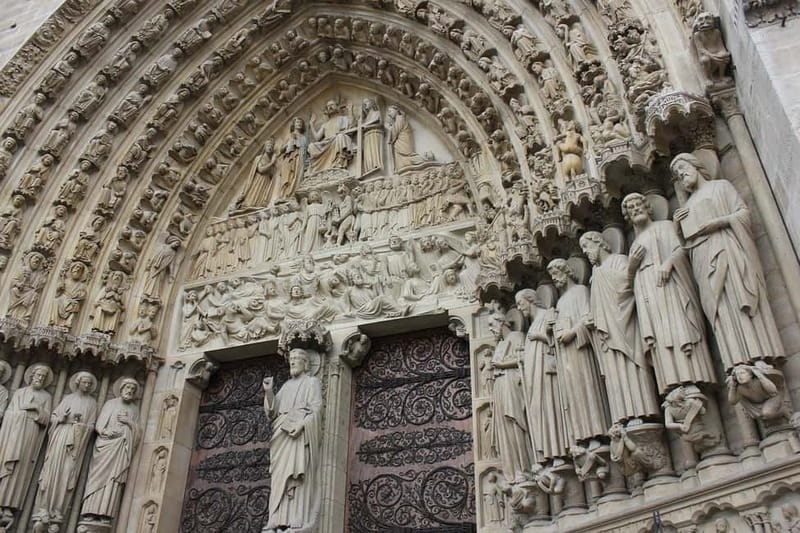
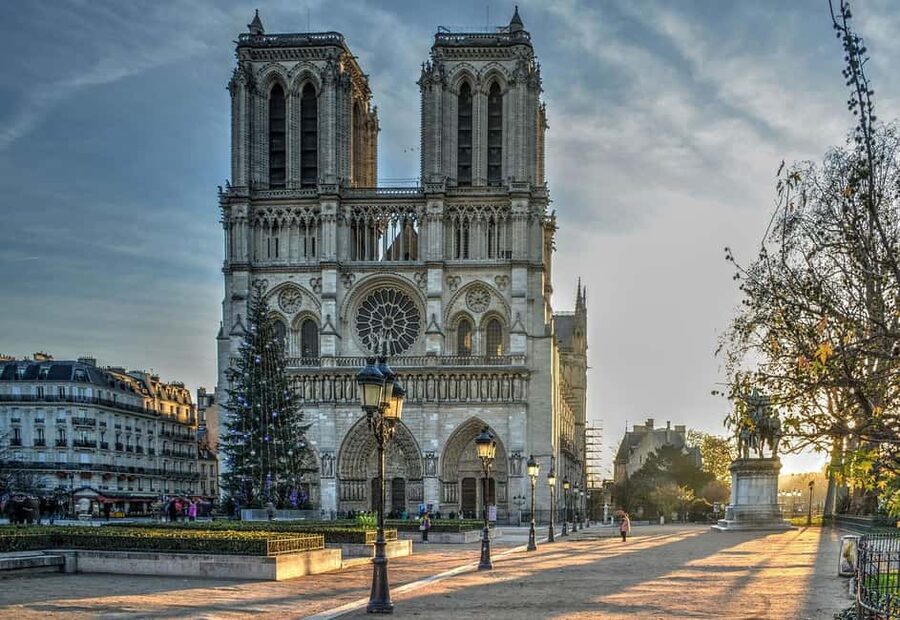
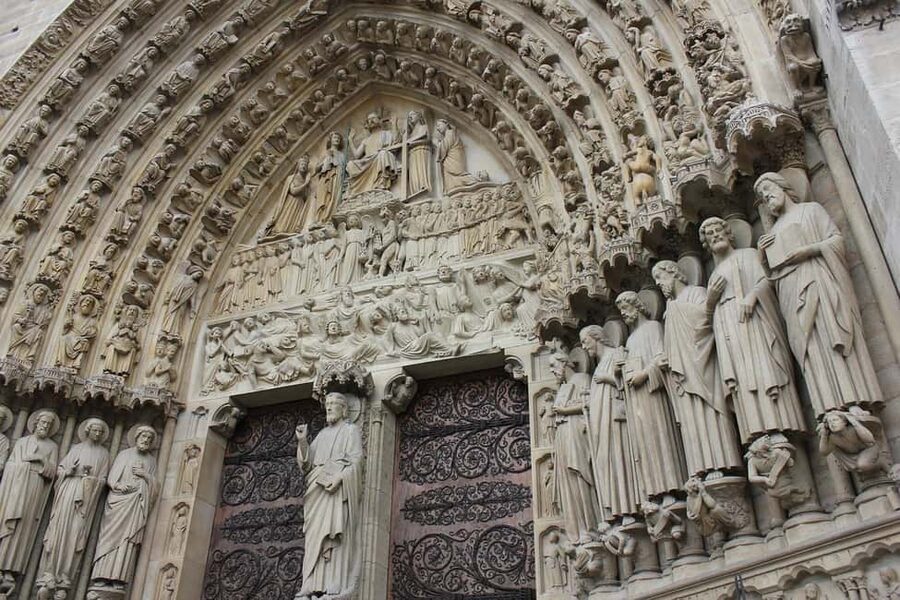
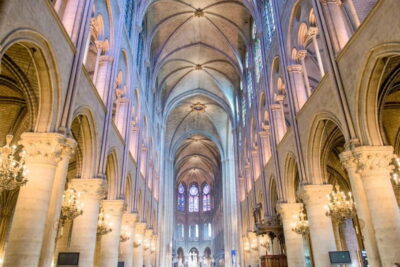
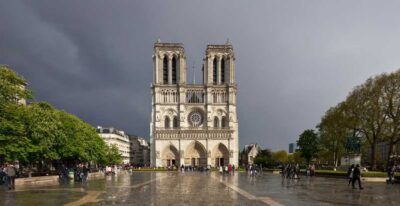
Notre-Dame is the star, but the trick here is that you don’t just arrive and wander. Your guide actively “reads” the façade with you—explaining what to look for in the portals, the line-up of kings, the carved gargoyles, and the rose window. That’s where the tour earns its value: you learn how to see the building.
Then comes the part many people care about most: 20 minutes of free time inside Notre-Dame. You get a mini self-guide in the form of a PDF plus a short audio. The whole point is efficiency—exactly what to look for, where to stand, and how to move so you see the key areas without wasting your time threading through crowds.
One practical note: interior access is self-guided, and you’ll still go through security screening. If the cathedral staff restricts access due to crowd levels or services, you may be re-routed. That’s why I like doing the Notre-Dame portion on a guided walk first, then letting the self-guided pack handle the “what am I looking at” part.
If your dream is specifically to photograph the interior, remember: flash photography isn’t allowed. Bring a camera that performs well in lower light, and use steady hands or a phone tripod if you have one.
Sainte-Chapelle on the riverfront: Saint Louis and the Crown of Thorns story
After Notre-Dame, the walk shifts from spiritual grandeur to royal and judicial power. The route traces the heart of old Paris near the Palais de Justice zone, and you’ll get the sense that this area wasn’t just about worship—it was governance.
A key stop is Sainte-Chapelle, tied to the story of Saint Louis and the Crown of Thorns. In this tour, expect the emphasis to be on understanding the meaning behind the place, with the viewing largely from the exterior/riverfront angle. You’re not trying to squeeze an entire day of chapel detail into three hours; instead, you’re getting the story hook and the visual anchor.
What I like about this approach is that you leave with a narrative you can carry. If you later decide to return to Sainte-Chapelle on your own, your second visit becomes easier because you already know what the building is trying to say.
Conciergerie photo stop: quick context and the practical payoff
You’ll also pass through the area around Conciergerie, where you get a photo stop plus a short guided visit segment (about 15 minutes). This is one of those “short but useful” stops.
Why it works: the Conciergerie zone is easy to walk past without realizing it mattered. With the guide’s framing, you understand you’re standing close to the machinery of power—where history isn’t just a name on a plaque. You get enough to make the photos feel meaningful instead of random.
If you’re the type who likes pictures, use that moment strategically. Take shots that include surrounding architectural cues. It’ll help later when you’re trying to remember which era you were looking at.
Palais de Justice energy: the medieval power walk
From Sainte-Chapelle toward the river crossings, you’re walking through the royal and judicial heart of Paris. Even if your feet are tired, your brain stays engaged because the guide keeps connecting what you see—stone, symbols, placement—to how medieval Paris worked.
This is also where the route stays smart about crowd flow. You’re not trying to wrestle a full day’s worth of museum lines into your schedule. Instead, you’re building a timeline as you walk: origins, monarchy, faith, and authority, all in a compact corridor.
You’ll also get exterior impressions of the historic riverfront. That context matters because the Seine shapes how Paris grew and how buildings relate to each other.
Pont Neuf to Pont des Arts: views that make the story stick
Then you cross to the postcard layer of the walk. You’ll go over Pont Neuf, and from there continue toward Pont des Arts for classic views.
The key detail here is the sightline: you’ll be looking toward the Louvre on the horizon, so the walk doesn’t feel like a set of unrelated monuments. It feels like a single migration—from early Paris island life to the palace district that later became one of the world’s biggest museums.
Take a minute on the bridge even if you don’t feel like it. The guide’s stories have trained your eyes by now. Those quick “pause and look” moments help you remember the sequence later when you’re planning your own Louvre route.
More time around Notre-Dame and the old island

Louvre courtyards, not the stress: Cour Carrée and Cour Napoléon
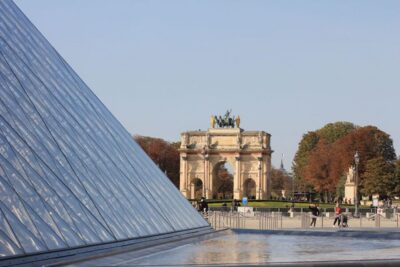
You’ll then walk through Louvre courtyards, including Cour Carrée and Cour Napoléon. This is not the full museum. It’s the architectural and historical logic of the place—how the palace became a museum and what that means in real space.
For first-timers, the advantage is huge. The Louvre inside can be overwhelming fast. Here, you get your bearings before you ever buy a ticket for the museum floors. You understand the layout enough to make later choices without guessing.
Your guide also shares practical suggestions for how you can approach the Louvre after this walk. Think photo angles, where to pause, and how to plan the rest of your visit so you don’t spend half a day moving in circles.
Finish in the Tuileries Garden: your built-in next-step plan
Your tour ends at the Jardin des Tuileries. I like this finish because it’s a reset. You’re still in central Paris, but you’ve moved out of the most congested “cathedral and palace” choke points.
You’ll get guide tips that make the rest of your day smoother: likely photo viewpoints, nearby café ideas, and onward routes depending on where you want to go next. Even if you don’t immediately go into the Louvre, you’ll have a clearer sense of where everything sits.
If you’re planning a bigger Louvre day afterward, your time here matters. The garden finish gives you a breather so your brain can switch from “history facts” to “how do I see this efficiently?”
Price and value: $32 for a timed, focused three hours
For $32 per person and a duration of about 3 hours, this is a value play—especially because it’s structured and small. The group is limited to 10 participants, which usually keeps the guide’s attention useful rather than stretched thin.
Where the cost makes sense:
- You get guided explanation at the key moments (façade reading, courtyard context, and power-area framing).
- You’re not paying for a full museum ticket here, so you’re paying for orientation and narrative.
- The PDF + audio mini self-guide helps you use your Notre-Dame interior time well.
Could you do this walk on your own? Sure. But you’d lose the “what to look for” coaching that turns Notre-Dame from a monument into a readable story. And in a place with crowds and security rules, having a plan beats improvising.
Timing and walking reality: what the 3-hour feel is like
Expect a solid walking day that’s still manageable. You’ll do several quick guided segments and one longer free time block inside Notre-Dame (20 minutes). The rest is “short and purposeful”: photo stop, guided story stops, then crossings for views.
The tour runs rain or shine, so don’t count on weather saving your schedule. Bring a layer for wind on bridges, and keep your footwear comfortable. If you’re thinking in terms of “museum legs,” treat this more like a city-history walk than a sitting-down tour.
Also, plan to use audio. You’ll want earbuds/headphones so you can access the audio on your phone during the free-time portion inside Notre-Dame.
Who should book—and who should skip
This tour is best if you want:
- A compact timeline of Paris’s development, starting with the Parisii and moving through medieval power and Victor Hugo’s Notre-Dame influence
- Strong guidance on what to notice at Notre-Dame and what the courtyards mean at the Louvre
- A walk-based format that ends with a nice place to regroup (Tuileries)
You might not love it if you:
- Have mobility limitations. The tour is listed as not suitable for people with mobility impairments or wheelchair users.
- Need guaranteed Notre-Dame interior access. The interior part is flexible based on crowd levels, security, and services.
Language options are French, Spanish, and English, so you should be able to match your comfort level.
Should you book this Notre-Dame & Île de la Cité–Louvre with a local?
I’d book it if you’re visiting Paris for the first time and you want a clean, walkable “story arc” rather than a half-day of random monuments. The biggest selling point is the way the guide helps you see Notre-Dame—façade details first, then the interior time handled with a practical PDF + audio mini-pack.
I’d hesitate only if Notre-Dame interior access is non-negotiable for your trip. Because access depends on crowd and cathedral rules, you should mentally prepare for the possibility that you won’t get exactly the interior experience you imagined.
If you do book, show up on time. Start on Pont Saint-Louis, where your guide will be holding a Voilà Tours sign, and arrive about 5 minutes early so you can lock in before the walking begins.
FAQ
How long is the Notre-Dame & Île de la Cité–Louvre with a local tour?
It lasts about 3 hours.
Where do I meet the guide?
You meet on Pont Saint-Louis, the pedestrian bridge between Île Saint-Louis and Île de la Cité, at the central span. Arrive 5 minutes early.
What languages are available?
The tour is offered in French, Spanish, and English.
Is entry to Notre-Dame included?
Notre-Dame entrance is included when accessible, depending on crowd and capacity. The interior time is handled using a PDF + short audio during your free-time segment.
How does the Notre-Dame interior free time work?
Inside Notre-Dame, you get 20 minutes of free time with a mini self-guide (PDF) and short audio on your phone. Security screening may apply.
Are flash photos allowed at Notre-Dame or elsewhere on the route?
No. Flash photography is not allowed.
What should I bring?
Bring comfortable shoes, a camera, and water. You may also want earbuds/headphones to listen to the audio during the Notre-Dame segment.
Where does the tour end?
The tour finishes at the Jardin des Tuileries.
More Tour Reviews in Paris
- Paris: 1-Hour Seine Cruise departing from the Eiffel Tower
★ 4.4 · 77,472 reviews - Paris: Louvre Museum Timed-Entrance Ticket
★ 4.6 · 71,977 reviews - Disneyland® Paris 1-Day Ticket
★ 4.6 · 49,412 reviews - Paris: Versailles Palace and Gardens Full Access Ticket
★ 4.6 · 41,579 reviews - Paris: Arc de Triomphe Rooftop Tickets
★ 4.6 · 34,264 reviews
Around Notre-Dame, More to See
- Paris Île de la Cité and Notre-Dame Walking Tour With Crypt
★ 5.0 · 2,272 reviews - Paris: Notre-Dame Cathedral Exterior Tour
★ 3.9 · 1,722 reviews - Paris: The Notre Dame Experience with Multiple Tour Options
★ 4.7 · 1,612 reviews - Paris: Eternal Notre-Dame VR Experience Ticket
★ 4.4 · 1,150 reviews - Paris:Notre-Dame Cathedral Interior and Exterior Guided Tour
★ 4.7 · 1,128 reviews
Back to the Louvre: More Ways In
- Paris: Louvre Museum Timed-Entrance Ticket
★ 4.6 · 71,977 reviews - Paris: Louvre Guided Tour with Reserved Access & Boat Cruise
★ 4.3 · 16,353 reviews - Louvre Museum Masterpieces Guided Tour with Access
★ 4.5 · 12,023 reviews - Paris: Louvre Overview, Exploration tour and Reserved Entry
★ 4.1 · 10,145 reviews - Paris: Louvre Museum Entry Ticket With Host and River Cruise
★ 4.6 · 9,926 reviews
Fresh off the review desk in Paris
- Secrets of Paris Bike Tour in English or Dutch★ 5.0 · 5 reviews
- Paris: Mont Saint-Michel Day Tour with Chinese Tour Guide★ 5.0 · 5 reviews
- Private Street Art 2-Hour Guided Tour in Paris★ 4.5 · 5 reviews
- Orsay Museum Tour: 2h Highlights (Private & Small Group)★ 5.0 · 5 reviews
- Discover Paris in electric golf carts★ 4.0 · 5 reviews
- Paris Private Boat Tour with your own Captain Guide★ 5.0 · 5 reviews
Louvre Museum Tours, compared.
 ★ 4.6Louvre Museum Timed-Entrance TicketFrom $2671,977 reviews
 ★ 4.3Louvre Guided Tour with Reserved Access & Boat CruiseFrom $8116,353 reviews
 ★ 4.5Louvre Museum Masterpieces Guided Tour with AccessFrom $8612,023 reviews
 ★ 4.1Louvre Overview, Exploration tour and Reserved EntryFrom $6010,145 reviews
 ★ 4.6Louvre Museum Entry Ticket With Host and River CruiseFrom $1009,926 reviews
 ★ 4.6Mona Lisa & Louvre Masterpieces Tour with Reserved AccessFrom $806,812 reviews
 ★ 5.0Louvre Museum – Exclusive Guided Tour (Entry Included)From $1816,296 reviews
 ★ 4.0Louvre Reserved Ticket and River Cruise ComboFrom $376,054 reviews
Browse the lists this tour appears in