
Reviewed · TOURS
Paris: Anzac Day Day Tour to Villers Bretonneux
Anzac Day in France hits harder. This 12-hour trip from Paris sends you to the Somme battlefields on the same day people gather for the Anzac Day Dawn Service in Villers-Bretonneux, then keeps going to major memorial stops like Thiepval and Lochnagar. I especially like how the itinerary pairs the solemn morning moment with specific places tied to 1916 battles, and I like having an English-speaking guide to connect the names on stone to what happened here. The main drawback to plan around is that this is a full schedule, and the time around the Dawn Service can feel tight right when you might want a slower pace.
If you’re visiting Paris and you want more than a drive-by, this is built for the long emotional arc of the day: transport, guided stops, and the big memorial sites across the Somme region in one go. It also comes with a couple practical limits, like the Australian National Memorial central tower not being open to the public because of technical equipment for the service, so you’ll want realistic expectations before you arrive.
In This Review
- Key highlights at a glance
- Why the Somme feels personal on Anzac Day
- The Paris-to-Somme drive: a full day in motion
- Villers-Bretonneux and the Anzac Day Dawn Service
- Victoria School: a kids-to-kids bridge in 1923–1927
- Adelaide Cemetery: where respect is the main activity
- Lochnagar Crater at La Boisselle: seeing war’s leftovers
- Pozières and Thiepval: the missing and the message
- Péronne and Mont Saint-Quentin: memorials with a wide view
- Price and value: is $330 worth it?
- Should you book this Anzac Day Somme tour?
- FAQ
- What’s the duration of the Paris to Somme Anzac Day tour?
- Where do I meet for the tour in Paris?
- What’s included in the price?
- Is food and drink included?
- Which major sites are visited during the day?
- Is the Australian National Memorial central tower open during the Dawn Service?
- Is the tour wheelchair accessible?
- What cancellation terms are offered?
- Is there an option to reserve without paying immediately?
- Is the tour guide available in English?
Key highlights at a glance
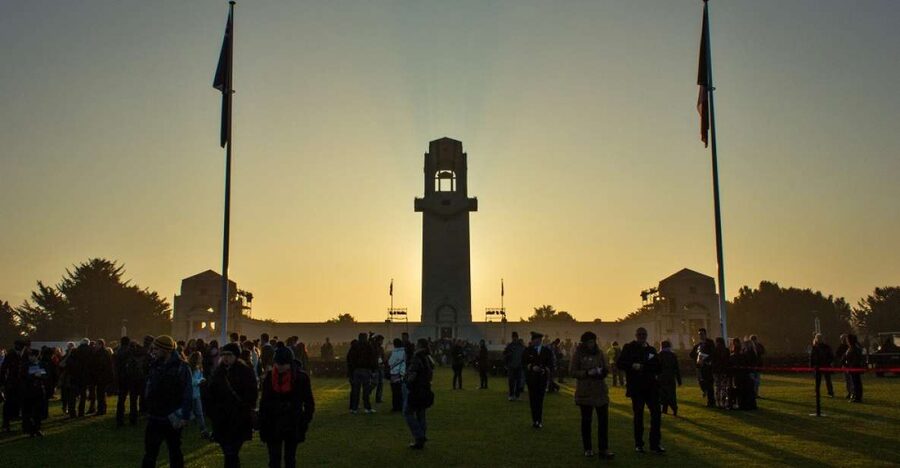
- Dawn Service at Villers-Bretonneux: The emotional centerpiece of the day on Anzac Day.
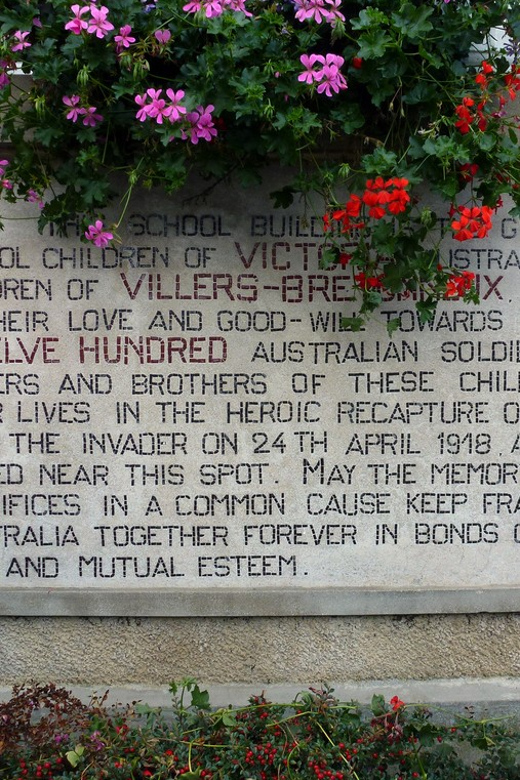
- Victoria School story (1923–1927): A school built as a gift from children of the state of Victoria to Villers-Bretonneux.
- Adelaide Cemetery: A dedicated place for paying respects to fallen soldiers.
- Lochnagar Crater at La Boisselle: A preserved war scar linked to 1916.
- Thiepval Memorial to the Missing: One of the most powerful World War I monuments to those with no known grave.
- Mont Saint-Quentin war memorial in Péronne: A memorial overlooking the Somme River area.
Why the Somme feels personal on Anzac Day
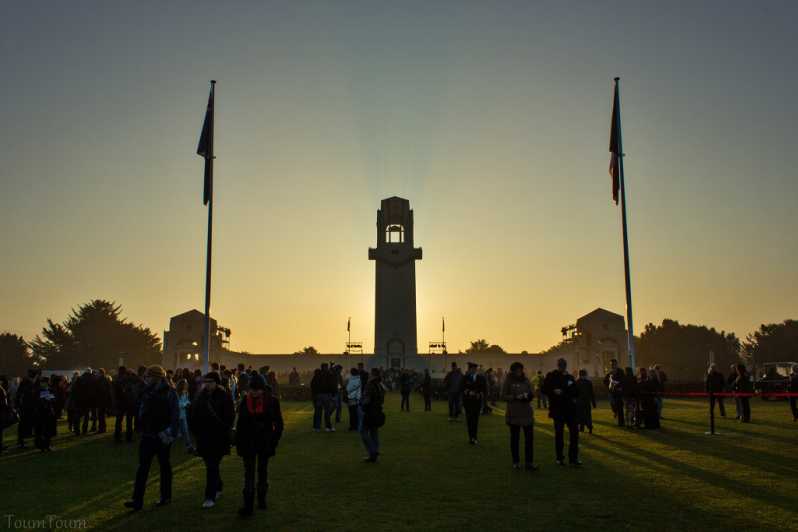
There’s something about standing in northern France on Anzac Day that feels different from seeing the Somme on any other day. This tour is specifically designed to line up with the Anzac Day Dawn Service in Villers-Bretonneux, so you’re not just learning about World War I—you’re present for the same ritual that connects Australia and France to the men who fought here.
I like that the day doesn’t stop at one viewpoint or one monument. You move from the Dawn Service area to other major sites tied to the Somme battles—cemeteries, battle ground evidence, and memorials. That matters because it helps you build a mental map of the region, not just a checklist of famous stops.
Still, you should go in knowing it’s a long day with a strong focus on the schedule. If you’re hoping for lots of free time for wandering, photos without pressure, or lingering at every stop, you may feel a bit rushed—especially around the service when everything has to run on time.
Still deciding? Here is how it stacks up against a few Paris favourites we have booked and reviewed.
- Paris: 1-Hour Seine Cruise departing from the Eiffel Tower
★ 4.4 · 77,472 reviews - Paris: Louvre Museum Timed-Entrance Ticket
★ 4.6 · 71,977 reviews - Disneyland® Paris 1-Day Ticket
★ 4.6 · 49,412 reviews - Paris: Versailles Palace and Gardens Full Access Ticket
★ 4.6 · 41,579 reviews
The Paris-to-Somme drive: a full day in motion
The tour leaves Paris from in front of the Opéra Garnier (Metro Opéra, or bus lines 3, 7, and 8), and then you head toward the Somme region for a full-day itinerary. The round-trip transportation is included, and the vehicle type can be a minibus, a 15-seater coach, or a larger coach depending on how many people are going.
This is one of those details that turns out to be practical. If you’re in a smaller group bus, you usually get an easier flow through the day and more room to move in your seat area. If it’s a larger coach, you may have less personal space during boarding and transitions, but you still get the biggest advantage: you’re not managing trains, transfers, or multiple rental car logistics on a day where timing matters.
The day also starts early enough that you’ll want to show up ready for changing light and weather. The tour strongly recommends comfortable shoes and warm clothing, and that’s not just generic advice—Dawn Service morning conditions can be colder, and you’ll be on your feet for memorial visits.
Villers-Bretonneux and the Anzac Day Dawn Service
The emotional center of this tour is the Anzac Day Dawn Service in Villers-Bretonneux. This stop is the reason many people book in the first place: it’s where the day’s tone turns from travel to remembrance.
One important note: due to installation of technical equipment for the Dawn Service, the central tower of the Australian National Memorial won’t be open to the public. That means even if you’re standing near it, you may not have access to parts you’re used to seeing in photos. I’d treat that as an expectation-setting reality, not a disappointment—because the service itself and the immediate memorial setting are still the heart of the morning.
The biggest practical consideration is timing around the service. In a 5/5 verified booking, Vicki Lee (Australia) said the day ran smoothly, the bus was comfortable, and the guides were friendly and enthusiastic. A different verified Australian booking scored 3/5 and complained about delays and a rush to get to seats just before the service, plus limited time afterward. The lesson for you: hold your expectations lightly. Arrive early, be ready for motion, and don’t assume you’ll have long, unstructured gaps right before or right after the ceremony.
Victoria School: a kids-to-kids bridge in 1923–1927
After the Dawn Service, the tour includes a stop at Villers-Bretonneux’s Victoria School, built between 1923 and 1927. It was created as a gift from the children of the state of Victoria in Australia to the children of Villers-Bretonneux—an act of goodwill meant to stand in for something words can’t always do.
This is a good reminder that remembrance doesn’t only live in cemeteries. It also lives in education, community ties, and the way one place chooses to honor another across oceans. If you’re traveling with kids or you’re the kind of adult who likes context, this stop gives you a human-scale perspective compared with some of the huge battlefield monuments.
Even if you’re mostly here for the major memorial sites, don’t skip this one mentally. It’s the tour’s softer thread, and it helps explain why the Anzac story in France isn’t only historical—it remains personal to locals.
Adelaide Cemetery: where respect is the main activity
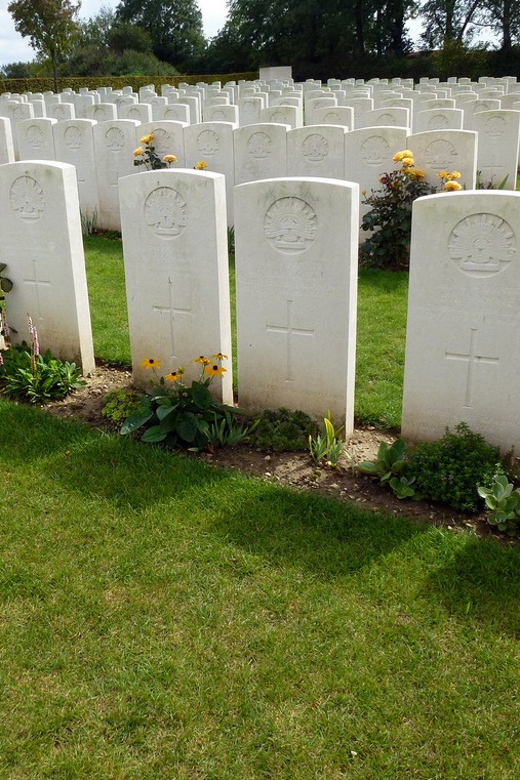
One of the scheduled memorial visits is Adelaide Cemetery, included specifically for paying respects to the fallen soldiers. Cemeteries like this can feel overwhelming if you walk in expecting to “finish fast.” The best approach is to slow down just enough to let the place do its job: names, layout, and quiet order.
What I find helpful about this kind of guided visit is that the English-speaking guide can connect the cemetery to the broader Somme setting without turning it into a classroom lecture. You don’t just see headstones; you understand that these are real people in a real geographic story. For you, that means you’re more likely to remember what you saw, because you’ll know what it represents.
You should also think ahead about how you’ll handle the emotional weight. If you tend to get overwhelmed on memorial visits, give yourself a plan: take breaks when you need to, and don’t try to force a full-speed checklist of every marker.
Lochnagar Crater at La Boisselle: seeing war’s leftovers
At La Boisselle, the tour takes you to the Lochnagar Crater, a deep wartime crater left behind from fighting in 1916. This is one of those stops that makes history look physical in a way that no museum panel can fully match.
The value here is not just that it’s famous. It’s that you can stand at the edge of a scar in the earth and understand how the battle reshaped the landscape. Even if you don’t know a lot of military terminology, the size and shape do the explaining.
One practical note: crater and battlefield ground can be uneven. Wear shoes that are comfortable for uneven footing, and expect you’ll spend some time looking, walking, and repositioning for better sightlines.




Pozières and Thiepval: the missing and the message
The tour also includes the site of the Battle of Pozières, followed by one of the biggest memorial stops of the Somme: the Memorial to the Missing of the Somme at Thiepval.
This pairing is powerful because Pozières brings you to a specific battlefield area, while Thiepval deals with the human result of that fighting: many people have no known grave. The memorial’s job is to keep their names in public memory, even when the body isn’t recoverable or identifiable.
I like that the itinerary doesn’t treat Thiepval like a quick photo stop. If you give it a little time, you can feel the scale of what’s being commemorated. It’s also a place where an English-speaking guide can help you read what you’re seeing without oversimplifying it.
Again, this is where schedule matters. In a rushed day, you might not get the minutes you want. If you’re aiming to truly connect with Thiepval, plan to arrive with patience and a willingness to accept that your pace is not always fully under your control.
Péronne and Mont Saint-Quentin: memorials with a wide view
Next comes Péronne, with a war memorial at Mont Saint-Quentin overlooking the Somme River area. This stop adds a different kind of perspective. Battlefield sites are often emotionally intense at close range; views like this remind you how ground shape, distance, and sightlines played a role in how battles unfolded.
A hilltop memorial also has a practical advantage for your brain. After more emotionally dense stops, a wide view can help you re-orient and understand how the region fits together geographically. That can make the day feel more coherent, not just intense.
You’ll want layers here too, because open viewpoints can get windy. The tour already recommends warm clothing, and this kind of stop is a reason why that matters.
Price and value: is $330 worth it?
At $330 per person for a 12-hour day, the price isn’t cheap—but it can still be good value if what you want is a guided, timed experience that handles the hard parts for you.
Here’s what you’re paying for, based on what’s included:
- An English-speaking guide
- Round-trip transportation by minibus/coach, with the vehicle size depending on participants
- A full set of Somme memorial and battlefield stops tied to Anzac Day
What you’re not paying for is equally important: food and drinks are not included. That means your real total cost might go up if you end up buying meals during gaps in the day. Also, because the service day can be tight, you’ll be smart to bring a plan for snacks and water on your own rather than hoping there’s an easy sit-down meal at just the right time.
Value also depends on how you handle schedule pressure. When the day runs smoothly, like in the 5/5 experience from Vicki Lee (Australia), this kind of organized day can feel effortless. When there are delays or confusion around the Dawn Service timing, like in the 3/5 experience that described scrambling for seats and rushed pacing, you may wish you had built in more flexibility.
My take: if your priority is to be part of the Dawn Service and then cover key Somme memorials in one trip from Paris, this is a reasonable way to do it. If your priority is slow, independent wandering, you might prefer a more flexible plan and less strict timing.
Should you book this Anzac Day Somme tour?
Book it if you want a structured Anzac Day experience from Paris that includes the Dawn Service at Villers-Bretonneux and the major Somme memorial stops in one day. It’s a strong fit if you like guided context and you want your time to count without the stress of figuring out transport across multiple battlefield locations.
Think twice if you know you get anxious with tight timing. Around Dawn Service day, things can be sensitive, and at least one verified Australian booking reported issues that led to delays and a rushed feeling. If you’re the type who needs long quiet moments at each memorial, you’ll want to mentally prepare for a packed itinerary.
If you do book, you’ll enjoy it most if you come equipped with comfortable shoes, warm clothing, and a practical plan for food/drinks since none are provided. Treat the schedule as the spine of the day, and let the memorial sites do the emotional work in the time you get.
FAQ
What’s the duration of the Paris to Somme Anzac Day tour?
The tour lasts 12 hours.
Where do I meet for the tour in Paris?
Meet in front of the Opéra Garnier, at Metro Opéra, or via bus lines 3, 7, and 8.
What’s included in the price?
It includes an English-speaking guide and round-trip transportation by minibus or coach (vehicle size depends on participant numbers).
Is food and drink included?
No. Food and drinks are not included.
Which major sites are visited during the day?
The tour includes Villers-Bretonneux for the Dawn Service, Victoria School, Adelaide Cemetery, the Lochnagar Crater at La Boisselle, the Battle of Pozières site, Thiepval Memorial to the Missing of the Somme, and the Mont Saint-Quentin war memorial in Péronne.
Is the Australian National Memorial central tower open during the Dawn Service?
No. The central tower will not be open to the public due to technical equipment installed for the Dawn Service.
Is the tour wheelchair accessible?
No. The tour is not wheelchair accessible and is not suitable for people with mobility impairments.
What cancellation terms are offered?
You can cancel up to 24 hours in advance for a full refund. No cancellations, modifications, or refunds are allowed 5 days prior to the scheduled tour date.
Is there an option to reserve without paying immediately?
Yes, it offers a reserve now & pay later option.
Is the tour guide available in English?
Yes. The guide is English-speaking.
More Tours in Paris
- Paris: Louvre Guided Tour with Reserved Access & Boat Cruise
★ 4.3 · 16,353 reviews - Paris: Big Bus Hop-On Hop-Off Tour with Optional Cruise
★ 4.4 · 13,279 reviews - Louvre Museum Masterpieces Guided Tour with Access
★ 4.5 · 12,023 reviews - Versailles: Skip-the-Line Tour of Palace and Gardens Access
★ 4.7 · 10,429 reviews - Paris: Louvre Overview, Exploration tour and Reserved Entry
★ 4.1 · 10,145 reviews
More Tour Reviews in Paris
- Paris: 1-Hour Seine Cruise departing from the Eiffel Tower
★ 4.4 · 77,472 reviews - Paris: Louvre Museum Timed-Entrance Ticket
★ 4.6 · 71,977 reviews - Disneyland® Paris 1-Day Ticket
★ 4.6 · 49,412 reviews - Paris: Versailles Palace and Gardens Full Access Ticket
★ 4.6 · 41,579 reviews - Paris: Arc de Triomphe Rooftop Tickets
★ 4.6 · 34,264 reviews
Fresh off the review desk in Paris
- Secrets of Paris Bike Tour in English or Dutch★ 5.0 · 5 reviews
- Paris: Mont Saint-Michel Day Tour with Chinese Tour Guide★ 5.0 · 5 reviews
- Private Street Art 2-Hour Guided Tour in Paris★ 4.5 · 5 reviews
- Orsay Museum Tour: 2h Highlights (Private & Small Group)★ 5.0 · 5 reviews
- Discover Paris in electric golf carts★ 4.0 · 5 reviews
- Paris Private Boat Tour with your own Captain Guide★ 5.0 · 5 reviews
Tours, compared.
 ★ 4.3Louvre Guided Tour with Reserved Access & Boat CruiseFrom $8116,353 reviews
 ★ 4.4Big Bus Hop-On Hop-Off Tour with Optional CruiseFrom $4313,279 reviews
 ★ 4.5Louvre Museum Masterpieces Guided Tour with AccessFrom $8612,023 reviews
 ★ 4.7Versailles: Skip-the-Line Tour of Palace and Gardens AccessFrom $7610,429 reviews
 ★ 4.1Louvre Overview, Exploration tour and Reserved EntryFrom $6010,145 reviews
 ★ 4.6Mona Lisa & Louvre Masterpieces Tour with Reserved AccessFrom $806,812 reviews
 ★ 4.0Paris Big Bus Hop-On Hop-Off Tour with Optional River CruiseFrom $466,534 reviews
 ★ 5.0Louvre Museum – Exclusive Guided Tour (Entry Included)From $1816,296 reviews