
Reviewed · PRIVATE
Paris Art Nouveau Private Tour
Art Nouveau shows up right when you learn its rules. This private, 2-hour walk through Paris keeps the focus on Art Nouveau and the Belle Époque era, using real buildings as your textbook and a guide who can explain what you’re seeing. I love how this kind of tour makes the city feel organized, not random, with a tight route that still leaves room for questions.
Second, I really like the chance to study Lavirotte’s architecture up close—including both the famous and the lesser-known work on Avenue Rapp and Square Rapp. You don’t just look; you understand how the design language works, and why Paris became such a hot spot for this style. If you enjoy architecture, this is the sort of tour that turns sightings into real comprehension.
One thing to plan for: Eiffel Tower entry is not included, even though the stop is built around the tower’s story through the Art Nouveau / Belle Époque lens. If you want to go up, you’ll need to budget and time that separately.
In This Review
- Key highlights you’ll feel on the walk
- Why Art Nouveau makes sense as a Paris walking tour
- Meeting point, route flow, and what 2 hours really means
- Stop 1: Eiffel Tower, explained from the Art Nouveau / Belle Époque angle
- Stop 2: The American Cathedral as your Gothic Revival contrast
- Stop 3: 29 Avenue Rapp and the Lavirotte masterpiece
- Stop 4: Immeuble 3 Square Rapp, the quieter Lavirotte lesson
- The guide experience: why private feels different here
- Price and value: $360.48 per group (up to 6)
- What to do before and during the tour to get more out of it
- Who this tour is best for (and who should choose another plan)
- Should you book this Paris Art Nouveau Private Tour?
- FAQ
- How long is the Paris Art Nouveau Private Tour?
- What group size is this private tour?
- Is the tour offered in English?
- What is included in the price?
- Are admission tickets included?
- Where do we meet for the tour?
- Where does the tour end?
- Is there any cancellation option?
Key highlights you’ll feel on the walk
- Private art historian guide who connects Art Nouveau to older styles you’ll recognize
- Two Lavirotte stops that let you compare the famous and the quieter example on the same theme
- Eiffel Tower stop without admission, so you can focus on meaning and detail rather than ticket logistics
- A quick Gothic Revival contrast at the American Cathedral to sharpen your eye
- Small-group format (private group up to 6) with time for personal questions
- Mobile ticket for a smoother start at the meeting point
Why Art Nouveau makes sense as a Paris walking tour
Art Nouveau in Paris can feel like a scavenger hunt—until someone gives you the key. On this tour, you’re not wandering by chance. You’re moving through a sequence of buildings where the design ideas talk to each other: curves and ornament, new materials and techniques, and the era’s belief that the street could look like a work of art.
I like the way this style tour doesn’t treat Art Nouveau as decoration only. It treats it like a system. Once you start noticing how forms change—windows, ironwork, stonework, doorways, and the way façades are composed—you’ll see why Paris can look traditional and futuristic in the same block.
And because it’s private, you can ask the exact questions that pop into your head. If you want comparisons (classical vs Gothic vs Art Nouveau), this is the kind of theme route where the guide can actually do that without rushing you through.
Worth weighing up next to this Paris pick
- Louvre Museum Paris Essential Guided Tour Semi-Private 6ppl Max
★ 5.0 · 3,807 reviews - SUV Private Transfer: Paris to Charles de Gaulle Airport (CDG)
★ 4.0 · 3,091 reviews - Paris: Private Photoshoot at the Eiffel Tower
★ 4.7 · 2,636 reviews - Top Private Cruises in Paris with French Champagne and surprises
★ 5.0 · 1,553 reviews
Meeting point, route flow, and what 2 hours really means
You meet at 221 Rue de l’Université (75007 Paris) and the walk typically ends around Square Rapp / avenue Rapp (75007), by the building previously known as Société théosophique (today a Tour Eiffel theatre). There’s no hotel pickup, and you’re on your own for getting to the start—so plan to arrive a bit early to get your bearings.
The total time is about 2 hours, with short stops that keep momentum. That means you’ll get enough time at each location to orient yourself and spot details, but you won’t have time for long detours. The good part: you leave with a clearer “map” of how the style works across different buildings.
Fitness-wise, the tour asks for moderate physical fitness. It’s walking and city pavement, not a marathon, but it’s still outdoors for the full two hours. Bring comfortable shoes and expect some uneven sidewalk moments.
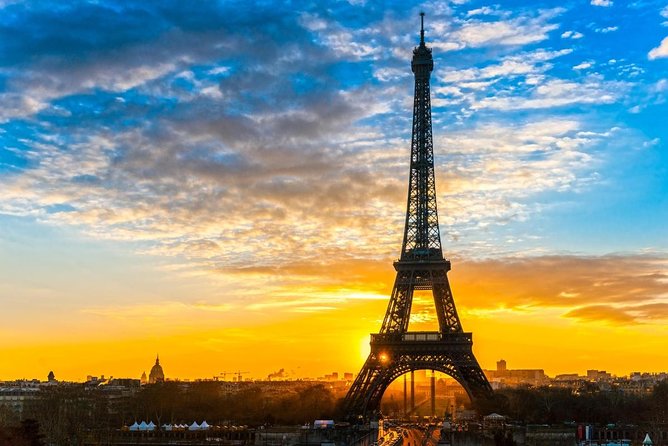
Stop 1: Eiffel Tower, explained from the Art Nouveau / Belle Époque angle
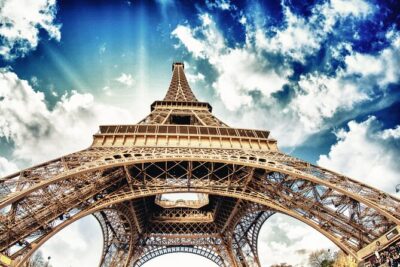
This is a clever choice for a theme tour. The Eiffel Tower is the obvious icon in Paris, but the guide’s job here is to help you look at it differently—through its era, its design logic, and the broader mood of the Belle Époque.
You spend about 15 minutes at the Eiffel Tower stop. That’s not enough time for the top of the tower, and it’s not meant to be. The key point is that the story is the product: how the city’s big technology moment connects to the same period’s taste for modernity and showmanship.
Plan a photo buffer here. Even if you don’t go inside, you’ll get a chance to connect what you see from street level to why the tower became such a symbol. The only major catch is straightforward: Eiffel Tower admission is not included, so you’ll need separate plans if you want an elevator ride and views from above.
Stop 2: The American Cathedral as your Gothic Revival contrast
Right after the Eiffel area, you hit a style comparison you can feel immediately. The American Cathedral in Paris is a strong example of Gothic Revival. It’s a short stop (around 5 minutes), but the point isn’t length—it’s contrast.
If you’re trying to train your eye for Art Nouveau, Gothic Revival is a useful counterpoint. Gothic tends to shout verticality and structure; Art Nouveau often plays more with surface pattern and curving, ornamental rhythms. Standing at the cathedral, you’ll start to see how designers were borrowing from the past while chasing very different visual goals.
This stop also helps you understand that Paris wasn’t stuck in one style. Even in the same general time period, the city’s architecture can swing between different inspirations—and theme tours work best when they show those shifts clearly.
Stop 3: 29 Avenue Rapp and the Lavirotte masterpiece
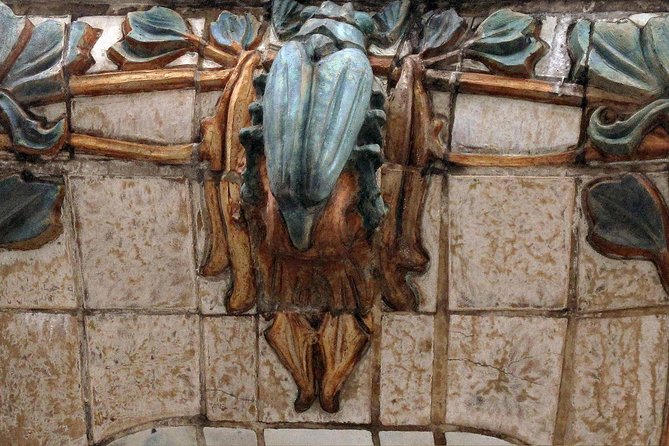
Now you get to the heart of the Art Nouveau fascination: 29 Avenue Rapp, home to the world-famous Lavirotte house. This is where the façade becomes the lesson.
You’ll have about 20 minutes here, which is a sweet spot for architectural looking. On a normal sightseeing day, you’d snap a picture and move on. On this tour, you’re supposed to notice things: how decorative elements relate to the building’s overall structure, how windows and borders are treated like a design surface, and how the building signals its era through its style choices.
This is also the type of place where a good guide can save you from confusion. Art Nouveau details can look like they’re there purely for decoration—until you start seeing the organizing principles. The guide’s job is to translate the visual language into words you can remember on your next walk through Paris.
Stop 4: Immeuble 3 Square Rapp, the quieter Lavirotte lesson
After the headline building, you head to Immeuble 3 Square Rapp, a lesser-known example of Lavirotte’s work. You’ll spend about 20 minutes here too.
I like this second stop because it trains your pattern recognition. If you only saw the famous façade, you might think Art Nouveau is only about one kind of drama. With this quieter example, you can compare how similar design thinking can show up in a different level of visibility and different façade treatment.
This is where you start building real confidence in what you’re seeing. You’ll recognize recurring signatures, and you’ll notice what changes—proof that the style isn’t one template. The guide’s explanations help you connect the dots between buildings instead of collecting them like random photos.




The guide experience: why private feels different here
This isn’t just a “walk and point” tour. The included feature is a professional art historian guide, and the private format matters because the explanations can match your interests.
In past departures, guides such as Boris and Milica/Mila have been described as engaging and focused on making comparisons—classical, Gothic, and Art Nouveau—and then explaining how those inspirations evolved. That’s the kind of framework that sticks. It’s also practical: once you understand how to compare styles, you can keep using that skill after the tour ends.
One extra detail I appreciate from the guide approach is flexibility around real human needs. In one instance, a guide helped work in a short break at Ladurée on the Champs-Élysées (coffee, tea, and macarons) so older family members could rest and continue. That kind of problem-solving isn’t guaranteed on every tour, but it’s a good sign: the guide isn’t only focused on hitting a script.
If you want to ask questions—about why a façade looks the way it does, or how one era influenced another—private time is where that turns from awkward to satisfying.
Price and value: $360.48 per group (up to 6)
The price is $360.48 per group, up to 6 people, for about 2 hours. On paper, that can look pricey if you compare it to a bus tour. But this is the kind of architectural walking tour where the value is in the guide’s interpretation, not just the buildings themselves.
Here’s the math that usually matters: with a full group of 6, the cost per person drops a lot, and you’re essentially paying for a tailored lesson in front of real façades. With 2–3 people, the per-person cost is higher, but you’re still getting a professional art historian guide and a tight route that saves time and confusion.
I think it’s especially good value if you:
- want to understand Art Nouveau without spending your entire trip reading guidebooks
- have at least a couple people to share the group cost
- enjoy architecture and want meaning, not just photos
What to do before and during the tour to get more out of it
Because the stops are close together but time is tight, you’ll get more if you do two simple things.
First, dress for walking and weather. The tour is outside for the whole 2 hours, and you’ll want to comfortably stand and look up at façades.
Second, come with one tiny goal. For example: decide ahead of time what you’ll watch for—ironwork shapes, window framing, or how ornament fits the façade. When the guide points those elements out, you’ll lock into it fast.
Also, save your phone battery. You’ll likely want photos, and it helps to have the mobile ticket ready for the start.
Who this tour is best for (and who should choose another plan)
This works best for you if you care about design, style history, or you’ve ever wondered why Paris façades look the way they do. It’s also a great choice for first-time visitors who want something more specific than the usual top sights, while still getting the Eiffel Tower in the mix.
It may be less ideal if you:
- only want major monument entry tickets and long interior time
- hate walking for any reason (the tour asks for moderate physical fitness)
- are looking for a more flexible, stop-anywhere itinerary
Should you book this Paris Art Nouveau Private Tour?
If you like architecture and you want a clear, guided understanding of Art Nouveau in Paris, I’d book it. The route is short, focused, and built around strong style comparisons: Eiffel Tower through its era, Gothic Revival at the American Cathedral, and then the Lavirotte buildings on Avenue Rapp and Square Rapp.
Where you should pause is if you were counting on Eiffel Tower admission during the tour. You’ll need to add that separately if it’s a must for you.
For the right group size—especially if you can fill up to 6—this is a smart way to buy real understanding, not just a handful of photos.
FAQ
How long is the Paris Art Nouveau Private Tour?
It runs for about 2 hours.
What group size is this private tour?
It’s a private tour, and the group can include up to 6 people.
Is the tour offered in English?
Yes, it’s offered in English.
What is included in the price?
The price includes a professional art historian guide.
Are admission tickets included?
Eiffel Tower entrance is not included. The American Cathedral and the Lavirotte-related stops are listed as admission ticket free.
Where do we meet for the tour?
The meeting point is 221 Rue de l’Université, 75007 Paris, France.
Where does the tour end?
The tour usually ends near avenue Rapp / Square Rapp, 75007 Paris.
Is there any cancellation option?
Yes. You can cancel for a full refund up to 24 hours in advance of the experience start time.
More Private in Paris
- Louvre Museum Paris Essential Guided Tour Semi-Private 6ppl Max
★ 5.0 · 3,807 reviews - SUV Private Transfer: Paris to Charles de Gaulle Airport (CDG)
★ 4.0 · 3,091 reviews - Paris: Private Photoshoot at the Eiffel Tower
★ 4.7 · 2,636 reviews - Top Private Cruises in Paris with French Champagne and surprises
★ 5.0 · 1,553 reviews - Golf Cart in Paris – Private Guided City Tour – Pickup Included
★ 5.0 · 1,164 reviews
More Tours in Paris
- Paris: Louvre Guided Tour with Reserved Access & Boat Cruise
★ 4.3 · 16,353 reviews - Paris: Big Bus Hop-On Hop-Off Tour with Optional Cruise
★ 4.4 · 13,279 reviews - Louvre Museum Masterpieces Guided Tour with Access
★ 4.5 · 12,023 reviews - Versailles: Skip-the-Line Tour of Palace and Gardens Access
★ 4.7 · 10,429 reviews - Paris: Louvre Overview, Exploration tour and Reserved Entry
★ 4.1 · 10,145 reviews
More Tour Reviews in Paris
- Paris: 1-Hour Seine Cruise departing from the Eiffel Tower
★ 4.4 · 77,472 reviews - Paris: Louvre Museum Timed-Entrance Ticket
★ 4.6 · 71,977 reviews - Disneyland® Paris 1-Day Ticket
★ 4.6 · 49,412 reviews - Paris: Versailles Palace and Gardens Full Access Ticket
★ 4.6 · 41,579 reviews - Paris: Arc de Triomphe Rooftop Tickets
★ 4.6 · 34,264 reviews
Fresh off the review desk in Paris
- Secrets of Paris Bike Tour in English or Dutch★ 5.0 · 5 reviews
- Paris: Mont Saint-Michel Day Tour with Chinese Tour Guide★ 5.0 · 5 reviews
- Private Street Art 2-Hour Guided Tour in Paris★ 4.5 · 5 reviews
- Orsay Museum Tour: 2h Highlights (Private & Small Group)★ 5.0 · 5 reviews
- Discover Paris in electric golf carts★ 4.0 · 5 reviews
- Paris Private Boat Tour with your own Captain Guide★ 5.0 · 5 reviews
Private, compared.
 ★ 5.0Louvre Museum Paris Essential Guided Tour Semi-Private 6ppl MaxFrom $1813,807 reviews
 ★ 4.0SUV Private Transfer: Paris to Charles de Gaulle Airport (CDG)From $713,091 reviews
 ★ 4.7Private Photoshoot at the Eiffel TowerFrom $412,636 reviews
 ★ 5.0Top Private Cruises in Paris with French Champagne and surprisesFrom $4821,553 reviews
 ★ 5.0Golf Cart in Paris – Private Guided City Tour – Pickup IncludedFrom $1691,164 reviews
 ★ 4.5Private Paris Airport Arrival Transfer – CDG & ORLY AirportsFrom $571,119 reviews
 ★ 4.0Paris Private Arrival Transfer from Charles de Gaulle (CDG) or Orly (ORY)From $541,084 reviews
 ★ 5.0Private Montmartre Food Tour with Wine, Cheese & PastriesFrom $3021,027 reviews