
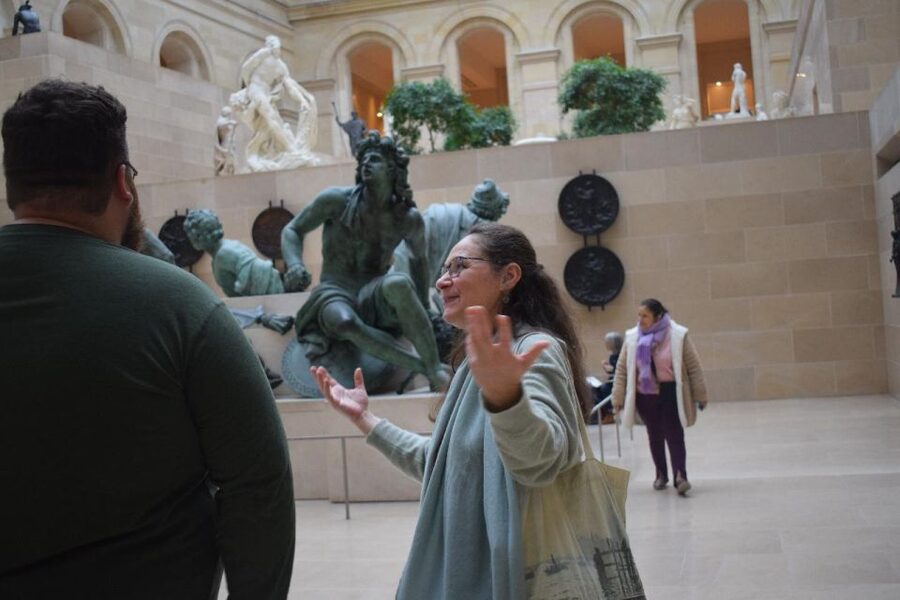
Reviewed · LOUVRE MUSEUM TOURS
Paris: Best of the Louvre Guided Tour with Pre-booked Ticket
The Louvre can feel less scary when someone points the way. This small-group guided visit uses a pre-booked timed ticket plus a skip-the-line entrance, so you get into the museum fast and start seeing real highlights right away.
I especially like two things: the guide-led “greatest hits” route, and the way the tour puts art into context without turning it into a lecture. Guides like Maxim, Clara, Flo, and Jerome were repeatedly praised for being passionate, funny, and helpful in planning the pace around the crowds.
One consideration: it’s a 2-hour sprint, not a slow museum crawl. Also, as of January 2026 the Louvre has changed its ticketing system—there’s no re-entry after your guided time ends, so don’t count on popping back in later for another round.
In This Review
- Key highlights you’ll care about
- Meeting at Place Colette and getting into the Louvre fast
- From the Louvre Pyramid to Venus de Milo: the tour’s best “anchor” stop
- A 2-hour guided sprint through Louvre masterpieces you’ll remember
- The Louvre building story: why it changes how you see the art
- Small group size (max 6) and hearing your guide without shouting
- What you get, and what you won’t get (temporary exhibitions excluded)
- Price at about $130: when it’s worth it (and when it might not be)
- Practical tips: shoes, bags, and the Louvre’s 2026 re-entry change
- Who should book this Louvre best-of tour?
- Should you book? My honest call
- FAQ
- Where do we meet for the tour?
- How long is the Louvre guided tour?
- Does this tour include skip-the-line entry?
- What’s the maximum group size?
- Which languages are available for the live guide?
- What museum content is included versus not included?
- Can I re-enter the Louvre after the tour ends?
- Is this tour suitable for wheelchair users or limited mobility?
Key highlights you’ll care about
- Skip-the-line entry with a timed Louvre ticket, so you spend less time queueing and more time looking
- Small group size (max 6 people) for a tour pace that doesn’t leave you behind
- Iconic “ladies of the Louvre” stops, including Venus, Mona Lisa, and Nike
- Royal-palace-to-museum story that helps you understand why the building looks the way it does
- Napoleon-era moments alongside paintings, sculptures, and even a quick courtyard glimpse
Meeting at Place Colette and getting into the Louvre fast

If you’ve ever stared at the Louvre entrance and thought, yeah… this will take forever, this start helps. You meet at Place Colette, between Le Kiosque des noctambules (those colorful glass-ball sculptures) and the Comédie Française building. Your guide is easy to find: they wait with a sign that says Connecting France.
From there, you head toward the Louvre Pyramid area and pass it as part of the flow into the museum. The practical win is what comes next: after security, the group benefits from fast entry. That matters because the Louvre is huge, and time inside goes fast—especially if you want to actually see the famous works instead of just walking past them in a blur.
Also, this is set up for real-world Paris logistics. Wear comfortable shoes because you’ll be on your feet. Plan for a crowd-adjacent experience; the guide’s job is to keep the group moving while you stop often enough to actually take things in.
Still chasing the Mona Lisa? More Louvre visits
- Paris: Louvre Museum Timed-Entrance Ticket
★ 4.6 · 71,977 reviews - Paris: Louvre Guided Tour with Reserved Access & Boat Cruise
★ 4.3 · 16,353 reviews - Louvre Museum Masterpieces Guided Tour with Access
★ 4.5 · 12,023 reviews - Paris: Louvre Overview, Exploration tour and Reserved Entry
★ 4.1 · 10,145 reviews
From the Louvre Pyramid to Venus de Milo: the tour’s best “anchor” stop
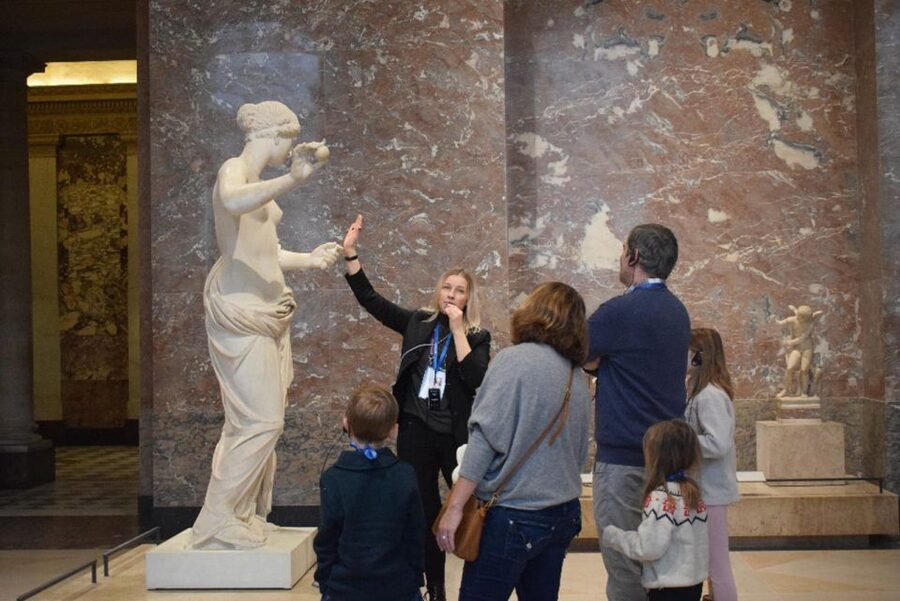
One of the smartest things about this tour is that it doesn’t start with abstract art-facts. It starts with a visual anchor: you stop to see the Venus de Milo. Even if you think you know what Venus looks like, seeing her in the museum’s space feels different—scale, setting, and the attention the room gives her all change the experience.
The guide also uses this moment to set expectations for what you’ll see next: big-name sculptures, major paintings, and museum history woven together. This is where many people start paying attention to details they usually miss on a self-guided visit—like how placement in the gallery changes what you notice first.
Drawback? If you’re hoping for lots of time at a single artwork, this isn’t that kind of tour. The goal is to hit several must-sees without turning your visit into a day-long endurance test. For Venus, you’ll get a proper look and explanation, but you’ll still move on.
A 2-hour guided sprint through Louvre masterpieces you’ll remember
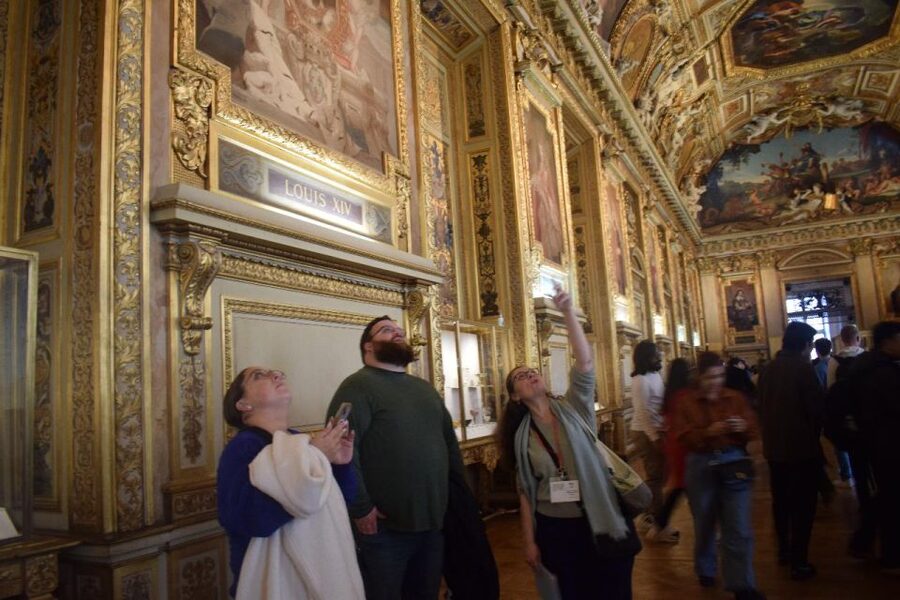
This is where the tour earns its money. In about two hours, you get guided access to what most people come for: paintings, sculpture, and Napoleon-era rooms that help the museum feel like a living story instead of an indoor warehouse.
You can expect to see major highlights such as:
- Mona Lisa (yes, it’s there)
- Venus de Milo
- Winged Victory of Samothrace
- Works connected to Leonardo da Vinci, Caravaggio, Botticelli, and Géricault
- Napoleon’s coronation imagery
- Napoleon-related spaces (including the more ornate apartment feel described by guests)
Here’s the value of the guided format. The guide doesn’t just point. They explain what you’re looking at and why it mattered at the time. That turns a familiar painting into something you can “read.” For sculptures, it helps you notice features beyond the statue’s fame—pose, texture, and why certain works became touchstones.
The tour also includes a bit of the Louvre’s “Royal palace over centuries” feeling. You’ll learn the Louvre’s long evolution: a medieval fortress that became a Renaissance royal residence, later serving partly as a museum, then expanded and shaped further by emperors, until it became the world’s most-visited museum by the end of the 20th century—with the Pyramid as its modern signature.
A realistic note: the Louvre is crowded, even when you do everything right. Guides like Flo and Jerome were repeatedly praised for keeping groups together and communicating clearly. You may also get an audio setup for hearing the guide clearly—one guest specifically mentioned audio devices—so you can focus on looking instead of straining to hear.
The Louvre building story: why it changes how you see the art
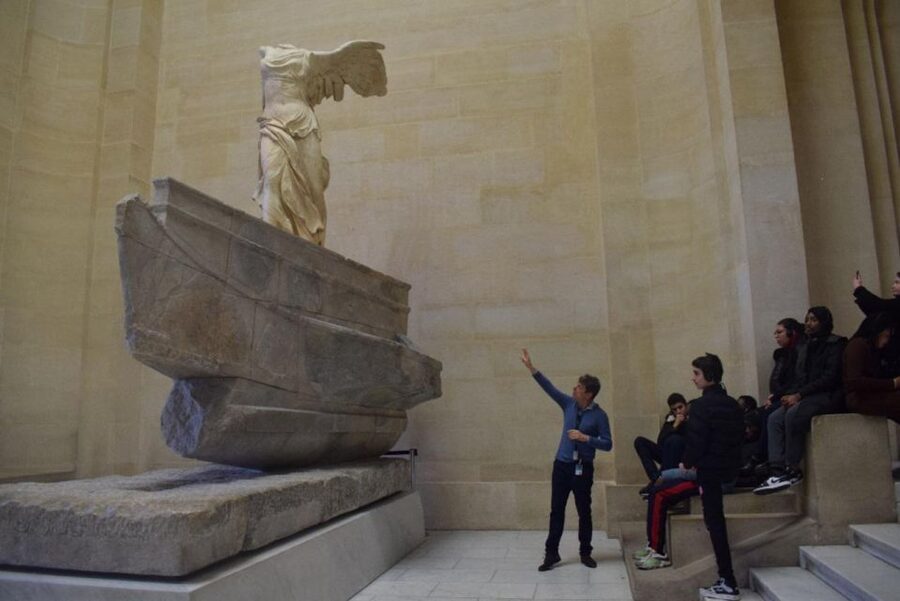
A self-guided visit can turn into a scavenger hunt: find Mona Lisa, find the big sculpture, take the selfie, leave. The benefit of this guided approach is that it connects art to place and time.
You’ll get the “how the building became the museum” version, with key moments like:
- the shift from fortress to royal residence,
- the later transformation into museum use,
- and how two emperors helped enlarge and shape what the Louvre became.
That background is useful because the Louvre isn’t one single style or period. It’s a patchwork of royal power, changing tastes, and big cultural collecting. When you know that, you stop asking why the rooms look so different and start noticing how each era left its fingerprints.
This is also where the guide shines. Guests highlighted guides who could answer questions and keep the explanations interactive, not robotic. In other words, it’s the difference between seeing names on a label and understanding what those names represent.
Small group size (max 6) and hearing your guide without shouting
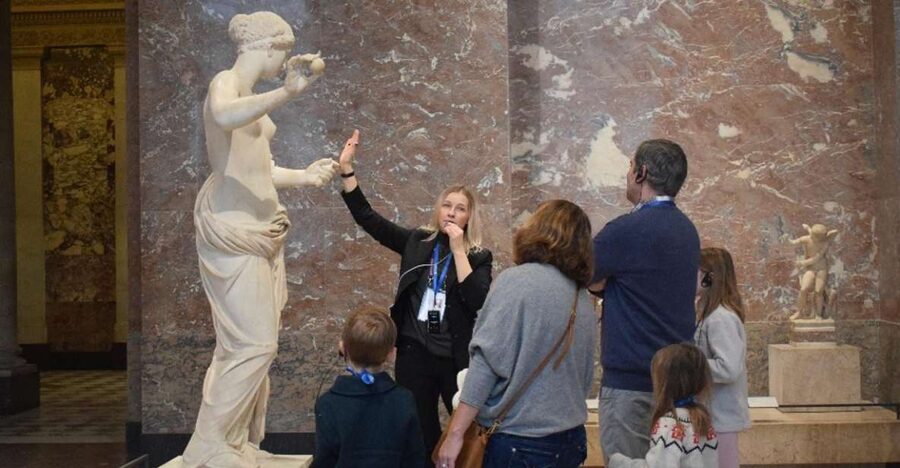
This tour is described as semi-private, capped at 6 people. That’s not just a comfort perk—it changes the entire experience. In a big group, the guide has to herd people. In a smaller group, the guide can slow down when you want a question answered and can react when someone needs a moment.
That’s one reason so many reviews praised the guides’ humor and attentiveness—examples included Maxim, Clara, Akiko, Mathieu, and others. In a small group, humor actually works because you’re not yelling across a crowd.
If you’re worried about language differences, the tour offers live guides in multiple languages, including English, French, German, Spanish, Italian, Arabic, and Chinese. That flexibility is a quality-of-life feature. Even when your French isn’t perfect, you won’t be stuck guessing.
Also, the small-group format helps with navigation. The Louvre is enormous, and crowds can funnel you into slow-moving bottlenecks. A guide who knows the flow can prevent you from wasting your limited time simply trying to get from one highlight to another.
What you get, and what you won’t get (temporary exhibitions excluded)
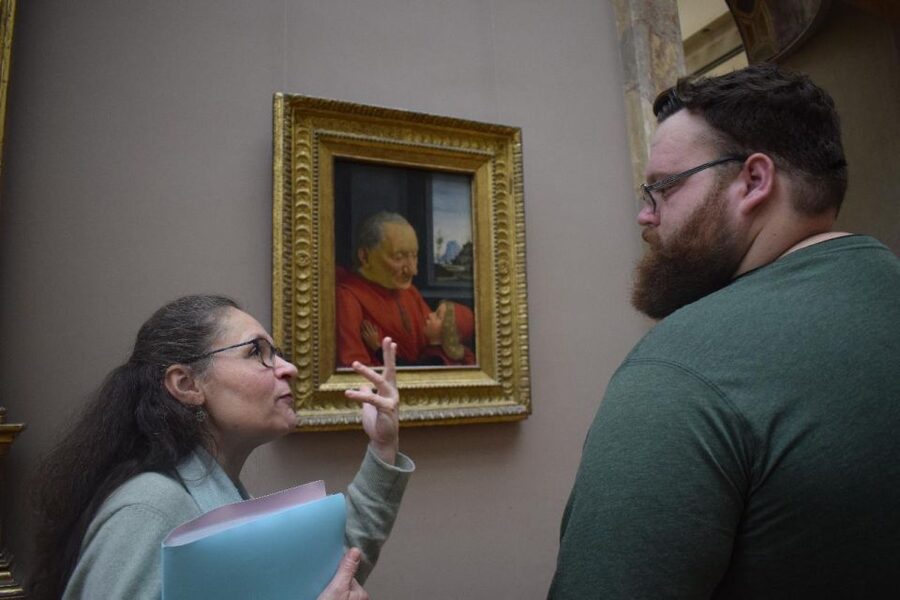
This tour is built around classic masterpieces and the core museum experience. It’s not aimed at temporary exhibitions, so if you’re hoping to chase a special temporary show, you’ll need a separate visit later.
That can be a good thing. Temporary exhibitions are unpredictable, often crowded, and they can steal time from the permanent “greatest hits.” If you only have one shot at the Louvre, focusing on the works everyone talks about usually gives you the strongest first impression.
Another helpful framing: this tour is designed to give you a starting map. When you leave, you should feel like you know what you care about most—paintings vs. sculpture vs. Napoleon rooms—so you can return on your own later. Just remember the big rule change for 2026: after your tour finishes, re-entry is no longer allowed.
Worth weighing up next to this Paris pick



Price at about $130: when it’s worth it (and when it might not be)
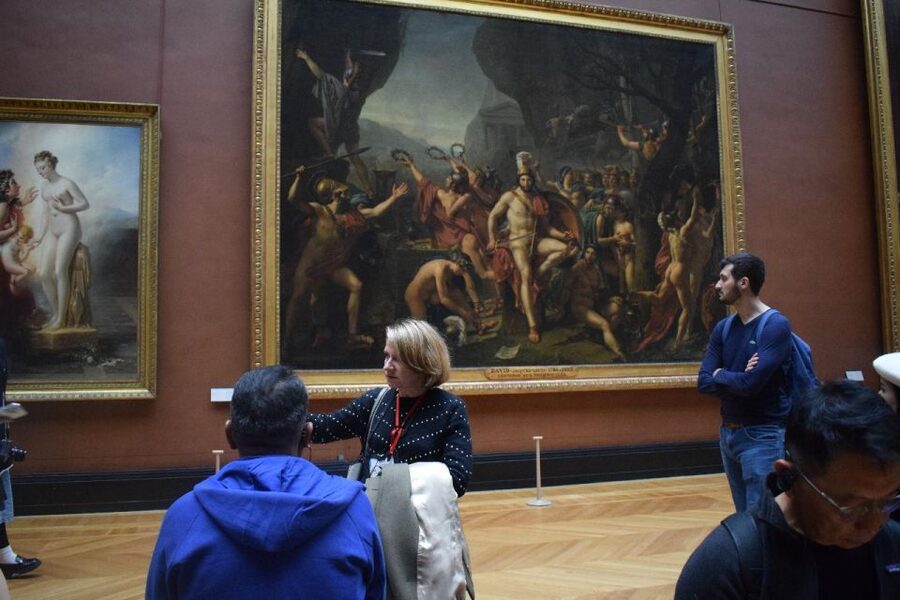
At roughly $130 per person for a 2-hour guided experience, it’s not a “cheap add-on.” The question is value: are you buying time, clarity, and reduced stress?
In this case, you are. You’re paying for:
- skip-the-line entry,
- a timed Louvre ticket,
- and a guide who helps you see more than the obvious.
For first-timers, the guide can easily change what you experience. Without context, the Louvre can feel like information overload. With the guide, each stop becomes a reasoned visit, not just a checkmark.
It can still be a “maybe” if you:
- already know exactly which rooms and works you want and you love wandering,
- or you’re traveling with someone who doesn’t want to follow a set route.
But if you want the easiest path to the masterpieces with less crowd frustration, the pricing is easier to justify.
Practical tips: shoes, bags, and the Louvre’s 2026 re-entry change
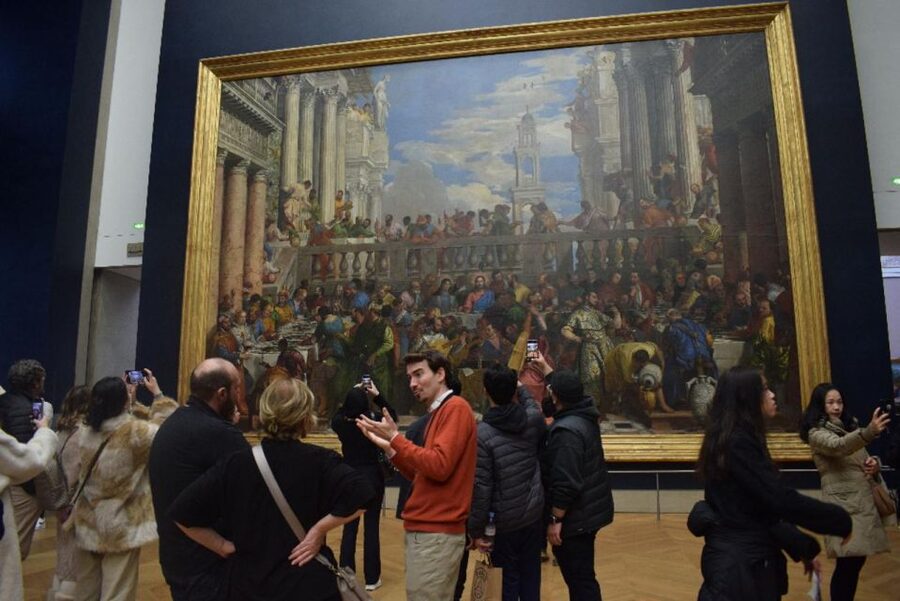
Bring a passport or ID card, and wear comfortable walking shoes. The museum rules also matter here: oversize luggage, baby strollers, luggage or large bags, and backpacks aren’t allowed on the tour.
This isn’t just an inconvenience—it can change your day. Pack light, keep what you bring easy to carry, and plan for how you’ll handle your items at security.
One key update to take seriously: as of January 2026, the Louvre ticketing system changed. There’s been a price increase, and you won’t be allowed to re-enter after your guided tour is over. So don’t plan a coffee break based on the idea that you can come back inside and continue where you left off.
If you like the idea of a flexible schedule, you might still choose this tour, but you’ll want to treat it as your main block of Louvre time, not a partial visit you can stretch later.
Who should book this Louvre best-of tour?
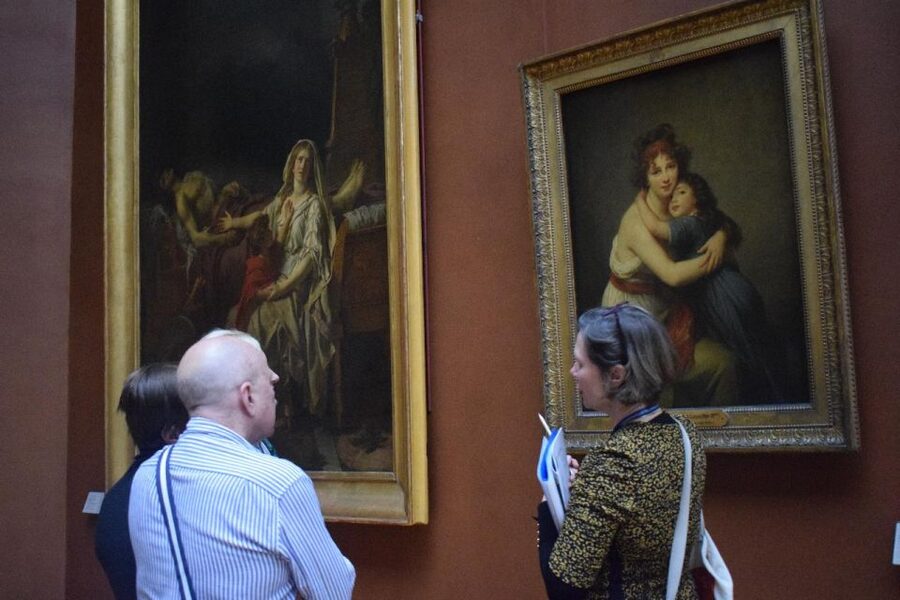
This tour works best for you if:
- you want a guided highlights route in a short window,
- you value art context and storytelling (not just photos),
- and you like the idea of a small group where your questions are more likely to get answered.
It’s also a strong choice if the Louvre is your one big “must-do” in Paris and you don’t want to spend your limited time figuring out navigation.
One less-fit category: the experience isn’t suitable for people with mobility impairments or wheelchair users, based on the provided information.
Should you book? My honest call
Book it if you want a fast, focused first visit that helps you actually understand what you’re seeing. The combination of skip-the-line entry, small group pacing, and guide-led context is exactly what turns the Louvre from overwhelming into manageable.
Skip it (or consider a self-guided approach) if you already have a very specific plan for rooms and artworks and you’re comfortable sorting out crowds without help. Also, if your schedule depends on going back into the museum after your tour time ends, note the 2026 no re-entry rule and plan accordingly.
If the Louvre is a “bucket list” stop for you, I’d treat this as the best way to land the plane: short flight, guided landing, and a good base for what you’ll want to explore next.
FAQ
Where do we meet for the tour?
Meet at Place Colette, between Le Kiosque des noctambules (the colorful glass balls sculpture) and the building named Comédie Française. Your guide will be waiting with a sign that says Connecting France.
How long is the Louvre guided tour?
The guided portion lasts 2 hours.
Does this tour include skip-the-line entry?
Yes. The experience includes skip-the-line entry through a separate entrance, plus a timed Louvre ticket.
What’s the maximum group size?
It’s a semi-private setup with a maximum of 6 people.
Which languages are available for the live guide?
The tour offers live guides in English, French, German, Spanish, Italian, Arabic, and Chinese.
What museum content is included versus not included?
The tour covers the Louvre’s main galleries and rooms with a guide. Temporary exhibitions are not included.
Can I re-enter the Louvre after the tour ends?
As of January 2026, the Louvre no longer allows re-entry after your tour is over.
Is this tour suitable for wheelchair users or limited mobility?
No. The provided information says it is not suitable for people with mobility impairments or wheelchair users.
More Tours in Paris
- Paris: Louvre Guided Tour with Reserved Access & Boat Cruise
★ 4.3 · 16,353 reviews - Paris: Big Bus Hop-On Hop-Off Tour with Optional Cruise
★ 4.4 · 13,279 reviews - Louvre Museum Masterpieces Guided Tour with Access
★ 4.5 · 12,023 reviews - Versailles: Skip-the-Line Tour of Palace and Gardens Access
★ 4.7 · 10,429 reviews - Paris: Louvre Overview, Exploration tour and Reserved Entry
★ 4.1 · 10,145 reviews
More Tour Reviews in Paris
- Paris: 1-Hour Seine Cruise departing from the Eiffel Tower
★ 4.4 · 77,472 reviews - Paris: Louvre Museum Timed-Entrance Ticket
★ 4.6 · 71,977 reviews - Disneyland® Paris 1-Day Ticket
★ 4.6 · 49,412 reviews - Paris: Versailles Palace and Gardens Full Access Ticket
★ 4.6 · 41,579 reviews - Paris: Arc de Triomphe Rooftop Tickets
★ 4.6 · 34,264 reviews
Back to the Louvre: More Ways In
- Paris: Louvre Museum Timed-Entrance Ticket
★ 4.6 · 71,977 reviews - Paris: Louvre Guided Tour with Reserved Access & Boat Cruise
★ 4.3 · 16,353 reviews - Louvre Museum Masterpieces Guided Tour with Access
★ 4.5 · 12,023 reviews - Paris: Louvre Overview, Exploration tour and Reserved Entry
★ 4.1 · 10,145 reviews - Paris: Louvre Museum Entry Ticket With Host and River Cruise
★ 4.6 · 9,926 reviews
Fresh off the review desk in Paris
- Secrets of Paris Bike Tour in English or Dutch★ 5.0 · 5 reviews
- Paris: Mont Saint-Michel Day Tour with Chinese Tour Guide★ 5.0 · 5 reviews
- Private Street Art 2-Hour Guided Tour in Paris★ 4.5 · 5 reviews
- Orsay Museum Tour: 2h Highlights (Private & Small Group)★ 5.0 · 5 reviews
- Discover Paris in electric golf carts★ 4.0 · 5 reviews
- Paris Private Boat Tour with your own Captain Guide★ 5.0 · 5 reviews
Louvre Museum Tours, compared.
 ★ 4.6Louvre Museum Timed-Entrance TicketFrom $2671,977 reviews
 ★ 4.3Louvre Guided Tour with Reserved Access & Boat CruiseFrom $8116,353 reviews
 ★ 4.5Louvre Museum Masterpieces Guided Tour with AccessFrom $8612,023 reviews
 ★ 4.1Louvre Overview, Exploration tour and Reserved EntryFrom $6010,145 reviews
 ★ 4.6Louvre Museum Entry Ticket With Host and River CruiseFrom $1009,926 reviews
 ★ 4.6Mona Lisa & Louvre Masterpieces Tour with Reserved AccessFrom $806,812 reviews
 ★ 5.0Louvre Museum – Exclusive Guided Tour (Entry Included)From $1816,296 reviews
 ★ 4.0Louvre Reserved Ticket and River Cruise ComboFrom $376,054 reviews
Browse the lists this tour appears in