
Reviewed · SAINTE-CHAPELLE & CONCIERGERIE
Paris: Conciergerie Ticket with Histopad
Guillotine history starts inside these walls. The Conciergerie is one of Paris’s most gripping sites, and you get to explore it at your own pace with an included audio guide and a Histopad time-travel tool. I especially like the chance to see real-feeling cells tied to the French Revolution and to stand in spaces like Marie Antoinette’s former chapel cell. The one possible drawback: it’s largely self-guided, so if you hate wayfinding, you’ll want to arrive with time to orient yourself.
Built as a royal palace in the 14th century and later turned into a prison, the Conciergerie became known during the Revolution as the antechamber to the guillotine. With the Histopad’s 3D recreation of Marie Antoinette’s cell, you can compare what’s left today with what used to be there. If you’re short on time, do this early in the day so you don’t miss the Histopad distribution cutoff.
In This Review
- Key things I’d focus on
- The Conciergerie: prison drama in medieval stone
- What you’ll actually see inside (and why each part matters)
- The cells of criminals: where the system felt real
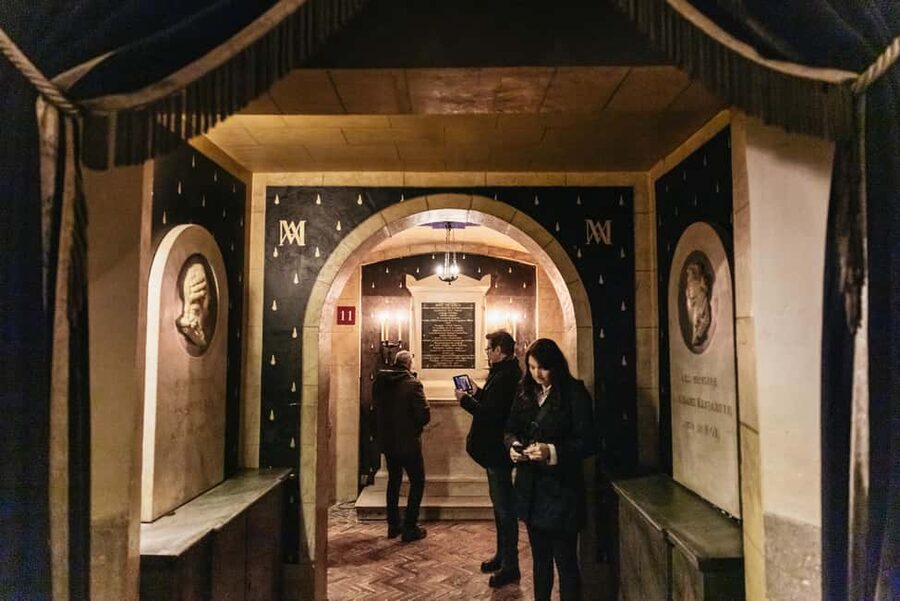
- Tombs of French Revolution heroes: memory in stone
- Marie Antoinette’s former chapel cell: the emotional centerpiece
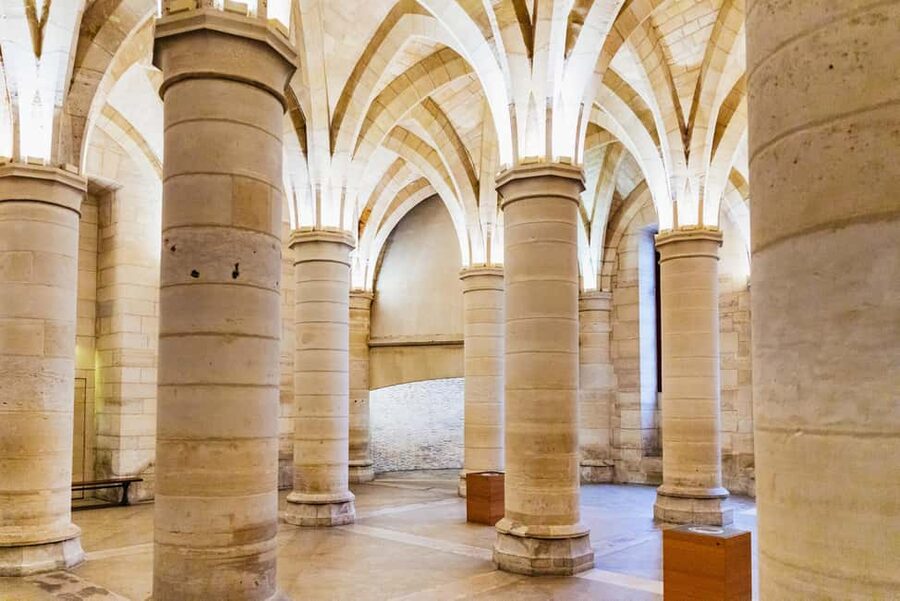
- Salle des Gens d’Armes: medieval grandeur you can measure with your eyes
- How the Histopad works in this visit (and the best way to use it)
- Audio guide languages and what they mean for planning
- Price and value: is $15 worth it?
- Timing tips so you don’t feel rushed
- Practicalities at the entrance: what to bring and what to skip
- Where it is and where to meet
- Who this ticket suits best
- Should you book the Conciergerie ticket with Histopad?
- FAQ
- How long is the Conciergerie visit?
- Where is the meeting point?
- What’s included with the ticket?
- Is Sainte-Chapelle entrance included?
- What audio guide languages are available?
- Is there a cutoff time to get the Histopad?
- What should I bring, and what isn’t allowed?
Key things I’d focus on
- Histopad 3D recreation lets you see Marie Antoinette’s cell as it once was, not just what survives today
- Two “big mood” areas: prison cells tied to Revolutionary justice and the memorial/tomb elements linked to Revolutionary heroes
- Marie Antoinette’s chapel cell is one of the most emotionally charged stops in the complex
- Salle des Gens d’Armes is the largest remaining medieval hall in Europe, so it’s impressive even if you’re not a medieval-architecture nerd
- Multi-language audio guide is included, so you’re not forced to hunt for a separate device or app
The Conciergerie: prison drama in medieval stone

If you want a Paris site that feels instantly serious, the Conciergerie delivers. It’s not a museum you stroll through because it’s famous; it’s a place where the building itself tells the story. The structure began life as a royal palace in the 14th century. When the royal family moved out, the same spaces were repurposed as a prison—turning grand rooms into holding areas and corridors into the last stop before trial.
That change in purpose is what makes your visit more than sightseeing. You’re walking through the physical logic of power: where people were held, where decisions were made, and where the Revolution’s momentum showed up in paperwork, schedules, and cell life.
And yes, the site is closely associated with the Revolution’s justice machinery. During that period, it was known as the antechamber to the guillotine. Even if you’ve read the history before, the setting adds weight. It’s hard to keep history abstract when you’re staring at prison space.
The medieval island, a few more ways
- Paris: Sainte-Chapelle, Conciergerie, Notre Dame Guided Tour
★ 4.8 · 727 reviews - Paris: Notre Dame Outdoor Tour with Sainte-Chapelle / Crypt.
★ 4.7 · 723 reviews - Notre Dame Outdoor Walking Tour and Entrance to Sainte Chapelle
★ 5.0 · 625 reviews - Paris: Conciergerie Ticket with Histopad
★ 4.4 · 479 reviews
What you’ll actually see inside (and why each part matters)
Your ticket gives you a self-guided visit, but the site isn’t just one big room. You’ll move through several key zones that each teach you something different about the Revolution—both politically and emotionally.
The cells of criminals: where the system felt real
One of the main attractions is the chance to explore the cells of criminals. That sounds blunt, because it is. But it’s also the point. These spaces help you understand that revolutionary justice didn’t just happen in courtrooms. It started with confinement—holding people before the next step.
I like this part because it grounds everything else. If you only focus on famous names, you can miss how the process worked. The cells make the process concrete: small spaces, strict boundaries, and the sense that time moved forward whether someone was ready or not.
Practical tip: give yourself enough time at the cells to pause. If you rush, you’ll only remember “dark rooms.” Slow down a bit and you’ll start to notice how the building shapes movement and control.
Tombs of French Revolution heroes: memory in stone
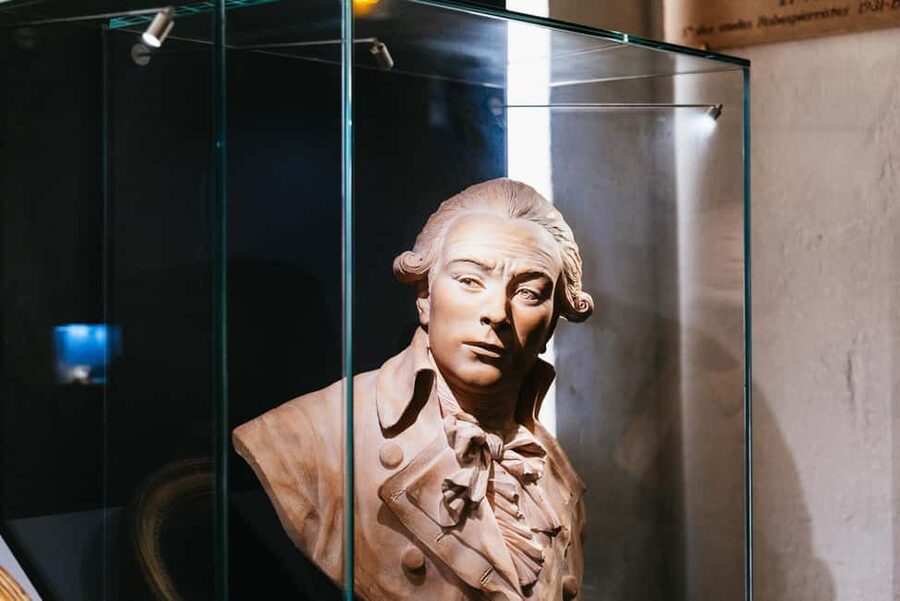
In the Conciergerie experience, you also get to see tombs of heroes of the French Revolution. This matters because it balances the darker prison story with a record of what the Revolution wanted to remember.
It’s a useful contrast. After seeing confined spaces, the tombs shift you from day-to-day captivity toward the Revolution’s legacy-building. The site becomes not only a record of suffering, but also a stage for meaning: who the Revolution honored and how it framed its own narrative.
Marie Antoinette’s former chapel cell: the emotional centerpiece
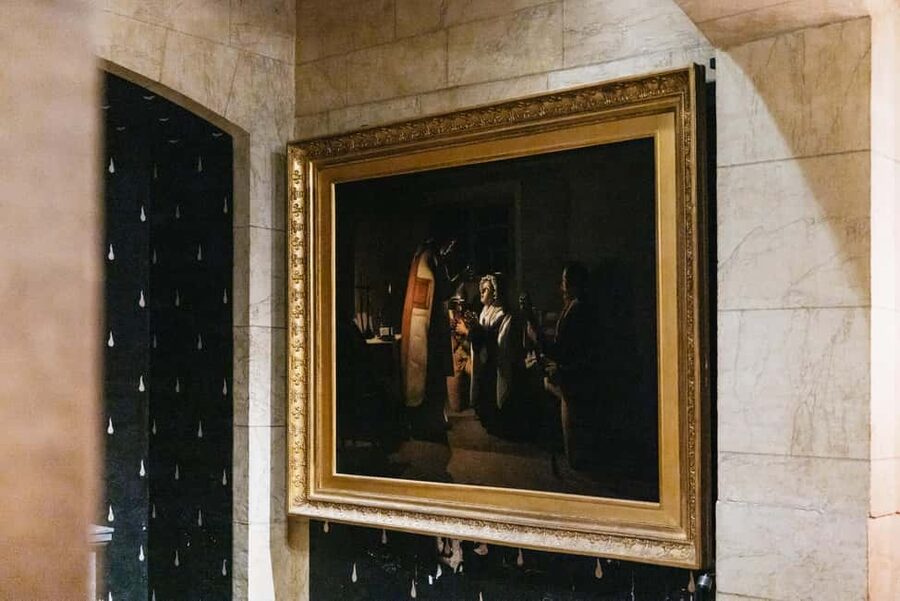
Marie Antoinette is unavoidable here, and the Conciergerie makes that focus tangible. You’ll visit the chapel that was once the prison cell where she was held. This is the stop where most people slow down without meaning to.
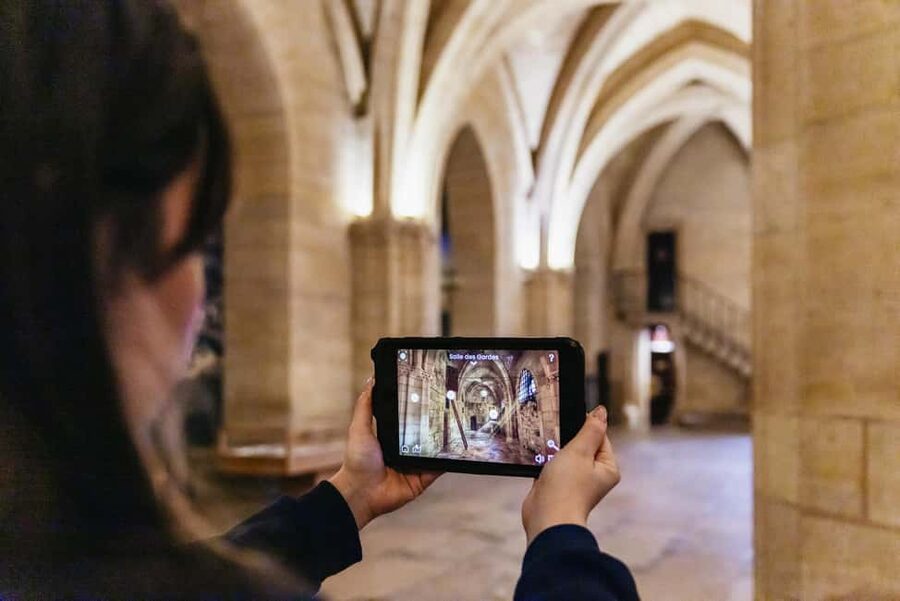
What’s especially smart about your ticket is that you’re not limited to seeing what’s left behind. The included Histopad can show you a 3D reproduction connected to her cell, letting you compare the space in a more complete way. If you’ve ever struggled with “what did it look like back then?” this is the solution.
Note: the Histopad is distributed to visitors until 4:15 PM. If you want the augmented reality component, aim to be in the building early enough to get one without stress.
Salle des Gens d’Armes: medieval grandeur you can measure with your eyes
Then there’s the architectural payoff: the Salle des Gens d’Armes, described as the largest remaining medieval hall in Europe. Even if you’re not chasing medieval architecture, this hall is worth your time because it’s a real sense of scale.
Think about what that means in context. A hall this big can’t be just about paperwork. It suggests ceremonies, gatherings, and a kind of public presence—then the prison function turns that same complex into something far more controlled and private.
In other words: the building itself holds contradictions. You see power, then the machinery of confinement, all in the same footprint.
Worth weighing up next to this Paris pick


How the Histopad works in this visit (and the best way to use it)

Your ticket includes a HistoPad 3D-reproduction tied to Marie Antoinette’s cell. The Histopad language support includes French, English, German, Spanish, Italian, Japanese, and Chinese.
Here’s how to get the most value:
- Use it at the chapel cell stop, not as a random add-on. The comparison only works if you’re looking at the real space at the same time.
- Don’t treat it like a video you watch and forget. Pause, look at what you’re standing in, then check how it would have looked in the reproduction.
- Plan your timing around distribution. Since the Histopad is distributed until 4:15 PM, arriving late can mean you get the ticket but not the full experience.
If you’re traveling with kids or anyone who learns visually, this is often the difference between “I saw it” and “I understood it.”
Audio guide languages and what they mean for planning
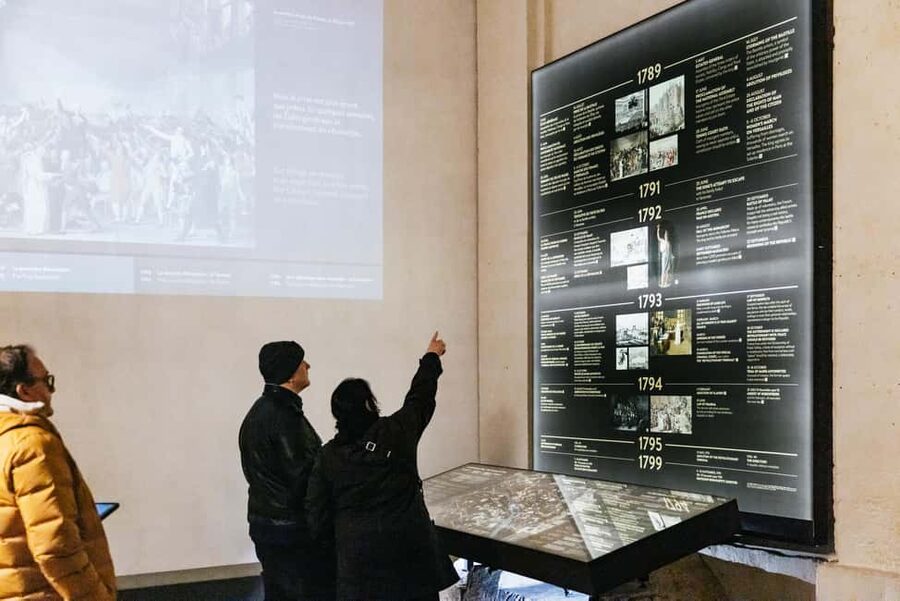
Your visit includes an audio guide with multiple languages: Chinese, English, French, German, Italian, Spanish, Japanese, Korean, and Portuguese.
This is practical value. You’re not stuck with one language, and you’re not paying extra for a separate guide system. It also helps with pacing, because audio cues can keep you from drifting through the site without context.
One thing to keep in mind: because this is self-guided, you may still want to slow down to read signage and match what the audio is pointing you toward. A self-guided visit can feel a bit tricky if you’re trying to follow the route in a hurry. Give yourself breathing room.
Price and value: is $15 worth it?
At about $15 per person, this is positioned as a straightforward, budget-friendly ticket for a high-impact site in central Paris. The value isn’t only the entrance fee—it’s that you’re also getting:
- the self-guided access to the Conciergerie’s main prison and Revolution-linked spaces
- an included audio guide in many languages
- a Histopad 3D reproduction connected to Marie Antoinette’s cell
What’s not included matters too. Sainte-Chapelle is not included, so don’t plan to replace that separate visit with this ticket. Also, transportation isn’t included, so you’ll cover getting there on your own.
If you like history you can touch—architecture, rooms, and physical constraints—this is strong value. If you’re looking for a guided storytelling tour with a person herding you from stop to stop, this may feel a bit more work than you expect, because it depends on your comfort with self-navigation.
Timing tips so you don’t feel rushed
You’ll want to think about timing because the experience has two “endpoints” that affect what you get:
- The last entrance is 30 minutes before closing time
- The Histopad is distributed until 4:15 PM
So the best strategy is simple: arrive early, get oriented, then spend time at the chapel cell and the big hall. If you show up late, you can still see a lot, but you might miss the Histopad component that makes this ticket feel special.
Also, the Conciergerie is closed May 1 and December 25, so plan around those dates. And remember: there’s no refund if you cancel.
Practicalities at the entrance: what to bring and what to skip
Bring a passport or ID card. You’ll also want to avoid luggage. The site does not allow luggage or large bags.
That’s not just a hassle note—it can affect your day. If you’re carrying a suitcase (or even a large day bag), you may need to rethink your logistics before you head there. Pack light if you can.
Good to know on discounts/free entry: visitors under 18 are free, and EU citizens under 26 with photo ID need a ticket issued onsite. Also, the first Sunday of January, February, March, November, and December is free, and European Heritage Days (the 3rd weekend of September) are free as well.
Where it is and where to meet
Meet at the Conciergerie itself: 2 Boulevard du Palais, 75001 Paris.
This location puts you in the heart of central Paris, so combining it with other nearby stops can be easy. Just keep your schedule realistic—self-guided history sites can take longer than you think once you start reading and comparing spaces.
Who this ticket suits best
This experience is a great fit if:
- you want a self-paced visit to a high-emotion Revolutionary site
- you enjoy architecture and how buildings shape history
- you’re curious about Marie Antoinette beyond names and dates
- you like using an included tool (Histopad) rather than relying on your phone
It might be less ideal if:
- you strongly prefer a guided tour with a clear, staff-led route
- you’re likely to show up late and miss the Histopad distribution
- you don’t handle self-navigation well when signage is the main “guide”
Should you book the Conciergerie ticket with Histopad?
Yes—if you want real history you can walk through and you plan to arrive early enough to get the Histopad. The combination of prison spaces, Revolution-linked tombs, Marie Antoinette’s former cell, and the Salle des Gens d’Armes makes this ticket feel like more than a basic entry pass.
Skip it or reconsider if you only want a quick stop, you’re traveling with bulky luggage, or you know you’ll hate the self-guided format. But if you like sinking into a place where the walls explain the story, this is a smart buy for Paris.
FAQ
How long is the Conciergerie visit?
The activity is valid for 1 day. You can check availability for starting times.
Where is the meeting point?
The meeting point is the Conciergerie, 2 Boulevard du Palais, 75001 Paris.
What’s included with the ticket?
You get an entrance ticket, a self-guided visit, and a HistoPad 3D reproduction of Marie Antoinette’s cell. The HistoPad is available in French, English, German, Spanish, Italian, Japanese, and Chinese. An audio guide is also included.
Is Sainte-Chapelle entrance included?
No. Entrance to Sainte-Chapelle is not included.
What audio guide languages are available?
The audio guide is available in Chinese, English, French, German, Italian, Spanish, Japanese, Korean, and Portuguese.
Is there a cutoff time to get the Histopad?
Yes. The Histopad is distributed to visitors until 4:15 PM.
What should I bring, and what isn’t allowed?
Bring a passport or ID card. Luggage or large bags are not allowed.
If you want, tell me what day/time you’re aiming for in Paris and whether you’re combining this with Sainte-Chapelle—I can help you structure a simple, realistic order so you don’t run into the Histopad or last-entrance timing.
More Tickets in Paris
- Paris: Louvre Museum Timed-Entrance Ticket
★ 4.6 · 71,977 reviews - Disneyland® Paris 1-Day Ticket
★ 4.6 · 49,412 reviews - Paris: Versailles Palace and Gardens Full Access Ticket
★ 4.6 · 41,579 reviews - Paris: Arc de Triomphe Rooftop Tickets
★ 4.6 · 34,264 reviews - Paris: Orsay Museum Entry Ticket
★ 4.7 · 25,647 reviews
More Tour Reviews in Paris
- Paris: 1-Hour Seine Cruise departing from the Eiffel Tower
★ 4.4 · 77,472 reviews - Paris: Louvre Museum Timed-Entrance Ticket
★ 4.6 · 71,977 reviews - Disneyland® Paris 1-Day Ticket
★ 4.6 · 49,412 reviews - Paris: Versailles Palace and Gardens Full Access Ticket
★ 4.6 · 41,579 reviews - Paris: Arc de Triomphe Rooftop Tickets
★ 4.6 · 34,264 reviews
Sainte-Chapelle and the Conciergerie
- Paris: Sainte-Chapelle, Conciergerie, Notre Dame Guided Tour
★ 4.8 · 727 reviews - Paris: Notre Dame Outdoor Tour with Sainte-Chapelle / Crypt.
★ 4.7 · 723 reviews - Notre Dame Outdoor Walking Tour and Entrance to Sainte Chapelle
★ 5.0 · 625 reviews - Paris: Sainte-Chapelle Entry with Notre Dame Outdoor Tour
★ 4.8 · 478 reviews - Sainte-Chapelle, Conciergerie & Notre Dame Exterior Guided Tour
★ 4.5 · 409 reviews
Fresh off the review desk in Paris
- Secrets of Paris Bike Tour in English or Dutch★ 5.0 · 5 reviews
- Paris: Mont Saint-Michel Day Tour with Chinese Tour Guide★ 5.0 · 5 reviews
- Private Street Art 2-Hour Guided Tour in Paris★ 4.5 · 5 reviews
- Orsay Museum Tour: 2h Highlights (Private & Small Group)★ 5.0 · 5 reviews
- Discover Paris in electric golf carts★ 4.0 · 5 reviews
- Paris Private Boat Tour with your own Captain Guide★ 5.0 · 5 reviews
Sainte-Chapelle & Conciergerie, compared.
 ★ 4.8Sainte-Chapelle, Conciergerie, Notre Dame Guided TourFrom $88727 reviews
 ★ 4.7Notre Dame Outdoor Tour with Sainte-Chapelle / Crypt.From $63723 reviews
 ★ 5.0Notre Dame Outdoor Walking Tour and Entrance to Sainte ChapelleFrom $79625 reviews
 ★ 4.8Sainte-Chapelle Entry with Notre Dame Outdoor TourFrom $75478 reviews
 ★ 4.5Sainte-Chapelle, Conciergerie & Notre Dame Exterior Guided TourFrom $86409 reviews
 ★ 4.5Outdoor Notre-Dame walking Tour with Sainte-Chapelle EntryFrom $80374 reviews
 ★ 4.9Notre Dame Exterior Walking Tour with Sainte ChapelleFrom $81290 reviews
 ★ 4.5Sainte-Chapelle and Conciergerie Guided Tour with Ticket in ParisFrom $83171 reviews
Browse the lists this tour appears in