
Notre-Dame feels brand-new again, and you notice why. With a licensed local guide, you step into one of the most ambitious modern restorations and learn how the building still works as architecture, not just scenery. I especially like the way this tour points out restoration details you’d otherwise miss, and then links them to big moments in French power and ceremony.
My other favorite part is the mix of exterior + interior in just 75 minutes. You walk the spot tied to Napoleon’s coronation along with the choir area connected to royal marriages, then you move inside to see the renewed glow of the cathedral’s limestone and the rose windows that survived the fire.
One thing to think about first: this is not a skip-the-line experience. You enter through the general admission line, so on crowded days your timing depends on security checks and foot traffic, and the flow can feel a bit brisk.
In This Review
- Key highlights worth your attention
- How the meeting works at Cité and why the general line matters
- West façade portals: the stone stories most people speed past
- Flying buttresses and the cage of light: the engineering lesson
- Entering the cathedral: cleaned limestone and rose windows that survived
- The 130-meter nave and the ceremonial path of Napoleon
- The choir and royal weddings: where “power” becomes ritual
- Semi-private up to 5 vs private: how group size changes the vibe
- Value check: is $30 worth it when cathedral entry is free?
- Who this tour suits best (and who might want a different approach)
- A final take: should you book this reopened Notre-Dame tour?
- FAQ
- Where is the meeting point for the Notre-Dame guided tour?
- How long is the tour?
- Is the cathedral entry ticket included?
- Does this tour offer skip-the-line access?
- How do the small group and private options work?
- What languages are available for the live guide?
- Do you provide Notre-Dame entry tickets in advance?
- Is cancellation possible if my plans change?
Key highlights worth your attention
- Licensed guide with real commentary while you’re inside and out
- West façade portals and the 28 kings watching from above
- Flying buttresses explained as the tech behind that cage of light
- Restored limestone and surviving rose windows glowing in daylight
- Napoleon’s coronation route plus the choir tied to royal weddings
- Small-group options (semi-private up to 5) or private flexibility
How the meeting works at Cité and why the general line matters
This tour meets in front of Cité metro station at Place Louis Lépine, 75004 Paris. Your guide holds a yellow sign that says Smart City Tour, and you’ll start right near the cathedral area—close enough that you’re not burning time on transit.
The biggest practical point is access. Entry is via the cathedral’s general admission line, and your guide stays with you through the process. Waiting times vary based on crowd levels and security checks. That doesn’t mean the tour is chaotic; it just means you should build in some flexibility to match the day’s pace.
Also note this: entry to Notre-Dame itself is free, but the guided service you book is independent of that. In other words, you are paying for the guide and the structured storytelling—not for special cathedral tickets. The operator also states they do not distribute entry tickets, so don’t expect a separate QR code or “ticket” to show up in your inbox.
More time around Notre-Dame and the old island
- Paris Île de la Cité and Notre-Dame Walking Tour With Crypt
★ 5.0 · 2,272 reviews - Paris: Notre-Dame Cathedral Exterior Tour
★ 3.9 · 1,722 reviews - Paris: The Notre Dame Experience with Multiple Tour Options
★ 4.7 · 1,612 reviews - Paris: Eternal Notre-Dame VR Experience Ticket
★ 4.4 · 1,150 reviews
West façade portals: the stone stories most people speed past
Once you’re queued and ready to enter the site, the tour begins with the cathedral’s dramatic front—the west façade. This is where guides earn their keep, because the details are there, but they’re easy to overlook when you’re staring at something huge.
You’ll look at the three monumental portals that tell stories in stone. Above, you’ll be pointed to the 28 kings watching over the façade. You also get attention paid to the small hidden details the average stop-and-snap visitor might walk past without a second glance.
What I like about this approach is that it gives you a way to read the cathedral as a narrative. The portals aren’t just decoration. They’re part of how medieval builders taught people what to think about power, faith, and authority. Seeing it with a guide means you’re not just admiring; you’re understanding where the symbolism sits and why the artists placed it where they did.
Flying buttresses and the cage of light: the engineering lesson
Next, your guide turns the cathedral into a lesson in engineering. Notre-Dame’s most famous structural idea is the flying buttress system, and you’ll be shown why it let builders replace solid walls with vast window space.
That matters because it explains what you see inside. When people say the cathedral feels full of light, they often mean it metaphorically. Here, you learn it literally: the structure allowed the building to carry its weight while letting in brightness. Your guide describes how this created a kind of cage of light effect—one you can still feel in the interior atmosphere today.
You’ll also see markers tied to the spire. The tour includes time to look at where the spire once stood and where the new one now rises. Even if you’re not an architecture nerd, this works. It gives the restoration a point in space, not just a headline in the news.
Entering the cathedral: cleaned limestone and rose windows that survived
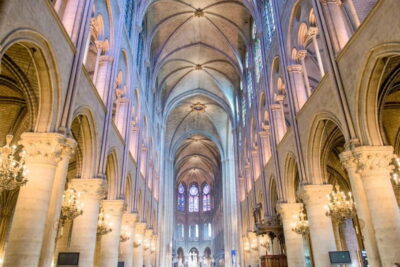
When you finally step inside, the change is immediate. The tour focuses on the visual transformation: cleaned limestone glows for the first time in generations, and sunlight moves across the stone in a way that makes the space feel newly legible.
Then comes the rose windows. You’re told to look closely at the rose windows that survived the fire, including details about their 10 meters of 13th-century glass depicting kings, prophets, and saints. That’s not a trivia flex—it’s a way of training your eyes. When you know what the glass is meant to show, the windows stop being a single pretty circle and start becoming a readable artwork with figures and hierarchy.
This is also where a guide can affect your experience the most. If yours has strong pacing, you’ll get a few clear “look here” moments rather than a long stream of facts. And if you want storytelling, guides tend to use anecdotes to connect architectural choices with the lived world of medieval Paris.
The 130-meter nave and the ceremonial path of Napoleon
One of the tour’s biggest draws is how it links space to events. You walk the 130-meter nave and you’re guided to the area connected to Napoleon’s coronation, where he crowned himself Emperor.
Even if you already know the date, the cathedral changes your sense of scale. The nave stretches forward like a processional line—exactly the kind of space where power wants to be seen. With a guide, you’re not just standing in a large room. You’re placed in a route: where a person would move, pause, and be witnessed.
I also like that this section is practical for first-timers. Instead of trying to point at every chapel at once, the guide highlights key ceremonial zones. It keeps the tour from turning into a blur of stone.
The choir and royal weddings: where “power” becomes ritual
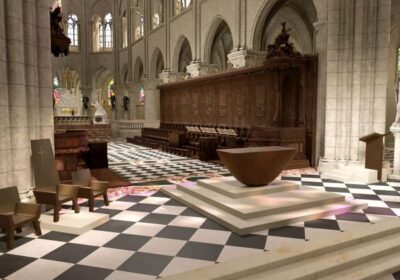
After the nave, you stand in the choir area connected to French royal weddings. This part is more than romantic medieval imagery. It’s about how the cathedral served politics and ceremony, not only worship.
Your guide connects the surrounding chapels, sculptures, and windows to eight centuries of events witnessed by these walls. If you’re interested in how cathedrals functioned as civic stages, this is one of the strongest parts of the itinerary.
It’s also a moment where a good guide style matters. In past groups, names like Juliette, Emma, Hugo, Melvyn, and Alessandro have shown up as examples of guides who mix competence with humor and memorable anecdotes. If you happen to land with someone like that, you’ll likely get the feeling of seeing the cathedral and its symbolism through a person who loves the place.
Worth weighing up next to this Paris pick




Semi-private up to 5 vs private: how group size changes the vibe
You can choose between semi-private and private formats. The semi-private option is capped at 5 guests, which is a meaningful limit for a site like this. In practice, that smaller size helps you ask questions without feeling like you’re slowing down a busload.
Private tours are also available for families or groups with specific interests. That flexibility matters if you’re trying to match the cathedral to a personal focus—architecture details, royal-era events, or simply getting more time on the façade and interiors without the tighter pacing of a small group.
A fair warning: because you enter via general admission, you may still feel the day’s crowd levels in the line. The difference is that once you’re inside and moving through the key spots, a smaller group helps you stay oriented and get more from the guide’s stops.
Value check: is $30 worth it when cathedral entry is free?
At $30 per person for 75 minutes, the value question comes down to one thing: what you’re buying is the licensed guide’s commentary plus a structured path through both exterior and interior.
Because Notre-Dame admission is free of charge, you’re not paying for special access tickets. You’re paying for:
- the guide’s explanations of why the cathedral looks the way it does
- guided time at major “read-this-first” points like the west façade portals and flying buttresses
- interpretation of interior elements like cleaned limestone and rose windows
- historical connections placed directly into the walking route
The tour also does not include skip-the-line access. So if your top goal is to minimize waiting at the general entrance, you’ll need to plan around the possibility of delays.
For me, the best way to decide is this: if you want to come out understanding what you saw—especially structural ideas like flying buttresses and how the restoration reshaped what’s visible—this price can make sense. If you just want a casual look without much explanation, you might not get enough from a paid guide.
Who this tour suits best (and who might want a different approach)
This works well if you:
- are visiting Notre-Dame and want a guide to help you read the building
- like architecture but don’t want to guess at the “why” behind the look
- enjoy walking to a few key ceremonial points like Napoleon’s coronation route and the choir
- want a small group feel, especially with semi-private up to 5
It may feel less ideal if you’re extremely detail-hungry and expect a longer, deeper lecture on everything Notre-Dame-related. Also, if you’re sensitive to pacing, remember you’re entering through the general admission line and moving as crowds move. On busy days, that can trim the time you spend lingering on a specific chapel or sculpture.
Still, the tour’s focused duration—75 minutes—can be a plus. It’s long enough to change how you see the cathedral, and short enough to keep the day moving.
A final take: should you book this reopened Notre-Dame tour?
I’d book it if you want the reopened cathedral to feel readable, not just impressive. The structure-first explanations (especially the flying buttresses and the windows) plus the ceremonial stops (Napoleon’s coronation area and the choir connected to royal weddings) make the visit more than a photo loop.
I’d think twice if you know you hate waiting, because this uses the general admission line. I’d also consider a different style if you prefer a slower pace or a more emotionally driven storytelling approach, since some guides’ styles can feel more efficient than theatrical on crowded days.
If you’re like most first-time visitors and you want to get the real payoff from your time at Notre-Dame, this tour is a strong bet—especially in a semi-private group when you can ask questions and actually process what you’re seeing.
FAQ
Where is the meeting point for the Notre-Dame guided tour?
Your guide meets you in front of Cité metro station at Place Louis Lépine, 75004 Paris, holding a yellow sign with Smart City Tour on it.
How long is the tour?
The duration is 75 minutes.
Is the cathedral entry ticket included?
Yes. The tour includes entry into Notre-Dame Cathedral, and the tour information notes that cathedral admission is free of charge. The guided service you book is separate from that free admission.
Does this tour offer skip-the-line access?
No. You enter via the general admission line, and waiting times can vary depending on crowd levels and security checks.
How do the small group and private options work?
You can choose between a semi-private group option limited to 5 guests for more personal attention, or a private tour option for flexibility based on your group’s needs.
What languages are available for the live guide?
The tour offers live guiding in English, Russian, Arabic, French, Spanish, and Italian.
Do you provide Notre-Dame entry tickets in advance?
No. The operator states they do not distribute entry tickets to Notre-Dame Cathedral.
Is cancellation possible if my plans change?
Yes, free cancellation is available up to 24 hours in advance for a full refund.
More Tours in Paris
- Paris: Louvre Guided Tour with Reserved Access & Boat Cruise
★ 4.3 · 16,353 reviews - Paris: Big Bus Hop-On Hop-Off Tour with Optional Cruise
★ 4.4 · 13,279 reviews - Louvre Museum Masterpieces Guided Tour with Access
★ 4.5 · 12,023 reviews - Versailles: Skip-the-Line Tour of Palace and Gardens Access
★ 4.7 · 10,429 reviews - Paris: Louvre Overview, Exploration tour and Reserved Entry
★ 4.1 · 10,145 reviews
More Tour Reviews in Paris
- Paris: 1-Hour Seine Cruise departing from the Eiffel Tower
★ 4.4 · 77,472 reviews - Paris: Louvre Museum Timed-Entrance Ticket
★ 4.6 · 71,977 reviews - Disneyland® Paris 1-Day Ticket
★ 4.6 · 49,412 reviews - Paris: Versailles Palace and Gardens Full Access Ticket
★ 4.6 · 41,579 reviews - Paris: Arc de Triomphe Rooftop Tickets
★ 4.6 · 34,264 reviews
Around Notre-Dame, More to See
- Paris Île de la Cité and Notre-Dame Walking Tour With Crypt
★ 5.0 · 2,272 reviews - Paris: Notre-Dame Cathedral Exterior Tour
★ 3.9 · 1,722 reviews - Paris: The Notre Dame Experience with Multiple Tour Options
★ 4.7 · 1,612 reviews - Paris: Eternal Notre-Dame VR Experience Ticket
★ 4.4 · 1,150 reviews - Paris:Notre-Dame Cathedral Interior and Exterior Guided Tour
★ 4.7 · 1,128 reviews
Fresh off the review desk in Paris
- Secrets of Paris Bike Tour in English or Dutch★ 5.0 · 5 reviews
- Paris: Mont Saint-Michel Day Tour with Chinese Tour Guide★ 5.0 · 5 reviews
- Private Street Art 2-Hour Guided Tour in Paris★ 4.5 · 5 reviews
- Orsay Museum Tour: 2h Highlights (Private & Small Group)★ 5.0 · 5 reviews
- Discover Paris in electric golf carts★ 4.0 · 5 reviews
- Paris Private Boat Tour with your own Captain Guide★ 5.0 · 5 reviews
Notre-Dame Tours, compared.
 ★ 5.0Paris Île de la Cité and Notre-Dame Walking Tour With CryptFrom $482,272 reviews
 ★ 3.9Notre-Dame Cathedral Exterior TourFrom $291,722 reviews
 ★ 4.7The Notre Dame Experience with Multiple Tour OptionsFrom $61,612 reviews
 ★ 4.4Eternal Notre-Dame VR Experience TicketFrom $361,150 reviews
 ★ 4.7Notre-Dame Cathedral Interior and Exterior Guided TourFrom $151,128 reviews
 ★ 4.1Notre-Dame Guided Tour with Multiple Entry OptionsFrom $221,107 reviews
 ★ 5.0Paris Highlights Bike Tour: Eiffel Tower, Louvre and Notre-DameFrom $54853 reviews
 ★ 4.6Notre-Dame The Restored Masterpiece Guided TourFrom $5812 reviews
Browse the lists this tour appears in