
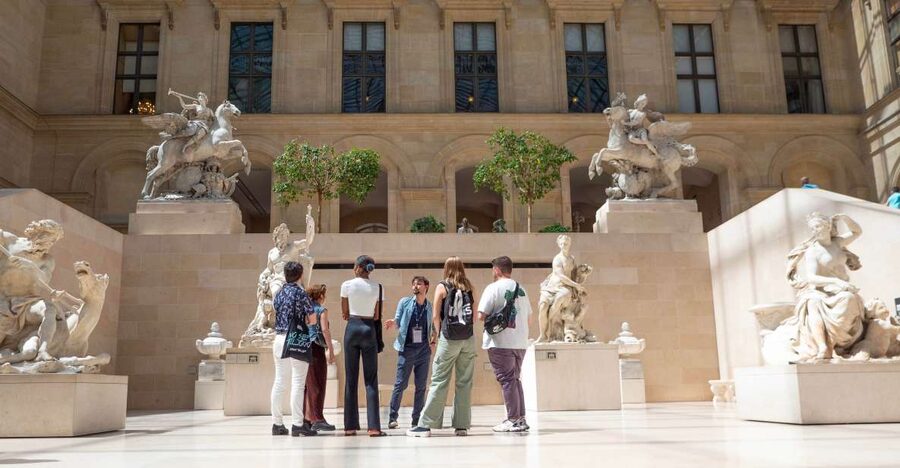
Reviewed · LOUVRE MUSEUM TOURS
Paris: Louvre Museum Highlights and Mona Lisa Tour
The Louvre can swallow a whole day. This guided route focuses on the most iconic works and gives you the context that makes them click.
I especially like how this tour uses fast-track entry so you spend less time waiting and more time looking. And the headsets help you hear your guide clearly as you move through the galleries.
One thing to plan for: it’s not a slow museum stroll. You’ll do security checks, walk a lot, and you can’t re-enter certain areas once you’ve moved past the route’s endpoint under the pyramid.
In This Review
- Key Things I’d Pay Attention To
- Meeting at Arc du Carrousel and Getting Inside Fast
- A Highlights Route That Keeps You From Getting Lost
- Ancient Greece First: Venus de Milo and Winged Victory of Samothrace
- Painting and Sculpture Across Centuries: What Comes Before Mona Lisa
- Mona Lisa: More Than a Photo Stop
- Underground Galleries: Medieval Fortress Foundations Under the Louvre
- Headsets and Small Group Size: Why This Tour Works in Real Life
- Price and Value: Is $116 Worth It for a 1–2 Hour Louvre Visit?
- Timing Tips: When the Louvre Feels Most Manageable
- Who This Tour Is Best For (and Who Should Skip It)
- Should You Book This Louvre Highlights Tour?
- FAQ
- Where do I meet the guide?
- How long is the Louvre highlights tour?
- How do I avoid the ticket line?
- Is the tour in English?
- What are the main highlights you’ll see?
- What should I bring, and what can’t I bring?
- Is this tour suitable for wheelchair users?
- Can I re-enter rooms after the tour ends under the pyramid?
- What happens if I’m late?
Key Things I’d Pay Attention To

- Fast-track entry with a pre-reserved ticket so you avoid the longest lines
- Curated highlights route that keeps you from wandering in circles
- Expert storytelling around major works like the Mona Lisa theft and its fallout
- Major stops you can actually see up close, including Venus de Milo and Winged Victory
- Underground history with the medieval fortress foundations under the Louvre
- Small group size (max 20) plus headsets for easier listening
Meeting at Arc du Carrousel and Getting Inside Fast
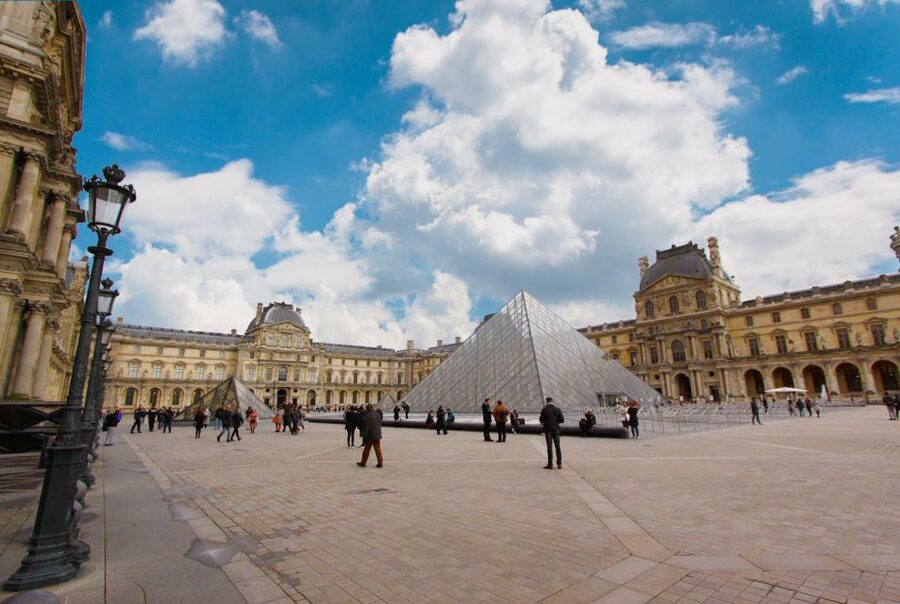
You meet your guide at the Arc du Carrousel du Louvre, just outside the museum. Do not go straight to the main entrance first. This matters because the tour starts with your group form-up and then you move together to get through the security flow.
From there, the goal is simple: get you into the museum quickly. You use a pre-reserved, separate entrance approach to skip the ticket lines, which is a huge deal at the Louvre. Even when you’re not thinking about crowds, you should be. The museum is too big to manage on your own unless you already know where you’re going.
Before entry, you’ll go through airport-style security. During busy periods, plan on waits that can reach up to 20 minutes, so arriving a few minutes early is smart.
Still chasing the Mona Lisa? More Louvre visits
- Paris: Louvre Museum Timed-Entrance Ticket
★ 4.6 · 71,977 reviews - Paris: Louvre Guided Tour with Reserved Access & Boat Cruise
★ 4.3 · 16,353 reviews - Louvre Museum Masterpieces Guided Tour with Access
★ 4.5 · 12,023 reviews - Paris: Louvre Overview, Exploration tour and Reserved Entry
★ 4.1 · 10,145 reviews
A Highlights Route That Keeps You From Getting Lost
The Louvre is not just large. It’s confusing large. You can easily end up seeing the wrong wing, hitting the most crowded rooms at the worst time, and missing the art that people actually come for.
This tour is built to solve that. You follow a carefully planned sequence designed to connect masterpieces across eras. That means you get a guided “path” through the collection rather than a random scattershot of stops.
Duration is listed as 1–2 hours, and that time limit shapes the experience. You’re getting a fast, high-impact overview, not a full museum day. Once you see the route, you’ll understand why: the Louvre is full of rooms worth lingering in, but the highlights are the best use of a short visit.
Also, the pace is practical. You’ll be walking and you’ll need to handle stairs. If you’re someone who moves slowly or needs frequent breaks, this may feel like a sprint more than a wander.
Ancient Greece First: Venus de Milo and Winged Victory of Samothrace
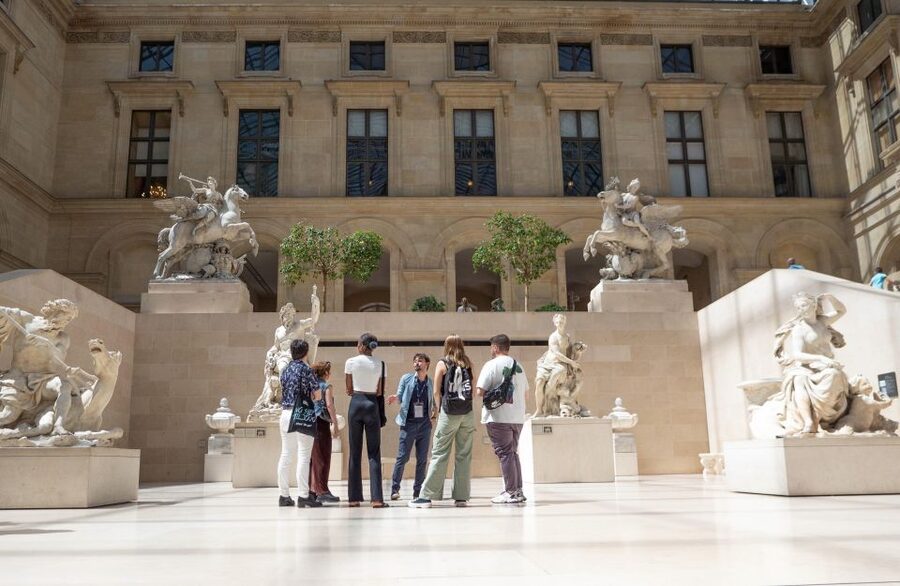
After entry, you start seeing the kinds of works that anchor the Louvre’s reputation. Two of the most memorable are Venus de Milo and the Winged Victory of Samothrace.
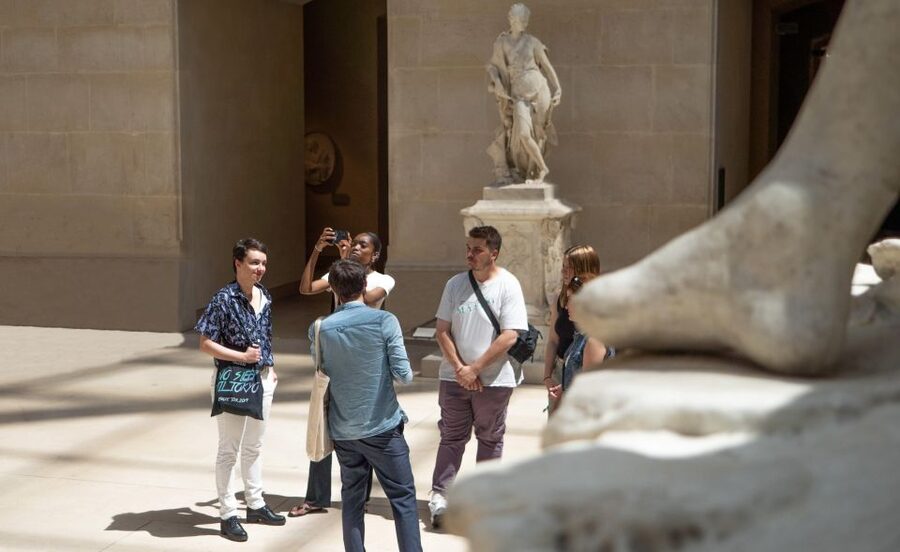
With Venus de Milo, the value isn’t only seeing the sculpture. It’s learning why the piece became so influential. It’s the kind of artwork that inspired later artists for generations, so once your guide gives you the right lens, you start noticing details and symbolism you would otherwise ignore.
Then you shift to Winged Victory of Samothrace, the celebrated Hellenistic statue connected to Nike, the Greek goddess of victory. This is one of those works where scale and emotion hit you fast. A good guide helps you “read” it: posture, movement, and why it became a reference point for Western art.
These stops are crowd magnets, so going with a group route helps. Without it, you’d spend too much time trying to find the right viewing spots while everyone else does the same thing.
Painting and Sculpture Across Centuries: What Comes Before Mona Lisa
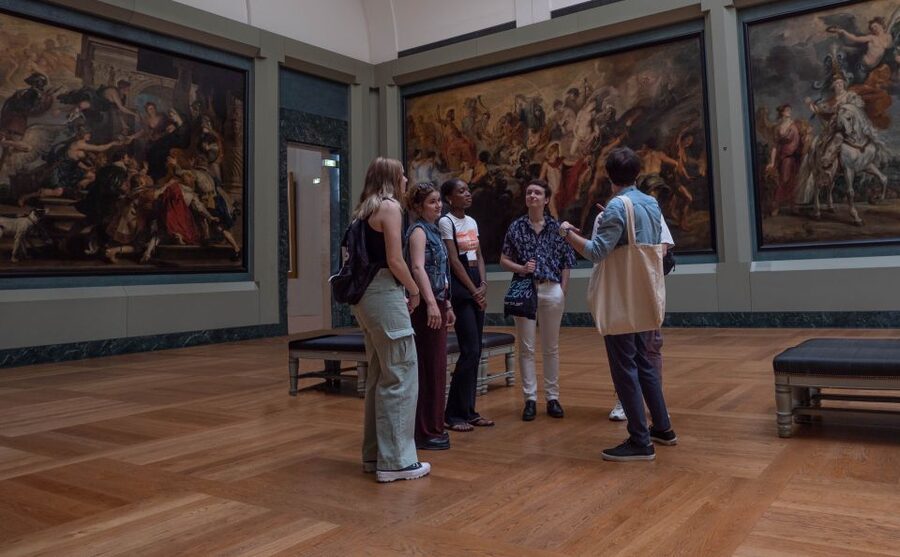
The Louvre isn’t one museum. It’s a time machine. This tour brings you through a cross-section of eras so you can understand how the collection is organized and why certain masterpieces are placed where they are.
You’ll see art from:
- Ancient civilizations (including Greek highlights like the works above)
- Renaissance pieces
- Paintings from the 13th to the 19th centuries
- Prints linked to the Royal Collection
You’re also not just stuck with the headline names. The tour includes essential masterpieces along the way, plus some other works your guide can place into context so you aren’t only looking at famous faces and then moving on.
This is where the tour earns its money. If you’ve ever stood in front of a masterpiece and felt like you needed a translator, that’s exactly what your guide is doing. They help you understand what you’re seeing and why it mattered to people at the time.
Mona Lisa: More Than a Photo Stop
Yes, you’ll see the Mona Lisa. But the point is what happens while you’re there.
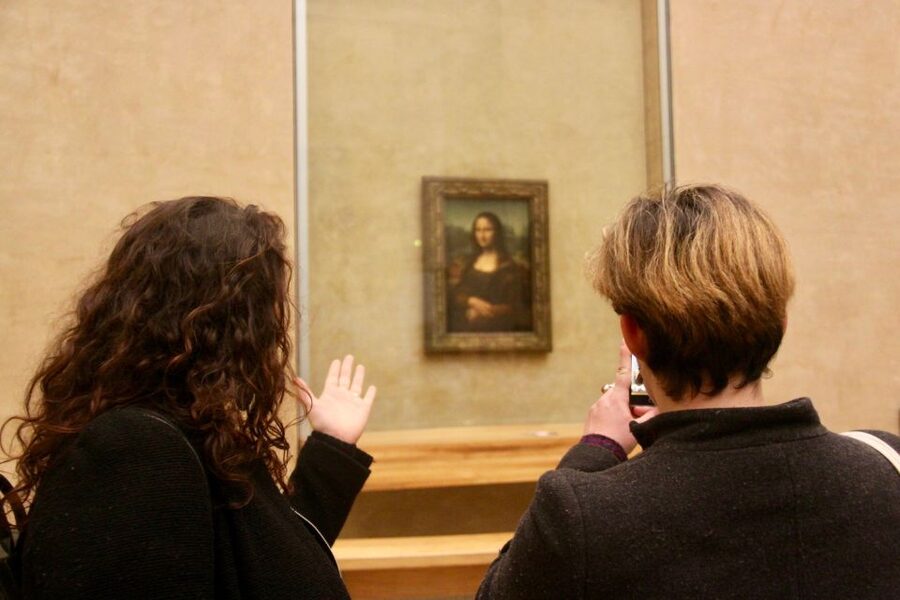
Your guide explains the painting’s significance, including the dramatic theft in 1911, which played a key role in its global fame. That story changes how you look at the portrait. Suddenly you’re not only staring at a face. You’re thinking about reputation, media attention, and how art can become world-famous through events as much as technique.
Timing matters too. The route ends near the Mona Lisa area, and that’s where crowds are often at their worst. Even with fast-track entry earlier, the museum’s most famous room draws everyone at once. With a guide, you at least get the context before you’re lost in the shuffle.
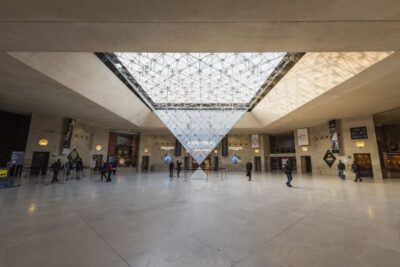
One important rule: once you’ve exited the wings and are under the pyramid, you cannot re-enter the rooms you just left. So when your guide finishes at the endpoint, you can keep exploring, but you shouldn’t expect to go back to the same galleries.
Underground Galleries: Medieval Fortress Foundations Under the Louvre

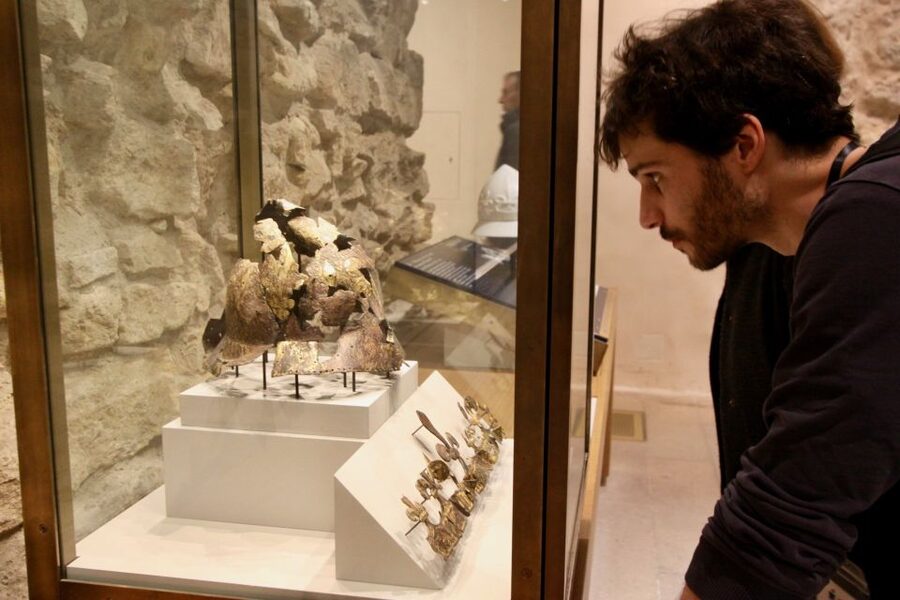
Not everything happens above ground. You also get access to the underground galleries, where you can uncover the remains of the original medieval fortress.
This part is valuable because it gives you a sense of place. The Louvre you see today is a former royal residence, but it didn’t appear from nowhere. The foundations under the museum shaped the palace that became one of the world’s most visited art sites.
Even if you don’t care about medieval architecture, this segment helps you connect the museum to the city around it. It’s history you can walk through, not just read about.
Worth weighing up next to this Paris pick


Headsets and Small Group Size: Why This Tour Works in Real Life
A museum tour lives or dies on three practical things: hearing, pacing, and group control.
Here, you get headsets, which helps a lot in the Louvre’s loud, crowded corridors. Your guide is talking the whole time, and being able to hear without craning your neck makes the experience smoother.
The group size is capped at 20 participants. That keeps things organized. You’re not fighting for space around your guide, and you’re less likely to lose the group than on larger tours.
Your guide is also described as both engaging and story-focused. Names like Sally, Barbara, and Pierre come up as particularly memorable guide styles, and that’s consistent with what you want here: clear explanations, strong context, and a pace that doesn’t leave you behind.
If you’re the type who gets overwhelmed, this setup helps you stay oriented. You’ll finish with a mental map, not just a collection of random photo angles.
Price and Value: Is $116 Worth It for a 1–2 Hour Louvre Visit?
At $116 per person for 1–2 hours, the cost isn’t cheap. But it can be good value if you treat it like what it is: a paid shortcut through complexity.
Here’s what you’re really buying:
- Skipping the ticket line through a separate entrance
- Expert commentary that makes famous works easier to understand
- A structured route through a museum that’s otherwise easy to misuse
- Headsets for better listening in real crowd conditions
If you’re visiting for the first time and you only have a short window, this kind of guided highlights experience often saves more time than the price suggests. The Louvre isn’t just about seeing. It’s about making sense of what you’re seeing before you get fatigue-blind.
Still, be honest about your goals. If you love wandering, hate group pacing, or want to spend long hours in specific departments, you may outgrow the highlights format quickly. But for many visitors, an efficient route plus the freedom to explore afterward is a smart compromise.
Timing Tips: When the Louvre Feels Most Manageable
The tour info flags that summer is busier. That’s when security lines grow and the most crowded rooms can feel like a permanent bottleneck.
So I’d aim for earlier time slots when you can. One reason: the Mona Lisa and Venus de Milo areas tend to be packed, and starting with a plan reduces the “freeze” effect where you stand still because everything is too much.
If your schedule is flexible, consider choosing a time that lets you avoid the peak crush as much as possible. If your visit is non-negotiable, go in expecting the museum to be busy and rely on the guided route to keep your bearings.
Who This Tour Is Best For (and Who Should Skip It)
This tour is a strong fit if you:
- want to see Mona Lisa, Venus de Milo, and Winged Victory
- feel nervous about navigating the Louvre alone
- want a guide to connect the art to the bigger story
- only have a short time window and still want the major context
It may be a poor fit if you:
- have mobility impairments or need wheelchair access (the tour notes it can’t accommodate wheelchairs due to elevator placement)
- can’t handle walking and stairs
- plan to bring luggage or large bags (not allowed)
Bring passport or ID and wear comfortable shoes. Also note that non-folding strollers aren’t allowed, and you should avoid bringing luggage entirely.
Should You Book This Louvre Highlights Tour?
I’d book this if you want the Louvre’s big names plus the “why this matters” context, and you’d rather buy clarity than spend your day figuring it out. The mix of fast-track entry, headsets, and a high-impact highlights route makes the experience feel organized even inside one of the world’s hardest places to navigate.
Skip it if your dream Louvre day is slow, quiet, and deeply department-focused. This isn’t that. It’s a smarter way to get your first masterpiece hits, learn the stories, then use the rest of your time however you want.
If your visit is short, if you’re new to art history, or if you simply don’t want to waste hours in lines and wrong corridors, this tour is a practical bet.
FAQ
Where do I meet the guide?
You meet at the Arc du Carrousel du Louvre just outside the museum. The exact meeting point can vary depending on the option booked, so check your booking details.
How long is the Louvre highlights tour?
The duration is listed as 1–2 hours. Starting times depend on availability.
How do I avoid the ticket line?
You get a pre-reserved entry ticket and use a separate entrance with fast-track access.
Is the tour in English?
Yes. The tour is guided in English.
What are the main highlights you’ll see?
The tour route includes major works such as the Mona Lisa, Venus de Milo, and Winged Victory of Samothrace, plus other essential masterpieces.
What should I bring, and what can’t I bring?
Bring passport or ID and comfortable shoes. Luggage or large bags are not allowed, and non-folding strollers are not allowed.
Is this tour suitable for wheelchair users?
No. It’s noted that the tour is not suitable for people with mobility impairments because of the museum’s elevator location.
Can I re-enter rooms after the tour ends under the pyramid?
No. Once you exit the wings and you are under the pyramid, you cannot re-enter the rooms.
What happens if I’m late?
Because it’s a group booking, if you’re late you may not be able to receive a ticket. The tour notes that late arrivals can’t be accommodated for ticket issuance.
If you want, tell me your travel month and the time window you’re considering, and I’ll suggest the best strategy for timing and how to pair this with free time afterward.
More Tours in Paris
- Paris: Louvre Guided Tour with Reserved Access & Boat Cruise
★ 4.3 · 16,353 reviews - Paris: Big Bus Hop-On Hop-Off Tour with Optional Cruise
★ 4.4 · 13,279 reviews - Louvre Museum Masterpieces Guided Tour with Access
★ 4.5 · 12,023 reviews - Versailles: Skip-the-Line Tour of Palace and Gardens Access
★ 4.7 · 10,429 reviews - Paris: Louvre Overview, Exploration tour and Reserved Entry
★ 4.1 · 10,145 reviews
More Tour Reviews in Paris
- Paris: 1-Hour Seine Cruise departing from the Eiffel Tower
★ 4.4 · 77,472 reviews - Paris: Louvre Museum Timed-Entrance Ticket
★ 4.6 · 71,977 reviews - Disneyland® Paris 1-Day Ticket
★ 4.6 · 49,412 reviews - Paris: Versailles Palace and Gardens Full Access Ticket
★ 4.6 · 41,579 reviews - Paris: Arc de Triomphe Rooftop Tickets
★ 4.6 · 34,264 reviews
Back to the Louvre: More Ways In
- Paris: Louvre Museum Timed-Entrance Ticket
★ 4.6 · 71,977 reviews - Paris: Louvre Guided Tour with Reserved Access & Boat Cruise
★ 4.3 · 16,353 reviews - Louvre Museum Masterpieces Guided Tour with Access
★ 4.5 · 12,023 reviews - Paris: Louvre Overview, Exploration tour and Reserved Entry
★ 4.1 · 10,145 reviews - Paris: Louvre Museum Entry Ticket With Host and River Cruise
★ 4.6 · 9,926 reviews
Fresh off the review desk in Paris
- Secrets of Paris Bike Tour in English or Dutch★ 5.0 · 5 reviews
- Paris: Mont Saint-Michel Day Tour with Chinese Tour Guide★ 5.0 · 5 reviews
- Private Street Art 2-Hour Guided Tour in Paris★ 4.5 · 5 reviews
- Orsay Museum Tour: 2h Highlights (Private & Small Group)★ 5.0 · 5 reviews
- Discover Paris in electric golf carts★ 4.0 · 5 reviews
- Paris Private Boat Tour with your own Captain Guide★ 5.0 · 5 reviews
Louvre Museum Tours, compared.
 ★ 4.6Louvre Museum Timed-Entrance TicketFrom $2671,977 reviews
 ★ 4.3Louvre Guided Tour with Reserved Access & Boat CruiseFrom $8116,353 reviews
 ★ 4.5Louvre Museum Masterpieces Guided Tour with AccessFrom $8612,023 reviews
 ★ 4.1Louvre Overview, Exploration tour and Reserved EntryFrom $6010,145 reviews
 ★ 4.6Louvre Museum Entry Ticket With Host and River CruiseFrom $1009,926 reviews
 ★ 4.6Mona Lisa & Louvre Masterpieces Tour with Reserved AccessFrom $806,812 reviews
 ★ 5.0Louvre Museum – Exclusive Guided Tour (Entry Included)From $1816,296 reviews
 ★ 4.0Louvre Reserved Ticket and River Cruise ComboFrom $376,054 reviews
Browse the lists this tour appears in