
Reviewed · LOUVRE MUSEUM TOURS
Paris: Louvre Museum Skip-The-Line Tour
The Louvre clicks faster with a plan. This 2-hour skip-the-line tour is built around the big story arc from Renaissance to Neoclassicism and Romanticism, so you’re not just drifting from room to room. Two things I really like: the guide-led route that gets you to major works quickly, and the way the tour connects art styles to ideas like Humanism and changing views of light.
I also like the mix of famous highlights and “why it matters” context, including Botticelli frescoes and Mantegna and Bellini-style Venetian painting. The one drawback to consider is that 2 hours is short for the Louvre, so you’ll see a focused set of works rather than every must-see on your personal list.
In This Review
- Key things to know before you go
- Where You Meet and How You’ll Actually Start
- The 2-Hour Game Plan: How the Route Stays Focused
- Entering the Louvre’s Big Idea: Renaissance and Humanism
- Nike of Samothrace: Getting Oriented with Ancient Greece
- Botticelli’s Fresco: Venus, Grace, and Renaissance Myth
- Mantegna and the Early Florentine Art Thread
- Da Vinci’s Mona Lisa: Not Just a Photo Stop
- Veronese’s Marriage at Cana: Scale You Can Feel
- Romanticism in Focus: Liberty, Medusa, and Political Drama
- Neoclassicism and Napoleon: When Art Gets Official
- Venetian Painting Highlights: Bellini’s Impact
- Ingres and the Odalisque: The Louvre’s Sensual Edge
- Price and Value: Is $294 per Person Worth It?
- Language Options and Family-Friendly Pace
- What to Bring (and What to Skip)
- Who Should Book This Tour
- Should You Book This Louvre Skip-The-Line Tour?
- FAQ
- How long is the Paris Louvre Skip-The-Line Tour?
- Where do we meet for the tour?
- Is skip-the-line entrance included?
- Do I need to bring food or drinks?
- What languages are available for the live guide?
- Is this tour a private group?
- Is the tour wheelchair accessible?
- What items are not allowed in the museum?
- Does the tour run in bad weather?
- What is the cancellation policy?
Key things to know before you go
- Arc de Triomphe du Carrousel meeting point: you’ll meet at the Arc, and your guide carries a red tote canvas bag.
- Skip-the-line entrance ticket included: less waiting time, more time looking.
- Three art movements in one run: Renaissance, Neoclassicism, and Romanticism, with a clear thematic path.
- Specific headline artworks: you’ll aim for works like the Nike of Samothrace, Botticelli’s fresco, and Delacroix’s Liberty Leading the People.
- Private group, multiple languages: English, French, and Serbo-Croatian options, with a live guide.
- Museum size limits matter: items over 55x35x20 cm aren’t permitted.
Where You Meet and How You’ll Actually Start
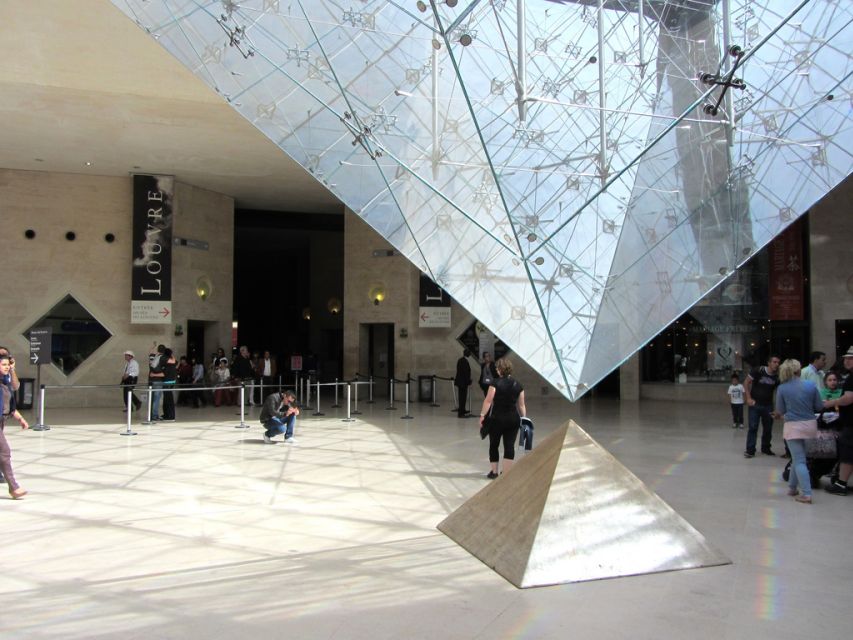
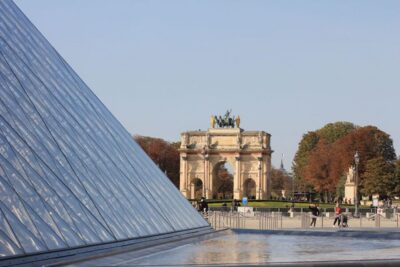
You start right in central Paris at Arc de Triomphe du Carrousel, with your guide holding a red tote canvas bag. That’s a small detail, but it matters in the real world: the Louvre area can feel chaotic, and having a clear meet point saves time.
The tour is private, so the pace tends to feel controlled instead of swept up in a giant crowd. It also runs rain or shine, so plan on bringing a compact rain layer; you’ll still do the core route.
One practical note that can make or break your day: oversize luggage isn’t allowed, and items bigger than 55x35x20 cm can’t go into the museum. If you’re traveling with a big bag, keep it compact before you arrive.
Still chasing the Mona Lisa? More Louvre visits
- Paris: Louvre Museum Timed-Entrance Ticket
★ 4.6 · 71,977 reviews - Paris: Louvre Guided Tour with Reserved Access & Boat Cruise
★ 4.3 · 16,353 reviews - Louvre Museum Masterpieces Guided Tour with Access
★ 4.5 · 12,023 reviews - Paris: Louvre Overview, Exploration tour and Reserved Entry
★ 4.1 · 10,145 reviews
The 2-Hour Game Plan: How the Route Stays Focused
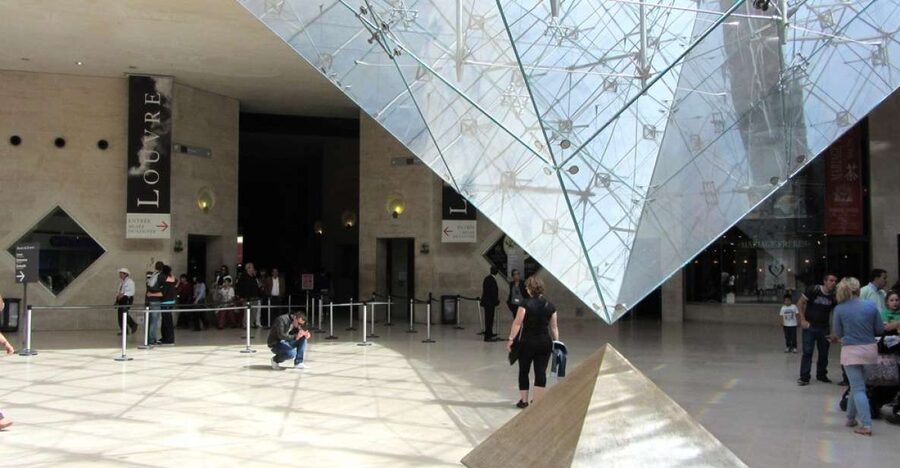
A 2-hour Louvre tour sounds easy until you remember how massive the museum is. Here’s the tradeoff: you’re not trying to cover everything. Instead, you’re taking a guided “best-of” through three periods—Renaissance, Neoclassicism, and Romanticism—so the visit feels like a story, not a checklist.
What makes this format work for most people is the way it keeps your attention on transitions: what changed between Medieval styles and Humanism, how Renaissance artists looked for new realism and emotion, and how later movements shifted toward drama and political themes. If you’ve ever walked into the Louvre and felt overwhelmed by scale, you’ll appreciate that the tour gives you a route with meaning.
Also, the tour includes a live guide, and that’s where the time-saving becomes more than just logistics. For example, one praised guide approach emphasizes how artists handled light and the way it shaped the mood of scenes—exactly the kind of thing you might miss if you only read wall labels on your own.
Entering the Louvre’s Big Idea: Renaissance and Humanism
Even before you hit the most famous names, this tour is built to help you recognize what’s going on in the art. The focus isn’t just on what the painting shows; it’s on why it was made and what it signals about the era.
You’ll start by moving through the museum’s wide timeline, from classical roots up toward the Renaissance shift. That’s helpful because Renaissance art can feel “suddenly new” when you don’t have the background. With the right framing, you see the Renaissance as a bridge—pulling forward from the Medieval world and pushing toward Humanism.
Nike of Samothrace: Getting Oriented with Ancient Greece
One of the early anchors is the Nike of Samothrace, a 2nd-century BC marble sculpture of the Greek goddess Nike, Victory. Even if you know the title, seeing it in person changes the experience. The body language, motion, and the sense of triumph are hard to fully grasp from photos.
This is a smart opener. It gives you a feeling for Greek ideals—movement, proportion, and drama—before the tour moves into Renaissance thinking. If you’re the type who likes to build context before you go deep, this stop sets you up nicely.
Practical tip: as you look, don’t force it into one interpretation. Notice how the pose tells a story even without words. Then carry that idea forward to later works, where allegory and symbolism become a bigger theme.
Botticelli’s Fresco: Venus, Grace, and Renaissance Myth
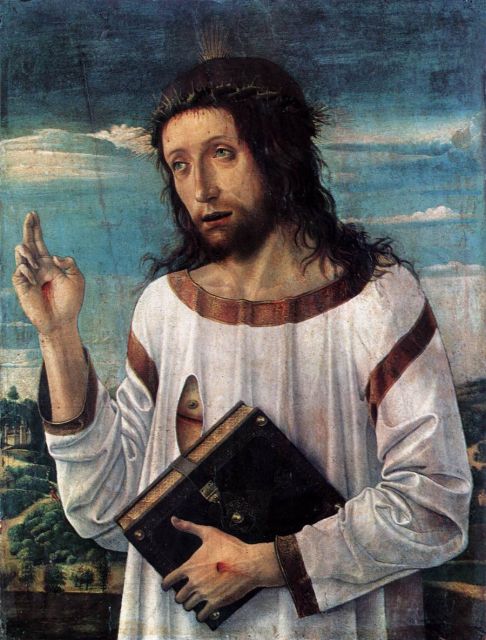
The Renaissance portion includes Botticelli’s fresco Venus and the Three Graces Presenting Gifts to a Young Woman. This is the kind of work where the details can feel distracting at first—faces, figures, gestures, drapery. The guide angle helps because the whole point is learning how Renaissance myth and ideals are staged.
What I like about this choice is that Botticelli isn’t just treated as a brand name for the Mona Lisa crowd. You see Renaissance art functioning like a message system: beauty, classical references, and human emotion all wrapped into one scene.
You’ll also get a transition lesson—how Medieval art thinking changes as Humanism and new artistic priorities take hold. That kind of context makes the fresco feel less like an isolated masterpiece and more like evidence of a cultural shift.
Mantegna and the Early Florentine Art Thread
The tour highlights Mantegna’s early art, including Saint Sebastian. This is a great moment to slow down, because early Renaissance painting can feel stylistically “different” from later works you may already know.
Saint Sebastian also brings a theme you can carry through the rest of the tour: how artists use bodies and expression to communicate suffering, devotion, and meaning. Even if your drawing skills are nonexistent (mine too), you can learn to read these works by focusing on how the figure communicates tension.
If you like art that feels grounded and structured, this stop is often a favorite. If you prefer movement and theatrical storytelling, you’ll still get that later—so don’t panic if this one feels quieter at first.
Worth weighing up next to this Paris pick


Da Vinci’s Mona Lisa: Not Just a Photo Stop
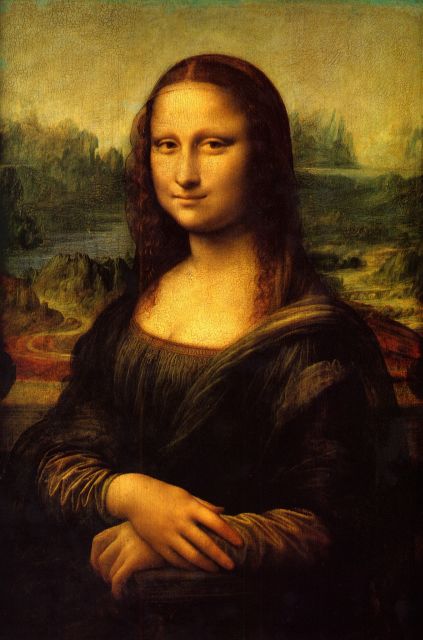
Yes, you’ll see Leonardo da Vinci represented by paintings such as the Mona Lisa. But the value isn’t the name; it’s what the guide helps you notice around it.
In a short visit like this, the guide’s job is to stop you from treating it like a tourist landmark. You should come away with a better sense of how Renaissance painting conveyed personality and atmosphere—especially through technique and expression.
If you’re sensitive to overcrowded rooms, this tour’s structure can help you spend less time stuck in the most chaotic areas. Still, remember the Louvre is popular, so you’ll want to keep your expectations realistic: your goal is a meaningful look, not a perfect, private viewing.
Veronese’s Marriage at Cana: Scale You Can Feel
Another major highlight is Veronese’s Marriage at Cana, described as the largest painting in the Louvre. Even when you already know it’s huge, standing in front of it makes the size register in your body, not just your eyes.
This stop is valuable because it shows Renaissance painting as world-building. Instead of one subject dominating the frame, the painting becomes a stage full of figures, gestures, and storytelling. It’s also the kind of work that rewards you for stepping back and then looking again from closer.
If you’re the type who wants one clear “wow moment” in a short tour, this is a strong candidate. It also sets up the shift toward later dramatic themes you’ll see in Romanticism.
Romanticism in Focus: Liberty, Medusa, and Political Drama
The tour then turns toward Romanticism, including Gericault’s Raft of the Medusa, and Delacroix’s Liberty Leading the People, commemorating the July Revolution of 1830. This is where the museum stops feeling like a history textbook and starts feeling like politics and emotion made visible.
The Raft of the Medusa is especially important because it’s not calm or purely decorative. It’s about disaster, fear, and humanity under pressure. Pair that with Liberty Leading the People, and you get two different flavors of Romantic drama: suffering versus collective action.
If you want to understand how art responds to events and public feeling, this is the section that connects best. The works share a common attitude: they want you to feel something, not just admire technique.
Neoclassicism and Napoleon: When Art Gets Official
You’ll also encounter Jacques-Louis David’s Crowning of Napoleon and The Oath of The Horatii. Neoclassicism can seem cold if you only think of it as “old-school style.” But in these examples, it’s all about persuasion.
David’s works communicate power and duty through composition, symbolism, and controlled emotion. The choice of these two paintings is smart for a 2-hour tour because they represent different kinds of authority: one tied to a ruler’s image, the other to civic virtue and collective commitment.
If you enjoy how images shape public memory, you’ll probably lock onto this section. It’s one of those “now I get why they made it” moments.
Venetian Painting Highlights: Bellini’s Impact
The tour also includes Bellini’s Venetian painting focus. While the specific title for Bellini isn’t listed in the details you provided, the point is still clear: you’re being shown how regional styles mattered during the Renaissance.
Venetian painting is often associated with color and atmosphere, and even a short introduction can help you notice differences when compared to other schools. If you’ve only ever met Renaissance art through black-and-white book images, this kind of guided comparison is genuinely helpful.
Ingres and the Odalisque: The Louvre’s Sensual Edge
Another highlight is Ingres’ sinuous nude Une Odalisque. This is a different kind of experience than political drama or myth. The work draws you in through form and pose, and it raises the question of how taste and subject matter shifted over time.
In a short tour, it’s easy to skip this type of piece because it doesn’t come with the same instant recognition as Napoleon or Mona Lisa. Here, it’s included for a reason: the Louvre isn’t just a museum of “big names.” It’s also a museum of changing attitudes toward the human figure.
If you’re comfortable looking at art with that kind of directness, you’ll likely find this stop one of the most memorable.
Price and Value: Is $294 per Person Worth It?
At $294 per person for a 2-hour private tour, you’re paying for three things at once: a skip-the-line entrance ticket, a live guide, and a route designed to save you time inside a huge museum.
Here’s how I think about the value. If you go on your own, you still have to spend time figuring out where to go, and you still have to choose which masterpieces deserve your attention. This tour removes most of that decision-making and replaces it with guidance tied to Renaissance, Neoclassicism, and Romanticism.
Is it expensive? Yes, compared with a self-guided visit. But if you care about context and you’d rather spend your time looking than planning, it can feel like a fair trade. The price can make more sense when you’re traveling as a pair or small group, because the guide time becomes more efficient.
One more value signal: Paris in person has been recognized as one of the top small tour operators in Europe, ranked among thousands of companies. That doesn’t guarantee quality, but it suggests they’re set up for the kind of experience that runs on time and delivers a coherent story.
Language Options and Family-Friendly Pace
The tour guide can be English, French, or Serbo-Croatian, and that matters because art interpretation is language interpretation. If you’re not fully comfortable with museum French, choosing a language you can relax in can turn the visit from “watching figures” into real understanding.
One praised theme from the experience description is that guides manage the Louvre with families and teenagers without losing the thread. If you’ve ever tried to keep a teenager focused in a museum, you know that’s a skill. It also suggests the tour avoids the kind of overly academic pacing that can make young people tune out.
What to Bring (and What to Skip)
Bring:
- A small day bag that stays within the museum item limits (again, avoid anything over 55x35x20 cm).
- A water bottle if you like, though food and beverages aren’t part of the tour.
Skip:
- Oversize luggage, since it isn’t allowed.
- Anything bulky that will slow down security lines or make you feel stressed.
And wear shoes you can stand in. The Louvre is about walking and looking, and 2 hours can still add up on your feet if you’re not used to it.
Who Should Book This Tour
This skip-the-line format is ideal if you:
- Want a guided route through Renaissance, Neoclassicism, and Romanticism in a short visit
- Like seeing major works with explanations rather than relying only on wall text
- Feel overwhelmed by the Louvre’s scale and want a practical plan that moves
It might be less ideal if you:
- Want to spend long periods in a few rooms and wander freely
- Are chasing a personal hit list of many specific artworks beyond this set
Should You Book This Louvre Skip-The-Line Tour?
If your priority is a focused, meaningful Louvre visit without wasting hours trying to plan, I’d say yes—especially at the start of a Paris trip when you want to get your bearings fast. The included skip-the-line ticket and the guide-led storyline through Renaissance to Romanticism are exactly the kind of value that turns a crowded museum into something you actually understand.
If you love deep wandering and want to linger for as long as possible, you may be happier with a longer self-guided visit or a different tour length. But for a short window and a strong structure, this one makes sense.
FAQ
How long is the Paris Louvre Skip-The-Line Tour?
It lasts 2 hours.
Where do we meet for the tour?
You meet at the Arc de Triomphe du Carrousel. The guide will be carrying a red tote canvas bag.
Is skip-the-line entrance included?
Yes. The tour includes a skip-the-line entrance ticket to the Louvre.
Do I need to bring food or drinks?
Food and beverages are not included.
What languages are available for the live guide?
The tour is offered in English, French, and Serbo-Croatian.
Is this tour a private group?
Yes, it’s a private group.
Is the tour wheelchair accessible?
Yes, the tour is wheelchair accessible.
What items are not allowed in the museum?
Oversize luggage isn’t allowed. Items exceeding 55x35x20 cm are not permitted in the museum.
Does the tour run in bad weather?
It operates rain or shine.
What is the cancellation policy?
Free cancellation is available up to 24 hours in advance for a full refund.
More Tours in Paris
- Paris: Louvre Guided Tour with Reserved Access & Boat Cruise
★ 4.3 · 16,353 reviews - Paris: Big Bus Hop-On Hop-Off Tour with Optional Cruise
★ 4.4 · 13,279 reviews - Louvre Museum Masterpieces Guided Tour with Access
★ 4.5 · 12,023 reviews - Versailles: Skip-the-Line Tour of Palace and Gardens Access
★ 4.7 · 10,429 reviews - Paris: Louvre Overview, Exploration tour and Reserved Entry
★ 4.1 · 10,145 reviews
More Tour Reviews in Paris
- Paris: 1-Hour Seine Cruise departing from the Eiffel Tower
★ 4.4 · 77,472 reviews - Paris: Louvre Museum Timed-Entrance Ticket
★ 4.6 · 71,977 reviews - Disneyland® Paris 1-Day Ticket
★ 4.6 · 49,412 reviews - Paris: Versailles Palace and Gardens Full Access Ticket
★ 4.6 · 41,579 reviews - Paris: Arc de Triomphe Rooftop Tickets
★ 4.6 · 34,264 reviews
Back to the Louvre: More Ways In
- Paris: Louvre Museum Timed-Entrance Ticket
★ 4.6 · 71,977 reviews - Paris: Louvre Guided Tour with Reserved Access & Boat Cruise
★ 4.3 · 16,353 reviews - Louvre Museum Masterpieces Guided Tour with Access
★ 4.5 · 12,023 reviews - Paris: Louvre Overview, Exploration tour and Reserved Entry
★ 4.1 · 10,145 reviews - Paris: Louvre Museum Entry Ticket With Host and River Cruise
★ 4.6 · 9,926 reviews
Fresh off the review desk in Paris
- Secrets of Paris Bike Tour in English or Dutch★ 5.0 · 5 reviews
- Paris: Mont Saint-Michel Day Tour with Chinese Tour Guide★ 5.0 · 5 reviews
- Private Street Art 2-Hour Guided Tour in Paris★ 4.5 · 5 reviews
- Orsay Museum Tour: 2h Highlights (Private & Small Group)★ 5.0 · 5 reviews
- Discover Paris in electric golf carts★ 4.0 · 5 reviews
- Paris Private Boat Tour with your own Captain Guide★ 5.0 · 5 reviews
Louvre Museum Tours, compared.
 ★ 4.6Louvre Museum Timed-Entrance TicketFrom $2671,977 reviews
 ★ 4.3Louvre Guided Tour with Reserved Access & Boat CruiseFrom $8116,353 reviews
 ★ 4.5Louvre Museum Masterpieces Guided Tour with AccessFrom $8612,023 reviews
 ★ 4.1Louvre Overview, Exploration tour and Reserved EntryFrom $6010,145 reviews
 ★ 4.6Louvre Museum Entry Ticket With Host and River CruiseFrom $1009,926 reviews
 ★ 4.6Mona Lisa & Louvre Masterpieces Tour with Reserved AccessFrom $806,812 reviews
 ★ 5.0Louvre Museum – Exclusive Guided Tour (Entry Included)From $1816,296 reviews
 ★ 4.0Louvre Reserved Ticket and River Cruise ComboFrom $376,054 reviews
Browse the lists this tour appears in