
Reviewed · LOUVRE MUSEUM TOURS
Paris Louvre : Private Treasure Hunt for Families or groups
A world-famous museum, solved like a mystery. This private Louvre treasure hunt turns must-see art into a kid-friendly case, complete with a story about a poisonous hidden vial and clue challenges at big landmarks. I like that you get included entry and walk in together, so the trip starts fast instead of wasting time figuring out museum logistics. One drawback to consider: the experience can feel very different depending on how well the guide clicks with your group, and there’s been at least one issue where a ticket didn’t match the party size.
In practice, you’ll meet your guide by the Louis XIV statue, head inside right away, and spend about two hours moving from artwork to artwork with mini games and coded-message style prompts. It’s designed for families and small groups (up to 5), and you’ll cover the Mona Lisa, the Venus de Milo, and the Winged Victory of Samothrace while chasing the thread back to that dangerous vial.
In This Review
- Key things to know before you go
- Private Louvre Treasure Hunt: What the 2 Hours Really Feel Like
- Meeting Point by Louis XIV: Getting Oriented Fast
- The Mission Story: The Poisonous Vial Case in Plain Sight
- Louvre Entry + Guided Tour Inside: Why the Start Matters
- La Joconde, Mona Lisa: A Famous Stop That Doesn’t Get Wasted
- Venus de Milo (15 Minutes) and Winged Victory: Turning Icons into Clues
- The Guide Factor: Hugo and Lisa as Examples of What Works
- Price and Logistics: Is $648 Worth It for Up to 5?
- What’s Included and What You Should Plan For
- Who This Tour Suits Best (And Who Might Feel It’s Too Much)
- Should You Book This Louvre Family Treasure Hunt?
- FAQ
- Where is the meeting point?
- How much does the tour cost?
- How long is the tour?
- Is it a private tour?
- What languages are available?
- Do I need to buy Louvre tickets?
- Which artworks are part of the treasure hunt?
- Is there a booklet?
- Are foods and drinks included?
- Are large bags allowed?
Key things to know before you go
- A mission-based game that keeps famous works from feeling like a checklist
- Walk-in Louvre entry included with your guide and group tickets
- Short stops at major icons, including a specific 15-minute Venus de Milo segment
- Two-hour private pacing for families instead of open-ended wandering
- Guide matters, with standout results when the guide actively manages kids’ focus
- Age fit varies, with some children thriving on riddles while others need easier engagement
Private Louvre Treasure Hunt: What the 2 Hours Really Feel Like
Two hours at the Louvre can sound short, but in this format it’s the right length. Instead of trying to see everything, you’re given a role—young detectives—and a reason to pay attention right where you stand. The game structure nudges you to look closely at art details you might otherwise breeze past.
This is a private tour for a group of up to five, so the guide can adjust questions and pacing. That matters at the Louvre, where even a confident adult can lose momentum in the crowds and hall turns. Here, you have momentum built in: you arrive, you start the mission, and each stop triggers a new challenge.
Your success also depends on your family’s style. If your kids like clues, puzzles, and short tasks, the time can fly. If they prefer movement, snacks, or less mental effort, you may want to set expectations that the tour is more thinking-based than playground-based.
Still chasing the Mona Lisa? More Louvre visits
- Paris: Louvre Museum Timed-Entrance Ticket
★ 4.6 · 71,977 reviews - Paris: Louvre Guided Tour with Reserved Access & Boat Cruise
★ 4.3 · 16,353 reviews - Louvre Museum Masterpieces Guided Tour with Access
★ 4.5 · 12,023 reviews - Paris: Louvre Overview, Exploration tour and Reserved Entry
★ 4.1 · 10,145 reviews
Meeting Point by Louis XIV: Getting Oriented Fast
You meet outside at 8 Pl. du Carrousel and specifically below the Louis XIV statue. That detail helps because the Louvre area can feel confusing if you’re showing up for the first time. Aim to arrive a few minutes early so you can spot the statue and get your bearings before your guide gathers the group.
Once you’re matched up with your guide, the big perk is the start: you don’t spend the early part of the experience stuck in ticket lines. Your group gets Louvre Museum entry tickets, and the experience is designed so you can walk right in together upon arrival.
Also keep in mind one practical rule: large bags or luggage aren’t allowed. If you’re traveling with kids, it’s smart to pack lightly and avoid bulky backpacks. In a family setting, that alone can make your Louvre morning smoother than you’d expect.
The Mission Story: The Poisonous Vial Case in Plain Sight
The whole tour runs on one clear storyline: save the Louvre from a mysterious curse involving a deadly hidden vial. The legend says that whoever inhales its contents falls into an eternal sleep, so your job is to find the vial before it’s too late. It sounds dramatic, but the best part is how the story gets used as a learning tool.
The clue system ties the mission to artwork you recognize. You’ll look for information through observation games and coded-message style prompts, then trace the thread from one famous stop to the next. Instead of being asked to stare at paintings while someone explains them, kids get tasks that require noticing what’s in front of them.
The tour also uses a “challenge at each artwork” approach, so your group isn’t stuck in one long stretch of listening. If you’ve ever watched young kids drift during museum audio guides, this is the opposite of that. You’re constantly switching between seeing the art and solving the next step.
One consideration: some clues can be too tricky depending on your child’s age and temperament. A guide can smooth that out, but it’s still a puzzle-oriented tour. If your child gets frustrated with riddles, you may want to be prepared to offer gentle encouragement and keep your expectations realistic for a two-hour run.
Louvre Entry + Guided Tour Inside: Why the Start Matters
This experience includes the guided portion inside the Louvre, not just the museum landmarks. That opening segment is valuable because it sets the tone: you’re not simply walking through a maze; you’re following a plan tied to the mission. The guide can help you understand what you’re supposed to look for, which makes every later stop easier.
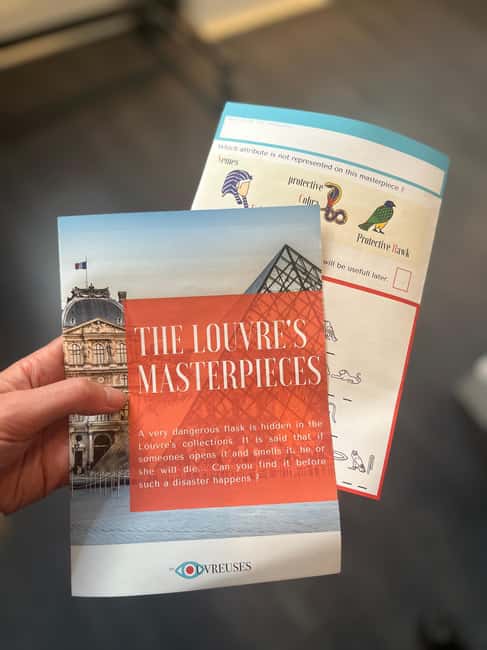
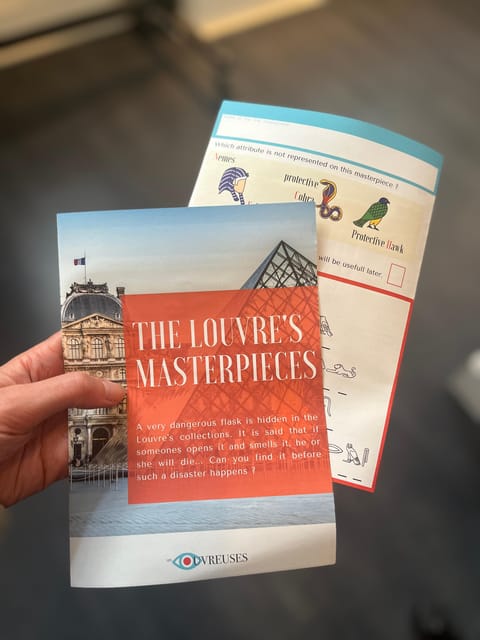
The included booklet is part of that structure. It gives kids (and adults) a physical anchor so the hunt feels like an event, not just a conversation. Even if your kids are young, the booklet format can help them track where you are and what you’re meant to do next.
Since it’s private, you’re not competing with dozens of strangers for attention. That reduces the usual pressure at the Louvre—where you can feel like you’re always late to the next hallway. Here, you can slow down at the art when the clues demand it, and speed up when the path makes sense.
The practical upside: walking right in with your tickets helps you start the experience with energy. At the Louvre, arriving late often means you’re already tired from crowd navigation. Starting strong makes the game more fun and less stressful.
La Joconde, Mona Lisa: A Famous Stop That Doesn’t Get Wasted
Your tour focuses on La Joconde, the Mona Lisa, as an early major landmark. That’s a smart choice because it’s one of the most recognizable images in the world. Kids may not care at first about museum fame, but they usually understand immediately that this one is special.
The guided stop at Mona Lisa isn’t treated like a photo opportunity only. You’re there to connect it to the case. The guide uses the game framework so you’re actively looking for clues rather than simply listening to general background.
In a tight two-hour window, the Mona Lisa stop also helps you calibrate. If your kids are engaged here, they’ll likely stay engaged for the next icons. If they tune out, you’ll have learned early that you might need a different approach—either another type of museum program or a simpler child-focused plan.
One more practical point: the Mona Lisa area can draw heavy attention, so the guiding and mission context matter even more. When you know you’re there to solve something, it’s easier to handle the crowd energy without getting overwhelmed.
Venus de Milo (15 Minutes) and Winged Victory: Turning Icons into Clues
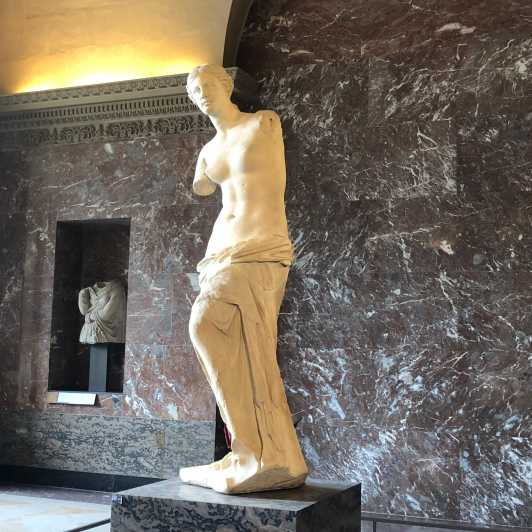
After Mona Lisa, you’ll move to the Venus de Milo, with a guided stop set at 15 minutes. That time box is useful. It’s long enough to feel like you did something meaningful, but short enough to keep kids from losing patience. For families, that’s the difference between a successful museum moment and a “why are we still standing here?” moment.
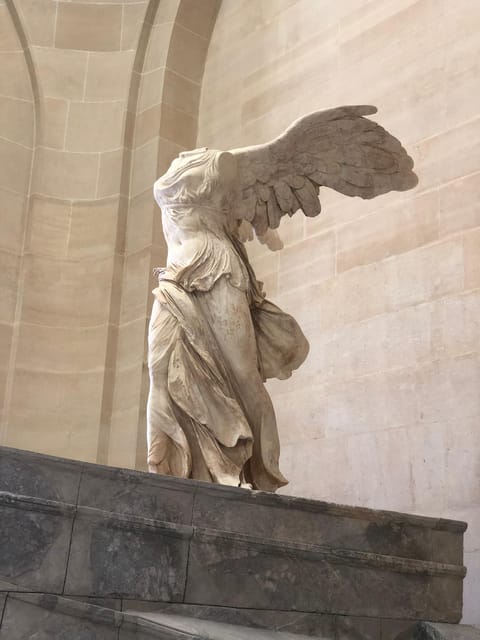
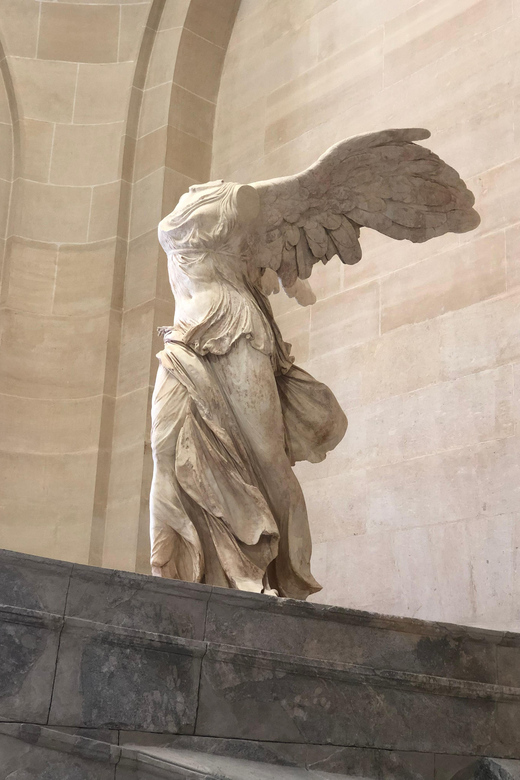
Then you’ll head to the Victoire de Samothrace, Winged Victory of Samothrace. This is the kind of sculpture that naturally holds attention, especially for kids who like dramatic stories and impressive details. And because the tour is a treasure hunt, the Winged Victory isn’t just admired. It’s used as part of the clue chain.
Across these stops, the tour’s method stays consistent: you trace threads, decode messages, and solve observation challenges at each artwork. That repetition helps children understand how to play. Even if they don’t read every clue like a textbook, they learn the pattern—look closely, answer the prompt, and move forward.
What you’ll likely appreciate most is the way it forces you to slow down at the right places. The Louvre can feel like a blur of rooms and masterpieces. Here, famous works become stations on a mission route, and your attention has a job.
Worth weighing up next to this Paris pick




The Guide Factor: Hugo and Lisa as Examples of What Works

This tour lives or dies with the guide’s delivery. The standout results from real families point to guides who actively manage kids’ focus, keep the mood upbeat, and explain in a way that makes the puzzle feel doable.
Hugo is highlighted for being patient with kids and staying involved with them throughout. That kind of engagement matters at the Louvre, because wandering can quickly turn into boredom. When a guide checks in and adjusts the tasks, the hunt can feel like a shared adventure instead of a test.
Lisa is also mentioned as amazing with kids, and the experience is described as one of the best ways to see a museum with children while still learning a lot. That’s a strong signal that the storytelling + clue approach can work well when the guide keeps the energy up.
Age fit is also important. One family described that their 9-year-old children loved it, while their 3-year-old didn’t. That tells me the riddle level and attention demands can be better for elementary-school kids than preschoolers. Another important detail: at least one booking had a major issue with a missing ticket, which caused frustration and wasted time waiting in rainy Paris. So even though the concept is strong, make sure your party size matches the tickets you receive.
Price and Logistics: Is $648 Worth It for Up to 5?
The price is $648 per group up to 5 people for about two hours. That number sounds high until you break it down by group size. If you’re using the full five-person capacity, you’re effectively around $129 per person for a private guide plus Louvre entry tickets and a booklet. For a family, that can be excellent value if your kids would otherwise struggle through a standard museum visit.
The reason this can be worth it is that you’re paying for two things kids usually struggle with: focused guidance and structured attention. At the Louvre, a self-guided visit can be expensive in its own way—time, energy, and patience. Paying for a guide who turns famous artworks into clue stations can save you from that slow, frustrating spiral.
That said, the value depends on whether the mission style fits your group. If your kids are extremely puzzle-motivated and you’ll use all the time effectively, this is likely a strong buy. If your kids need more free-roaming, less riddle time, or have trouble staying seated through guided stops, you might feel like you paid for something that didn’t match their energy.
What’s Included and What You Should Plan For
Included:
- Louvre Museum entry tickets
- A live guide (French or English)
- A booklet
Not included:
- Foods and drinks
So plan for breaks the way you normally would with your family. A two-hour museum hunt can be surprisingly tiring for kids, especially when they’re constantly switching attention between clues and looking around.
Also remember the baggage rule: luggage or large bags aren’t allowed. If your child needs a stroller, bring only what you can manage easily at museum entry points. Keep your packing minimal so the day stays calm.
Language matters too. You can get the tour in English or French, so if your group prefers one, it’s worth choosing the language you’ll actually enjoy. The mission story lands better when you can follow every prompt.
Who This Tour Suits Best (And Who Might Feel It’s Too Much)
This is a family-friendly concept, but it’s not a passive tour. It’s an active treasure hunt where your group solves challenges and coded-message style clues to find the hidden vial.
From the outcomes shared by families, the sweet spot seems to be kids around ages 6 to 9, especially when the guide keeps them engaged. One family with children aged 6 and 9 loved the tour with Hugo and said he held attention the whole time. That’s exactly what you want at the Louvre: a guide who can keep energy high for the full two hours.
For younger kids, results can vary. A 3-year-old not being into it is a useful reality check. At that age, riddles and clue stations may not be satisfying enough on their own. For toddlers and preschoolers, you might still enjoy the art stops, but the “detective mission” format may feel like work rather than play.
If your group includes adults who want more story and meaning than basic museum facts, this tour can also work well. Even if the kids solve most of the clues, adults often end up looking closer because they understand what they’re hunting for.
Should You Book This Louvre Family Treasure Hunt?
Book it if you want the Louvre experience to feel like an adventure with structure. You get included tickets, a private guide, and a mission that helps kids stay engaged with the big icons—Mona Lisa, Venus de Milo, and the Winged Victory. The format is built for families who learn best by doing, not just by listening.
Think twice if your group’s main goal is a relaxed museum stroll. This tour is puzzle-driven, and some clue challenges may feel hard for younger kids or for children who get discouraged quickly. Also, before you go, double-check the ticket quantity tied to your party size—there have been real cases where a missing ticket caused major inconvenience.
If you’re traveling with elementary-school kids and you’d rather avoid the chaos of figuring out where to start, this is a smart way to see the Louvre while giving everyone a job to do.
FAQ
Where is the meeting point?
You meet outside at 8 Pl. du Carrousel, below the Louis XIV statue.
How much does the tour cost?
It costs $648 per group (up to 5 people).
How long is the tour?
The duration is 2 hours.
Is it a private tour?
Yes, it’s a private group experience.
What languages are available?
The live guide offers French and English.
Do I need to buy Louvre tickets?
Louvre Museum entry tickets are included, and the experience is designed so you can walk in upon arrival with your tickets.
Which artworks are part of the treasure hunt?
You’ll visit La Joconde (Mona Lisa), the Venus de Milo, and the Victoire de Samothrace (Winged Victory of Samothrace).
Is there a booklet?
Yes, a booklet is included.
Are foods and drinks included?
No, foods and drinks aren’t included.
Are large bags allowed?
No, luggage or large bags aren’t allowed.
More Private in Paris
- Louvre Museum Paris Essential Guided Tour Semi-Private 6ppl Max
★ 5.0 · 3,807 reviews - SUV Private Transfer: Paris to Charles de Gaulle Airport (CDG)
★ 4.0 · 3,091 reviews - Paris: Private Photoshoot at the Eiffel Tower
★ 4.7 · 2,636 reviews - Top Private Cruises in Paris with French Champagne and surprises
★ 5.0 · 1,553 reviews - Golf Cart in Paris – Private Guided City Tour – Pickup Included
★ 5.0 · 1,164 reviews
More Tour Reviews in Paris
- Paris: 1-Hour Seine Cruise departing from the Eiffel Tower
★ 4.4 · 77,472 reviews - Paris: Louvre Museum Timed-Entrance Ticket
★ 4.6 · 71,977 reviews - Disneyland® Paris 1-Day Ticket
★ 4.6 · 49,412 reviews - Paris: Versailles Palace and Gardens Full Access Ticket
★ 4.6 · 41,579 reviews - Paris: Arc de Triomphe Rooftop Tickets
★ 4.6 · 34,264 reviews
Back to the Louvre: More Ways In
- Paris: Louvre Museum Timed-Entrance Ticket
★ 4.6 · 71,977 reviews - Paris: Louvre Guided Tour with Reserved Access & Boat Cruise
★ 4.3 · 16,353 reviews - Louvre Museum Masterpieces Guided Tour with Access
★ 4.5 · 12,023 reviews - Paris: Louvre Overview, Exploration tour and Reserved Entry
★ 4.1 · 10,145 reviews - Paris: Louvre Museum Entry Ticket With Host and River Cruise
★ 4.6 · 9,926 reviews
Fresh off the review desk in Paris
- Secrets of Paris Bike Tour in English or Dutch★ 5.0 · 5 reviews
- Paris: Mont Saint-Michel Day Tour with Chinese Tour Guide★ 5.0 · 5 reviews
- Private Street Art 2-Hour Guided Tour in Paris★ 4.5 · 5 reviews
- Orsay Museum Tour: 2h Highlights (Private & Small Group)★ 5.0 · 5 reviews
- Discover Paris in electric golf carts★ 4.0 · 5 reviews
- Paris Private Boat Tour with your own Captain Guide★ 5.0 · 5 reviews
Louvre Museum Tours, compared.
 ★ 4.6Louvre Museum Timed-Entrance TicketFrom $2671,977 reviews
 ★ 4.3Louvre Guided Tour with Reserved Access & Boat CruiseFrom $8116,353 reviews
 ★ 4.5Louvre Museum Masterpieces Guided Tour with AccessFrom $8612,023 reviews
 ★ 4.1Louvre Overview, Exploration tour and Reserved EntryFrom $6010,145 reviews
 ★ 4.6Louvre Museum Entry Ticket With Host and River CruiseFrom $1009,926 reviews
 ★ 4.6Mona Lisa & Louvre Masterpieces Tour with Reserved AccessFrom $806,812 reviews
 ★ 5.0Louvre Museum – Exclusive Guided Tour (Entry Included)From $1816,296 reviews
 ★ 4.0Louvre Reserved Ticket and River Cruise ComboFrom $376,054 reviews
Browse the lists this tour appears in