
Reviewed · GUIDED
Paris: Marais District & Jewish Quarter Guided Tour 12 guest
Paris history hits the pavement fast. A 12-person Marais & Jewish Quarter guided walk with an art historian guide turns landmarks into clear stories, and guides like Eden (praised for friendly, engaging English) bring the streets to life. You get enough time to connect the dots between royal Paris and the neighborhood that shaped modern Jewish life.
I especially like the way the route balances grand set pieces with street-level detail: Place des Vosges is your pretty reset, while the Jewish Quarter stops focus on daily life and what people built, sold, and remembered. One possible drawback is that you do not enter synagogues on this tour, so the Jewish sites you see are about the neighborhood and exterior atmosphere rather than inside worship.
For a 150-minute walk, the highlights are strong, but plan for moderate walking and museum rules. Bring your ID, keep bags small, and expect a fast rhythm through several of the Marais’s most famous corners.
In This Review
- Key highlights to expect on this Marais and Jewish Quarter tour
- Why this 150-minute walk works for Paris’s Marais and Jewish Quarter
- Meeting in the Marais: start point and what to know before you go
- Saint-Paul-Saint-Louis and the Marais’s early story: the area before it was central
- Place des Vosges: beauty with a purpose, not just a photo stop
- Rue des Francs-Bourgeois and Hôtel de Carnavalet: mansions, status, and a museum stop that’s worth your time
- The Pletzl and Rue des Rosiers: the Jewish Quarter as street life, not just landmarks
- Artistic tomb stones and graves: a pause that adds weight to the story
- Pompidou and Hôtel de Ville: two architecture eras that put the Marais in wider context
- Price and value: what $61 buys you when time is short
- Practical tips for the day: walking pace, bags, ID, and museum rules
- Which guide style you might get: Eden’s warmth and Francois’s humor
- Who this tour suits best (and who might want something different)
- Should you book this Marais and Jewish Quarter guided walk?
- FAQ
- How long is the Paris Marais District and Jewish Quarter guided tour?
- What’s included in the tour price?
- Does the tour include entry into synagogues?
- What group size should I expect?
- What do I need to bring?
- Are large bags allowed during the tour and in museums?
Key highlights to expect on this Marais and Jewish Quarter tour
- Max 12 people per guide for real conversations, not a megaphone shuffle.
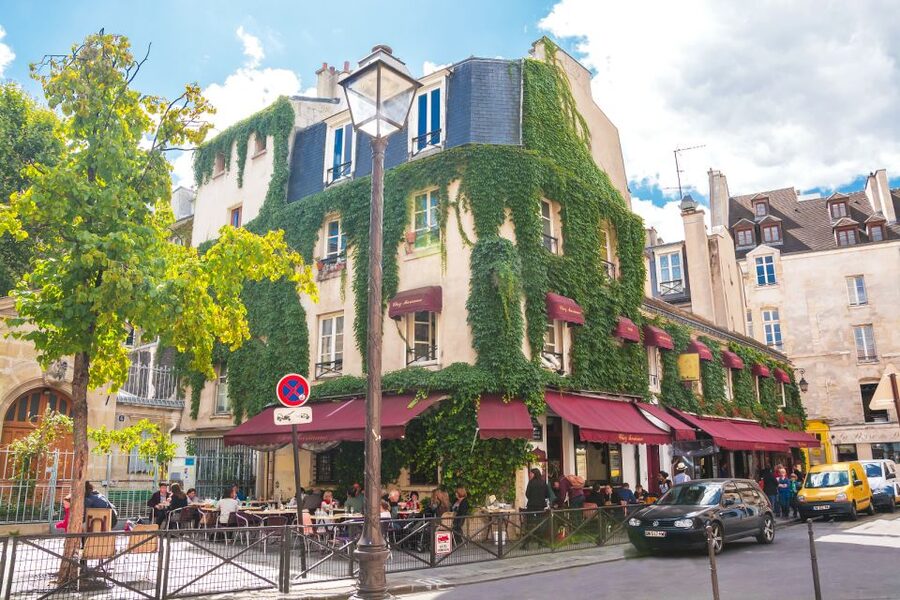
- Place des Vosges plus royal stops like Hôtel de Sully for the Marais before it was a hub.
- Jewish Quarter focus on everyday streets around the Pletzl, Rue des Rosiers, and more.
- Meaningful cemetery moment with artistic tomb stones and graves you’ll pass by.
- A museum stop on the route (Musée Carnavalet), with quiet-room rules you’ll get explained.
- Optional framing stops like Pompidou and Hôtel de Ville, which show how the Marais connects to wider Paris.
Why this 150-minute walk works for Paris’s Marais and Jewish Quarter
This is the kind of tour that helps you get oriented quickly. The Marais can feel like a maze if you wander on your own, but a guided route gives you the timeline—how this area grew from a peripheral zone into the center-stage Paris it is today.
You’ll also appreciate the pace. At about 150 minutes, it’s long enough to cover real ground and still short enough that you can keep your afternoon flexible. That matters in Paris, where one late museum queue or transit delay can throw off the whole day.
Worth weighing up next to this Paris pick
- Paris: Louvre Guided Tour with Reserved Access & Boat Cruise
★ 4.3 · 16,353 reviews - Louvre Museum Masterpieces Guided Tour with Access
★ 4.5 · 12,023 reviews - Louvre Museum – Exclusive Guided Tour (Entry Included)
★ 5.0 · 6,296 reviews - Versailles: Skip-the-Line Guided Palace Tour and Full Access
★ 4.6 · 5,214 reviews
Meeting in the Marais: start point and what to know before you go
The tour starts near Rue Saint-Antoine (the exact meeting point can vary by option), so I recommend you plug in the address the day before. It’s a walking tour, and the route builds from the Marais’s historic core into the Jewish Quarter and beyond.
A couple practical notes you’ll want to follow from the start: bring your passport or ID card, and plan on carrying only what you can comfortably manage on foot. Large bags aren’t allowed, and some museum areas restrict bags to handbags or small thin backpacks.
If you’re doing this in a group setting, it helps to travel light. Museum rules and security checks in Paris can be strict, and you do not want to spend the first part of your tour stuck at the wrong line with the wrong bag size.
Saint-Paul-Saint-Louis and the Marais’s early story: the area before it was central
The tour begins by putting the Marais on the map—literally. You’ll learn how this district once sat beyond the city’s center and then transformed into a key part of Paris. That shift changes how you read the streets: you start noticing why certain buildings exist where they do.
One of the early stops is near Paroisse Saint-Paul Saint-Louis. It’s a classic Paris church setting you’ll pass by, but the point is context. Your guide uses these anchor locations to explain how religious and civic space shaped neighborhood life over time.
Then you head toward Hôtel de Sully, where you’ll see the stately courtyard area that signals the Marais’s older power structure. Even if you do not linger long, you’ll learn what to look for: the “why” behind the architecture and the prestige tied to these residences.
What I like here is the storytelling order. You get the atmosphere of old Paris first—before the tour jumps into the Jewish neighborhood’s later chapters.
Place des Vosges: beauty with a purpose, not just a photo stop
Place des Vosges is one of those places that looks good in any season, but this tour helps you see it as more than a pretty square. Your guide uses it as a turning point in the Marais timeline, so you understand what the space meant when the area was still defining itself.
You’ll walk through or pass by with enough time to take in the symmetry and the scale. And because you’re in a guided group, you also get the small explanations that make the square feel “readable,” like knowing what the architecture was designed to communicate.
A fair consideration: if you’re the type who only wants museum entry and doesn’t care about architecture, you might feel the square is more of a pause than a payoff. But for most people, it’s the moment that makes the rest of the route click.
Rue des Francs-Bourgeois and Hôtel de Carnavalet: mansions, status, and a museum stop that’s worth your time
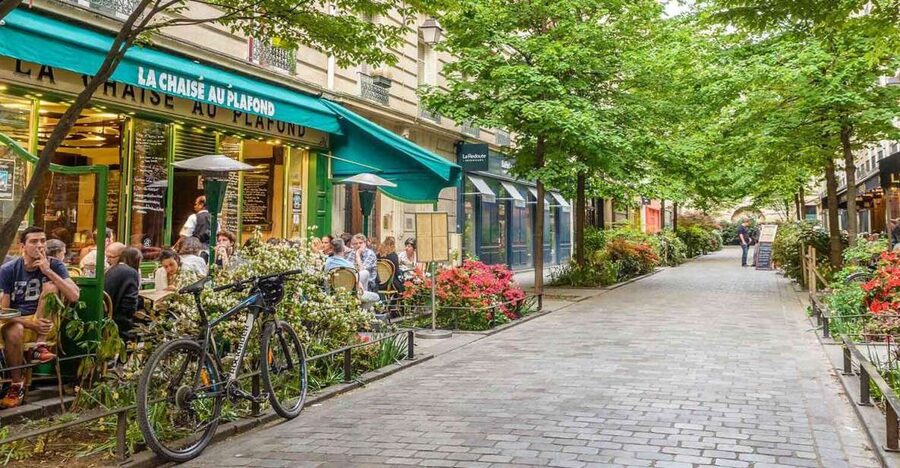
Next comes the section where you feel the Marais’s old wealth and its modern shopping energy at the same time. Along Rue des Francs-Bourgeois, you’ll be shown how noble residences lined these lanes—homes that later became public memory in different forms.
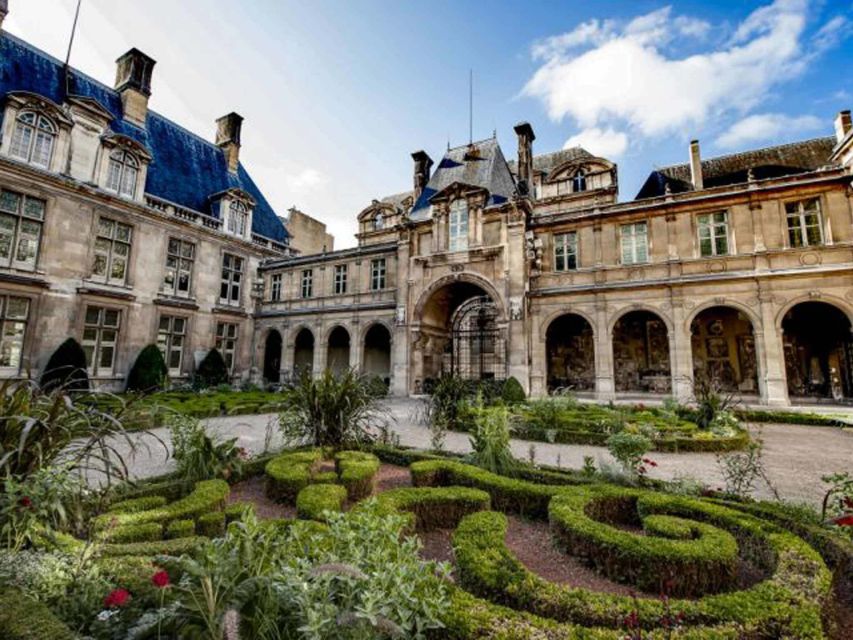
You’ll also make a stop near Musée Carnavalet, the museum strongly associated with Paris’s own story. Even if museum hours and internal rules can affect the exact experience, the tour is built to use it as a meaningful break in the walk, not as a rushed “see it and leave” stop.
A couple things to expect when a museum is part of your day: some rooms can have quiet rules, and your guide will explain before you enter. That’s actually a good setup. It keeps the tour respectful and helps you focus on what you’re looking at rather than being shushed by strangers later.
If you do museums often, Carnavalet can feel like a natural fit because it connects to what you’re seeing outside. If you rarely go into museums, you’ll still get enough guidance to make it feel understandable rather than overwhelming.
The Pletzl and Rue des Rosiers: the Jewish Quarter as street life, not just landmarks
This is the part of the tour that most people remember. You shift from royal and architectural Paris into neighborhood life, where the Jewish community helped shape the Marais through the 18th and 19th centuries. Instead of only big monuments, you’re walking a story made of shops, streets, and daily patterns.
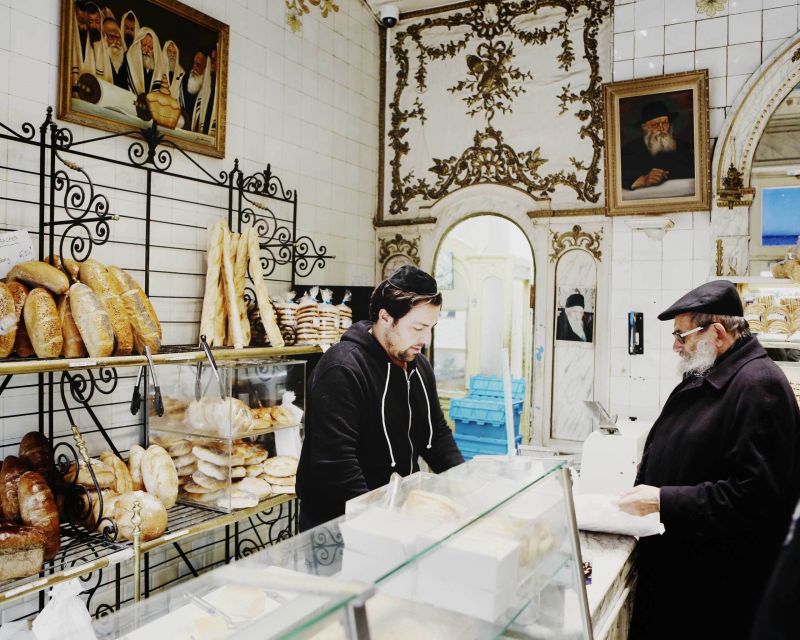
Your route includes the area around the Pletzl, with time to stroll past bakeries and boutiques and to understand why these streets matter. Your guide also connects the neighborhood’s identity to names and street functions, which makes it easier to understand what you’re seeing rather than just noticing it.
Then comes Rue des Rosiers, one of the most recognizable Jewish Quarter streets. Here you’ll likely notice the blend of old and new: commerce, cultural markers, and the everyday flow of people. The tour helps you translate those signals into history, which is exactly what makes guided walking worthwhile.




Artistic tomb stones and graves: a pause that adds weight to the story
One of the more moving moments on this route is the stroll past artistic tomb stones and graves. You’re not being asked to treat this like a postcard stop. Instead, your guide frames it as part of how the community remembered itself and how the city held those memories in place.
This is also where the tour’s “art historian” angle matters. You’ll notice style, symbolism, and how design can communicate identity—things you’d almost certainly miss on your own without a guide’s direction.
If you prefer a tour that stays strictly upbeat, this section might feel heavier than the rest. But it’s also one of the reasons the tour feels complete instead of just scenic.
Pompidou and Hôtel de Ville: two architecture eras that put the Marais in wider context
Depending on the exact flow, you may pass by Centre Pompidou and Hôtel de Ville. It’s not a detour for the sake of seeing famous buildings. It’s a way to show how Paris changes shape over time—how a neighborhood like the Marais sits inside the larger story of a modern city.
Passing Pompidou gives you the contrast: a totally different architectural language than the older Marais. Then Hôtel de Ville brings you back toward civic Paris, reminding you that neighborhoods are always connected to how a city governs itself and presents its identity.
Finally, you’ll pass Saint Gervais Church as another landmark marker in the overall route. It’s brief, but it helps tie the walking path into the bigger geography of central Paris.
Price and value: what $61 buys you when time is short
At $61 per person for about 150 minutes, this isn’t a bargain like a free walking route. But it’s also not overpriced for a guided walk that covers multiple major areas and includes a professional art historian.
Here’s the value logic I’d use if I were planning your day:
- You get a tight route through places you’d otherwise have to research heavily.
- You get interpretation, not just directions. That’s what makes places like Hôtel de Sully and Carnavalet land with meaning.
- Small group size (max 12) makes it easier to ask questions and keep pace with the guide.
Also, the tour doesn’t include food or drinks, so you can plan your own meal without feeling locked into a fixed schedule. The money spent goes to time and guidance, not to an expensive add-on.
Practical tips for the day: walking pace, bags, ID, and museum rules
Plan on moderate walking. This tour is straightforward, but it’s still a series of stops in a compact area, so comfortable shoes matter.
If you’re relying on a semi-private option, note that it is not available for those with walking disabilities or wheelchair users. Wheelchair tours are listed as available only on request, so if that applies to you, ask before you book so you’re not surprised.
For what to bring:
- Bring passport or ID card
- Bring valid photo ID
- Keep your bag small enough to meet museum security expectations; inside museums, only handbags or small thin backpacks are allowed.
Museum spaces can also have occasional closures without much warning. When that happens, you’ll get an alternative, so you’re not left standing around.
Which guide style you might get: Eden’s warmth and Francois’s humor
Even without you planning it, the guide quality is part of the deal here. Eden is specifically praised for being friendly, engaging, and easy to follow in excellent English, with history explained in a way that feels emotional rather than robotic.
Francois is another name that comes up with strong mentions of humor and personality. That matters because the Marais can otherwise become a list of building names. When the guide’s voice is lively, you start remembering the connections.
So if you want a guide who makes the neighborhood feel human, this tour tends to deliver.
Who this tour suits best (and who might want something different)
This tour is a strong fit if you:
- Want a walkable, time-efficient route through the Marais and the Jewish Quarter
- Like understanding the “why” behind buildings and street names
- Prefer a small group where you can ask questions
- Enjoy a blend of architecture plus community-focused storytelling
It’s less ideal if you:
- Only want synagogue interior access, because synagogue entry is not included
- Want a totally low-walking plan, since this is moderate walking throughout
- Need a tour with minimal museum exposure, since Carnavalet is part of the experience
Should you book this Marais and Jewish Quarter guided walk?
If your goal is to understand Paris in layers, I think this is a smart booking. You get a compact route that links royal Marais, iconic squares, neighborhood commerce, and even cemetery symbolism—plus optional framing stops like Pompidou and Hôtel de Ville.
I’d book it if you’re short on time, curious about how history actually shaped everyday streets, and you want an expert voice to organize what you’d otherwise experience as disconnected sights.
I’d hesitate only if synagogue interiors are your top priority or if you’re not up for moderate walking. In those cases, you might look for a different format that matches those exact needs.
FAQ
How long is the Paris Marais District and Jewish Quarter guided tour?
The duration is 150 minutes.
What’s included in the tour price?
You get a professional art historian guide and a walking tour. Private and semi-private tour options are available, and wheelchair tours are available only on request.
Does the tour include entry into synagogues?
No. The tour does not include entry into any synagogues because access is restricted to worshippers for security reasons.
What group size should I expect?
The maximum group size is 12 guests per guide.
What do I need to bring?
Bring your passport or ID card, and also make sure you have valid photo ID.
Are large bags allowed during the tour and in museums?
No luggage or large bags are allowed. Inside the museum, only handbags or small thin backpacks are allowed.
More Guided in Paris
- Paris: Louvre Guided Tour with Reserved Access & Boat Cruise
★ 4.3 · 16,353 reviews - Louvre Museum Masterpieces Guided Tour with Access
★ 4.5 · 12,023 reviews - Louvre Museum – Exclusive Guided Tour (Entry Included)
★ 5.0 · 6,296 reviews - Versailles: Skip-the-Line Guided Palace Tour and Full Access
★ 4.6 · 5,214 reviews - Louvre Access with Mona Lisa Escort or Guided Option
★ 4.0 · 4,588 reviews
More Tours in Paris
- Paris: Louvre Guided Tour with Reserved Access & Boat Cruise
★ 4.3 · 16,353 reviews - Paris: Big Bus Hop-On Hop-Off Tour with Optional Cruise
★ 4.4 · 13,279 reviews - Louvre Museum Masterpieces Guided Tour with Access
★ 4.5 · 12,023 reviews - Versailles: Skip-the-Line Tour of Palace and Gardens Access
★ 4.7 · 10,429 reviews - Paris: Louvre Overview, Exploration tour and Reserved Entry
★ 4.1 · 10,145 reviews
More Tour Reviews in Paris
- Paris: 1-Hour Seine Cruise departing from the Eiffel Tower
★ 4.4 · 77,472 reviews - Paris: Louvre Museum Timed-Entrance Ticket
★ 4.6 · 71,977 reviews - Disneyland® Paris 1-Day Ticket
★ 4.6 · 49,412 reviews - Paris: Versailles Palace and Gardens Full Access Ticket
★ 4.6 · 41,579 reviews - Paris: Arc de Triomphe Rooftop Tickets
★ 4.6 · 34,264 reviews
Fresh off the review desk in Paris
- Secrets of Paris Bike Tour in English or Dutch★ 5.0 · 5 reviews
- Paris: Mont Saint-Michel Day Tour with Chinese Tour Guide★ 5.0 · 5 reviews
- Private Street Art 2-Hour Guided Tour in Paris★ 4.5 · 5 reviews
- Orsay Museum Tour: 2h Highlights (Private & Small Group)★ 5.0 · 5 reviews
- Discover Paris in electric golf carts★ 4.0 · 5 reviews
- Paris Private Boat Tour with your own Captain Guide★ 5.0 · 5 reviews
Guided, compared.
 ★ 4.3Louvre Guided Tour with Reserved Access & Boat CruiseFrom $8116,353 reviews
 ★ 4.5Louvre Museum Masterpieces Guided Tour with AccessFrom $8612,023 reviews
 ★ 5.0Louvre Museum – Exclusive Guided Tour (Entry Included)From $1816,296 reviews
 ★ 4.6Versailles: Skip-the-Line Guided Palace Tour and Full AccessFrom $885,214 reviews
 ★ 4.0Louvre Access with Mona Lisa Escort or Guided OptionFrom $1004,588 reviews
 ★ 4.0Louvre Priority Access with Mona Lisa Escort or Guided OptionFrom $744,420 reviews
 ★ 4.6Louvre Museum: Skip-the-Line Small Group Guided TourFrom $1294,268 reviews
 ★ 5.0Louvre Museum Paris Essential Guided Tour Semi-Private 6ppl MaxFrom $1813,807 reviews