
Reviewed · SKIP THE LINE
Paris: Pompidou Center – Skip-the-Line Guided Tour 8 guests
Modern art can feel like a code—this tour makes it readable. I like the small-group size (max 8) and the way the guide links the Pompidou’s architecture to what you’ll see inside.
You start right at the museum’s standout exterior, then move through major movements—Cubism, Dada, Surrealism, Pop Art, Fluxus, Minimalism—ending with time on the roof for a Paris view. One caution: this experience isn’t set up for everyone with mobility needs, so if you use a wheelchair, check options with the provider before you go.
In This Review
- Quick take: what matters most
- Entering the Pompidou Center the smart way
- Starting at the outside: where Renzo Piano sets the theme
- The modern-art route: Cubism, Fauvism, and the war years
- Dada to Surrealism: when art fights back
- Pop Art, Bauhaus, and Abstract Expressionism
- Contemporary galleries: Fluxus, Minimalism, and Dubuffet’s winter garden
- Roof time: the Paris panorama that makes the whole thing stick
- Guides who turn style into meaning
- Price and value: what you’re paying for at $384 per person
- Things to know so the day runs smoothly
- Should you book this Pompidou skip-the-line tour?
- FAQ
- How long is the Pompidou Center skip-the-line guided tour?
- What is the meeting point for the tour?
- Is it a small-group tour?
- Does the tour include skip-the-line entrance?
- Are large bags allowed inside?
- Do I need to bring ID?
Quick take: what matters most
- Max 8 people means questions don’t get lost in a crowd
- Skip-the-line entrance saves time when you want to get right to the art
- Renzo Piano’s inside-out building sets the theme from minute one
- Modern to contemporary in 150 minutes gives you a clear art timeline
- Roof time adds a memorable Paris panorama to the art lesson
- No large bags and silent-room rules can affect your pace
Entering the Pompidou Center the smart way
The Pompidou Center is famous for two things: the museum’s high-voltage look outside, and the modern art story inside. This tour helps you tackle both without feeling lost. You’ll get a guided route through a collection that’s huge on paper—nearly 3,200 works—so your guide has to pick priorities. That’s the point. You’re not “seeing everything.” You’re learning how the art world changed and why.
For first-time modern art visitors, the biggest win is context. Instead of just naming artists and styles, the guide points out what each movement was reacting to—wars, politics, new ideas about how art should work, and new ways of thinking about everyday life. That makes the museum feel like a storyline instead of a maze.
And because the group is limited to 8 people, you’re more likely to get answers in real time. That matters when you’re staring at something that looks strange and you actually want to ask why it’s strange.
Worth weighing up next to this Paris pick
- Paris: Louvre Guided Tour with Reserved Access & Boat Cruise
★ 4.3 · 16,353 reviews - Louvre Museum Masterpieces Guided Tour with Access
★ 4.5 · 12,023 reviews - Louvre Museum – Exclusive Guided Tour (Entry Included)
★ 5.0 · 6,296 reviews - Versailles: Skip-the-Line Guided Palace Tour and Full Access
★ 4.6 · 5,214 reviews
Starting at the outside: where Renzo Piano sets the theme
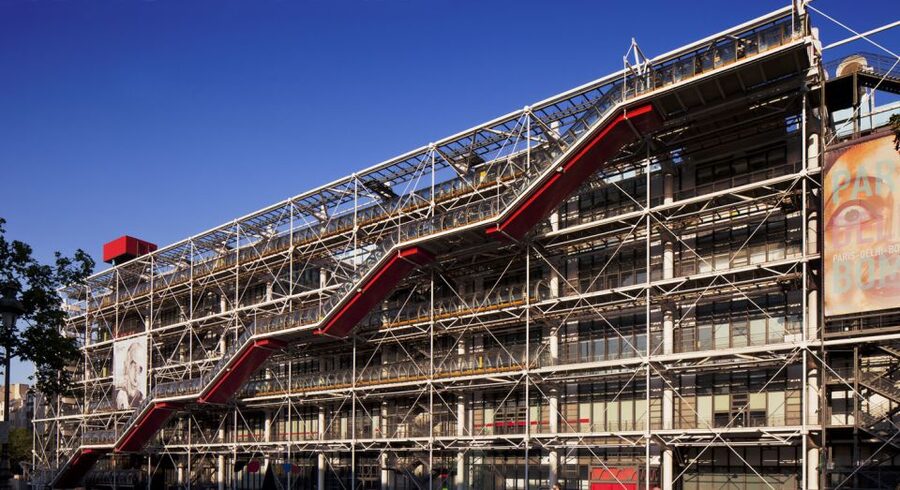
Your tour begins outdoors, meeting the guide by the blue parking sign on the corner of Rue Beaubourg and Rue Rambuteau. Arriving a few minutes early is worth it here, because the first part of the experience is visual. Before you even enter, you’ll examine the museum’s striking exterior.
The Pompidou was designed by Renzo Piano as an “inside-out” concept. Practically, that means the building’s structure and function look exposed rather than hidden. You’ll also learn why the exterior was conceived the way it was—an idea that helps you read the museum as a statement, not just a container.
If you like architecture, this opening is a gift. It trains your eyes to notice how the building itself communicates modern thinking: change is visible, design is part of the message, and form can be loud. Even if you’re more of an art person than an architecture person, it sets a baseline for what you’ll be dealing with inside.
The modern-art route: Cubism, Fauvism, and the war years
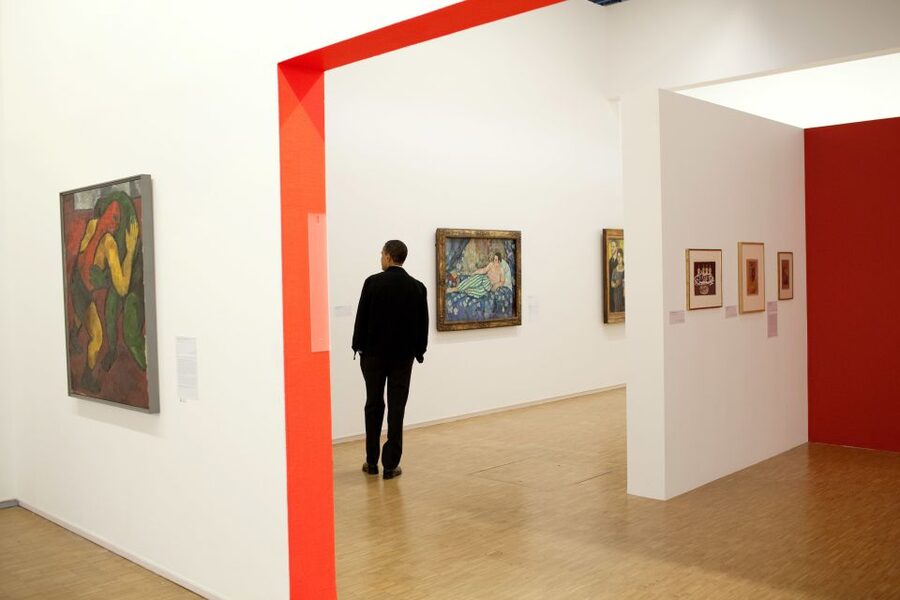
Once you’re in, the tour moves through the modern collection with an art-history backbone. The route is paced for understanding, not speed. You’ll stop in front of key works and talk about the ideas behind different styles.
One highlight is the way the guide anchors movements in specific examples. You’ll talk Cubism in front of a Picasso painting—helpful if you’ve ever felt like Cubism is just “fracture and angles.” Instead, you’ll hear what it was trying to do: rethink perspective and show subjects from multiple viewpoints.
Then you’ll shift to Fauvism with a Matisse example. That stop helps explain why the colors matter. Fauvism isn’t only about being colorful. It’s about using color to push emotion and structure.
From there, the tour brings in the world wars and how they changed the art world. This is where the tour becomes more than “style spotting.” You’ll see how violence and instability shaped responses in art—sometimes through seriousness, sometimes through shock, and sometimes through dark humor.
Dada to Surrealism: when art fights back

After you’ve handled the big style shifts of the early 1900s, the guide turns to Dada. You’ll learn how Dada grew out of the gore and absurdity of World War I. The key takeaway is that Dada wasn’t trying to be polite. It was a reaction—one that used chaos and ridicule as a weapon.
Then you’ll move to the surrealists, including Salvador Dali. If Dali has ever felt theatrical to you (and he often does), the tour framing makes that theatrics make sense. Surrealism is about disrupting ordinary logic—dreams, fears, and symbolic images taking over. The guide’s job is to show you how to look for that shift in your eyes, not just in the facts.
This part is often where people realize modern art isn’t always about beauty. Sometimes it’s about truth that doesn’t behave.
Pop Art, Bauhaus, and Abstract Expressionism
The mid-to-late 20th century portion is where the museum starts feeling like a conversation with everyday life. You’ll learn Pop Art by checking out Andy Warhol works. Even if you’ve seen Warhol’s prints before, the guide helps you understand why the repetition, the commercial feel, and the celebrity-adjacent look were part of a bigger question: what counts as art in a media-saturated world?
From there, you’ll explore movements like Bauhaus and Abstract Expressionism. The tour structure helps you keep the difference straight:
- Bauhaus tends to connect design and function with modern life.
- Abstract Expressionism leans into emotion and gesture—art as an event rather than a clear picture.
The guide also includes works by beloved French artists alongside international names such as Georgia O’Keeffe, Jackson Pollock, and Piet Mondrian. That variety matters because modern art isn’t one uniform style. It splinters and reforms again and again.
Practical tip: in these stops, don’t try to memorize everything. Watch for one thing the guide mentions—like how color behaves, how form is constructed, or how the work handles space—and use that as your anchor. You’ll remember more by understanding one thread than by collecting ten facts.
Contemporary galleries: Fluxus, Minimalism, and Dubuffet’s winter garden

After you’ve covered the modern backbone, you’ll shift into contemporary galleries. This section is useful if you want the museum to feel current rather than sealed in the past.
You’ll learn about recent artistic movements such as Fluxus and Minimalism. These two can sound abstract on paper, but the guided explanations help translate them into something you can actually see:
- Fluxus often treats art as an attitude and an action—rules can be tested, and everyday behavior can become part of the work.
- Minimalism focuses on reduction and clarity—less “story” and more structure, materials, and presence.
Then comes Dubuffet’s winter garden installation. Installations change how you experience art because you’re not only looking at an object. You’re moving through an atmosphere of shapes and design choices. You’ll come away with a better sense of why some contemporary works feel like environments.
A note that matters for expectations: collections can vary through the year, and temporary exhibits aren’t included in this tour. So the focus stays on the permanent modern and contemporary collection areas and the movements your guide is walking you through.
Worth weighing up next to this Paris pick
Roof time: the Paris panorama that makes the whole thing stick
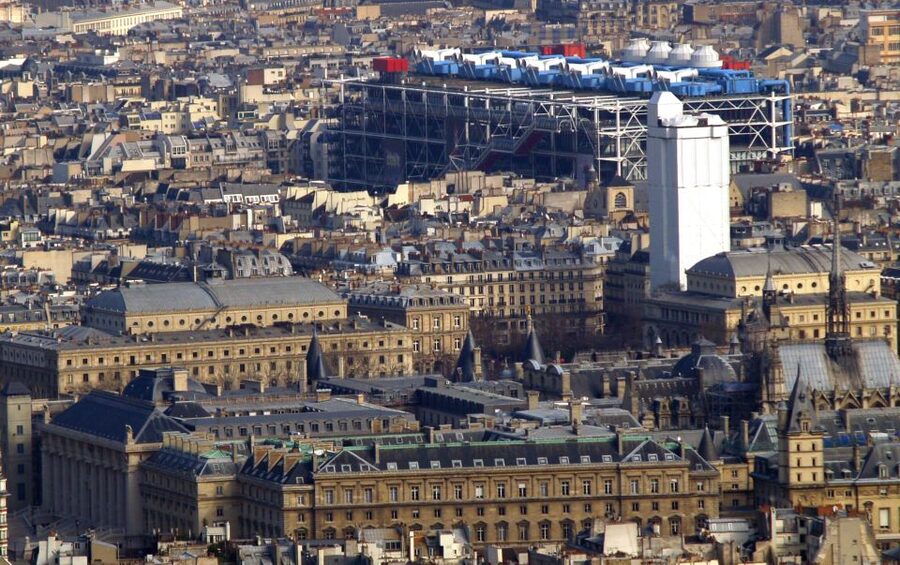
The tour ends with time at the museum roof for a Paris panorama. This part is more than a photo stop. It’s a memory anchor. After spending 150 minutes inside, with ideas shifting from Cubism to Fluxus, the skyline reset gives your brain a clean place to land.
You’ll also get a last chance to connect the building and the city. This is a museum that announces itself outside, and the roof brings you back to why you’re here: Paris, seen from an unusual angle.
If you care about photos, do the roof segment with a plan. Bring your phone, clear it of unnecessary apps, and be ready to move when your guide says it’s time to go. Roof time can be shorter than you hope when you’re part of a structured tour.
Guides who turn style into meaning
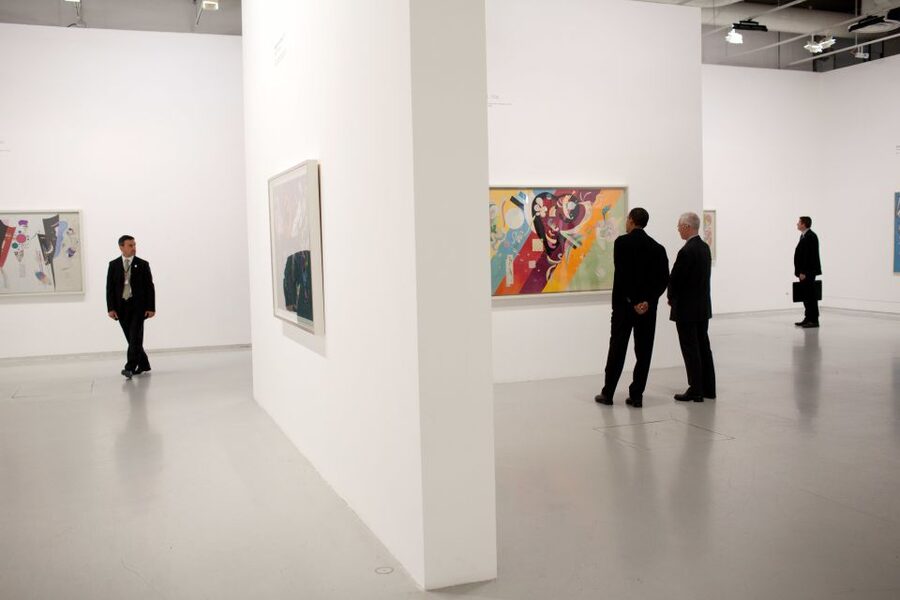
In modern art, the difference between a frustrating visit and a great one often comes down to the guide’s teaching style. The tour’s top praise is consistency: guides who can explain ideas without talking down, and who connect art to social context instead of leaving it floating as trivia.
You may encounter guides such as Anastasia, who has a reputation for keeping a group engaged even with pre-teens in the mix. Others include Dunya and Belen, noted for helping people understand modern and contemporary art in a way that feels clearer and less intimidating. Tanya is another name that shows up with an emphasis on connecting art and artists to real social contexts.
Even if you’re not a “museum person,” this is the type of guide setup that makes modern art feel less like homework.
Price and value: what you’re paying for at $384 per person
At $384 per person for a 150-minute, skip-the-line, professional guided tour, the price isn’t small. So the real question is value: what are you buying?
You’re paying for four things that add up:
- Skip-the-line entrance, which protects your time in a busy museum
- A professional guide, who turns huge collections into a usable route
- Small-group pacing (max 8), which helps you ask questions and keep up
- A guided arc of movements, from modern to contemporary, plus roof views
If you’re visiting for a short time and want a structured overview, this is the kind of tour that can reduce second-guessing. If you prefer wandering slowly and reading everything at your own pace, you might decide the guided route isn’t your best fit. But if you want understanding fast, it’s money well spent.
Things to know so the day runs smoothly
A few practical details can affect your experience:
- No large bags or luggage are allowed. Plan to travel light.
- You’ll need a photo ID (passport or ID card).
- Some spaces are silent rooms, where noise and talking aren’t allowed. Keep it respectful and keep your questions for before or after those areas.
- Occasional museum closures can happen. If the museum opening time is delayed by more than 1 hour from the tour start, you’ll be offered an alternative. Refunds or discounts aren’t mentioned for those delays.
- If you have mobility needs: the information provided says the tour isn’t suitable for people with mobility impairments or wheelchair users, but it also says wheelchair-suitable tours may be available on request. If you’re in that situation, contact the provider early and ask what they can offer.
Should you book this Pompidou skip-the-line tour?
Book it if you want a clear, guided understanding of modern and contemporary art, and you like the idea of learning why movements happened instead of just memorizing names. The max-8 format and the architecture-to-art flow are the strengths that make this tour feel efficient without feeling rushed.
Skip it or think twice if you need wheelchair access on a day you can’t change, or if you strongly prefer to read at your own pace with no structure. Also, if your bag policy is hard to manage, plan a lighter day around the museum.
If you want the Pompidou to make sense, this tour is a practical way to get there—starting outside with the building’s design statement, then moving through the art world’s big turns, and ending with a roof view that reminds you why you traveled to Paris.
FAQ
How long is the Pompidou Center skip-the-line guided tour?
The tour lasts 150 minutes.
What is the meeting point for the tour?
Meet your guide by the blue parking sign on the corner of Rue Beaubourg and Rue Rambuteau.
Is it a small-group tour?
Yes. It’s a small-group experience with a maximum of 8 people.
Does the tour include skip-the-line entrance?
Yes. Skip-the-line entrance is included.
Are large bags allowed inside?
No. Luggage or large bags are not allowed.
Do I need to bring ID?
Yes. You should bring a passport or ID card (valid photo ID).
More Guided in Paris
- Paris: Louvre Guided Tour with Reserved Access & Boat Cruise
★ 4.3 · 16,353 reviews - Louvre Museum Masterpieces Guided Tour with Access
★ 4.5 · 12,023 reviews - Louvre Museum – Exclusive Guided Tour (Entry Included)
★ 5.0 · 6,296 reviews - Versailles: Skip-the-Line Guided Palace Tour and Full Access
★ 4.6 · 5,214 reviews - Louvre Access with Mona Lisa Escort or Guided Option
★ 4.0 · 4,588 reviews
More Tours in Paris
- Paris: Louvre Guided Tour with Reserved Access & Boat Cruise
★ 4.3 · 16,353 reviews - Paris: Big Bus Hop-On Hop-Off Tour with Optional Cruise
★ 4.4 · 13,279 reviews - Louvre Museum Masterpieces Guided Tour with Access
★ 4.5 · 12,023 reviews - Versailles: Skip-the-Line Tour of Palace and Gardens Access
★ 4.7 · 10,429 reviews - Paris: Louvre Overview, Exploration tour and Reserved Entry
★ 4.1 · 10,145 reviews
More Tour Reviews in Paris
- Paris: 1-Hour Seine Cruise departing from the Eiffel Tower
★ 4.4 · 77,472 reviews - Paris: Louvre Museum Timed-Entrance Ticket
★ 4.6 · 71,977 reviews - Disneyland® Paris 1-Day Ticket
★ 4.6 · 49,412 reviews - Paris: Versailles Palace and Gardens Full Access Ticket
★ 4.6 · 41,579 reviews - Paris: Arc de Triomphe Rooftop Tickets
★ 4.6 · 34,264 reviews
Fresh off the review desk in Paris
- Secrets of Paris Bike Tour in English or Dutch★ 5.0 · 5 reviews
- Paris: Mont Saint-Michel Day Tour with Chinese Tour Guide★ 5.0 · 5 reviews
- Private Street Art 2-Hour Guided Tour in Paris★ 4.5 · 5 reviews
- Orsay Museum Tour: 2h Highlights (Private & Small Group)★ 5.0 · 5 reviews
- Discover Paris in electric golf carts★ 4.0 · 5 reviews
- Paris Private Boat Tour with your own Captain Guide★ 5.0 · 5 reviews
Skip the Line, compared.
 ★ 4.7Versailles: Skip-the-Line Tour of Palace and Gardens AccessFrom $7610,429 reviews
 ★ 4.6Versailles: Skip-the-Line Guided Palace Tour and Full AccessFrom $885,214 reviews
 ★ 4.6Louvre Museum: Skip-the-Line Small Group Guided TourFrom $1294,268 reviews
 ★ 4.2From Paris: Versailles Guided Tour with Skip-the-Line EntryFrom $1152,422 reviews
 ★ 4.7Versailles: Palace of Versailles Skip-the-Line Guided TourFrom $762,216 reviews
 ★ 4.6Skip-the-Line Louvre Museum & Mona Lisa Guided TourFrom $801,442 reviews
 ★ 4.5Musée d’Orsay Skip-the-Line Tour with Expert GuideFrom $671,145 reviews
 ★ 4.6Skip-the-Line Louvre Highlights Tour with Mona LisaFrom $931,132 reviews
Browse the lists this tour appears in