
Reviewed · GUIDED
Paris – Private Guided Tour with Art nouveau Theme
Art Nouveau in Paris clicks fast when you see the details at street level. I love how the tour ties symbolism and design choices to the real Belle Époque setting, and I like that you get specific façades you can point at as you go. One thing to consider: you’re on foot for about 2 hours, so you’ll want comfy shoes and a little patience with tight sidewalks and street noise.
This is a private guided walk, so the pace is easier to manage than big group tours. A possible drawback is simply logistics: the meeting point is right by a busy commercial corner, so plan to arrive a few minutes early to avoid a last-minute scramble.
In This Review
- Key things to notice on this walk
- Art Nouveau is a street sport, not a museum label
- The 2-hour plan: private, walkable, and designed for attention
- Where the tour begins: Franprix at rue de l’Université and avenue de la Bourdonnais
- Setting the stage: symbolism and the Belle Époque mindset
- Stop 1: The Ceramic Hotel and why the façade is the point
- Stop 2: Avenue Rapp and Jules Lavirotte’s flamboyant houses
- Stop 3: Theosophic Society building and the philosophical side
- Stop 4: Eiffel Tower links, not just a photo stop
- Picasso drinking dens angle: art meets everyday life
- What makes the guiding style matter here
- Price and value: $176 per person for a private 2-hour theme
- Who this tour is for (and who might prefer something else)
- Before you go: small practical tips that pay off
- Should you book this Art Nouveau private tour?
Key things to notice on this walk
- A true Art Nouveau storyline from early ideas to the more mature look, with explanation for the why behind the curves and motifs
- Ceramic Hotel façade views that let you understand the style without relying on photos
- Avenue Rapp architecture by Jules Lavirotte where ornamentation actually has a plan
- Theosophic Society building stop for the philosophical side of the movement
- Eiffel Tower connections that explain how Art Nouveau thought influenced what came next
- Picasso neighborhood links that add a human, not textbook, angle to the area
Art Nouveau is a street sport, not a museum label
If you’ve ever looked at Art Nouveau pictures and thought, Nice, but what am I actually seeing?, this tour format helps. The point isn’t just naming styles. You learn how people in turn-of-the-century Paris thought about nature, beauty, modern life, and even ideas that sat just beneath everyday fashion.
Art Nouveau also has a habit of confusing newcomers because it overlaps with neighbors like Impressionism-era tastes, Gothic revivals, and later Art Deco energy. Here, you’ll be guided through those connections in a way that makes the differences feel obvious. That matters because once you learn the language, you start spotting it everywhere—on corners, behind railings, and on the tiny choices most people miss.
And yes, you’ll still get the iconic anchor: the Eiffel Tower is part of the story, not treated like a distant postcard.
Worth weighing up next to this Paris pick
- Paris: Louvre Guided Tour with Reserved Access & Boat Cruise
★ 4.3 · 16,353 reviews - Louvre Museum Masterpieces Guided Tour with Access
★ 4.5 · 12,023 reviews - Louvre Museum – Exclusive Guided Tour (Entry Included)
★ 5.0 · 6,296 reviews - Versailles: Skip-the-Line Guided Palace Tour and Full Access
★ 4.6 · 5,214 reviews
The 2-hour plan: private, walkable, and designed for attention
This experience is built for a private group for about 2 hours. In practice, that means your guide can answer questions without rushing you through the next photo stop. One review also flagged that the walking wasn’t strenuous, which is good news if you want architecture without turning it into a leg workout.
You’ll start at street level and move stop to stop, so you’ll see façades the way Parisians experience them: partly framed by traffic, balconies, and the geometry of the block. Bring a light layer if the weather is changeable. Paris can go from fine to windy fast, especially in open areas around major landmarks.
Timing note: if your visit lands on a major public holiday like July 14, you might run into more noise and movement restrictions in the area. That won’t change the buildings you’re seeing, but it can affect the comfort of the walk.
Where the tour begins: Franprix at rue de l’Université and avenue de la Bourdonnais
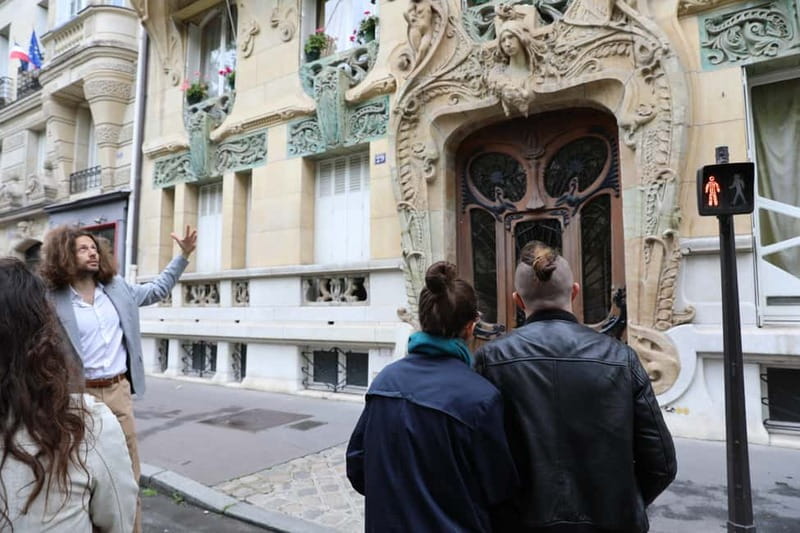
The meeting point is practical and specific: stand in front of the Franprix store at the corner of rue de l’Université and avenue de la Bourdonnais. Look for your guide holding a red canvas tote bag.
This is one of those details that saves time. Paris storefront corners are busy, and the red tote makes it easier to find the person who’s actually running the tour.
Also, the tour runs with an in-person live guide in English or French. If you have a preference, it’s worth confirming so you don’t end up translating your own questions on the spot.
Setting the stage: symbolism and the Belle Époque mindset
Before you even hit the best-looking façades, the guide frames Art Nouveau in a way that helps your eyes cooperate. You’ll hear about the history of the movement and what people wanted from it—elegance, innovation, and a sense that design could express modern ideas.
You’ll also get a clearer timeline, starting from the roots of Art Nouveau and moving into the more mature period. That’s important because Art Nouveau isn’t one look. Early work can feel different from later work, and the symbolism shifts as the style develops.
In some versions of this tour, guides help you connect the dots between Art Nouveau and later styles. One past group specifically found the explanation about Art Nouveau vs. Art Deco to be a real eye-opener. You leave with a mental checklist for what you’re seeing, not just a list of buildings.
Stop 1: The Ceramic Hotel and why the façade is the point
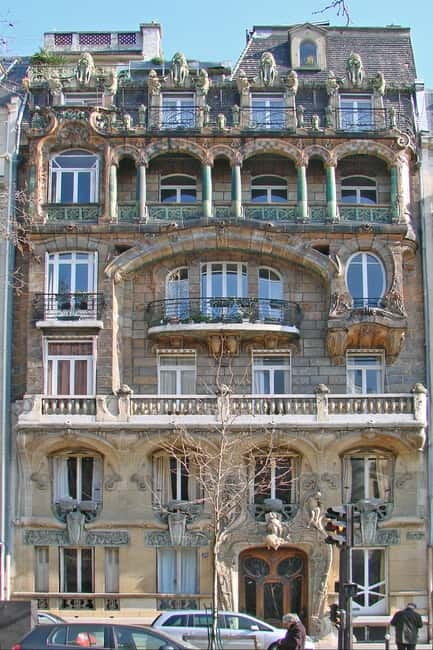
The star façade stop is the Ceramic Hotel. This is one of the most beautiful Art Nouveau façades in Paris, and it’s the kind of place where the details punish you for looking only from across the street.
Up close, you’ll be paying attention to how the ornament works: not as random decoration, but as a message carried by materials, curves, and texture. That’s where Art Nouveau comes alive. Instead of feeling like “pretty,” it starts to feel like a design system.
A good guide also helps you read the façade with intention. If you’re someone who wants to understand rather than just photograph, this stop is the payoff moment.
A small practical note: ceramic and sculptural detail often looks best in the right light. If the façade is partially shaded when you arrive, don’t panic—stay a minute longer and look from slightly different angles.
Stop 2: Avenue Rapp and Jules Lavirotte’s flamboyant houses
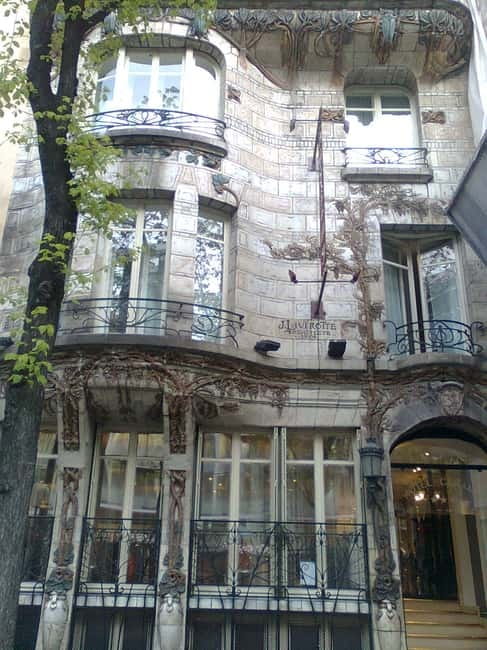
Next, you walk down Avenue Rapp for houses by Jules Lavirotte. This is where the style’s personality shows. Lavirotte’s work has a flair that can feel almost theatrical, and that’s the point—Art Nouveau was embraced by people who wanted their homes to say something.
You’ll learn how these houses fit into the larger Art Nouveau movement, and you’ll notice the way architectural elements interact with the street. The façades aren’t just fronts. They’re performances you experience while walking past.
One benefit of this tour format is that it gives you time to look. You’re not rushing to the next block like a checklist. You get the explanation, then you get to see if your eyes agree.
Worth weighing up next to this Paris pick



Stop 3: Theosophic Society building and the philosophical side
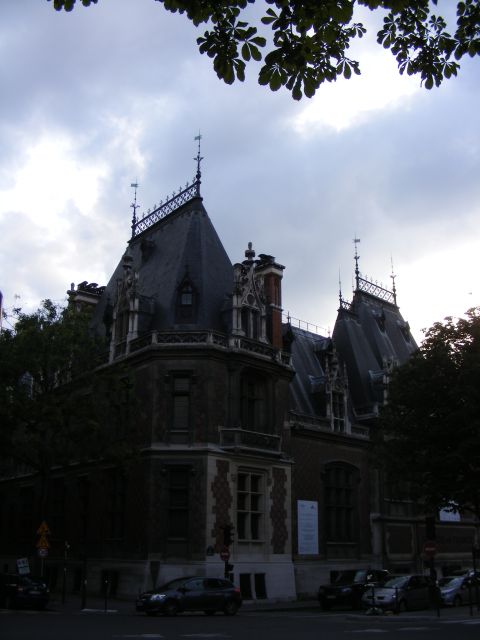
Art Nouveau often gets sold as ornament and nature motifs. But it also had an intellectual side, and that’s where the Theosophic society building stop matters.
You’ll discover links between design and the ideas swirling around Paris at the time. Theosophy isn’t required knowledge to enjoy the architecture, but the guide’s context helps you understand why certain symbols show up and why the movement felt like it was more than fashion.
In one set of comments, the guide approach was praised for placing these ideas into a cultural and philosophical context. That’s the difference between seeing “pretty shapes” and understanding why those shapes existed.
When the explanation connects to your real-time view of the façade, you’ll notice more than you expected—especially if you’re the type who likes meaning under the surface.
Stop 4: Eiffel Tower links, not just a photo stop
This tour includes a stop that tackles a common question: what do you do with the Eiffel Tower in an Art Nouveau itinerary?
Here, the guide frames the links between Art Nouveau and the Eiffel Tower, helping you see the relationship in ideas and influence rather than treating the tower as a separate attraction you happen to pass near. It’s a smart way to keep the theme consistent.
You’ll get the feel that the tower isn’t only about engineering spectacle. It’s also part of the broader modernization of the city. That modernization is where Art Nouveau’s “new” energy fits.
Practical tip: if you want a great view, don’t just aim your camera at the obvious angle. Ask yourself what you’d be looking at if you lived here. The best shots often come from slightly different street positions, where the tower’s lines echo the architecture around it.
Picasso drinking dens angle: art meets everyday life
One of the more fun highlights is the section on Picasso’s favorite drinking dens in the area. It’s not just a diversion. It’s a reminder that Paris art history isn’t confined to famous galleries and printed museum labels.
This kind of stop works best when it’s framed as atmosphere. You’ll connect the artistic world of later decades to the same neighborhood fabric you’ve been reading through Art Nouveau details.
If you’re a traveler who likes architecture but also wants human stories, this portion adds warmth. It helps you think of the buildings as stages where creative life actually happened.
What makes the guiding style matter here
A big reason this tour gets strong ratings is how the guide handles questions and keeps the theme tight. Many groups highlighted guides who answered questions with confidence and linked architecture to broader contexts—social issues, evolving design trends, and the logic behind the style.
Some tours are led by guides like Boris, who’s been singled out for being extremely knowledgeable and for building explanations that connect visual details to bigger themes. Even if your guide isn’t Boris, the structure is clearly set up for that kind of teaching: you’re shown something, then you’re taught how to see it.
Also, one review noted the guide’s professionalism and manner. That matters on a private tour because it affects pace and comfort. You want the walk to feel like you’re with someone who knows the subject and respects the group’s attention.
Price and value: $176 per person for a private 2-hour theme
At $176 per person, you’re paying for two things: privacy and a specialized theme with real architecture stops. This isn’t the kind of tour where you spend most of the time waiting in lines or repeating the same facts for a large group.
To judge value fairly, think about what you’re getting for a single 2-hour block:
- Multiple high-impact façades and a themed explanation, instead of one building plus a long walk
- A guide who can adapt to your questions and keep the story moving
- The ability to focus on details that are easy to miss when you’re on your own
Could you DIY an Art Nouveau walk in Paris? Sure. But you’d likely spend your time guessing what’s important and why. Paying for a guide here is about buying clarity and saving time. You get a route with built-in meaning, not just random street wandering.
Who this tour is for (and who might prefer something else)
This Art Nouveau private tour is a good fit if you:
- Love architecture but want help reading it
- Want a coherent theme instead of scattered landmark hopping
- Prefer calmer group settings (private group) and the ability to ask questions
- Enjoy art history when it’s tied to the city’s physical details
You might choose a different option if you:
- Want a long, unbroken Eiffel Tower experience rather than thematic stop coverage
- Prefer self-paced exploring with no guide interpretation
- Need a tour that’s shorter or fully seated (this one is a walk)
Before you go: small practical tips that pay off
- Wear comfortable shoes. The experience is walk-based for about 2 hours.
- Bring water for comfort. The tour doesn’t include food or drinks.
- If you’re visiting in mid-July around July 14, expect possible noise and movement changes in the area.
- If you’re serious about photos, come with an open mind: some of the best views come after you understand what to look for.
Should you book this Art Nouveau private tour?
If you want Art Nouveau in Paris to make sense—fast—this is a strong booking. The route focuses on the kind of façades and streets where the style’s ideas are visible in real life: the Ceramic Hotel, Lavirotte on Avenue Rapp, the Theosophic society building, and Eiffel Tower connections that keep the theme coherent. The added Picasso drinking dens angle also gives you a more human, city-feeling layer.
I’d book it if you like learning as you walk and you want a guide who connects what you see to why it exists. If you’re just chasing pretty pictures with no interest in symbolism or context, you might be happier with a more general architecture loop.
For most people who care about design, this private 2-hour theme walk is exactly the right size: long enough to understand, short enough to stay energized.
More Guided in Paris
- Paris: Louvre Guided Tour with Reserved Access & Boat Cruise
★ 4.3 · 16,353 reviews - Louvre Museum Masterpieces Guided Tour with Access
★ 4.5 · 12,023 reviews - Louvre Museum – Exclusive Guided Tour (Entry Included)
★ 5.0 · 6,296 reviews - Versailles: Skip-the-Line Guided Palace Tour and Full Access
★ 4.6 · 5,214 reviews - Louvre Access with Mona Lisa Escort or Guided Option
★ 4.0 · 4,588 reviews
More Tours in Paris
- Paris: Louvre Guided Tour with Reserved Access & Boat Cruise
★ 4.3 · 16,353 reviews - Paris: Big Bus Hop-On Hop-Off Tour with Optional Cruise
★ 4.4 · 13,279 reviews - Louvre Museum Masterpieces Guided Tour with Access
★ 4.5 · 12,023 reviews - Versailles: Skip-the-Line Tour of Palace and Gardens Access
★ 4.7 · 10,429 reviews - Paris: Louvre Overview, Exploration tour and Reserved Entry
★ 4.1 · 10,145 reviews
More Tour Reviews in Paris
- Paris: 1-Hour Seine Cruise departing from the Eiffel Tower
★ 4.4 · 77,472 reviews - Paris: Louvre Museum Timed-Entrance Ticket
★ 4.6 · 71,977 reviews - Disneyland® Paris 1-Day Ticket
★ 4.6 · 49,412 reviews - Paris: Versailles Palace and Gardens Full Access Ticket
★ 4.6 · 41,579 reviews - Paris: Arc de Triomphe Rooftop Tickets
★ 4.6 · 34,264 reviews
Fresh off the review desk in Paris
- Secrets of Paris Bike Tour in English or Dutch★ 5.0 · 5 reviews
- Paris: Mont Saint-Michel Day Tour with Chinese Tour Guide★ 5.0 · 5 reviews
- Private Street Art 2-Hour Guided Tour in Paris★ 4.5 · 5 reviews
- Orsay Museum Tour: 2h Highlights (Private & Small Group)★ 5.0 · 5 reviews
- Discover Paris in electric golf carts★ 4.0 · 5 reviews
- Paris Private Boat Tour with your own Captain Guide★ 5.0 · 5 reviews
Guided, compared.
 ★ 4.3Louvre Guided Tour with Reserved Access & Boat CruiseFrom $8116,353 reviews
 ★ 4.5Louvre Museum Masterpieces Guided Tour with AccessFrom $8612,023 reviews
 ★ 5.0Louvre Museum – Exclusive Guided Tour (Entry Included)From $1816,296 reviews
 ★ 4.6Versailles: Skip-the-Line Guided Palace Tour and Full AccessFrom $885,214 reviews
 ★ 4.0Louvre Access with Mona Lisa Escort or Guided OptionFrom $1004,588 reviews
 ★ 4.0Louvre Priority Access with Mona Lisa Escort or Guided OptionFrom $744,420 reviews
 ★ 4.6Louvre Museum: Skip-the-Line Small Group Guided TourFrom $1294,268 reviews
 ★ 5.0Louvre Museum Paris Essential Guided Tour Semi-Private 6ppl MaxFrom $1813,807 reviews