
Reviewed · CATACOMBS TOURS
Paris: Small-Group Catacombs Tour with Skip-the-Line Entry
Paris beneath Paris is not for the faint-hearted. This small-group catacombs tour uses skip-the-line entry and takes you into restricted areas with a live guide.
You’ll get a tight tour for just 6 people, which keeps the pace moving and makes it easier to hear the details that turn a pile of bones into a story. Two things I especially like are the calm, human scale of a small group and the way your guide connects the catacombs to real events, not just spooky vibes.
The one consideration: it’s a short tour, but you’ll still face steep stairs—that 133-step descent is part of the deal—so if stairs are an issue, plan carefully before you book.
In This Review
- Key things to know
- Meeting at the Catacombs entrance with a clear plan
- Skip-the-line entry through a separate entrance
- The 133-step descent: where the tour starts to feel real
- From limestone quarry tunnels to burial tunnels in the 1780s
- Bone decorations you’ll actually understand (and remember)
- Restricted areas: why the small group improves the whole route
- WWII bunkers, the Wehrmacht, and French Resistance stories
- The grave of Philibert Aspairt and the legend element
- Cataphiles underground: raves, swimming parties, and graffiti
- Price, time, and what $227 really buys you
- Who should book this catacombs tour (and who should think twice)
- Should you book this Paris Catacombs small-group tour?
- FAQ
- How long is the Paris Catacombs small-group tour?
- What’s the group size?
- Is there skip-the-line entry?
- Where do we meet for the tour?
- What language is the tour guide?
- What’s included in the price?
- Can I cancel, and is there a pay-later option?
Key things to know
- Skip-the-line access through a separate entrance so you waste less time waiting
- Small group of up to 6 people, which makes it easier to notice details and ask questions
- Restricted areas included, so you don’t just repeat the standard public route
- A 133-step descent kicks things off right away, before you even settle in
- Bones as documentation: your guide explains the decorations and what they can suggest
- WWII, the French Revolution, and modern cataphile culture show up in the stories
Meeting at the Catacombs entrance with a clear plan
Your tour starts in front of the Paris Catacombs main entrance at 1 Avenue du Colonel Henri Rol-Tanguy, and your guide will be holding a LivTours sign. The good part here is that the meeting point is right at the site, so you’re not dealing with confusing pickup logistics or a long bus ride before you get underground.
This also shapes the experience. Catacombs tours can turn chaotic fast—people bunch up, lines form, and the whole thing becomes more about timing than understanding. Starting at the entrance helps you move as a group and get into the underworld without losing the thread.
One small practical tip: the guide sign might not be huge. Keep your eyes up near the entrance area so you don’t waste time scanning the crowd. Also, since there’s no hotel pickup, you’ll want to build a little extra buffer if you’re coming in on foot, metro, or on a tight city schedule.
Finally, the tour ends right back at the meeting point. That’s convenient when you want to roll into dinner or a nearby museum afterward without planning a new transit puzzle.
Deeper underground, other Catacombs visits
- Paris: Catacombs Entry & Seine River Cruise with Audio Guide
★ 4.4 · 1,150 reviews - Paris: Catacombs, Audio Guide, and River Cruise Option
★ 4.6 · 966 reviews - Paris: Catacombs Ticket and Seine River Cruise
★ 4.1 · 853 reviews - Paris Catacombs Tour
★ 4.5 · 832 reviews
Skip-the-line entry through a separate entrance
The headline feature is straightforward: you get skip-the-line entry. In practice, that usually means you approach the attraction differently than the self-guided crowd and enter through a separate entrance, which helps you start the tour faster and more smoothly.
Why I think this matters: the Paris Catacombs can be popular, and waiting around outside in the open can sap the mood. With skip-the-line access, you’re more likely to keep the tour’s momentum—first the descent, then the stories, then the bone artwork. That flow is a big part of why this works better than wandering on your own.
The tour is also set up for a small group (6 people), and you feel the difference right away. Instead of shouting over other visitors, you can hear your guide when they point out details—sometimes tiny—like how certain decorations are arranged or what makes a particular section different.
Your guide leads the experience in English, and they bring the tunnel route to life with explanations you’d miss just walking. If you’re the type who likes context—where something happened, when it happened, and why it ended up this way—this format delivers.
The 133-step descent: where the tour starts to feel real
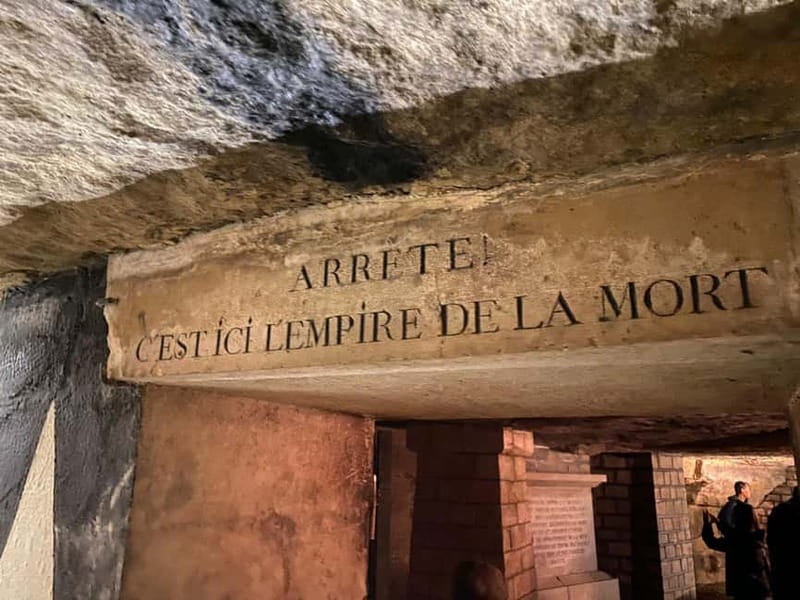
Right after entry, the tour begins with a 133-step staircase down into the catacombs. This isn’t a slow, optional warm-up. It’s part of the experience—literal descent into the underworld.
Go in mentally prepared for stairs and narrow passages. Even though the tour runs about 1.5 hours, that first drop sets the tone. If you’re planning this on a day when you’re also doing long walks aboveground, consider whether you’re saving your energy for the underground portion.
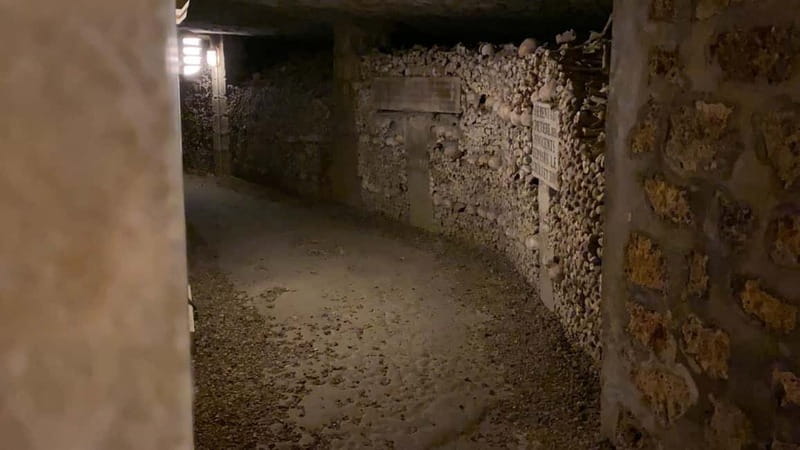
Once you’re down there, the tunnel atmosphere does what it’s designed to do: it compresses your sense of space, makes you pay attention to walls and arrangements, and turns the space from “a place you visit” into “a place you’re inside of.”
The guide also frames what you’re seeing early on—how the tunnels relate to limestone quarrying and later to burial—so the bones aren’t just “there.” They’re tied to reasons, timelines, and human decisions. That’s key. Otherwise, catacombs can feel like a surreal museum with no clear story. With a guide, the descent becomes an introduction, not just a shock.
From limestone quarry tunnels to burial tunnels in the 1780s
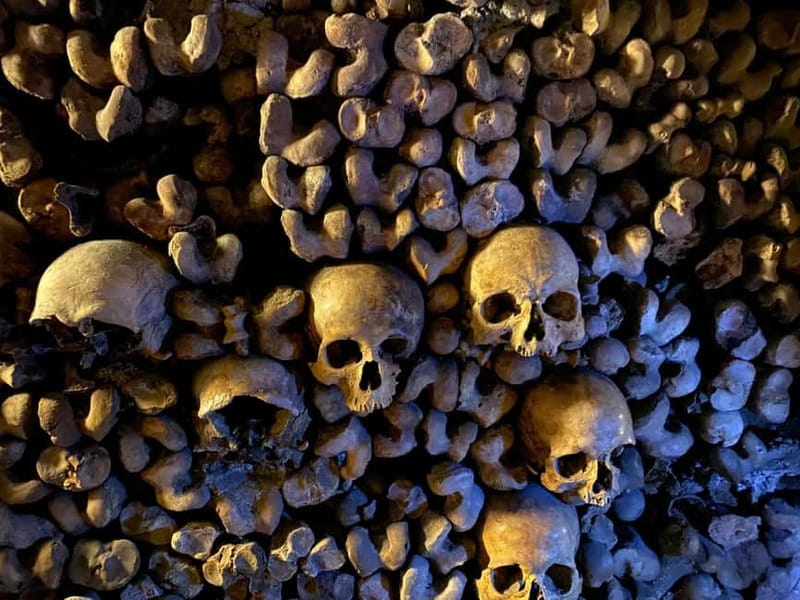
One of the most useful parts of this tour is how it puts the catacombs into two major phases: building material, then burial.
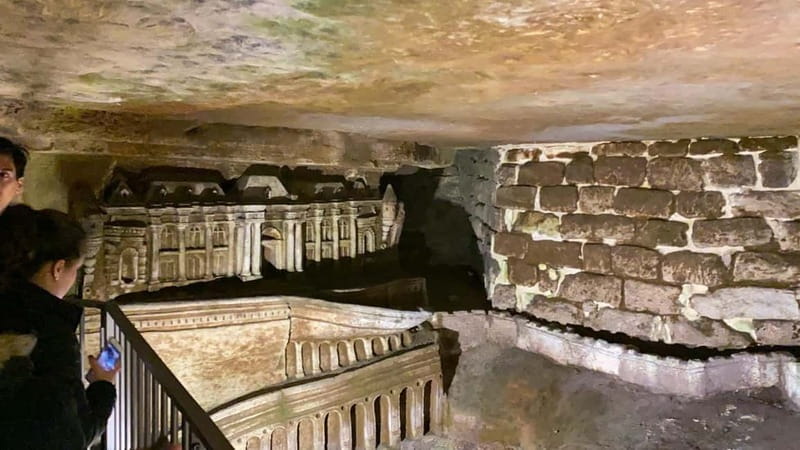
Your guide explains that the catacombs began as a 13th-century limestone quarry, used for projects as grand as Notre Dame. That detail changes how you see the underground. You start noticing the idea of working space—how people carved, shaped, and moved through rock—rather than thinking only about what came later.
Then the story pivots to what forced a change. Bad weather in the 1780s contributed to the situation that led Parisians to bury their dead here. You learn how the catacombs became a solution to a crisis, not a spooky decision for entertainment.
And the tour scale matters. You’re walking through an underground network described as a 200-mile maze, built from the remains of roughly 6 million Parisians. When your guide connects that number to specific sections and decorative practices, it stops being a big statistic and starts becoming an interpretive lens for the space.
Even if you’re not into macabre stories, this is what makes the tour feel grounded: the catacombs are linked to real urban life and real historical pressures.
Bone decorations you’ll actually understand (and remember)
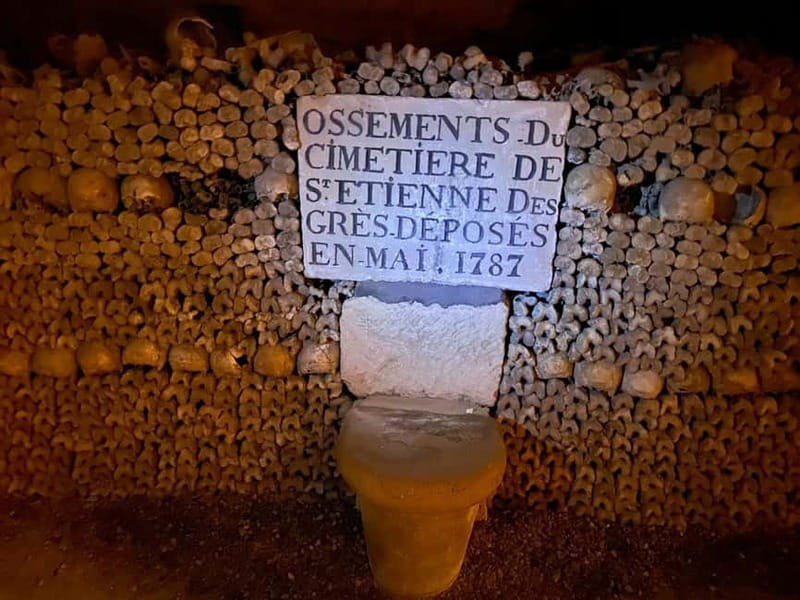
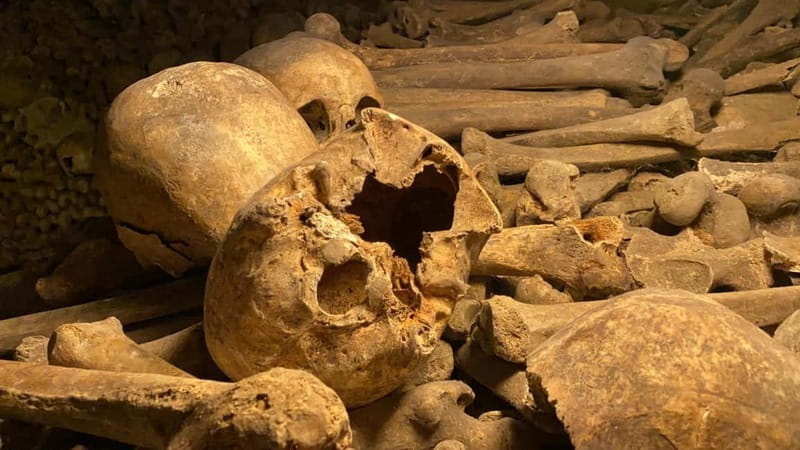
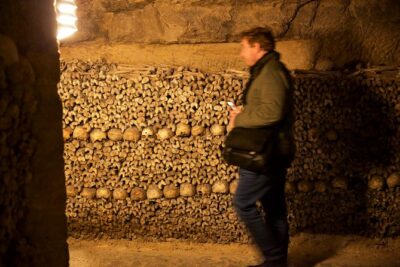
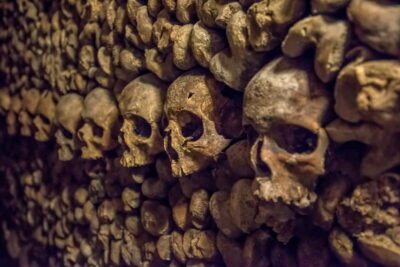
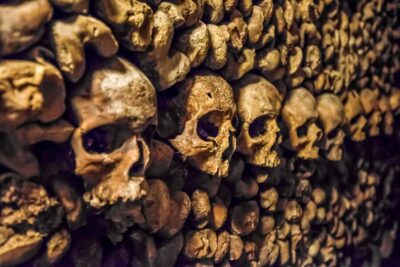
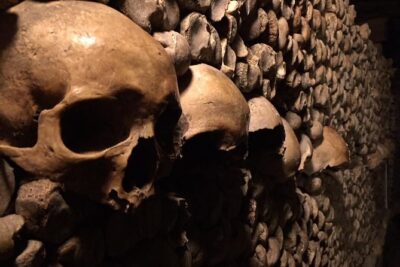
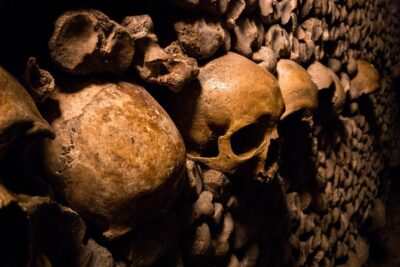
One of the best moments is when the guide helps you slow down and look. During the tour, you have time to admire bone decorations with an explanation of what you’re seeing and how it was made.
You’ll encounter designs that range from religious iconography to hearts and other symbolic patterns. The guide doesn’t just list them. They explain how workers “beautified” the bones—turning structural remains into something meant to communicate.
There’s one feature people bring up for a reason: inside the Crypt of the Passion, you’ll get a moment to gaze at The Barrel, a structure built out of skeletal remains. It’s the kind of sight that lands in your brain because it’s both constructed and unmistakably human.
What I like about a guided approach here is that it trains your eyes. After a good explanation, you stop seeing random bone piles and start seeing choices: where elements are arranged, how surfaces are shaped, and how symbols are communicated with limited materials.
It’s also a place where the timing of your stops matters. If you rushed through the route on your own, you might miss the best pieces. With a guide and a small group, you’re more likely to get those careful pauses.
Restricted areas: why the small group improves the whole route
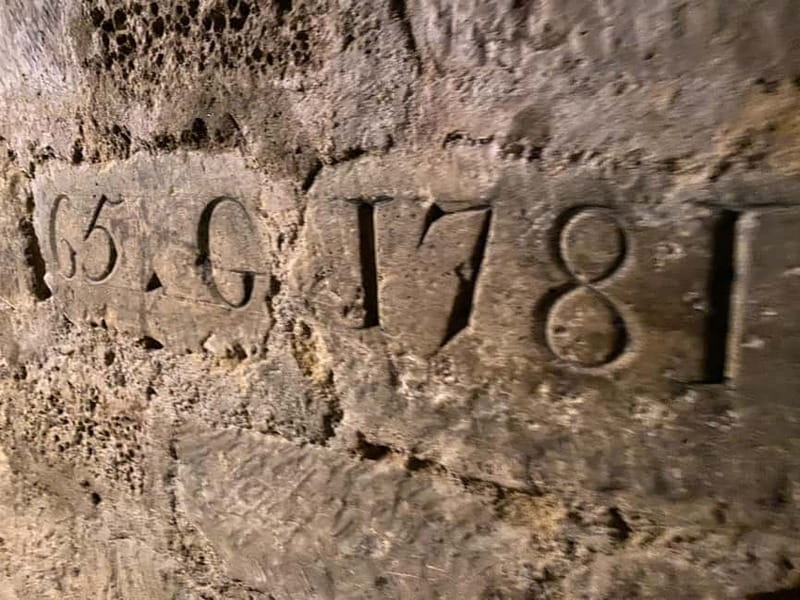
This tour isn’t just standard catacombs footage. A big selling point is exclusive access to restricted areas.
Those restricted segments are valuable for two reasons. First, they give you variety. You’re not simply retracing the most public route. Second, the guide can explain what makes those areas distinct, including how they fit into the larger story of the catacombs.
That’s where the small group (up to 6 people) really earns its keep. In a bigger group, it’s harder to slow down, and it’s harder to notice details without constantly falling behind. In a small group, the guide can manage pacing, direct your attention, and keep you from getting lost in the flow of other visitors.
Some guides described on this kind of tour include Maria, Leo, Remi, Lavinia, Michelle, and Angelo. Names vary by day, but the common thread in those experiences is that the guide’s stories and pacing shaped how memorable the walk felt—especially when there were extra sections that most visitors don’t see.
Also, the company states that the group size is limited to 6, with rare exceptions that might be made to accommodate participants traveling together so you’re not split. Either way, the goal remains the same: control the group size so the tour feels personal, not factory-made.
Worth weighing up next to this Paris pick




WWII bunkers, the Wehrmacht, and French Resistance stories
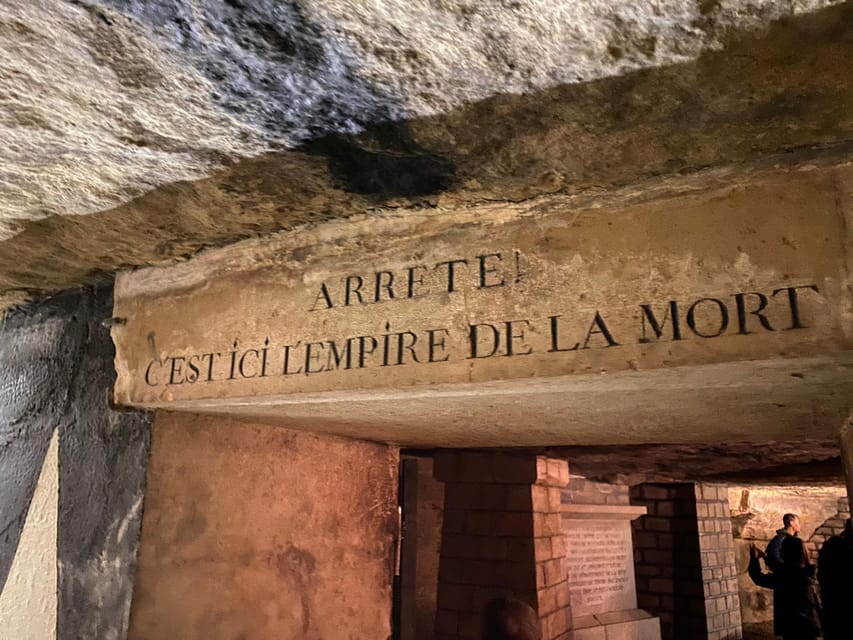
The catacombs aren’t only about religion and burial. The tour also covers wartime use during World War II.
Your guide tells you how parts of the catacombs were used as wartime bunkers by both the German Wehrmacht and the French Resistance. That dual framing matters. It keeps the story from being one-note; you hear how the same underground geography could serve different sides depending on who controlled it and what they needed.
This is where guided history earns its keep. Without context, you’d just see more tunnels and more bones. With context, the underground becomes a strategy map—passageways and hiding places shaped by the realities of conflict.
There’s also mention of the catacombs’ relationship to the French Revolution. You don’t just get the war story; you get a broader sense that the space repeatedly shifted roles through major turning points in Paris.
I like when a tour doesn’t treat the catacombs as a single-themed attraction. Here, the catacombs come off like infrastructure—sometimes grim infrastructure, but infrastructure all the same.
The grave of Philibert Aspairt and the legend element
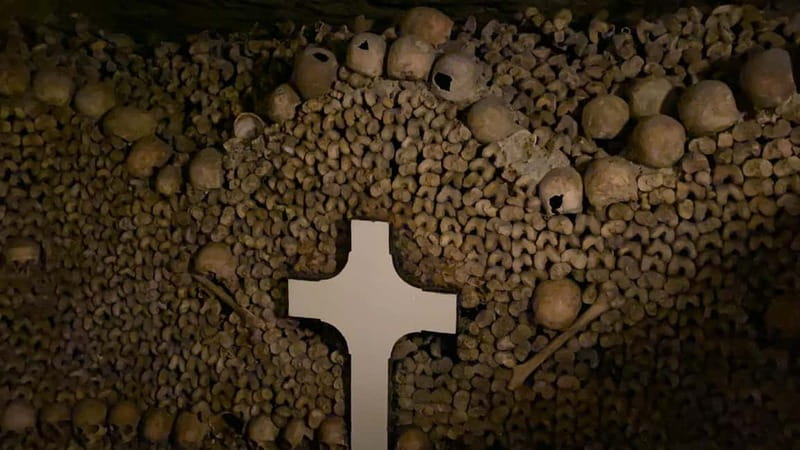
If you’re into human stories inside the bigger history, ask your guide about the grave of the doorman named Philibert Aspairt, who passed away in the catacombs in the 18th century.
This is one of those details that adds a personal thread. Instead of the underground staying abstract, it gives you a named person tied to a specific time period. That helps the catacombs feel less like a general “bones forever” place and more like a real setting where individuals lived and died.
And because the guide is live, you can ask follow-up questions. The tour structure supports that kind of conversation, especially in a group of six where you’re not constantly waiting for space or for the next checkpoint.
It’s also a nice contrast to the larger structural stories about mining and war. You get both: big historical forces, and then one human name you can carry out of the tunnels with you.
Cataphiles underground: raves, swimming parties, and graffiti
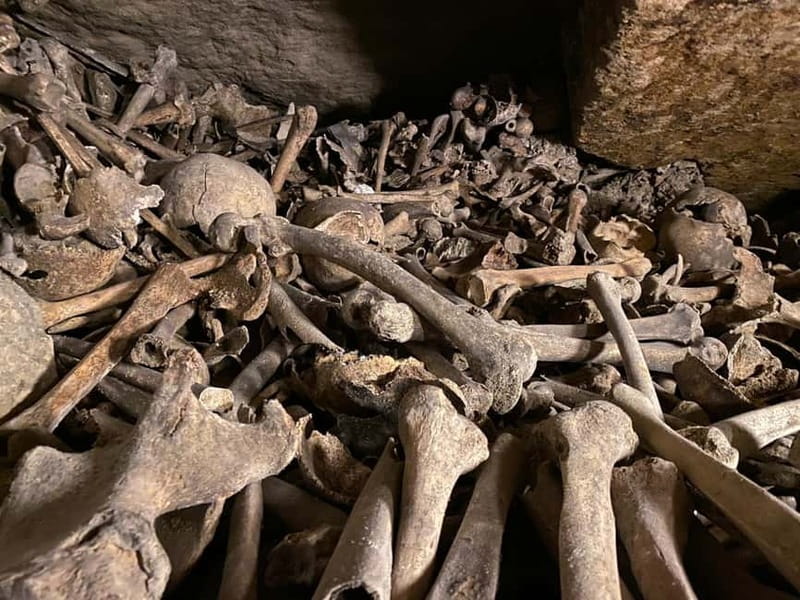
One of the more modern, slightly surreal threads in the experience is the story of cataphiles—people who explore the underground—and how they’ve used parts of the catacombs for gatherings.
Your guide will talk about recent years and incidents involving things like raves and swimming parties, along with an extensive network of underground exploration. It’s not presented as a free-for-all; it’s described in the context of how the catacombs continue to attract people even today.
Keep your eyes peeled for graffiti left by cataphiles. You’re still in a place dedicated to death and memory, but you’ll see evidence of modern curiosity and rule-bending energy.
I think that contrast is part of why this tour feels current. You’re not only walking through history—you’re seeing how history keeps feeding the present.
Price, time, and what $227 really buys you
At $227 per person for about 1.5 hours, this isn’t a cheap add-on. The key question is whether you’re paying for a basic walk or for access and interpretation.
Here, the value is tied to three things that are hard to replicate on your own:
- Skip-the-line entry through a separate entrance
- An expert live guide in English who explains the tunnels and decorations as you go
- Exclusive access to restricted areas, not just the standard public sections
That’s why some people call the price steep: if you’re the type who reads signs quickly and doesn’t care much about context, then yes, it can feel overpriced.
But if you want the full experience—stairs plus story, bones plus meaning, restricted areas plus explanation—then this format starts to look like good spending. In a compact 90 minutes, you’re not only seeing more than the standard route; you’re learning how to interpret it.
One more practical point: the tour does not include food or drink, and there’s no hotel pickup. So think of it as a focused underground appointment, not an all-day outing. For most schedules in Paris, that’s a good trade.
Who should book this catacombs tour (and who should think twice)
I’d steer you toward this tour if you want an organized route, a small group pace, and a guide who ties together quarrying, burial, WWII, and modern underground culture. It also helps if you enjoy being shown details—like how bone decorations are arranged or why certain sections matter.
You might think twice if you’re uncomfortable with steep steps. The 133-step descent is unavoidable in the tour flow, and the tunnels are narrow, dim, and close. If you need mobility support, plan carefully.
If you’re traveling with kids around age 10 and up, it can work depending on your child’s temperament and comfort with the subject matter; the tour is designed as a readable, guided experience rather than a silent wander.
And if you’re the kind of person who likes to leave with more than a photo—someone who wants names, dates, and explanations—this is exactly the style that pays off.
Should you book this Paris Catacombs small-group tour?
Yes, if you care about skip-the-line convenience, restricted-area access, and a guide-led story that connects the space to mining, burial, war, and legends like Philibert Aspairt. The small group size makes it easier to take the tour at the right pace and notice details instead of just surviving the stairs and moving on.
If the idea of a bone-filled underground and steep stairs doesn’t sound like your thing, then no—this tour is built around both the setting and the interpretation. But if you’re curious, this is one of the better ways to see the catacombs without turning it into a confusing self-guided slog.
FAQ
How long is the Paris Catacombs small-group tour?
The tour lasts about 1.5 hours.
What’s the group size?
It’s a small group limited to 6 people.
Is there skip-the-line entry?
Yes. You get skip-the-line access through a separate entrance.
Where do we meet for the tour?
Meet at 1 Avenue du Colonel Henri Rol-Tanguy, Paris, France, in front of the Catacombs main entrance. The guide holds a LivTours sign. The tour ends back at the meeting point.
What language is the tour guide?
The tour is in English.
What’s included in the price?
Skip-the-line entry, a professional local expert guide, and a small-group tour (up to 6 people).
Can I cancel, and is there a pay-later option?
Yes. You can cancel up to 24 hours in advance for a full refund, and you can reserve now and pay later.
More Tours in Paris
- Paris: Louvre Guided Tour with Reserved Access & Boat Cruise
★ 4.3 · 16,353 reviews - Paris: Big Bus Hop-On Hop-Off Tour with Optional Cruise
★ 4.4 · 13,279 reviews - Louvre Museum Masterpieces Guided Tour with Access
★ 4.5 · 12,023 reviews - Versailles: Skip-the-Line Tour of Palace and Gardens Access
★ 4.7 · 10,429 reviews - Paris: Louvre Overview, Exploration tour and Reserved Entry
★ 4.1 · 10,145 reviews
More Tour Reviews in Paris
- Paris: 1-Hour Seine Cruise departing from the Eiffel Tower
★ 4.4 · 77,472 reviews - Paris: Louvre Museum Timed-Entrance Ticket
★ 4.6 · 71,977 reviews - Disneyland® Paris 1-Day Ticket
★ 4.6 · 49,412 reviews - Paris: Versailles Palace and Gardens Full Access Ticket
★ 4.6 · 41,579 reviews - Paris: Arc de Triomphe Rooftop Tickets
★ 4.6 · 34,264 reviews
Further into the Catacombs
- Paris: Catacombs Entry & Seine River Cruise with Audio Guide
★ 4.4 · 1,150 reviews - Paris: Catacombs, Audio Guide, and River Cruise Option
★ 4.6 · 966 reviews - Paris: Catacombs Ticket and Seine River Cruise
★ 4.1 · 853 reviews - Paris Catacombs Tour
★ 4.5 · 832 reviews - Paris: Catacombs Special Access Tour
★ 4.7 · 805 reviews
Fresh off the review desk in Paris
- Secrets of Paris Bike Tour in English or Dutch★ 5.0 · 5 reviews
- Paris: Mont Saint-Michel Day Tour with Chinese Tour Guide★ 5.0 · 5 reviews
- Private Street Art 2-Hour Guided Tour in Paris★ 4.5 · 5 reviews
- Orsay Museum Tour: 2h Highlights (Private & Small Group)★ 5.0 · 5 reviews
- Discover Paris in electric golf carts★ 4.0 · 5 reviews
- Paris Private Boat Tour with your own Captain Guide★ 5.0 · 5 reviews
Catacombs Tours, compared.
 ★ 4.4Catacombs Entry & Seine River Cruise with Audio GuideFrom $1351,150 reviews
 ★ 4.6Catacombs, Audio Guide, and River Cruise OptionFrom $94966 reviews
 ★ 4.1Catacombs Ticket and Seine River CruiseFrom $104853 reviews
 ★ 4.5Paris Catacombs TourFrom $161832 reviews
 ★ 4.7Catacombs Special Access TourFrom $158805 reviews
 ★ 4.9Catacombs Restricted Access TourFrom $187456 reviews
 ★ 5.0Catacombs of Paris Semi-Private VIP Restricted Access TourFrom $185288 reviews
 ★ 5.0Paris Catacombs Guided TourFrom $149211 reviews
Browse the lists this tour appears in